Crypto Extortion Hits Strait Of Hormuz As Scammers Exploit Shipping Crisis

bitcoinist2026-04-21 tarihinde yayınlandı2026-04-21 tarihinde güncellendi

Özet

An emerging crypto extortion scam is targeting shipping companies with vessels stranded near the Strait of Hormuz, according to maritime risk firm Marisks. Criminals posing as Iranian security officials are sending fraudulent messages offering safe passage in exchange for transit fees paid in Bitcoin or Tether. The scam exploits desperation amid the ongoing regional conflict, which has severely restricted movement through the critical waterway. Victims are instructed to submit documents and pay a cryptocurrency fee to secure transit. However, the messages are not from Iranian authorities. Paying could not only result in financial loss but also potentially violate international sanctions, as any crypto transfer linked to Iranian entities may be considered material support. Legal risks remain even if companies are defrauded. The scheme appears to capitalize on earlier reports that Iran was considering a real crypto-based toll system.

At least one vessel that came under fire while trying to leave the Strait of Hormuz may have been acting on fraudulent instructions — directions that came not from Iranian officials, but from criminals posing as them.

Maritime risk firm Marisks flagged the possibility in a warning issued Monday, though it stopped short of confirming the link.

The warning describes a scam targeting ship owners whose vessels are stuck west of the strait. Unknown groups have been sending messages to these companies, claiming to represent Iranian security services and offering safe passage in exchange for transit fees paid in Bitcoin or Tether (USDT).

Image: Pension Awareness

Fake Officials, Real Consequences

Marisks was direct: the messages are fraudulent. They do not come from Iranian authorities, the firm said.

Tehran has not publicly addressed the situation.

The scam follows a pattern designed to look credible. Recipients are told to submit documents for review. Once verified, they are assigned a fee in cryptocurrency. Pay it, the messages say, and safe transit will be arranged at an agreed time.

It is a structured process — one built to look official enough that desperate ship owners might believe it.

Bitcoin is currently trading at $76,278. Chart: TradingView

The timing is no accident. The Strait of Hormuz has been largely closed since conflict escalated in the Middle East. Before hostilities, the waterway carried roughly 20% of the world’s oil and liquefied natural gas.

Ships have been stranded for days, some under threat of armed intervention. That pressure creates exactly the kind of desperation scammers rely on.

Reports earlier this month indicated that Iran itself had been weighing a real Bitcoin-denominated toll on vessels passing through the strait — charging around $1 per barrel for loaded tankers while letting empty ships through free.

The scam appears to have grown directly out of that reporting, borrowing its credibility from a policy that was already in the news.
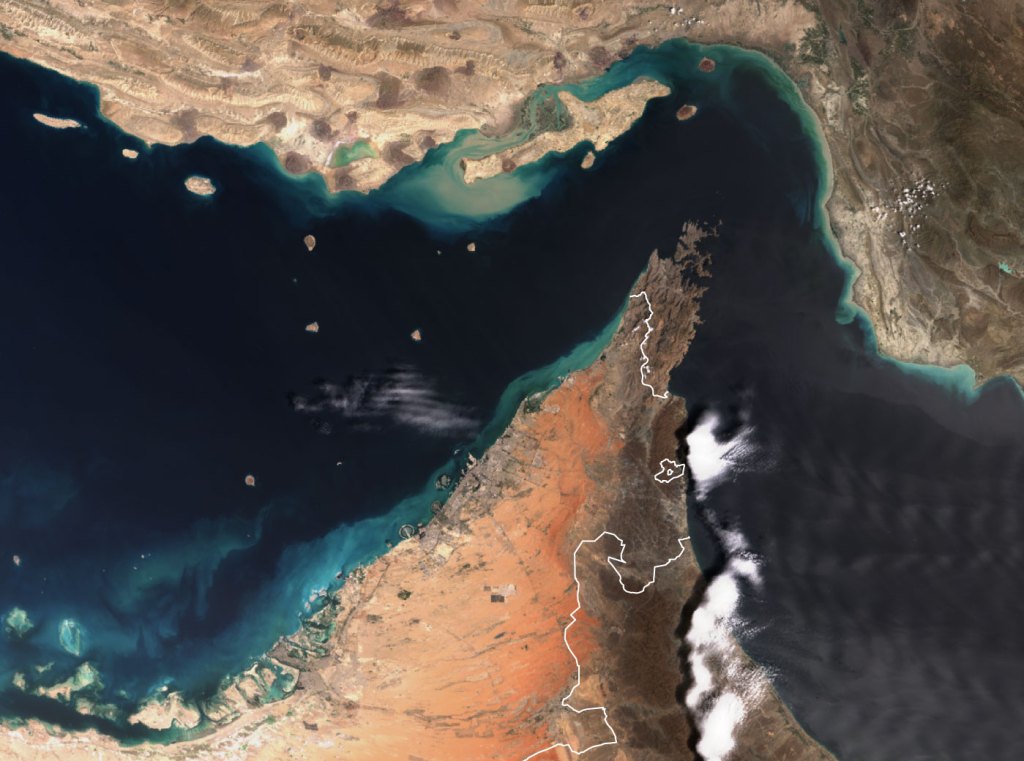
Satellite image of Strait of Hormuz. Source: WSJ

Sanctions Risk Adds To The Danger

For shipping companies tempted to pay, the financial and legal exposure goes beyond losing money to criminals.

According to Chainalysis senior intelligence analyst Kaitlin Martin, any cryptocurrency transfer tied to Iranian-controlled waterways could be classified as material support — a designation that puts companies in potential violation of US and international sanctions.

Entities linked to the Islamic Revolutionary Guard Corps fall under some of the strictest sanctions in force.

That means victims of the scam could face legal scrutiny even after being defrauded. Paying what appears to be a ransom to free a stranded vessel could trigger the same sanctions mechanisms designed to punish deliberate violators.

Featured image from Unsplash, chart from TradingView

İlgili Sorular

QWhat is the main subject of the scam described in the article targeting ships in the Strait of Hormuz?

AThe scam involves criminals posing as Iranian security officials, sending fraudulent messages to ship owners offering safe passage in exchange for transit fees paid in Bitcoin or Tether (USDT).

QWhich maritime risk firm issued a warning about the possibility of fraudulent instructions to vessels?

AMarisks, a maritime risk firm, issued the warning about the fraudulent messages.

QWhat significant risk do shipping companies face beyond financial loss if they pay the cryptocurrency ransom?

AThey risk violating US and international sanctions, as any cryptocurrency transfer tied to Iranian-controlled waterways could be classified as material support, potentially leading to legal scrutiny.

QWhy is the timing of this scam particularly effective, according to the article?

AThe timing is effective because the Strait of Hormuz has been largely closed due to escalated conflict, leaving ships stranded and under threat, which creates the desperation that scammers rely on.

QWhat real policy proposal by Iran may have lent credibility to this cryptocurrency extortion scam?

AReports indicated that Iran itself had been considering a real Bitcoin-denominated toll on vessels passing through the strait, charging around $1 per barrel for loaded tankers, which the scam appears to have exploited for credibility.

İlgili Okumalar

Michael Saylor's Latest Long Read: Who Defines the Soul of Bitcoin?

Michael Saylor's essay outlines four key ideological factions within the Bitcoin community, each shaping its future. **Bitcoin Maximalists** view Bitcoin as the dominant monetary network—a breakthrough offering superior property rights and sound money. They focus on its moral imperative and resist dilution. **Bitcoin Capitalists** believe Bitcoin's full potential is unlocked through deep integration with the global economy—into capital markets, corporate treasuries, and financial instruments. Their risk is excessive financialization. **Bitcoin Technologists** advocate for ongoing protocol improvements in scalability, privacy, and security to meet evolving demands and threats. Their core risk is destabilizing changes to the foundational layer. **Bitcoin Fundamentalists** prioritize protecting Bitcoin's core principles: self-custody, running nodes, decentralization, and its use as money. They guard against corruption, capture, and compromise. The essay argues that Bitcoin's success requires a balanced synthesis of these perspectives: maintaining its sacred core (Fundamentalists), recognizing its dominance (Maximalists), enabling global integration (Capitalists), and allowing carefully considered innovation (Technologists). The goal is disciplined expansion where most innovation occurs in higher layers, preserving the integrity of the base protocol while making Bitcoin useful for all.

marsbit1 saat önce

Michael Saylor's Latest Long Read: Who Defines the Soul of Bitcoin?

marsbit1 saat önce

SpaceX's Blazingly Hot IPO Breaks Records; The Previous Record Holder Was a Chinese Company

SpaceX's upcoming IPO has ignited a feverish market response, poised to break records as the largest in US and global history with a targeted valuation of $1.77 trillion and fundraising of $75 billion. Elon Musk's assertive stance, rewriting IPO rules by allocating 30% of new shares to retail investors—far exceeding the typical 5-10%—and slashing underwriting fees below 0.75%, has fueled the frenzy. This event surpasses the previous US IPO fundraising record set by Chinese e-commerce giant Alibaba in 2014. Alibaba's landmark 2014 NYSE listing raised over $25 billion, crowning it the world's fourth-largest tech company. It symbolized China's rising consumer class and digital economy, ushering in a golden era for US-listed Chinese tech firms and even prompting Hong Kong's exchange to reform its listing rules. However, Alibaba's fortunes shifted post-2020 peak. It faced a record antitrust fine for "choosing one from two" practices, internal cultural crises, and strategic missteps. A focus on premium consumption eroded its core e-commerce market share to around 30%, while costly expansions into new retail and media incurred massive losses. In late 2023, its market value was overtaken by PDD (Pinduoduo). Now, Alibaba is pivoting to AI as a new growth engine. Its Tongyi Qianwen model boasts high user engagement, and Alibaba Cloud remains China's leading public cloud provider, with AI-related revenue growing significantly. The company is integrating AI across its ecosystem. Yet challenges persist, including strong competition from ByteDance's Doubao model, talent retention issues, and an unclear strategic focus between consumer and enterprise AI. Alibaba's journey—from its record-setting IPO peak, through periods of regulatory scrutiny and strategic overreach, to its current AI-driven recalibration—highlights the cyclical fate of tech giants and underscores the critical role of core technological innovation in navigating industry shifts.

marsbit1 saat önce

SpaceX's Blazingly Hot IPO Breaks Records; The Previous Record Holder Was a Chinese Company

marsbit1 saat önce

Why Does Ethereum Still Need Kohaku? Privacy Concerns Aren't Just in Transactions

The article "Why Ethereum Still Needs Kohaku: Privacy Issues Extend Beyond Transactions" explains the Kohaku initiative as a suite of privacy-first tools designed to improve user privacy on the Ethereum network. It addresses the problem that while Ethereum's transparency enables innovation, it also exposes users' financial activities, asset holdings, and social connections when they reuse a single address. Kohaku aims to bridge the gap between existing privacy protocols (like Railgun, Privacy Pools) and practical user experience by integrating privacy features into wallets, developer tools, and daily interactions. Key focuses include: enabling wallets to manage multiple accounts for different purposes ("many accounts, many you"), facilitating controlled visibility for transactions instead of full transparency, protecting user data during RPC queries and network activity, and providing developers with easier ways to integrate privacy. The article clarifies that Kohaku is not a single product but an ongoing effort to make privacy a default, usable component of the ecosystem, moving beyond complex protocols to practical application. It counters common misconceptions, arguing that privacy is a fundamental user right for normal activities, not just for anonymity, and that it can coexist with compliance through selective disclosure. Ultimately, Kohaku represents an essential step for Ethereum's maturation, ensuring users can participate in the open network while maintaining control over their personal information boundaries.

marsbit1 saat önce

Why Does Ethereum Still Need Kohaku? Privacy Concerns Aren't Just in Transactions

marsbit1 saat önce

İşlemler

Spot
Futures

Popüler Makaleler

ONE Nasıl Satın Alınır

HTX.com’a hoş geldiniz! Harmony (ONE) satın alma işlemlerini basit ve kullanışlı bir hâle getirdik. Adım adım açıkladığımız rehberimizi takip ederek kripto yolculuğunuza başlayın. 1. Adım: HTX Hesabınızı OluşturunHTX'te ücretsiz bir hesap açmak için e-posta adresinizi veya telefon numaranızı kullanın. Sorunsuzca kaydolun ve tüm özelliklerin kilidini açın. Hesabımı Aç2. Adım: Kripto Satın Al Bölümüne Gidin ve Ödeme Yönteminizi SeçinKredi/Banka Kartı: Visa veya Mastercard'ınızı kullanarak anında Harmony (ONE) satın alın.Bakiye: Sorunsuz bir şekilde işlem yapmak için HTX hesap bakiyenizdeki fonları kullanın.Üçüncü Taraflar: Kullanımı kolaylaştırmak için Google Pay ve Apple Pay gibi popüler ödeme yöntemlerini ekledik.P2P: HTX'teki diğer kullanıcılarla doğrudan işlem yapın.Borsa Dışı (OTC): Yatırımcılar için kişiye özel hizmetler ve rekabetçi döviz kurları sunuyoruz.3. Adım: Harmony (ONE) Varlıklarınızı SaklayınHarmony (ONE) satın aldıktan sonra HTX hesabınızda saklayın. Alternatif olarak, blok zinciri transferi yoluyla başka bir yere gönderebilir veya diğer kripto para birimlerini takas etmek için kullanabilirsiniz.4. Adım: Harmony (ONE) Varlıklarınızla İşlem YapınHTX'in spot piyasasında Harmony (ONE) ile kolayca işlemler yapın.Hesabınıza erişin, işlem çiftinizi seçin, işlemlerinizi gerçekleştirin ve gerçek zamanlı olarak izleyin. Hem yeni başlayanlar hem de deneyimli yatırımcılar için kullanıcı dostu bir deneyim sunuyoruz.

373 Toplam GörüntülenmeYayınlanma 2024.12.12Güncellenme 2026.06.02

ONE Nasıl Satın Alınır

Tartışmalar

HTX Topluluğuna hoş geldiniz. Burada, en son platform gelişmeleri hakkında bilgi sahibi olabilir ve profesyonel piyasa görüşlerine erişebilirsiniz. Kullanıcıların ONE (ONE) fiyatı hakkındaki görüşleri aşağıda sunulmaktadır.

活动图片