Crypto Exchange Bithumb Pushes IPO Past 2028 As Cleanup Effort Continues

bitcoinist2026-04-02 tarihinde yayınlandı2026-04-02 tarihinde güncellendi

Özet

Bithumb, a major South Korean cryptocurrency exchange, has delayed its initial public offering (IPO) plans to after 2028, a significant postponement from its original 2025 target. The decision follows a year of challenges, including compliance issues, board changes, and a major internal error in February that temporarily displayed over $40 billion in fake user balances. The exchange mistakenly credited users with 2,000 Bitcoin instead of 2,000 won, raising serious concerns about its internal controls. Additionally, Bithumb faced regulatory pressure, including a six-month suspension and a $24 million fine for alleged anti-money laundering breaches. Under renewed CEO Lee Jae-won, the company is now prioritizing the strengthening of its accounting systems and internal governance with advisory firm Samjong KPMG before proceeding with an IPO. This slower timeline contrasts with competitor Upbit, which is reportedly preparing for its own public listing.

Bithumb is now looking at an initial public offering sometime after 2028, a further slip from its earlier 2025 target, after a year of compliance trouble, board changes, and a costly internal blunder that briefly showed more than $40 billion in fake balances on its books.

According to reports tied to the company’s shareholder meeting, the South Korea-based exchange says it wants to spend the next stretch fixing its accounting and control systems before it tries to list.

Internal Error Raised Fresh Questions

The exchange’s most damaging recent episode came in February, when it mistakenly credited users with about 2,000 Bitcoin instead of 2,000 won. The mix-up was quickly reversed, and most of the money never left Bithumb’s internal ledger, but the scale of the error was hard to ignore.

It turned a routine systems failure into a public test of trust, and it arrived at a bad time for a company trying to convince regulators and investors that it is ready for the scrutiny that comes with a stock listing.

BTCUSD trading at $66,362 on the 24-hour chart: TradingView

That mistake followed earlier pressure from South Korean authorities. Under CEO Lee Jae-won, Bithumb faced a six-month suspension and a $24 million fine tied to alleged anti-money-laundering breaches.

Shareholders have now backed Lee for another two-year term, even as the company keeps moving the IPO goal farther down the road. The exchange had once expected to list in 2025, but the new plan is to focus on preparation through 2027 before any filing process advances.
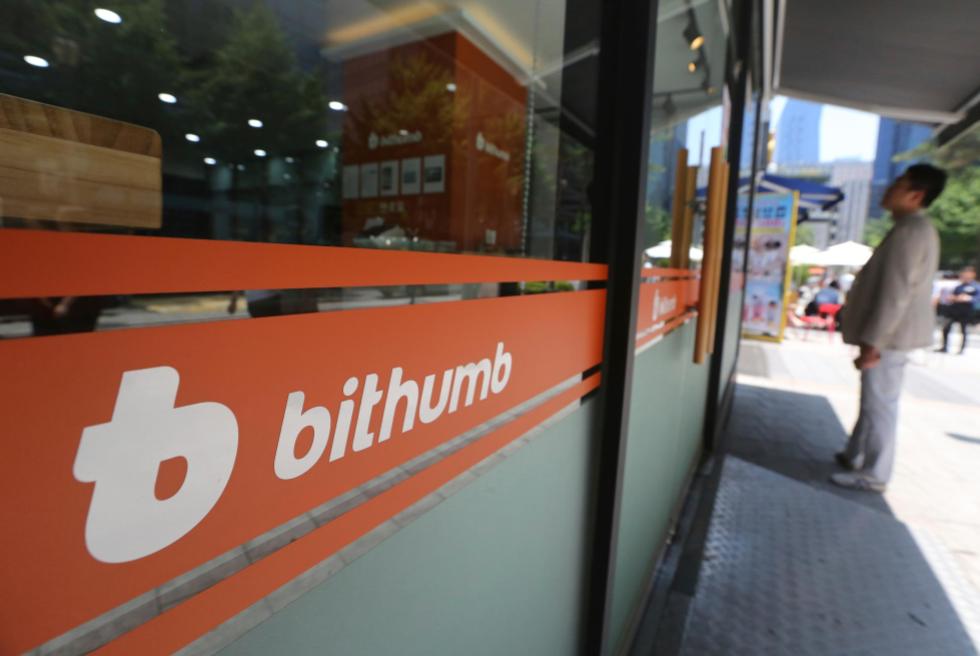
Image: AP

A Slower Road To The Market

Bithumb’s latest timeline fits a broader pattern of delay. CFO Jeong Sang-gyun told shareholders that the company is strengthening its accounting policies and internal controls after bringing in Samjong KPMG as an IPO adviser.

That language points to work that usually happens before a listing window opens, not after a target year has already passed. The change in pace also shows how much the exchange’s public debut now depends on proving basic governance, not just market demand.

The exchange is not the only one moving through the South Korean market with listing plans in view. Dunamu, the operator of Upbit, is also said to be preparing for an IPO after a share swap with Naver Financial, with September mentioned as a possible timing point.

Featured image from Moneyseth, chart from TradingView

İlgili Sorular

QWhat is the new target year for Bithumb's IPO, and why was it delayed from the original 2025 target?

ABithumb is now targeting an IPO sometime after 2028, a delay from its original 2025 goal. The postponement is due to a year of compliance issues, board changes, and a major internal error that falsely displayed over $40 billion in balances. The company now plans to focus on fixing its accounting and control systems before attempting to list.

QWhat was the significant internal error that occurred at Bithumb in February, and what was its impact?

AIn February, Bithumb mistakenly credited users with approximately 2,000 Bitcoin instead of 2,000 won due to a systems failure. Although the error was quickly reversed and most funds never left the exchange's internal ledger, the massive scale of the mistake severely damaged trust and raised questions about the company's readiness for the scrutiny of a public listing.

QWhat regulatory action did South Korean authorities take against Bithumb under CEO Lee Jae-won?

AUnder CEO Lee Jae-won, Bithumb faced regulatory pressure from South Korean authorities, resulting in a six-month suspension and a $24 million fine for alleged anti-money laundering breaches.

QWho did Bithumb bring on as an IPO adviser, and what is the company's current focus according to its CFO?

ABithumb brought in Samjong KPMG as an IPO adviser. According to CFO Jeong Sang-gyun, the company is now focusing on strengthening its accounting policies and internal controls as part of its preparation for a future listing.

QWhich other major South Korean crypto exchange is also preparing for an IPO, and what was a key step in its preparation?

ADunamu, the operator of the Upbit exchange, is also preparing for an IPO. A key step in its preparation was a share swap with Naver Financial, with September mentioned as a potential timing for its public debut.

İlgili Okumalar

Why Hasn't the U.S. Seen the Rise of 'Huabei' or 'Jiebei'?

The article explores why the U.S. lacks large-scale consumer credit products like China's "Huabei" and "Jiebei," despite having a developed financial sector. Key reasons include: 1. **Structural Barriers**: A fragmented federal and state regulatory system, reinforced by post-2008 reforms like the Dodd-Frank Act, raises compliance costs and protects traditional banks, stifling fintech innovation. 2. **Credit Card Dominance**: Credit cards, used by 70-80% of adults, form a $1.28 trillion debt market with high APRs (avg. 22.3%). This system cross-subsidizes users who pay in full with those carrying balances, creating a predatory yet entrenched ecosystem. 3. **Data Privacy Laws**: Strict regulations (e.g., FCRA, CCPA) prevent tech giants from leveraging behavioral data for credit scoring, unlike in China where such data fuels fintech models. 4. **Capital Market Disincentives**: Wall Street penalizes tech firms entering finance due to lower valuations associated with heavy regulation and risk, as seen in Apple’s failure with Apple Card. 5. **Banking Oligopoly**: Major banks control consumer lending, leveraging lobbying power and consumer habits to maintain high-cost credit, while alternatives like payday loans (400% APR) or "unbanked" services remain niche or exploitative. Ultimately, regulatory, structural, and corporate interests collectively block the emergence of accessible, low-cost digital lending in the U.S.

Odaily星球日报39 dk önce

Why Hasn't the U.S. Seen the Rise of 'Huabei' or 'Jiebei'?

Odaily星球日报39 dk önce

More and More 'Model Supermarkets' Are Opening: ByteDance, Alibaba, and Tencent Compete to Integrate

Chinese tech giants like ByteDance, Alibaba, and Tencent are accelerating the rollout of integrated AI model subscription services—dubbed “model supermarkets”—to provide developers with bundled access to multiple leading domestic large language models (LLMs). ByteDance’s Volcengine recently upgraded its "Coding Plan" by adding newer models like GLM-5.1, Minimax M2.7, and Kimi k2.6, allowing subscribers to use various top models under a single monthly fee starting at ¥40. However, user feedback reveals significant issues, including rapid consumption of usage limits (e.g., hitting caps within hours), frequent server errors (like HTTP 429), and slow response times during peak hours. Complaints about misleading deduction rates—where calls to advanced models consume more quota—are also common. The trend is industry-wide: Alibaba, Tencent, and Baidu have all launched similar multi-model coding plans. While these platforms reduce trial costs for developers, they also expose challenges in balancing affordability with service quality and computational stability. Amid this shift, independent AI companies like Zhipu, MiniMax, and Moonlight Face (Kimi) are developing strategies to avoid becoming mere “pipes” in this ecosystem—focusing on vertical applications, autonomous agents, and long-context models to retain competitiveness. Analysts suggest that, while platform aggregation may pressure model firms in the short term, specialized and vertical AI capabilities will remain differentiated in the long run.

marsbit43 dk önce

More and More 'Model Supermarkets' Are Opening: ByteDance, Alibaba, and Tencent Compete to Integrate

marsbit43 dk önce

İşlemler

Spot
Futures
活动图片