Crypto Bets On Argentina Inflation Stoke Fears Of Insider Trading On Polymarket

bitcoinist2026-03-17 tarihinde yayınlandı2026-03-17 tarihinde güncellendi

Özet

Argentinian authorities have ordered a nationwide blockade of the crypto prediction platform Polymarket, enforced by regulators and internet providers, following a court ruling that deemed it an unlicensed gambling operation. The move comes after allegations of insider trading emerged when suspicious betting activity occurred just before the release of official inflation data in February. Argentina follows Colombia as the second Latin American country to ban the platform, reflecting a broader global trend of regulators treating prediction markets as gambling rather than financial tools. This could fragment liquidity and push users into less regulated markets.

Argentinian authorities have ordered a full national blockade of Polymarket after it predicted inflation data.

An Authoritarian Crypto Ban?

Argentinian outlets reported this Monday that a court ruling in Buenos Aires ordered a nationwide blockade of Polymarket, one of the largest crypto prediction market platforms globally. The blockade will be enforced via the Ente Nacional de Comunicaciones (ENACOM) and local internet service providers (ISPs), in addition to its removal from Apple and Google app stores. The restriction goes as far as affecting already signed up Polymarket users, another local outlet claims.

Buenos Aires Lottery Regulators (Lotería de la Ciudad de Buenos Aires and the Cámara Argentina de Casinos y Bingos) argue that Polymarket is operating as an unlicensed online gambling platform, not just a neutral "prediction market". This led to a case being brought by the City's Special Prosecutor's Office for Gambling (FEJA) and presided over by Judge Susana Parada.

The Public Prosecutor's Office explained that despite the blocking order having already been issued, the implementation depends on ENACOM notifying all ISP's so the companies can cut off access. Therefore, the full and final implementation will most likely be gradual.

A "Degen Casino" That Played With The Country's Inflation

This drastic ruling follows a suspicious trading scandal in the inflation market back in February, where odds moved around fifteen minutes before INDEC released official CPI data, raising allegations of insider trading by politically connected actors.

The local media has echoed the "degen casino" narrative, arguing that these markets let users place peso‐linked wagers on macro data, elections and high‐profile political outcomes without any Argentine license or KYC/age checks. Clarín claims that, in Polymarket, "it all comes down to betting money on a question that can be answered with a yes or a no":

Polymarket presents itself as a prediction market, but in practice it's a way to bet on almost anything that emerged during the pandemic and gained popularity during the election campaign between Donald Trump and Kamala Harris, when the tycoon began promoting these markets because they gave him better results than the polls: 55.5% were literally betting on him.

A Global Trend

Despite some claims that place Argentina as the first country in the region to implement such measures, the truth is that last year Colombia became the first country in Latin America to ban Polymarket. Coljuegos, Colombian gambling regulators, declared the platform ilegal in September 2025 and, similarly to the Argentinian ban, instructed their ISPs to block access to it.

It its worth noting that prediction markets had become a popular way for global crypto traders to price political risk, inflation paths and macro events in real time, often anticipating official data. In line with this, this is not the first clash between Polymarket's and regulatory entities. Besides Colombia, other earlier blocks or investigations have been registered in France, Taiwan and Singapore, in addition to the US regulatory pressure over unregistered derivatives and gambling concerns.

Argentina's move reinforces a growing trend of regulators increasingly treating crypto prediction platforms as gambling first and market infrastructure second, which could fragment liquidity and push activity into friendlier jurisdictions or darker venues.
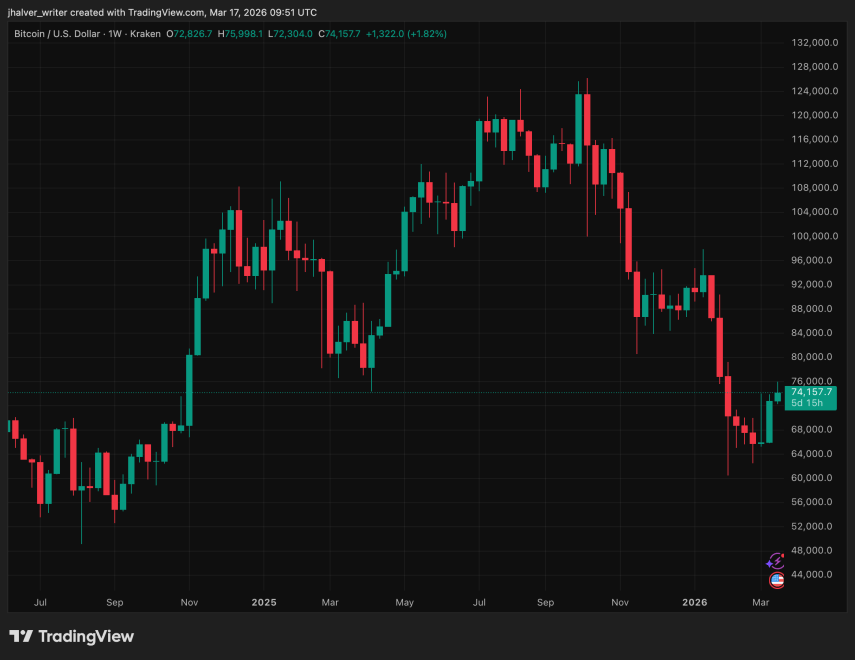
BTC's price trends reaches $74K on the daily chart, the highest since January. Source: BTCUSD on Tradingview

Cover image from Perplexity, BTCUSD chart from Tradingview

İlgili Sorular

QWhy did Argentinian authorities order a national blockade of Polymarket?

AArgentinian authorities ordered a national blockade of Polymarket because they argue it is an unlicensed online gambling platform, not just a neutral prediction market, following a suspicious trading scandal involving inflation data.

QWhat was the suspicious trading activity on Polymarket related to in Argentina?

AThe suspicious trading activity was related to Argentina's inflation data, where odds moved around fifteen minutes before the official CPI data was released by INDEC, raising allegations of insider trading.

QWhich other Latin American country banned Polymarket before Argentina?

AColombia became the first country in Latin America to ban Polymarket, declaring the platform illegal in September 2025 and instructing ISPs to block access.

QHow does Polymarket present itself versus how it is viewed by regulators?

APolymarket presents itself as a prediction market, but regulators view it as an unlicensed online gambling platform that allows users to place wagers on events without proper licensing or KYC/age checks.

QWhat global trend does Argentina's move against Polymarket reinforce?

AArgentina's move reinforces a growing trend of regulators treating crypto prediction platforms as gambling first and market infrastructure second, which could fragment liquidity and push activity into friendlier jurisdictions.

İlgili Okumalar

Within Strategy's Framework, STRC's Dividend Yield Remains at 12% as Share Price Stays Below Par Value

Michael Saylor, Executive Chairman of Strategy (MSTR), confirmed that the dividend rate for its STRC perpetual preferred shares will remain at 12.00% through August 2026. The rate has increased from 9% at its July 2025 launch to the current high via a "ratchet" mechanism, which permanently raises the rate by 0.5% whenever the share price falls below $95. This mechanism is intended to push the price back toward its $100 par value and support Strategy's "at-the-market" (ATM) program for issuing new shares to fund Bitcoin purchases. However, the mechanism has not worked as intended. STRC shares closed at $89.46 on July 31, remaining about 10-11% below par value despite the record-high dividend. Competition from rival Strive's higher-yielding SATA securities has pressured demand. The persistent discount has forced Strategy to suspend new STRC issuances via its ATM program, limiting this funding channel for Bitcoin acquisitions. STRC's struggles reflect Bitcoin's own volatility, as the preferred shares historically move in tandem. Analysts have warned the ratchet structure carries long-term, one-way risk. A law firm is investigating Strategy's ability to maintain dividend payments if Bitcoin's price stays low. Retail investors own roughly 83% of outstanding STRC shares, a group seen as prone to panic selling during downturns. In response, Strategy has established financial reserves, including a liquidity cushion covering about 26 months of dividend/interest obligations, and a $2 billion share buyback program alongside a Bitcoin monetization framework, though the company emphasized it is not obligated to sell any Bitcoin.

cryptonews.ru36 dk önce

Within Strategy's Framework, STRC's Dividend Yield Remains at 12% as Share Price Stays Below Par Value

cryptonews.ru36 dk önce

Analyst: Bitcoin's Price Will Drop to $60k in August, Then Rebound to $70k

Financial analyst Andrey Poroshin has provided a new forecast for Bitcoin's price dynamics in August. Poroshin, an analyst at the Bitbanker exchange, expects the cryptocurrency market to experience a downturn this month, with prices retesting the $60,000 level due to a lack of supportive macroeconomic catalysts. He noted that the recent US Federal Reserve decision to hold interest rates did not significantly impact the market, while inflation remains above the 2% target. Poroshin stated that Bitcoin is ending July under pressure from moderate volatility and a lack of new macroeconomic stimuli, leading to continued market caution. According to his base scenario, Bitcoin will drop to a range of $60,000 to $62,000 before recovering to $70,000. He pointed out that even $70,000 remains below the cost of mining in the US, which has prompted some miners to shift towards AI data center operations. Poroshin cited the winding down of BitMEX's operations as a potential catalyst for a price rebound, suggesting the exit of weaker players often coincides with market reversals and reduced short-term selling pressure. He believes Bitcoin is currently less susceptible to geopolitical shocks, such as the Iran-US conflict, and does not expect significant market changes in August related to the pending CLARITY Act. Looking ahead, Poroshin forecasts that September will bring more active price fluctuations driven by potential Fed rate decisions and possible discussions or approval of the CLARITY Act.

cryptonews.ru36 dk önce

Analyst: Bitcoin's Price Will Drop to $60k in August, Then Rebound to $70k

cryptonews.ru36 dk önce

İşlemler

Spot
活动图片





