Crossing Boundaries Is Hard: Neither Prediction Market Nor Perp DEX Leader Has Replicated Their Own Success

Odaily星球日报2026-07-27 tarihinde yayınlandı2026-07-27 tarihinde güncellendi

Özet

Over the past six months, two of the hottest trading sectors—prediction markets and Perpetual DEXs (Perp DEXs)—have been attempting to cross into each other's territories. In April, prediction market platform Polymarket announced plans to launch perpetual contracts (Perps) for crypto, stocks, and commodities. In late May, the regulated platform Kalshi launched CFTC-regulated crypto Perps. Meanwhile, leading Perp DEX Hyperliquid moved in the opposite direction, launching its HIP-4 outcome markets for event-based trading in May. Initial results from these crossovers have been mixed, showing that established user habits and liquidity do not easily transfer to new product categories. Hyperliquid's HIP-4 platform saw strong initial demand, with daily volume reaching nearly $30 million during the World Cup, but active markets have since collapsed from over 120 to under 20, with daily volume often falling below $1 million. This highlights the inherent challenge: perpetual contracts maintain liquidity around core assets, while event contracts expire and require constant renewal of interest and liquidity. Similarly, Polymarket's Perps, still in an invite-only phase, saw daily volume drop from an initial ~$48 million to around $18 million by late July, with open interest (OI) at only ~$26.4 million—a fraction of Hyperliquid's ~$7.7 billion OI. Kalshi's Perps had a faster start, accumulating $16.1 billion in volume over six weeks, but recent daily volume has plummeted over 80% to arou...

Original | Odaily Planet Daily(@OdailyChina)

Author | Asher(@Asher_ 0210)

Over the past six months, the two hottest trading sectors, prediction markets and Perp DEX, have been infiltrating each other's core territories.

In April, Polymarket announced the launch of Perps, covering cryptocurrencies, US stocks, and commodities; at the end of May, Kalshi officially launched CFTC-regulated cryptocurrency perpetual contracts. On the other side, the Perp DEX leader Hyperliquid entered the prediction market arena in reverse through HIP-4, hoping to extend its already mature order book, account system, and liquidity advantages to real-world event trading.

Prediction markets have gathered a group of users keen on trading sports, esports, politics, and trending events, while Hyperliquid has accumulated a cohort of crypto-native traders more inclined towards high-frequency and leveraged trading. The cross-sector moves by both sides are essentially attempts to bring their respective advantages in core user bases and trading scenarios into the other's home turf.

However, several months later, the results have not been ideal. The accumulated user habits and liquidity in the original sectors did not naturally migrate with the expansion of product boundaries.

Hyperliquid: Active Prediction Markets Dropped from 125 to Less Than 20

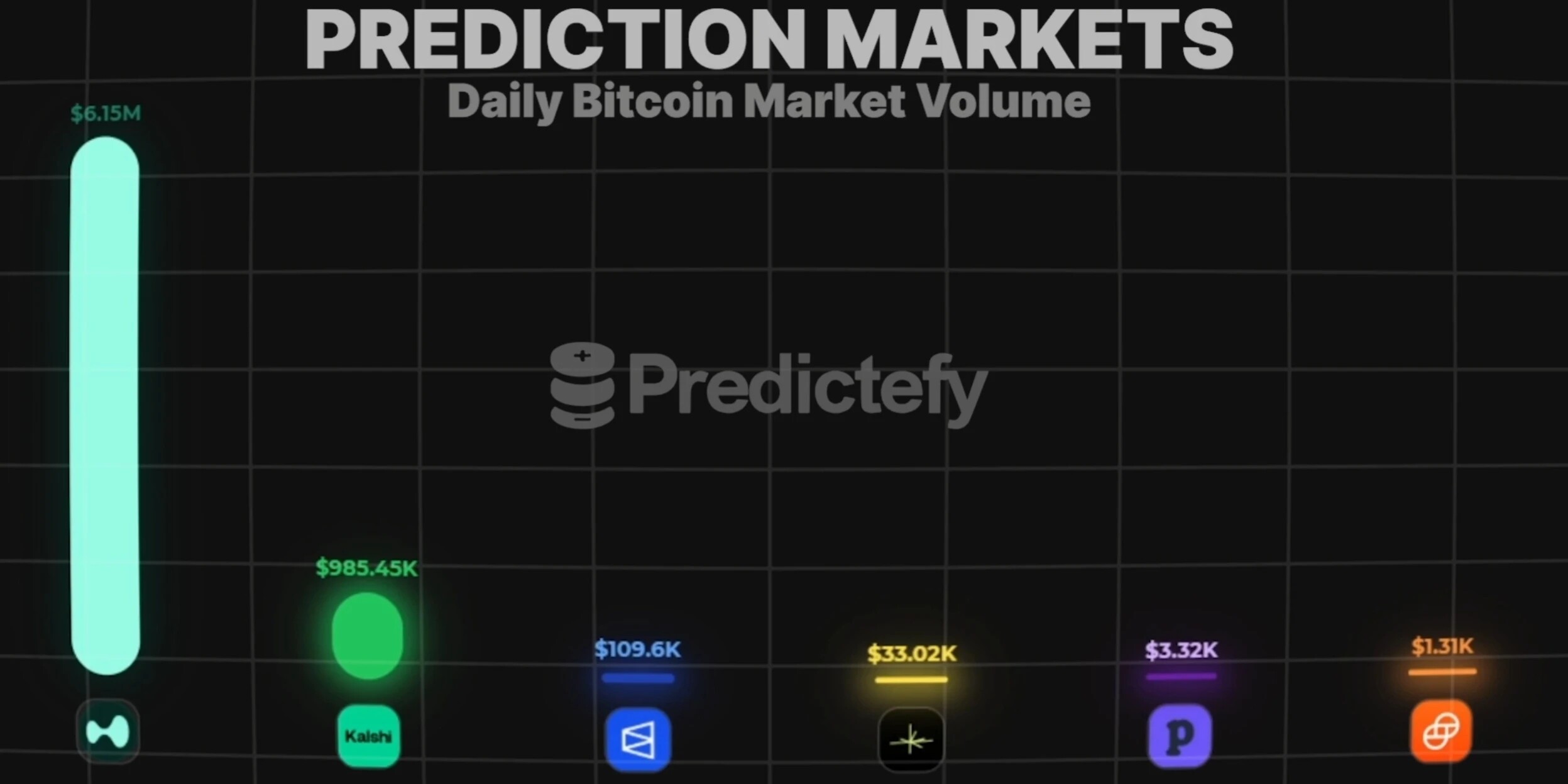
On May 2nd, Hyperliquid launched HIP-4 Outcome Markets on its mainnet, formally introducing outcome markets into its on-chain trading system. The first batch launched was intraday BTC binary outcome contracts, with first-day trading volume reaching $6.15 million, far exceeding similar prediction events on Kalshi and Polymarket. Additionally, over 54,000 trades were completed that day, involving more than 3,000 traders.
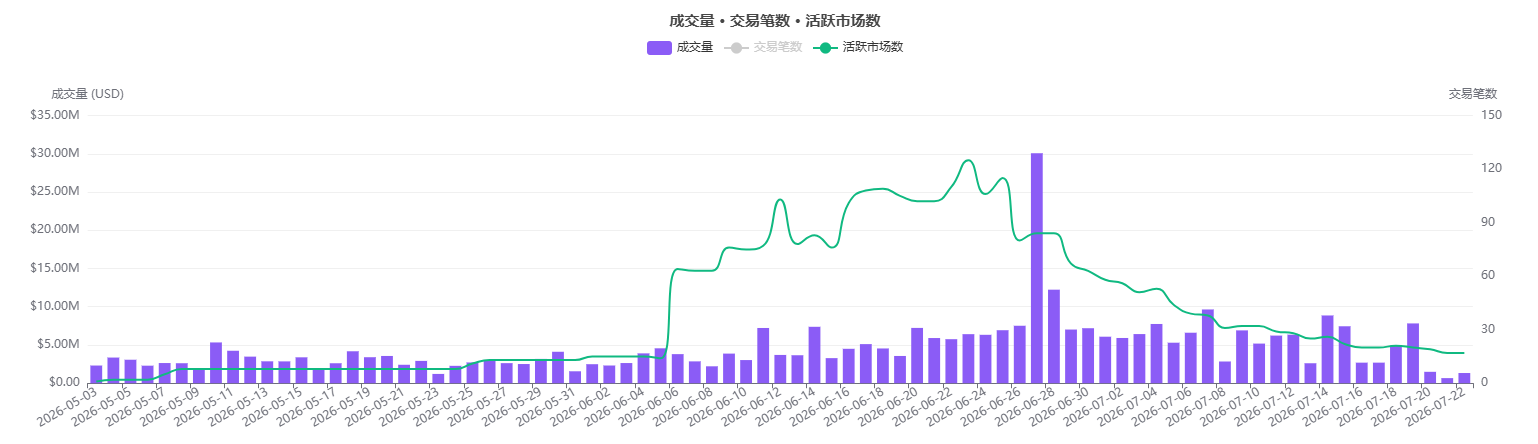
The World Cup further amplified this growth wave. In early June, HIP-4 had only dozens of active markets, which quickly rose to over 100, peaking at over 120. Trading volume also increased correspondingly, nearing $30 million on June 27th and remaining at the tens of millions level the next day. With the addition of sports events, macro data, and crypto price events, HIP-4 initially moved beyond its early state dominated by short-term BTC contracts and began expanding towards a more comprehensive event trading platform.

But the rapid increase in the number of markets did not translate into sustained trading demand. As the World Cup entered its later stages, the number of active HIP-4 markets began to decline continuously, dropping from a high of 125 to around 50, further decreasing to just over 20 by mid-July, and recently falling below 20, a contraction of over 85% from the peak. Trading volume also weakened in tandem, mostly returning to the millions of dollars range on most days, and recently even dropping below $1 million at times.
Behind this lies the completely different liquidity structures of Perps and event contracts. Perpetual contract trading has long revolved around core assets like BTC and ETH, allowing market makers, capital, and traders to continuously accumulate in the same set of markets. Event contracts, however, are settled continuously as matches end, data is released, or political events conclude, often requiring new markets to re-gather liquidity and trading interest. While Hyperliquid can reuse its matching system, accounts, and capital infrastructure, it cannot directly copy the liquidity and user trading frequency formed in Perps to HIP-4.

Polymarket: Perpetual Contract Daily Trading Volume Below $20 Million

Polymarket announced its foray into the perpetual contract market in April and began rolling out its Perps product to more users in July, supporting up to 20x leverage. Access currently still requires an invitation code activation or joining a waitlist. The product covers crypto assets like BTC, ETH, SOL, and has also extended to some stocks and commodities.
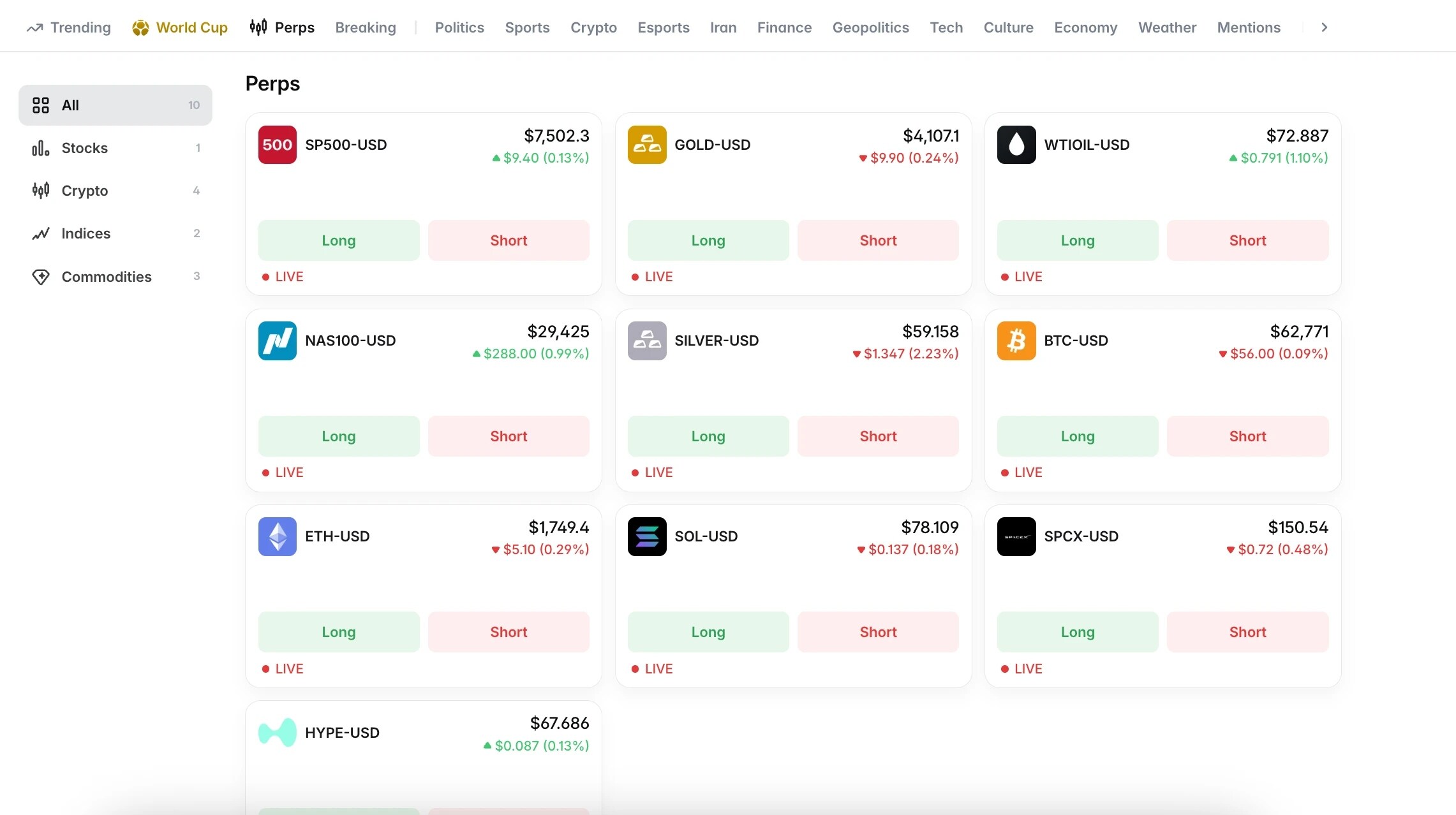
In its initial launch phase, Polymarket Perps saw 24-hour trading volume reach approximately $48 million, but this level was not sustained. By late July, daily trading volume had fallen to around $18.2 million, with open interest (OI) at approximately $26.4 million. The OI for core pairs like BTC and ETH also remained in the single-digit millions. Compared to the initial launch, trading activity for Polymarket Perps has noticeably cooled.

However, it's not entirely fair to directly compare Polymarket Perps with mature Perp platforms at this stage, as it remains in an early phase requiring invitation codes for trading. But even considering this, the gap in scale remains stark. During the same period, Hyperliquid's open interest was approximately $7.7 billion, with a 24-hour trading volume of about $1.58 billion. In contrast, Polymarket Perps' OI was only about $26.4 million, roughly 0.3% of the former; its daily trading volume was also only about 1% of Hyperliquid's.

Currently, the trading volume on Polymarket Perps resembles early user experimentation with a new product, not yet forming stable trading habits or sustained discussion heat. At least based on current data, the user base and brand advantages Polymarket accumulated in the prediction market have not smoothly transferred to the Perp sector. This cross-sector move cannot yet be called a success.

Kalshi Perps: $16.1 Billion in Trading Volume Over Six Weeks, but Recent Cooling

Compared to Polymarket, Kalshi's Perps had a faster start. At the end of May, Kalshi officially launched CFTC-regulated cryptocurrency perpetual contracts, initially covering BTC, ETH, SOL, XRP, and other assets. By July 9th, approximately six weeks after launch, the cumulative trading volume for Kalshi Perps had reached $16.1 billion.

However, compared to the rapid surge in volume at launch, Kalshi Perps' current trading heat has noticeably cooled. Data from Loris Tools shows that the daily trading volume for the Perps section on Kalshi was still $448 million on July 20th, but in the past two days, it has dropped to around $80 million—a plunge of over 80% in daily volume within just a few days.
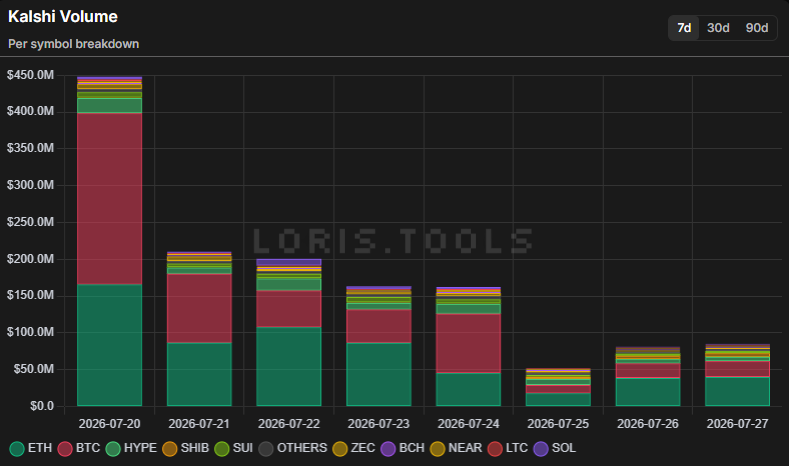
Meanwhile, Hyperliquid's Perp daily trading volume remains at the billions of dollars level. Even using Kalshi's recent high of $448 million on July 20th for comparison, there is still a significant gap in trading scale compared to Hyperliquid. With Kalshi's recent daily volume falling to around $80 million, the gap has widened further.

The disparity in open interest is even more pronounced. The OI for the Perps section on Kalshi remains in the tens of millions of dollars range, while Hyperliquid's is approximately $7.5 billion. Kalshi's cumulative $16.1 billion over six weeks indicates its Perps had a decent cold start, but the recent rapid decline in trading volume and persistently low OI also means it remains noticeably distant from the competitive range of mainstream Perp platforms.

Kalshi's "U.S. Compliant Gateway" remains its most distinct differentiator. But currently, this advantage primarily addresses the issue of "whether U.S. users can trade Perps," not yet solving "why professional Perp traders would stay on Kalshi long-term."

Crossing Boundaries is Difficult; Fortifying the Home Turf Might Be More Important Than the "Everything Exchange" Slogan

The cross-sector attempts by Hyperliquid, Polymarket, and Kalshi highlight the difficulty in replicating the long-accumulated user habits and liquidity of their original sectors. Hyperliquid's core users are more accustomed to high-frequency, leveraged, and on-chain derivatives trading, while Polymarket and Kalshi's users primarily focus on judging sports, politics, and trending events. Platforms can quickly add new categories but find it hard to make users simultaneously change their original trading styles.

For Hyperliquid, further deepening its Perp and on-chain asset trading might be more important than proving it can trade anything. For Polymarket and Kalshi, what remains truly scarce is event supply, user mindshare, and prediction market liquidity. Crossing boundaries can bring new growth imagination, but if new categories cannot form independent demand, they might also dilute the resources where the platform originally held the strongest advantage.

The so-called Everything Exchange, in the end, may not compete on who covers the most categories, but rather on who can continuously accumulate users, liquidity, and market depth in their core sector. For platforms that already possess clear advantages, deepening their home turf might be more crucial than constantly expanding their boundaries.


İlgili Sorular

QWhat are the main challenges faced by Hyperliquid, Polymarket, and Kalshi when expanding into each other's core business areas?

AThe main challenges are their inability to successfully replicate their established user habits and liquidity from their original sectors into the new ones. Hyperliquid's Perp DEX users are accustomed to high-frequency, leveraged trading of crypto assets, and this behavior did not naturally transfer to event-based prediction markets. Conversely, users of prediction market platforms like Polymarket and Kalshi are focused on trading based on sports, politics, and real-world events, and did not bring sustained, deep liquidity to the new perpetual contracts offerings.

QHow did the performance of Hyperliquid's HIP-4 Outcome Markets change after its initial launch, particularly regarding the number of active markets?

AAfter a strong initial launch with over 615 USD in volume on day one, HIP-4 saw significant growth during events like the World Cup, with the number of active markets peaking at over 120. However, performance declined sharply afterwards. The number of active markets dropped to around 50, then further to just over 20 by mid-July, and recently fell below 20, representing a contraction of over 85% from the peak. Trading volume also weakened significantly, often falling back to the millions of USD range and recently dropping below 1 million USD.

QAccording to the article, what is the current trading volume and Open Interest (OI) status of Polymarket's Perpetual Contracts compared to a leader like Hyperliquid?

AAs of late July, Polymarket's Perps had a 24-hour trading volume of approximately 18.2 million USD and an Open Interest (OI) of about 26.4 million USD. In stark contrast, Hyperliquid's OI was around 7.7 billion USD with a 24-hour trading volume of approximately 1.58 billion USD. This means Polymarket's Perps OI was only about 0.3% of Hyperliquid's, and its daily trading volume was only about 1% of Hyperliquid's.

QWhat was the initial success and subsequent trend for Kalshi's CFTC-regulated cryptocurrency perpetual contracts?

AKalshi's Perps had a successful initial launch, accumulating 16.1 billion USD in trading volume within about six weeks. However, trading activity has recently cooled significantly. While daily volume reached 448 million USD on July 20th, it dropped sharply to around 80 million USD in the following days, a decline of over 80%. Its Open Interest (OI) remains in the tens of millions of USD, which is vastly lower than Hyperliquid's multi-billion dollar OI.

QWhat is the article's concluding argument regarding the 'Everything Exchange' strategy for these platforms?

AThe article argues that for platforms like Hyperliquid, Polymarket, and Kalshi, deepening their expertise and dominance in their core, original sectors is more important than continually expanding into new product categories. The key to success is not necessarily covering the most asset types, but rather which platform can persistently accumulate users, liquidity, and market depth in its primary赛道. Focusing on strengthening their 'home field' advantage is presented as a more crucial strategy than boundary expansion.

İlgili Okumalar

In Conversation with Ray Dalio: We Are Currently in an AI Bubble, with 1% of My Portfolio in Bitcoin

Ray Dalio, founder of Bridgewater Associates, warns in an interview that the current AI boom shows classic bubble characteristics, which could lead to significant economic downturns as seen in past cycles like 1929 or 2000. He explains that speculative enthusiasm, fueled by debt and overvaluation, often precedes a crash when rising rates or taxation force asset sales, causing widespread losses and recession. Dalio also outlines his "Big Cycle" theory, describing an approximate 80-year pattern where widening wealth gaps, massive government deficits, and shifting geopolitical power (like China's rise) create internal conflict and global instability. He emphasizes that we are in a late-cycle, transitional phase where traditional powers like the US and UK face decline. For personal wealth protection, Dalio advises diversification beyond cash into assets like stocks, bonds, real estate, and particularly gold, which he prefers over Bitcoin. While he holds about 1% of his portfolio in Bitcoin as a non-printable hard asset, he views gold as more secure from technological or governmental threats. Regarding AI's impact, Dalio believes it will disproportionately benefit capital owners, worsening inequality by replacing both physical and cognitive labor. He suggests that human intuition and emotional intelligence, combined with AI, will be key for future workers. On taxation, Dalio argues that wealth taxes are impractical and risk triggering asset sell-offs, reducing productive investment. He points to the UK as a cautionary example of debt, low productivity, and political strife. Geopolitically, Dalio foresees a more regionalized world, with the US showing weakness in prolonged conflicts like with Iran, akin to past imperial declines. The ideal outcome, he suggests, is coexisting powerful blocs (e.g., Americas, China-Asia Pacific) without major war.

marsbit3 saat önce

In Conversation with Ray Dalio: We Are Currently in an AI Bubble, with 1% of My Portfolio in Bitcoin

marsbit3 saat önce

Daily 7.2 Trillion KRW: Foreign Capital's Record Net Buying on Friday! Wall Street Says Headwinds for Korean Stock Fund Flows Have Subsided

South Korean stock market sees a dramatic shift in fund flows. On July 31, foreign investors made a record net purchase of approximately KRW 7.2 trillion in KOSPI stocks, marking a fundamental reversal from the persistent large-scale net outflows seen in previous months. This contributed to a significant narrowing of foreign net selling in July to KRW 9.8 trillion, down sharply from KRW 48.4 trillion in June and KRW 44.5 trillion in May. Simultaneously, domestic institutional pressure eased. South Korean pension funds and asset managers turned to a net buying position in July, purchasing KRW 1.0 trillion worth of KOSPI shares, contrasting with net sales in May and June. Market volatility is expected to be dampened by new financial regulations. Effective July 31, the Financial Services Commission tightened access for retail investors to single-stock leveraged ETFs by raising the minimum cash deposit requirement. Trading volumes for these products subsequently dropped to about 50% of their monthly average. Citigroup Research maintains its year-end KOSPI target of 10,000 points. The firm cites several supportive factors: the substantial easing of headwinds from capital outflows, a robust fundamental outlook for the semiconductor sector, historically low market valuations, strong economic fundamentals, and the potential for policy support from financial authorities if needed.

marsbit3 saat önce

Daily 7.2 Trillion KRW: Foreign Capital's Record Net Buying on Friday! Wall Street Says Headwinds for Korean Stock Fund Flows Have Subsided

marsbit3 saat önce

Thanks to Dice Rolls, Bitcoin Keys Are Stored Offline, But Not Everyone Will Do It

The article discusses using dice rolls to generate secure Bitcoin wallet seeds, providing entropy independent of potentially flawed hardware random number generators. It explains that each fair dice roll offers about 2.585 bits of entropy, with around 50 rolls needed for a standard 12-word seed phrase and 99+ recommended for higher security. This method gained attention after a vulnerability was revealed in some Coldcard hardware wallets, where a faulty firmware RNG (dating back to 2021) compromised generated keys. The analysis notes that while a dice-generated main seed was safe from this specific flaw, other Coldcard functions (like creating paper wallets, backup keys, or passwords) could still be vulnerable if they used the defective RNG. The piece argues that while dice-based entropy is technically robust, the manual process is error-prone, tedious, and unrealistic for most new users, who might make mistakes in recording or inputting rolls. It concludes that while manual entropy generation should remain an option for advanced users, the long-term goal is to develop reliable, user-friendly hardware and software that securely generates randomness without requiring specialized knowledge. Coldcard users are advised to check their firmware version and replace any secondary secrets (like paper wallet keys) created with vulnerable devices, while also considering multi-signature setups with devices from different manufacturers for added security.

cryptonews.ru8 saat önce

Thanks to Dice Rolls, Bitcoin Keys Are Stored Offline, But Not Everyone Will Do It

cryptonews.ru8 saat önce

İşlemler

Spot
活动图片




