Written by: Xu Chao
The supply-demand contradiction in artificial intelligence infrastructure is intensifying among the world's leading technology companies. According to informed sources, Google informed Meta around March this year that it could not meet its full Gemini computing power demands and imposed usage caps on the social media giant—even the world's largest AI service provider is struggling to cope with the surging demand for computing power.
According to a report by the Financial Times, the restrictions remain in effect and have already caused disruptions and delays to several internal AI projects at Meta. As a result, Meta has instructed employees to improve the efficiency of their AI computing power usage, promoting a more meticulous accounting of AI tokens internally. Both Google and Meta declined to comment on the matter.
This situation has forced Google to accelerate its expansion efforts. Earlier this month, Google signed a computing power leasing agreement with Elon Musk's SpaceX worth $920 million per month. Google CEO Sundar Pichai admitted during the Q1 earnings call: "We are indeed facing constraints in computing power recently; if we could meet the demand, cloud business revenue would be higher."
Meta is not alone. Multiple sources pointed out that other Google enterprise customers are also subject to varying degrees of restrictions, with Meta being the most affected due to its exceptionally large demand. This incident highlights the explosive growth of AI inference workloads, which has become one of the industry's biggest challenges.
Computing Power Bottleneck Under Persistent Pressure, Major Clients Bear the Brunt
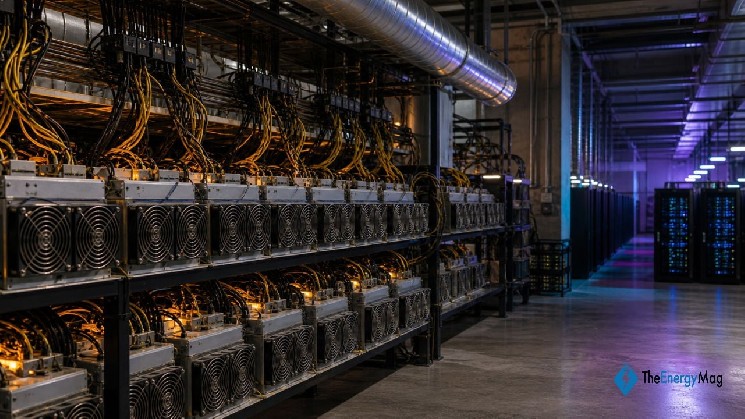
Despite hundreds of billions of dollars invested by major tech companies in chips, data centers, and power supply, AI computing power supply still struggles to keep pace with demand growth.
Google's Q1 cloud business revenue surpassed $20 billion for the first time, and its backlog of signed but undelivered cloud contracts nearly doubled sequentially, exceeding $460 billion. Pichai clearly stated that computing power constraints will persist in the near term.
Against this backdrop, the impact on Meta is particularly pronounced. Sources indicate that it is the high-intensity demand from major enterprise clients like Meta that directly pushed Google to accelerate its search for external computing power sources. As enterprises deploy chatbots, coding assistants, and AI agents on a large scale, inference workloads—the computing power consumed when models perform tasks in real-world applications after training—are becoming a core bottleneck for the industry.
Meta's Internal Projects Hindered, Accelerates Shift to In-House Models
Meta uses Gemini extensively internally, covering platform security review (including identifying fraudulent content and removing harmful information), customer service and advertising-assisted chatbots, as well as some internal workflows and code development, while also using other models like Anthropic's Claude.
According to sources, Meta initially chose Gemini because its performance surpassed that of the company's own open-source Llama model. However, as computing power restrictions tightened, Meta is accelerating its migration to in-house models. Multiple sources stated that Meta has recently begun prioritizing the promotion of its newly launched Muse Spark model, which is believed to be competitive with Gemini in performance, helping to reduce reliance on external models.
Meta CEO Mark Zuckerberg has previously continued to increase investment in AI talent and infrastructure, aiming to build what he calls "personal super intelligence." Unlike Google, Meta does not have a cloud business and is accelerating the construction of its own data center system, pledging a cumulative investment of $600 billion in the United States by 2028.
Google Expands Capacity via SpaceX, Industry Seeks Solutions
Faced with computing power pressure, Google signed a $920 million per month computing power leasing agreement with SpaceX this month to bridge the infrastructure gap. AI lab Anthropic also reached a similar agreement with SpaceX last month.
Google's move to impose restrictions on Meta provides a rare window for the outside world to glimpse the real pressure faced by the world's top AI service providers in allocating computing power. Currently, the infrastructure bottleneck across the entire AI industry is spreading from the training side to the inference side. Resolving the supply-demand contradiction still depends on the realization of a new round of large-scale capital investment.