Compound (COMP) – Is a major pullback next despite price gains of 23%?

ambcrypto2026-02-14 tarihinde yayınlandı2026-02-14 tarihinde güncellendi

Özet

Compound (COMP) recently surged by 23%, reaching an intraday high of $22.84 before correcting to $20.51. Trading volume spiked 502% to $307.95 million, indicating strong market interest. However, technical analysis suggests a potential reversal, as COMP has been trading within a descending channel since August 2025. Historically, touching the upper boundary of this pattern has led to significant pullbacks. A failure to break above the $24.85 resistance could result in a 30% decline, possibly pushing prices below $15. The ADX reading of 48.83 signals a strong trend, while the MFI at 72.27 indicates overbought conditions, hinting at a short-term pullback. On-chain data shows mixed signals: $144.88k flowed out of exchanges, and reserves declined 4.12%, suggesting accumulation. Yet, traders have built substantial short positions around $22.1, reflecting skepticism about further upside. In summary, despite recent gains and accumulation by long-term holders, technical indicators and derivatives activity point to a potential corrective phase.

Compound (COMP) recorded gains of 23% on the charts recently. However, the altcoin has since flashed a bearish sign, with the same hinting at a potential price reversal. This conributed to its subsequent correction, with COMP trading at $20.51 at press time after hitting an intraday high of $22.84.

Market participants have been actively interested in the altcoin though as its trading volume surged by 502% to $307.95 million. Such a massive increase in volume alongside the price rally is a sign that traders and investors are actively engaging with COMP’s market trend.

Besides today’s upside move and the massive uptick in trading volume, one question every crypto enthusiast is asking is what’s next for the asset. Will COMP extend its rally, or is a corrective phase next?

Compound (COMP) price action and key levels

AMBCrypto’s technical analysis of the daily chart revealed that COMP has been on a strong downtrend. Especially since it has been moving within a textbook-style descending channel pattern since August 2025.

Additionally, the chart revealed that in the past, whenever COMP’s price hit the upper boundary of this channel, it consistently recorded a strong price reversal.

Based on past performances and its price action, if COMP fails to break above this prolonged descending trendline, history may repeat itself. In such a case, the price could see a downside move of over 30% – Potentially falling below the $15-level.

However, the bearish thesis for COMP would only be invalidated if the asset breaks out of this pattern and closes a daily candle above the $24.85-level.

Additionally, the Average Directional Index (ADX), an indicator that measures the strength of a trend, climbed to 48.83 – Well above the key threshold of 25. This hinted at a strong directional move across the market.

Meanwhile, the Money Flow Index (MFI) hit 72.27, indicating strong buying pressure and overbought conditions. Such a combination of conditions often alludes to a potential short-term price pullback or consolidation.

Are traders flashing mixed signals?

Despite COMP’s recent price gains, derivatives tool Coinglass and on-chain analytics provider Nansen shared mixed signals from traders and investors.

For example – Coinglass’s COMP Spot inflow/outflow data revealed that more than $144.88k worth of COMP flowed out of exchanges in 24 hours. This hinted at potential accumulation.

Meanwhile, Nansen highlighted a notable 4.12% decline in exchange reserves during the same period, further pointing towards accumulation behavior.

However, intraday traders appeared to be closely following the price action. According to the COMP exchange liquidation map, traders have been strongly positioning around $19.6 on the downside and $22.1 on the upside – Levels acting as key support and resistance.

Traders at these levels built $343.13k worth of long-leveraged positions and $2.06 million worth of short-leveraged positions. This implied that many traders strongly believe COMP is unlikely to break above the $22.1-level anytime soon.

Final Summary

  • COMP’s price hit the upper boundary of the descending channel pattern, with the price action hinting at a potential reversal.
  • While intraday traders have been placing short positions, investors and long-term holders are continuing to accumulate.


İlgili Sorular

QWhat recent price gain did Compound (COMP) record, and what was its price at press time?

ACompound (COMP) recorded a recent gain of 23% on the charts. At press time, it was trading at $20.51 after hitting an intraday high of $22.84.

QAccording to the technical analysis, what pattern has COMP's price been moving in since August 2025, and what is the potential downside target if it fails to break out?

ACOMP's price has been moving within a descending channel pattern since August 2025. If it fails to break above the upper boundary of this channel, the price could see a downside move of over 30%, potentially falling below the $15 level.

QWhat two key indicator readings (ADX and MFI) were mentioned, and what do they suggest about the market?

AThe Average Directional Index (ADX) climbed to 48.83, indicating a strong directional move. The Money Flow Index (MFI) hit 72.27, indicating strong buying pressure and overbought conditions, which often alludes to a potential short-term price pullback or consolidation.

QWhat on-chain data from Coinglass and Nansen hinted at potential accumulation behavior?

ACoinglass's data showed that over $144.88k worth of COMP flowed out of exchanges in 24 hours. Nansen highlighted a 4.12% decline in exchange reserves during the same period, both pointing towards accumulation behavior.

QWhat are the key support and resistance levels according to the COMP exchange liquidation map, and what do the leveraged positions at these levels imply?

AThe key support and resistance levels are $19.6 on the downside and $22.1 on the upside. Traders built $343.13k in long-leveraged positions and $2.06 million in short-leveraged positions at these levels, implying that many believe COMP is unlikely to break above $22.1 soon.

İlgili Okumalar

Jensen Huang 'Saves' South Korean Stock Market: Locks In SK Hynix Memory, Chip Shortage to Continue

On June 5th, South Korea's stock market experienced a sharp decline, with major chipmakers like Samsung and SK Hynix dropping nearly 10%. Amidst the turmoil, NVIDIA CEO Jensen Huang's visit to Seoul played a dramatic role in boosting market sentiment. Following a dinner meeting with SK Group Chairman Chey Tae-won and SK Hynix CEO Kwak Noh-Jung, Huang confirmed that NVIDIA's new Vera CPU will utilize SK Hynix DRAM. The companies announced a multi-year technical partnership to co-develop next-generation memory for NVIDIA's AI infrastructure, covering products from data centers to personal AI and robotics. This collaboration extends beyond memory supply. SK Hynix is integrating NVIDIA's AI and Omniverse platform into its own semiconductor design and manufacturing processes, including computational lithography and creating digital twins of its fabrication plants for autonomous operation. While strengthening ties with SK Hynix, NVIDIA is diversifying its supply chain for the upcoming HBM4 memory, with Samsung, SK Hynix, and Micron all certified as suppliers for its Vera Rubin platform. Despite this, Huang warned that the global chip shortage, driven by relentless demand from AI factory construction, is expected to persist for several years across the entire supply chain. His visit underscores NVIDIA's systematic effort to deepen integration with South Korea's broader tech industry.

marsbit42 dk önce

Jensen Huang 'Saves' South Korean Stock Market: Locks In SK Hynix Memory, Chip Shortage to Continue

marsbit42 dk önce

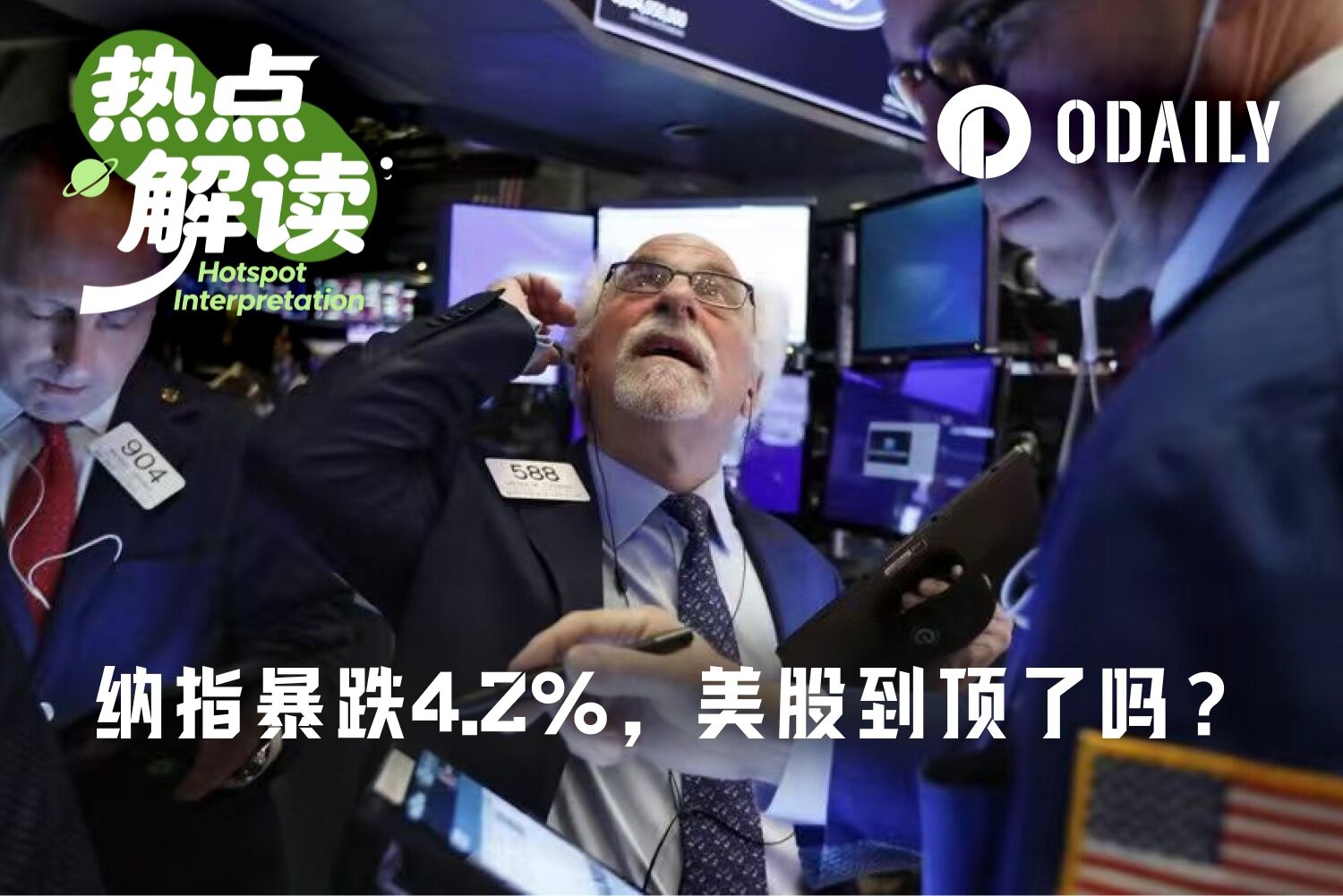
Nasdaq Plunges 4.2% in a Single Day: Does "Black Friday" Burst the U.S. Stock Market Bubble?

The Nasdaq plunged 4.18% on June 5, 2026, its worst single-day drop in over a year, as a much stronger-than-expected US jobs report triggered fears of economic overheating and delayed Federal Reserve interest rate cuts. The selloff, centered on high-valuation tech and AI stocks like Nvidia and Broadcom, spread across major indices. The article examines whether this signals a market top. The strong May non-farm payrolls data, nearly double expectations, pushed bond yields higher, directly hurting rate-sensitive tech stocks. This exposed vulnerabilities in the crowded AI trade, where valuations had soared on narratives of infinite growth, despite emerging signs of slowing order momentum and corporate AI monetization challenges. Prior to the drop, market indicators flashed warning signs: historically high valuations (e.g., Shiller CAPE ratio near 39.5), extreme bullish sentiment, and high levels of leverage. Technical charts showed key support levels being breached. Wall Street is divided on the outlook. Bears, citing risks of "stagflation" and AI bubble comparisons to the dot-com era, warn of a potential significant correction. Bulls view the drop as a healthy correction within a bull market, underpinned by a strong economy and expected corporate earnings growth of around 7% in 2026. The immediate future hinges on upcoming key events: the May CPI inflation data and the mid-June FOMC meeting. Their outcomes will critically shape market expectations for the Fed's rate path. The article concludes that conditions for a major market top are aligning, marking a fragile transition from narrative-driven gains to a phase demanding validation from macroeconomic data and corporate fundamentals. Caution is advised.

marsbit47 dk önce

Nasdaq Plunges 4.2% in a Single Day: Does "Black Friday" Burst the U.S. Stock Market Bubble?

marsbit47 dk önce

Nasdaq Plunges 4.2% in a Single Day, Did 'Black Friday' Pop the U.S. Stock Bubble?

The Nasdaq Composite plummeted 4.18% on June 5, its biggest single-day drop since April 2025, triggering widespread debate over whether the U.S. stock market has peaked. The sell-off was sparked by a stronger-than-expected U.S. non-farm payrolls report, which fueled fears of economic overheating and pushed back market expectations for Federal Reserve rate cuts, leading to a sharp rise in Treasury yields. The AI sector, the primary driver of the recent bull market, suffered severe losses, with the Philadelphia Semiconductor Index crashing over 10%. Stocks like Nvidia, Broadcom, and Micron led the decline. Concerns are mounting about the sustainability of AI capital expenditures and high valuations, with signs of order cuts for next-generation chips emerging. Analyses point to several warning signs: historically high market valuations (e.g., elevated Shiller CAPE ratio, Buffett Indicator), extreme bullish sentiment indicators, and significant insider selling. The sell-off also caused a key technical breakdown, with the S&P 500 breaking below its short-term moving average and testing its 200-day moving average. Wall Street is divided on the outlook. Bears warn this could be the start of a bubble deflation or a "stagflation" scenario, while bulls view it as a healthy, overdue correction within a bull market driven by solid corporate earnings growth. A more moderate view suggests the easy liquidity-driven rally is over, and markets are entering a phase of fundamental stock-picking with potential for consolidation. The immediate future hinges on key upcoming events: the May CPI report and the mid-June FOMC meeting. Their outcomes will be critical in determining whether this is a temporary pullback or the beginning of a more significant trend reversal. The consensus is that the era of one-directional market gains may be ending, requiring increased investor caution.

Odaily星球日报52 dk önce

Nasdaq Plunges 4.2% in a Single Day, Did 'Black Friday' Pop the U.S. Stock Bubble?

Odaily星球日报52 dk önce

The First Case on AI Agents: What Was Adjudicated?

"The First 'Agent' Ruling: What Was Decided?" On April 30, the Guangzhou Internet Court issued a ruling—China's first behavior preservation order in the intelligent agent (AI agent) field. The defendant, an open-source AI agent software, was ordered to stop downloads, cease actions that bypassed a platform's technical protection measures, and delete related tutorials and data. The core issue: the software used the operating system's "accessibility service" permissions to automate user interactions within other apps without those platforms' authorization. This mirrors a recent US case where Amazon sued Perplexity for similar reasons—bypassing Amazon's API to directly scrape and interact with its pages—and won a preliminary injunction. Both rulings establish a crucial legal boundary for the AI agent era: agents cannot operate unchecked. The article argues the fundamental legal principle emerging is one of **dual authorization**. An AI agent requires both **user consent** AND **platform consent** to operate legitimately within that platform's ecosystem. Bypassing platform rules through system-level permissions, even with user permission, undermines platform responsibilities for content moderation, data security, and user privacy, creating liability issues. The piece uses the evolution of "Doubao Phone" (an AI-integrated smartphone) as a case study. Its initial, aggressive version that bypassed platform controls faced roadblocks. Its upcoming 2.0 version is reportedly pivoting to negotiate API access and authorization deals with major platforms (like Alibaba's ecosystem), seen as a strategic adaptation to the new regulatory reality. A global trend is identified: the era of unregulated, "wild west" growth for AI agents is ending, replaced by a **compliance race**. This raises barriers to entry, as securing platform authorizations becomes a new cost. Open-source status is also not a legal shield if the code facilitates bypassing technical protections. In conclusion, these first rulings target not the largest, but the most **aggressive and representative** cases. By setting precedent with them, regulators are efficiently steering the entire industry towards a new, more regulated operating paradigm defined by dual authorization and platform cooperation.

marsbit57 dk önce

The First Case on AI Agents: What Was Adjudicated?

marsbit57 dk önce

Fired by Google Over a 14-Page Paper, Over 4,000 Rallied for Her. 6 Years Later: She Almost Predicted the Entire AI Era Back Then.

In late 2020, Google AI researcher Timnit Gebru was effectively dismissed following a conflict over a 14-page, unpublished research paper she co-authored titled "On the Dangers of Stochastic Parrots." The paper, which has since been cited over 14,000 times, raised critical early warnings about the risks of large language models (LLMs). It argued that these models, trained on vast, biased internet data, are essentially "stochastic parrots" that mimic language without true understanding, potentially amplifying societal biases, generating plausible but false information (later termed "AI hallucination"), consuming massive energy, and obscuring their training data contents. Gebru's stance led to a clash with Google management, who requested the paper's withdrawal. Her subsequent internal criticism of the company's diversity efforts and handling of the matter culminated in her termination, which sparked protests from over 4,000 Google employees and researchers. Six years later, the paper's predictions have proven remarkably prescient. Issues like AI hallucination, embedded bias (evident in resume screening and healthcare algorithms), soaring energy consumption from AI data centers, unvetted training data containing harmful content, and the risk of "model collapse" from AI-generated internet content have become central industry challenges. The incident also highlighted concerns about AI development being driven primarily by commercial competition within a handful of powerful tech companies, often at the expense of ethical considerations. After leaving Google, Gebru founded the Distributed AI Research Institute (DAIR) to explore these issues independently. The controversy underscores how her early, critical insights into the fundamental limitations and societal impacts of LLMs anticipated many of the most pressing dilemmas in today's AI era.

marsbit58 dk önce

Fired by Google Over a 14-Page Paper, Over 4,000 Rallied for Her. 6 Years Later: She Almost Predicted the Entire AI Era Back Then.

marsbit58 dk önce

İşlemler

Spot
Futures

Popüler Makaleler

COMP Nasıl Satın Alınır

HTX.com’a hoş geldiniz! Compound (COMP) satın alma işlemlerini basit ve kullanışlı bir hâle getirdik. Adım adım açıkladığımız rehberimizi takip ederek kripto yolculuğunuza başlayın. 1. Adım: HTX Hesabınızı OluşturunHTX'te ücretsiz bir hesap açmak için e-posta adresinizi veya telefon numaranızı kullanın. Sorunsuzca kaydolun ve tüm özelliklerin kilidini açın. Hesabımı Aç2. Adım: Kripto Satın Al Bölümüne Gidin ve Ödeme Yönteminizi SeçinKredi/Banka Kartı: Visa veya Mastercard'ınızı kullanarak anında Compound (COMP) satın alın.Bakiye: Sorunsuz bir şekilde işlem yapmak için HTX hesap bakiyenizdeki fonları kullanın.Üçüncü Taraflar: Kullanımı kolaylaştırmak için Google Pay ve Apple Pay gibi popüler ödeme yöntemlerini ekledik.P2P: HTX'teki diğer kullanıcılarla doğrudan işlem yapın.Borsa Dışı (OTC): Yatırımcılar için kişiye özel hizmetler ve rekabetçi döviz kurları sunuyoruz.3. Adım: Compound (COMP) Varlıklarınızı SaklayınCompound (COMP) satın aldıktan sonra HTX hesabınızda saklayın. Alternatif olarak, blok zinciri transferi yoluyla başka bir yere gönderebilir veya diğer kripto para birimlerini takas etmek için kullanabilirsiniz.4. Adım: Compound (COMP) Varlıklarınızla İşlem YapınHTX'in spot piyasasında Compound (COMP) ile kolayca işlemler yapın.Hesabınıza erişin, işlem çiftinizi seçin, işlemlerinizi gerçekleştirin ve gerçek zamanlı olarak izleyin. Hem yeni başlayanlar hem de deneyimli yatırımcılar için kullanıcı dostu bir deneyim sunuyoruz.

235 Toplam GörüntülenmeYayınlanma 2024.12.13Güncellenme 2026.06.02

COMP Nasıl Satın Alınır

Tartışmalar

HTX Topluluğuna hoş geldiniz. Burada, en son platform gelişmeleri hakkında bilgi sahibi olabilir ve profesyonel piyasa görüşlerine erişebilirsiniz. Kullanıcıların COMP (COMP) fiyatı hakkındaki görüşleri aşağıda sunulmaktadır.

活动图片