Community is Dead, Long Live Community

链捕手2026-05-15 tarihinde yayınlandı2026-05-15 tarihinde güncellendi

Özet

The author reflects on the transformative and often painful evolution of crypto communities. They nostalgically recall the early days of Web3, where genuine bonds formed around shared beliefs in projects like DeFi and NFTs, leading to deep friendships and passionate collaboration. However, the essay argues this authentic "community" is now largely dead. It has been corrupted by a culture of extraction, where most participants in modern Discord servers are motivated solely by financial gain—grinding for points, chasing airdrops, and immediately selling tokens. This dynamic creates a facade of engagement that vanishes after a token launch, often replaced by hostility. The author uses their project, Across Protocol, as a case study, announcing the shutdown of its Discord server because it no longer represents a true community but a toxic space dominated by mercenary actors. The piece concludes with a bittersweet farewell to the old era and a determined call to continue building with the few remaining genuine believers. The title's paradox, "Community is dead. Long live community," mourns the loss of the original ideal while expressing hope for its future revival.

Author: jamesrichardfry, Head of Marketing, Across Protocol

Compiled by: Jiahuan, ChainCatcher

I've been struggling with how to write this. Part of me wants to sugarcoat it. Dress it up in marketing speak. Frame it as something beautiful and move on.

But that wouldn't be entirely honest. If you know me, you know I wear my heart on my sleeve and I'm incapable of lying. So here it is, bluntly.

Community is dead. Of course, it wasn't always this way. That goes without saying, but I'm saying it out loud anyway.

I still miss the good old days on Clubhouse and Discord chatrooms. The times we spent hours "vibing" with people from across the internet about magic internet money, the latest NFT drop, the best staking opportunities, complaining about the money we lost, dreaming about the next great project, and actually *building*.
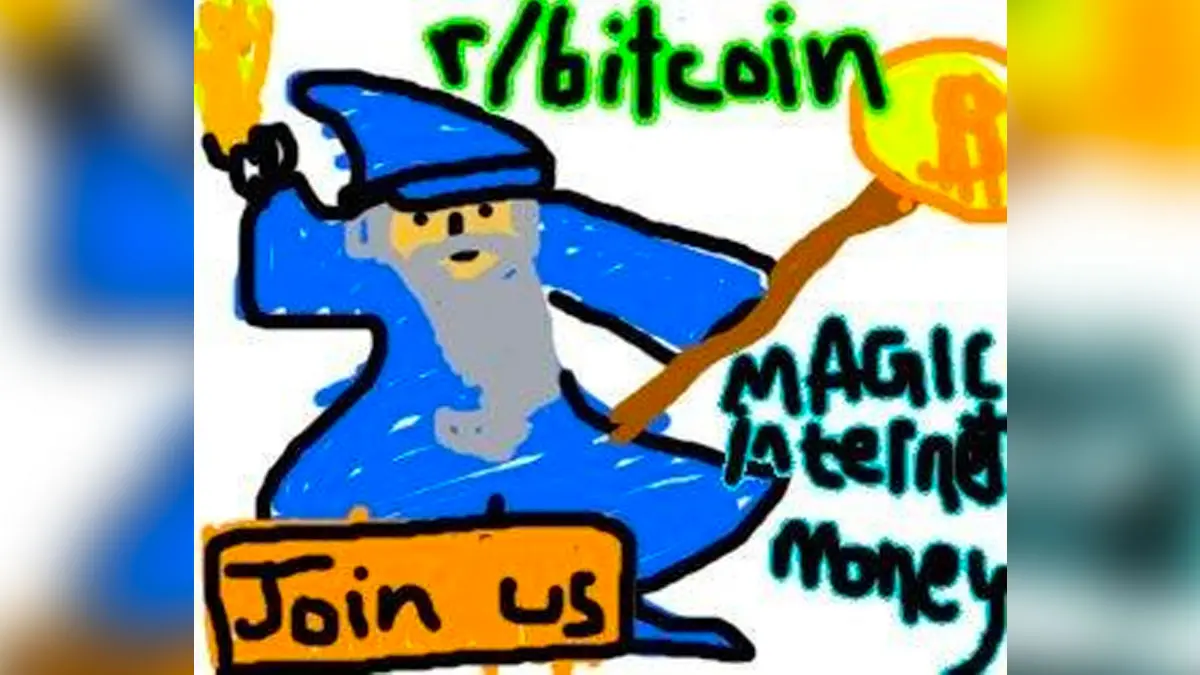
To this day, I'm still good friends with many of those people. Some have even become friends in real life. When community is good, it's good. I miss those days.

Zooming out a bit, what is community? I talked about this for way too long during a recent all-hands meeting, and I could almost hear the eyes rolling from my colleagues.

To share a bit of that epiphany with you, here's my take on community:

A community is a group of people gathered around a shared interest. In many aspects of our daily lives, we have community.

From the school you go to, the sport you play, the religion you practice, the gym you frequent, even the grocery store you shop at.

Some communities are shallow. The group of old men I see at the gym Monday through Friday is a community, but it's clearly very different from the friend circle community we intentionally spend time with.

Web3 or crypto community is no different.

We all gathered around our shared interests. DeFi summer. NFT mania. NFT winter. Cross-chain interoperability whatever. Zero-knowledge proofs whatever.

Whatever you're into, there's a group of people diving down the rabbit hole with you.

Some were there for the financial speculation. Others, from a deep belief and commitment to the early cypherpunk movement. Some crypto communities were surface-level or perfunctory.

Others were deeply profound. I mean, deeply, deeply profound. Like a religious congregation, fanatic following, belief-in-your-gut, put-your-money-where-your-mouth-is profound.

We wore the same "clothes" (PFP), spoke our own language (WAGMI), looked crazy to outsiders, and we didn't care one bit because we believed in what we were all gathering to pursue.

Early crypto community was inseparable from belief.

Not just belief, but a deep, gut-wrenching conviction that gave you the courage to get on stage and talk for hours in front of hundreds about why you believed in the founder, the project, the roadmap, and why you were the project's diamond-handed hodler.

Conviction. That's what drove the parabolic growth in the early days. Without community, crypto would be nothing.

Across, by the way, was no exception. The early days of the Across community were the golden days. The vibes were high. There was deep conviction (yes, I'm repeating that word). Excitement, energy, people genuinely caring about the project for the innovation, not for the token price.

We hired people from that community who are still with us today. And some of the early people who stuck around are still die-hard community members, riding the waves with us.

When community is good, it's good.

And then, everything changed.

Fast forward to today. I'm going to make some sweeping generalizations here. Please know that I'm not referring to "all" community members, "every" community group, and not painting with a broad brush. But if I continue to be blunt, I'm referring to most. Vast majority.

The word "community" has been bastardized by the crypto "extractors." In many ways, if you want to know why "the love of money is the root of all evil," look no further than the countless Discord "communities."

Thousands of unread messages a day. Impressive daily active users. Constant social support, until the Token Generation Event (TGE) hits. We all know the playbook.

The vibe before TGE mimics the early crypto community sentiment. Deep conviction. Gut-wrenching fire. Courage to get on stage. PFP and project tags in bios. Ride or die, diamond hands, bullish hodler.

Then, everyone changes.

You go to sleep one night, barely able to keep up with the Discord notifications.

You wake up the next morning, and it's a ghost town.

Or worse.

You find your loyal "community" coming at you with pitchforks and torches.

Over the airdrop.

You see, "community" is no longer community.

It's devolved into endless, AI-generated spam to farm points, for the hope of an airdrop, to immediately dump, then complain about the token price, and call the project a scam or rug (which, to be fair, is often true).

You know where I'm going with this long-winded rant, right?

"Community" is no longer community. You know it. You feel it. The timeline feels off. Discord servers feel off. Podcasts feel off. Twitter Spaces feel off.

Everything feels wrong, like "Con" will never be "Confucius." Everyone reading this today knows it deep down, even if you've never articulated it this clearly before.

Today's "community" is a cheap imitation of the early community that built crypto into what it is. The shared interest of these "community" members boils down to one thing. Extraction. Quick. Decisive. Extraction. It's the poison that kills what crypto could have been, and should have been.

Most of today's (again, not all) Discord "communities" consist of the dregs of the remnants.

Some are genuine loyalists and believers. (To those who have stuck with Across, we wouldn't be here without you. Thank you. You know where to find us, we'll always have a place for you.)

Some, often the majority, are there to extract from the project. I won't dwell on that here.

And finally, those who only appear to complain. Because in every bear market, these specific types of "community" members will kick you when you're down, as if the bear market hasn't affected every team member, and as if we caused the bear market to happen.

Unfortunately, the Across Discord has recently fallen into this "majority" category as well. Our "community" has become something else.

The people who recognize the incredible achievements we've made, the progress Across has pioneered for the entire industry, and who still support us, are tired of being part of this extractive "community" and have left the Discord.

The few who remain will happily move with us to Twitter and other channels. The rest are what I defined above as "community." Yes, I'm saying this with gut-wrenching fire and deep conviction.

Therefore, today, the Across Discord is moving to read-only mode.

This is the first step in our planned, full shutdown of the server.

To the community of believers still standing with us, let's keep building. We have a lot of work to do.

To Discord, thank you for hosting some of the good old days of crypto. I will cherish them forever.

Community is dead.

Long live community.

İlgili Sorular

QAccording to the author, what is the core difference between early crypto communities and today's so-called 'communities'?

AThe author argues that the core difference lies in the underlying motive. Early crypto communities were driven by a deep, shared belief and passion for the technology and vision. Today's 'communities' are primarily driven by extraction - the desire to farm points, earn airdrops, sell tokens immediately for profit, and then often turn hostile towards the project. They are characterized as cheap knock-offs of the genuine early communities.

QWhat specific action is the author announcing for the Across Protocol Discord server, and why?

AThe author announces that the Across Protocol Discord server will be set to read-only mode, which is the first step in a planned full shutdown. The reason is that their Discord has been overrun by the 'extractive' majority, driving away the genuine, loyal community members. The noise and negativity no longer serve the project's builders and true believers.

QHow does the author define a 'community' in the broader sense, beyond just web3?

AThe author defines a community as a group of people gathered around a shared interest. They provide examples from everyday life such as school, sports, religion, the gym, or even a local grocery store. The author notes that communities can be shallow (like nodding acquaintances at the gym) or deep and meaningful (like close friend groups).

QWhat positive aspects of the early 'golden era' of crypto communities does the author miss?

AThe author misses the authentic 'vibing' on platforms like Clubhouse and Discord, where people discussed crypto topics out of genuine interest, shared experiences, dreamed up new projects, and collaboratively 'built' things. These interactions were based on excitement, innovation, and a shared belief in the project's potential, not just token price. Many real friendships were formed during this time.

QWhat is the primary 'poison' that the author believes has killed the potential of what crypto communities could have been?

AThe author identifies 'extraction' as the primary poison. The current environment is dominated by individuals whose sole common interest is to quickly and decisively extract value from projects through activities like airdrop farming, followed by selling tokens and complaining. This self-serving behavior has corrupted the genuine communal spirit.

İlgili Okumalar

Navigating the World of Event Trading: Top 5 Prediction Markets for Every Type of User

The prediction market industry has grown significantly, with trading volumes exceeding $20 billion monthly by mid-2026, driven by sports, politics, and macroeconomics. Success now depends heavily on platform choice and execution logistics. This guide compares five leading networks: **Polymarket**: A high-volume, decentralized platform on Polygon, using USDC for international and crypto-native users. It offers diverse markets but lacks built-in risk tools. **Kalshi**: A CFTC-regulated U.S. exchange for institutional traders, using direct fiat. It leads in regulated volume, especially for major sports and economic events, but has limited contract listings. **Outpoll**: A CeDeFi platform for advanced traders, focusing on professional tools. It uniquely features built-in stop-loss/take-profit orders, 0.1% fees, and full API support, with settlement in USDC. **OG Predictive**: A CFTC-regulated, sports-focused platform from Crypto.com. It offers granular player props and a flat fee structure, appealing to long-term position traders. **Manifold Markets**: A play-money, no-KYC platform for casual users and developers. It allows user-generated markets on any topic with zero fees, serving as a sandbox for strategy testing. Key differentiators include regulatory models (regulated vs. decentralized), funding (fiat vs. crypto), order types, risk management features, API access, and mobile support. The conclusion emphasizes that in today's event trading, profitability hinges not just on accurate predictions but on optimizing execution through platform infrastructure, liquidity, fees, and risk tools.

TheNewsCrypto7 dk önce

Navigating the World of Event Trading: Top 5 Prediction Markets for Every Type of User

TheNewsCrypto7 dk önce

Why Are Large-Scale Crypto Conferences No Longer Glamorous?

Why Are Major Crypto Conferences Losing Their Allure? A growing sense of fatigue surrounds large in-person crypto conferences, with many founders and investors now avoiding events they would never have missed just two years ago. While complaints cite declining ROI and information quality, the root causes are more structural. Crypto, global from inception, once relied on these mega-conferences as neutral hubs for essential face-to-face connections. However, their core value has been fragmented. High-quality participants—developers, investors—have largely migrated to smaller, private side-events, leaving main stages for repetitive content already shared online. The main conference often just becomes the excuse for being in the same city, with attendees scrambling between exclusive dinners and micro-events. While these intimate gatherings offer signal-rich conversations, they lose the "serendipitous encounters" of large conferences and can create insular echo chambers, especially as talent concentrates in hubs like New York. Meanwhile, invite-only, high-caliber summits are rising, offering quality and scale but at the cost of accessibility and crypto's early egalitarian ethos. This shift isn't unique to crypto; AI events in San Francisco show a similar trend. The perception of higher-value interactions drives core groups towards smaller, private settings, potentially creating a vicious cycle that drains larger events of their vitality. Yet, a more optimistic view exists. The apparent decline of crypto-centric events may signal industry maturation. Leading projects are now focused outward—on stablecoins for traditional finance, consumer-facing digital banks, or real-world assets. Crypto topics are increasingly integrated into mainstream finance and tech conferences. Just as dedicated "internet conferences" faded, dedicated crypto summits may become redundant as the technology embeds into every sector. The future likely holds far fewer large, inward-looking crypto conferences. The industry has moved past needing frequent self-congratulatory gatherings. True growth lies in engaging with the broader economy. This evolution towards private networking and mainstream integration, for better or worse, is a mark of the industry coming of age.

marsbit19 dk önce

Why Are Large-Scale Crypto Conferences No Longer Glamorous?

marsbit19 dk önce

Coin & Stock Compass: Global Listed Companies Net Sold $85.45 Million in BTC Last Week, Strategy's Dollar Reserves Scale Up to $3 Billion (July 14)

Global Public Companies Net Sell $85.45 Million in BTC; Strategy's Dollar Reserves Hit $3 Billion (July 14) Last week saw a significant net sell-off of Bitcoin by global public companies, excluding miners, totaling $85.45 million—a 908.42% decrease from the prior week. Major buyers like Strategy (formerly MicroStrategy) and Japan's Metaplanet were notably absent from the market. However, two companies, Brazil's OrangeBTC and asset manager Strive, made purchases, adding 8 and 18 BTC, respectively. The aggregate BTC holdings of tracked public companies now stand at 1,139,635 BTC, valued at approximately $71.38 billion and representing 5.7% of Bitcoin's circulating market cap. In corporate updates, Strategy announced its dollar reserves have grown by $450 million to reach $3 billion, while its BTC holdings remain at 843,775 coins. Hyperscale Data increased its BTC reserves past 1,000 coins. Strategy will report its Q2 2026 financial results on July 30. Mining firm Cleanspark added 454 BTC, bringing its total to 13,924 BTC. Conversely, BitFuFu sold 184 BTC, Bitdeer maintained zero net BTC holdings after selling its weekly production, and Empery Digital sold 1,400 BTC to fund an AI data center project and repay debt. Overall, public companies purchased 110,000 BTC in Q2 2026, 1.8 times the volume of the previous two quarters combined. In other cryptocurrency-related corporate news, Ethereum treasury company Bitmine increased its ETH holdings by 27,801 coins, with total staked ETH exceeding 4.9 million. Solana-focused company DFDV transferred daily operations of its meme coin DONT to an independent team. BNB treasury company BNB Plus was delisted from Nasdaq for failing to meet the $1 minimum bid price and moved to trade on the OTCQB market under the symbol BNBX. The broader equity markets showed mixed signals. Bank of America warned that bullish investor positioning indicated a potential pullback risk for stocks. In contrast, Morgan Stanley predicted the ongoing earnings season could broaden market gains beyond tech giants. Specific regional highlights included continued foreign investor outflows from South Korean stocks, pressure on US equities, and the upcoming IPO of Chinese memory chip maker ChangXin Memory. Most crypto-linked stocks remained in a downtrend.

marsbit33 dk önce

Coin & Stock Compass: Global Listed Companies Net Sold $85.45 Million in BTC Last Week, Strategy's Dollar Reserves Scale Up to $3 Billion (July 14)

marsbit33 dk önce

Why Are Major Crypto Conferences Losing Their Luster?

Why Are Major Crypto Conferences Losing Their Appeal? A growing sense of fatigue surrounds large-scale offline crypto conferences. Participants complain of declining returns and less substantial information, but the root cause is deeper. Initially, these global summits were vital for a decentralized industry without a physical hub, enabling crucial face-to-face connections. However, the value of large main-stage events has been eroded. High-quality developers and investors have migrated to exclusive, invitation-only side events and private dinners. While these offer focused networking, they lose the "serendipitous encounters" of larger gatherings and can create elitist barriers, contradicting crypto's open ethos. This fragmentation triggers a vicious cycle: as key people leave main events, their value diminishes further. Simultaneously, the industry's focus is shifting outward. Leading crypto firms are now engaging with traditional finance and real-world applications like stablecoins, digital banking, and prediction markets. Consequently, crypto-specific topics are increasingly integrated into mainstream financial conferences, making dedicated crypto summits potentially redundant. Looking ahead, the frequency of top-tier crypto conferences will likely decrease significantly. The industry has moved past its inward-looking phase. The migration of quality discourse to private settings and the push for mainstream adoption, while diluting the large conference model, are ultimately signs of the sector's maturation.

Foresight News45 dk önce

Why Are Major Crypto Conferences Losing Their Luster?

Foresight News45 dk önce

İşlemler

Spot
活动图片