The world's largest cryptocurrency traded in a range of approximately $62,300 to $63,100 during early Saturday trading sessions after briefly rising above the $65,000 mark the previous day. Although Bitcoin ultimately gained about 7.36% in July, the transition into August quickly erased much of that momentum as sellers regained control of the situation.
Coldcard Incident Shifts the Course of Discussion
Security news rarely stays on the sidelines of price dynamics, especially when it comes to self-custody. The Coldcard incident is a prime example. Malicious actors exploited a long-standing firmware vulnerability to steal 1,128.6633 BTC from over 1,100 wallets in a meticulously coordinated operation, reminding the market that even reliable hardware can become a source of risk if a vulnerability remains undetected for years.
The response to the incident followed a familiar pattern characteristic of major security incidents. Coinkite released a patched firmware and recommended that affected users generate entirely new wallet seeds rather than simply updating their devices. This is an important distinction because with a compromised seed, installing new software does not restore its security. Moving funds becomes the only practical solution.
ETF Outflows Continue to Exert Pressure
Institutional investment flows did not provide significant relief. On July 31st, US spot Bitcoin ETFs recorded a net outflow of approximately $265 million, with BlackRock's IBIT leading the decline, while Fidelity's FBTC and Grayscale's GBTC also ended the day in negative territory.
ETF fund flows often have a greater impact on short-term market psychology than long-term fundamental factors. Several consecutive days of redemptions tend to heighten caution, especially when the price is already trending lower. Instead of acting as buyers, institutional investors largely stayed on the sidelines, depriving Bitcoin of one of the strongest sources of demand seen earlier this year.
August Brings Two Distinct Bitcoin-Related Events
Beyond price, traders are watching two unrelated events that could dominate Bitcoin discussions throughout August.
The first is BIP-110, a proposed temporary soft fork that would limit certain forms of non-financial data embedded in Bitcoin transactions. Miners are expected to begin signaling around August 7th, but support remains minimal, making the proposal's path to activation uncertain. Some believe this fork could lead to a blockchain split.
The second is the Paul Sztorc-planned hard fork of eCash, scheduled for around August 21st. Unlike BIP-110, this fork does not alter Bitcoin itself. Instead, it creates a separate blockchain that duplicates the Bitcoin ledger, allowing eligible Bitcoin holders to claim an equivalent share of the new asset. The remaining uncertainty concerns which exchanges and custodians will decide to support the distribution.
Given that market sentiment is already low, it remains unclear how these events will affect confidence in the coming days.
Seasonal Trends Offer Little Help
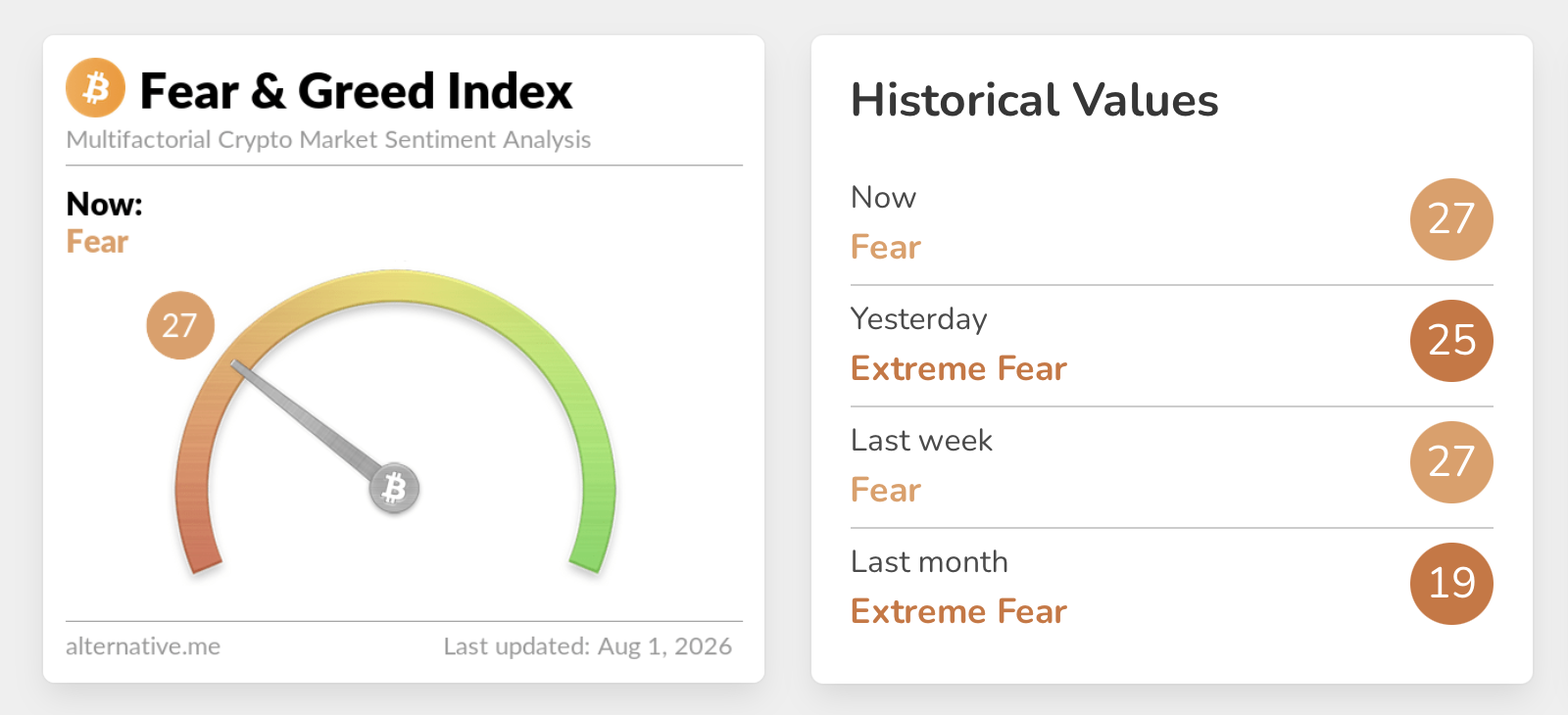
August has often been a challenging month for Bitcoin, and this year's overall market situation does little to improve the outlook. The Crypto Fear & Greed Index remains in the "Fear" zone, while rising bond yields and a decline in AI-related stocks have generally reduced investor appetite for risk assets.
One notable difference from previous selling waves is what hasn't happened. The Bitcoin derivatives market has remained relatively stable, with open interest holding around $48 billion rather than skyrocketing. This typically indicates that the decline is driven more by the unwinding of existing positions than by aggressive new leveraged trades—a dynamic considered healthier than the liquidations that often accompany sharper corrections.
What Traders Are Watching
The next key technical hurdle remains the $64,000 to $65,000 range and above. Reclaiming this area would signal that buyers are beginning to digest the recent wave of negative news. However, losing the $62,000 level would likely shift focus to the $58,000 to $60,000 zone—an area that previously attracted significant demand earlier this summer.
Over the next few weeks, attention will focus on the start of BIP-110 miner signaling around August 7th, exchange announcements ahead of the planned eCash fork on August 21st, and whether daily ETF flow reports show a return of institutional buyers after an extended period of outflows.
end-content