Editor's Note: When the crypto industry truly touches the core areas of finance—bank deposits and payments—the conflict is no longer a battle of ideas but a battle of interests. This article uses Brian Armstrong's direct confrontation with Wall Street as a clue to reveal the essence of the game between banks and crypto platforms behind the "CLARITY Act." This is not only about whether stablecoin yields are legal but also about who will dominate the rule-making power for the next generation of the financial system.
Below is the original text:
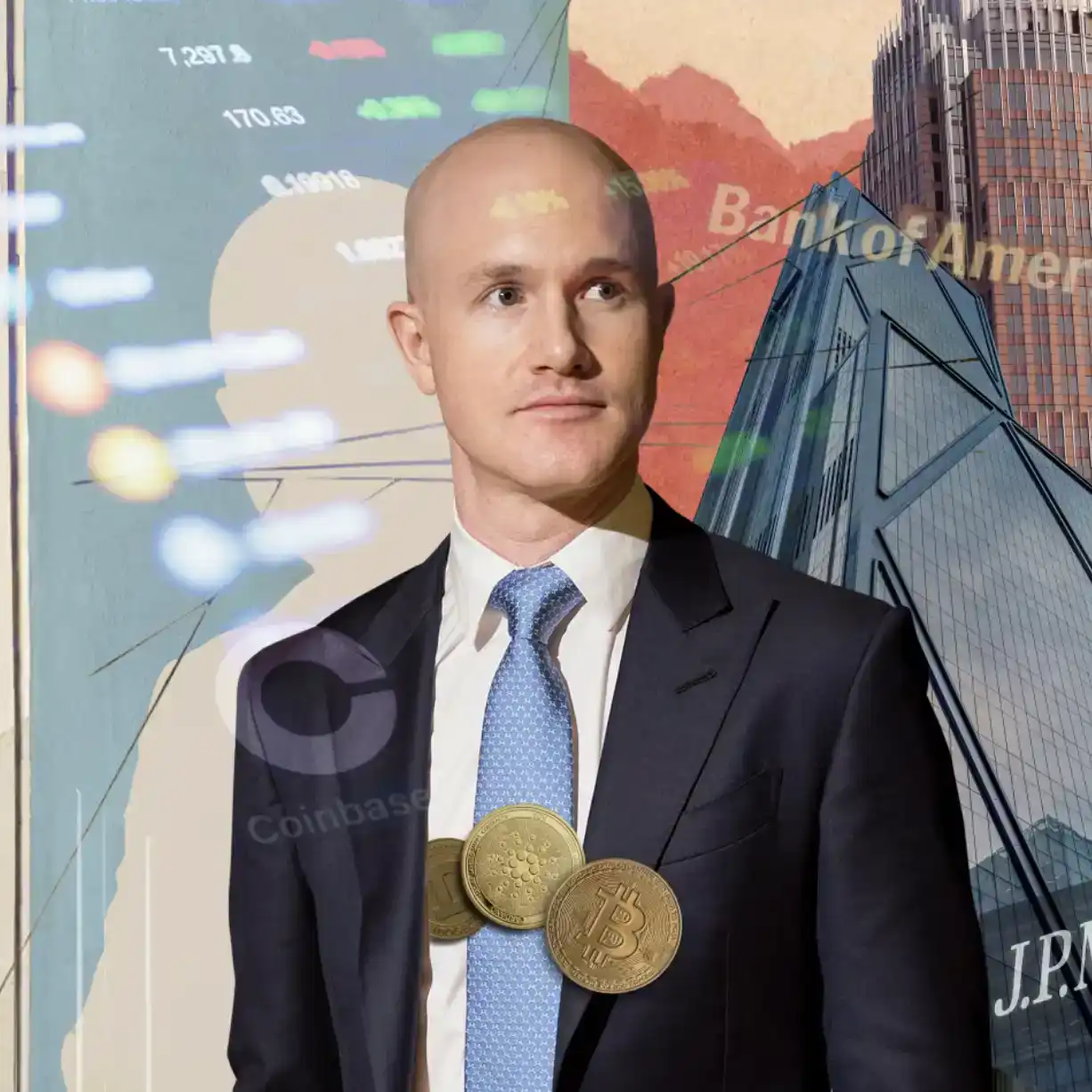
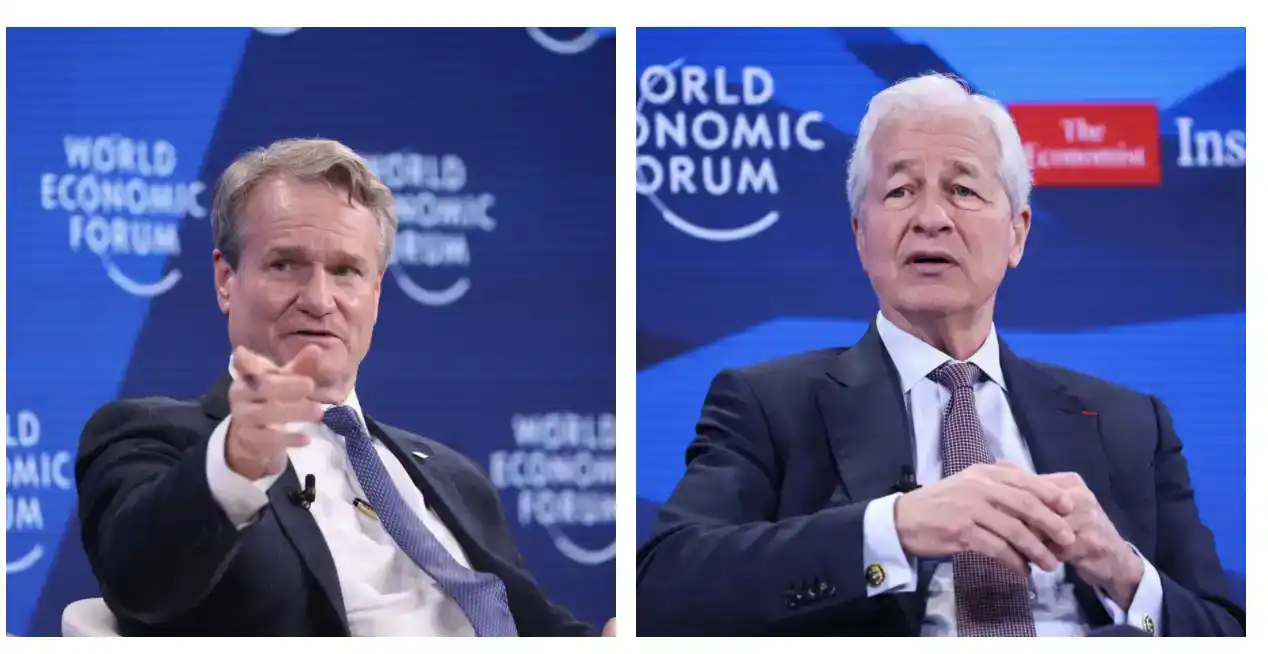
Last week, during the World Economic Forum in Davos, Switzerland, Brian Armstrong, the CEO of the largest cryptocurrency company in the U.S., was having coffee with former British Prime Minister Tony Blair when Jamie Dimon suddenly interrupted.
"You're talking nonsense," said Jamie Dimon, a long-time crypto skeptic who has called Bitcoin a "fraud," while pointing his index finger directly at Armstrong's face.
According to people familiar with the matter, Dimon's core message was simple: he wanted Armstrong to stop lying on television. Just the week before, Armstrong had accused banks of trying to undermine a piece of legislation aimed at establishing a new regulatory framework for digital assets in multiple business TV programs.
This direct confrontation was clearly inconsistent with the Davos annual meeting's purpose of "promoting cooperation among global leaders."
As the crypto industry rapidly enters the mainstream U.S. financial system, some heavyweight figures on Wall Street are beginning to realize that a threat is approaching. Although banks have accepted crypto assets to some extent—for example, by assisting clients in investing in Bitcoin or using digital assets to improve the efficiency of cross-border transfers—they have chosen to draw a line when crypto business touches their core territory: retail deposits.
Banks and Coinbase are in direct conflict over a key issue: whether crypto trading platforms should be allowed to offer "yield" to users. This so-called "reward" typically refers to regular payments of a certain percentage of return to stablecoin holders, such as an annualized 3.5%. Stablecoins are a type of digital asset pegged to real-world currencies like the U.S. dollar.
Banks argue that such returns paid to users are essentially no different from bank account interest. Since banks offer much lower yields—savings account rates are often below 0.1%—they worry that the result will be a massive transfer of funds into crypto assets. This outflow, banks say, will weaken the viability of community banks and affect lending to businesses.
Brian Armstrong and other crypto industry figures, however, believe that the free market should be allowed to work: banks can either compete with stablecoins by raising deposit rates or simply enter the stablecoin business themselves.
This legislation, called the "Clarity Act," could reshape the future of everyday financial services, including bank deposits and electronic payments.
According to people familiar with the matter, in the latest effort to seek compromise, the White House plans to convene a meeting on Monday with banking and crypto industry groups. David Sacks, the Trump administration's head of AI and crypto affairs, is expected to attend. Kara Calvert, head of U.S. policy at Coinbase, is also among the invitees.
The 43-year-old Armstrong co-founded Coinbase in 2012 and has played a significant role in pushing the crypto industry to gain legitimacy and mainstream acceptance. As the head of a company with a market capitalization of about $55 billion, Armstrong wields considerable influence in industry debates, especially in the game unfolding in Washington.
Just one day before a Senate committee was set to vote on a version of the bill—a version that could effectively prohibit companies like Coinbase from offering yields to customers, potentially costing billions of dollars—Armstrong posted on platform X: "We would rather have no bill than a bad bill."
Hours later, the vote was suddenly postponed, surprising the financial world.
Ron Hammond, head of policy and advocacy at digital asset trading firm Wintermute, said: "Now it's more like Coinbase vs. the banks, rather than the crypto industry vs. the banks."
Armstrong's counterattack did not stop with the X post on January 14. He later reiterated his views on television programs, telling Bloomberg in an interview that bank lobbyists "are trying to kill competitors" and accusing banks of "essentially lending out their customers' deposits without their permission."
According to people familiar with the matter, these remarks directly led to a series of uncomfortable direct confrontations with several bank CEOs in Davos.
"If you want to be a bank, then just go be a bank," Brian Moynihan said last week during a 30-minute meeting with Armstrong in the main venue at Davos. The meeting was superficially friendly but somewhat stiff.
Citigroup CEO Jane Fraser gave Armstrong less than a minute. (Coinbase is a client of both Citi and JPMorgan and has business partnerships with multiple banks.)
And that "one minute" was even more than the time given by Wells Fargo CEO Charlie Scharf. When Armstrong approached him, Scharf bluntly said the two had "nothing to talk about." This scene unfolded with Dimon, Scharf's former boss, not far away.
"Bank Alternative"
Armstrong attended Rice University in Houston, studying economics and computer science, and was an early adopter of digital currency and blockchain ideas. He read the Bitcoin whitepaper published in 2008 by the pseudonymous Satoshi Nakamoto; in 2011, while working at Airbnb, he was deeply troubled by difficulties in remitting money to South America.
These experiences paved the way for the birth of Coinbase. The company initially tried to solve a core problem plaguing crypto investors: the lack of a safe place to store digital assets. Later, when some users wanted not just to "custody" Bitcoin but to trade it, Coinbase顺势 developed into an exchange.
Coinbase quickly grew from a small apartment in San Francisco (the company's first office). By 2017, when the other co-founder left, Armstrong had become the undisputed leader of the company.
Former colleagues previously told The Wall Street Journal that Armstrong is introverted, sometimes struggles to communicate with employees, and is not very good at criticizing subordinates face-to-face. Some former employees felt his demeanor was reminiscent of the冷静、克制 "Vulcan" from Star Trek.
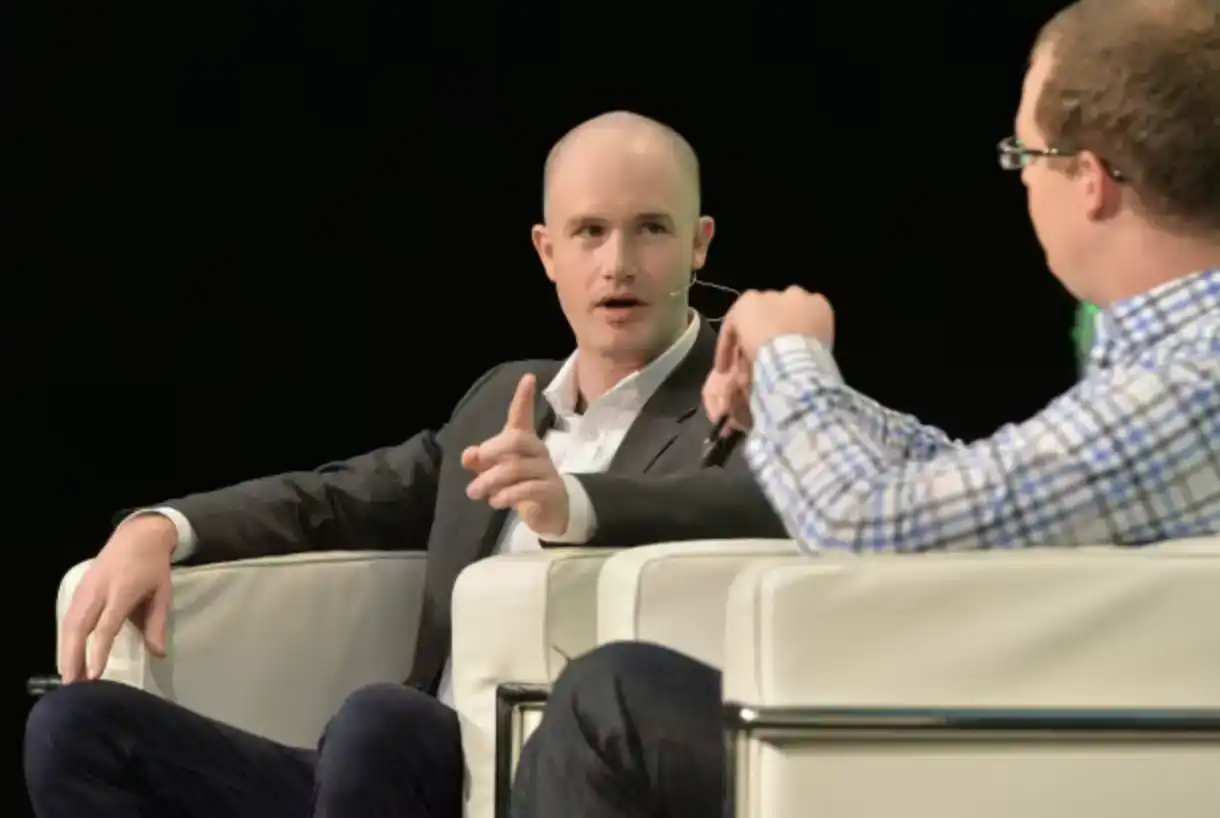
However, Armstrong has never been shy about his ambitions for Coinbase. He positioned Coinbase as the American company that would bring cryptocurrency into the mainstream. Today, Coinbase's business covers everything from electronic payments and stock trading to commodities and prediction markets.
"Fundamentally, we want to be an alternative to banks," he said last year on Fox Business. "We want to build a super app that provides all kinds of financial services."
As the business expanded, Armstrong invested tens of millions of dollars to build the largest lobbying machine in the industry. After surviving multiple booms and busts in the crypto market, Coinbase went public in April 2021, with its market capitalization once reaching a high of $100 billion, and Armstrong's personal stake briefly rising to about $13 billion.
After weathering the industry collapse in 2022 and regulatory crackdowns during the Biden administration in 2023, Armstrong began to fight back strongly and gradually found his voice. The founder who once preferred to wear headphones, write code in the office, and was somewhat reluctant to speak publicly has now become the most active spokesperson for the crypto industry in Washington—and the attitude of American politicians towards cryptocurrency is undergoing a dramatic shift.
Coinbase, through a network of super PACs, invested about $75 million in the 2024 election cycle, aiming to counter skeptical candidates and build grassroots organizations to gain public support for crypto-related bills. The super PAC group said on Wednesday that it now has funds totaling $193 million.
Trump's victory in 2024 opened a policy window that Armstrong has been chasing for a decade. He praised Trump for ushering in "the dawn of a new era for crypto" and attended a "Crypto Ball" with a performance by Snoop Dogg around Trump's inauguration. Nowadays, the executive takes off his signature T-shirt and black jacket at least every two months, puts on a suit, and visits politicians on Capitol Hill.
"In all things crypto-related in the U.S., Coinbase is at the forefront," said Anthony Scaramucci, founder of SkyBridge Capital and a long-time crypto investor.
Last summer, Trump signed the "Genius Act" into law, clearing the way for several companies to issue stablecoins. This law spurred rapid growth in stablecoin activity. The act prohibits issuers from paying interest directly to users but does not cover trading platforms or third parties like Coinbase. This "omission" is seen by banking groups as a regulatory loophole and is the trigger for the current conflict surrounding the "Clarity Act."
The Long Road to Legislation
The House passed its version of the "Clarity Act" last year, but advancement in the Senate is widely considered more difficult, partly due to serious disagreements over which rules crypto companies should follow. The Senate Agriculture Committee, responsible for overseeing条款 related to the Commodity Futures Trading Commission, advanced its own version on Thursday. Lawmakers will eventually need to pass a version through a full Senate vote and reconcile it with the House version.
According to people familiar with the matter, Brian Moynihan's core point to Armstrong was: if crypto companies like Coinbase want to offer deposit-like services, then, in the view of many banks, they should accept the same regulatory burden as banks. Regulatory agencies including the Federal Reserve and the Office of the Comptroller of the Currency review banks' risk profiles, regularly inspect their operations, and set strict capital requirements for loans and investments.
"The controversy surrounding the 'reward mechanism' is actually an exception in our overall partnership with banks," said Coinbase Chief Policy Officer Faryar Shirzad. "We maintain close cooperation with banks and have announced multiple partnerships."
Coinbase has a lucrative partnership with stablecoin issuer Circle, which allows it to earn a considerable revenue share from the mainstream stablecoin USDC. Through this unique arrangement, Coinbase is able to offer a 3.5% yield to some USDC holders, which is uncommon in the industry. The company says such incentives help attract users and provide consumers with more choices in an environment where savings account interest rates are extremely low.
"There's no reason to prohibit paying interest to consumers," Armstrong said in an interview with The Wall Street Journal last year.
As the "Clarity Act" moved toward a congressional vote, banks began intense lobbying behind the scenes. According to a government estimate cited by banks, about $6.6 trillion in deposits could be "siphoned off" from the traditional financial system if related restrictions were lifted. This lobbying quickly had an effect: a series of条款 and potential amendments were added to the nearly 300-page draft bill, which Armstrong viewed as tantamount to a defeat for the crypto industry. He immediately withdrew his support, and Senate Banking Committee Chairman Tim Scott (R-S.C.) canceled the scheduled vote hours later.
According to people familiar with the matter, Armstrong has an idea for breaking the deadlock. He told Brian Moynihan that a new category of stablecoin issuers could be established: those that meet stricter regulatory standards would be allowed to pay yields to users. This way, banks could theoretically enter the competition under the same regulatory framework as Coinbase.
Other proposals advocate generally prohibiting yield payments but保留 a small number of exceptional use cases for institutions like Coinbase.
Whatever the final solution, legislation advancement will almost certainly require Armstrong's endorsement.
"The current situation is that everyone believes whether this legislation passes ultimately depends on whether Coinbase gives the nod," said Hilary Allen, a professor at American University's law school, an expert in securities law, and also a crypto skeptic. "This is a truly shocking reality."


















