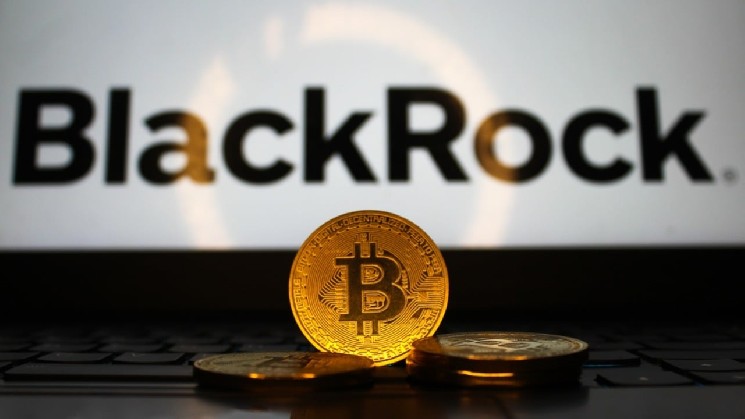
Coinbase Partners with Fannie Mae to Make Crypto Assets a Real 'Down Payment' for Home Purchases

marsbit2026-03-27 tarihinde yayınlandı2026-03-27 tarihinde güncellendi

Özet

Coinbase has partnered with Better Home & Finance to launch a bitcoin-backed mortgage program supported by Fannie Mae, integrating digital assets into the traditional housing finance system. The product allows eligible borrowers to use Bitcoin or USDC as collateral for down payments without selling their holdings, avoiding potential capital gains taxes while maintaining market exposure. The mortgage is structured as a compliant loan product with standards aligned to traditional Fannie Mae-backed loans. Better originates and services the loans, while Coinbase provides custody and infrastructure support for the crypto assets. The initiative aims to address the barrier of upfront down payment funds, particularly for the 41% of U.S. households that lack sufficient liquid assets despite holding other forms of wealth. Unlike traditional crypto-backed loans, this product minimizes volatility risk for borrowers—no margin calls or additional collateral are required due to price fluctuations. Collateral is only at risk if the borrower is at least 60 days delinquent on mortgage payments. Interest rates are expected to be 0.5 to 1.5 percentage points higher than standard 30-year mortgages. The product reflects shifting wealth patterns, especially among younger Americans—45% of young investors hold crypto, compared to 18% of older adults. It also introduces features like yield generation on USDC holdings to offset mortgage costs. Future plans may include expanding eligible collateral ...

Original Author: Micah Zimmerman

Original Compilation: AididiaoJP, Foresight News

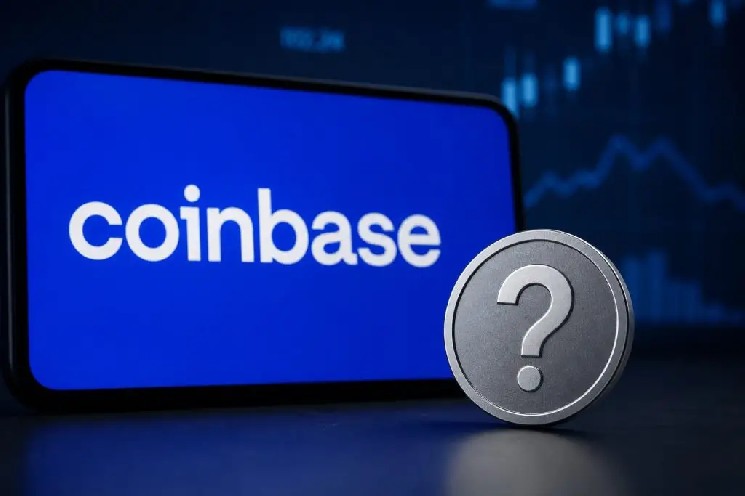
Coinbase is collaborating with Better Home & Finance to launch a Bitcoin-backed mortgage supported by Fannie Mae.

This partnership marks the gradual integration of digital assets into the traditional housing finance system. Coinbase and Better Home & Finance have jointly introduced a crypto mortgage backed by Fannie Mae, opening new pathways for the application of digital assets in the housing finance sector.

This innovative product allows eligible borrowers to use Bitcoin or USDC as collateral for down payments without selling their digital assets. This approach avoids potential capital gains taxes while enabling borrowers to maintain market exposure to their assets.

The mortgage is designed as a compliant loan product, with standards and protective mechanisms consistent with traditional Fannie Mae-backed loans. Better handles loan origination and servicing, while Coinbase provides custody and related infrastructure support for the mortgaged Bitcoin and other crypto assets.

This product aims to address a long-standing obstacle in the housing market: the upfront funds required for down payments.

According to Better's data, approximately 41% of American families are unable to purchase a home due to insufficient liquid funds, despite holding other forms of wealth.

Better CEO Vishal Garg stated: "For decades, the path to homeownership for Americans has been limited to selling assets, liquidating investments, or tapping into retirement savings. This collaboration will provide a new pathway for millions of Americans who hold digital assets."

According to the companies' press release, an estimated 52 million Americans have held digital assets, representing about 20% of the adult population.

This product allows borrowers to use crypto assets as collateral instead of cash, aiming to leverage their balance sheets to facilitate home purchases.

Bitcoin-Backed Mortgages

Unlike traditional crypto-backed loans, this product is designed to minimize volatility risks for borrowers. The loans do not require margin calls or additional collateral. Even if Bitcoin prices fall, borrowers won't need to add extra collateral, and mere market fluctuations won't trigger asset liquidation.

Collateral is only at risk of being liquidated if the borrower is at least 60 days delinquent on mortgage payments. This arrangement aligns with standard foreclosure processes in traditional housing finance.

Mortgages using crypto-backed structures are expected to have interest rates about 0.5 to 1.5 percentage points higher than standard 30-year mortgages, depending on the borrower. Coinbase believes this cost difference may be worthwhile for borrowers seeking to avoid liquidating assets.

Max Branzburg, Head of Consumer and Business Products at Coinbase, said: "Transforming digital wealth into home purchasing power is a milestone development. Token-backed mortgages are our first step in opening pathways to homeownership for the younger generation."

This product reflects changing wealth-holding patterns, particularly among younger Americans. Coinbase data shows that 45% of young investors hold crypto assets, compared to just 18% among older demographics, indicating that digital assets are becoming a primary store of value for the new generation.

Meanwhile, housing affordability continues to deteriorate. Home price increases have outpaced income growth, leaving many potential buyers in an "asset-rich, cash-poor" predicament. Token-backed mortgages attempt to bridge this gap by treating crypto assets as usable collateral rather than speculative investments.

Better has previously explored alternative collateral models. In 2023, the company allowed some Amazon employees to use their stock holdings as down payment collateral. Company executives stated that incorporating Bitcoin and crypto assets would significantly expand loan demand. Garg estimated that if the company had launched such a product earlier, it might have avoided up to $40 billion in lost loan origination.

The product structure also introduces new features unique to digital assets. Borrowers mortgaging USDC can continue earning yields from their holdings, which can help offset some mortgage costs. Additionally, Coinbase's custody model allows users to mortgage only specific portions of their portfolio without locking up all assets.

The companies stated that they plan to gradually expand the types of eligible collateral, potentially including tokenized stocks, fixed-income products, and real estate assets.

Although crypto-backed mortgages have existed in limited wealth management channels, Fannie Mae's involvement signals a move toward broader adoption. As a government-sponsored enterprise, Fannie Mae sets standards for a significant portion of the U.S. mortgage market.

By combining Bitcoin collateral with compliant loan structures, the collaboration between Coinbase and Better positions digital assets as part of mainstream financial infrastructure rather than a separate, parallel system.

Coinbase describes this product as "as American as apple pie," calling it an evolution of housing financing rather than a departure from traditional models.

Trend Kriptolar

İlgili Sorular

QWhat is the new mortgage product launched by Coinbase and Better Home & Finance, and which major institution backs it?

ACoinbase and Better Home & Finance have launched a crypto mortgage product that is backed by Fannie Mae. This product allows eligible borrowers to use Bitcoin or USDC as collateral for a down payment on a home.

QWhat is a key financial advantage for borrowers who use this new crypto mortgage instead of selling their digital assets?

AA key advantage is that borrowers can avoid triggering potential capital gains taxes that would be incurred from selling their digital assets. They also get to maintain their market exposure to those assets.

QHow does this product protect borrowers from the volatility of cryptocurrency prices?

AThe loan is designed to minimize volatility risk. There are no margin calls or requests for additional collateral if the price of Bitcoin drops. The collateral is only at risk of being liquidated if the borrower is at least 60 days delinquent on their mortgage payments.

QAccording to the article, what percentage of young investors hold crypto assets, and how does this compare to older generations?

AAccording to Coinbase data cited in the article, 45% of young investors hold crypto assets, compared to only 18% of older generations.

QWhat future expansion plans do the companies have for the types of collateral accepted by this mortgage product?

AThe companies plan to gradually expand the types of eligible collateral in the future, potentially including tokenized stocks, fixed-income products, and real estate assets.

İlgili Okumalar

When the World Cup Collides with Agents: From Web2 to Web3, How Are Wallets Evolving into Agentic Wallets?

World Cup as a Catalyst for Agentic Wallets: From Web2 to Web3 This article explores how the World Cup provides a real-world scenario for observing the evolution of digital wallets from simple asset managers towards "Agentic Wallets"—intelligent, AI-powered interfaces. Using the example of prediction markets like Polymarket, it illustrates how AI Agents can lower the barrier to Web3 interaction. Instead of navigating complex DApps, users can express intent in natural language (e.g., "I think Portugal will win") within platforms like Discord or web pages. The Agent then interprets this intent, finds the relevant market, and seamlessly guides the user through the on-chain transaction via their wallet. The core shift is from wallets as mere "function menus" for signing transactions to "intent interpreters" that understand user goals. The article highlights parallel developments in traditional finance, such as Mastercard's "Agent Pay" and WeChat Pay's AI tests, which focus on granting AI controlled, authorized, and auditable payment capabilities. This underscores a broader trend of AI entering the financial layer. However, the article emphasizes that the primary challenge for Agentic Wallets in Web3 is not automation but establishing clear security boundaries. Unlike traditional systems with chargebacks, on-chain transactions are often irreversible. Therefore, future wallets must ensure users retain ultimate control and comprehension. They need to transparently communicate an Agent's permissions, spending limits, authorized durations, and provide easy ways to pause or revoke access. The World Cup experiments represent early steps toward wallets that are not just applications but ubiquitous, intelligent interfaces that simplify Web3 while keeping users securely in control.

marsbit1 saat önce

When the World Cup Collides with Agents: From Web2 to Web3, How Are Wallets Evolving into Agentic Wallets?

marsbit1 saat önce

Options Don't Work in DeFi? Vitalik Might Not Agree

For years, the prevailing view has been that options struggle to gain traction in DeFi due to complexity, fragmented liquidity, and lack of natural demand compared to products like perpetual futures. However, a recent algorithmic stablecoin design proposed by Vitalik Buterin presents a different perspective, using options not as a standalone trading product, but as foundational infrastructure for other financial instruments. In this design, one unit of ETH is split into two components: a "stable" side (P) that retains value up to a specified strike price, and an "upside" side (N) that captures all appreciation above that strike. Combined, they always equal one ETH, eliminating debt, margin, and liquidation risks inherent in typical collateralized debt position (CDP) stablecoins. The stable component essentially mimics the payoff of a covered call option. To function as a stablecoin, this structure requires continuously rolling deep in-the-money calls, which introduces challenges like rollover slippage, predictable transaction flow vulnerable to front-running, and persistent liquidity needs. A core hurdle is finding consistent buyers for the leveraged ETH upside exposure (N). While it offers leverage without funding rates or liquidation, it must compete with simpler alternatives like direct call options or perpetuals. The system's scalability depends on a sustained demand for this specific form of leverage. The author draws parallels to their experience with Rysk, where earlier versions of DeFi options protocols struggled. The breakthrough came with Rysk V12, which aligns incentives: asset holders generate yield by selling covered calls against their holdings, while market makers efficiently acquire the desired option exposure. This demonstrates that options can find product-market fit when embedded as a risk distribution and pricing engine within structured products, stablecoins, or yield-generating assets, rather than marketed as a complex direct trading instrument. Vitalik's proposal reinforces this architectural approach—using fully collateralized, non-custodial, and physically settled options as a fundamental building block. The real opportunity for options in DeFi may lie not in becoming the next perpetual swap, but in powering the next generation of on-chain financial products.

marsbit1 saat önce

Options Don't Work in DeFi? Vitalik Might Not Agree

marsbit1 saat önce

Conversation with Investor Zheng Di: MicroStrategy's Coin Sale Experiment, AI Economy, and Opportunities in US Stocks

Frontier tech investor Zheng "Didier" Di discusses the recent Bitcoin price drop, the financial strategy shift at MicroStrategy, the AI-driven surge in U.S. stocks, and the evolving role of crypto exchanges. Didier posits that the recent BTC decline stems less from macro factors or ETF outflows, and more from market repricing due to MicroStrategy's new financial structure. Following a wave of preferred stock and debt issuance (STRC, STRZ, etc.), MicroStrategy must now manage cash flow to pay dividends, potentially leading to a market expectation of sustained, small-scale BTC sales to maintain its "per-share bitcoin neutral" principle. Didier views this as a financial "experiment" testing market capacity for such recurring sell pressure, which, while creating near-term structural headwinds, likely avoids a true "death spiral" absent major new external shocks. Shifting to AI, Didier argues that tokens are becoming the new form of labor, with AI models and compute (tokenized inputs) increasingly replacing human roles in execution and middle-management. This drives enterprise efficiency and higher margins, fueling the sustained rally in U.S. semiconductor, data center, and infrastructure stocks. He foresees an emerging "machine economy" where automated agents transact and collaborate on-chain. Regarding crypto exchanges offering U.S. equities, Didier sees this as a natural evolution. With few crypto-native assets generating lasting value, exchanges are pivoting towards real-world assets (RWAs) like stocks and bonds. This doesn't necessarily cannibalize crypto but reflects a maturing industry focusing on blockchain's core utilities: decentralized choice and efficient settlement. He notes that trading logic for crypto natives doesn't need to drastically change, as meme-driven and fundamentalist strategies find analogs in U.S. markets. The "1011 event" (likely referring to a major market crash) severely damaged crypto market liquidity, marking a probable end to the altcoin speculative cycle, with capital flowing towards the deeper liquidity of U.S. markets. For the macro outlook, Didier is cautious about near-term market pressure from potential mega-IPOs (e.g., SpaceX) and the U.S. midterm elections, which could bring more regulatory scrutiny. Long-term, he remains bullish on AI's productivity gains and its convergence with blockchain/Web3, predicting a shift from speculative frenzy to a more institutionalized, industrial phase for the crypto sector.

marsbit2 saat önce

Conversation with Investor Zheng Di: MicroStrategy's Coin Sale Experiment, AI Economy, and Opportunities in US Stocks

marsbit2 saat önce

Playnance’s $GCOIN Lists on KoinBX Amid Rapid Growth in India

Playnance's native token, $GCOIN, has been listed on the cryptocurrency exchange KoinBX as of June 18. This move aims to enhance accessibility for its rapidly growing community, particularly in India, where the blockchain-powered Web3 iGaming ecosystem has gained significant traction. Over 130 partners in Playnance's "Be the Boss" program have built communities engaging thousands of active players in the region. The "Be the Boss" model allows participants to create and manage their own gaming communities, earning rewards tied to community activity. CEO Pini Peter noted India's high engagement, with community leaders successfully building player networks. One partner, Dr. Nicolas, reported earning over $57,000 through the program in recent months, highlighting both the financial rewards and the opportunity to grow an engaged community. $GCOIN serves as the ecosystem's core utility token, incentivizing participation and aligning the interests of players and community leaders ("Bosses"). The listing on KoinBX is part of Playnance's strategy to expand globally, increasing the token's utility and accessibility by combining community ownership, gamified engagement, and blockchain-based incentives. Founded in 2020, Playnance is a Web3 iGaming infrastructure company focused on creating live, non-custodial, on-chain products to onboard mainstream users. It currently processes approximately one million transactions daily, aiming to simplify the user experience while maintaining full on-chain transparency.

TheNewsCrypto3 saat önce

Playnance’s $GCOIN Lists on KoinBX Amid Rapid Growth in India

TheNewsCrypto3 saat önce

İşlemler

Spot
Futures

Popüler Makaleler

HOME Nasıl Satın Alınır

HTX.com’a hoş geldiniz! Defi.app (HOME) satın alma işlemlerini basit ve kullanışlı bir hâle getirdik. Adım adım açıkladığımız rehberimizi takip ederek kripto yolculuğunuza başlayın. 1. Adım: HTX Hesabınızı OluşturunHTX'te ücretsiz bir hesap açmak için e-posta adresinizi veya telefon numaranızı kullanın. Sorunsuzca kaydolun ve tüm özelliklerin kilidini açın. Hesabımı Aç2. Adım: Kripto Satın Al Bölümüne Gidin ve Ödeme Yönteminizi SeçinKredi/Banka Kartı: Visa veya Mastercard'ınızı kullanarak anında Defi.app (HOME) satın alın.Bakiye: Sorunsuz bir şekilde işlem yapmak için HTX hesap bakiyenizdeki fonları kullanın.Üçüncü Taraflar: Kullanımı kolaylaştırmak için Google Pay ve Apple Pay gibi popüler ödeme yöntemlerini ekledik.P2P: HTX'teki diğer kullanıcılarla doğrudan işlem yapın.Borsa Dışı (OTC): Yatırımcılar için kişiye özel hizmetler ve rekabetçi döviz kurları sunuyoruz.3. Adım: Defi.app (HOME) Varlıklarınızı SaklayınDefi.app (HOME) satın aldıktan sonra HTX hesabınızda saklayın. Alternatif olarak, blok zinciri transferi yoluyla başka bir yere gönderebilir veya diğer kripto para birimlerini takas etmek için kullanabilirsiniz.4. Adım: Defi.app (HOME) Varlıklarınızla İşlem YapınHTX'in spot piyasasında Defi.app (HOME) ile kolayca işlemler yapın.Hesabınıza erişin, işlem çiftinizi seçin, işlemlerinizi gerçekleştirin ve gerçek zamanlı olarak izleyin. Hem yeni başlayanlar hem de deneyimli yatırımcılar için kullanıcı dostu bir deneyim sunuyoruz.

304 Toplam GörüntülenmeYayınlanma 2025.06.10Güncellenme 2026.06.10

HOME Nasıl Satın Alınır

Tartışmalar

HTX Topluluğuna hoş geldiniz. Burada, en son platform gelişmeleri hakkında bilgi sahibi olabilir ve profesyonel piyasa görüşlerine erişebilirsiniz. Kullanıcıların HOME (HOME) fiyatı hakkındaki görüşleri aşağıda sunulmaktadır.

活动图片