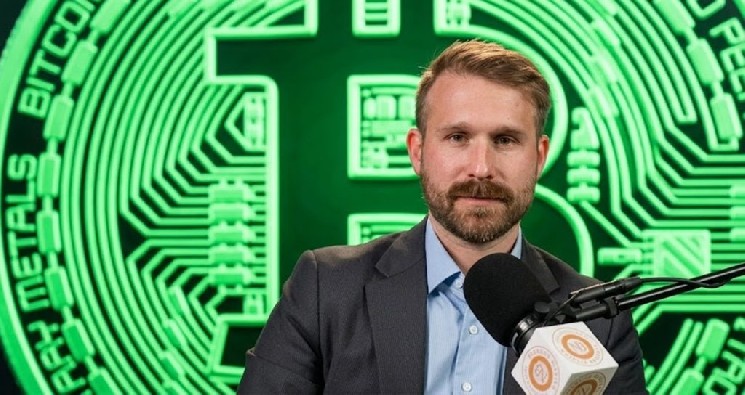
Coinbase, Microsoft disrupt Tycoon 2FA phishing network linked to credential theft

ambcrypto2026-03-04 tarihinde yayınlandı2026-03-04 tarihinde güncellendi

Özet

Coinbase, in collaboration with Microsoft, Europol, and other partners, has successfully disrupted the Tycoon 2FA phishing-as-a-service platform. This criminal toolkit enabled attackers to steal login credentials and bypass multi-factor authentication (MFA) by using cloned login pages that mimicked trusted services like Microsoft 365. The operation involved seizing key domains through legal action and dismantling the infrastructure powering the service. Coinbase's investigation traced cryptocurrency payments funding the platform, which operated on a subscription model, and attributed its administration to an individual based in Pakistan. The takedown highlights the significant threat phishing poses to the crypto sector, where social engineering remains a major cause of financial losses. This coordinated effort targeted both the operational infrastructure and the financial networks supporting such cybercrime.

Coinbase said it worked with Microsoft, Europol, and other industry partners to disrupt Tycoon 2FA, a phishing-as-a-service platform used by cybercriminals to steal login credentials and bypass multi-factor authentication [MFA].

The coordinated action targeted infrastructure powering Tycoon’s operations, including domains hosting the platform’s control panels and phishing pages.

According to Coinbase, Microsoft filed a civil action that led to a court-authorized seizure of key domains, effectively taking the service offline.

The effort combined legal action, infrastructure takedowns, and blockchain analysis to trace the financial flows that funded the phishing network.

Phishing platform designed to bypass MFA

Tycoon operated as a subscription-based phishing toolkit, enabling attackers to launch credential-harvesting campaigns using cloned login pages that mimic trusted services such as Microsoft 365 and other widely used platforms.

The platform enabled attackers to capture usernames, passwords, and authentication codes in real time. More critically, it allowed criminals to steal session cookies used to access accounts without triggering MFA prompts.

Security experts say that capability makes phishing campaigns significantly more effective. It turns credential theft into a gateway for broader attacks such as account takeovers, business email compromise, and invoice fraud.

Coinbase traced crypto payments funding the service

Coinbase’s Global Intelligence team said it traced cryptocurrency payments used to fund Tycoon’s operations. Phishing-as-a-service platforms often operate like illicit software businesses, with subscription models, resellers, and recurring revenue streams.

Blockchain analysis helped investigators identify financial connections between the platform’s operators and related infrastructure, according to the company.

The investigation also helped attribute Tycoon’s administration to Saad Fridi, who, Coinbase said, is believed to be based in Pakistan.

Phishing attacks remain a major crypto threat

The disruption comes amid persistent security challenges across the crypto sector.

A recent report showed that crypto-related hacks resulted in $112.53 million in losses across January and February 2026. Incidents were concentrated in a small number of major exploits.

Beyond protocol vulnerabilities, social engineering remains a major driver of losses. This highlights the scale of credential-theft campaigns targeting crypto users and financial platforms.

Platforms like Tycoon have contributed to that trend by industrializing phishing operations, allowing criminals to run campaigns through ready-made toolkits and subscription services.

Pressure on the phishing economy

Coinbase said dismantling services like Tycoon requires targeting both the infrastructure that powers phishing campaigns and the financial networks that support them.

The company said it will continue working with technology companies and law enforcement to prevent cryptocurrency from being used to fund cybercrime.


Final Summary

  • Coinbase and Microsoft helped dismantle Tycoon 2FA, a phishing-as-a-service platform used to steal credentials and bypass MFA protections.
  • The disruption comes as phishing attacks remain a major driver of crypto losses, with security data showing hundreds of millions stolen through social-engineering campaigns.


İlgili Sorular

QWhat is Tycoon 2FA and what was its primary function?

ATycoon 2FA was a phishing-as-a-service platform used by cybercriminals to steal login credentials and bypass multi-factor authentication (MFA) protections.

QWhich companies and organizations collaborated to disrupt the Tycoon 2FA network?

ACoinbase worked with Microsoft, Europol, and other industry partners to disrupt the Tycoon 2FA network.

QHow did the Tycoon 2FA platform manage to bypass multi-factor authentication?

AThe platform allowed attackers to capture usernames, passwords, and authentication codes in real time, and more critically, to steal session cookies which could be used to access accounts without triggering MFA prompts.

QWhat role did Coinbase's Global Intelligence team play in the investigation?

ACoinbase's Global Intelligence team traced the cryptocurrency payments used to fund Tycoon's operations, using blockchain analysis to identify financial connections and help attribute the platform's administration to an individual based in Pakistan.

QAccording to the article, how much was lost to crypto-related hacks in January and February 2026?

AAccording to a recent report cited in the article, crypto-related hacks resulted in $112.53 million in losses across January and February 2026.

İlgili Okumalar

Agents Take Over Traffic Distribution Power: What Are Tencent, ByteDance, and Alibaba Competing For?

In the race to dominate the AI era's entry point, China's tech giants—Tencent, ByteDance, and Alibaba—are aggressively deploying AI Agents to control the future of traffic distribution. Alibaba is pursuing a dual-track "closed loop + openness" strategy. Its Qianwen app is evolving into a super-Agent integrated across its ecosystem (Taobao, Alipay, etc.) to handle complex tasks like travel planning. Concurrently, it is opening its platform to external brands (Luckin Coffee, KFC) and has launched a B2B Agent platform, "Wukong," targeting enterprise automation. Its other flagship, Quark, aims to be an "AI super search box" for information and tasks. ByteDance is executing an omnipresent "sprawl strategy." Its Doubao app boasts over 300 million monthly active users and is evolving into a default AI entry point for daily life, with plans for paid versions and e-commerce integration. Its core weapon is the Kouzi platform, a visual "AI assembly factory" for developers to build custom Agents. ByteDance is also pushing hardware integration, collaborating on AI phones and developing smart glasses to embed Doubao everywhere. Tencent is playing its long-held "ultimate card" by quietly embedding an AI Agent directly into WeChat. This Agent, accessible via a swipe, can understand user commands and automatically execute tasks by calling upon WeChat's millions of mini-programs (e.g., finding and ordering coffee). This leverages WeChat's unparalleled 1.4-billion-user ecosystem to position the app as an AI-powered "service operating system," a move that could dramatically reshape the competitive landscape. The core battleground is shifting from competing for "user screen time" to competing to be the "default execution layer" for user intent. The business model is evolving from an "attention economy" to an "intent economy," where the Agent that can most efficiently fulfill a user's need gains control over service access and token flow. This represents a fundamental change in how users connect with digital services, making the fight for the Agent入口 (entry point) a pivotal moment for redefining industry leadership in the AI age.

marsbit45 dk önce

Agents Take Over Traffic Distribution Power: What Are Tencent, ByteDance, and Alibaba Competing For?

marsbit45 dk önce

From Banning Doubao to Embracing Honor: Why Did WeChat Suddenly 'Change Its Face'?

The article explores the sudden shift in WeChat's strategy towards AI assistants from mobile phone manufacturers, transitioning from strict opposition to active collaboration. For over a year, WeChat fiercely resisted attempts by phone AI assistants (like ByteDance's Doubao in late 2025) to control its features via GUI automation ("simulated clicking"), citing security and data control concerns. This stance created a significant barrier for system-level AI integration. Now, Tencent has initiated A2A (Agent-to-Agent) partnerships with major phone brands like Honor, Xiaomi, OPPO, and vivo. This model allows a phone's system AI (e.g., Honor's YOYO) to parse a user's voice command and send a structured request directly to WeChat's own internal AI agent via secure APIs. WeChat then executes the action (e.g., sending a message) and returns the result. The article attributes Tencent's "change of face" to strategic pressure. While leading in social app usage, Tencent trails rivals like ByteDance and Alibaba in standalone AI app popularity. WeChat, with its vast mini-program ecosystem, is Tencent's key asset for an AI comeback. The upcoming WeChat AI agent aims to handle tasks like booking and payments within the app. However, phone system assistants remain the primary AI entry point for most users. The A2A collaboration allows Tencent to extend WeChat's AI reach to this crucial system layer while maintaining control over its core functions and data. For phone manufacturers, embracing A2A is a pragmatic move. The GUI route proved unviable due to WeChat's blocks. A2A offers a compliant path to integrate a vital service, enhancing their AI assistants' usefulness. It allows them to focus on developing their own AI ecosystems for other services while cooperating on WeChat access. The collaboration is framed as a mutual, strategic necessity: Tencent gains a distribution channel, and manufacturers gain a key functionality. The partnership relies on a "dual authorization" mechanism for security, requiring both user and app consent for each action. While questions about long-term data privacy practices remain, experts note A2A is more secure and compliant than GUI automation. Ultimately, this cooperation is seen as a tentative, calculated truce. Tencent's long-term goal is to make WeChat an AI-powered "service OS." Phone manufacturers aim to make their system AI the central user interface. Their paths may converge or clash in the future, but for now, the A2A deal represents the opening chapter in the battle for the AI-era user入口, driven by necessity and strategic calculus on both sides.

marsbit2 saat önce

From Banning Doubao to Embracing Honor: Why Did WeChat Suddenly 'Change Its Face'?

marsbit2 saat önce

İşlemler

Spot
Futures
活动图片