Coinbase Founder Is Now Researching Immortality

Odaily星球日报2026-06-03 tarihinde yayınlandı2026-06-03 tarihinde güncellendi

Özet

Coinbase Founder Invests in the "Fountain of Youth": NewLimit's $435M Funding to Reverse Aging Brian Armstrong, co-founder and CEO of Coinbase, is now targeting a new frontier: human longevity. His biotech startup, NewLimit, has just raised $435 million in a Series C round led by Peter Thiel’s Founders Fund, valuing the company at $3.1 billion. The funding will advance its mission to develop therapies that slow or even reverse cellular aging, with its first drug targeting alcohol-related liver disease set to enter clinical trials next year. Founded in 2021 by Armstrong, former GV partner Blake Byers, and stem cell biologist Jacob Kimmel, NewLimit builds on Nobel Prize-winning research by Shinya Yamanaka, who discovered that adult cells can be reprogrammed to a younger state. NewLimit’s approach focuses on identifying specific gene combinations to reset the "epigenetic age" of cells, aiming first to treat diseases viewed as accelerated aging before broadening its applications. The company joins a growing field of longevity startups backed by tech billionaires, including Sam Altman’s investment in Retro Biosciences and Jeff Bezos’s support for Altos Labs. For these ultra-wealthy backers, conquering aging represents the ultimate investment—extending the one resource even immense wealth cannot buy: time.

Original | Odaily Planet Daily (@OdailyChina)

Author | Azuma (@azuma_eth)
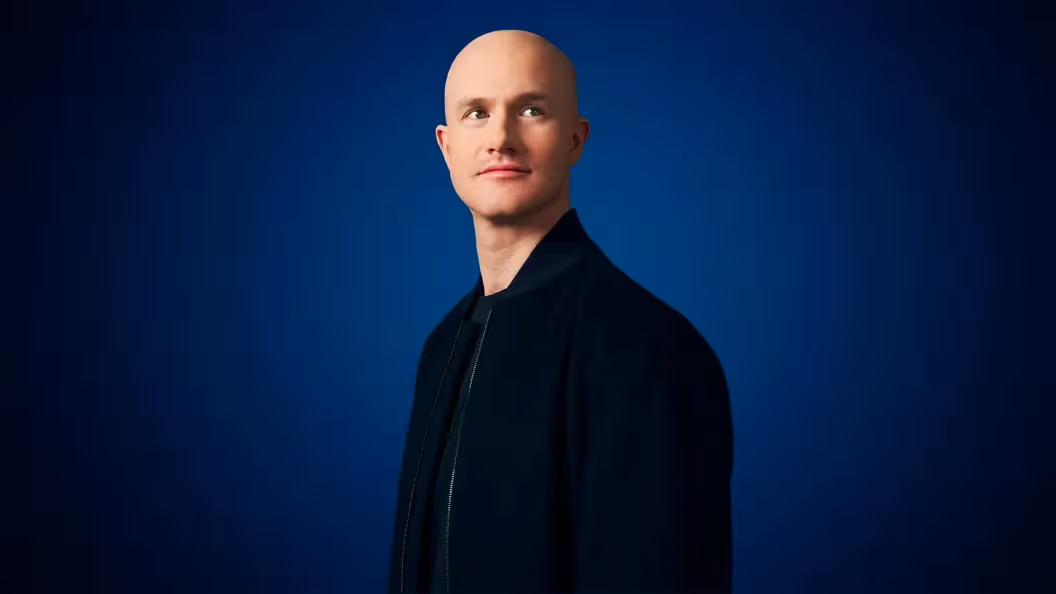
At 3 AM Beijing time on June 3, longevity tech startup NewLimit announced the completion of a $435 million Series C funding round. This round was led by Founders Fund, the fund under Peter Thiel, with continued participation from Abstract Ventures, Kleiner Perkins, NFDG, Eli Lilly Ventures, Valor Equity Partners, among others. New investors including Thrive Capital, Greenoaks, and Quiet Capital also joined this round.

WSJ reported that NewLimit's valuation in this round reached $3.1 billion, more than tripling its valuation from a year ago.
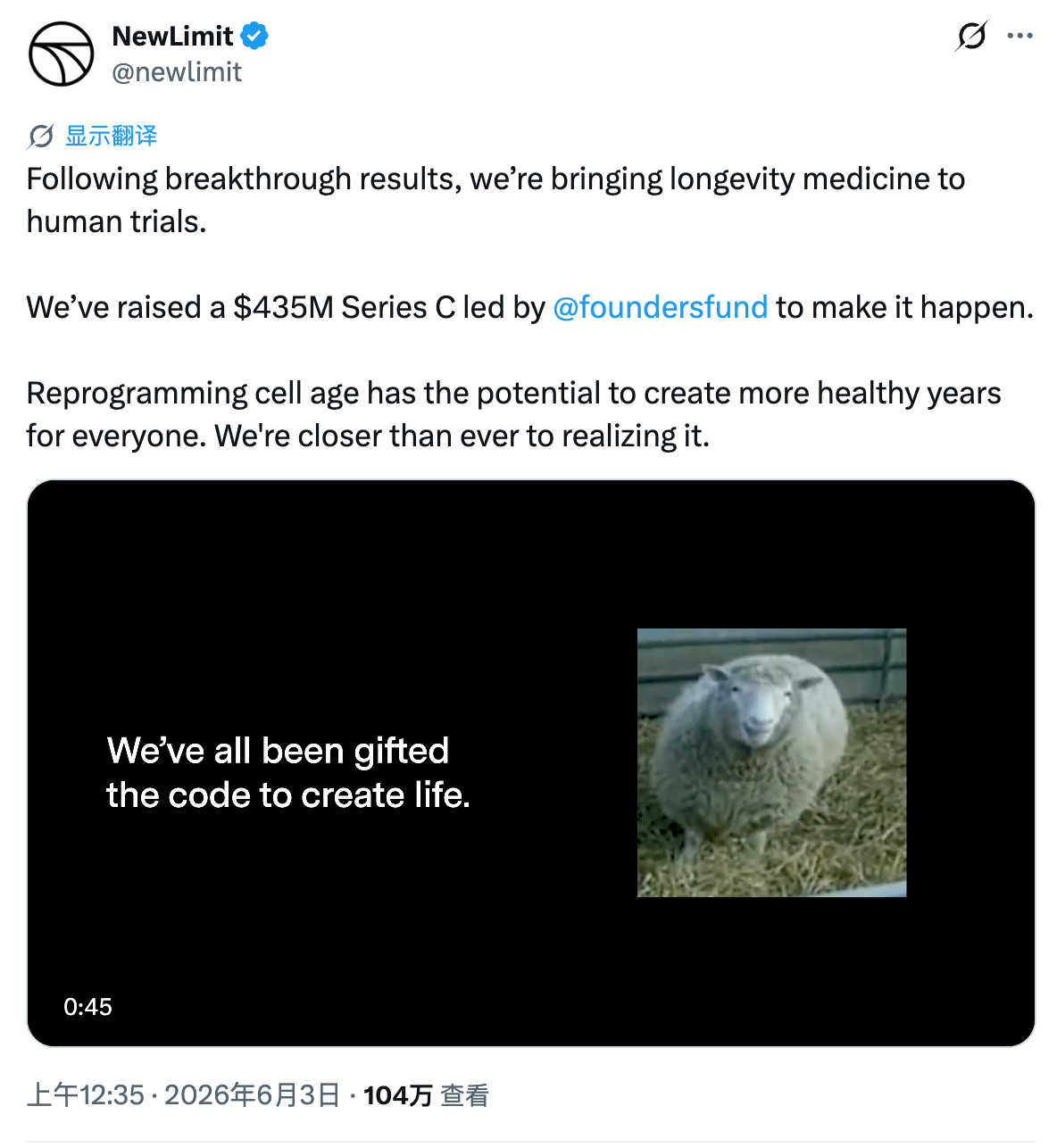
In the funding announcement, NewLimit revealed that following breakthrough research achievements, the company is advancing longevity medicine to the stage of human clinical trials. Its first drug targeting alcohol-associated liver disease is expected to commence clinical trials next year.

NewLimit further emphasized: "By reprogramming cell age, humans have the potential to achieve longer healthspans. Now, humanity is closer than ever to the goal of 'slowing down or even reversing aging.'"

The Founder is an Old Acquaintance

It's worth noting that NewLimit's co-founder is none other than a familiar name – Brian Armstrong, the founder and CEO of Coinbase.

In 2021, Brian Armstrong, alongside former GV partner and bioengineer Blake Byers, and stem cell biologist Jacob Kimmel, jointly invested $110 million to establish NewLimit in the southern part of San Francisco.
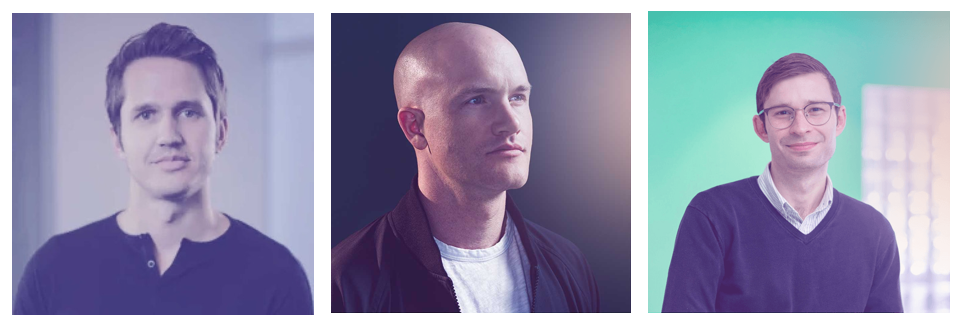
Photo: NewLimit founding team

Prior to this Series C round, NewLimit had completed three rounds of funding, detailed as follows.

  • Completed a $40 million Series A round in May 2023, with investors including Dimension, Founders Fund, and Kleiner Perkins;
  • Completed a $130 million Series B round in May 2025, valuing the company at $810 million, led by Kleiner Perkins with participation from Founders Fund, Khosla Ventures, and Human Capital, among others;
  • Secured an additional $45 million in funding in October 2025, bringing the post-money valuation to $1.62 billion, with investors including Lilly Ventures, Duke University, Section 32, etc.;

According to NewLimit's official introduction, the company is committed to developing drugs that extend people's healthspan – "As we age, our cells' functions gradually decline, making us more susceptible to disease. It was once thought that aging was inevitable, but emerging science suggests the aging process can be reversed at the cellular level. We are developing the first drugs based on these discoveries to restore youthful function to aged cells."

In simpler terms, NewLimit is researching immortality using scientific methods!

Reversing Aging is Not a Fantasy

Over the past few decades, the scientific community has long recognized the connection between aging and cellular functional decline but couldn't find precise methods to make cells 'rejuvenate'. The turning point came in 2006 when Japanese scientist Shinya Yamanaka discovered that activating just a few specific transcription factors could reprogram adult cells into a younger state similar to embryonic stem cells. This discovery was later named "Yamanaka Factors" and earned him the 2012 Nobel Prize in Physiology or Medicine.
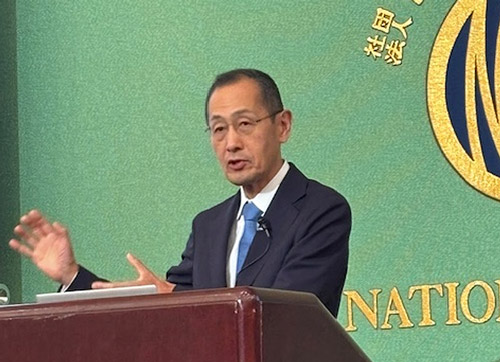
Odaily Note: Photo of Shinya Yamanaka speaking in Tokyo

Yamanaka's research first proved something previously thought impossible – that cellular age is not irreversible. The story NewLimit is telling is built precisely upon this discovery.

NewLimit writes on its website: "Our drugs work by reprogramming a cell's epigenome to a more youthful state by activating specific transcription factor genes. We already know this reversal is possible. But for different types of cells, exactly which combination of transcription factors is needed to restore their youthful function remains unknown. The core challenge of our work is finding and discovering these effective gene payloads."

NewLimit's strategy is to first target a specific disease to secure drug approval, then explore broader applications. As mentioned earlier, NewLimit is advancing a drug for alcohol-associated liver disease into clinical trials.

Jacob Kimmel, co-founder and CEO of NewLimit, further explained this: Liver disease can essentially be viewed as a form of 'accelerated aging,' where the aging process everyone experiences manifests faster and more severely.

The Biggest Investors in This Sector Are All Billionaires

NewLimit is not the only tech company currently targeting "immortality."

In 2022, Sam Altman invested $180 million in Retro Biosciences, which is developing drugs to rejuvenate aging cells and revealed last month its valuation had reached $1.8 billion.

Additionally, Altos Labs, reportedly backed by Jeff Bezos's funding, launched in 2022 with $3 billion and has since raised nearly twice that amount cumulatively.

It's not hard to see that from Peter Thiel to Sam Altman, to Jeff Bezos, the biggest investors in this sector are invariably super-wealthy individuals at the pinnacle of the tech and wealth pyramid. Peter Thiel has publicly expressed extreme aversion to death, stating views like: "Death is humanity's greatest enemy, yet we treat it as a natural law..."

The logic behind these tech tycoons' willingness to invest hundreds of millions of dollars isn't hard to understand – when wealth and power reach their peak, time becomes the only enemy, the one luxury that cannot be directly purchased with money.

Having made enough money, "how to live longer" becomes the ultimate quest.

İlgili Sorular

QWho is the founder of NewLimit, and what other company is he known for?

AThe founder of NewLimit is Brian Armstrong, who is also the founder and CEO of Coinbase.

QWhat is the key scientific breakthrough that NewLimit's research is built upon?

ANewLimit's research is built upon the discovery of the 'Yamanaka Factors' by Shinya Yamanaka, which demonstrated that adult cells can be reprogrammed to a younger, embryonic-like state.

QWhat is NewLimit's primary approach to developing its age-reversing drugs?

ANewLimit's primary approach is to discover the specific combinations of transcription factor genes that can reprogram the epigenome of different cell types to a younger state, aiming to restore their youthful function.

QWhat is the significance of liver disease in NewLimit's current clinical trial plans?

AAccording to NewLimit's co-founder Jacob Kimmel, liver disease can be seen as an 'accelerated version of aging,' making it a strategic starting point to develop and test drugs before exploring broader anti-aging applications.

QWhich other prominent tech billionaires are investing in similar longevity research companies?

AOther prominent tech billionaires investing in similar longevity research include Peter Thiel (investing in NewLimit), Sam Altman (investing in Retro Biosciences), and Jeff Bezos (investing in Altos Labs).

İlgili Okumalar

In Conversation with Ray Dalio: We Are Currently in an AI Bubble, with 1% of My Portfolio in Bitcoin

Ray Dalio, founder of Bridgewater Associates, warns in an interview that the current AI boom shows classic bubble characteristics, which could lead to significant economic downturns as seen in past cycles like 1929 or 2000. He explains that speculative enthusiasm, fueled by debt and overvaluation, often precedes a crash when rising rates or taxation force asset sales, causing widespread losses and recession. Dalio also outlines his "Big Cycle" theory, describing an approximate 80-year pattern where widening wealth gaps, massive government deficits, and shifting geopolitical power (like China's rise) create internal conflict and global instability. He emphasizes that we are in a late-cycle, transitional phase where traditional powers like the US and UK face decline. For personal wealth protection, Dalio advises diversification beyond cash into assets like stocks, bonds, real estate, and particularly gold, which he prefers over Bitcoin. While he holds about 1% of his portfolio in Bitcoin as a non-printable hard asset, he views gold as more secure from technological or governmental threats. Regarding AI's impact, Dalio believes it will disproportionately benefit capital owners, worsening inequality by replacing both physical and cognitive labor. He suggests that human intuition and emotional intelligence, combined with AI, will be key for future workers. On taxation, Dalio argues that wealth taxes are impractical and risk triggering asset sell-offs, reducing productive investment. He points to the UK as a cautionary example of debt, low productivity, and political strife. Geopolitically, Dalio foresees a more regionalized world, with the US showing weakness in prolonged conflicts like with Iran, akin to past imperial declines. The ideal outcome, he suggests, is coexisting powerful blocs (e.g., Americas, China-Asia Pacific) without major war.

marsbit3 saat önce

In Conversation with Ray Dalio: We Are Currently in an AI Bubble, with 1% of My Portfolio in Bitcoin

marsbit3 saat önce

Daily 7.2 Trillion KRW: Foreign Capital's Record Net Buying on Friday! Wall Street Says Headwinds for Korean Stock Fund Flows Have Subsided

South Korean stock market sees a dramatic shift in fund flows. On July 31, foreign investors made a record net purchase of approximately KRW 7.2 trillion in KOSPI stocks, marking a fundamental reversal from the persistent large-scale net outflows seen in previous months. This contributed to a significant narrowing of foreign net selling in July to KRW 9.8 trillion, down sharply from KRW 48.4 trillion in June and KRW 44.5 trillion in May. Simultaneously, domestic institutional pressure eased. South Korean pension funds and asset managers turned to a net buying position in July, purchasing KRW 1.0 trillion worth of KOSPI shares, contrasting with net sales in May and June. Market volatility is expected to be dampened by new financial regulations. Effective July 31, the Financial Services Commission tightened access for retail investors to single-stock leveraged ETFs by raising the minimum cash deposit requirement. Trading volumes for these products subsequently dropped to about 50% of their monthly average. Citigroup Research maintains its year-end KOSPI target of 10,000 points. The firm cites several supportive factors: the substantial easing of headwinds from capital outflows, a robust fundamental outlook for the semiconductor sector, historically low market valuations, strong economic fundamentals, and the potential for policy support from financial authorities if needed.

marsbit3 saat önce

Daily 7.2 Trillion KRW: Foreign Capital's Record Net Buying on Friday! Wall Street Says Headwinds for Korean Stock Fund Flows Have Subsided

marsbit3 saat önce

Thanks to Dice Rolls, Bitcoin Keys Are Stored Offline, But Not Everyone Will Do It

The article discusses using dice rolls to generate secure Bitcoin wallet seeds, providing entropy independent of potentially flawed hardware random number generators. It explains that each fair dice roll offers about 2.585 bits of entropy, with around 50 rolls needed for a standard 12-word seed phrase and 99+ recommended for higher security. This method gained attention after a vulnerability was revealed in some Coldcard hardware wallets, where a faulty firmware RNG (dating back to 2021) compromised generated keys. The analysis notes that while a dice-generated main seed was safe from this specific flaw, other Coldcard functions (like creating paper wallets, backup keys, or passwords) could still be vulnerable if they used the defective RNG. The piece argues that while dice-based entropy is technically robust, the manual process is error-prone, tedious, and unrealistic for most new users, who might make mistakes in recording or inputting rolls. It concludes that while manual entropy generation should remain an option for advanced users, the long-term goal is to develop reliable, user-friendly hardware and software that securely generates randomness without requiring specialized knowledge. Coldcard users are advised to check their firmware version and replace any secondary secrets (like paper wallet keys) created with vulnerable devices, while also considering multi-signature setups with devices from different manufacturers for added security.

cryptonews.ru8 saat önce

Thanks to Dice Rolls, Bitcoin Keys Are Stored Offline, But Not Everyone Will Do It

cryptonews.ru8 saat önce

İşlemler

Spot
活动图片





