Coinbase Flags Concerns Over CLARITY Bill

TheNewsCrypto2026-01-12 tarihinde yayınlandı2026-01-12 tarihinde güncellendi

Özet

Coinbase has threatened to withdraw its support for the upcoming CLARITY Act, a key U.S. crypto bill, if it restricts the ability of platforms to offer rewards on stablecoin holdings beyond basic disclosure rules. The exchange argues such limitations would harm its business and competition in the stablecoin market, particularly affecting rewards programs for assets like USD Coin. This stance follows the earlier GENIUS Act, which prohibited issuers from paying yields but allowed third-party platforms to offer rewards. Coinbase claims restricting platform-based rewards would undermine previous compromises and unfairly advantage traditional banks. The issue arises as policymakers work on broader crypto market reforms, with some senators seeking a compromise that would permit rewards only for chartered banks or trust companies.

As per the reports, it is speculated that Coinbase might withdraw its support for Washington’s upcoming major crypto bill. The firm is setting its boundaries as Congress moves closer to finalising its upcoming major crypto bill named the CLARITY Act.

In a report shared by Bloomberg on January 11, a warning surfaced as policymakers got ready to put up an extensive digital-asset market structure bill in the Senate later this week. Coinbase revealed that it may pull out its support for the CLARITY Act if it limits stablecoin rewards beyond fundamental disclosure rules.

As per the exchange, the issue directly hits its business and the competition in the stablecoin market, and the people close to the company’s thinking think alike. The ability to offer rewards on stablecoin balances, mainly USD Coin, remains at stake.

Association with the other Act

The debate trails through the GENIUS Act in July, which made the first federal framework for stablecoin issuers. That law bars creators from paying interest or yield associated only with holding stablecoins, but it does not obstruct third-party platforms from offering rewards to users.

Companies associated with crypto say that distinction was intentional. The officials from Coinbase state that prohibiting platform-based rewards would revoke compromises so far settled in the GENIUS Act and shift the field in favour of banks.

The firm has also mounted rewards as a way to make the role of the dollar in global digital finance more robust, mainly as different countries explore interest-bearing virtual currencies. Political pressure surrounding the bill is also increasing. In the election cycle of 2023-24, the crypto industry was leading in being the largest corporate political spender, in which Coinbase was a prominent donor.

The threat to withdraw support has weight as policymakers attempt to maintain momentum in the back of broader market structure reforms. Still, the final outcome is not clear. Some senators are looking for a middle ground that would permit rewards only for companies holding bank or trust charters.

Highlighted Crypto News Today:

Bitcoin Holds Near $92K as Asia Rises Ahead of US CPI Data

TagsCoinbaseCrypto BillGenius ACT

İlgili Sorular

QWhy might Coinbase withdraw its support for the CLARITY Act?

ACoinbase may withdraw its support if the CLARITY Act limits stablecoin rewards beyond fundamental disclosure rules, as this directly impacts its business and competition in the stablecoin market.

QWhat is the main concern for Coinbase regarding the CLARITY Act?

AThe main concern is the potential restriction on the ability to offer rewards on stablecoin balances, particularly for USD Coin, which is a key part of its business model.

QHow does the GENIUS Act relate to the current debate over the CLARITY Act?

AThe GENIUS Act, passed in July, established the first federal framework for stablecoin issuers. It prohibits issuers from paying interest directly but allows third-party platforms to offer rewards. The current debate centers on whether the CLARITY Act will uphold this distinction.

QWhat is the crypto industry's argument for allowing platform-based stablecoin rewards?

AThe industry argues that prohibiting platform-based rewards would undo compromises made in the GENIUS Act and unfairly shift the competitive landscape in favor of traditional banks.

QWhat is one potential legislative compromise being considered regarding stablecoin rewards?

ASome senators are seeking a middle ground that would permit rewards only for companies that hold a bank or trust charter, attempting to balance innovation with regulatory oversight.

İlgili Okumalar

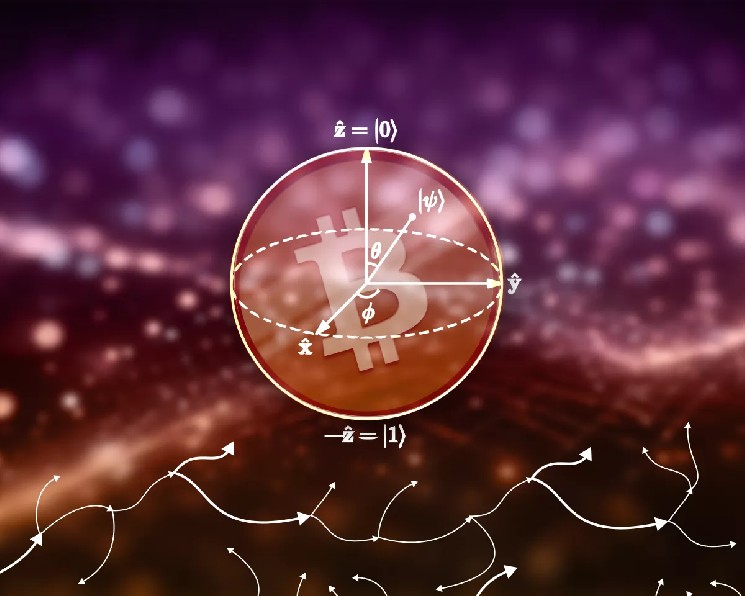
AmericanFortress proposed a scheme to protect crypto wallets from quantum threats

AmericanFortress has published a preprint detailing ZKPoSP, a cryptographic scheme designed to protect hierarchically deterministic (HD) cryptocurrency wallets from potential quantum attacks without requiring users to change their addresses. The proposed scheme replaces classical digital signatures with non-interactive zero-knowledge (NIZK) proofs, aiming to maintain compatibility with existing address formats. The company also introduced the QBIP32 scheme, intended to generate a signing scalar, a separate quantum-resistant proof, and a chain code in a single function call. According to the authors, QBIP32 can be applied to various elliptic curves of prime order, including secp256k1 and Ed25519. The post-quantum security of the scheme is described as "conjectured," relying on the quantum resistance of the underlying hash functions and NIZK proofs. However, for the scheme to function in a given blockchain network (like Bitcoin, Ethereum, or Solana), nodes would need to support verification of these new proofs instead of standard signatures—a capability currently not implemented. An implementation in Rust using RISC Zero reportedly takes 12–13 seconds to generate a proof and 9–10 milliseconds to verify it. The publication follows other industry efforts to address quantum threats, including reports from Galaxy on vulnerable assets, new hardware wallets like the PQ1, and consortiums like the Bitcoin Security Consortium pledging funding for post-quantum cryptography research. This new work specifically focuses on HD wallets and positions ZKPoSP/QBIP32 as a general mechanism for multiple curves and networks.

cryptonews.ru12 dk önce

AmericanFortress proposed a scheme to protect crypto wallets from quantum threats

cryptonews.ru12 dk önce

Weekly On-Chain Data Review: Robinhood Chain Explodes, FWA Goes Viral, Mantle Doubles Down on RWA

**Chain Data Weekly Digest: Vault Regulation, Robinhood Memecoin Surge, and FWA's NFT Gamble** * **Vault Managers Face SEC Scrutiny:** SEC Commissioner Hester Peirce warned that some DeFi Vault strategies could trigger investment advisor regulations. This may lead to licensing requirements, potentially sidelining smaller managers while bringing more traditional finance firms on-chain. The industry debates whether Vaults are purely code-driven or resemble discretionary portfolio management. * **Robinhood Chain's Memecoin-Led Boom:** Despite its initial RWA focus, Robinhood Chain has seen explosive early growth driven by memecoin trading and launchpads, which now dominate its DEX volume. The chain facilitates memecoin trading via tokenized stock pairs. It boasts over $800M in on-chain assets, $5B in stablecoin market cap, and strong fee revenue, positioning it as a consumer trading hub. * **FWA Revives NFT Activity with a Gamble:** The Fake World Assets (FWA) protocol, a gachapon-style system on Ethereum where users pay to randomly win deposited NFTs, has rapidly captured 10% of Ethereum's mainnet gas consumption in its first week. It demonstrates how simple, consumer-facing mechanics can reignite NFT engagement, attracting a broad user base. * **CEX Consolidation & DEX Growth:** The closures of BitMEX and BitMart highlight intense central exchange (CEX) competition and consolidation. Meanwhile, the DEX/CEX spot trading volume ratio hit a record high of 24.3% in July, signaling a shift of trading activity and innovation to on-chain venues. * **Mantle's RWA Focus at 3 Years:** Celebrating its third anniversary, Mantle Network is solidifying its role as a "full-stack distribution layer" for tokenized real-world assets (RWA). It ended Q2 with $1.2B in DeFi TVL, $955M in stablecoin market cap, and a growing suite of native RWA trading infrastructure like Fluxion and xChange.

marsbit22 dk önce

Weekly On-Chain Data Review: Robinhood Chain Explodes, FWA Goes Viral, Mantle Doubles Down on RWA

marsbit22 dk önce

From 'Western Learning Ants' to Korean Pension Funds: Why Does Korean Capital Continue to Flow to the US?

Summary: "From 'Western Ants' to National Pension: Why Korean Capital Continues to Flow to the U.S.?" South Korea’s capital is increasingly moving toward U.S. markets, driven by two key investor groups. Individual retail investors, known as "Western Ants," actively trade U.S. stocks overnight, seeking exposure to major tech firms and higher returns often unavailable in Korea’s concentrated domestic market. Simultaneously, the National Pension Service (NPS), managing over $1.16 trillion in assets, is expanding its global investment footprint. Facing demographic pressures and the sheer size of its fund, NPS has steadily increased overseas allocations, with over half its financial assets now invested abroad. A recent memorandum of understanding with six top U.S. venture capital firms (including Sequoia and a16z) marks a strategic extension into Silicon Valley’s private investment ecosystem, aiming to access growth-stage tech opportunities while leveraging external managers’ expertise. While both flows reflect limitations of Korea’s home market, their risk profiles differ sharply: retail investors often pursue speculative, concentrated bets, whereas NPS must ensure long-term, diversified returns for national retirement security. This outward shift also creates macroeconomic tensions, as demand for dollars from both groups pressures the Korean won, prompting coordinated measures between NPS and the central bank to mitigate currency volatility. Ultimately, Korea’s growing financial integration with global markets—especially the U.S.—signals a broader structural shift where citizens’ wealth and pension sustainability are increasingly tied to worldwide economic dynamics.

marsbit32 dk önce

From 'Western Learning Ants' to Korean Pension Funds: Why Does Korean Capital Continue to Flow to the US?

marsbit32 dk önce

İşlemler

Spot
活动图片