Claude Code's Father's Night Shift AI Army, Fable 5 Built with Two Commands

marsbit2026-07-20 tarihinde yayınlandı2026-07-20 tarihinde güncellendi

Özet

For the past year, Boris Cherny, creator of Claude Code, hasn't written a single line of code himself. He manages hundreds, even thousands, of AI agents that run day and night, autonomously handling tasks from writing and submitting code to fixing CI tests and gathering user feedback. His secret lies in a "loop" system, where tasks are defined and set to run repeatedly, combined with a critical "/goal" command that provides a clear, verifiable objective and a "supervisor" model to check progress. This approach transforms the programmer's role from a coder to a system designer and reviewer. At Anthropic, AI agents even collaborate in Slack channels to divide work. The recently released Fable 5 model is built for such long-term autonomous operation, featuring self-verification and the ability to understand complex charts. Effective use requires the "/goal" command for targeted tasks and "/loop" for recurring ones. To maximize efficiency, a local context system can be set up in 20 minutes, providing the AI with persistent memory of your projects, preferences, and procedures. The key takeaway is that the future lies not in prompting AI for each step, but in building autonomous systems driven by clear, verifiable goals.

For the past year, he hasn't written a single line of code by hand.

He submits dozens of PRs every day, and one day hit 150, setting a personal record.

What's even more outrageous is that he has hundreds of AI agents running simultaneously on his side, and thousands more work the night shift for him.

This was personally stated by Boris Cherny, the father of Claude Code, during a recent public discussion with developers.
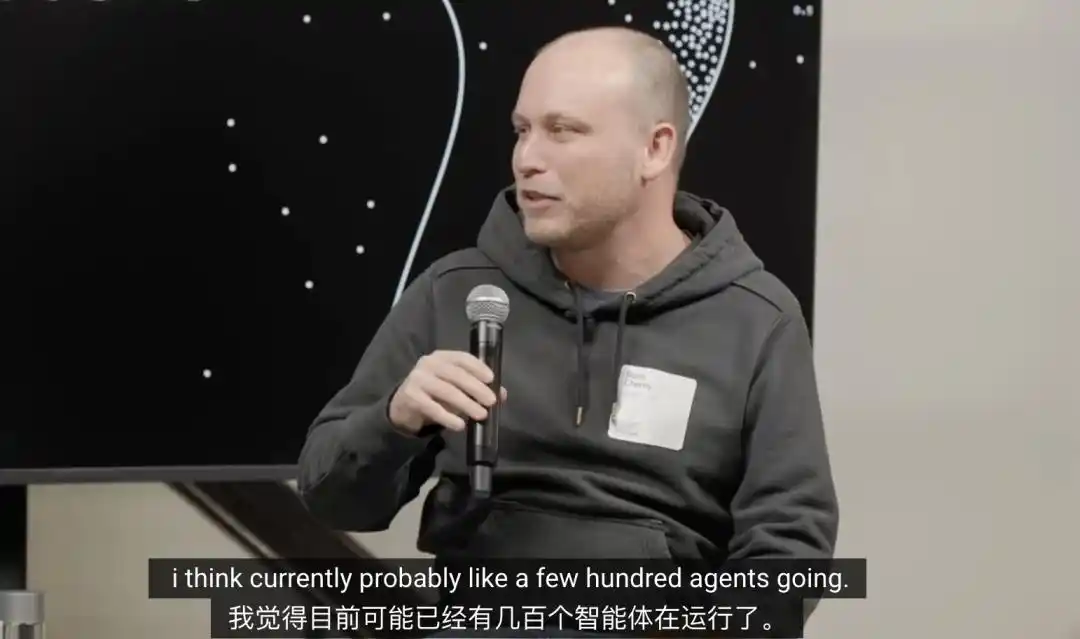

He has the Claude app open on his phone, with a small code tab on the left, containing 5 to 10 concurrent sessions.

Under each session is a cluster of agents, hundreds running during the day, and once night falls, thousands start doing deeper work.

The models write all the code, he doesn't touch a single line.

For him, the task of programming has been solved.

How Can One Person Manage Thousands of Agents?

One person manages thousands of agents, having them all modify code in the same repository simultaneously, without losing control, fighting each other, or creating piles of garbage.

Boris's secret lies behind one word: Loop.

He says a Loop is the simplest yet most useful thing he's seen; Loops are the future.

The essence of a Loop is letting Claude schedule a repeatable task using a cron job—every minute, every five minutes, daily, as you set it. Once it's running, it basically requires no management.

He has dozens of Loops running perpetually:

One specifically monitors his PRs, automatically fixing continuous integration (CI) and rebasing;

One is responsible for keeping CI healthy, fixing any unstable tests itself;

And another scrapes user feedback from X every 30 minutes, clusters and organizes it, then submits it to him.

More crucially, later on, even the step of initiating a Loop rarely requires Boris to speak up.

Once he just asked the model to run a data query, and the model replied: "I noticed this data keeps changing, so I'll start a Loop and give you a report every 30 minutes."

He said okay, just send it to my Slack. The model then handled the matter.

Not long ago, Boris also mentioned he no longer writes prompts, only loops.

Soon, he might not even need to write loops.

Agents

Are Redefining "Getting Work Done"

Behind this, "getting work done" itself is changing.

In the past, it was you writing a line, AI answering, you writing the next line; now, it's you building a small system that can find work, do it, and submit it on its own, then you walk away.

Anthropic recently launched Routines, moving the same mechanism to the server side. Close your laptop, and it still runs.

The role of "engineer" is also being rewritten in Boris's case:

The model writes the code, he's responsible for building the system and acceptance testing. Dozens to hundreds of PRs emerge daily from the agents. His real job is deciding which can be merged and which need to be sent back.

In his words, this is not "AI replacing engineers," but humans transitioning from operators and executors to designers of automated systems: the focus shifts from "writing this line of code correctly" to "building a system that can write code correctly on its own."

He even predicts that in another year, security steps like prompt injection protection, command validation, and manual approval will become less important because models will become increasingly conscientious about doing the right thing.

And this approach is no longer just his personal play.

According to Boris, there's hardly any manual coding left in the company; even SQL is written by models. It's hard to find a few lines of code still typed by a human in the entire company.

Even more surreal is another scene. When his Claude agents are writing code in a Loop, they'll go to Slack themselves, chat with colleagues' Claude agents, aligning on things no one has figured out yet.

A group of AIs holding meetings in a Slack channel, dividing up the work, and going back to do it—this is daily routine at Anthropic.

Even more intense is the team composition: engineering managers, product managers, designers, data scientists, finance, user researchers—everyone is writing code.

The functions remain, but everyone has gained an extra layer of general capability: "orchestrating AI to get work done," becoming cross-disciplinary generalists.

From Writing Prompts to Writing Loops

The Gap Lies in a Step Called Acceptance

How can an AI that works autonomously infinitely not be a machine producing bugs at high speed?

The answer lies in a step most people overlook: acceptance.

A Loop can run autonomously without going off the rails, relying on a "goal-driven" mechanism, corresponding to the /goal command in Claude Code.

You give it a goal, like "All unit tests under /tests/ pass, linting clean." After each step, a separate, smaller model judges: Is it done? If not, keep going; if yes, stop.

This "supervising model" responsible for scoring is not the one doing the work.

This simple design is precisely the heart of the entire loop.

Without it, a Loop running all night could very well be a machine that's asleep yet still bulk-submitting garbage code, and doing so righteously.

Boris verified this long ago.

When sharing his workflow previously, he gave this piece of advice: the most important step to squeeze the utmost out of Claude Code is to give it a way to verify its own work.
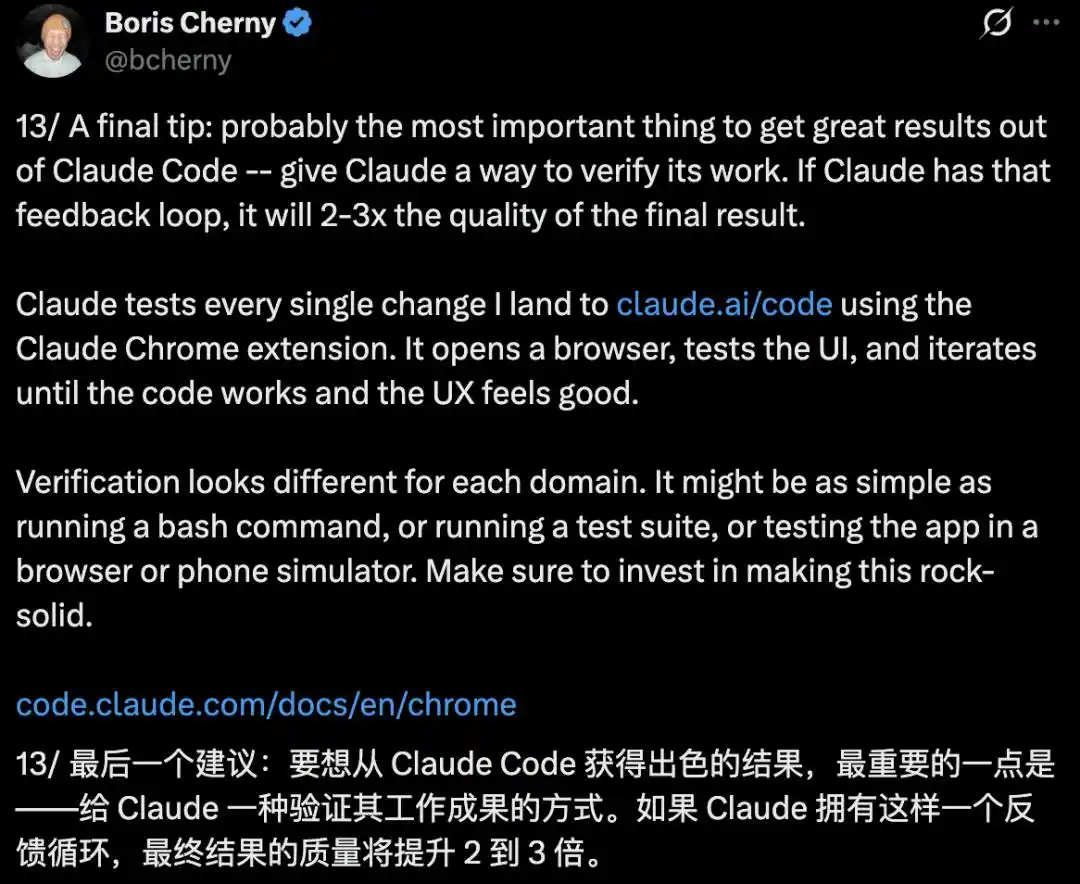
Once this feedback loop is established, output quality typically improves by 2 to 3 times.

A single action of "making AI check itself" is equivalent to upgrading a generation of models.

This Cycle is Usable by Ordinary People Too

The aforementioned cycle has been turned into a product; ordinary people can use it just the same.

After the release of Fable 5, a widely circulated tutorial on X stated, after three weeks of hands-on testing by the author: Most people use Fable 5 like they use ordinary Claude, which is a complete waste of what truly makes it worth paying for.

The author first points out three capabilities that distinguish Fable 5 from all previous Claude models.
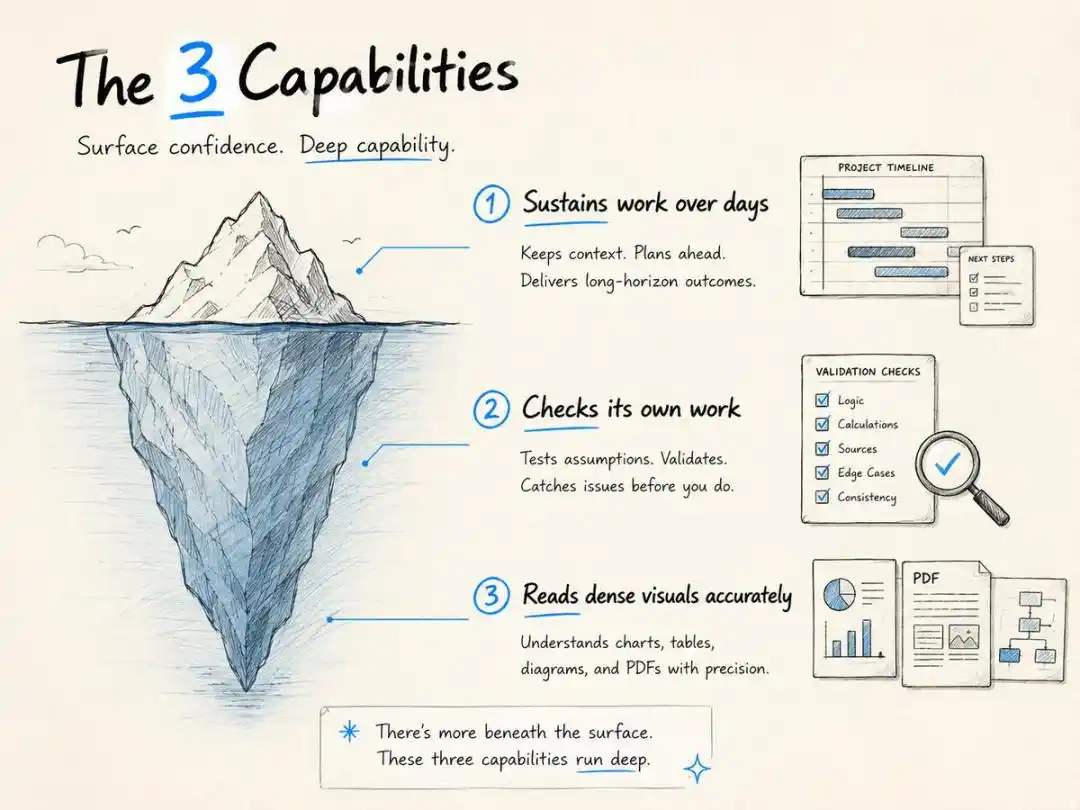
The three major capabilities of Fable 5 summarized in the tutorial: Long-term autonomous work, self-verification, understanding dense charts.

First, it can work continuously for days, not minutes.

Previous models were sprinters; Fable 5 is the first model built for "long-term autonomous work."

In Claude Code, you can give it an entire multi-day project; it plans in phases itself, dispatches sub-agents, and keeps working until the goal is met.

Second, it checks its own work. After finishing a task, it doesn't rush to deliver; it first writes tests, runs them, catches errors, fixes them, and only then says "done."

Third, the ability to understand dense charts.

According to the author's tests, for tables in financial reports, charts embedded in PDFs, architecture diagrams, dashboard screenshots—areas where Opus 4.8 occasionally misidentified columns or confused axes—Fable 5 can read them accurately and consistently.

And to truly utilize these capabilities, it relies on two commands: /goal and /loop.

Without them, you're paying double the price for a chatbot; with them, you're buying an autonomous working employee.
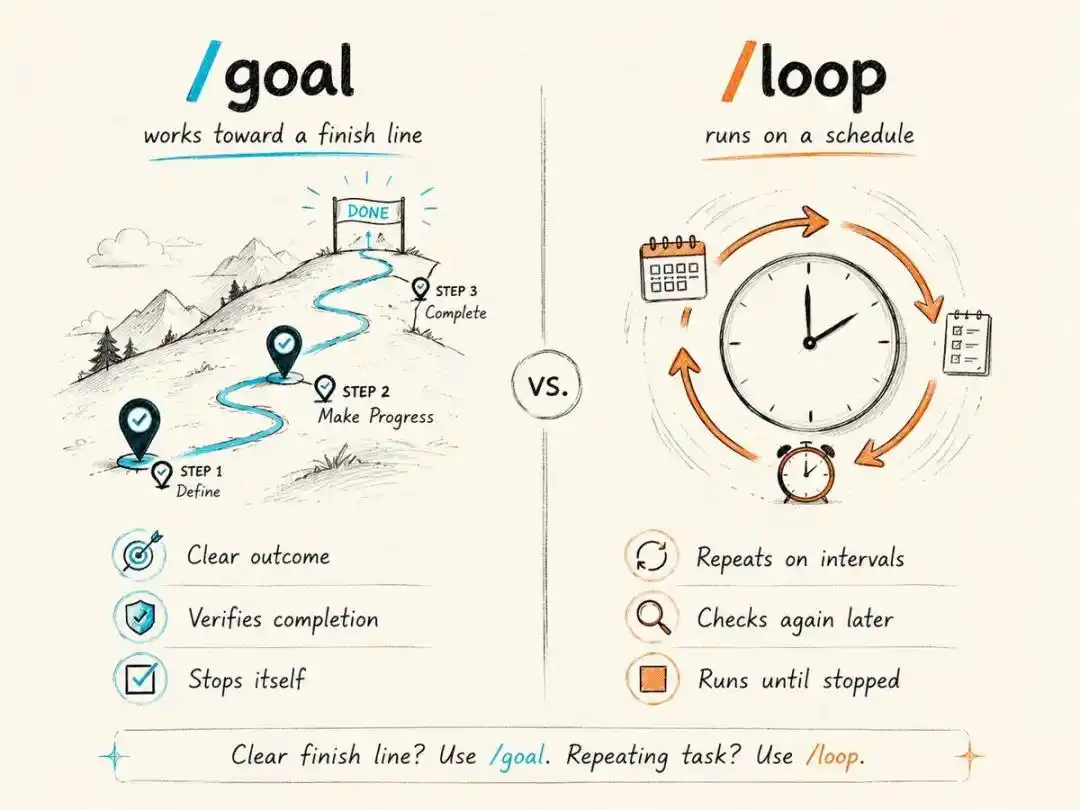
/goal runs towards the finish line and stops itself when reached; /loop runs repeatedly on schedule until you tell it to stop.

The mechanism of /goal is: you define the result, it's responsible for iteration. Whether it runs well follows an ironclad rule: write the "completion criteria" concretely, and must include an exit strategy for failure.

For example, "Improve this piece of code" is a bad goal because it's unverifiable; "All tests under /tests/ pass, only files in /src are allowed to be modified, stop and report if still failing after 3 fixes" is a good goal because each point can be verified.

/loop doesn't target a specific endpoint; it runs repeatedly on schedule until you stop it.

For example, check error logs every 30 minutes, pick out severity-level ones and report them in plain language; or scan the inbox every hour, summarize new emails, and draft replies for those needing responses.

The division of labor mantra is three sentences: For a clear endpoint, use /goal; for periodic repetition, use /loop; to keep running until a condition is met, combine both.

Before letting go, there's one more piece of very practical advice: set the spending limit first. An uncapped /goal hitting a difficult problem can burn through tokens frighteningly fast.

Making It Remember You: 20 Minutes of Local Configuration

The tutorial also mentions a step most guides skip, which is precisely the most crucial.

Fable 5 won't remember you. Every new session, it knows nothing about your business, writing style, clients, or preferences, starting from zero each time.

The solution is to set up a local context system on your own machine, which takes only 20 minutes.
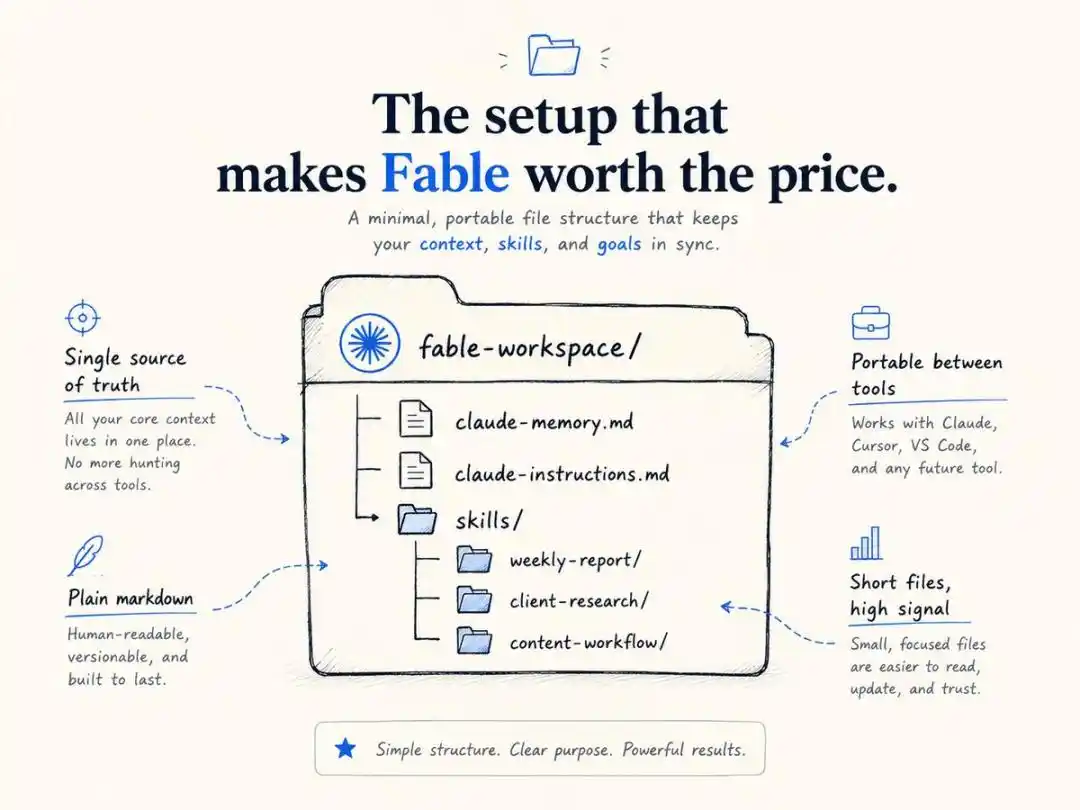
One folder, two markdown files, and a set of skills—that's all the configuration needed for Fable 5 to "know you."

It's done in four steps.

Step one, create a context folder, e.g., named `fable-workspace`, serving as the "single source of truth" it must read before starting any work.

The folder can contain items like: a one-page summary of business and priorities, standard operating procedures for frequent tasks, key information for ongoing projects, often-referenced strategic documents, plus a decision log.

Keep each file to one page; too much content eats up the context window.

Step two, create a memory file `claude-memory.md`, and leave an instruction: Whenever I mention important information about business, preferences, or situation, update the key points into it, keep it brief, and date it.

From then on, it updates itself. Mention a new client once, and it already knows in the next session.

Step three, create an instruction file `claude-instructions.md`, clearly stating behavioral rules for each session: read the memory file before starting work, check past decisions before giving advice, ask if unsure—don't guess, proactively report after finishing work and mark areas needing human review.

Step four, in Claude Code, use `/add` to point to this folder, or write into CLAUDE.md. Once connected, at the start of every session, it already comes loaded with your full context.

This configuration has another benefit: if you switch to another AI tool someday, you can directly package and take your context with you.

Regarding saving money, there's an 80/20 approach: only use Fable 5 for that 20% of tasks that truly leverage its strengths.

In Claude Code, Fable can also dispatch cheaper sub-agents to do rough work: it comes up with the plan, Sonnet, Haiku, etc., execute it, and finally, it returns to validate.

At this point, you'll realize Boris's "Night Shift AI Army" breaks down to just three things:

A model that works autonomously, a set of standards defining "done," and a cycle that runs on schedule.

The model and the cycle are already in place.

What's truly scarce is the person who can clearly explain to the model "what a finished task looks like."

References:

https://safe.ai/blog/significant-increase-in-digital-labor-automation

https://x.com/free_ai_guides/status/2073050543027638443

https://youtu.be/SlGRN8jh2RI

https://x.com/bcherny/status/2007179861115511237

This article is from WeChat public account "Xinzhiyuan", edited by: Yuanyu

Trend Kriptolar

İlgili Sorular

QWhat is the core concept that allows Claude Code's creator to manage thousands of AI agents simultaneously without chaos?

AThe core concept is the 'Loop'. It involves setting up timed, automated tasks (like code fixes, CI health checks, or user feedback collection) that run periodically (e.g., every minute, 5 minutes, or daily) with minimal human oversight. This enables continuous, self-directed work by AI agents.

QAccording to the article, how is the role of an 'engineer' being redefined in Boris's workflow?

AThe role is shifting from being a hands-on coder to a designer and manager of automated systems. The engineer sets up the systems (like Loops), defines goals, and acts as a reviewer/approver for the code (PRs) generated by AI agents, rather than writing the code line-by-line themselves.

QWhat is the critical component that prevents an autonomous AI loop from becoming a machine that generates bugs?

AThe critical component is a 'verification' or 'acceptance' mechanism, specifically the '/goal' command in Claude Code. A separate 'supervisor' model independently checks if the AI's work meets the predefined, concrete completion criteria after each step, creating a feedback loop that ensures quality and stops the process when the goal is achieved.

QWhat are the two key commands in Fable 5 that users must utilize to unlock its potential for autonomous work?

AThe two key commands are '/goal' and '/loop'. '/goal' is for tasks with a clear end state, where the AI iterates until the goal is met. '/loop' is for recurring, periodic tasks that run until manually stopped. Using them transforms Fable 5 from a chatbot into an autonomous worker.

QWhat practical setup does the article suggest to make Fable 5 'remember' a user's context across different sessions?

AIt suggests creating a local context system with a dedicated folder (e.g., 'fable-workspace'). This folder should contain concise Markdown files summarizing the business, priorities, operating procedures, and active projects. A 'claude-memory.md' file is used for the AI to self-update with important user information, and a 'claude-instructions.md' file defines session behavior rules. This folder is then linked to Claude Code via the '/add' command or a CLAUDE.md file.

İlgili Okumalar

Dialogue with Jia Hang | Looking Back at Two Decades of Chinese Payment Going Global

**Summary: A Conversation with Jia Hang on Two Decades of China's Payment Globalization** Jia Hang, a veteran with over twenty years in payments, reflects on China's attempts to build a global payment network through three key phases: UnionPay (card networks), Alipay+ (digital wallets), and now, stablecoins. His journey began at UnionPay International, aiming to establish China's card network abroad. While successful in following Chinese tourists ("where Chinese go, UnionPay goes"), it struggled to achieve true global scale. The core lesson: card networks like Visa/Mastercard's unassailable advantage isn't just technical standards, but their deeply entrenched **governance and profit-sharing models** that create powerful network effects. Competing as the "same species" is nearly impossible. At Ant Group, he led Alipay+, a strategy to bypass card networks by interconnecting local e-wallets worldwide. While innovative, it faced a similar ceiling. Mobile QR payments and card swipes were essentially **the same species competing for the same pie**, lacking a disruptive value proposition for users or a sustainable new incentive model to replace the card networks' established flywheel. Today, at Singapore's DCS, Jia focuses on stablecoin-based payments. He argues stablecoins represent a fundamental shift. They are not competing with Visa for consumer payments but challenging the **traditional banking and account system for value movement**. Products like "U Cards" (stablecoin-linked payment cards) are transitional, leveraging existing card networks for acceptance while building new rails. The real potential lies in stablecoins enabling seamless, low-cost global value transfer, potentially reorganizing the financial infrastructure around **accounts rather than cards**. Jia believes stablecoin adoption for local retail payments, cross-border transactions, and as high-yield savings vehicles is becoming irreversible. This could gradually reduce reliance on traditional fiat channels, especially in regions with weak currencies or capital controls. The quest for the "next global payment network" continues, now centered on whether stablecoins can successfully bridge Web2 and Web3, establish new governance, and create compelling user value beyond mere cost reduction.

marsbit11 dk önce

Dialogue with Jia Hang | Looking Back at Two Decades of Chinese Payment Going Global

marsbit11 dk önce

Circle's Stock Price Plunges 76%, Hong Kong Dollar Stablecoin Set to Launch Within Two Weeks

Circle's stock price has plunged approximately 76% from its 2023 peak, reflecting a major market revaluation. Despite this, Circle President Heath Tarbert emphasized the company's focus on long-term execution and its dominant position with USDC's $73 billion circulation across 34 blockchains. The competitive landscape is intensifying. A new consortium-backed stablecoin, Open USD, is attempting to challenge incumbents by sharing reserve yields with partners. More significantly, Visa's new stablecoin platform, initially supporting Open USD while also being compatible with USDC, could erode Circle's network effects. In response, Circle is expanding into real-world payments through partnerships like the one with Japan's JCB. Separately, Tether (USDT) faces a two-year compliance window under new U.S. regulations, requiring it to adjust its reserve composition away from assets like Bitcoin and loans towards cash and U.S. Treasuries. Meanwhile, in Hong Kong, Standard Chartered-backed fintech firm Dian Dian is poised to launch a licensed HKD-pegged stablecoin (HKDAP), moving the industry into a phase where the real test is integrating licensed stablecoins into actual payment flows and corporate treasury systems. The sharp decline in Circle's stock underscores a broader shift: the stablecoin market is moving from a winner-takes-all dynamic to a multi-player competitive arena where execution, compliance, and real-world utility are becoming paramount.

marsbit12 dk önce

Circle's Stock Price Plunges 76%, Hong Kong Dollar Stablecoin Set to Launch Within Two Weeks

marsbit12 dk önce

Amidst Capital's Encirclement, Decentralization is the Sole Defense for Public Blockchains

In a landscape dominated by power and profit motives, the author argues that decentralization is not merely one desirable feature among many in blockchain design—it is the singular, non-negotiable defense against corporate and capital capture. The article adopts a Machiavellian, realist perspective on human institutions, positing that businesses will inevitably attempt to co-opt any valuable network to protect their profits and dominance. While external attacks like 51% forks are often discussed, the greater existential risk is internal capture—the gradual erosion of a protocol’s neutrality by vested interests, as seen historically with platforms like Visa and Google. The piece critiques permissioned chains, highly centralized “permissionless” layer-1s, and layer-2s without sufficient decentralization (e.g., single sequencers) as inherently vulnerable. These compromised systems, promoted by established financial players, are framed as delaying tactics to stifle truly open networks that threaten existing high-fee, inefficient business models. Real-world examples, such as closed enterprise consortiums that exclude competitors, illustrate how such systems cement oligopolies rather than foster innovation. The author concludes that while decentralized protocols like Ethereum are imperfect and costly to operate, they represent the only viable long-term equilibrium. In a market where value naturally flows to the most secure and neutral settlement layer, only maximally decentralized public blockchains can resist being subsumed by capital and powerful incumbents.

Foresight News22 dk önce

Amidst Capital's Encirclement, Decentralization is the Sole Defense for Public Blockchains

Foresight News22 dk önce

Who Decides the Rules of Bitcoin? BIP-110 Ignites Governance Debate

Bitcoin's governance is once again at the center of a heated debate, this time ignited by BIP-110, the "Reduced Data Temporary Softfork." This proposal aims to curb non-monetary data (like inscriptions and Runes) by introducing seven new consensus-layer restrictions over a year, such as limiting new output scripts to 34 bytes and restoring the OP_RETURN cap to 83 bytes. The controversy stems from BIP-110's fundamental shift: it moves the battle against "spam" from node relay and miner policies to the consensus layer, rendering currently valid transactions invalid. Supporters, arguing that default policy governance has failed (highlighted by Bitcoin Core v30's relaxation of OP_RETURN limits), see this as necessary to protect node resources and Bitcoin's monetary focus. Opponents, led by figures like Michael Saylor and Adam Back, warn it dangerously centralizes governance. Saylor listed 110 reasons against it, criticizing its low 55% miner activation threshold and potential for chain splits. Back emphasized Bitcoin's "permissionless" ethos, arguing no single group should impose value judgments via consensus rules. Further complicating matters, technical critiques suggest BIP-110 may be technically circumventable, and a "BlockSlop" vulnerability in its upgrade path poses a consensus risk. The debate has drawn in diverse stakeholders: miners (with pools like Ocean signaling support and Foundry polling clients), node operators (like Bitcoin Knots), and new players like corporate treasury holder MicroStrategy (Saylor), whose market influence adds a novel dimension. Ultimately, BIP-110 acts as a governance stress test, exposing the unresolved question: who decides Bitcoin's rules? It pits the authority of miners, node operators, developers, and capital holders against each other, with each side claiming to defend Bitcoin's core principles of neutrality and security.

marsbit39 dk önce

Who Decides the Rules of Bitcoin? BIP-110 Ignites Governance Debate

marsbit39 dk önce

İşlemler

Spot

Popüler Makaleler

$S$ Nedir

SPERO'yu Anlamak: Kapsamlı Bir Genel Bakış SPERO'ya Giriş İnovasyonun manzarası gelişmeye devam ederken, web3 teknolojilerinin ve kripto para projelerinin ortaya çıkışı dijital geleceği şekillendirmede önemli bir rol oynamaktadır. Bu dinamik alanda dikkat çeken projelerden biri SPERO, $$s$$ olarak adlandırılmaktadır. Bu makale, SPERO hakkında ayrıntılı bilgi toplamak ve sunmak amacıyla, meraklılar ve yatırımcıların web3 ve kripto alanlarındaki temellerini, hedeflerini ve yeniliklerini anlamalarına yardımcı olmayı amaçlamaktadır. SPERO,$$s$$ Nedir? SPERO,$$s$$, kripto alanında merkeziyetsizlik ve blok zinciri teknolojisi ilkelerini kullanarak etkileşimi, faydayı ve finansal kapsayıcılığı teşvik eden bir ekosistem yaratmayı amaçlayan benzersiz bir projedir. Proje, kullanıcıların yenilikçi finansal çözümler ve hizmetler sunarak eşler arası etkileşimleri yeni yollarla kolaylaştırmayı hedeflemektedir. SPERO,$$s$$'nin temel amacı, bireyleri güçlendirmek ve kripto para alanındaki kullanıcı deneyimini artıran araçlar ve platformlar sağlamaktır. Bu, daha esnek işlem yöntemlerini mümkün kılmayı, topluluk odaklı girişimleri teşvik etmeyi ve merkeziyetsiz uygulamalar (dApp'ler) aracılığıyla finansal fırsatlar yaratmayı içermektedir. SPERO,$$s$$'nin temel vizyonu kapsayıcılık etrafında dönmekte olup, geleneksel finansal sistemlerdeki boşlukları kapatmayı ve blok zinciri teknolojisinin faydalarından yararlanmayı hedeflemektedir. SPERO,$$s$$'nin Yaratıcısı Kimdir? SPERO,$$s$$'nin yaratıcısının kimliği bir miktar belirsizdir, çünkü kurucusu(ları) hakkında ayrıntılı arka plan bilgisi sağlayan sınırlı kamuya açık kaynaklar bulunmaktadır. Bu şeffaflık eksikliği, projenin merkeziyetsizlik taahhüdünden kaynaklanabilir—birçok web3 projesinin paylaştığı bir etik anlayışı, bireysel tanınmanın yerine kolektif katkıları önceliklendirmektedir. Topluluk ve onun kolektif hedefleri etrafında tartışmaları merkezileştirerek, SPERO,$$s$$, belirli bireyleri öne çıkarmadan güçlendirme özünü taşımaktadır. Bu nedenle, SPERO'nun etik anlayışını ve misyonunu anlamak, tek bir yaratıcının kimliğini belirlemekten daha önemlidir. SPERO,$$s$$'nin Yatırımcıları Kimlerdir? SPERO,$$s$$, kripto sektöründe yeniliği teşvik etmeye adanmış girişim sermayedarlarından melek yatırımcılara kadar çeşitli yatırımcılar tarafından desteklenmektedir. Bu yatırımcıların odak noktası genellikle SPERO'nun misyonuyla uyumlu olup, toplumsal teknolojik ilerlemeyi, finansal kapsayıcılığı ve merkeziyetsiz yönetimi vaat eden projeleri önceliklendirmektedir. Bu yatırımcı temelleri, yalnızca yenilikçi ürünler sunan projelere değil, aynı zamanda blok zinciri topluluğuna ve ekosistemlerine olumlu katkılarda bulunan projelere de ilgi duymaktadır. Bu yatırımcıların desteği, SPERO,$$s$$'yi hızla gelişen kripto projeleri alanında dikkate değer bir rakip haline getirmektedir. SPERO,$$s$$ Nasıl Çalışır? SPERO,$$s$$, onu geleneksel kripto para projelerinden ayıran çok yönlü bir çerçeve kullanmaktadır. İşte benzersizliğini ve yeniliğini vurgulayan bazı temel özellikler: Merkeziyetsiz Yönetim: SPERO,$$s$$, kullanıcıların projenin geleceğiyle ilgili karar alma süreçlerine aktif olarak katılmalarını sağlayan merkeziyetsiz yönetim modellerini entegre etmektedir. Bu yaklaşım, topluluk üyeleri arasında sahiplik ve hesap verebilirlik duygusunu teşvik etmektedir. Token Kullanımı: SPERO,$$s$$, ekosistem içinde çeşitli işlevler sunmak üzere tasarlanmış kendi kripto para token'ını kullanmaktadır. Bu token'lar, işlemleri, ödülleri ve platformda sunulan hizmetlerin kolaylaştırılmasını sağlayarak genel etkileşimi ve faydayı artırmaktadır. Katmanlı Mimari: SPERO,$$s$$'nin teknik mimarisi, modülerlik ve ölçeklenebilirliği destekleyerek projenin evrimi sırasında ek özelliklerin ve uygulamaların sorunsuz bir şekilde entegrasyonuna olanak tanımaktadır. Bu uyum sağlama yeteneği, sürekli değişen kripto manzarasında geçerliliği sürdürmek için hayati öneme sahiptir. Topluluk Katılımı: Proje, işbirliği ve geri bildirim teşvik eden mekanizmalar kullanarak topluluk odaklı girişimlere vurgu yapmaktadır. Güçlü bir topluluk oluşturarak, SPERO,$$s$$, kullanıcı ihtiyaçlarını daha iyi karşılayabilir ve piyasa trendlerine uyum sağlayabilir. Kapsayıcılığa Odaklanma: Düşük işlem ücretleri ve kullanıcı dostu arayüzler sunarak, SPERO,$$s$$, daha önce kripto alanında yer almamış bireyler de dahil olmak üzere çeşitli bir kullanıcı tabanını çekmeyi hedeflemektedir. Bu kapsayıcılık taahhüdü, erişilebilirlik yoluyla güçlendirme misyonuyla uyumludur. SPERO,$$s$$ Zaman Çizelgesi Bir projenin tarihini anlamak, gelişim yolculuğu ve kilometre taşları hakkında kritik bilgiler sağlar. Aşağıda, SPERO,$$s$$'nin evriminde önemli olayları haritalayan önerilen bir zaman çizelgesi bulunmaktadır: Kavram Geliştirme ve Fikir Aşaması: SPERO,$$s$$'nin temelini oluşturan ilk fikirler, blok zinciri endüstrisindeki merkeziyetsizlik ve topluluk odaklılık ilkeleriyle yakından uyumlu olarak geliştirildi. Proje Beyaz Kağıdının Yayınlanması: Kavramsal aşamayı takiben, SPERO,$$s$$'nin vizyonunu, hedeflerini ve teknolojik altyapısını ayrıntılı bir şekilde açıklayan kapsamlı bir beyaz kağıt yayımlandı ve topluluk ilgisini ve geri bildirimini toplamak amacıyla sunuldu. Topluluk Oluşturma ve Erken Katılımlar: Projenin hedefleri etrafında tartışmalar yürüterek destek toplamak ve erken benimseyenler ile potansiyel yatırımcılar için bir topluluk oluşturmak amacıyla aktif iletişim çabaları gerçekleştirildi. Token Üretim Etkinliği: SPERO,$$s$$, yerel token'larını erken destekçilere dağıtmak ve ekosistem içinde başlangıç likiditesini sağlamak amacıyla bir token üretim etkinliği (TGE) gerçekleştirdi. İlk dApp'in Yayınlanması: SPERO,$$s$$ ile ilişkili ilk merkeziyetsiz uygulama (dApp) faaliyete geçti ve kullanıcıların platformun temel işlevleriyle etkileşimde bulunmalarını sağladı. Sürekli Gelişim ve Ortaklıklar: Projenin tekliflerine sürekli güncellemeler ve iyileştirmeler yapılmakta olup, blok zinciri alanındaki diğer oyuncularla stratejik ortaklıklar, SPERO,$$s$$'yi rekabetçi ve gelişen bir oyuncu haline getirmiştir. Sonuç SPERO,$$s$$, web3 ve kripto paranın finansal sistemleri devrim niteliğinde dönüştürme ve bireyleri güçlendirme potansiyelinin bir kanıtıdır. Merkeziyetsiz yönetime, topluluk katılımına ve yenilikçi tasarlanmış işlevselliğe olan bağlılığıyla, daha kapsayıcı bir finansal manzaraya doğru bir yol açmaktadır. Hızla gelişen kripto alanındaki herhangi bir yatırımda olduğu gibi, potansiyel yatırımcılar ve kullanıcılar, SPERO,$$s$$ içindeki devam eden gelişmelerle ilgili olarak kapsamlı bir araştırma yapmaları ve düşünceli bir şekilde katılmaları teşvik edilmektedir. Proje, kripto endüstrisinin yenilikçi ruhunu sergileyerek, sayısız olasılığını keşfetmeye davet etmektedir. SPERO,$$s$$'nin yolculuğu hala devam ederken, temel ilkeleri, teknoloji, finans ve birbirimizle etkileşim biçimimizi etkileyebilir.

188 Toplam GörüntülenmeYayınlanma 2024.12.17Güncellenme 2024.12.17

$S$ Nedir

AGENT S Nedir

Agent S: Web3'te Otonom Etkileşimin Geleceği Giriş Web3 ve kripto para dünyasında sürekli gelişen manzarada, yenilikler bireylerin dijital platformlarla etkileşim biçimlerini sürekli olarak yeniden tanımlıyor. Bu tür öncü projelerden biri olan Agent S, açık ajans çerçevesi aracılığıyla insan-bilgisayar etkileşimini devrim niteliğinde değiştirmeyi vaat ediyor. Otonom etkileşimlerin yolunu açarak, Agent S karmaşık görevleri basitleştirmeyi ve yapay zeka (AI) alanında dönüştürücü uygulamalar sunmayı hedefliyor. Bu detaylı inceleme, projenin karmaşıklıklarına, benzersiz özelliklerine ve kripto para alanındaki etkilerine dalacaktır. Agent S Nedir? Agent S, bilgisayar görevlerinin otomasyonunda üç temel zorluğu ele almak üzere özel olarak tasarlanmış çığır açıcı bir açık ajans çerçevesidir: Alan Spesifik Bilgi Edinimi: Çerçeve, çeşitli dış bilgi kaynaklarından ve iç deneyimlerden akıllıca öğrenir. Bu çift yönlü yaklaşım, alan spesifik bilgi açısından zengin bir veri havuzu oluşturmasını sağlar ve görev yürütmedeki performansını artırır. Uzun Görev Ufukları Üzerinde Planlama: Agent S, karmaşık görevlerin verimli bir şekilde parçalanmasını ve yürütülmesini kolaylaştıran deneyim artırımlı hiyerarşik planlama kullanır. Bu özellik, çoklu alt görevleri etkili ve verimli bir şekilde yönetme yeteneğini önemli ölçüde artırır. Dinamik, Homojen Olmayan Arayüzlerle Başlama: Proje, ajanlar ve kullanıcılar arasındaki etkileşimi geliştiren yenilikçi bir çözüm olan Ajan-Bilgisayar Arayüzü'ni (ACI) tanıtmaktadır. Çok Modlu Büyük Dil Modellerini (MLLM'ler) kullanarak, Agent S çeşitli grafik kullanıcı arayüzlerini sorunsuz bir şekilde gezinebilir ve manipüle edebilir. Bu öncü özellikler aracılığıyla, Agent S, makinelerle insan etkileşimini otomatikleştirmede karşılaşılan karmaşıklıkları ele alan sağlam bir çerçeve sunarak, AI ve ötesinde birçok uygulama için zemin hazırlıyor. Agent S'nin Yaratıcısı Kimdir? Agent S'nin kavramı temelde yenilikçi olsa da, yaratıcısı hakkında spesifik bilgiler belirsizliğini koruyor. Yaratıcı şu anda bilinmiyor, bu da projenin yeni aşamasını veya kurucu üyeleri gizli tutma stratejik tercihini vurguluyor. Anonimlikten bağımsız olarak, odak çerçevenin yetenekleri ve potansiyeli üzerinde kalıyor. Agent S'nin Yatırımcıları Kimlerdir? Agent S, kriptografik ekosistemde oldukça yeni olduğundan, yatırımcıları ve finansal destekçileri hakkında ayrıntılı bilgiler açıkça belgelenmemiştir. Projeyi destekleyen yatırım temelleri veya organizasyonları hakkında kamuya açık bilgilerdeki eksiklik, finansman yapısı ve gelişim yol haritası hakkında sorular doğuruyor. Destekleyicilerin anlaşılması, projenin sürdürülebilirliğini ve potansiyel pazar etkisini değerlendirmek için kritik öneme sahiptir. Agent S Nasıl Çalışır? Agent S'nin temelinde, çeşitli ortamlarda etkili bir şekilde çalışmasını sağlayan son teknoloji bir sistem yatmaktadır. İşleyiş modeli birkaç ana özellik etrafında inşa edilmiştir: İnsan Benzeri Bilgisayar Etkileşimi: Çerçeve, bilgisayarlarla etkileşimleri daha sezgisel hale getirmeyi amaçlayan gelişmiş AI planlaması sunar. Görev yürütmedeki insan davranışını taklit ederek, kullanıcı deneyimlerini yükseltmeyi vaat eder. Anlatı Belleği: Yüksek düzeyde deneyimlerden yararlanmak için kullanılan Agent S, görev geçmişlerini takip etmek amacıyla anlatı belleğini kullanarak karar verme süreçlerini geliştirir. Episodik Bellek: Bu özellik, kullanıcılara adım adım rehberlik sağlayarak, çerçevenin görevler gelişirken bağlamsal destek sunmasına olanak tanır. OpenACI Desteği: Yerel olarak çalışabilme yeteneği ile Agent S, kullanıcıların etkileşimleri ve iş akışları üzerinde kontrol sağlamasına olanak tanır ve Web3'ün merkeziyetsiz felsefesiyle uyumlu hale gelir. Dış API'lerle Kolay Entegrasyon: Çeşitli AI platformlarıyla uyumluluğu ve çok yönlülüğü, Agent S'nin mevcut teknolojik ekosistemlere sorunsuz bir şekilde entegre olmasını sağlar ve geliştiriciler ile organizasyonlar için cazip bir seçenek haline getirir. Bu işlevsellikler, Agent S'nin kripto alanındaki benzersiz konumuna katkıda bulunarak, karmaşık, çok aşamalı görevleri minimum insan müdahalesi ile otomatikleştirir. Proje geliştikçe, Web3'teki potansiyel uygulamaları dijital etkileşimlerin nasıl gelişeceğini yeniden tanımlayabilir. Agent S'nin Zaman Çizelgesi Agent S'nin gelişimi ve kilometre taşları, önemli olaylarını vurgulayan bir zaman çizelgesinde özetlenebilir: 27 Eylül 2024: Agent S'nin kavramı, “Bilgisayarları İnsan Gibi Kullanan Açık Bir Ajans Çerçevesi” başlıklı kapsamlı bir araştırma makalesi ile tanıtıldı ve projenin temelini sergiledi. 10 Ekim 2024: Araştırma makalesi arXiv'de kamuya açık olarak yayınlandı ve çerçevenin derinlemesine bir incelemesini ve OSWorld benchmark'ına dayalı performans değerlendirmesini sundu. 12 Ekim 2024: Agent S'nin yetenekleri ve özellikleri hakkında görsel bir içgörü sağlayan bir video sunumu yayımlandı ve potansiyel kullanıcılar ve yatırımcılarla daha fazla etkileşim sağlandı. Bu zaman çizelgesindeki işaretler, sadece Agent S'nin ilerlemesini değil, aynı zamanda şeffaflık ve topluluk katılımına olan bağlılığını da göstermektedir. Agent S Hakkında Ana Noktalar Agent S çerçevesi gelişmeye devam ederken, birkaç ana özellik öne çıkmakta ve yenilikçi doğasını ve potansiyelini vurgulamaktadır: Yenilikçi Çerçeve: İnsan etkileşimine benzer bir bilgisayar kullanımı sağlamak üzere tasarlanan Agent S, görev otomasyonuna yeni bir yaklaşım getiriyor. Otonom Etkileşim: GUI aracılığıyla bilgisayarlarla otonom olarak etkileşim kurabilme yeteneği, daha akıllı ve verimli hesaplama çözümlerine doğru bir sıçrama anlamına geliyor. Karmaşık Görev Otomasyonu: Sağlam metodolojisi ile karmaşık, çok aşamalı görevleri otomatikleştirerek süreçleri daha hızlı ve daha az hata payı ile gerçekleştirebilir. Sürekli İyileştirme: Öğrenme mekanizmaları, Agent S'nin geçmiş deneyimlerden öğrenmesini sağlar ve sürekli olarak performansını ve etkinliğini artırır. Çok Yönlülük: OSWorld ve WindowsAgentArena gibi farklı işletim ortamlarında uyumlu olması, geniş bir uygulama yelpazesine hizmet edebilmesini sağlar. Agent S, Web3 ve kripto alanında kendini konumlandırırken, etkileşim yeteneklerini artırma ve süreçleri otomatikleştirme potansiyeli, AI teknolojilerinde önemli bir ilerlemeyi temsil etmektedir. Yenilikçi çerçevesi aracılığıyla, Agent S dijital etkileşimlerin geleceğini örneklemekte ve çeşitli sektörlerde kullanıcılar için daha sorunsuz ve verimli bir deneyim vaat etmektedir. Sonuç Agent S, AI ve Web3'ün birleşiminde cesur bir sıçramayı temsil ediyor ve teknoloji ile etkileşim biçimimizi yeniden tanımlama kapasitesine sahip. Henüz erken aşamalarında olmasına rağmen, uygulama olanakları geniş ve çekici. Kritik zorlukları ele alan kapsamlı çerçevesi ile Agent S, otonom etkileşimleri dijital deneyimin ön plana çıkmasına taşımayı hedefliyor. Kripto para ve merkeziyetsizlik alanlarına daha derinlemesine girdikçe, Agent S gibi projelerin teknoloji ve insan-bilgisayar işbirliğinin geleceğini şekillendirmede önemli bir rol oynayacağı kesin.

661 Toplam GörüntülenmeYayınlanma 2025.01.14Güncellenme 2025.01.14

AGENT S Nedir

S Nasıl Satın Alınır

HTX.com’a hoş geldiniz! Sonic (S) satın alma işlemlerini basit ve kullanışlı bir hâle getirdik. Adım adım açıkladığımız rehberimizi takip ederek kripto yolculuğunuza başlayın. 1. Adım: HTX Hesabınızı OluşturunHTX'te ücretsiz bir hesap açmak için e-posta adresinizi veya telefon numaranızı kullanın. Sorunsuzca kaydolun ve tüm özelliklerin kilidini açın. Hesabımı Aç2. Adım: Kripto Satın Al Bölümüne Gidin ve Ödeme Yönteminizi SeçinKredi/Banka Kartı: Visa veya Mastercard'ınızı kullanarak anında Sonic (S) satın alın.Bakiye: Sorunsuz bir şekilde işlem yapmak için HTX hesap bakiyenizdeki fonları kullanın.Üçüncü Taraflar: Kullanımı kolaylaştırmak için Google Pay ve Apple Pay gibi popüler ödeme yöntemlerini ekledik.P2P: HTX'teki diğer kullanıcılarla doğrudan işlem yapın.Borsa Dışı (OTC): Yatırımcılar için kişiye özel hizmetler ve rekabetçi döviz kurları sunuyoruz.3. Adım: Sonic (S) Varlıklarınızı SaklayınSonic (S) satın aldıktan sonra HTX hesabınızda saklayın. Alternatif olarak, blok zinciri transferi yoluyla başka bir yere gönderebilir veya diğer kripto para birimlerini takas etmek için kullanabilirsiniz.4. Adım: Sonic (S) Varlıklarınızla İşlem YapınHTX'in spot piyasasında Sonic (S) ile kolayca işlemler yapın.Hesabınıza erişin, işlem çiftinizi seçin, işlemlerinizi gerçekleştirin ve gerçek zamanlı olarak izleyin. Hem yeni başlayanlar hem de deneyimli yatırımcılar için kullanıcı dostu bir deneyim sunuyoruz.

1.8k Toplam GörüntülenmeYayınlanma 2025.01.15Güncellenme 2026.06.02

S Nasıl Satın Alınır

Tartışmalar

HTX Topluluğuna hoş geldiniz. Burada, en son platform gelişmeleri hakkında bilgi sahibi olabilir ve profesyonel piyasa görüşlerine erişebilirsiniz. Kullanıcıların S (S) fiyatı hakkındaki görüşleri aşağıda sunulmaktadır.

活动图片