Claude Code Source Code Leaked, Over 500,000 Lines of Code Obtained by Developers

marsbit2026-04-01 tarihinde yayınlandı2026-04-01 tarihinde güncellendi

Özet

Anthropic faces a major security incident as the complete source code for its AI tool Claude Code, exceeding 500,000 lines of TypeScript, was leaked. The breach originated when a developer shared a compressed file on Twitter, which quickly gained over 5.3 million views. The exposure was due to Anthropic accidentally including .map files when publishing to npm, revealing core code. The leaked code unveils several advanced features, including a project codenamed BUDDY, which offers a personalized cyber pet system with traits like debugging power and even a "sarcasm value." Another feature, KAIROS, aims to create an "always-on" AI assistant capable of maintaining memory across sessions and initiating tasks. The code also includes a "Nightly Dreaming" mechanism, allowing Claude to organize information and consolidate core content while the user sleeps. Despite the breach, the incident has inadvertently showcased Anthropic's innovative capabilities, turning a PR crisis into an unexpected demonstration of their cutting-edge AI developments.

Recently, artificial intelligence company Anthropic encountered an unprecedented crisis when the complete source code of its latest tool, Claude Code, was accidentally leaked within the developer community. The incident began when a developer, Chaofan Shou, posted a compressed package containing over 500,000 lines of TypeScript code on Twitter, sparking widespread attention and discussion among developers globally. This leak quickly exploded online, with page views surpassing 5.3 million within hours, becoming a hot topic in the tech circle.
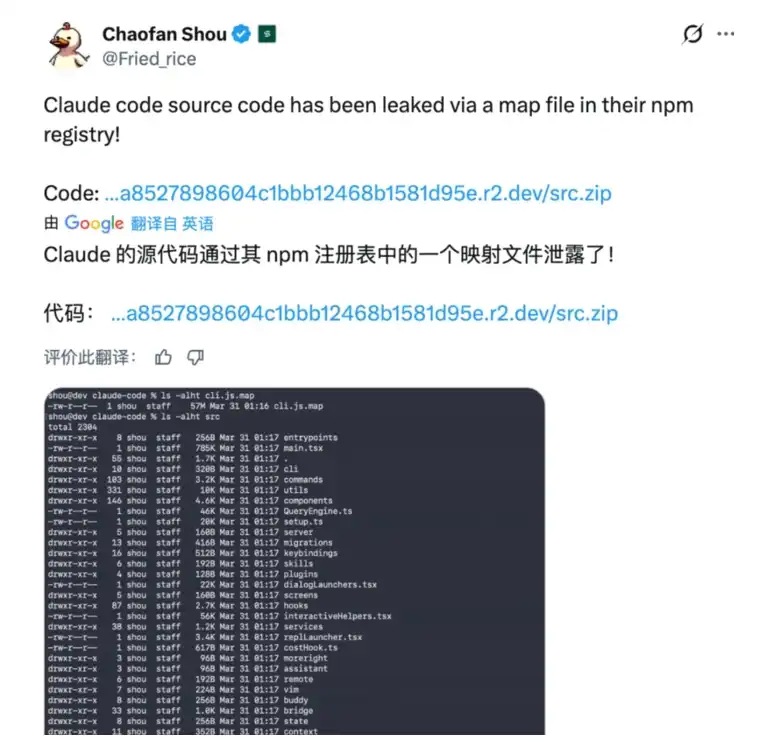
So, what was the cause of this leak? According to reports, when Anthropic published the code to npm, it actually forgot to remove the .map files, leading to the exposure of the core code. This mistake not only embarrassed the company but also raised external doubts about its security management. However, this accidental leak has given the outside world an early glimpse into some of Anthropic's cutting-edge functionalities in the AI field.

From the source code, it can be seen that Claude Code includes several astonishing features, with the project codenamed BUDDY being particularly notable. It can not only accompany developers in writing code but also has a unique personalized pet system, allowing users to incubate their own cyber pets based on personal information. This pet not only has a cute appearance but also has dynamic stats like debugging power and patience, and even a "sarcasm value," undoubtedly adding a lot of fun to the work atmosphere.

Even more forward-looking is the feature codenamed KAIROS, which aims to achieve an "always-on" AI assistant. Unlike traditional conversation methods, KAIROS can maintain memory across multiple sessions and proactively initiate tasks. Additionally, the source code includes a Nightly Dreaming mechanism, where Claude organizes information and consolidates core content while the user sleeps. This innovative concept not only makes the AI smarter but also brings new possibilities for future work methods.

Although Anthropic is currently busy dealing with this leak, the unexpected exposure might also provide a platform to showcase their cutting-edge technology. This accidental PR crisis has instead highlighted the company's innovative capabilities. The future of the AI field will become even more exciting because of such attempts.


İlgili Sorular

QWhat was the cause of the Claude Code source code leak at Anthropic?

AAnthropic forgot to remove .map files when publishing the code to npm, which exposed the core source code.

QHow many lines of TypeScript code were leaked in the Claude Code incident?

AOver five hundred thousand lines of TypeScript code were leaked.

QWhat is the name of the project that features a personalized cyber pet system for developers?

AThe project is called BUDDY, which includes a personalized cyber pet system with traits like debugging power and patience.

QWhat is the KAIROS feature designed to do according to the leaked source code?

AKAIROS is designed to be an 'always-on' AI assistant that maintains memory across multiple sessions and can proactively initiate tasks.

QWhat mechanism does Claude have for processing information during user inactivity?

AClaude has a 'Nightly Dreaming' mechanism where it organizes information and consolidates core content while the user is sleeping.

İlgili Okumalar

After the Fed's Interest Rate Decision and Comments from Kevin Walsh, Experts Gathered and Shared Their Latest Insights!

Following the Fed's decision to hold interest rates steady, experts highlight a potential shift towards more independent policymaking within the FOMC, as three members dissented. Market strategists note the slight decline in bond yields and a weaker dollar post-announcement, but caution that a rate hike in September remains possible. Experts like Mark Hackett point to the three dissenting votes as a sign of growing committee independence. While markets initially rallied in relief, the final direction hinges on Fed Chair Kevin Warsh's upcoming press conference. Analysts, including Audrey Childs-Freeman, interpret the dissent as the Fed maintaining a hawkish stance. They suggest the Fed will continue monitoring data, with a summer scenario of high bond yields supporting the dollar still in play. Chris Anstey emphasizes that markets will closely watch the 10-year Treasury yield during Warsh's conference. A continued rise could signal investor fears that the Fed is not acting aggressively enough on inflation, posing a challenge for the Chair. The long-term yield is also viewed as critical for mortgages and economic management. Diane Swonk of KPMG argues a September rate hike is likely, stating that an increase now would have been more appropriate given nearly five years of high inflation. She warns that prolonged high prices risk becoming embedded in the economic system. *This is not investment advice.

cryptonews.ru15 dk önce

After the Fed's Interest Rate Decision and Comments from Kevin Walsh, Experts Gathered and Shared Their Latest Insights!

cryptonews.ru15 dk önce

USDT Supply Shrinks by $5.5 Billion While Stablecoin Turnover Hits Record High

The supply of stablecoins has contracted for the first time in years, with total market capitalization falling 4.3% from its May peak to $308.5 billion. Despite this decline, June saw a record $1.83 trillion in adjusted transaction volume for stablecoins, a 60% increase from May. This divergence suggests a shift in usage patterns: less capital is sitting idle, while the remaining supply circulates more rapidly through payment and trading systems. Specifically, the supply of Tether's USDT decreased from approximately $189.54 billion to $184 billion between May 1 and July 29, while Circle's USDC supply fell from $77.27 billion to $72.41 billion. Part of this capital appears to have moved into tokenized Treasury products, a sector whose value has grown to over $16 billion, partly driven by regulations like the 2025 GENIUS Act that prohibit interest payments on payment-focused stablecoins. Transaction velocity is emerging as a key metric, with stablecoins now turning over about six times per month—double the rate from two years ago. USDC, despite having a smaller supply than USDT, processed about $1.21 trillion in adjusted volume in June, leading in settlement activity. While a significant portion of on-chain volume may not represent genuine economic payments, identifiable real-world payments have grown sharply, reaching an estimated $390 billion in 2025. The data indicates stablecoins are evolving from static collateral into active financial infrastructure.

cryptonews.ru40 dk önce

USDT Supply Shrinks by $5.5 Billion While Stablecoin Turnover Hits Record High

cryptonews.ru40 dk önce

İşlemler

Spot
活动图片