‘Clarity once and for all’ – White House reviews SEC’s new crypto framework

ambcrypto2026-03-24 tarihinde yayınlandı2026-03-24 tarihinde güncellendi

Özet

The U.S. SEC is shifting its approach to crypto regulation by moving away from enforcement actions toward creating clear rules. On March 20, it submitted two proposals to the White House, one aimed at classifying digital assets to determine which should be considered securities. If approved, many cryptocurrencies may no longer be classified as securities, reducing regulatory confusion. An "innovation exemption" may ease compliance for crypto firms, encouraging innovation in the U.S. The CFTC chair emphasized the need for clarity. The SEC-CFTC collaboration suggests most digital assets should not be automatically treated as securities. Despite recent market gains, investor sentiment remains fearful. The new framework seeks to balance oversight and growth while awaiting potential congressional legislation.

The U.S. Securities and Exchange Commission (SEC) is starting to change how it handles crypto regulation. Instead of relying mainly on lawsuits and enforcement actions, it is now working toward creating clear and structured rules.

On the 20th of March, the SEC quietly sent two important proposals to the White House. One focuses on making hedge funds and private equity firms more transparent.

Meanwhile, the second proposal was a more significant one for crypto. The latter aims to create a clear system to classify digital assets.

White House reviews crypto interpretation

If approved, many cryptocurrencies may no longer be classified as securities, reducing confusion and giving the industry clearer rules to follow. Instead of relying on lawsuits, the SEC is shifting toward setting clear guidelines, as reported by Bloomberg.

The proposed “innovation exemption” highlights this change. Rather than strict enforcement, the SEC is offering a more supportive environment where crypto firms can operate with fewer restrictions. This means new companies may not need to immediately meet complex registration requirements, making it easier for them to build and grow in the U.S.

Remarking on the same, Michael S. Selig, Chair of the Commodity Futures Trading Commission (CFTC), said,

Chairman Atkins and I now have developed a new interpretation that will provide clarity once and for all as to what’s a security and what’s not

Citing the reason behind this shift, Selig explains that earlier, the SEC, under Chair Gary Gensler, companies were often left guessing what was allowed and what wasn’t. This confusion pushed many crypto businesses to move outside the U.S.

In fact, because of this unclear environment, many developers became hesitant and stopped taking risks. Now, the new SEC proposals are trying to fix that by bringing more clarity and encouraging innovation to return to the U.S.

Private fund space also gets a breather

A similar shift is happening in the private fund space. The SEC has delayed some reporting rules (Form PF) until the 1st of October and is rethinking the strict data requirements introduced under Gary Gensler.

This revives an important debate. Following the Archegos collapse, regulators pushed for greater transparency to mitigate risk. Now, however, the SEC is shifting focus toward easing compliance burdens for firms, aiming to strike a balance between market safety and regulatory simplicity.

Notably, this change comes at a time when there is a significant disconnect between price movements and investor sentiment.

Market scenes are full of question marks

In the last 24 hours, the total crypto market value has gone up by about 3.26% at press time. But even with this rise, investor confidence is still very low.

The Crypto Fear & Greed Index is stuck in the “Extreme Fear” zone, showing that people are still uncertain and cautious.
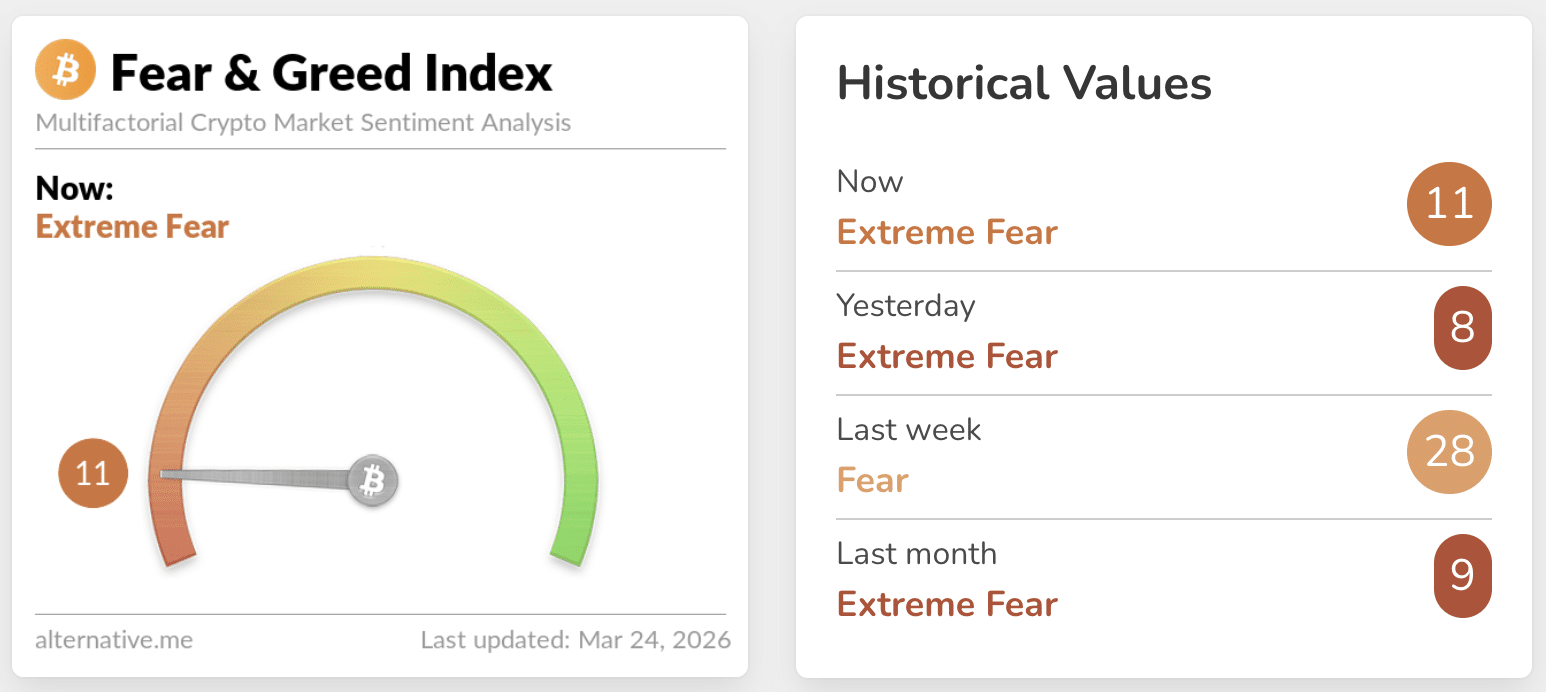
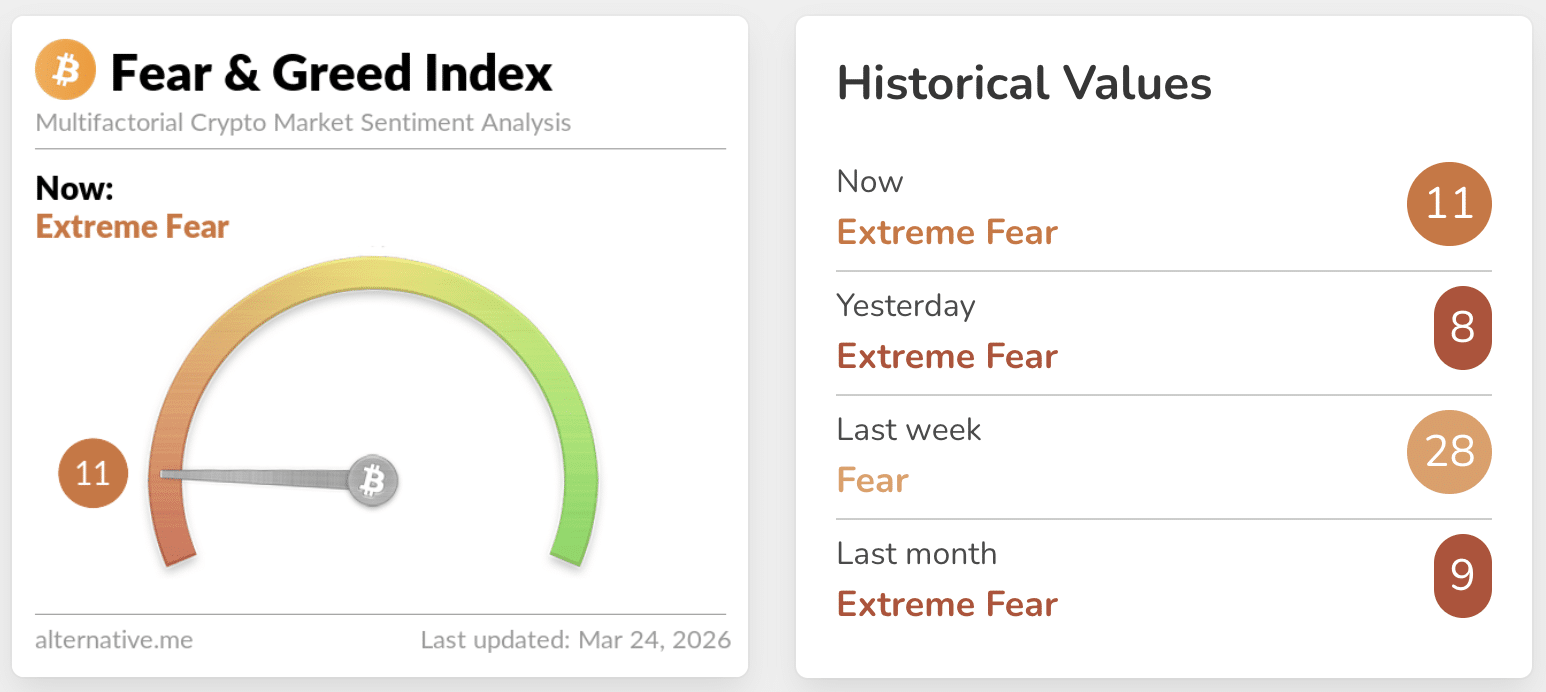
Source: Alternative

However, with all these developments, the SEC is trying to build a bridge between its old approach and future laws like the CLARITY Act, which aim to provide clearer legal clarity.

Needless to say, the SEC is also working closely with the CFTC. In a recent interpretation on the 17th of March, they suggested that most digital assets should not be treated as securities automatically. This helps reduce risk and uncertainty for crypto companies in the U.S.

It’s still unclear whether these new rules will be temporary until Congress passes full legislation or if they will become a long-term framework. But one thing is clear: under Chairman Paul Atkins, the SEC is trying to end the confusion.


Final Summary

  • Collaboration between the SEC and CFTC is a key step toward unified oversight, reducing regulatory overlap and uncertainty.
  • Clear classification of digital assets could finally remove the grey zone that has stalled crypto innovation.


İlgili Sorular

QWhat is the main shift in the SEC's approach to crypto regulation as described in the article?

AThe SEC is shifting from relying mainly on lawsuits and enforcement actions to creating clear and structured rules for the crypto industry.

QWhat is the purpose of the proposed 'innovation exemption' mentioned in the article?

AThe 'innovation exemption' aims to create a more supportive environment where crypto firms can operate with fewer restrictions, allowing new companies to build and grow without immediately meeting complex registration requirements.

QAccording to the article, what problem did the previous regulatory environment cause for crypto businesses?

AThe previous unclear regulatory environment, under Chair Gary Gensler, caused confusion that pushed many crypto businesses to move outside the U.S. and made developers hesitant to take risks.

QWhat does the current 'Crypto Fear & Greed Index' indicate about investor sentiment, despite recent market gains?

ADespite a recent rise in the total crypto market value, the Crypto Fear & Greed Index is stuck in the 'Extreme Fear' zone, indicating that investor confidence is still very low and people remain uncertain and cautious.

QHow are the SEC and CFTC collaborating to provide clarity, according to the recent interpretation on March 17th?

AIn their recent interpretation, the SEC and CFTC suggested that most digital assets should not be automatically treated as securities, which helps reduce risk and uncertainty for crypto companies in the U.S.

İlgili Okumalar

The Value Distribution of Stablecoins

**Summary: The Value Distribution of Stablecoins** The article argues that stablecoins are evolving from mere trading tools into broader channels for dollar access. It divides the stablecoin ecosystem into four layers to analyze how value is distributed: 1. **Issuance Layer:** Mints stablecoins, holds reserve assets, and captures the spread between reserve yield and user costs (e.g., Tether, Circle). This layer currently earns the largest profit margin. 2. **Infrastructure Layer:** Connects stablecoins to the traditional financial system, handling fiat on/off-ramps, banking integration, compliance (KYC/AML), and asset management (e.g., Bridge, BVNK). This is the "unglamorous" but critical work, building the essential bridges between crypto and real-world finance. 3. **Acquiring/Distribution Layer:** Integrates stablecoins into merchant systems, manages payment flows, and provides enterprise financial software (e.g., Stripe, Coinbase). They act as the access point for businesses. 4. **Application Layer:** The end-users and businesses that ultimately use stablecoins for payments, settlements, or as a store of value. They benefit from convenience but have little pricing power. The core thesis is that while the issuance layer currently dominates profits, the often-overlooked **infrastructure layer holds significant long-term potential**. The real challenge and barrier to mass adoption is not the on-chain transfer of stablecoins (which is simple), but the complex "last mile" integration into existing business workflows, banking systems, and regulatory frameworks across different countries. Companies in this layer are currently in a "land grab" phase, investing heavily to build networks, secure bank partnerships, and establish compliance pathways. While their position is currently pressured by the profitable issuers above and distribution platforms below, the article suggests that if stablecoins become a default financial rail for businesses, the infrastructure providers who have done the hard work of integration will ultimately gain strong pricing power and become entrenched, essential players.

marsbit5 saat önce

The Value Distribution of Stablecoins

marsbit5 saat önce

The Value Distribution of Stablecoins

The Value Distribution of Stablecoins The article argues that stablecoins are evolving from a mere trading tool into a broad "dollar channel." It analyzes the industry's value chain through four layers: 1. **Issuance Layer (e.g., Tether, Circle):** The top layer that mints stablecoins, holds reserve assets, and captures the thickest interest rate spread. 2. **Infrastructure Layer (e.g., Bridge, BVNK):** Connects stablecoins to the traditional financial system, handling critical but complex "dirty work" like fiat on/off-ramps, banking integration, compliance (KYC/AML), and cross-border settlement. 3. **Acquiring/Distribution Layer (e.g., Stripe, Coinbase):** Embeds stablecoins into merchant systems, manages payment flows, and integrates with enterprise software. 4. **Application Layer:** End-users and businesses that ultimately use stablecoins for payments, settlement, or storing value. The author posits that while the issuance layer currently captures the most profit, the most overlooked and potentially critical layer is infrastructure. The core challenge for stablecoin adoption isn't the on-chain transfer (which is simple), but bridging the gap between blockchain and the real-world financial system. This involves solving practical problems for businesses: fiat conversion, reconciliation, tax handling, and user onboarding. Infrastructure companies are currently in a difficult "land-grab" phase—building networks, securing banking relationships, and achieving compliance country-by-country. They face pressure from both the profitable issuance layer above and distribution platforms below. However, the author suggests this layer is building a crucial moat. Once stablecoins become a default business rail, the infrastructure players who have done the hard work of integration may gain significant, durable value and pricing power.

链捕手5 saat önce

The Value Distribution of Stablecoins

链捕手5 saat önce

İşlemler

Spot
Futures

Popüler Makaleler

HOUSE Nasıl Satın Alınır

HTX.com’a hoş geldiniz! Housecoin (HOUSE) satın alma işlemlerini basit ve kullanışlı bir hâle getirdik. Adım adım açıkladığımız rehberimizi takip ederek kripto yolculuğunuza başlayın. 1. Adım: HTX Hesabınızı OluşturunHTX'te ücretsiz bir hesap açmak için e-posta adresinizi veya telefon numaranızı kullanın. Sorunsuzca kaydolun ve tüm özelliklerin kilidini açın. Hesabımı Aç2. Adım: Kripto Satın Al Bölümüne Gidin ve Ödeme Yönteminizi SeçinKredi/Banka Kartı: Visa veya Mastercard'ınızı kullanarak anında Housecoin (HOUSE) satın alın.Bakiye: Sorunsuz bir şekilde işlem yapmak için HTX hesap bakiyenizdeki fonları kullanın.Üçüncü Taraflar: Kullanımı kolaylaştırmak için Google Pay ve Apple Pay gibi popüler ödeme yöntemlerini ekledik.P2P: HTX'teki diğer kullanıcılarla doğrudan işlem yapın.Borsa Dışı (OTC): Yatırımcılar için kişiye özel hizmetler ve rekabetçi döviz kurları sunuyoruz.3. Adım: Housecoin (HOUSE) Varlıklarınızı SaklayınHousecoin (HOUSE) satın aldıktan sonra HTX hesabınızda saklayın. Alternatif olarak, blok zinciri transferi yoluyla başka bir yere gönderebilir veya diğer kripto para birimlerini takas etmek için kullanabilirsiniz.4. Adım: Housecoin (HOUSE) Varlıklarınızla İşlem YapınHTX'in spot piyasasında Housecoin (HOUSE) ile kolayca işlemler yapın.Hesabınıza erişin, işlem çiftinizi seçin, işlemlerinizi gerçekleştirin ve gerçek zamanlı olarak izleyin. Hem yeni başlayanlar hem de deneyimli yatırımcılar için kullanıcı dostu bir deneyim sunuyoruz.

348 Toplam GörüntülenmeYayınlanma 2025.04.27Güncellenme 2026.06.02

HOUSE Nasıl Satın Alınır

Tartışmalar

HTX Topluluğuna hoş geldiniz. Burada, en son platform gelişmeleri hakkında bilgi sahibi olabilir ve profesyonel piyasa görüşlerine erişebilirsiniz. Kullanıcıların HOUSE (HOUSE) fiyatı hakkındaki görüşleri aşağıda sunulmaktadır.

活动图片












