China's Version of 'Tech Burning Man' Debuts in Shanghai, muShanghai Creates a Global Geek 'Pop-up City'

marsbit2026-05-11 tarihinde yayınlandı2026-05-11 tarihinde güncellendi

Özet

From May 10 to June 6, 2026, the inaugural muShanghai "Pop-up City" experiment, dubbed China's version of a "tech Burning Man," launched in Shanghai. Co-organized by the international open-source community The Mu and the Hongqiao Alibaba Center, this 28-day event aimed to build a global "parallel city" for geeks, attracting over 800 participants from more than 50 countries, including former OpenAI engineers and startup founders. The program featured four themed weeks: AI Week, Biotech Week, Robotics Week, and Culture Week, hosting nearly 100 sessions like ClawCon 2026. Activities ranged from discussions on AI safety and consumer apps to robot battles and cyberpunk culture, culminating in large outdoor "Innovator Marketplaces." A core principle was "Build in Public," encouraging open sharing of projects and progress. Hongqiao Alibaba Center served as the co-host and primary venue, positioning itself as a first-stop hub for international talent in China. The event marks a significant step for The Mu community, which has previously organized similar pop-up cities in Argentina and San Francisco, in bringing its model of immersive, collaborative innovation to China. It aims to be a key window for global科创 (scientific and technological innovation) exchange.

From May 10 to June 6, 2026, the "Pop-up City" experiment hosted by muShanghai kicked off in Shanghai. The experiment was initiated by the international open-source community The Mu and co-hosted by Hongqiao Alibaba Center. Whether you are a code-writing geek, a research-driven academic achiever, or an aspiring disruptor looking to make a big impact, you will find your place here. The organizers hope to co-build a "parallel city" belonging to global geeks with participants.

This 28-day experiment will gather developers, researchers, and entrepreneurs from over fifty countries worldwide to jointly explore new possibilities for human-technology collaboration in the AI era.
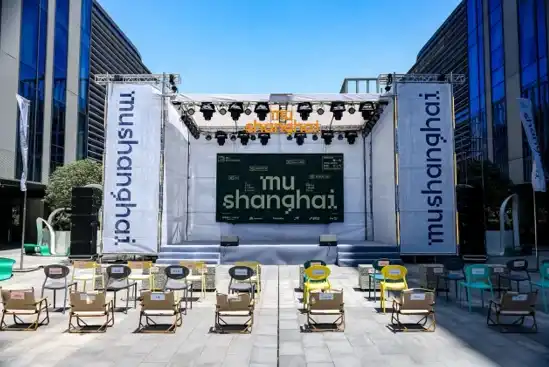
Global Tech Innovation Forces Resonate Together in Shanghai

"When my foreign friend first came to China, he said, 'China is different from what I imagined. You must host a The Mu event here, to let the world see the real China,'" recalled Sun, the initiator of muShanghai.

Since its launch, this experiment has attracted over 2000 applications globally, with more than 800 people passing the muShanghai review. They are evenly distributed across over fifty countries, including the United States, Argentina, Canada, Japan, France, South Africa, the United Kingdom, and China. The lineup of participants is impressive, ranging from former OpenAI engineers and founders of startups that have raised tens of millions in funding, to core contributors of OpenClaw like Vincent Koc and Dave Morin. Top technical talent from around the world will collide and collaborate across disciplines here.

"Domestic talents go global, and international talents come to China—letting the world see China ultimately means letting the world see you," Sun stated. "We've built the stage, now it's your turn to co-create."

Four Thematic Weeks Build an Immersive Innovation Ecosystem
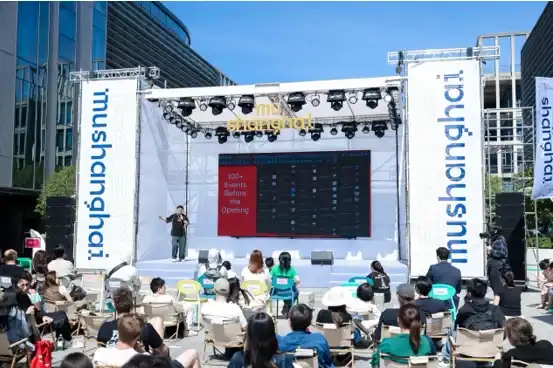
This 28-day "Tech Burning Man" will revolve around four thematic weeks, hosting nearly 100 events cumulatively. As a grand opening, ClawCon 2026 Shanghai will gather core global contributors of OpenClaw to deeply discuss AI development trends and open-source ecosystem building.

  • AI Week (May 11-15): Big Model Day will invite guests from kimi, Zhipu AI, Ant Bailing, StepFun, and others to share hardcore insights; the AI Safety session convenes global safety researchers and cryptographers; the Consumer App session invites teams behind multimodal large models like MiniMax and ZPilot, along with other Chinese AI consumer product teams, to deconstruct product iteration logic on-site.
  • Biotech Week (May 18-22): Topics progress layer by layer, from using technology to combat aging, to equipping labs with AI brains and robotic arms, to rewriting the underlying code of the material world. There's even a month-long longevity experiment led by a Yale PhD, where researchers will use themselves as subjects to explore the boundaries of life sciences.
  • Robotics Week (May 25-29): Robot combat competitions, cyber fashion shows, hardware supply chain pop-ups, and other events will take turns, offering a visually striking tech feast showcasing cutting-edge achievements in robotics.
  • Culture Week (June 1-6): Stepping beyond a purely technological perspective, it explores future social forms, cyberpunk culture, independent game creation, and other topics, allowing technology and humanities to collide and integrate here.

Notably, every Friday during the first three weeks, a large outdoor "Innovator's Market" will be held, and in the final week, there will be exhibitions related to technology and humanities. All participants can bring their own projects for on-site display, testing, and exchange, promoting rapid implementation of ideas and facilitating efficient collaboration. muShanghai will implement a Build in Public content mechanism throughout. We have designed a complete set of methods to encourage everyone to publicly share their projects, processes, problems, progress, and interim results, continuing iteration based on real feedback.

Hongqiao Alibaba Center Empowers "The First Stop for Starting a Business in China"
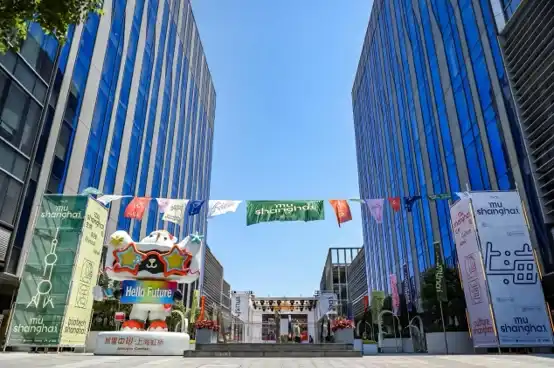
This one-month event is expected to reach over 100,000 people. As the co-organizer, Hongqiao Alibaba Center positions itself as an international innovation community and an ecological development hub. Relying on its five-dimensional one-stop capabilities in space, commerce, culture, ecosystem, and government services, it provides solid support for overseas talents to land and develop.

The "Tech Burning Man" initiator, The Mu, is the first international entrepreneur community to settle in Hongqiao Alibaba Center and is also one of the first international open-source partner communities of the HongCheng OPC community. The park director stated that HongCheng OPC is committed to providing one-stop services for global entrepreneurs coming to China. Collaborating with The Mu this time is a key layout for Hongqiao Alibaba Center in building an international tech innovation ecosystem.

This event is not only a frontier tech gathering but also an important window for China's tech innovation ecosystem to integrate with the world.

The Mu: An Open-Source Community That "Builds Cities from Scratch" Globally

Behind muShanghai is The Mu community, which has been successfully implemented in places like Argentina and San Francisco.

In Argentina, the Crecimiento project gathered 2,500 developers, incubated over 1,200 projects, with total funding exceeding $20 million. In San Francisco, The Mu helped transform the 16-story Frontier Tower into a tech innovation landmark, hosting OpenClaw's first offline developer gathering. It was also the sole startup community at the 2025 Osaka World Expo.

From preparation to project establishment, the muShanghai team overcame multiple challenges over seven months, including compliance filings for foreign events and rebuilding resource networks. On the opening day, attendees included Kong Fuan, Party Secretary and Executive Deputy Director of the Shanghai Hongqiao International Central Business District Administrative Committee; Lou Yongqi, President of Shanghai University of Engineering Science; Ke Xiaolin and Wang Ximei, Deputy District Heads of Minhang District, among others. The muShanghai core creative team and domestic and international co-creation partners introduced the thematic content and exciting activities for the upcoming four weeks.

AI may be changing the world, but it cannot replace the infinite possibilities that arise when we meet and collide.

About The Mu

The Mu is a global community organization that promotes open-source collaboration and innovation. It is committed to providing immersive co-creation spaces for developers, researchers, and entrepreneurs through the "Pop-up City" model, facilitating cross-cultural, interdisciplinary knowledge sharing and technological breakthroughs.

About Hongqiao Alibaba Center

Located in the core area of the Hongqiao International Open Hub, Hongqiao Alibaba Center is an important industrial office carrier for Alibaba Group in Shanghai. It is dedicated to creating a benchmark for space services targeting global tech talent, providing first-stop support for international developers, entrepreneurs, and companies coming to China. It offers not just office space, but an ecosystem-based development solution for international talent.


İlgili Sorular

QWhat is muShanghai and what event is it organizing in Shanghai in 2026?

AmuShanghai is organizing a 28-day 'Pop-up City' experiment in Shanghai from May 10 to June 6, 2026. It aims to create a 'parallel city' for global geeks, co-hosted by the international open-source community The Mu and the Hongqiao Alibaba Center.

QWhat are the four theme weeks of the muShanghai 'Pop-up City' event and their main focuses?

AThe four theme weeks are: 1) AI Week (May 11-15): Focusing on large models, AI safety, and consumer applications. 2) Biotech Week (May 18-22): Exploring longevity, AI/robotics in labs, and foundational science. 3) Robotics Week (May 25-29): Featuring robot combat, cyber fashion shows, and hardware supply chain events. 4) Culture Week (June 1-6): Discussing future society, cyberpunk culture, and independent game creation.

QWho is The Mu community and what role does it play in the muShanghai event?

AThe Mu is an international open-source community that drives collaboration and innovation globally. It is the organizer behind the muShanghai 'Pop-up City' event. The community has previously run successful projects in Argentina and San Francisco and aims to provide an immersive co-creation space for developers, researchers, and entrepreneurs.

QWhat is the significance of the Hongqiao Alibaba Center's involvement as a co-host?

AAs a co-host, the Hongqiao Alibaba Center provides a strategic 'first stop in China' for overseas talent and entrepreneurs. It offers comprehensive support in space, business, culture, ecosystem, and government services, positioning itself as an international innovation hub and a key part of building a global tech and innovation ecosystem in Shanghai.

QWhat does 'Build in Public' refer to in the context of the muShanghai event?

A'Build in Public' is a core content mechanism for the muShanghai event. It refers to a designed set of practices that encourages participants to openly share their projects, processes, problems, progress, and interim results throughout the event. The goal is to foster iteration and improvement through real-time feedback and collaboration within the community.

İlgili Okumalar

Gate Research Institute: The 'Wall Street-ization' Wave of Crypto Financial Products – Competition or Integration?

The article titled "Gate Research Institute: Are Crypto Financial Products Sparking a 'Wall Street' Wave—Competition or Convergence?" explores the evolving relationship between the crypto ecosystem and traditional finance (TradFi). The piece begins by reflecting on Bitcoin's original 2009 vision of decentralization, disintermediation, and moving away from banks. It then contrasts this with the 2024 landscape, where key crypto assets like Bitcoin are increasingly held through Wall Street products like ETFs issued by giants like BlackRock. The article questions whether this signifies that TradFi is systematically taking over the rights to issue, price, custody, and distribute crypto financial assets. The core argument is that this is not a zero-sum takeover but rather a bidirectional convergence where each side addresses the other's weaknesses. Crypto offers 24/7 global markets, programmable settlement, and open access but lacks compliant channels, institutional-grade custody, deep fiat liquidity, and mainstream distribution. TradFi possesses these but is constrained by legacy systems, limited operating hours, and slow settlement. Two primary convergence paths are highlighted: * **Path A (CEX to TradFi):** Exemplified by Gate, which has progressed from offering tokenized stocks and CFDs to providing direct, real stock trading (US, Hong Kong, South Korea) within its platform, using USDT. * **Path B (TradFi to Crypto):** Exemplified by Robinhood, which has integrated crypto trading, acquired exchanges like Bitstamp, and is moving traditional assets like stocks onto the blockchain via tokenization and its own Layer 2. Both paths are ultimately competing to become the next-generation, unified financial account—a "super account" where users can seamlessly trade cryptocurrencies, stocks, ETFs, RWA (Real World Assets), and tokenized treasury products in one interface. The growth of RWA and tokenized treasuries (e.g., BlackRock's BUIDL) is presented as the asset-layer fusion, providing stable, yield-bearing assets on-chain and acting as a bridge between the two worlds. In conclusion, the "Wall Street-ization" of crypto is framed as a mutual transformation. Decentralized ideals persist in the protocol layer, while at the application layer, a more efficient, global, and accessible unified capital market is emerging from this convergence. The future competition lies not between crypto exchanges and stockbrokers, but between platforms vying to offer the most comprehensive asset coverage, liquidity, and user experience within a single account.

marsbit2 dk önce

Gate Research Institute: The 'Wall Street-ization' Wave of Crypto Financial Products – Competition or Integration?

marsbit2 dk önce

Claude's Major New Feature: Screen Recording + Voice, Distilling Your Skills into AI Tasks in One Click

Claude has introduced a major new feature called "Record a Skill," available for Pro, Max, and Team users. This function, found in the Claude desktop app's CoWork menu, allows users to create reusable AI skills simply by recording their screen and providing voice narration while performing a task. Claude then automatically analyzes the recording and generates a functional Skill. A hands-on test confirmed the feature works seamlessly. Users start recording via the Skills manager, perform their workflow while verbally explaining the steps and logic, and avoid including sensitive information. After recording, Claude processes the content and creates the Skill, which can be saved and later invoked with a slash command (/). This eliminates the need for manual adjustments or writing complex instruction files. The innovation goes beyond mere efficiency. Previously, creating a Skill required writing a detailed SKILL.md file in Markdown—a significant barrier for non-technical users. "Record a Skill" bypasses this by directly capturing both actions and the implicit reasoning shared in the narration. This lowers the barrier to knowledge transfer and automation, addressing a core challenge in corporate knowledge management: the difficulty of getting experts to write and maintain documentation. However, the feature also highlights a shift in the nature of work. A case study from March 2026 showed a freelancer whose five-year client relationship was effectively replaced by a hand-coded Claude Skill automating their content workflow. With the even lower barrier of screen recording, the ability to distill personal expertise into automatable skills accelerates this trend. The "moat" for work is moving from simply knowing how to do a task to mastering tasks that are difficult or impossible to automate.

marsbit7 dk önce

Claude's Major New Feature: Screen Recording + Voice, Distilling Your Skills into AI Tasks in One Click

marsbit7 dk önce

Feeding AI "Noise" Can Also Boost Scores, This Work Enables Positive Transfer with Noise

Feeding "Noise" to AI Can Improve Performance: A Method Enables Positive Transfer from Noise This work, Semi-Supervised Noise Adaptation (SSNA), introduces a Noise Adaptation Framework (NAF) that challenges traditional transfer learning. Instead of requiring a labeled source domain of real data (e.g., images, text), NAF uses randomly generated Gaussian noise as the source. For a target task with C classes, it constructs C noise clusters by sampling from Gaussian distributions. Although this synthetic noise contains no semantic meaning, NAF trains it to form a discriminative class structure in a shared representation space—clustering same-class noise and separating different classes. The key is aligning this learned structure from the noise domain to the real, sparsely labeled target domain. A small number of target labels are still essential to establish the correspondence between noise clusters and actual classes. The training objective combines: 1) supervised loss on the few labeled target samples, 2) classification loss for the noise to build its structure, and 3) a distribution alignment loss (using Negative Domain Similarity) to minimize the gap between the noise and target domains in the shared space. Experiments show significant gains in few-label settings. With just 4 labels per class, NAF with a ResNet-18 backbone improves accuracy over a standard supervised baseline (ERM) by +12.35% on CIFAR-10, +7.61% on CIFAR-100, +4.38% on DTD-47, and +2.74% on Caltech-101. It also benefits fine-grained datasets and scales to ImageNet-1K (with 100 labels/class) and text classification (AG News). NAF can be integrated into existing semi-supervised methods like FixMatch for further gains. Ablation studies confirm the transferred benefit comes from the discriminative structure of the noise, not randomness itself. Collapsing all noise into a single point causes negative transfer, while increasing separation between noise cluster centers improves performance. The amount of noise per class is less critical once a basic structure forms. In conclusion, this work demonstrates that for positive transfer, the semantic content of source data may not be necessary. What can be effectively transferred is the *organizational structure* of categories within a representation space. This offers a promising alternative for scenarios where real source data is unavailable due to privacy, copyright, or procurement constraints.

marsbit8 dk önce

Feeding AI "Noise" Can Also Boost Scores, This Work Enables Positive Transfer with Noise

marsbit8 dk önce

İşlemler

Spot
活动图片