China's 'Bio DeepSeek' Emerges: 4 Oxford Prodigies Let AI Take Over Life Science

marsbit2026-08-04 tarihinde yayınlandı2026-08-04 tarihinde güncellendi

Özet

China's 'Biology DeepSeek' Emerges: Four Oxford Alumni Aim to Let AI Take Over Life Sciences Following DeepSeek-V4-Flash's global impact, a Chinese counterpart for life sciences has arrived. Jindu Bio, founded by four Oxford University alumni, has developed GeneLLM, a multi-omics large language model. Published in top journals *Nature Communications* and *Advanced Science*, GeneLLM is the first model pre-trained directly on raw omics data, aiming to understand the "language" and "system" of life. GeneLLM treats the four RNA bases (A, U, G, C) as fundamental tokens, learning from raw sequencing data without relying on pre-defined annotations. It uses a Transformer architecture to predict the next base, processing trillions of RNA reads. With versions ranging from 1.5 billion to 30 billion parameters, it achieves high accuracy in disease prediction with significantly lower-cost, shallow-depth sequencing, making precision medicine more accessible. Beyond the model, Jindu Bio is building BioFord Harness, an infrastructure to connect AI with physical labs. This system translates scientific intent into executable commands for various lab equipment, manages scheduling, and creates a data feedback loop. Its platform features five collaborative AI agents for literature review, experimental design, scientific reasoning, lab scheduling, and data analysis, drastically speeding up research cycles. Crucially, it turns all experimental data—including failures—into valuable learning mater...

Just as DeepSeek-V4-Flash's official release shook the global general-purpose large model community, China's life science version of DeepSeek followed closely behind.

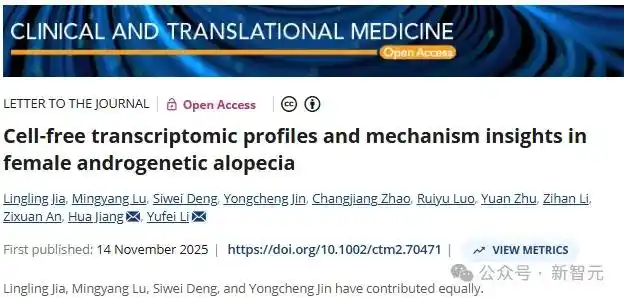
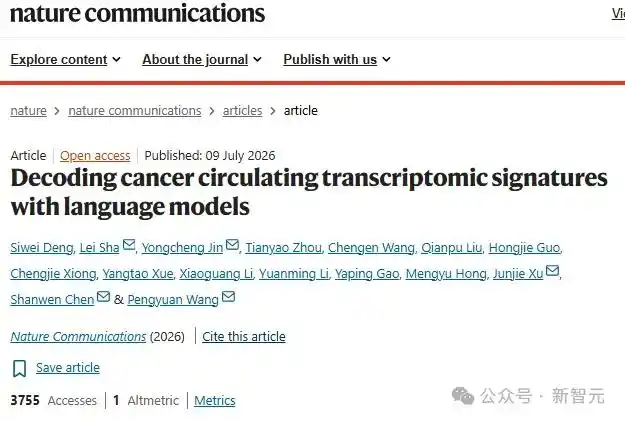
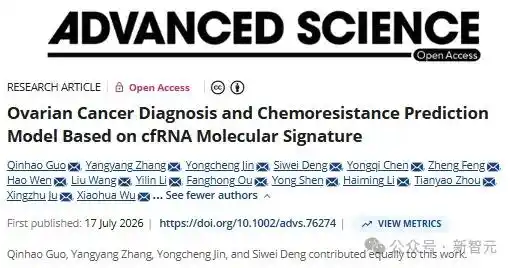
Recently, GeneLLM, a life science vertical multi-omics large model independently developed by Kindu Biology (founded by 4 Oxford University returnees), has been successively published in top-tier international academic journals – Nature Communications and Advanced Science.

As the world's first multi-omics large model pre-trained directly on raw omics data, GeneLLM is another heavyweight model following Google's AlphaFold and Stanford's EVO 2, filling the gap in China's life science foundational large models. It can be called China's life science version of DeepSeek, allowing AI to begin understanding the multiple 'languages' and the entire 'system' of life.
Predicting the Next Piece of Life Information Like Predicting the Next Token

Disease recognition is just one application scenario for GeneLLM. What Kindu Biology truly aims to do is build the "Claude Code" for the life science field.

The core of large language models like ChatGPT, Claude, and DeepSeek is next-token prediction.

GeneLLM adopts a similar approach, but what it predicts is not text, but life information.

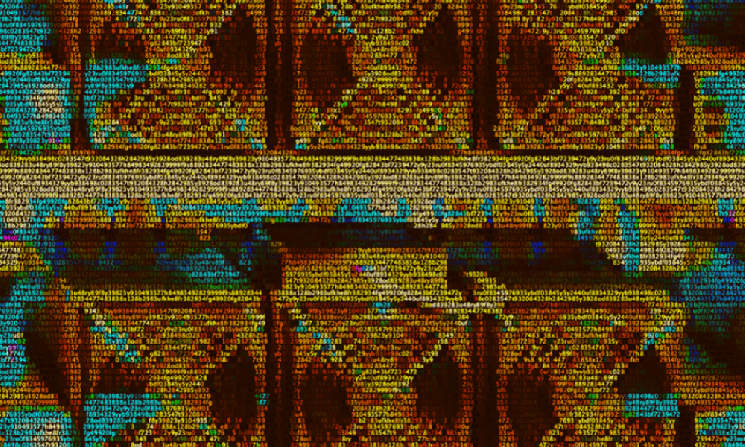
The four bases in RNA sequences – Adenine (A), Uracil (U), Guanine (G), and Cytosine (C) – become the basic tokens for GeneLLM to understand the language of life.

Traditional bioinformatics analysis typically relies on gene annotation, sequence alignment, and manually defined labels. While accurate, this method prematurely limits the model's cognitive scope and may lose vast amounts of unknown biological signals hidden in raw data.

GeneLLM, however, charts a different path, learning life's patterns directly from unprocessed raw sequencing data.

It uses multi-omics raw data such as RNA-seq, proteomics, and metabolomics as training data, allowing the model to autonomously discover disease-related patterns.

Currently, GeneLLM has completed pre-training of a 1.5 billion parameter model with 3.5 trillion base sequences, and the XLarge version has achieved pre-training of a 30 billion parameter model, continuously expanding the technological barrier.

As the world's first multi-omics large model pre-trained on raw sequencing data, GeneLLM includes two main stages:

(1) Unsupervised Pre-training & Prototype Discovery

(2) Patient-level Disease Fine-tuning (Disease Tuning)
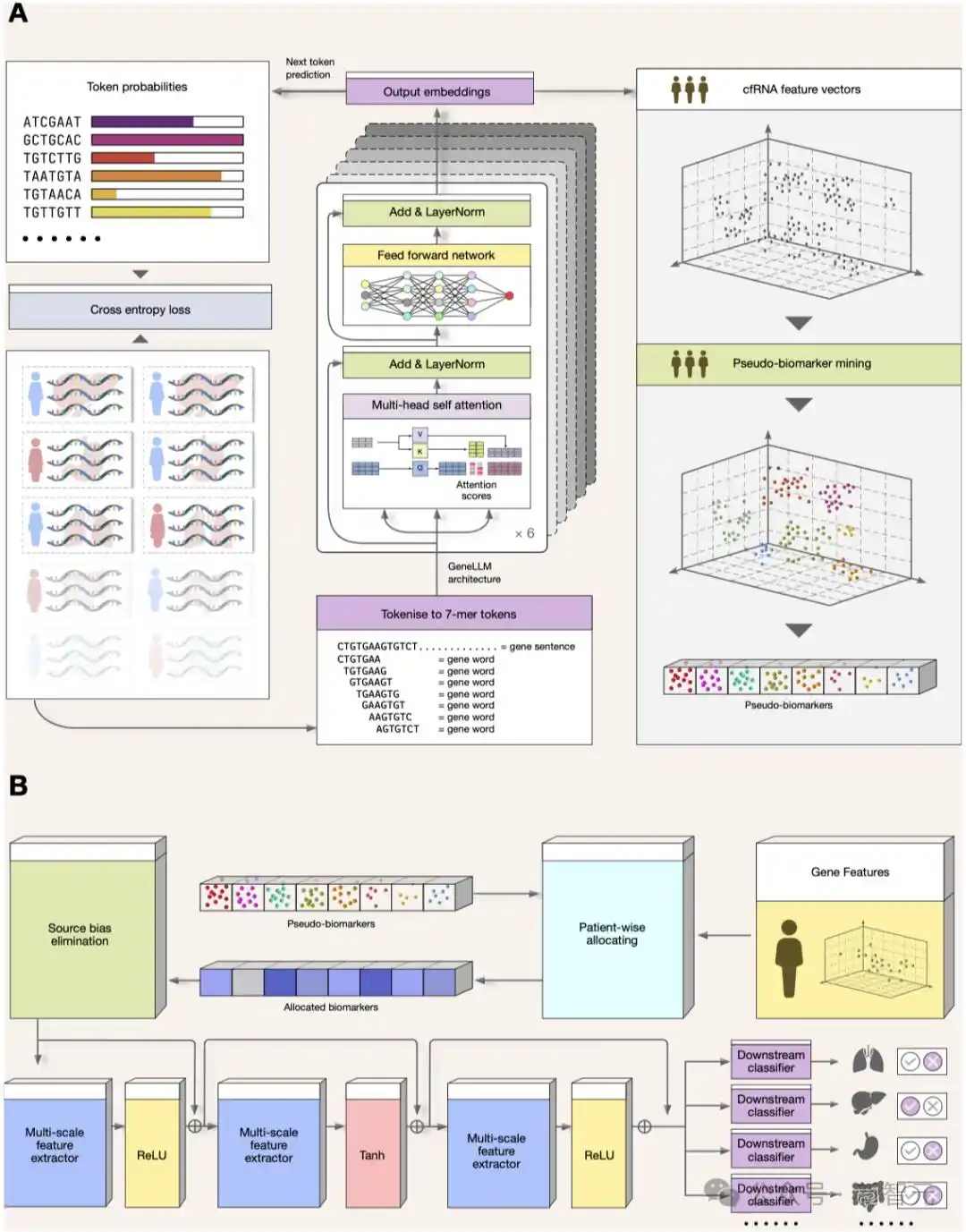
GeneLLM first needs to solve a problem:

How to transform complex life data into a language AI can understand?

In natural language processing, the BPE algorithm splits sentences into Tokens; GeneLLM, however, splits RNA sequencing fragments of about 150bp length into life Tokens using a sliding window of 7 bases (7-mer).

Subsequently, the model utilizes the Transformer architecture to directly predict the next base without gene annotation or human labels.

This means the AI is not first consulting a human-compiled "dictionary," but learning directly from the raw signals of life.

During training, GeneLLM processed approximately tens of trillions of RNA reads, trained on a hundred-card cluster of NVIDIA A100 GPUs.

At this point, GeneLLM's generalization and other capabilities began to "emerge."

As a major innovative breakthrough in the life science field, this domestically produced life science model, GeneLLM, can be applied to various fields including new drug R&D, precision medicine, synthetic biology, environmental monitoring, microbiology & bio-agriculture, and protein & molecule design. It is one of the few large models globally that has achieved real-world scenario deployment.
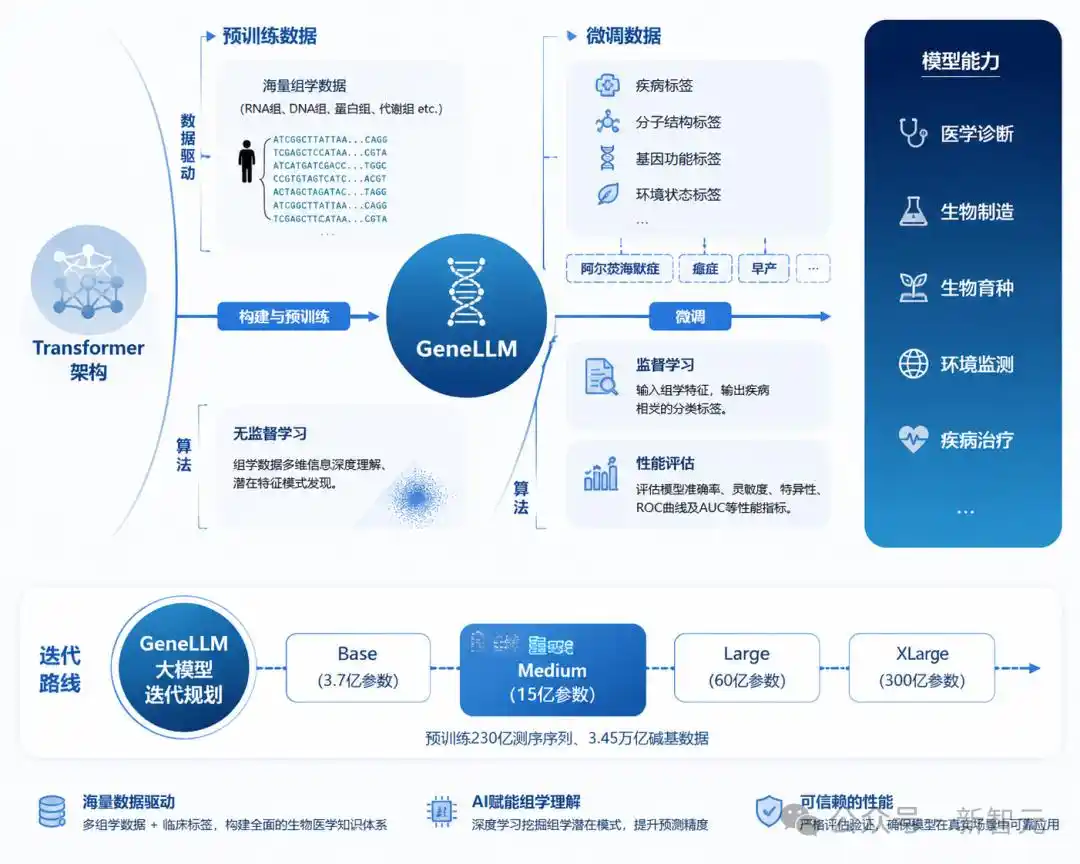
Only after examining the underlying innovations of GeneLLM in "data, architecture, training," can we truly understand: why it represents China's "Bio Version of DeepSeek."

Silicon Valley stacks tens of thousands of H100s for trillion-parameter models, DeepSeek improves computing efficiency through algorithmic innovation, and GeneLLM similarly moves massive life science data with a deft touch.

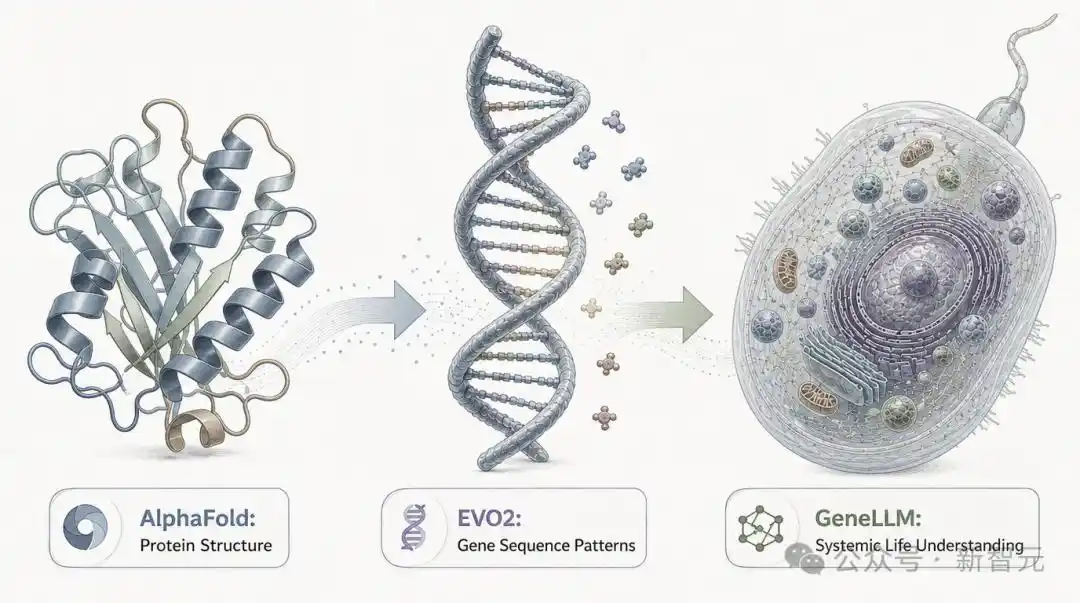
If AlphaFold allowed AI to see life's "structure" for the first time, and EVO2 allowed AI to begin understanding life's "code," then GeneLLM attempts to further understand life's "system."
What's more remarkable is efficiency. Traditional methods rely on 6Gb deep sequencing, with high costs making deployment difficult. GeneLLM maintains AUC > 0.8 even at an extremely shallow depth of 1Gb (cost reduced by 83%).

This truly holds the promise of making affordable precision medicine a reality.

A new research paradigm begins to emerge: letting AI learn from life data, bringing life science into a new stage of predictable, computable, and scalable exploration.

Not Just a Model, but the "Last Mile" Intelligent Infrastructure

But Kindu Biology's strategy extends beyond the foundational model.

Using the GeneLLM multi-omics large model as the life cognition base, Kindu Biology further constructs an execution system connecting AI intelligence with the physical world. Through the Harness intelligent experiment execution layer and the DBTL (Design-Build-Test-Learn) data feedback loop, it achieves a complete AI for Science closed loop—from understanding life patterns and generating scientific hypotheses, to automated experimental validation and continuous iterative optimization.

As Liam Fedus, former OpenAI VP and head of post-training, said, current LLMs have exhausted the limited text and code on the internet. The next major advance in scientific discovery must rely on experimental iteration.
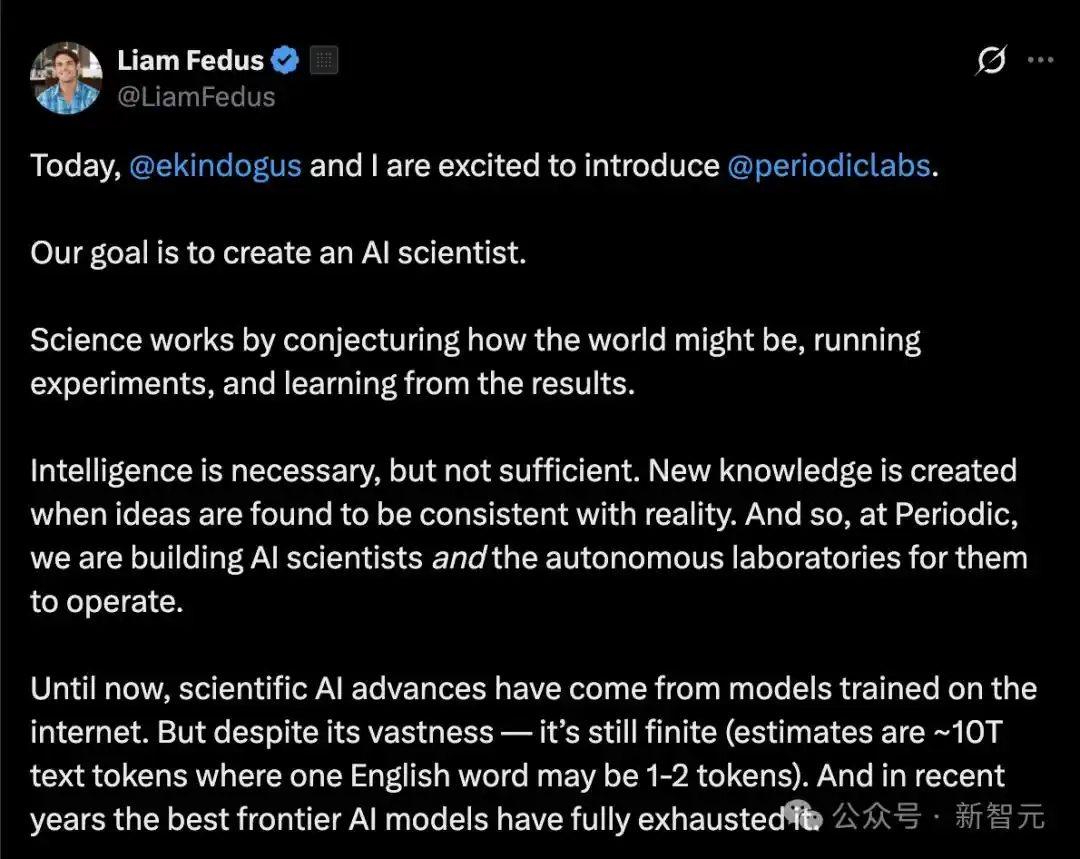
In other words, AI cannot discover new knowledge solely by reading what humans have already written; it must conduct experiments itself.

But here's the problem—

Internet services inherently have APIs; network information is inherently digital. But research equipment comes from different vendors with varying protocols, complex and expensive. No one can rebuild everything from scratch in a few months.

Most labs today are designed for humans: instrument panels, pipetting actions, sample states, on-the-spot judgments—the vast majority are not translated into machine-readable signals.

For AI to enter the lab, the current challenge is not just model capability; it requires a new set of infrastructure.

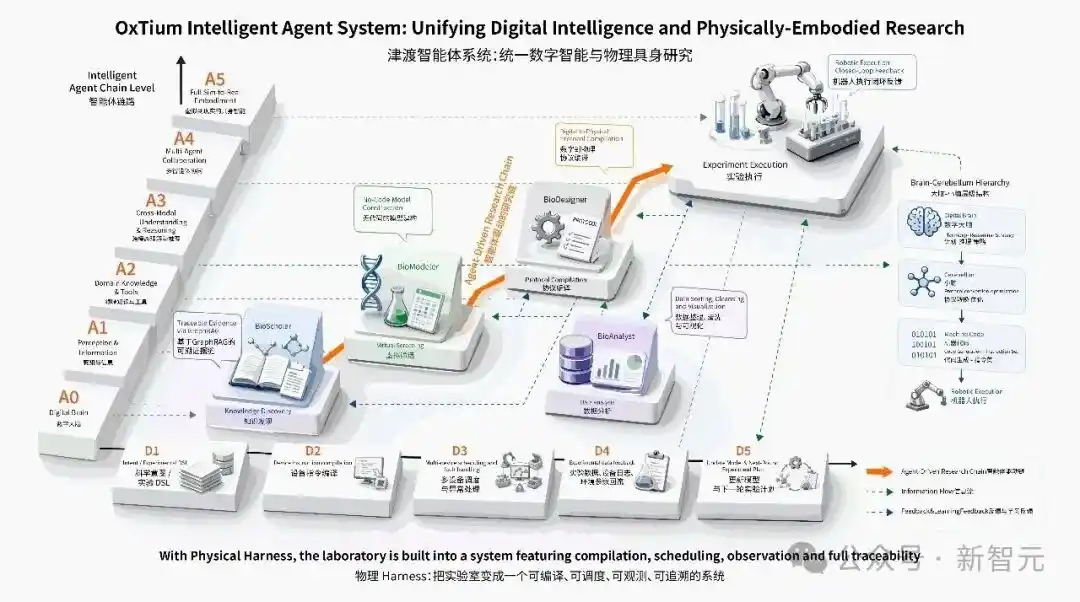
Therefore, for AI to enter the lab, the current issue is not just a model capability problem; it also requires a physical Harness: turning the lab into a system that can be compiled, scheduled, monitored, and traced.

This is the true last mile of AI4S.

BioFord Harness, Making the Lab Start "Running Itself"

For this purpose, Kindu developed a system called BioFord Harness.

This is an infrastructure that connects AI with the physical lab.

They are not making robotic arms imitate human hands, but transforming the lab into a system that can be compiled, scheduled, monitored, and traced.

In this process, the physical Harness must accomplish at least three things:

1. Compile scientific intent or experimental DSL into instructions executable by different devices;

2. Complete scheduling, resource and safety constraint management among multiple devices, and handle exceptions;

3. Let experimental results, device logs, and environmental parameters flow back, becoming inputs for the next round of model and experimental design.

Scientific question → AI understanding → experimental plan → device scheduling → execution → data feedback → model optimization → next round.

A flywheel for scientific experimental data is thus set in motion.
Five Intelligent Agents, Turning Research Workflow into an Assembly Line

The BioFord Agent embodied intelligent research platform connects downward to the physical lab layer and upward to the scientist's cognitive layer, bridging the gap between reasoning and execution with physical AI.

At the cognitive layer, BioFord Agent consists of a collaborative network of five intelligent agents, spanning the entire life science research workflow, potentially multiplying research efficiency.

Literature Retrieval Agent

Experimental Design Agent

Science Agent

Experiment Scheduling Agent

Data Analysis Agent

For example, the Literature Retrieval Agent can quickly help you search and read vast amounts of literature, complete literature reviews, and assist in hypothesis generation.
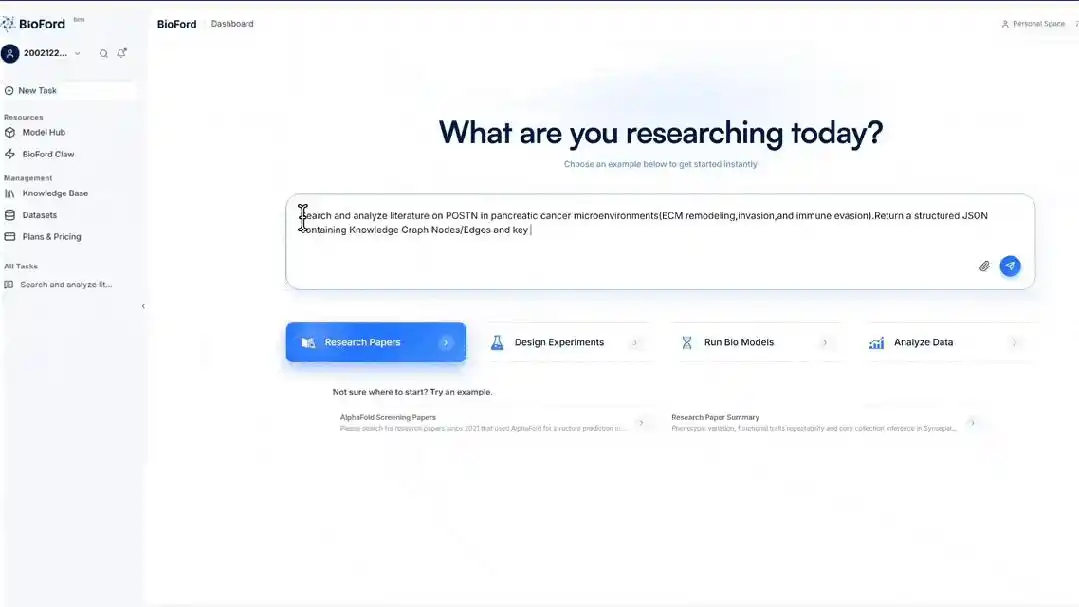
The Experimental Design Agent enabled the research team to shorten the experimental design cycle from several months to one week.

The Experiment Scheduling Agent launched by Kindu Biology, relying on the Universal Instrument Abstraction Layer, breaks protocol barriers between various heterogeneous devices.

Whether it's PCR machines, microplate readers, flow cytometers, or automated liquid handling workstations, they can all achieve unified management and scheduling. The system has built-in dynamic scheduling algorithms, enabling automatic batch scheduling, real-time conflict avoidance, and full recording of experimental parameters, forming a traceable audit trail.
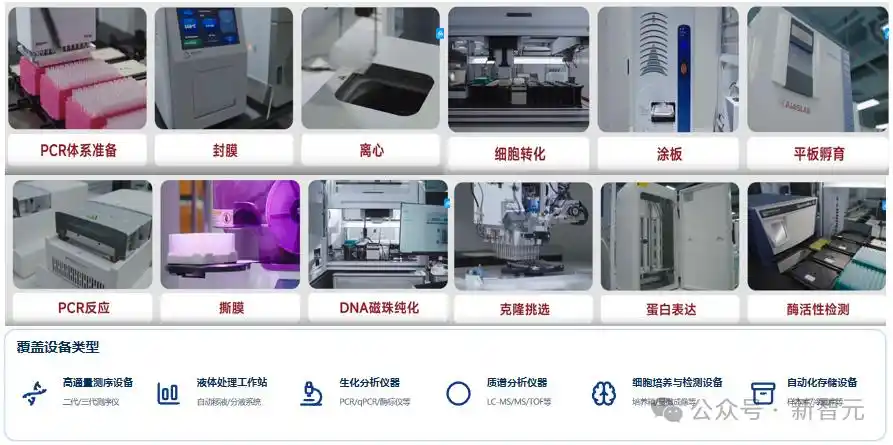
This means AI is no longer stuck in the "suggestions" stage, but truly enters the lab, operates equipment, executes tasks, and becomes a trustworthy "research assistant."

Failure Data Might Be More Valuable Than Success Data

The deeper value this system addresses is: making every experiment—whether successful or failed—data that the system can digest.

In a traditional lab, a failed record might just be a line saying "results not as expected." The experience resides in people's minds; when they leave, the experience is gone.

But in the BioFord system, every failure is valuable training data—the logic of parameter selection, records of environmental conditions, proofs of erroneous paths... all are deposited, becoming part of the system's "experience."

Next time, AI knows: this path is blocked.

Interestingly, in this field, it's not the one with the strongest computing power that wins, nor the one with the largest model.

Computing power can be bought, but research data cannot.

Jin Yongcheng, Founder & CEO of Kindu Biology, stated: "During the R&D process, we gradually realized that AI for BioScience is not simply about stacking models and data. For those doing experiments, the ultimate problem to solve remains the dilemma of not knowing how to proceed after calculation, and not getting it right when proceeding."

This is the most important, and hardest-to-replicate, moat in the AI4S field.

Four Oxford People, Including a Senior Fellow of Luo Fuli

In 2022, when Jin Yongcheng received his PhD in Bioengineering from the University of Oxford, he faced a choice.

His supervisor was Hagan Bayley, a Fellow of the Royal Society and founder of the UK-listed third-generation sequencing giant Oxford Nanopore. The lab had a strong tradition of "translating research into practice." Staying in the UK was a clear, smooth path.

But he chose another path—packing a "prototype technology" from the lab into his suitcase and bringing it back to China. Accompanying him were three Oxford alumni: Biology PhD Deng Siwei, Computer Science Associate Researcher Sha Lei (PhD in Computer Science from Peking University, senior fellow of Luo Fuli, head of Xiaomi's large model), and Zhou Tianyao, skilled in product commercialization. The four possess complementary backgrounds in bioengineering, AI, computational biology, and business operations, forming a perfect team for highly interdisciplinary research. They had previously collaborated on joint research projects, achieving disease prediction and detection by combining AI and transcriptomics technology.

The company name "Kindu Biology": "Kin" is taken from "Oxford," symbolizing their starting point from top-tier academic institutions like Oxford labs; "du" (渡) signifies ferrying or helping others, representing the destination they believe AI for Science should reach.

Currently, Kindu Biology's BioFord Agent physical AI research platform has been deployed in several prestigious domestic universities with significant results, reducing research cycles from several months to one week.

The Wind Rises: 4 Funding Rounds in 1 Year, A Capital "Enchantment" Scene

However, walking a path "untrodden by predecessors" inevitably comes with solitude.

The early days of entrepreneurship were full of difficulties. At that time, AI startups were booming, but "AI+" attempts in the biological sciences were rare. "Those who understand AI may not understand biological science, and most who understand biological science don't understand AI."

Jin Yongcheng admitted: "Investors once couldn't understand what we were doing."

The team chose the "hardest path": starting from a biological foundational large model, a direction pursued by only a handful of companies globally.

In 2025, a turning point emerged.

That year, the State Council issued the "Opinions on Deepening the Implementation of the 'AI+' Initiative," listing AI for Science among the key areas. The field began to gain momentum.

Kindu Biology achieved the feat of "completing 4 funding rounds in one year." The company's main funding timeline is a benchmark for the industry.

Angel+ Round: Led by Sequoia Capital China Seed Fund;

Pre-A+ Round: Led by Chuangdongfang Investment with tens of millions;

Pre-A+ Round: Received tens of millions in investment from Nanshan Zhanxintou;

Series A Round: Led by Gaotejia Investment with nearly 100 million RMB.

Teng Yuhang, Executive Partner at Gaotejia Investment, stated: "Kindu Biology has transformed life science basic research into a subscribable, scalable 'computing power + experiment' infrastructure."

Jin Yongcheng's goal is even more ambitious: "We are not satisfied with just selling software; we want to build the intelligent operating system for the life science field. Just as Intel defined computing power in the PC era, we hope to define the new R&D paradigm for life science in the AI era."

From Oxford labs to Shenzhen, from being misunderstood to receiving heavy investment from top-tier capital, the story of the four Oxford graduates is not just a startup legend, but a soul-searching inquiry about "what we can do for humanity."

When AI learns to "stay up all night" doing research on its own, scientific discovery may no longer rely on the serendipitous inspiration of geniuses, but become a predictable inevitability. This journey has just begun for them.

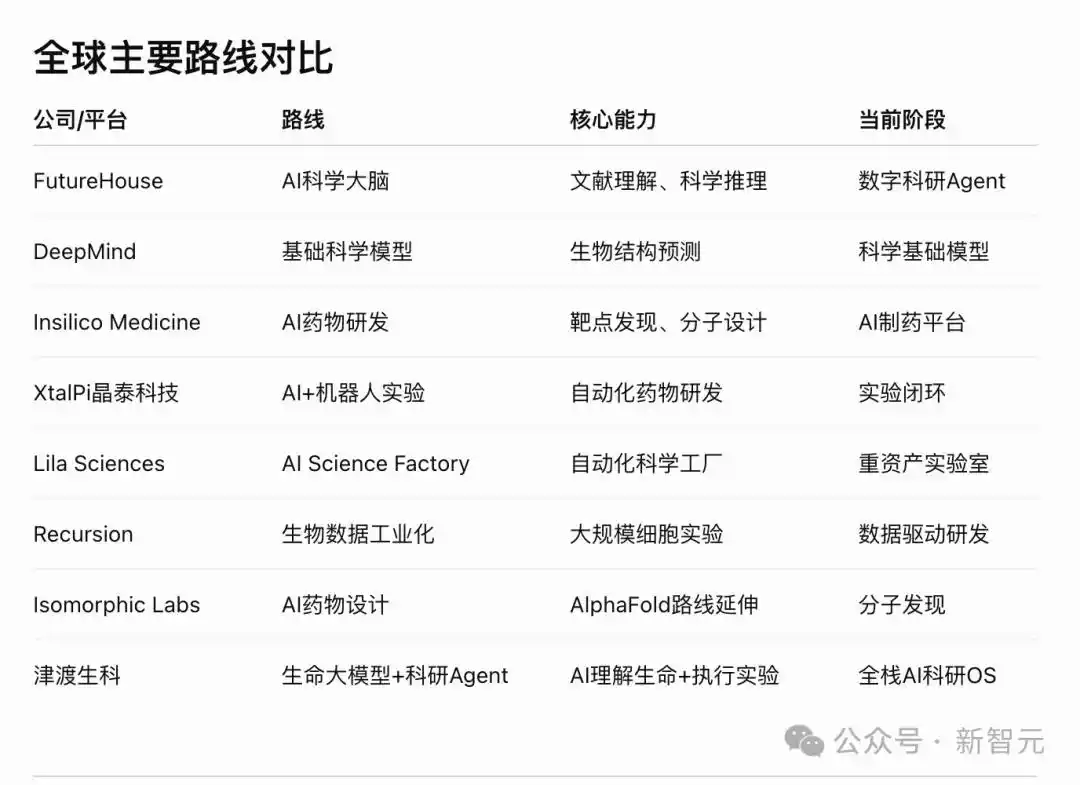
Industry Landscape: Kindu Charts a Lightweight Physical AI Path

In the broader AI for BioScience landscape, Kindu is not alone, but its entry point is distinctly different.

The first category is Digital AI Scientists.

Stanford-incubated Biomni (commercialized as Phylo) possesses over 150 specialized tools, capable of automatically performing literature review, hypothesis generation, and bioinformatics analysis.

FutureHouse, backed by Eric Schmidt, is dedicated to building AI scientists that can autonomously generate hypotheses and write papers.

However, while powerful, they remain confined to the digital world.

The second category is the Full-stack Autonomous route.

XtalPi deploys over 300 "AI + robotics" workstations globally.

Lila Sciences, incubated by Flagship Pioneering, with $550 million in funding, attempts to let AI completely take over the design, execution, and redesign of experiments, aiming for "scientific superintelligence."

But these approaches are extremely capital-intensive.

The third category is the End-to-end Pipeline route.

Insilico Medicine pushes AI directly into its own innovative drug pipelines, with its first AI-discovered drug entering Phase III clinical trials, but they are "car builders" rather than "road pavers."

Kindu Biology's choice is: focus on building the physical Harness, creating the "last mile" infrastructure between models and physical experimental systems.

Not engaging in the foundational model race, not pursuing end-to-end pipelines, not creating pure digital AI scientists. Focusing only on that last mile is undoubtedly a more lightweight approach.

Jin Yongcheng articulated this judgment clearly: "The true watershed for AI for Science is not how well the model mimics a scientist's answers, but whether the lab can start functioning like a continuously learning system."

Moreover, in the global AI for Science field, Kindu is not simply "only doing the last mile."

More accurately, it uses the last mile as an entry point to compete for the orchestration rights of the entire scientific workflow.

Compared to pure digital AI scientists, it can interact with the physical world; compared to building heavy-asset science factories from scratch, it has the opportunity to take over clients' existing labs; compared to end-to-end AI drug discovery companies, it doesn't have to bet its fate on a single clinical pipeline.
Its true moat will not be parameter count, but the continuously accumulated experimental trajectories, device interfaces, failure experiences, and cross-laboratory execution network.

As Jin Yongcheng said, the myriad signaling pathways within organisms and the reaction mechanisms full of unknowns are fascinating. "As rich as biology is, so is the prospect of AI for Science."

Exploring the mysteries of life with AI's intelligence—the vast universe for these Oxford prodigies has just begun to unfold.

This article is from the WeChat public account "Xinzhiyuan", author: Xinzhiyuan; Editor: Aeneas KingHZ


Trend Kriptolar

İlgili Sorular

QWhat is GeneLLM, and how does it represent a significant advancement in China's life science AI field?

AGeneLLM is a multi-omics foundation model developed by Jindu Biotechnology, created by four Oxford University returnees. It is hailed as China's 'DeepSeek for Life Sciences.' Its significance lies in being the first multi-omics foundation model in the world trained directly on raw omics data (like RNA, proteomics, metabolomics) without relying on pre-defined gene annotations or labels. This allows it to autonomously learn patterns and 'understand' the language and systems of life from primary biological signals, filling a key gap in China's life science foundation model landscape. It has been published in top journals like Nature Communications and Advanced Science.

QHow does GeneLLM's core training approach mimic Large Language Models (LLMs) like ChatGPT?

AGeneLLM's core approach mirrors that of text-based LLMs. Just as LLMs predict the next 'token' (word piece) in a sequence, GeneLLM predicts the next 'life information token.' It treats the four RNA bases (A, U, G, C) as fundamental tokens. The model processes raw RNA sequencing data by splitting it into fragments using a sliding 7-mer window, creating these biological tokens. It then uses a Transformer architecture to predict the next base in a sequence, learning directly from the raw data without human-curated 'dictionaries' of biological knowledge.

QWhat is BioFord Harness, and what role does it play in the AI for Science (AI4S) ecosystem according to the article?

ABioFord Harness is a physical infrastructure system developed by Jindu Biotech. Its role is to bridge the gap between AI models and the physical laboratory—solving the 'last-mile' problem in AI4S. It transforms a lab into a 'compilable, schedulable, observable, and traceable' system. It does this by 1) compiling scientific intent into executable instructions for diverse lab equipment, 2) managing scheduling, resources, and safety constraints across multiple devices, and 3) ensuring experimental results, logs, and environmental data flow back to optimize the next round of AI models and experimental designs, creating a continuous learning loop.

QWhat distinguishes Jindu Biotech's strategic approach from other major players in the AI for BioScience field?

AJindu Biotech carves out a distinct, 'lightweight' strategic niche by focusing on the 'last mile' infrastructure (BioFord Harness) rather than competing directly in other established approaches. It does not aim to be a pure 'digital AI scientist' (like Biomni), build capital-intensive fully autonomous labs (like Lila Sciences or XtalPi), or develop end-to-end proprietary drug pipelines (like Insilico Medicine). Instead, it specializes in building the physical harness that connects AI models to existing laboratory equipment, allowing it to orchestrate the entire scientific workflow without the massive capital expenditure of rebuilding labs from scratch.

QHow did the founding team's background and the 2025 policy shift contribute to Jindu Biotech's development?

AThe founding team comprised four Oxford alumni with complementary expertise in bioengineering (CEO Jin Yongcheng), biology, computer science (a former colleague of DeepSeek's Luo Fuli), and business operations. This interdisciplinary 'puzzle' was crucial for tackling the highly cross-disciplinary AI for Science challenge. Despite initial investor skepticism, a major turning point came in 2025 when the Chinese State Council issued guidelines prioritizing 'AI+', including AI for Science. This policy tailwind helped validate the field, leading Jindu Biotech to secure an impressive four rounds of funding in one year from top-tier investors like Sequoia Capital China and Gaotejia Investment, fueling its rapid growth.

İlgili Okumalar

Sui Transfers $65 Billion for Free. Its Co-founder Is Confident Even Grander Things Are Ahead

Sui's co-founder Evan Cheng makes a radical prediction: within four years, digital payment volume on the Sui blockchain will rival that of traditional card networks and banking systems. This claim is ambitious for an L1 blockchain whose token trades just above $0.60. Cheng, CEO of Sui's developer Mysten Labs, frames Sui's roadmap as an infrastructure play, not a trading platform. He believes current Web3 infrastructure is stuck in an "era of dial-up access." Founded by ex-Meta engineers behind the Diem blockchain and Move programming language, Mysten Labs envisions Sui as a "communication system" for stablecoin settlements, remittances, and future AI-to-AI commerce. Co-founder Adeniyi Abiodun adds that the internet will soon enable free, private, large-scale payments as privacy features roll out on Sui. The vision is backed by data. Since Mysten Labs eliminated gas fees for stablecoin transfers at the protocol level in June, Sui has processed over $65 billion in stablecoin transfers. Having handled $2.27 trillion in stablecoin volume since early 2024, this move removes a major barrier by not requiring merchants to hold a second asset for fees. Sui is also encroaching on Bitcoin's territory with the Hashi testnet, allowing Bitcoin to be used as DeFi collateral on Sui without converting to a synthetic token. Furthermore, a default privacy feature for stablecoin transactions is in development, cited by institutions as crucial for moving real payment volume to public blockchains. Skeptics point to Sui's token facing sell pressure from unlock schedules and its $2.8B market cap being a fraction of the payment volumes Cheng cites. Whether Sui becomes the "rail for every internet payment" or captures a smaller but significant share of stablecoin and cross-border settlements remains to be seen. The coming year's gas-free transaction data and Hashi bridge adoption will test if Cheng's four-year forecast is realistic or founder-driven optimism.

cryptonews.ru14 dk önce

Sui Transfers $65 Billion for Free. Its Co-founder Is Confident Even Grander Things Are Ahead

cryptonews.ru14 dk önce

Analysts Have Announced Signs of a Bear Cycle Ending on the Crypto Market

Analysts at Wintermute suggest the cryptocurrency market is showing signs of a bear cycle ending, despite tough macroeconomic conditions and ongoing uncertainty around US monetary policy. They noted that digital assets displayed relative resilience last week against several negative events that typically pressure risk assets, including an unchanged Fed rate, a multi-decade high in 30-year US Treasury yields, and a major AI fund liquidating assets. Bitcoin and Ethereum fell less than 4% for the week, which analysts interpret as a sign of nearly exhausted selling pressure, with excessive optimism now leaving the stock market instead. While a rapid shift to a sustained bull run is not expected, low open interest and summer liquidity could set the stage for a short-term technical rally. However, this scenario would be invalidated if the market breaks last week's lows on high volume, signaling the return of active sellers. The report also highlighted a shift in institutional demand: US spot Bitcoin ETFs saw outflows in late July, while Ethereum funds posted a fourth consecutive week of inflows. Furthermore, a major corporate buyer, Strategy, has resumed periodic Bitcoin sales to fund dividends, becoming an occasional seller during weak demand periods. Near-term catalysts include upcoming US ISM Services data and the jobs report, which will shape Fed policy expectations. The upcoming Jackson Hole symposium, where Fed Chair Kevin Warsh may signal future policy direction ahead of the September meeting, is also seen as a key event that will influence the crypto market's next move.

cryptonews.ru21 dk önce

Analysts Have Announced Signs of a Bear Cycle Ending on the Crypto Market

cryptonews.ru21 dk önce

İşlemler

Spot

Popüler Makaleler

$S$ Nedir

SPERO'yu Anlamak: Kapsamlı Bir Genel Bakış SPERO'ya Giriş İnovasyonun manzarası gelişmeye devam ederken, web3 teknolojilerinin ve kripto para projelerinin ortaya çıkışı dijital geleceği şekillendirmede önemli bir rol oynamaktadır. Bu dinamik alanda dikkat çeken projelerden biri SPERO, $$s$$ olarak adlandırılmaktadır. Bu makale, SPERO hakkında ayrıntılı bilgi toplamak ve sunmak amacıyla, meraklılar ve yatırımcıların web3 ve kripto alanlarındaki temellerini, hedeflerini ve yeniliklerini anlamalarına yardımcı olmayı amaçlamaktadır. SPERO,$$s$$ Nedir? SPERO,$$s$$, kripto alanında merkeziyetsizlik ve blok zinciri teknolojisi ilkelerini kullanarak etkileşimi, faydayı ve finansal kapsayıcılığı teşvik eden bir ekosistem yaratmayı amaçlayan benzersiz bir projedir. Proje, kullanıcıların yenilikçi finansal çözümler ve hizmetler sunarak eşler arası etkileşimleri yeni yollarla kolaylaştırmayı hedeflemektedir. SPERO,$$s$$'nin temel amacı, bireyleri güçlendirmek ve kripto para alanındaki kullanıcı deneyimini artıran araçlar ve platformlar sağlamaktır. Bu, daha esnek işlem yöntemlerini mümkün kılmayı, topluluk odaklı girişimleri teşvik etmeyi ve merkeziyetsiz uygulamalar (dApp'ler) aracılığıyla finansal fırsatlar yaratmayı içermektedir. SPERO,$$s$$'nin temel vizyonu kapsayıcılık etrafında dönmekte olup, geleneksel finansal sistemlerdeki boşlukları kapatmayı ve blok zinciri teknolojisinin faydalarından yararlanmayı hedeflemektedir. SPERO,$$s$$'nin Yaratıcısı Kimdir? SPERO,$$s$$'nin yaratıcısının kimliği bir miktar belirsizdir, çünkü kurucusu(ları) hakkında ayrıntılı arka plan bilgisi sağlayan sınırlı kamuya açık kaynaklar bulunmaktadır. Bu şeffaflık eksikliği, projenin merkeziyetsizlik taahhüdünden kaynaklanabilir—birçok web3 projesinin paylaştığı bir etik anlayışı, bireysel tanınmanın yerine kolektif katkıları önceliklendirmektedir. Topluluk ve onun kolektif hedefleri etrafında tartışmaları merkezileştirerek, SPERO,$$s$$, belirli bireyleri öne çıkarmadan güçlendirme özünü taşımaktadır. Bu nedenle, SPERO'nun etik anlayışını ve misyonunu anlamak, tek bir yaratıcının kimliğini belirlemekten daha önemlidir. SPERO,$$s$$'nin Yatırımcıları Kimlerdir? SPERO,$$s$$, kripto sektöründe yeniliği teşvik etmeye adanmış girişim sermayedarlarından melek yatırımcılara kadar çeşitli yatırımcılar tarafından desteklenmektedir. Bu yatırımcıların odak noktası genellikle SPERO'nun misyonuyla uyumlu olup, toplumsal teknolojik ilerlemeyi, finansal kapsayıcılığı ve merkeziyetsiz yönetimi vaat eden projeleri önceliklendirmektedir. Bu yatırımcı temelleri, yalnızca yenilikçi ürünler sunan projelere değil, aynı zamanda blok zinciri topluluğuna ve ekosistemlerine olumlu katkılarda bulunan projelere de ilgi duymaktadır. Bu yatırımcıların desteği, SPERO,$$s$$'yi hızla gelişen kripto projeleri alanında dikkate değer bir rakip haline getirmektedir. SPERO,$$s$$ Nasıl Çalışır? SPERO,$$s$$, onu geleneksel kripto para projelerinden ayıran çok yönlü bir çerçeve kullanmaktadır. İşte benzersizliğini ve yeniliğini vurgulayan bazı temel özellikler: Merkeziyetsiz Yönetim: SPERO,$$s$$, kullanıcıların projenin geleceğiyle ilgili karar alma süreçlerine aktif olarak katılmalarını sağlayan merkeziyetsiz yönetim modellerini entegre etmektedir. Bu yaklaşım, topluluk üyeleri arasında sahiplik ve hesap verebilirlik duygusunu teşvik etmektedir. Token Kullanımı: SPERO,$$s$$, ekosistem içinde çeşitli işlevler sunmak üzere tasarlanmış kendi kripto para token'ını kullanmaktadır. Bu token'lar, işlemleri, ödülleri ve platformda sunulan hizmetlerin kolaylaştırılmasını sağlayarak genel etkileşimi ve faydayı artırmaktadır. Katmanlı Mimari: SPERO,$$s$$'nin teknik mimarisi, modülerlik ve ölçeklenebilirliği destekleyerek projenin evrimi sırasında ek özelliklerin ve uygulamaların sorunsuz bir şekilde entegrasyonuna olanak tanımaktadır. Bu uyum sağlama yeteneği, sürekli değişen kripto manzarasında geçerliliği sürdürmek için hayati öneme sahiptir. Topluluk Katılımı: Proje, işbirliği ve geri bildirim teşvik eden mekanizmalar kullanarak topluluk odaklı girişimlere vurgu yapmaktadır. Güçlü bir topluluk oluşturarak, SPERO,$$s$$, kullanıcı ihtiyaçlarını daha iyi karşılayabilir ve piyasa trendlerine uyum sağlayabilir. Kapsayıcılığa Odaklanma: Düşük işlem ücretleri ve kullanıcı dostu arayüzler sunarak, SPERO,$$s$$, daha önce kripto alanında yer almamış bireyler de dahil olmak üzere çeşitli bir kullanıcı tabanını çekmeyi hedeflemektedir. Bu kapsayıcılık taahhüdü, erişilebilirlik yoluyla güçlendirme misyonuyla uyumludur. SPERO,$$s$$ Zaman Çizelgesi Bir projenin tarihini anlamak, gelişim yolculuğu ve kilometre taşları hakkında kritik bilgiler sağlar. Aşağıda, SPERO,$$s$$'nin evriminde önemli olayları haritalayan önerilen bir zaman çizelgesi bulunmaktadır: Kavram Geliştirme ve Fikir Aşaması: SPERO,$$s$$'nin temelini oluşturan ilk fikirler, blok zinciri endüstrisindeki merkeziyetsizlik ve topluluk odaklılık ilkeleriyle yakından uyumlu olarak geliştirildi. Proje Beyaz Kağıdının Yayınlanması: Kavramsal aşamayı takiben, SPERO,$$s$$'nin vizyonunu, hedeflerini ve teknolojik altyapısını ayrıntılı bir şekilde açıklayan kapsamlı bir beyaz kağıt yayımlandı ve topluluk ilgisini ve geri bildirimini toplamak amacıyla sunuldu. Topluluk Oluşturma ve Erken Katılımlar: Projenin hedefleri etrafında tartışmalar yürüterek destek toplamak ve erken benimseyenler ile potansiyel yatırımcılar için bir topluluk oluşturmak amacıyla aktif iletişim çabaları gerçekleştirildi. Token Üretim Etkinliği: SPERO,$$s$$, yerel token'larını erken destekçilere dağıtmak ve ekosistem içinde başlangıç likiditesini sağlamak amacıyla bir token üretim etkinliği (TGE) gerçekleştirdi. İlk dApp'in Yayınlanması: SPERO,$$s$$ ile ilişkili ilk merkeziyetsiz uygulama (dApp) faaliyete geçti ve kullanıcıların platformun temel işlevleriyle etkileşimde bulunmalarını sağladı. Sürekli Gelişim ve Ortaklıklar: Projenin tekliflerine sürekli güncellemeler ve iyileştirmeler yapılmakta olup, blok zinciri alanındaki diğer oyuncularla stratejik ortaklıklar, SPERO,$$s$$'yi rekabetçi ve gelişen bir oyuncu haline getirmiştir. Sonuç SPERO,$$s$$, web3 ve kripto paranın finansal sistemleri devrim niteliğinde dönüştürme ve bireyleri güçlendirme potansiyelinin bir kanıtıdır. Merkeziyetsiz yönetime, topluluk katılımına ve yenilikçi tasarlanmış işlevselliğe olan bağlılığıyla, daha kapsayıcı bir finansal manzaraya doğru bir yol açmaktadır. Hızla gelişen kripto alanındaki herhangi bir yatırımda olduğu gibi, potansiyel yatırımcılar ve kullanıcılar, SPERO,$$s$$ içindeki devam eden gelişmelerle ilgili olarak kapsamlı bir araştırma yapmaları ve düşünceli bir şekilde katılmaları teşvik edilmektedir. Proje, kripto endüstrisinin yenilikçi ruhunu sergileyerek, sayısız olasılığını keşfetmeye davet etmektedir. SPERO,$$s$$'nin yolculuğu hala devam ederken, temel ilkeleri, teknoloji, finans ve birbirimizle etkileşim biçimimizi etkileyebilir.

319 Toplam GörüntülenmeYayınlanma 2024.12.17Güncellenme 2024.12.17

$S$ Nedir

AGENT S Nedir

Agent S: Web3'te Otonom Etkileşimin Geleceği Giriş Web3 ve kripto para dünyasında sürekli gelişen manzarada, yenilikler bireylerin dijital platformlarla etkileşim biçimlerini sürekli olarak yeniden tanımlıyor. Bu tür öncü projelerden biri olan Agent S, açık ajans çerçevesi aracılığıyla insan-bilgisayar etkileşimini devrim niteliğinde değiştirmeyi vaat ediyor. Otonom etkileşimlerin yolunu açarak, Agent S karmaşık görevleri basitleştirmeyi ve yapay zeka (AI) alanında dönüştürücü uygulamalar sunmayı hedefliyor. Bu detaylı inceleme, projenin karmaşıklıklarına, benzersiz özelliklerine ve kripto para alanındaki etkilerine dalacaktır. Agent S Nedir? Agent S, bilgisayar görevlerinin otomasyonunda üç temel zorluğu ele almak üzere özel olarak tasarlanmış çığır açıcı bir açık ajans çerçevesidir: Alan Spesifik Bilgi Edinimi: Çerçeve, çeşitli dış bilgi kaynaklarından ve iç deneyimlerden akıllıca öğrenir. Bu çift yönlü yaklaşım, alan spesifik bilgi açısından zengin bir veri havuzu oluşturmasını sağlar ve görev yürütmedeki performansını artırır. Uzun Görev Ufukları Üzerinde Planlama: Agent S, karmaşık görevlerin verimli bir şekilde parçalanmasını ve yürütülmesini kolaylaştıran deneyim artırımlı hiyerarşik planlama kullanır. Bu özellik, çoklu alt görevleri etkili ve verimli bir şekilde yönetme yeteneğini önemli ölçüde artırır. Dinamik, Homojen Olmayan Arayüzlerle Başlama: Proje, ajanlar ve kullanıcılar arasındaki etkileşimi geliştiren yenilikçi bir çözüm olan Ajan-Bilgisayar Arayüzü'ni (ACI) tanıtmaktadır. Çok Modlu Büyük Dil Modellerini (MLLM'ler) kullanarak, Agent S çeşitli grafik kullanıcı arayüzlerini sorunsuz bir şekilde gezinebilir ve manipüle edebilir. Bu öncü özellikler aracılığıyla, Agent S, makinelerle insan etkileşimini otomatikleştirmede karşılaşılan karmaşıklıkları ele alan sağlam bir çerçeve sunarak, AI ve ötesinde birçok uygulama için zemin hazırlıyor. Agent S'nin Yaratıcısı Kimdir? Agent S'nin kavramı temelde yenilikçi olsa da, yaratıcısı hakkında spesifik bilgiler belirsizliğini koruyor. Yaratıcı şu anda bilinmiyor, bu da projenin yeni aşamasını veya kurucu üyeleri gizli tutma stratejik tercihini vurguluyor. Anonimlikten bağımsız olarak, odak çerçevenin yetenekleri ve potansiyeli üzerinde kalıyor. Agent S'nin Yatırımcıları Kimlerdir? Agent S, kriptografik ekosistemde oldukça yeni olduğundan, yatırımcıları ve finansal destekçileri hakkında ayrıntılı bilgiler açıkça belgelenmemiştir. Projeyi destekleyen yatırım temelleri veya organizasyonları hakkında kamuya açık bilgilerdeki eksiklik, finansman yapısı ve gelişim yol haritası hakkında sorular doğuruyor. Destekleyicilerin anlaşılması, projenin sürdürülebilirliğini ve potansiyel pazar etkisini değerlendirmek için kritik öneme sahiptir. Agent S Nasıl Çalışır? Agent S'nin temelinde, çeşitli ortamlarda etkili bir şekilde çalışmasını sağlayan son teknoloji bir sistem yatmaktadır. İşleyiş modeli birkaç ana özellik etrafında inşa edilmiştir: İnsan Benzeri Bilgisayar Etkileşimi: Çerçeve, bilgisayarlarla etkileşimleri daha sezgisel hale getirmeyi amaçlayan gelişmiş AI planlaması sunar. Görev yürütmedeki insan davranışını taklit ederek, kullanıcı deneyimlerini yükseltmeyi vaat eder. Anlatı Belleği: Yüksek düzeyde deneyimlerden yararlanmak için kullanılan Agent S, görev geçmişlerini takip etmek amacıyla anlatı belleğini kullanarak karar verme süreçlerini geliştirir. Episodik Bellek: Bu özellik, kullanıcılara adım adım rehberlik sağlayarak, çerçevenin görevler gelişirken bağlamsal destek sunmasına olanak tanır. OpenACI Desteği: Yerel olarak çalışabilme yeteneği ile Agent S, kullanıcıların etkileşimleri ve iş akışları üzerinde kontrol sağlamasına olanak tanır ve Web3'ün merkeziyetsiz felsefesiyle uyumlu hale gelir. Dış API'lerle Kolay Entegrasyon: Çeşitli AI platformlarıyla uyumluluğu ve çok yönlülüğü, Agent S'nin mevcut teknolojik ekosistemlere sorunsuz bir şekilde entegre olmasını sağlar ve geliştiriciler ile organizasyonlar için cazip bir seçenek haline getirir. Bu işlevsellikler, Agent S'nin kripto alanındaki benzersiz konumuna katkıda bulunarak, karmaşık, çok aşamalı görevleri minimum insan müdahalesi ile otomatikleştirir. Proje geliştikçe, Web3'teki potansiyel uygulamaları dijital etkileşimlerin nasıl gelişeceğini yeniden tanımlayabilir. Agent S'nin Zaman Çizelgesi Agent S'nin gelişimi ve kilometre taşları, önemli olaylarını vurgulayan bir zaman çizelgesinde özetlenebilir: 27 Eylül 2024: Agent S'nin kavramı, “Bilgisayarları İnsan Gibi Kullanan Açık Bir Ajans Çerçevesi” başlıklı kapsamlı bir araştırma makalesi ile tanıtıldı ve projenin temelini sergiledi. 10 Ekim 2024: Araştırma makalesi arXiv'de kamuya açık olarak yayınlandı ve çerçevenin derinlemesine bir incelemesini ve OSWorld benchmark'ına dayalı performans değerlendirmesini sundu. 12 Ekim 2024: Agent S'nin yetenekleri ve özellikleri hakkında görsel bir içgörü sağlayan bir video sunumu yayımlandı ve potansiyel kullanıcılar ve yatırımcılarla daha fazla etkileşim sağlandı. Bu zaman çizelgesindeki işaretler, sadece Agent S'nin ilerlemesini değil, aynı zamanda şeffaflık ve topluluk katılımına olan bağlılığını da göstermektedir. Agent S Hakkında Ana Noktalar Agent S çerçevesi gelişmeye devam ederken, birkaç ana özellik öne çıkmakta ve yenilikçi doğasını ve potansiyelini vurgulamaktadır: Yenilikçi Çerçeve: İnsan etkileşimine benzer bir bilgisayar kullanımı sağlamak üzere tasarlanan Agent S, görev otomasyonuna yeni bir yaklaşım getiriyor. Otonom Etkileşim: GUI aracılığıyla bilgisayarlarla otonom olarak etkileşim kurabilme yeteneği, daha akıllı ve verimli hesaplama çözümlerine doğru bir sıçrama anlamına geliyor. Karmaşık Görev Otomasyonu: Sağlam metodolojisi ile karmaşık, çok aşamalı görevleri otomatikleştirerek süreçleri daha hızlı ve daha az hata payı ile gerçekleştirebilir. Sürekli İyileştirme: Öğrenme mekanizmaları, Agent S'nin geçmiş deneyimlerden öğrenmesini sağlar ve sürekli olarak performansını ve etkinliğini artırır. Çok Yönlülük: OSWorld ve WindowsAgentArena gibi farklı işletim ortamlarında uyumlu olması, geniş bir uygulama yelpazesine hizmet edebilmesini sağlar. Agent S, Web3 ve kripto alanında kendini konumlandırırken, etkileşim yeteneklerini artırma ve süreçleri otomatikleştirme potansiyeli, AI teknolojilerinde önemli bir ilerlemeyi temsil etmektedir. Yenilikçi çerçevesi aracılığıyla, Agent S dijital etkileşimlerin geleceğini örneklemekte ve çeşitli sektörlerde kullanıcılar için daha sorunsuz ve verimli bir deneyim vaat etmektedir. Sonuç Agent S, AI ve Web3'ün birleşiminde cesur bir sıçramayı temsil ediyor ve teknoloji ile etkileşim biçimimizi yeniden tanımlama kapasitesine sahip. Henüz erken aşamalarında olmasına rağmen, uygulama olanakları geniş ve çekici. Kritik zorlukları ele alan kapsamlı çerçevesi ile Agent S, otonom etkileşimleri dijital deneyimin ön plana çıkmasına taşımayı hedefliyor. Kripto para ve merkeziyetsizlik alanlarına daha derinlemesine girdikçe, Agent S gibi projelerin teknoloji ve insan-bilgisayar işbirliğinin geleceğini şekillendirmede önemli bir rol oynayacağı kesin.

787 Toplam GörüntülenmeYayınlanma 2025.01.14Güncellenme 2025.01.14

AGENT S Nedir

S Nasıl Satın Alınır

HTX.com’a hoş geldiniz! Sonic (S) satın alma işlemlerini basit ve kullanışlı bir hâle getirdik. Adım adım açıkladığımız rehberimizi takip ederek kripto yolculuğunuza başlayın. 1. Adım: HTX Hesabınızı OluşturunHTX'te ücretsiz bir hesap açmak için e-posta adresinizi veya telefon numaranızı kullanın. Sorunsuzca kaydolun ve tüm özelliklerin kilidini açın. Hesabımı Aç2. Adım: Kripto Satın Al Bölümüne Gidin ve Ödeme Yönteminizi SeçinKredi/Banka Kartı: Visa veya Mastercard'ınızı kullanarak anında Sonic (S) satın alın.Bakiye: Sorunsuz bir şekilde işlem yapmak için HTX hesap bakiyenizdeki fonları kullanın.Üçüncü Taraflar: Kullanımı kolaylaştırmak için Google Pay ve Apple Pay gibi popüler ödeme yöntemlerini ekledik.P2P: HTX'teki diğer kullanıcılarla doğrudan işlem yapın.Borsa Dışı (OTC): Yatırımcılar için kişiye özel hizmetler ve rekabetçi döviz kurları sunuyoruz.3. Adım: Sonic (S) Varlıklarınızı SaklayınSonic (S) satın aldıktan sonra HTX hesabınızda saklayın. Alternatif olarak, blok zinciri transferi yoluyla başka bir yere gönderebilir veya diğer kripto para birimlerini takas etmek için kullanabilirsiniz.4. Adım: Sonic (S) Varlıklarınızla İşlem YapınHTX'in spot piyasasında Sonic (S) ile kolayca işlemler yapın.Hesabınıza erişin, işlem çiftinizi seçin, işlemlerinizi gerçekleştirin ve gerçek zamanlı olarak izleyin. Hem yeni başlayanlar hem de deneyimli yatırımcılar için kullanıcı dostu bir deneyim sunuyoruz.

2.0k Toplam GörüntülenmeYayınlanma 2025.01.15Güncellenme 2026.06.02

S Nasıl Satın Alınır

Tartışmalar

HTX Topluluğuna hoş geldiniz. Burada, en son platform gelişmeleri hakkında bilgi sahibi olabilir ve profesyonel piyasa görüşlerine erişebilirsiniz. Kullanıcıların S (S) fiyatı hakkındaki görüşleri aşağıda sunulmaktadır.

活动图片