China Turns To Interest Rates To Kick-Start Digital Yuan Adoption

bitcoinist2025-12-30 tarihinde yayınlandı2025-12-30 tarihinde güncellendi

Özet

China will allow commercial banks to pay interest on digital yuan (e-CNY) wallet balances starting January 1, 2026, shifting the digital currency from a cash-like instrument to a deposit-like asset. The People’s Bank of China (PBOC) introduced the new framework, which brings e-CNY under deposit insurance protection and requires non-bank payment providers to hold full reserves. By November 2025, e-CNY recorded 3.48 billion transactions totaling ¥16.7 trillion ($2.37 trillion). The move may influence where consumers and businesses store funds, as interest-bearing e-CNY becomes more attractive. Banks may face higher operational costs but could benefit from reduced nonbank platform deposits. The policy also strengthens cross-border testing and regulatory oversight.

According to reports, China will let commercial banks pay interest on balances held in digital yuan wallets starting January first, 2026.

The People’s Bank of China has laid out a new framework that moves the e-CNY from a cash-like tool to something closer to a bank deposit. Lu Lei of the PBOC is named in official notices about the change.

Banks To Pay Interest On e-CNY

Based on reports, holders of merchant or personal digital wallets will earn interest calculated by the banks that run those wallets.

The move requires banks to treat digital yuan holdings more like deposits, and it brings those balances under China’s deposit insurance protections. Reports say non-bank payment firms that operate wallets must keep 100% reserves for the e-CNY they manage.

Adoption Numbers And Rules

According to official figures cited in media coverage, by November 2025 there were about 3.48 billion e-CNY transactions with a combined value near ¥16.7 trillion — roughly $2.37 trillion.

The new policy links interest payments to existing deposit rate arrangements, which means interest rates on e-CNY will be set in line with how banks price other deposit accounts.

Observers have pointed out that the change could shift where consumers keep money, since insured, interest-bearing e-CNY becomes more attractive for storing funds.
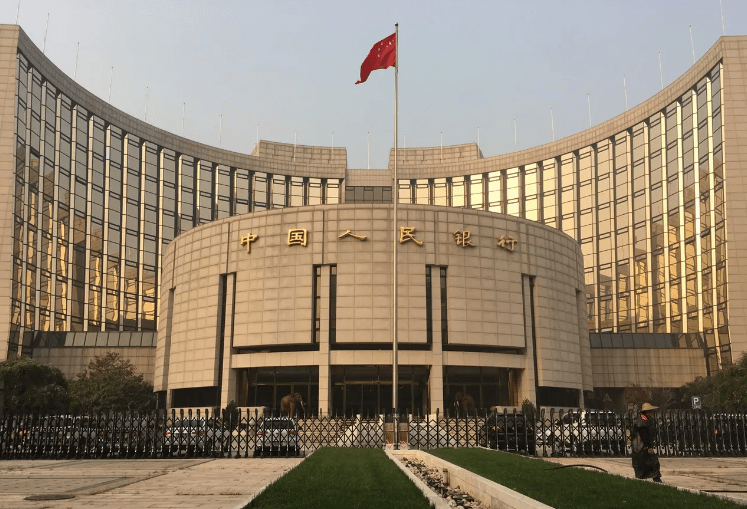
The People's Bank of China. Image: Fintech Futures

Reports have disclosed that digital yuan wallets will be subject to rules similar to those for regular bank accounts. Deposit insurance will apply, and reserve and reporting requirements will be tightened for third-party payment providers.

The PBOC framework also sets clearer rules for cross-border testing that was already under way with partners such as Singapore, Thailand, Hong Kong, the UAE and Saudi Arabia.

Banking And Policy Impact

Banks will need to adapt systems for interest calculation and for clearing e-CNY transactions at scale, which could increase operational costs in the short term. That said, some costs may be offset if more money flows into e-CNY wallets and fewer funds stay in nonbank payment platforms.

Total crypto market cap currently at $2.95 trillion. Chart: TradingView

Monetary authorities will watch how these flows interact with the broader money supply and lending operations, because shifts in where deposits sit can affect credit channels.

For everyday users, the most direct change is that holding e-CNY could earn interest and enjoy the same insurance protection as deposits. For businesses, payment settlement may become cheaper or faster depending on how banks price services.

Reports suggest regulators aim to keep the system safe by demanding full reserves from third-party operators and clearer oversight by banks.

Based on reports and official statements, the change takes effect on January 1, 2026, and it marks a major step in China’s long running e-CNY program. Regulators, banks and users will all be watching how interest rules are applied and whether the shift leads to wider use of the digital currency.

Featured image from Unsplash, chart from TradingView

İlgili Sorular

QWhen will commercial banks start paying interest on digital yuan wallet balances in China?

AJanuary 1, 2026.

QWhat is the People's Bank of China (PBOC) transforming the e-CNY into with this new framework?

AIt is moving the e-CNY from a cash-like tool to something closer to a bank deposit.

QHow will the interest on e-CNY wallets be calculated and set?

AInterest will be calculated by the banks that run the wallets and will be set in line with how banks price other deposit accounts.

QWhat protection will digital yuan wallet balances receive under the new policy?

AThey will be brought under China’s deposit insurance protections.

QWhat are the operational implications for banks due to this new policy?

ABanks will need to adapt systems for interest calculation and clearing e-CNY transactions at scale, which could increase operational costs in the short term.

İlgili Okumalar

Participants in XRP Fraud Scheme That Stole $9 Million from 71 Investors Arrested

South Korean police have arrested three individuals accused of operating a fraudulent investment platform that stole approximately 3.4 million XRP (worth about $9 million) from 71 investors between October 16 and 23. The suspects promoted the site Fxrpntwork.com through blogs, online articles, and YouTube videos, promising guaranteed principal and monthly returns of 1.5% to 1.8%. Investors were instructed to transfer XRP from Korean exchanges to overseas platforms and then to wallets controlled by the group before the site was shut down. The scammers copied the branding of legitimate projects Flare Network and FXRP to appear credible. Authorities warn that such impersonation frauds, which use familiar branding and urgent promises of guaranteed profits, are a common red flag. Legitimate companies do not solicit cryptocurrency transfers through unsolicited promotions. Seoul police have issued an Interpol Red Notice for a fourth suspect abroad and are investigating others involved in creating and promoting the fraudulent website. While investigators froze 17.3 billion won in assets, approximately 10 billion won was moved during the probe, with wallet analysis revealing transfers totaling 27.3 billion won, suggesting there may be additional unidentified victims and accomplices. The case underscores the organized, cross-border nature of crypto investment fraud.

cryptonews.ru4 dk önce

Participants in XRP Fraud Scheme That Stole $9 Million from 71 Investors Arrested

cryptonews.ru4 dk önce

Within Strategy's Framework, STRC's Dividend Yield Remains at 12% as Share Price Stays Below Par Value

Michael Saylor, Executive Chairman of Strategy (MSTR), confirmed that the dividend rate for its STRC perpetual preferred shares will remain at 12.00% through August 2026. The rate has increased from 9% at its July 2025 launch to the current high via a "ratchet" mechanism, which permanently raises the rate by 0.5% whenever the share price falls below $95. This mechanism is intended to push the price back toward its $100 par value and support Strategy's "at-the-market" (ATM) program for issuing new shares to fund Bitcoin purchases. However, the mechanism has not worked as intended. STRC shares closed at $89.46 on July 31, remaining about 10-11% below par value despite the record-high dividend. Competition from rival Strive's higher-yielding SATA securities has pressured demand. The persistent discount has forced Strategy to suspend new STRC issuances via its ATM program, limiting this funding channel for Bitcoin acquisitions. STRC's struggles reflect Bitcoin's own volatility, as the preferred shares historically move in tandem. Analysts have warned the ratchet structure carries long-term, one-way risk. A law firm is investigating Strategy's ability to maintain dividend payments if Bitcoin's price stays low. Retail investors own roughly 83% of outstanding STRC shares, a group seen as prone to panic selling during downturns. In response, Strategy has established financial reserves, including a liquidity cushion covering about 26 months of dividend/interest obligations, and a $2 billion share buyback program alongside a Bitcoin monetization framework, though the company emphasized it is not obligated to sell any Bitcoin.

cryptonews.ru44 dk önce

Within Strategy's Framework, STRC's Dividend Yield Remains at 12% as Share Price Stays Below Par Value

cryptonews.ru44 dk önce

İşlemler

Spot
活动图片





