Chainalysis estimates $457B in taxable crypto activity, says CARF misses most

cointelegraph2026-08-26 tarihinde yayınlandı2026-08-26 tarihinde güncellendi

Özet

A Chainalysis report estimates that potentially taxable onchain cryptocurrency activity reached at least $457 billion globally in 2025, with the U.S. accounting for $112.6 billion. The Organisation for Economic Co-operation and Development’s (OECD) Crypto-Asset Reporting Framework (CARF), which began data collection in 2026 across 48 jurisdictions, is designed to capture transaction data from crypto intermediaries. However, Chainalysis finds CARF covers only 14% of the identified onchain taxable activity. The remaining 86%, including decentralized exchange trading, peer-to-peer transfers, and onchain income, falls outside CARF's scope as it largely targets centralized service providers. Experts note that decentralized finance (DeFi) activities remain outside the reporting perimeter due to the lack of centralized operators, though this may change as regulators develop new rules.

Potentially taxable onchain crypto activity reached at least $457 billion globally in 2025, while international reporting rules may capture only a fraction of it, according to a new Chainalysis report.

The US accounted for an estimated $112.6 billion of the total, while North America led all regions with $134.6 billion, followed by the European Union at $125.1 billion.

The estimates include realized gains, income from activities such as mining, staking and lending, and crypto-denominated payments across six major blockchains, but exclude trading and other activity conducted within centralized exchanges.

Chainalysis said transactions covered by the Organisation for Economic Co-operation and Development’s (OECD) Crypto-Asset Reporting Framework (CARF) account for just 14% of the onchain taxable activity it identified. The remaining 86% includes activity on decentralized exchanges, peer-to-peer transfers, onchain income streams and payments.

CARF, developed by the OECD in 2022, requires covered crypto service providers to report customer transaction data to tax authorities.
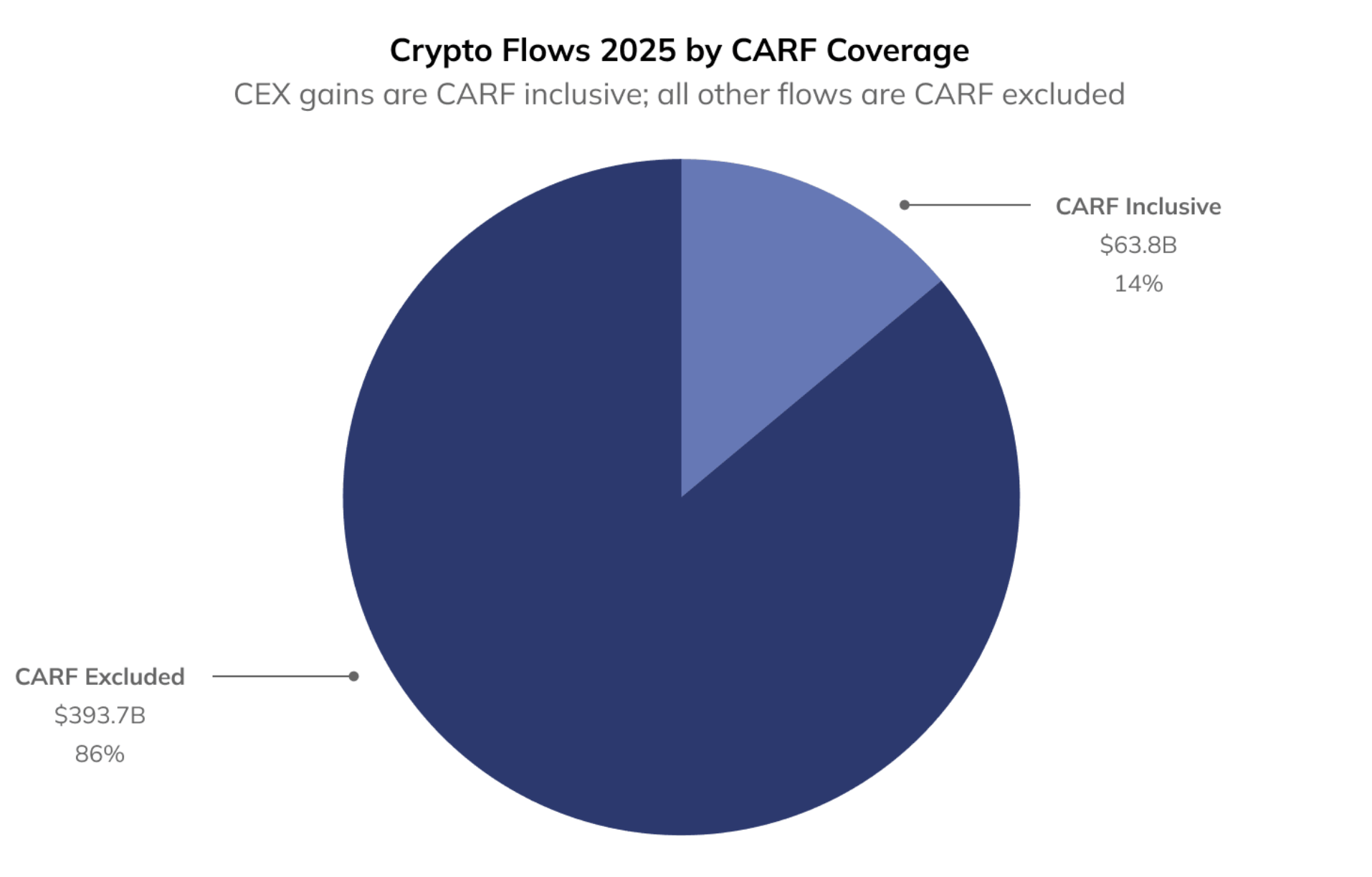
CARF covers only 14% of potentially taxable onchain crypto activity.
Source: Chainalysis

Related: Chainalysis sues US over $95M ICE contract with TRM Labs

CARF’s limits on onchain tax reporting

CARF data collection began on Jan. 1, 2026, in 48 jurisdictions, including the United Kingdom and European Union, requiring covered crypto platforms to collect additional customer and tax residency information.

Under CARF, in-scope crypto providers collect customer and tax residency information and report transaction data to domestic tax authorities, which can then share that information across borders.
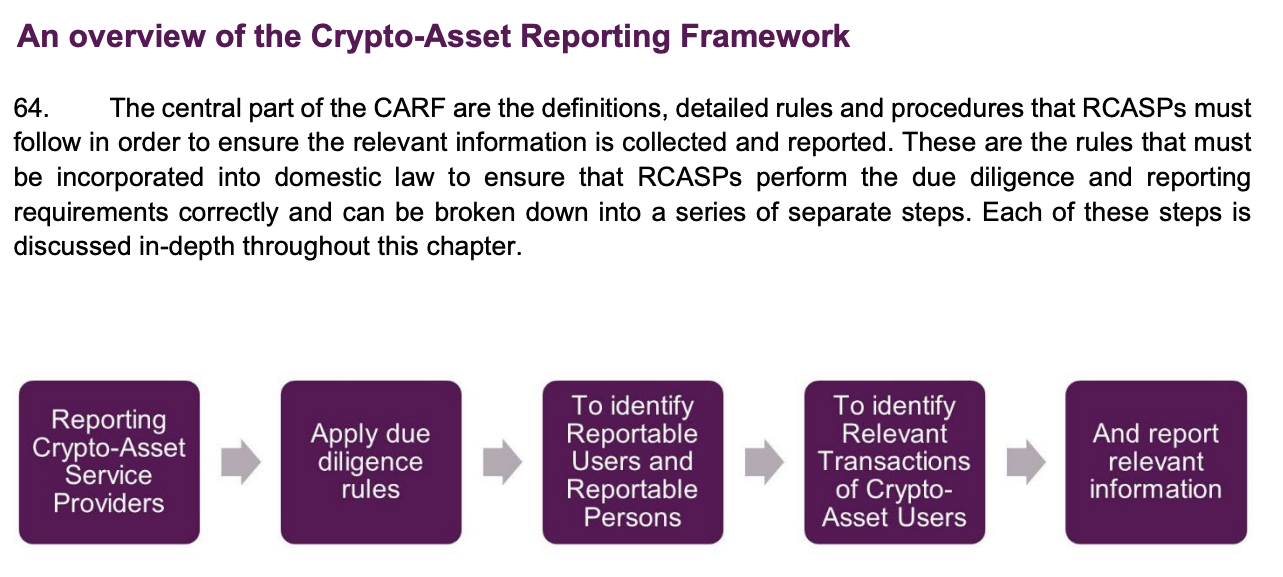
CARF framework. Source: OECD

CARF’s focus on crypto intermediaries also helps explain the gaps highlighted by Chainalysis. Colby Mangels, a former OECD adviser who worked on CARF, told Cointelegraph in January that the framework was designed around intermediaries that facilitate crypto transactions as a business.

Much of decentralized finance therefore remains outside the reporting perimeter, as there may be no centralized operator or custodial relationship on which to impose reporting requirements.

That could change as regulators develop rules for decentralized platforms. Mangels said tax authorities are watching developments in anti-money laundering regulation, including efforts to determine when DeFi platforms or their operators should be treated as regulated crypto service providers.

Magazine: SEC’s proposed crypto rules probably won’t spark new ICO boom

İlgili Sorular

QAccording to the Chainalysis report, how much potentially taxable onchain crypto activity was estimated globally in 2025?

APotentially taxable onchain crypto activity was estimated to be at least $457 billion globally in 2025.

QWhat percentage of the identified onchain taxable activity is covered by the OECD's Crypto-Asset Reporting Framework (CARF)?

AAccording to Chainalysis, the transactions covered by the OECD's Crypto-Asset Reporting Framework (CARF) account for just 14% of the identified onchain taxable activity.

QWhat major categories of taxable activity were included in Chainalysis's $457 billion estimate?

AThe estimates included realized gains, income from activities such as mining, staking and lending, and crypto-denominated payments across six major blockchains. It excluded trading and other activity conducted within centralized exchanges.

QWhich region had the highest estimated amount of potentially taxable onchain crypto activity according to the report?

ANorth America led all regions with an estimated $134.6 billion in potentially taxable onchain crypto activity.

QWhy does much of decentralized finance (DeFi) activity remain outside the reporting perimeter of CARF?

AMuch of decentralized finance (DeFi) remains outside CARF's reporting perimeter because there may be no centralized operator or custodial relationship on which to impose reporting requirements, as the framework is designed around intermediaries that facilitate crypto transactions as a business.

İlgili Okumalar

A Crucial Event is Approaching, Pay Attention to Friday: This Could Be the Fed's Most Important Event This Year

Federal Reserve Chair Kevin Warsh is preparing to deliver one of his most significant speeches this week at the Jackson Hole symposium. Markets and Fed officials are focused on a fundamental question: Is persistently high U.S. inflation due to temporary shocks like tariffs and the war with Iran, or is the economy still too strong from a demand perspective? The answer could determine whether the Fed will raise interest rates in the coming period. Investors will scrutinize Warsh's Friday speech for clues about his economic assessment and the conditions under which he might tighten monetary policy. The outlook is interpreted through two scenarios. One suggests inflation has exceeded the Fed's 2% target for over a year due to temporary shocks and may recede spontaneously. The other warns these events mask deeper economic imbalances, where strong demand allows companies to keep raising prices, potentially necessitating rate hikes. While recent softer inflation data has eased pressure for a September rate hike, concerns remain that the Iran war, new tariffs, and a surge in AI investment could exert lasting upward pressure on prices. Divisions within the Fed are growing, with some officials pushing for further tightening, citing robust consumer spending and labor demand, while others believe price pressures may ease on their own. A notable feature of Warsh's tenure has been his reduced guidance to markets, arguing central bankers talk too much. However, this reluctance to share his own views may be making it harder to build consensus, as evidenced by three dissenting votes for a rate hike last month—the highest in nearly a decade. Market reactions are being closely watched. Following the July meeting, the yield on the 30-year U.S. Treasury note rose to its highest level since 2007, suggesting investors believe the Fed might tolerate slightly higher near-term inflation but could require more significant future rate increases. Therefore, the Jackson Hole speech is crucial not only for near-term rate expectations but also for understanding how Fed policy communication will be shaped under Warsh's leadership.

cryptonews.ru2 saat önce

A Crucial Event is Approaching, Pay Attention to Friday: This Could Be the Fed's Most Important Event This Year

cryptonews.ru2 saat önce

İşlemler

Spot
活动图片