CFTC, US soldier accused of illegal Polymarket bet spar over interpretation of prediction markets

cointelegraph2026-08-24 tarihinde yayınlandı2026-08-24 tarihinde güncellendi

Özet

A US soldier, Gannon Ken Van Dyke, accused of using nonpublic information to make over $400,000 trading event contracts on prediction market Polymarket, is opposing the CFTC's attempt to file an amicus brief in his criminal fraud case. His lawyers argue the CFTC, which has its own stayed civil case against him, is improperly trying to influence the court rather than pursue its own action. Van Dyke pleaded not guilty to charges related to trading on nonpublic information about a Venezuela operation. The case is cited by critics as an example of potential manipulation on prediction platforms.

Gannon Ken Van Dyke, a soldier who allegedly made more than $400,000 using nonpublic information to trade event contracts on prediction market platform Polymarket, is pushing back against attempts by the US Commodity Futures Trading Commission (CFTC) to weigh in on his criminal case.

In a Monday filing in the US District Court for the Southern District of New York, Van Dyke’s lawyers opposed the CFTC’s efforts to file an amicus brief relating to claims in his case. The letter referred to the commodities regulator’s counsel filing a notice requesting permission from the court to provide its views on many of Van Dyke’s defense claims, including that event contracts on platforms like Polymarket were not “swaps” under the purview of the CFTC.

“The CFTC is no sheep ‘friend of the Court’ here,” said defense attorneys. “It is a regulatory wolf, with its own case against Mr. Van Dyke that it refuses to pursue itself. Rather, like a true coursing predator, the CTFC seeks to advance its own interests through the back door of an amicus brief instead of facing its own case against Mr. Van Dyke head on. This Court should not countenance the CFTC’s litigation gambits.”

US authorities charged Van Dyke with fraud in April over allegations he traded event contracts on Polymarket related to the removal of Venezuelan President Nicolás Maduro in January, an operation for which he was privy to nonpublic information. The incident has been one of the leading cases lawmakers and critics of prediction markets point to as an example of potential manipulation on platforms like Kalshi and Polymarket.

A federal judge already ordered that the CFTC’s civil case against Van Dyke be stayed “pending the outcome of the criminal proceeding.” He has pleaded not guilty to all charges and a criminal trial could potentially begin in late 2026 or early 2027.

Related: Kalshi ordered to stop broad range of prediction markets in Washington
İlgili Okumalar

“Economic Outcast”: US Treasury Takes Aim at Iran's Cryptocurrency, Technology, and Gold

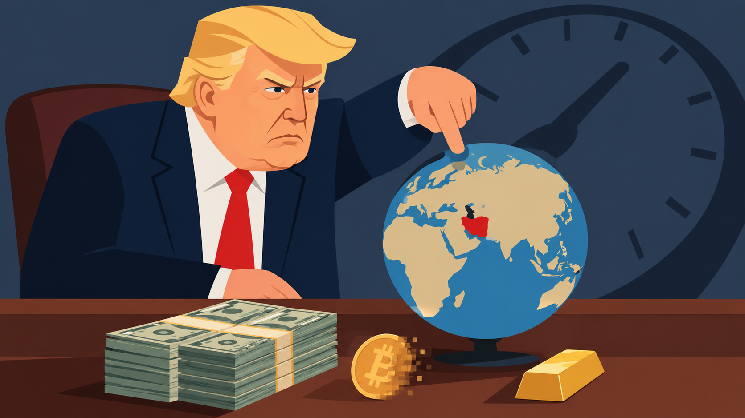
On August 24, 2026, the U.S. Treasury Department, under Secretary Scott Bessent, launched "Operation Economic Outcast," a major campaign targeting the financial networks of the Islamic Republic of Iran and its affiliates. The primary goal is to cut off revenue streams supporting the Iranian regime, with a specific focus on denying funding to the Islamic Revolutionary Guard Corps (IRGC). The Office of Foreign Assets Control (OFAC) activated authorities to sanction any entities, regardless of location, operating in or servicing five key Iranian economic sectors: digital assets (cryptocurrency), technology, gold, aviation, and shipping. OFAC noted Iran's increasing use of cryptocurrency to evade sanctions, including for operations linked to the IRGC and government officials. Initial measures targeted nearly 60 organizations, individuals, and vessels across multiple jurisdictions involved in procuring nuclear/missile technology, conducting cyber operations, and facilitating illicit oil sales. The U.S. State Department joined the campaign, announcing additional sanctions against Iranian military officials, intelligence entities targeting U.S. forces, and networks moving Iranian oil. Treasury warned foreign partners that they have a specific deadline to halt identified Iran-related activities, or face unilateral U.S. action. Entities facilitating sanctions evasion risk being cut off from the U.S. financial system and the dollar economy. The operation consolidates sanctions against Iran's crypto, tech, and commodity financing into a unified campaign with clear deadlines. It expands OFAC's reach to crypto brokers and payment networks handling Iranian oil. Analysis suggests crypto tools are already embedded in Iran's trade practices, as seen with capital flight from the Nobitex exchange and discussions of Bitcoin payments for Strait of Hormuz transit, indicating new OFAC powers target existing, not hypothetical, evasion channels.

cryptonews.ru8 dk önce

“Economic Outcast”: US Treasury Takes Aim at Iran's Cryptocurrency, Technology, and Gold

cryptonews.ru8 dk önce

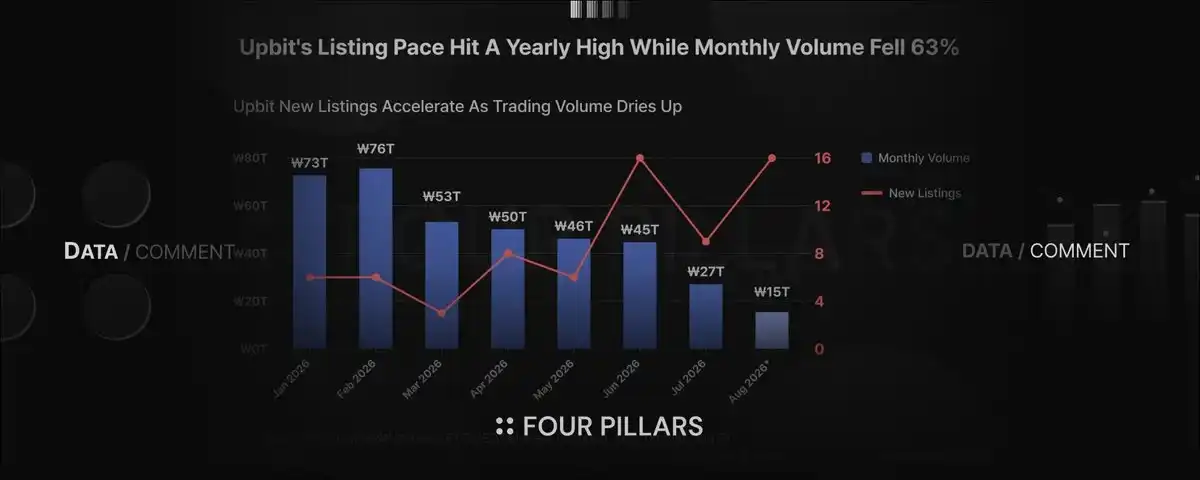
Upbit Accelerates Token Listings: Total Trading Volume Halved, New Tokens Support Nearly 30% Share

In the second half of 2026, Upbit significantly accelerated its pace of listing new cryptocurrencies, even as the overall Korean won-denominated trading market cooled rapidly. Monthly trading volume on Upbit plunged 63%, from KRW 72.7 trillion in January to KRW 27.1 trillion in July, with Bitcoin prices also falling. Contrary to the conventional logic of listing more during bull markets, Upbit intensified new listings during this downturn. New listings have become a crucial lever for Upbit to sustain trading activity in a bear market. By August, 61 new tokens listed in 2026 were collectively contributing nearly 30% of Upbit's total won trading volume, up from just 5% in January. This means roughly a quarter of the platform's fee revenue now comes from these newly listed assets. Standout performers like CHIP, RE, SLX, and CAP achieved significant individual market share shortly after listing, while new stablecoin listings contributed negligible volume. This strategy highlights a shift: the "Upbit listing premium," once a sought-after event to attract new capital, is increasingly used as a defensive tool to stabilize fee income amid shrinking overall volume. While the premium effect persists, indicating remaining genuine demand, its frequent use risks diluting the long-term strategic value and scarcity of Korean won liquidity access. Upbit's approach reflects a broader challenge for Asian centralized exchanges: relying on short-term listing tools to maintain operations during macro weakness, potentially at the cost of eroding long-term competitive foundations.

marsbit27 dk önce

Upbit Accelerates Token Listings: Total Trading Volume Halved, New Tokens Support Nearly 30% Share

marsbit27 dk önce

İşlemler

Spot
活动图片