Ceasefire Indefinitely Extended, How Long Will the US-Iran Conflict Continue to Be a Tug-of-War?

marsbit2026-04-22 tarihinde yayınlandı2026-04-22 tarihinde güncellendi

Özet

President Trump has indefinitely extended the ceasefire with Iran while maintaining a naval blockade of the Strait of Hormuz, stating the truce will last until Iran presents a new proposal and negotiations conclude. The decision follows the collapse of planned peace talks after Iranian representatives refused to attend, calling U.S. conditions unacceptable. Iran has not requested the extension and maintains a firm stance, keeping the strait closed as long as the blockade persists. The prolonged standoff has heightened global market volatility, with oil prices rising sharply. Despite the temporary truce, the lack of a clear diplomatic framework and mutual distrust suggest the situation remains a fragile, unstable equilibrium, with risks of escalation persisting.

Original Title: Trump Extends Iran Ceasefire, Blockade as Peace Talks Stumble

Original Author: Courtney Subramanian and Jennifer A Dlouhy,Bloomberg

Original Compilation: Peggy,BlockBeats

Editor's Note: US President Donald Trump announced an indefinite extension of the ceasefire with Iran just before the agreement was set to expire, while continuing the maritime blockade of the Strait of Hormuz. Trump stated that the US would extend the ceasefire until Iran submits a new proposal, "and regardless of the outcome, until the negotiations conclude"; he also emphasized that without this blockade, "it would be impossible to reach any agreement with Iran."

From a strategic perspective, the US is attempting through the combination of "extending the ceasefire + maintaining the blockade" to avoid an immediate escalation into full-scale war while continuing to pressure Iran to make concessions on nuclear issues and negotiation terms. However, Iran has neither accepted the negotiation conditions nor proactively requested an extension of the ceasefire. Instead, it has maintained a firm response in terms of energy exports and military posture, leading to a stalemate between the two sides on the core issues of "whether to negotiate and how to negotiate."

More notably, this confrontation has begun to spill over into global markets. As a critical channel for global energy transportation, the blockade and repeated reopening of the Strait of Hormuz have not only intensified oil price volatility but also amplified uncertainties in the energy and shipping systems. In the short term, the ceasefire extension provides a certain buffer for the market; but in the medium to long term, in the absence of a clear negotiation structure and basic mutual trust, this passively extended ceasefire resembles a fragile balance that could be broken at any time.

As diplomatic paths continue to be blocked and military deterrence intensifies, the next phase of this conflict will depend on whether the two sides return to the negotiating table or slide toward more intense confrontation.

Below is the original text:

US President Donald Trump announced an indefinite extension of the ceasefire with Iran just before the agreement was set to expire; meanwhile, the US continues to maintain a maritime blockade of the Strait of Hormuz after the collapse of the originally planned peace talks between the two sides.

Trump stated on his social platform Truth Social that Pakistan, as the mediator, requested the US to postpone launching a new round of strikes. The US will extend the ceasefire deadline until Iran submits a new proposal and "regardless of the outcome, until the negotiations conclude." In another post, he also stated that without this blockade, "it would be impossible to reach any agreement with Iran—unless we blow up the rest of their country, including their leaders!"

US Vice President JD Vance was originally scheduled to travel to Pakistan to restart negotiations with Iran, but representatives from Tehran refused to attend, stating that the conditions proposed by the US were "unacceptable." Iran's semi-official Tasnim News Agency stated that there is currently "no realistic possibility" for Iran to participate in negotiations.

A White House official confirmed in a statement that the Vice President's scheduled trip on Tuesday will not take place.

This statement contrasts sharply with Donald Trump's remarks earlier that day. At the time, he stated in an interview with CNBC that if Iran did not meet his conditions, "I expect bombing to occur," and claimed that the US military "is eager and ready to act at any time." In a phone interview on Monday, Trump also stated that if an agreement was not reached, it was "highly unlikely" that he would extend the current ceasefire.

Driven by the news of the ceasefire extension, oil prices rose for the second consecutive day. After accumulating a nearly 9% increase over the previous two trading sessions, Brent crude price is currently around $98 per barrel. In January of this year, oil prices once fell below $60, and in March, they reached a high of $119.50. The average retail price of gasoline in the US is currently about $4 per gallon, compared to about $3 before the war broke out on February 28.

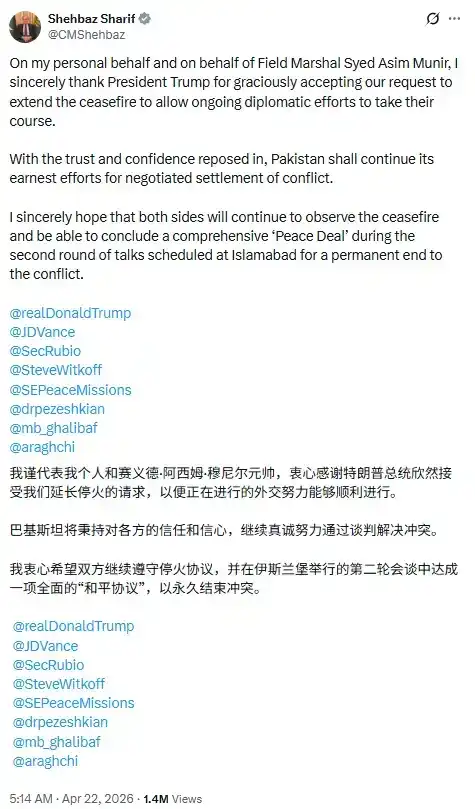
Pakistani Prime Minister Shehbaz Sharif thanked Trump for extending the ceasefire in a statement, "buying time for ongoing diplomatic efforts to proceed smoothly."
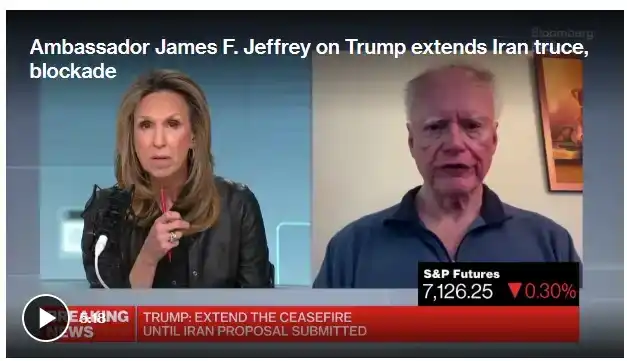
Former US Deputy National Security Advisor and current Philip Solondz Distinguished Fellow at the Washington Institute, James F. Jeffrey, appeared on 'Bloomberg Businessweek Daily' to discuss the ceasefire extension and engaged in a dialogue with hosts Carol Massar and Tim Stenovec.

He posted on platform X: "I sincerely hope both sides will continue to abide by the ceasefire agreement and reach a comprehensive 'peace agreement' in the second round of negotiations in Islamabad, thereby achieving a permanent end to the conflict."
Senior Iranian officials had not responded to Donald Trump's statement by nighttime Tehran time. Iran's semi-official Tasnim News Agency, quoting unnamed sources, stated that Iran did not request an extension of the ceasefire. Simultaneously, the media outlet stated that as long as the US maintains the maritime blockade, Iran will not reopen the Strait of Hormuz.

Iran's semi-official Fars News Agency quoted a statement from the military stating that the Iranian armed forces "are in a state of full combat readiness, with fingers on the trigger."
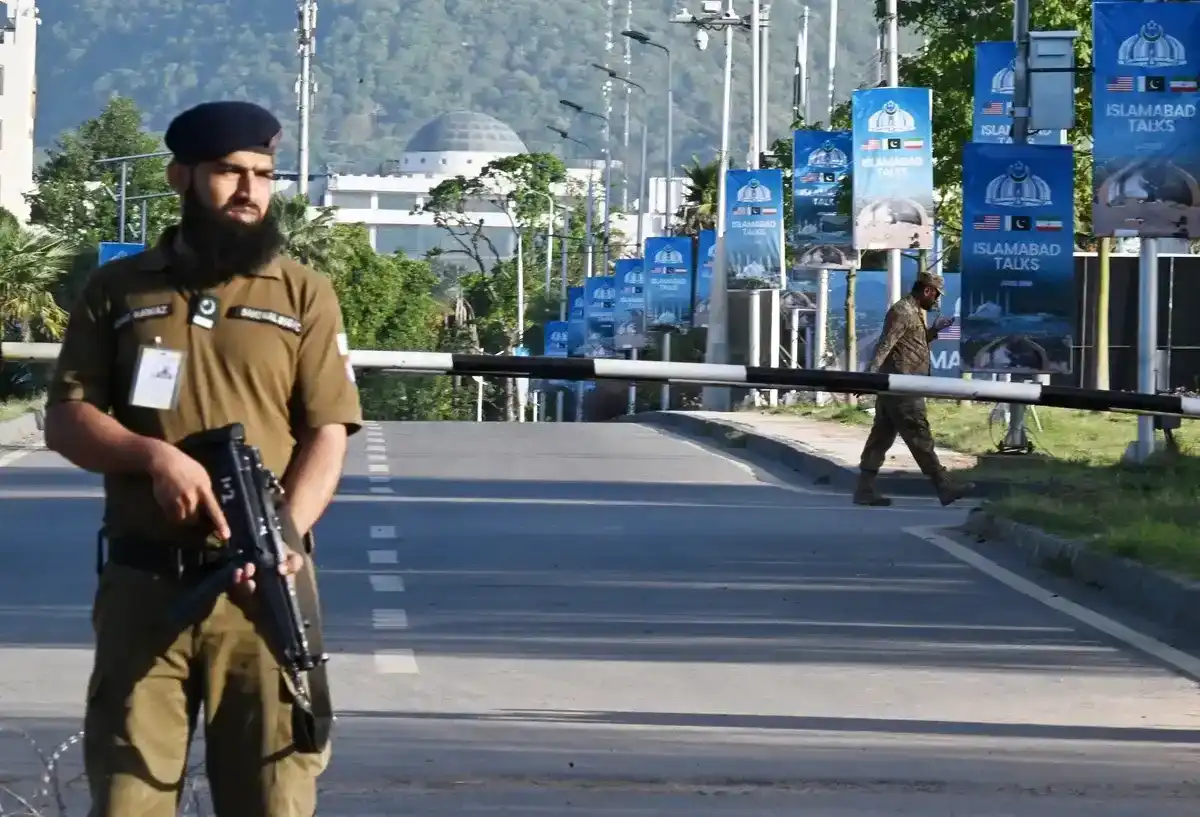
Security personnel guard a checkpoint near the Serena Hotel in Islamabad on April 22. Photo: Aamir Qureshi / AFP / Getty Images.

These developments mark the latest round of back-and-forth between Washington and Tehran since April 7, when the two sides announced a two-week ceasefire. Since then, the two sides have continuously publicly disputed the terms of the agreement and alternately closed and reopened the Strait of Hormuz. Before the war, about one-fifth of the world's oil and liquefied natural gas exports passed through this strait.

According to data intelligence company Vortexa, at least two fully loaded Iranian oil tankers have sailed out of the Persian Gulf this week and breached the US blockade. The company's data also shows that Iran still has the capacity to export oil, with at least 34 oil tankers and gas carriers related to Iran passing through the Strait of Hormuz and navigating past the naval blockade.

The British Navy stated on Wednesday that an Iranian gunboat fired upon a container ship near the Strait of Hormuz, causing "serious damage" to its bridge, but fortunately, there were no casualties.
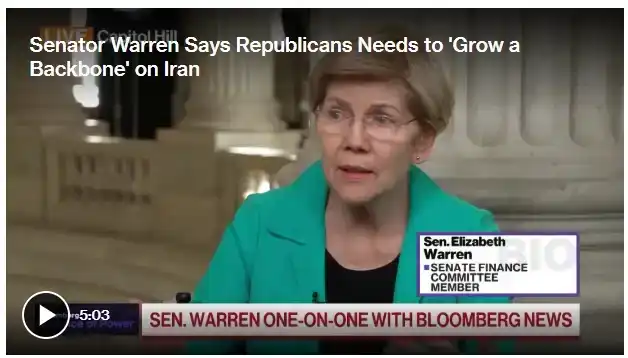
US Democratic Senator Elizabeth Warren from Massachusetts criticized President Donald Trump for lacking a clear plan regarding the Iran conflict. Warren expressed these views on the 'Balance of Power: Evening Edition' program.

The UK and France are convening military planners from over 30 countries for a two-day summit to discuss how to ensure the Strait of Hormuz remains open. British Prime Minister Keir Starmer and French President Emmanuel Macron have been leading the coordination of a plan aimed at keeping the strait open after the Iran war ends, though they have rejected Trump's request for allies to use force to reopen the Strait of Hormuz.

After the initial ceasefire was announced, a round of negotiations took place between the US and Iran but ended in failure. US officials stated that Iran was unwilling to accept restrictions on its nuclear program; while the Iranian side stated that the US had put forward a series of demands that it could not accept.

Iranian Parliament Speaker Mohammad Bagher Ghalibaf Source: AFP / Getty Images

Iranian Parliament Speaker Mohammad Bagher Ghalibaf, who led the Tehran delegation in the first round of negotiations, stated on Monday that Iran would not "accept negotiations under the shadow of threat."

Although the ceasefire extension may soothe investor sentiment in the short term, the path to a lasting agreement to end the war remains fraught with uncertainty. This conflict, now in its eighth week, has resulted in thousands of deaths, triggered a global energy crisis, and increased pressure on both sides to find an "exit path."

Donald Trump demands that Iran abandon its pursuit of nuclear weapons and hand over its nuclear materials. Tehran denies having any such intentions and refuses to hand over its enriched uranium.

Alex Vatanka, a senior fellow at the Middle East Institute, stated that Trump has somewhat "painted himself into a corner" because he does not actually want to return to military conflict.

"He made a strategic mistake in thinking that raising his voice and increasing pressure on the Iranians would work," Vatanka said. "This approach doesn't work with this regime. Quiet pressure often works better than public pressure."

Original link

İlgili Sorular

QWhat did President Trump announce regarding the ceasefire with Iran and the blockade of the Strait of Hormuz?

APresident Trump announced an indefinite extension of the ceasefire with Iran and the continuation of the maritime blockade of the Strait of Hormuz.

QWhy did the planned peace talks between the U.S. and Iran fail to proceed?

AThe talks failed because Iran refused to attend, stating that the conditions proposed by the U.S. were 'unacceptable'.

QHow has the situation in the Strait of Hormuz affected global oil markets?

AThe blockade and repeated closures of the Strait of Hormuz have increased oil price volatility and amplified uncertainty in energy and shipping systems, causing Brent crude prices to rise.

QWhat is Iran's current stance on negotiations and the U.S. blockade?

AIran has maintained a hardline response, refusing to negotiate under threat and stating it will not reopen the Strait of Hormuz as long as the U.S. maintains its maritime blockade.

QWhat are the key demands the U.S. has made of Iran in this conflict?

AThe U.S. has demanded that Iran abandon its pursuit of nuclear weapons and hand over its nuclear materials, specifically its enriched uranium.

İlgili Okumalar

Why Haven't Forex Stablecoins Taken Off?

Why FX Stablecoins Never Took Off: A Path Forward via Synthetic FX Despite the explosive growth of stablecoin-powered digital banking, which has seen ~$6B in VC investment and a 24x surge in crypto card spending in under a year, a major limitation persists: these banks are essentially dollar-only accounts. This leaves 95-99% of global accounts, which are denominated in non-USD currencies, underserved. Attempts to create native foreign currency (FX) stablecoins (like EURC) have largely failed, with total FX stablecoin TVL at ~$600M compared to $400B for USD stablecoins—a 700x gap. These FX tokens face critical challenges: fragile pegs due to low liquidity, limited exchange/FinTech acceptance, poor on/off-ramps, complex regional compliance, and a chicken-and-egg adoption problem. The article argues that the solution lies not in competing with entrenched USD stablecoin networks (USDT/USDC), but in adopting a synthetic FX model inspired by traditional finance. Specifically, it advocates for Mark-to-Market Non-Deliverable Forwards (NDFs)—cash-settled FX derivatives that allow users to maintain underlying USD stablecoin holdings while having their account balance and P&L denominated in a foreign currency. This approach offers key advantages: strong oracle-based pegs, retention of deep USD stablecoin liquidity and yield, superior on/off-ramps, scalability to any currency with a reliable feed, and capital efficiency. It mirrors how modern institutional FX markets operate. Primary use cases for on-chain NDFs include: 1. **Digital Banks/Wallets:** Enabling multi-currency accounts for international users without leaving the USD stablecoin ecosystem, boosting deposits and retention. 2. **FX Carry Trade Vaults:** Offering access to sovereign interest rate differentials (e.g., earning yield on BRL) in a more stable and scalable format than crypto-native products like Ethena. 3. **Global Enterprise Payments:** Allowing merchants to receive payments in local currency equivalents while settling in USD stablecoins, similar to services offered by Stripe for fiat. The conclusion is that synthetic FX, not native FX stablecoins, is the viable path to integrating foreign exchange into the growing stablecoin digital banking landscape, potentially unlocking the next phase of institutional DeFi and multi-trillion-dollar global adoption.

链捕手29 dk önce

Why Haven't Forex Stablecoins Taken Off?

链捕手29 dk önce

IOSG Founder: Web3 Is 'Losing Blood,' How Can Practitioners Survive Better?

IOSG Founder: Web3 Is "Bleeding Out" – How Can Practitioners Survive Better? In a candid reflection, the founder of IOSG Ventures voices deep concerns about the current state of Web3, describing an ecosystem experiencing severe "blood loss." Despite the recent MuShanghai event showcasing a successful pivot towards a more diverse, global community, a somber reality persists: many crypto-native attendees were there exploring exits or new labels in biotech, AI, and robotics. The core issue is identified as a breakdown in the ecosystem's positive feedback loop. Alarmingly, underestimated "low-probability bad events" are occurring simultaneously: a significant brain drain of Chinese developers to AI, a lack of breakout applications despite massive funding, and a widening credibility gap for practitioners globally, often stigmatized as scam artists. This has created a dire接班人 (successor) problem, with the next generation seeing little professional prestige or financial upside in crypto compared to fields like AI. A significant portion of the critique focuses on Ethereum and Vitalik Buterin. While not pessimistic about Ethereum's technology, the founder worries that critical development windows were missed by focusing on niche technical narratives like ZK and L2 instead of mass-market applications. A more urgent concern is that Vitalik may be isolated in an "information bubble," shielded from the grassroots community's hardships by layers of intermediaries, preventing crucial feedback from reaching him. The call is for Vitalik to return to a founder's mindset, re-engage directly with the community, and rally efforts for the next decade. The divergence between U.S. and Chinese OG (Original Gangster) ecosystems is stark. While many U.S. builders reinvest their wealth into the ecosystem, the Chinese scene suffers from a severe lack of "造血能力" (blood-making ability), with most market-driven funds struggling and many early success stories cashing out entirely. This threatens the entire Asian Web3 ecosystem's survival. For individual practitioners, survival advice is pragmatic: find your core "why," maintain life balance beyond token prices, continuously learn new skills (like AI), form small, trusted alliances for mutual support, and practice self-compassion. The industry's greatest need is not money or tech, but lighthouses—individuals at all levels who offer mentorship, grants, referrals, and honest reflection to guide others. The piece concludes with a direct appeal: OGs must pay forward the opportunities the industry gave them; founders must not struggle alone; and builders must continue their work, ensuring it remains a viable profession. The survival of Web3's "cathedral" depends not on any single leader but on the collective responsibility of everyone who remains.

marsbit1 saat önce

IOSG Founder: Web3 Is 'Losing Blood,' How Can Practitioners Survive Better?

marsbit1 saat önce

Deficits, Inflation, and the New Fed: The Deep Logic Behind US Bond Yields Breaking 5% and the Market Reset

In the week of May 15-19, 2026, U.S. long-term Treasury yields surged to multi-year highs, with the 30-year yield hitting 5.2%, a level unseen since 2007, and the 10-year yield climbing to 4.687%. Equity markets declined in response. Four primary factors are driving the rise in yields. First, stubborn inflation persists, with April wholesale prices rising 6% year-over-year, fueling expectations of potential future Fed rate hikes instead of cuts. Second, newly confirmed Fed Chair Kevin Warsh inherits a complex inflation battle, with markets closely awaiting his first FOMC meeting. Third, deteriorating U.S. fiscal health, marked by large deficits and rising debt servicing costs, is eroding the traditional "safe-haven" premium for Treasuries. Fourth, the "One Big Beautiful Bill" tax cuts are projected to add trillions to the national debt, contributing to Moody's recent credit rating downgrade. Rising yields pressure stocks through several channels: a higher discount rate reduces the present value of future earnings (especially for growth stocks); rising risk-free rates compress equity risk premiums, making bonds relatively more attractive; higher borrowing costs impact consumers and corporations; and a stronger dollar affects multinational earnings. For investors, the environment favors value and financial stocks over long-duration growth stocks. Bond investors find attractive yields in short to intermediate maturities, while income investors see the best fixed-income opportunities in over a decade. Key developments to watch include Chair Warsh's first FOMC meeting, upcoming inflation data, Treasury auction demand, and whether the 30-year yield approaches 6%, a level that could trigger a more sustained equity valuation reset. The bond market's message is clear: the era of cheap government borrowing is over, posing a central challenge for markets in late 2026.

marsbit1 saat önce

Deficits, Inflation, and the New Fed: The Deep Logic Behind US Bond Yields Breaking 5% and the Market Reset

marsbit1 saat önce

Is MicroStrategy Selling Bitcoin Not a Bearish Signal? Deconstructing the 5 Financial Logics Behind Corporate Bitcoin Divestment

The article "Is Strategy Selling Bitcoin Not a Bearish Signal? Decoding 5 Financial Logics Behind Corporate Bitcoin Divestment" analyzes why companies might sell their bitcoin holdings, arguing it's not necessarily negative. It begins by noting the market's surprise at Strategy's potential sale, contrasting its previous "never sell" stance. The core argument is that corporate decisions prioritize shareholder value, and selling bitcoin can be a rational strategic choice. The article outlines five key financial reasons for such sales: 1. **Increase Bitcoin Holdings Per Share:** Companies can use proceeds from bitcoin sales to repurchase shares when the stock price is undervalued relative to its bitcoin assets. This reduces the outstanding share count, potentially increasing the bitcoin amount backing each remaining share. 2. **Optimize Capital Structure & Reduce Financing Costs:** Building cash reserves through bitcoin sales can improve credit ratings (as favored by agencies like S&P), leading to lower future borrowing costs. Repaying debt with sale proceeds also reduces financial leverage. 3. **Legitimate Tax Planning:** In the absence of wash-sale rules for bitcoin in the US, companies can sell to realize capital losses, then repurchase, lowering the tax basis of their holdings and creating tax offsets. 4. **Counter Negative Market Narratives:** A controlled, non-disruptive sale could demonstrate market resilience and disprove fears that corporate selling would crash the market, thereby normalizing bitcoin as a corporate treasury asset. 5. **Repurchase Preferred Stock at a Discount:** If a company's preferred stock trades significantly below its face value, using bitcoin sale proceeds to repurchase it can retire expensive liabilities at a profit, saving on future dividend payments. The conclusion emphasizes that bitcoin's monetary properties offer flexibility. Strategic sales can protect corporate and shareholder interests, making asset utilization more important than rigid "hold" mandates.

marsbit1 saat önce

Is MicroStrategy Selling Bitcoin Not a Bearish Signal? Deconstructing the 5 Financial Logics Behind Corporate Bitcoin Divestment

marsbit1 saat önce

İşlemler

Spot
Futures

Popüler Makaleler

WAR Nasıl Satın Alınır

HTX.com’a hoş geldiniz! WAR (WAR) satın alma işlemlerini basit ve kullanışlı bir hâle getirdik. Adım adım açıkladığımız rehberimizi takip ederek kripto yolculuğunuza başlayın. 1. Adım: HTX Hesabınızı OluşturunHTX'te ücretsiz bir hesap açmak için e-posta adresinizi veya telefon numaranızı kullanın. Sorunsuzca kaydolun ve tüm özelliklerin kilidini açın. Hesabımı Aç2. Adım: Kripto Satın Al Bölümüne Gidin ve Ödeme Yönteminizi SeçinKredi/Banka Kartı: Visa veya Mastercard'ınızı kullanarak anında WAR (WAR) satın alın.Bakiye: Sorunsuz bir şekilde işlem yapmak için HTX hesap bakiyenizdeki fonları kullanın.Üçüncü Taraflar: Kullanımı kolaylaştırmak için Google Pay ve Apple Pay gibi popüler ödeme yöntemlerini ekledik.P2P: HTX'teki diğer kullanıcılarla doğrudan işlem yapın.Borsa Dışı (OTC): Yatırımcılar için kişiye özel hizmetler ve rekabetçi döviz kurları sunuyoruz.3. Adım: WAR (WAR) Varlıklarınızı SaklayınWAR (WAR) satın aldıktan sonra HTX hesabınızda saklayın. Alternatif olarak, blok zinciri transferi yoluyla başka bir yere gönderebilir veya diğer kripto para birimlerini takas etmek için kullanabilirsiniz.4. Adım: WAR (WAR) Varlıklarınızla İşlem YapınHTX'in spot piyasasında WAR (WAR) ile kolayca işlemler yapın.Hesabınıza erişin, işlem çiftinizi seçin, işlemlerinizi gerçekleştirin ve gerçek zamanlı olarak izleyin. Hem yeni başlayanlar hem de deneyimli yatırımcılar için kullanıcı dostu bir deneyim sunuyoruz.

170 Toplam GörüntülenmeYayınlanma 2024.12.11Güncellenme 2026.04.28

WAR Nasıl Satın Alınır

Tartışmalar

HTX Topluluğuna hoş geldiniz. Burada, en son platform gelişmeleri hakkında bilgi sahibi olabilir ve profesyonel piyasa görüşlerine erişebilirsiniz. Kullanıcıların WAR (WAR) fiyatı hakkındaki görüşleri aşağıda sunulmaktadır.

活动图片













