CARF Global Implementation Timeline Overview: What Are the Commitments of Mainland China and Hong Kong?

marsbit2026-01-28 tarihinde yayınlandı2026-01-28 tarihinde güncellendi

Özet

CARF (Crypto-Asset Reporting Framework) is a global framework for the automatic exchange of tax-related data on crypto-assets, targeting crypto-asset service providers as reporting entities. As of the end of 2025, 76 jurisdictions have committed to implementing CARF, with a phased rollout plan. The first group, including the UK and EU member states, will begin automatic information exchange in 2027. The second group, which includes Singapore, the United Arab Emirates, and Hong Kong, is scheduled to fully implement the framework in 2028. Data collection for reportable transactions will begin one year prior, starting in 2026. Hong Kong has explicitly committed to implementing CARF. It plans to start collecting crypto-asset transaction data in 2027 and commence automatic tax information exchange with partner jurisdictions in 2028. Service providers operating in Hong Kong must establish compliance and reporting mechanisms. In contrast, Mainland China has not yet committed to CARF and is not included in any of the implementation batches. It is also not listed by the OECD as a jurisdiction with relevance that has yet to commit. Under its current regulatory framework, which imposes strict limitations on crypto-asset activities, there are no legal crypto-asset service providers that could be integrated into the CARF system. Therefore, in the short term, Mainland China does not meet the conditions for participating in CARF's routine information exchange. It is noted that Mainland C...

Author: Fintax

Basic Positioning of CARF

CARF is a framework for the automatic exchange of tax-related information on crypto-assets, with crypto-asset service providers as the reporting entities, used to support tax authorities in various jurisdictions in obtaining information related to transactions involving their taxpayers.

Global Implementation Progress and Timeline

According to information released by the OECD Global Forum, as of the end of 2025, 76 countries and regions have committed to implementing CARF and will advance its implementation in batches.

The first group of jurisdictions plans to commence the first automatic information exchange in 2027, primarily including the UK and EU member states, etc.; the second group of jurisdictions plans to fully implement in 2028, including Singapore, the United Arab Emirates, and China Hong Kong, etc.

According to the institutional arrangement, the collection of relevant transaction data will commence one year in advance, starting from 2026, crypto-asset service providers will need to systematically organize reportable transaction information.
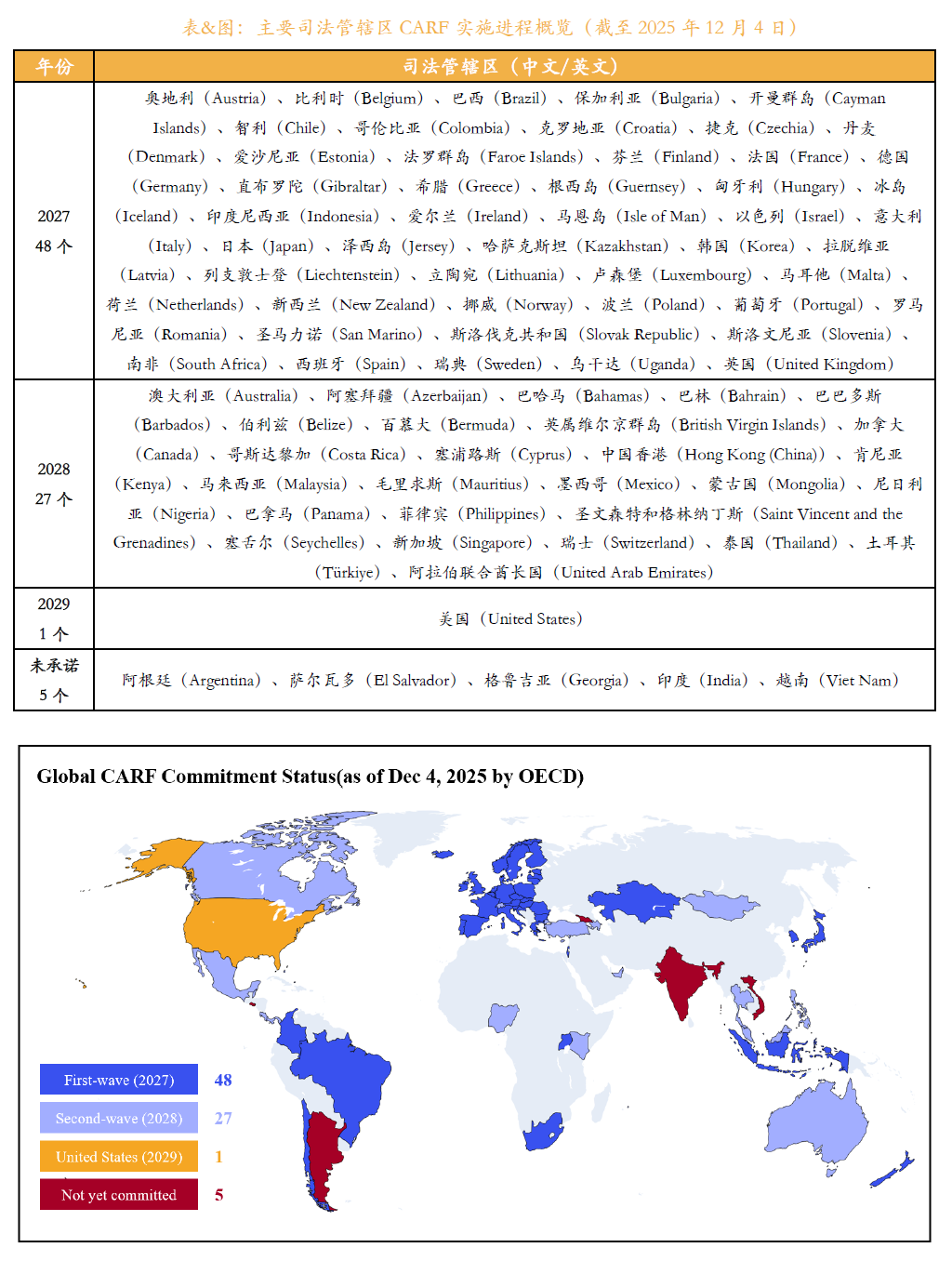
Figure 1: Overview of CARF Implementation Progress in Major Jurisdictions

China Hong Kong: Clear Participation and Timetable Advancement

In the aforementioned arrangement, China Hong Kong has clearly committed to implementing CARF and will advance related work according to the international timetable.

Hong Kong plans to start collecting crypto-asset transaction data from 2027 and commence automatic tax information exchange with other cooperating jurisdictions in 2028.

Crypto-asset service providers operating under Hong Kong's regulatory framework need to establish corresponding data compliance and reporting mechanisms, and relevant reportable transactions will be included in the cross-border information exchange process.

Mainland China: Not Yet Committed and Outside the Implementation Scope

In comparison, Mainland China has not yet made an implementation commitment to CARF.

As of the current stage, Mainland China is not included in any implementation batch of CARF, nor has it been listed by the OECD as a jurisdiction that is relevant but has not yet committed to participation.

Under the current regulatory framework, the mainland adopts a strict restrictive attitude towards cryptocurrency trading activities, and there are no legal crypto-asset service providers within the country that can be纳入 the CARF reporting system; therefore, it does not currently meet the institutional conditions for participating in CARF's regularized information exchange.

Future Possibilities and Realistic Judgment

It should be pointed out that Mainland China has fully implemented CRS since 2018 and has mature experience in financial account information exchange.

If future crypto-asset regulatory policies are adjusted, the mainland has the institutional and technical conditions to对接 CARF.

However, given the current policy environment, the possibility of Mainland China joining this framework around the 2027 launch of CARF and in the following years remains relatively low.

İlgili Sorular

QWhat is the CARF and what is its primary purpose?

AThe CARF (Crypto-Asset Reporting Framework) is an international framework for the automatic exchange of tax-related information on crypto-assets. It targets crypto-asset service providers as the reporting entities, aiming to support tax authorities in various jurisdictions in obtaining information related to transactions involving their taxpayers.

QHow many jurisdictions have committed to implementing the CARF as of the end of 2025, and what is the implementation timeline?

AAs of the end of 2025, 76 countries and regions have committed to implementing the CARF. The first group of jurisdictions, including the UK and EU member states, plan to commence the first automatic information exchange in 2027. The second group, which includes Singapore, the United Arab Emirates, and Hong Kong, China, is scheduled to fully implement the framework in 2028.

QWhat is the commitment and implementation plan of Hong Kong, China regarding the CARF?

AHong Kong, China has explicitly committed to implementing the CARF. It plans to start collecting crypto-asset transaction data from 2027 and begin automatic exchange of tax information with other cooperating jurisdictions in 2028. Crypto-asset service providers operating under Hong Kong's regulatory framework will need to establish corresponding data compliance and reporting mechanisms.

QWhat is the current status of Mainland China's commitment to the CARF?

AMainland China has not yet made a commitment to implement the CARF. It is not included in any of the implementation batches listed by the OECD and is not currently classified as a relevant jurisdiction that has yet to commit. Under its current regulatory framework, which imposes strict restrictions on crypto-asset activities, there are no legitimate crypto-asset service providers that could be incorporated into the CARF reporting system, making short-term participation unlikely.

QDoes Mainland China have the foundational experience to potentially join the CARF in the future?

AYes, Mainland China has comprehensive experience in financial account information exchange, having fully implemented the CRS (Common Reporting Standard) since 2018. This provides it with the technical and institutional foundation to potentially adapt to the CARF requirements if its crypto-asset regulatory policy were to change in the future. However, given the current policy environment, the possibility of joining the CARF around its 2027 launch or in the subsequent few years remains relatively low.


İlgili Okumalar

In Jinjiang, Fujian, a Storage Super Unicorn Lies Quiet

In Fujian's Jinjiang, a city known for sportswear, lies a quiet semiconductor giant: Fujian Jinhua Integrated Circuit Co. (JHICC). Once a promising domestic DRAM manufacturer alongside Yangtze Memory and ChangXin Memory Technologies (CXMT), its journey was derailed in 2018 when the U.S. placed it on an Entity List and filed criminal charges for alleged trade secret theft. This halted production for years. A turning point came in February 2024 when a U.S. federal court found JHICC not guilty. However, it had lost crucial time. While CXMT soared to become a top-valued A-share company in 2024, JHICC, with an estimated valuation of 80 billion RMB, was just restarting. Its current output is primarily customized DDR4 chips, not the advanced DDR5/HBM demanded for AI, but it still benefits from the broader memory chip upcycle. JHICC's story is tied to Chen Zhengkun, a veteran engineer who left Micron to lead the venture. Founded in 2016 with state-backed funding, JHICC partnered with Taiwan's UMC to develop DRAM technology. Rapid progress was cut short by the U.S. actions, which Micron initiated, partly due to its heavy reliance on the Chinese market. Post-sanctions, Chen's team worked to rebuild the production line with reduced reliance on U.S. technology. According to its records, JHICC achieved small-scale production and revenue growth under immense pressure. It now focuses on the stable "niche" DRAM market (e.g., TVs, routers) with a monthly capacity of ~40,000 wafers, aiming for 60,000 by 2026. It holds over 1,000 patents but remains on the Entity List. For Jinjiang, investing in JHICC was a bold industrial leap. The local government provided unwavering financial and logistical support during the crisis, helping the company survive. JHICC has become the anchor for a growing local semiconductor cluster. Though its scale lags behind domestic peers, JHICC's persistence symbolizes a hard-won foothold in a global market long dominated by Samsung, SK Hynix, and Micron. Having missed one boom, it seeks a place in the new AI-driven memory supercycle.

marsbit32 dk önce

In Jinjiang, Fujian, a Storage Super Unicorn Lies Quiet

marsbit32 dk önce

Must-Watch Events Next Week|CLARITY Act Could Face Senate Vote; SpaceX, Circle to Report Earnings (8.3-8.9)

**Summary: Key Events and Developments to Watch (August 3-9)** The upcoming week is marked by significant financial disclosures, key legislative deadlines, and notable product updates. **Major Financial Events:** Several companies are scheduled to release their Q2 2026 earnings. American Bitcoin (ABTC) will report on August 3, followed by SpaceX and Hut 8 Mining Corp. on August 4, and Circle on August 5. Notably, a significant portion of SpaceX shares (up to 12% of total shares) will be unlocked on August 6 following their earnings release. **Key Legislative Deadline:** The U.S. Senate faces an August 7 deadline to secure 60 votes for the CLARITY Act, a bipartisan bill aiming to establish a federal regulatory framework for cryptocurrencies. The Senate may hold a full vote on the bill during the week. **Economic Data:** The U.S. July Non-Farm Payrolls report will be released on August 7, providing crucial labor market data. **Technology & Product Updates:** * **Shutdowns:** DeFi portfolio tracker Zapper and wallet app Ctrl Wallet will cease operations on August 3. * **Upgrades:** LayerZero will deprecate its v1 relayers on August 3. XRP Ledger's new version 3.3.0, featuring five new functions, is expected next week. * **AI:** Elon Musk announced that the advanced Grok 4.6 AI model is set for release around August 7. * **Bitcoin:** The BIP-110 forced signaling for a potential Bitcoin network change is scheduled to begin around August 8. **Other Notable Events:** Chinese robotics firm Unitree Tech has set its preliminary price inquiry for its IPO for August 5. South Korean exchange Upbit will delist AQT and AERGO tokens on August 3.

marsbit2 saat önce

Must-Watch Events Next Week|CLARITY Act Could Face Senate Vote; SpaceX, Circle to Report Earnings (8.3-8.9)

marsbit2 saat önce

İşlemler

Spot
活动图片



