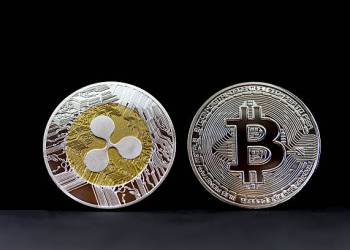
Last night (December 29), Bitcoin once again exhibited a "painting the door" (sharp reversal) price action. Faced with this kind of反复拉扯的 (repeated back-and-forth) stalemate, the market's nerves seem to have been numbed long ago.
It's only been three months since Bitcoin retreated from its high, but investors already feel like they've been in a deep winter for a long time. This psychological breakdown doesn't come solely from the drawdown in book assets, but more from a shaken confidence. Stocks are surging, indices are hitting new highs, gold and silver are soaring wildly...
Traditional assets are having a狂欢 (carnival/celebration), while crypto assets have unexpectedly fallen behind. Under this huge disparity, players are starting to vote with their feet—shorting, cutting losses, liquidating positions, and exiting the market. The crypto market is sinking into an unprecedented survival anxiety.
Entering Purgatory Mode, Trading Activity Drops to a Freezing Point
Watching and waiting, along with防守 (defense/playing defensively), have become the main themes at the end of the year for the crypto market.
In fact, the stablecoin market cap has quietly climbed to a staggering $3000 billion. According to historical experience, such a huge pool of off-exchange funds should be the fuel for a bull market,预示 (foreshadowing/predicting) the launch of a large-scale bubble行情 (market trend/run). However, the reality is that instead of a collective狂欢 (celebration/carnival), the crypto market has entered炼狱模式 (purgatory mode).
Looking back at the crypto market's price action throughout the year, investor confidence has been deeply hit. Although Bitcoin and Ethereum hit all-time highs this year, they failed to maintain the offensive and both turned downward. The altcoin market is even more惨烈 (brutal/devastating); even new coins listed couldn't escape their spiral downward fate, and liquidity枯竭 (drying up/depletion) has become the norm.
In this绞肉机行情 (meat grinder market), neither old hands nor newcomers are spared. Even Bitcoin holders are having a tough time; currently, over 30% of Bitcoin is held at a loss. The last time the supply in loss reached this level was in October 2023, when BTC's price was around $26,000.
Along with the低迷 (slump/doldrums), capital is rapidly withdrawing. Matrixport data shows that the Bitcoin spot ETF, a barometer for institutions, has seen net outflows for 9 consecutive weeks, with cumulative outflows接近 (approaching/nearing) $6 billion. If the month ends with net outflows, this will be the most significant wave of capital withdrawal since the ETFs launched in January 2024.
Trading activity has also dropped to a freezing point. According to The Block data, global cryptocurrency exchange spot trading volume fell to $1.59 trillion in November, hitting the lowest level since June.

Market interest has plummeted sharply. As a barometer for retail sentiment, Google Trends shows that the global search volume for "Cryptocurrency" continues to decline, with the US region hitting its lowest point in a year.
CryptoQuant analyst Darkfost also pointed out that the market sentiment index, built based on media articles, X platform data, etc., shows that the current general consensus in the crypto market has turned bearish. But he also believes that when a common consensus forms, the market often reverses, proving most people wrong.
Can't Outperform Stocks, Can't Beat Precious Metals
While the crypto market remains persistently weak, many traditional assets have been particularly strong.
This year, the major stock markets next door上演了 (staged/put on) a "big short squeeze"行情 (market trend/run). A-share new stocks performed strongly, with an average first-day increase of over 256%, and none broke their IPO price; the Hong Kong stock market warmed up, with over 40 individual stocks doubling in price; the three major US stock indices ended the year strongly, with the S&P 500 up nearly 18%, the Dow Jones up 14.5%, and the Nasdaq up an impressive 22%; South Korea's composite index Kospi saw a stunning surge, rising over 76%.
Retail investors are running to enter the market. Taking US stocks as an example, KobeissiLetter data shows that this round of US stock market rise is historic; the proportion of US household stock holdings in net worth has surpassed real estate, a phenomenon that has only occurred three times in the past 65 years; JPMorgan analysts pointed out that retail investment in US stocks grew 53% in 2025, reaching $303 billion, becoming the main force behind the stock market rise.
In the showdown among避险资产 (safe-haven assets), physical precious metals also completely beat Bitcoin. Gold, silver, and platinum all recently hit historical highs; despite experiencing a惊魂闪崩 (heart-stopping flash crash), their full-year gains remain considerable. In comparison, Bitcoin's status as "digital gold" faces severe challenges. The BTC-to-gold and BTC-to-silver ratios have fallen to their lowest levels since November 2023 and September 2023, respectively.
This has also attracted ridicule from outside the圈 (circle/community). For example, gold hardliner Peter Schiff直言 (stated bluntly), one of the best trades of 2025 is "selling Bitcoin, buying silver"; the crypto Christmas rally didn't happen, Bitcoin's launch pad malfunctioned, while precious metals took off. If Bitcoin doesn't rise when tech stocks rise, and doesn't rise when gold and silver rise, then it might never rise.
Just a month ago, Peter Schiff was一度落下下风 (once at a disadvantage/lost the upper hand) in a debate with CZ about the "value of gold and Bitcoin".
The year, which was initially hoped to be one of政策红利 (policy dividends/benefits), ultimately ended with Bitcoin closing the year down, and the performance of other crypto assets was even more惨淡 (bleak). According to CoinGecko data statistics, only the RWA, Layer1, and US domestic narrative sectors recorded gains this year, while all other sectors saw double-digit declines. The market lacks赚钱效应 (money-making effect/profitability).

Capital always seeks profit. When traditional markets offer more certain returns, the appeal of crypto assets drops off a cliff. To retain liquidity and users, many crypto platforms have also started offering related traditional assets. For example, Binance, Kraken, Bitget, Hyperliquid, Robinhood, etc., offer tokenized stock services; on-chain commodities are also emerging, with tokenized gold trading volume surging; some crypto DAO/companies have even started incorporating gold into their reserve assets to enhance the robustness of their balance sheets, etc.
Guard Your Circle of Competence, Don't Be the 'Fool' at the Table
Crypto capital and attention are flowing out. Even South Korea, a "crypto trading powerhouse," has shown obvious signs of cooling down. Retail investors are纷纷 (one after another) abandoning coins for stocks, trying to find more stable and sustainable returns in a larger pool.
However, just like Buffett's 'fool at the table' theory, entering a new arena doesn't equal having the qualifications to stay at the table.
Taking US stocks as an example, for most people, opening an account only takes a few minutes, but this doesn't mean the barrier to entry is really low. Compared to the crypto market, the US stock market is a highly mature, deeply institutionalized system. The vast majority of retail investors face an全方位 (all-around)降维打击 (dimensionality reduction strike/overwhelming disadvantage) in terms of information, resources, tools, experience, and risk control capabilities.
In the crypto field, retail investors can still capture some frontline sentiment and structural changes through communities, social media, and on-chain data, even dancing with the market makers at certain moments. In the US stock market, standing opposite are often professional institutions with quantitative models, experienced analyst teams, industry research channels, and long-term data accumulation—the level of competition is not on the same scale.
Moreover, many investors moving from the crypto circle to US stocks have not simultaneously upgraded their cognitive frameworks. When facing complex variables like financial reports, industry barriers, business models, and macro policies, they still employ the emotional gaming and short-term thinking used in crypto trading, lacking the ability to understand and grasp complete business cycles.
The reason the US stock market can experience a long-term bull market lies more in the continuous improvement of corporate profitability, clear and stable shareholder return mechanisms, and a long-term competitive environment of survival of the fittest. Companies including Microsoft, Amazon, Google, and Apple have all undergone several cycle tests, ultimately weathering volatility and accumulating value.
More importantly, most new players suffer from severe survivorship bias. Since the darkest moments after the 2009 financial crisis, the US stock market has started its longest bull run in history. This means young investors haven't truly experienced the complete洗礼 (baptism/trial) of a deep bear market. Playing with the wind at their backs has amplified their optimism about the market, mistaking the Beta returns brought by the overall market rise for Alpha created by their own abilities. According to a recent report released by Coinbase, about 45% of US investors holding crypto assets come from younger demographics.
It seems like gold is everywhere, but in reality, every step is perilous. The real barrier lies more in cognition. Rather than being led by narratives, it's better to guard your circle of competence, lower expectations, and patiently wait for the wind to come.