Can Pump.fun Crack the Creator Token Conundrum by 2026?

比推2025-12-17 tarihinde yayınlandı2025-12-17 tarihinde güncellendi

Özet

Based on Delphi's upcoming 2026 applications report, this analysis examines Pump.fun, a leading meme coin launchpad, and its challenges in realizing its vision for creator tokens. While Pump.fun dominates the launchpad space, its core challenge remains unresolved: creating a sustainable economic model for creator tokens. Most creator tokens fail to retain value, as the token itself becomes part of the product with unclear utility for holders. The notable exception was the viral @onlybagwork phenomenon, which demonstrated the potential of the model by generating over 2300 SOL in fees for its creators without them selling their holdings. However, such success has proven fleeting, and no subsequent creator token has achieved similar organic momentum or valuation. The platform's shift to using 100% of net revenue for $PUMP token buybacks has fueled a significant price increase, giving it a lower market-cap-to-revenue ratio than major competitors like Hyperliquid. Despite a sharp decline in daily launchpad revenue from its peak, Pump.fun maintains a structural advantage and dominant market share. Looking ahead to 2026, key questions remain: Can Pump.fun design a sustainable incentive structure for creator tokens? How will it manage upcoming token unlocks? The report suggests the team may need to focus its strategy, which currently spans streaming, Initial Community Offerings (ICM), and mobile. Potential strategic directions include expanding into iGaming—a natural fit for its u...

Author: Simon

Compiled by: Deep Tide TechFlow

Original title: Can Pump.fun Tell a New Story Next Year?


The following content is excerpted from Delphi's upcoming "2026 Application Outlook Report," focusing on Pump(.)fun — one of the consumer applications we are most interested in for the coming year.

Since we published the initial Pump report (before its funding round), many things have changed. Many of the dynamics we predicted have been validated, but some areas have fallen short of expectations, leaving users and investors disappointed. However, the core challenges facing Pump remain unchanged.

To realize Pump's grand vision, the team needs to strike a balance between the short-term profit-seeking nature of the crypto industry and its long-term vision for the platform. It is worth noting that once a project launches a token, its operational environment shifts; the token itself becomes an independent product with inherent reflexivity, continuously shaping user expectations. Pump is no exception.

Since completing its funding round, the Pump team has increased its investment in crypto-native streaming, but this area has not developed as smoothly as we anticipated, at least not yet reaching the ideal state.

Pump has not yet succeeded in attracting core creators from outside the crypto ecosystem, and the CCM meta (creator coin meta) that emerged on the Pump platform was short-lived. The most notable moment came from the "Bagwork" campaign, which not only demonstrated the potential of creator-driven tokens but also revealed the structural issues hindering the model's development.
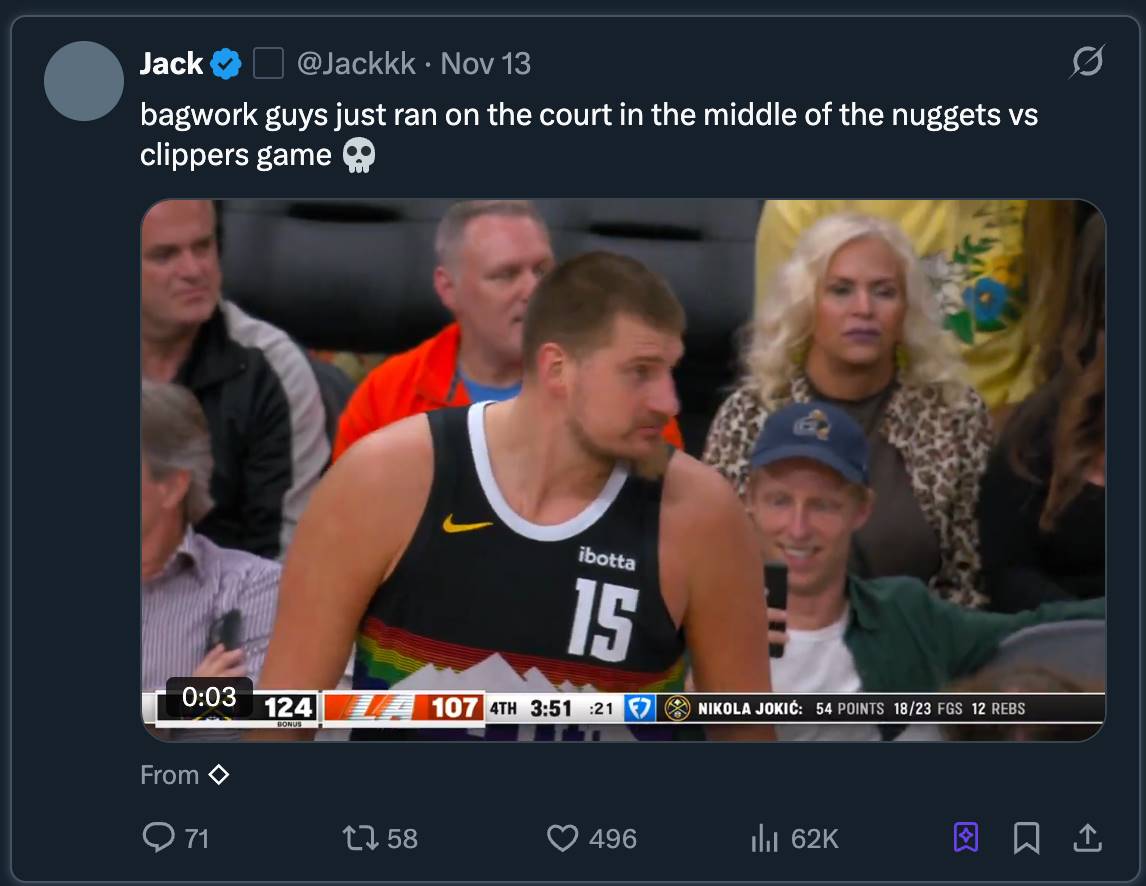
This viral explosion was led by a group of teenagers who, with some support from Pump, executed a series of sensational events: snatching Bradley Martyn's hat, storming the Dodgers' game field, rushing onto the Knicks' court, and even getting tattoos of Pumpfun and Bagwork.

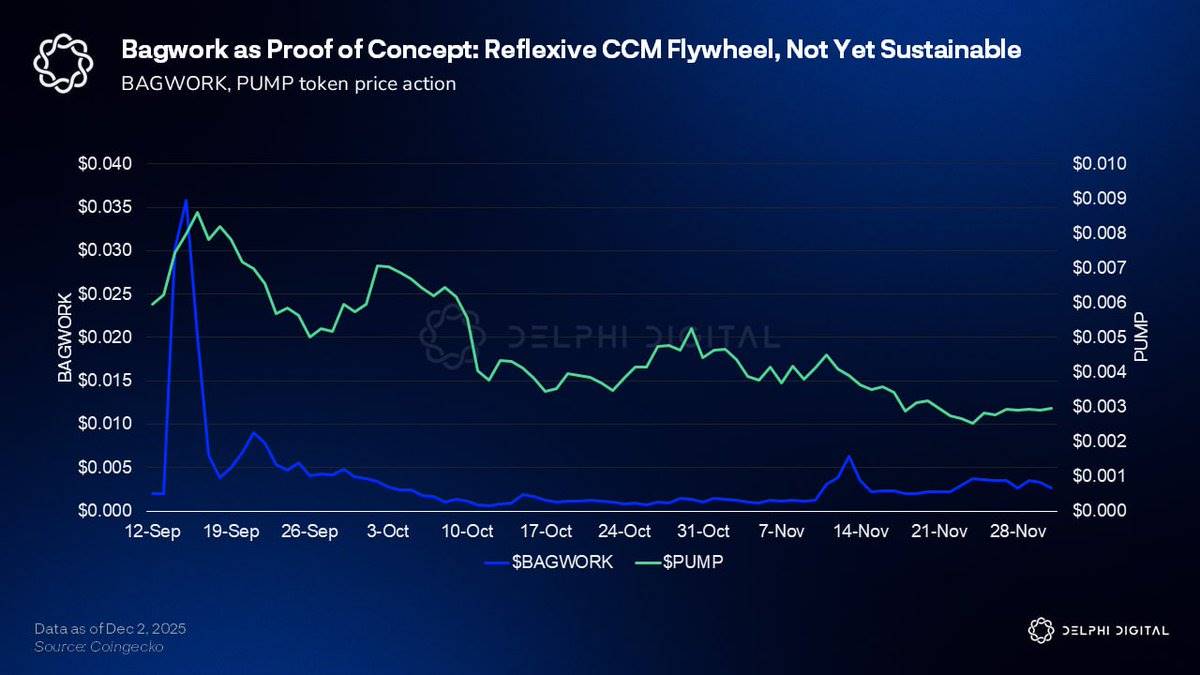
The rise of @onlybagwork almost perfectly coincided with the peak of Pump.fun's frenzy in mid-September. At that time, the fully diluted valuation (FDV) of $PUMP reached approximately $8.5 billion, and Bagwork's market cap briefly exceeded $50 million.

However, since then, no creator token has come close to such organic momentum or reached similar valuation peaks.

The Knicks court incident occurred more recently, long after the initial hype, and now Bagwork's market cap is just over $2 million.
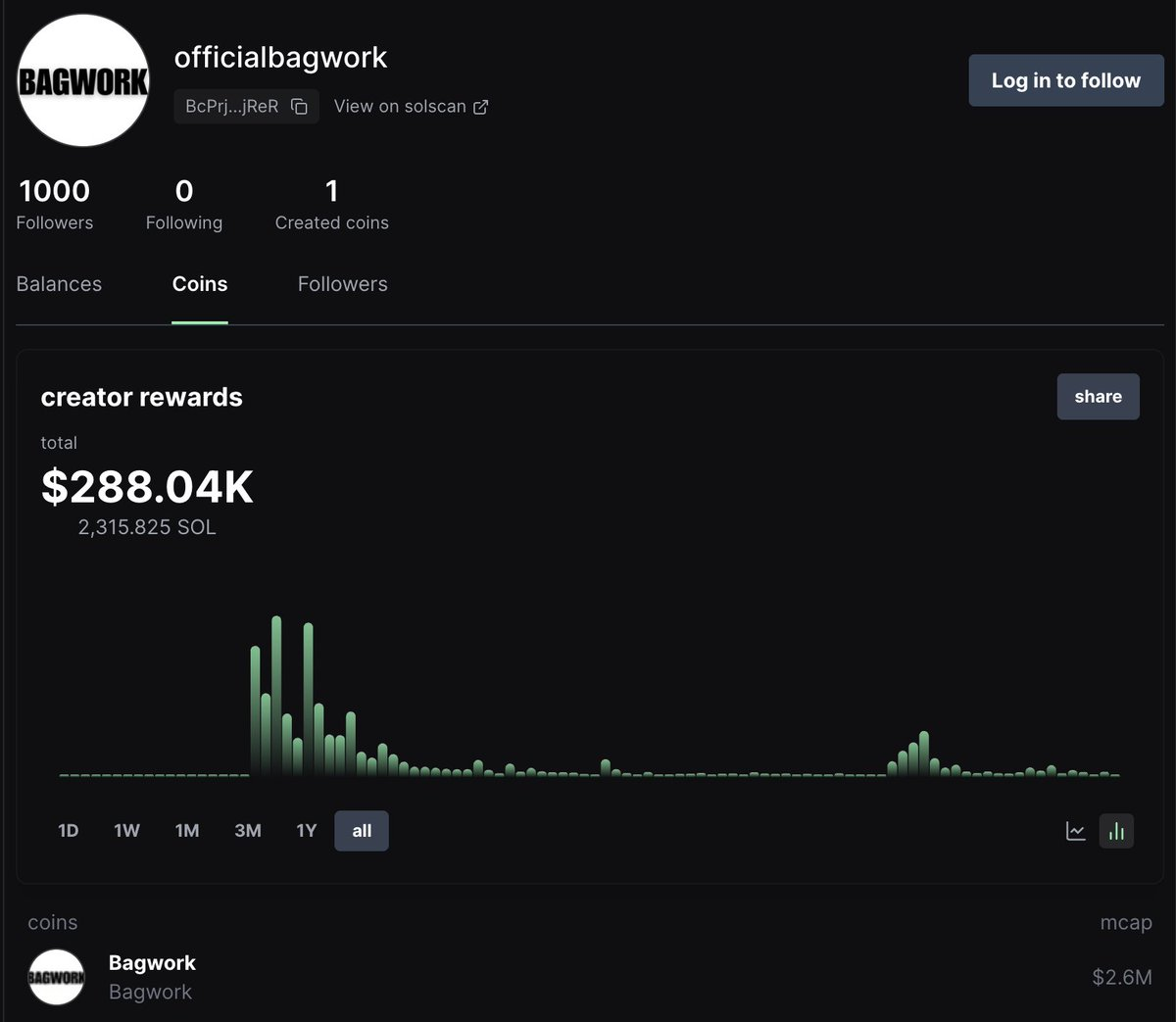
Bagwork is one of the few cases in Pump's streaming experiment that actually worked as intended. The Bagwork team earned over 2300 SOL in creator revenue from $BAGWORK trading fees (approximately $300,000 at current prices).

Notably, all of this was achieved without the team selling their holdings. Viral events directly translated into attention, trading volume, and fee revenue, creating the closest case to a true creator token flywheel effect for Pump to date.

However, beyond Bagwork, Pump has struggled to realize its streaming vision. Creator tokens have consistently failed to retain their value. This phenomenon can be traced back to a fundamental issue: the token itself is part of the product.

Currently, the economic rationale for owning or supporting a streamer's token remains unclear. Bagwork's early success quickly faded, and since then, every major streamer token has failed to gain similar traction, eventually trending toward zero.
Creators can achieve short-term gains through the CCM fee structure, but the reputational risk associated with crashed tokens makes this model unattractive to larger, more established creators who could have helped the platform reach a broader audience. From a trader's perspective, these tokens remain a zero-sum game environment rather than genuine communities.

This is the most critical issue Pump needs to address as it moves into 2026.

So far, the team has not made meaningful attempts at deeper creator incentive mechanisms, and airdrop allocations remain untouched. Apart from the informal support provided during the Bagwork frenzy, Pump has not taken any coordinated measures, such as targeted airdrops, creator rewards, or other incentive mechanisms that could have been used to kickstart early momentum, create more PvE (Player vs. Environment)-style incentives, and provide creators with a space to experiment without immediately damaging their communities.
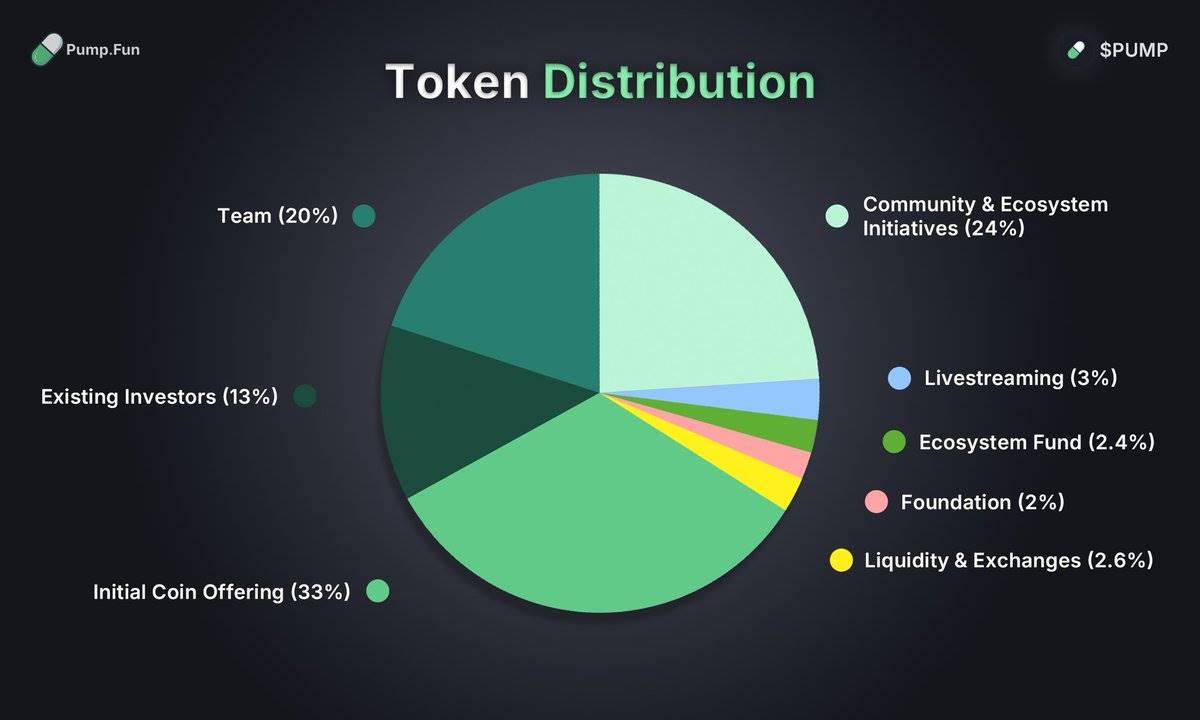
The good news is that this provides Pump with significant flexibility.

The untouched "Community & Ecosystem Initiatives" treasury remains a powerful lever the team can utilize as the model matures. If Pump can design a sustainable incentive structure for creator tokens, it could open up a new economic category for creators looking to leverage crypto mechanisms for monetization and audience expansion.

Although this potential upside is substantial, until then, streaming will continue to manifest as a series of short-lived hype cycles rather than a durable and repeatable vertical.

On the token side, the primary catalyst that drove $PUMP from around $0.025 to $0.085 was the team's decision to use 100% of net revenue for buybacks.
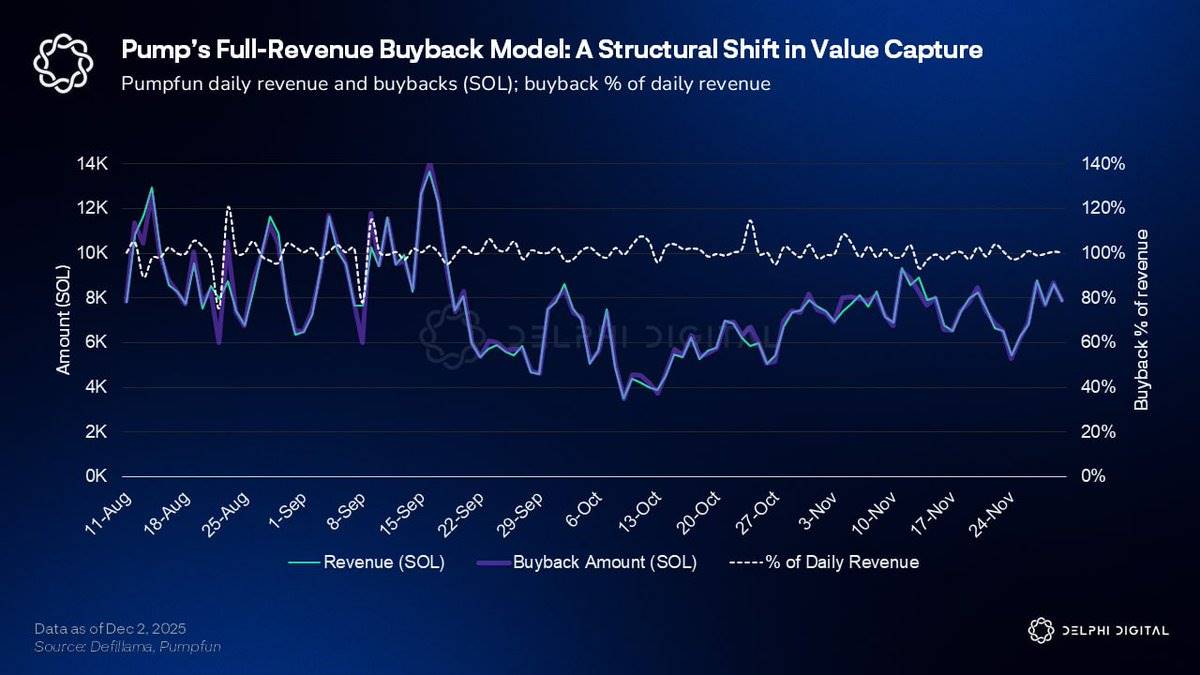
Pump shifted from initially planning to use about a quarter of its revenue for buybacks to almost fully adopting a Hyperliquid-style buyback model. This change was made after the market clearly indicated that a partial buyback model would not be well-received. This shift ignited one of the strongest large-cap token rallies this year in a liquidity-scarce and challenging altcoin market.

In terms of the buyback-to-market-cap ratio, no other major token currently trades at a lower multiple.
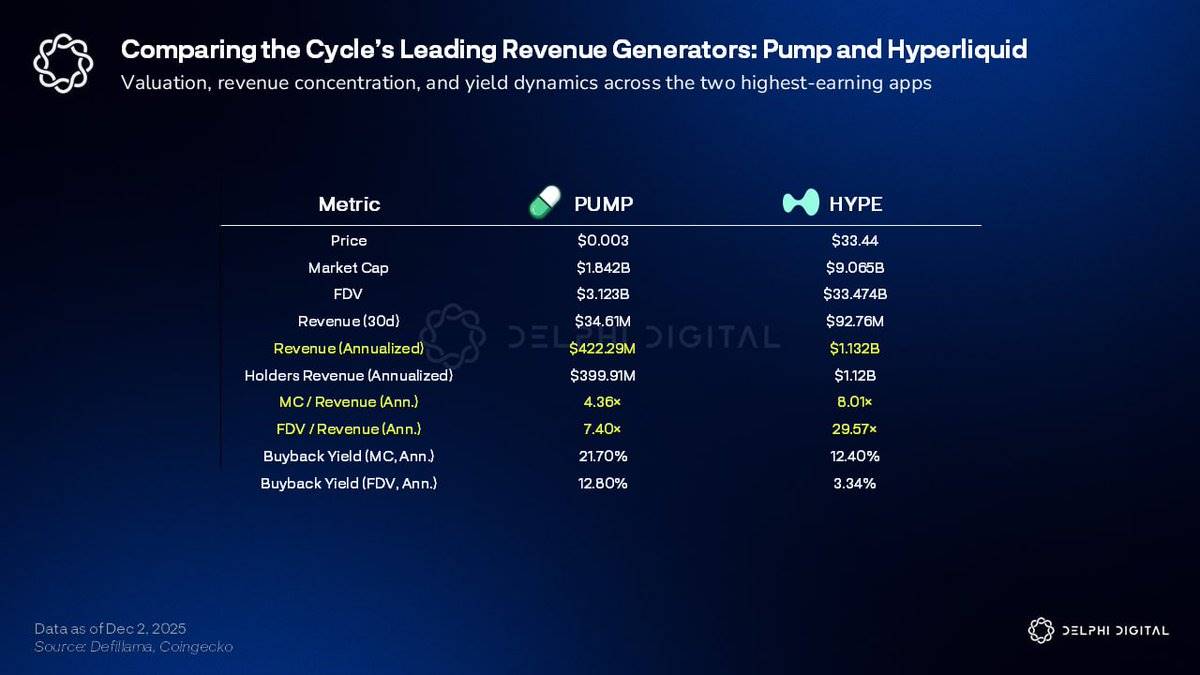
Based on current data, Pump's annualized revenue is $422 million, with a market cap of $1.84 billion, implying a market-cap-to-revenue ratio (MC/Rev) of 4.36x and an annualized buyback yield of approximately 12.8%. This is significantly lower than other large-cap tokens, including Hyperliquid's ~8.01x MC/Rev and ~3.34% yield.

Even so, the market remains skeptical about Pump's long-term business prospects.

Market concerns may include: whether the team can consistently deliver meaningful products; the impact of future unlocks on the market with approximately 40% of the token supply still locked; and the uncertainty surrounding the final allocation of airdrop and creator incentive distributions. Additionally, the overall contraction of Meme coin activity in the crypto market, reduced end-user activity, and questions about the sustainability of Pump's revenue base also raise doubts.

Despite these concerns, Pump still dominates the Meme coin launchpad space. Even in the current extremely tough market environment, Pump still earns (and buys back) about $1 million daily.
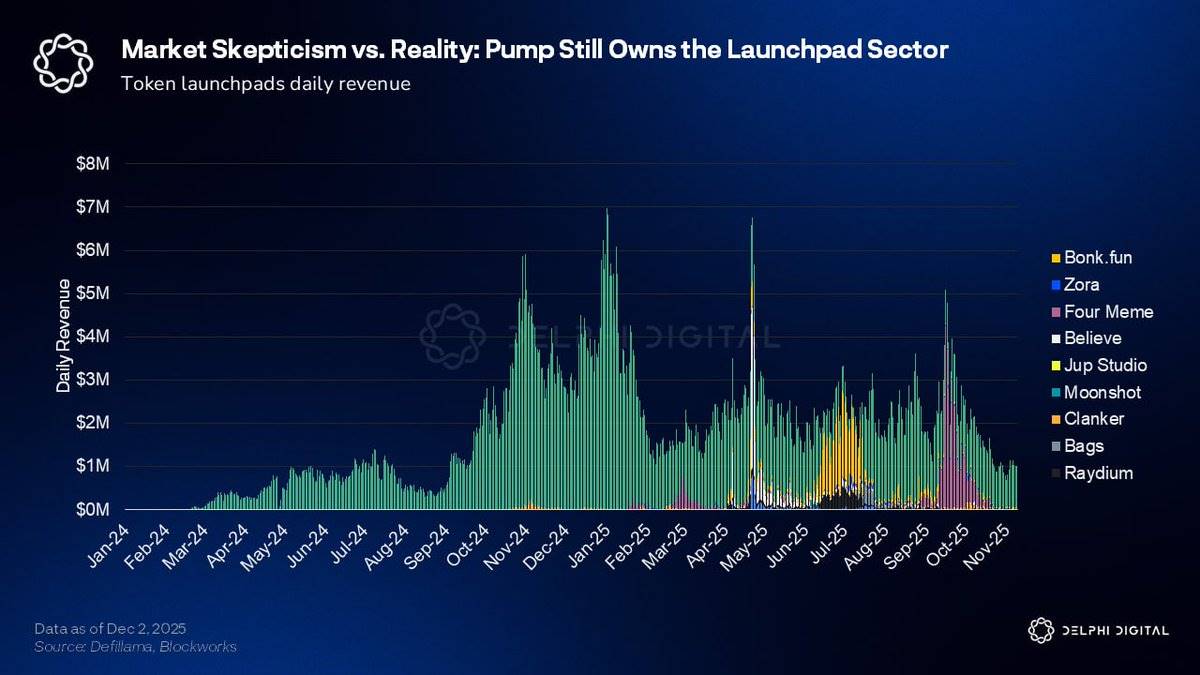
Pump's daily launchpad revenue has dropped nearly 85% from its peak of close to $14 million earlier this year to currently around $2 million. However, competitors have only posed a threat to Pump's position for brief periods, failing to bring substantial challenges. This aligns with our prediction in the initial report regarding the short-lived Bonk and Raydium challenge phases: even during cyclical trading volume contractions, Pump has maintained structural advantages and dominated the industry's activity share.

The acquisition of Padre supports the view that Pump intends to expand beyond Solana into a multi-chain ecosystem and has achieved support for BNB ecosystem assets through the Padre frontend. This also aligns with our earlier prediction that Pump would eventually acquire a terminal or terminal-related asset to strengthen user acquisition channels and integrate more of the user journey.
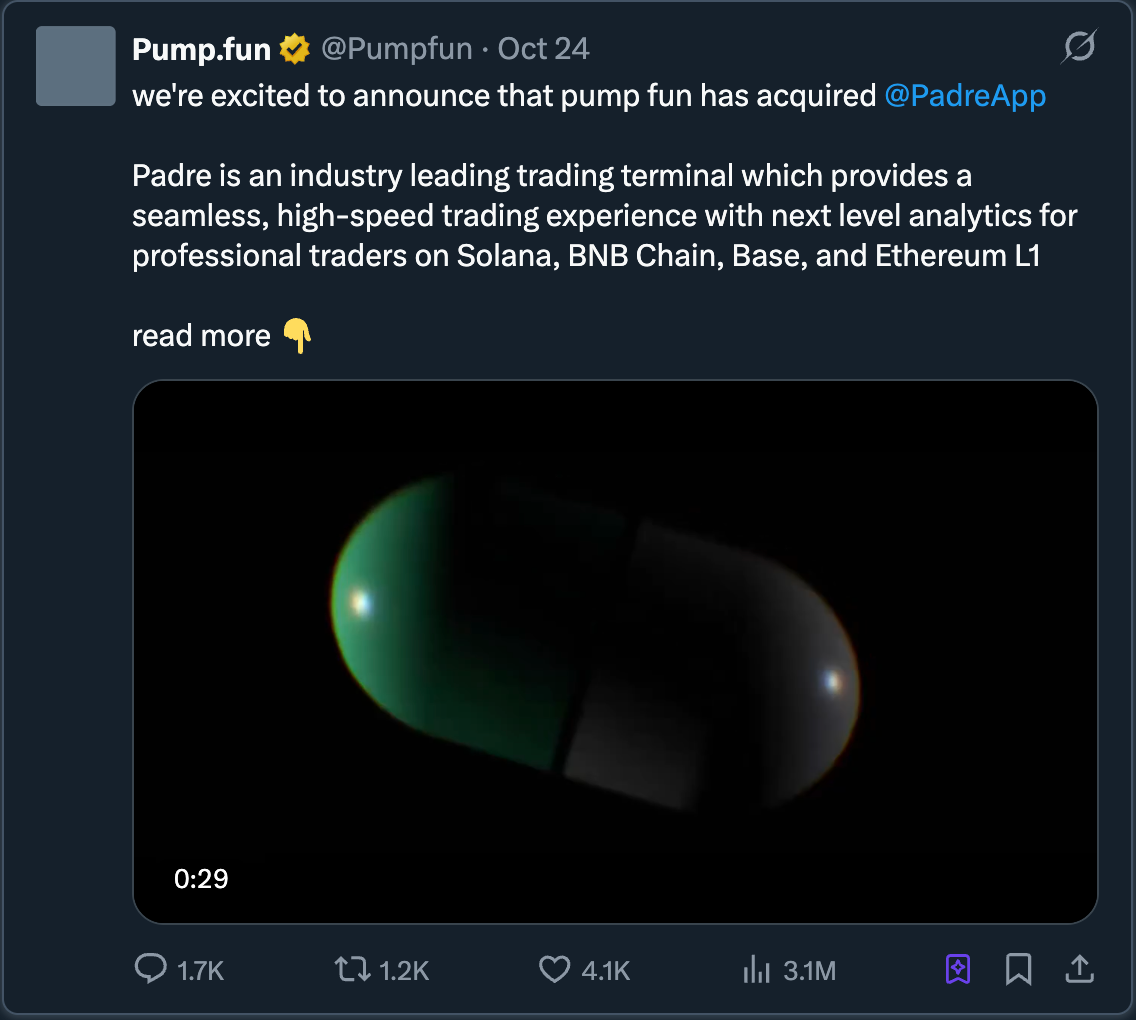
Beyond these moves, the team has recently maintained a low-profile strategy. An investor call is currently planned but had not been held at the time of writing, so more details may be disclosed later.
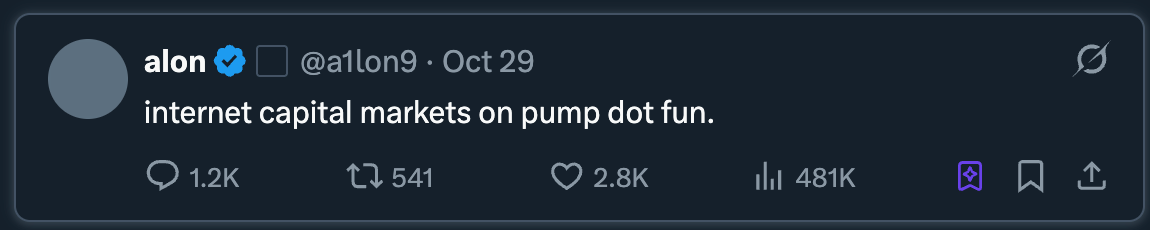
The leadership team has also expressed interest in the broader ICM (Initial Community Offering) category, although we believe this is not the core area of Pump's current brand positioning or product strengths. Pump initially experimented with the Believe model but failed to gain significant market attention. MetaDAO has become the dominant player in the "high-quality founder + community" fundraising space.

Furthermore, the culture and structure of ICM seem less aligned with Pump's brand positioning. Pump's brand core revolves around speculation, speed, and the Meme culture of creators, rather than long-term governance or Futarchy-based systems. For Pump to succeed in the ICM space, they would need to lean towards more governance-focused structures and attract non-crypto teams looking to operate on-chain. However, this does not fully align with the needs and positioning of Pump's current users and creators. Although theoretically, ICM could offer some potential upside if the team takes action, we see this more as a secondary or optional direction rather than a natural extension of Pump's existing flywheel into 2026.
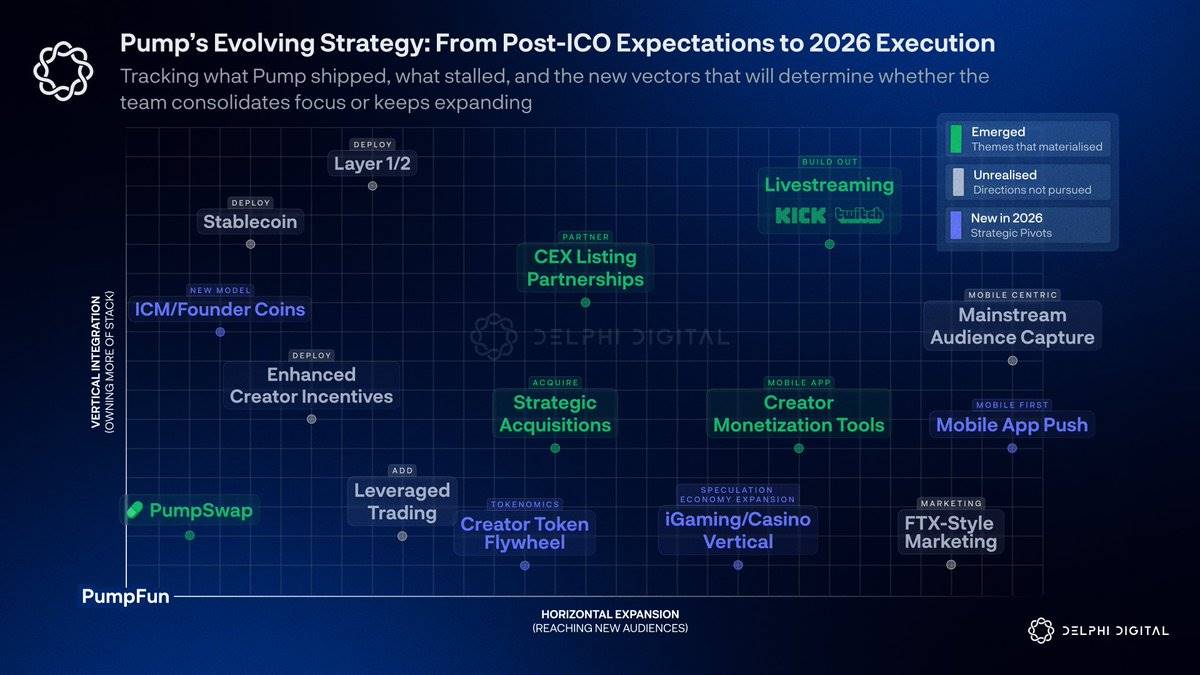
Looking ahead to 2026, Pump's main questions focus on: whether it can finally establish an incentive-compatible creator token model; whether it can achieve substantial multi-chain market expansion through Padre; how to manage the risks of token unlocks and declining revenue visibility; and which product vertical to prioritize as its main focus. Currently, Pump's strategy seems scattered across multiple directions, including streaming, ICM, and mobile.

At some point in the future, the team may need to clearly focus on one core breakthrough. For most of 2025, that breakthrough seemed to be streaming, but this is no longer clear now.

The bigger question is whether Pump can attract larger non-crypto creators. This might require redesigning the creator token flywheel mechanism, providing stronger, longer-term incentives to support viral growth beyond the crypto-native user base. Pump has the basic conditions to achieve this. The 2025 Bagwork frenzy briefly showcased the potential success of this model, a time when Pump seemed close to crossing the chasm.

Furthermore, Pump still has vast room to expand its product suite. One strategic direction the team should seriously evaluate is entering the iGaming or casino-related vertical. Adopting a model similar to Kick or Stake would naturally fit Pump's speculation-driven user base. This direction would deeply synergize with its Meme coin and streaming strategic goals, and the profit potential in this field is already proven.
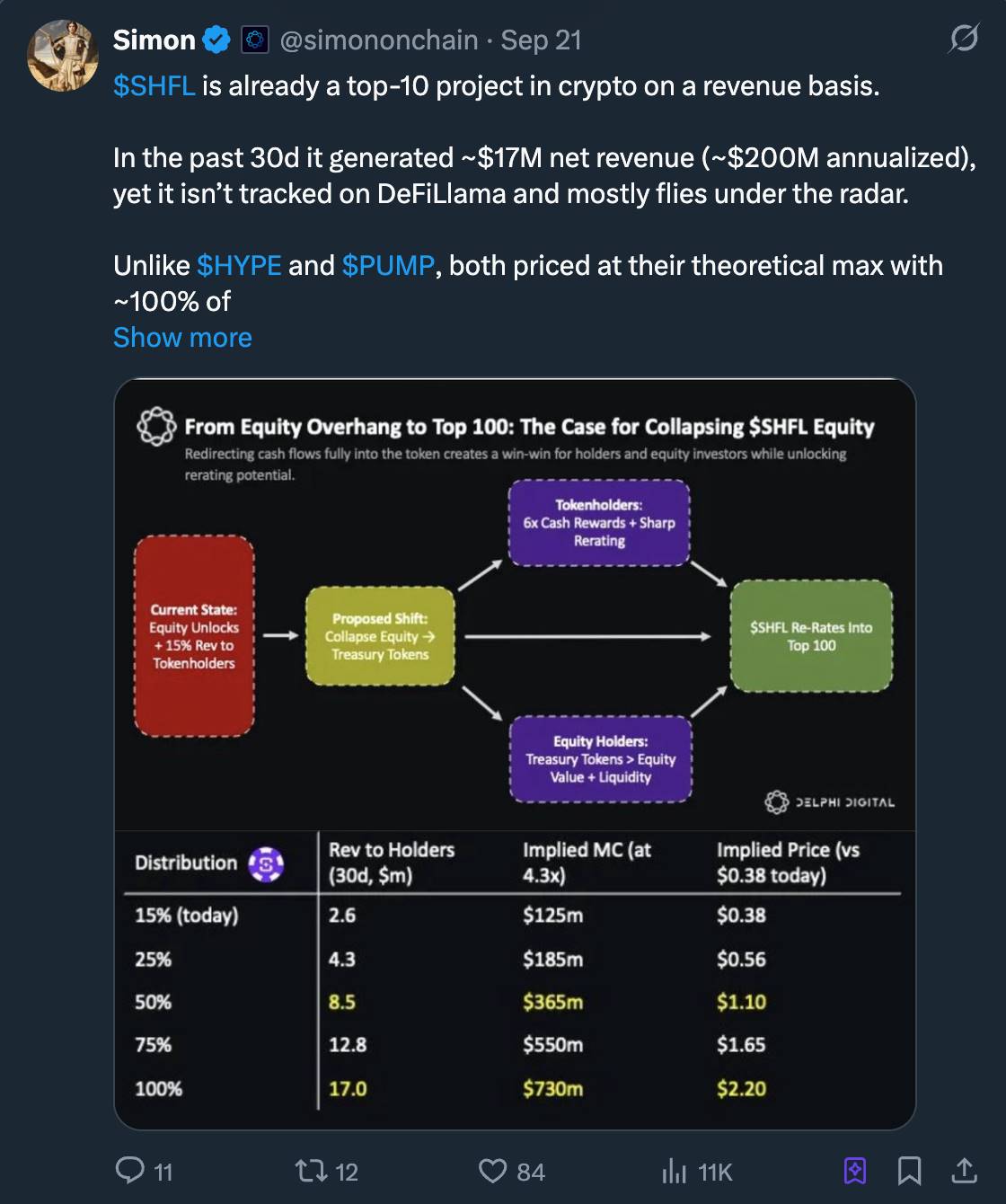
Shuffle's net gaming revenue and weekly lottery distribution demonstrate the huge potential of this area with successful execution.

Pump's mobile application is another underutilized advantage. Deeper expansion into mobile could broaden user acquisition channels, make the product more accessible to mainstream users, and provide creators with more monetization scenarios. If combined with iGaming, this could not only significantly expand Pump's potential audience but also strengthen the platform's existing successful elements.

Despite the uncertainties, Pump remains one of the most resilient consumer applications of this cycle, maintaining dominance even as the overall market landscape has shifted. Substantial progress in any key direction could trigger a significant shift in market sentiment and help Pump break through to attract a broader non-crypto-native user base.


Twitter:https://twitter.com/BitpushNewsCN

BitPush TG Group:https://t.me/BitPushCommunity

BitPush TG Channel: https://t.me/bitpush

Original link:https://www.bitpush.news/articles/7596421

Trend Kriptolar

İlgili Sorular

QWhat is the core challenge that Pump.fun still faces in 2026 according to the article?

AThe core challenge is creating a sustainable and incentive-compatible creator token model. The fundamental problem is that the token itself is part of the product, and the economic rationale for holding or supporting a streamer's token remains unclear, causing most tokens to trend toward zero and making the model unattractive to larger, established creators.

QWhat was the Bagwork phenomenon, and why was it significant for Pump.fun?

ABagwork was a viral event led by a group of teenagers who engaged in attention-grabbing stunts, which coincided with the peak of Pump.fun's activity in mid-September. It was significant because it was one of the few cases where Pump.fun's streaming experiment worked as intended, generating over 2300 SOL in creator fees and briefly showcasing the potential flywheel effect of a true creator token without the team selling their holdings.

QHow does Pump.fun's current market cap to revenue (MC/Rev) ratio compare to other major tokens like Hyperliquid?

APump.fun's MC/Rev ratio is 4.36x with an annualized buyback yield of ~12.8%, which is significantly lower than other major tokens. For comparison, Hyperliquid has an MC/Rev ratio of ~8.01x and a yield of ~3.34%.

QWhat strategic direction does the article suggest could be a natural fit for Pump.fun's user base and existing strategy?

AThe article suggests that entering the iGaming or casino-related verticals would be a natural strategic fit. This approach, similar to models like Kick or Stake, aligns with Pump.fun's speculation-driven user base and could create deep synergies with its meme coin and streaming goals, leveraging proven monetization potential.

QDespite a significant drop in daily launchpad revenue, what advantage does Pump.fun maintain in the meme coin platform space?

APump.fun maintains a dominant structural advantage and continues to command the majority share of industry activity, even during cyclical trading volume contractions. It still earns and buys back approximately $1 million daily, and competitors have only posed a threat briefly without providing a substantial challenge.

İlgili Okumalar

AI is Killing 'Poor People's Entertainment'

AI Is Eliminating 'Entertainment for the Poor' This article discusses the rising cost of video gaming, arguing that AI is making digital entertainment increasingly expensive. It follows the example of a frugal gamer who, accustomed to waiting for discounts and buying second-hand games, now faces a new reality. Video game consoles like the PS5 Pro and Switch 2 are increasing in price post-launch, breaking the traditional pattern of降价 over time. Game prices are also rising, with major titles like GTA 6 launching at $80. Furthermore, the industry is moving towards eliminating physical media, exemplified by Sony's plan to stop PS disc production by 2028. This shift blocks the二手 market, a key cost-saving avenue for players. Even Valve's anticipated affordable Steam Machine launched with a high price and disappointing specs. Manufacturers cite inflation, supply chain issues, and rising development costs, but a core driver is the AI boom. AI data centers now consume semiconductor and memory resources once prioritized for consumer electronics like game consoles. This competition from a more profitable sector drives up hardware costs. Additionally, developing modern AAA games with massive teams over many years is astronomically expensive, pushing publishers towards digital-only distribution and subscription models to secure recurring revenue. The article suggests this trend extends beyond gaming. Video streaming, music platforms, cloud storage, and AI tools are increasingly locked behind complex subscription tiers. While AI promises future benefits, it is currently making digital entertainment and services more costly. The era of progressively cheaper, accessible online entertainment is ending, forcing consumers to pay more upfront for future technological promises.

marsbit37 dk önce

AI is Killing 'Poor People's Entertainment'

marsbit37 dk önce

The Demise of the Trillion-HKD ETF Myth: SK Hynix Plummets, Hong Kong Switches from 'Double Leverage' to 'Flexible Leverage', South Korea Restricts Leveraged ETF Investments

South Korea's AI-driven bull market has taken a sharp downturn, severely impacting SK Hynix's stock and prompting regulatory tightening in both Hong Kong and South Korea on single-stock leveraged products. The CSOP SK Hynix Daily Leveraged (2x) ETF, once the world's largest single-stock leveraged ETF with over HKD 130 billion in assets, saw its value plummet by over 80% as SK Hynix shares fell nearly 46% from their June peak, erasing more than HKD 100 billion. In response, Hong Kong's Securities and Futures Commission (SFC) revised its regulatory framework. Starting August 3rd, fixed 2x leverage for single-stock leveraged and inverse products will shift to a dynamic "flexible leverage" mechanism, where daily leverage can vary up to a maximum of 2x. This aims to balance market development with investor protection but has sparked debate about changes to the products' core features and potential reduced appeal for risk-seeking investors. Simultaneously, South Korean authorities announced plans to further restrict single-stock leveraged ETFs following two consecutive days of market circuit breakers. Proposed measures include capping individual investors' allocations to such products at 20% of their total financial investment assets, increasing trading costs, and enhancing suitability requirements. The Finance Minister publicly apologized, acknowledging insufficient initial risk assessment. Analysts note that while the long-term fundamentals for South Korean semiconductor firms like SK Hynix remain solid, short-term market volatility is heightened due to concentrated leveraged bets and shifting global risk sentiment. The regulatory moves in both markets signal a clear shift from encouraging innovation towards prioritizing risk control, reminding investors of the amplified risks inherent in leveraged products.

marsbit43 dk önce

The Demise of the Trillion-HKD ETF Myth: SK Hynix Plummets, Hong Kong Switches from 'Double Leverage' to 'Flexible Leverage', South Korea Restricts Leveraged ETF Investments

marsbit43 dk önce

After the Privatization of the Internet, Silicon Valley Begins Privatizing Human Civilization

"The Privatization of Human Civilization" The article critiques how AI companies like Anthropic are systematically acquiring and digitizing millions of books—sometimes by destroying physical copies—to build proprietary training datasets for models like Claude. While a lawsuit resulted in a settlement, the author argues the deeper issue transcends copyright: it is about the privatization and centralized control of human knowledge and civilization. This process coincides with a powerful Silicon Valley ideology, exemplified by Marc Andreessen's "Techno-Optimist Manifesto" and movements like e/acc (Effective Accelerationism). This worldview frames technological growth and speed as inherently moral, portraying caution, regulation, and public dissent as obstacles to progress. It often envisions intelligence itself, rather than human well-being, as the ultimate goal, potentially sidelining present human concerns. Figures like Peter Thiel and Curtis Yarvin express skepticism towards democratic processes as too slow, suggesting more centralized, founder-led governance is efficient. This logic extends to AI, where a small team within a company defines the model's "constitution"—its rules, values, and definitions of truth and safety—effectively governing how millions understand the world. Thus, the scanned books symbolize a new form of control. Knowledge isn't erased but is ingested into private, opaque systems. The original, decentralized, and contestable nature of books and public knowledge is replaced by a curated, company-controlled output. The public's access to their own cultural heritage becomes mediated by corporate AI, which remembers civilization only in the form its creators dictate. This is not book-burning but a subtler, potentially more complete privatization of human memory and understanding.

marsbit52 dk önce

After the Privatization of the Internet, Silicon Valley Begins Privatizing Human Civilization

marsbit52 dk önce

İşlemler

Spot

Popüler Makaleler

PUMP Nasıl Satın Alınır

HTX.com’a hoş geldiniz! Pump.fun (PUMP) satın alma işlemlerini basit ve kullanışlı bir hâle getirdik. Adım adım açıkladığımız rehberimizi takip ederek kripto yolculuğunuza başlayın. 1. Adım: HTX Hesabınızı OluşturunHTX'te ücretsiz bir hesap açmak için e-posta adresinizi veya telefon numaranızı kullanın. Sorunsuzca kaydolun ve tüm özelliklerin kilidini açın. Hesabımı Aç2. Adım: Kripto Satın Al Bölümüne Gidin ve Ödeme Yönteminizi SeçinKredi/Banka Kartı: Visa veya Mastercard'ınızı kullanarak anında Pump.fun (PUMP) satın alın.Bakiye: Sorunsuz bir şekilde işlem yapmak için HTX hesap bakiyenizdeki fonları kullanın.Üçüncü Taraflar: Kullanımı kolaylaştırmak için Google Pay ve Apple Pay gibi popüler ödeme yöntemlerini ekledik.P2P: HTX'teki diğer kullanıcılarla doğrudan işlem yapın.Borsa Dışı (OTC): Yatırımcılar için kişiye özel hizmetler ve rekabetçi döviz kurları sunuyoruz.3. Adım: Pump.fun (PUMP) Varlıklarınızı SaklayınPump.fun (PUMP) satın aldıktan sonra HTX hesabınızda saklayın. Alternatif olarak, blok zinciri transferi yoluyla başka bir yere gönderebilir veya diğer kripto para birimlerini takas etmek için kullanabilirsiniz.4. Adım: Pump.fun (PUMP) Varlıklarınızla İşlem YapınHTX'in spot piyasasında Pump.fun (PUMP) ile kolayca işlemler yapın.Hesabınıza erişin, işlem çiftinizi seçin, işlemlerinizi gerçekleştirin ve gerçek zamanlı olarak izleyin. Hem yeni başlayanlar hem de deneyimli yatırımcılar için kullanıcı dostu bir deneyim sunuyoruz.

404 Toplam GörüntülenmeYayınlanma 2024.12.12Güncellenme 2026.07.09

PUMP Nasıl Satın Alınır

Tartışmalar

HTX Topluluğuna hoş geldiniz. Burada, en son platform gelişmeleri hakkında bilgi sahibi olabilir ve profesyonel piyasa görüşlerine erişebilirsiniz. Kullanıcıların PUMP (PUMP) fiyatı hakkındaki görüşleri aşağıda sunulmaktadır.

活动图片