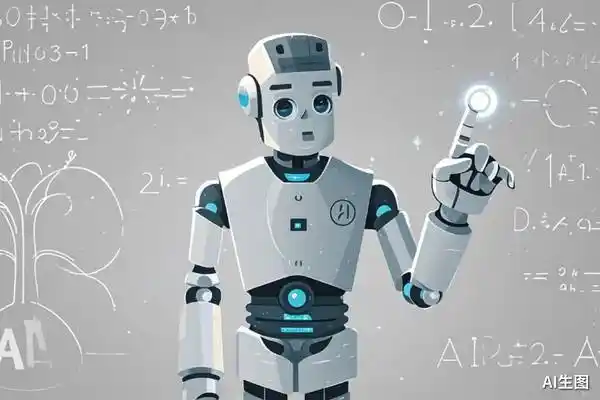
Burning Through Billions, Market Cap Evaporates 200 Billion: SenseTime Suddenly Turns a Profit

marsbit2026-08-17 tarihinde yayınlandı2026-08-17 tarihinde güncellendi

Özet

Chinese AI giant SenseTime, once a star in the AI "Four Dragons," recently projected its first-ever profit for H1 2026, sparking a temporary stock surge. However, its current market cap of ~HK$64.6 billion remains over 80% below its peak of ~HK$300 billion in early 2022. The article analyzes SenseTime's dramatic fall from grace. It excelled in the "AI 1.0" era, dominating computer vision for applications like facial recognition and smart cities. However, it was disrupted by the "AI 2.0" generative AI revolution led by ChatGPT, which shifted focus from recognition to creation. Compounded by US sanctions, the death of its founder, a short-seller report, and a decline in its core smart city business, the company faced a perfect storm. Its workforce was cut by nearly 60%. To survive, SenseTime pivoted, actively "killing" its old self. It transitioned from project-based solutions to a generative AI and visual AI dual-engine model. Now, over 70% of its revenue comes from large language models, a more scalable, subscription-like business. Cost-control measures on expensive model training have also contributed to its path to profitability. Yet, significant challenges remain. The current AI race is an ecosystem battle dominated by giants like Microsoft/OpenAI, Google, and Chinese tech firms with integrated clouds, apps, and vast user bases. SenseTime, as an independent AI company, lacks such a super app or traffic gateway. The key question is whether it can build a sustainable moat...

On August 17th, the veteran star AI company SenseTime experienced a long-awaited strong breakout, with its stock price soaring over 13% intraday and rising over 8% at the time of writing, bringing its total market cap back to around HK$64.6 billion. What sparked this capital frenzy was a "positive profit warning" released by SenseTime on the evening of the 16th — the company expects to successfully turn a loss into a profit in the first half of 2026, marking SenseTime's first consolidated profit since its listing on the Hong Kong Stock Exchange in 2022.

However, while the market cheered this historic turning point, a massive chasm still separates SenseTime's current stock price from its peak. Looking back to late 2021 and early 2022, SenseTime was highly sought after by capital upon its IPO, with its stock price once nearing HK$9.70 per share and its total market cap once exceeding HK$270 billion. Now, even after the single-day surge, its stock price hovers around HK$1.53, and its market cap has plummeted by over 80% from its peak.

From being the most favored by capital during the era of the "AI Four Dragons" to experiencing a darkest hour of multiple storms, this once-dominant player in the spotlight is trying to catch up with the times again through a comprehensive pivot to generative AI.

When AI Was Hottest, Why Did It Fall Behind?

In 2018, if you asked someone in the tech circle: Which Chinese AI company is the strongest?

The answer would most likely include SenseTime.

Indeed, in those years, SenseTime was a true top influencer. Face recognition, smart cities, autonomous driving — in almost every hot AI-related sector, you could find its presence. Along with Megvii, Yitu, and CloudWalk, the other three making up the "AI Four Dragons," it was a regular in tech media headlines, securing round after round of financing and seeing its valuation skyrocket. Back then, SenseTime was like the top student in school who aced every exam; everyone thought its future was limitless.

However, fast-forward to 2023, and the scene changed dramatically.

When ChatGPT, DeepSeek , Claude, and Gemini set the world ablaze, when AI became the hottest concept in capital markets, when OpenAI and Anthropic became the focus of the tech world, SenseTime gradually faded from the public eye.
Why did this happen? The answer might be brutally simple: SenseTime caught AI 1.0, but missed AI 2.0.

To understand this, we must first clarify the fundamental differences between AI in these two eras.

In the era SenseTime was founded, AI primarily did "recognition" work — given a face, it told you who it was; given a photo of an intersection, it flagged which car ran a red light; given a surveillance video, it counted how many people passed by.

This type of technology has a professional term: computer vision, simply put, teaching machines to see the world. SenseTime became a leader in this field, making a fortune by providing enterprises with face recognition and smart city solutions.

But the sudden emergence of ChatGPT changed the game entirely. The new generation of AI was no longer content with just seeing; it began to create, writing articles, making videos, and even coding.

It was as if SenseTime had spent a decade mastering the art of recognition, becoming the best in the world, only to find the martial world suddenly embracing generative techniques, with everyone training in them. The old skills weren't useless, but they were no longer the main act.

If it were merely falling behind in the technological path, SenseTime might still have had a chance to turn things around. What was truly fatal was that from 2019 to 2023, bad news seemed to arrive one after another like clockwork.

First, starting in 2019, the U.S. placed SenseTime on its sanctions list. Then, at the end of 2022, ChatGPT exploded onto the scene,颠覆 the entire industry's technological paradigm. The computer vision track that SenseTime relied on for survival suddenly went from being a future direction to a traditional business, while its布局 in large models was half a step too slow.

Misfortune never comes singly. Its former cash cow, the smart city business, also began to萎缩, with收入增长失速.

2023 was an even darker hour for SenseTime. This year, founder Tang Xiao'ou passed away, causing widespread惋惜 in the industry and dealing a heavy blow to both internal morale and capital market confidence; almost simultaneously, short-seller Grizzly Research released a report questioning SenseTime, sending its stock price further downhill.

After this series of blows, the numbers were staggering: In 2021, the smart city business accounted for 45.6% of SenseTime's total revenue; by 2022, this proportion had dropped to 28.8%; by 2023, it had further declined to around 12%. SenseTime even actively reduced its reliance on the smart city business.

Meanwhile, its market cap also fell from a peak of around HK$300 billion to just a few hundred billion; its employee headcount was大幅裁减 from 6,114 to 2,472, a reduction of nearly 60% in three and a half years, equivalent to losing six out of every ten people.

Almost every conceivable crisis occurred during these past few years.

Rather than a story of simply falling behind, it's more a story of a star AI company being simultaneously hit by multiple storms at a turning point in the era.

Can the Company That Once Made Money 'Scanning Faces' Stage a Comeback?

If you thought SenseTime had completely vanished and would never reappear, you might be overlooking a very interesting fact: SenseTime has already transformed from a face recognition company into a technology enterprise driven by both generative AI and visual AI.

Put more directly: SenseTime actively "killed" its old self.

Judging from the latest earnings forecast, the transformation is beginning to show results: In the first half of 2026, it is expected to record a profit for the period of approximately RMB 500 million to RMB 700 million, compared to a loss of about RMB 1.489 billion in the same period last year; the net loss is expected to decrease by 60%~70% year-on-year.

It is worth noting that SenseTime explicitly mentioned in its announcement: "This will be the first time the Company has achieved consolidated profit since its listing."

This is an important signal. Because over the past few years, the biggest external质疑 about SenseTime has been whether it could actually make money.

As one of the brightest stars in China's AI industry, from 2018 to 2021, SenseTime told a story of technology changing the world. Back then, it seemed everyone agreed: whoever had the most advanced algorithms, the most AI research papers, the highest face recognition accuracy, could become the winner of the next era.

But later, people realized that technological领先 doesn't necessarily mean商业上的成功.

In the past, SenseTime's core businesses were smart cities, smart business, and smart living. To put it more bluntly, this involved selling artificial intelligence solutions to local governments and enterprises. For example, face recognition access control, city security systems, traffic recognition, campus management, etc.

This business model has a天然缺陷: once a project is completed, the revenue ends. This made it more like a technical service company than an internet platform.

An internet platform can generate continuous revenue from users, but a project-based enterprise must constantly寻找新的订单.

This is also why, for many years, SenseTime could never摆脱亏损的困境.

The emergence of generative AI changed all this. In the past, SenseTime was selling projects; now, it has shifted to selling models.

A single large model can simultaneously serve multiple industries like finance, education, office work, robotics, and content creation. It's no longer a "one-time delivery" business but more like a sustainable subscription. The biggest advantage of this model is that, in theory, it offers greater economies of scale.

Looking at the business structure, generative AI has become SenseTime's new growth engine. For example, in the full year of 2025, generative AI业务 generated revenue of RMB 3.63 billion, accounting for 72.4% of total revenue; its other main business, visual AI, generated revenue of RMB 1.08 billion, accounting for 21.6%.

In other words, over 70% of the revenue for the SenseTime that once relied on scanning faces to make money now comes from large models.

At the same time, SenseTime has also begun actively controlling costs.

Training large models is essentially a "cash-burning" game. For the past few years, SenseTime has been labeled a "cash-burning machine." From its founding to its IPO, cumulative R&D investment exceeded tens of billions of RMB, and persistent losses became investors' biggest concern.

But in the last two years, SenseTime has明显 adjusted its strategy. On one hand, it has begun emphasizing model training efficiency. On the other hand, it is also working to reduce its reliance on high-end computing power by optimizing model architecture and adapting to domestic chips to lower training costs.

Judging by the operational results, this strategy is indeed starting to work. However, the issue is that profitability doesn't mean it has already staged a comeback. Up to this point, if asked whether SenseTime has made a comeback? Probably not. Because it faces an even bigger problem: Do independent AI companies still have a chance?

Because the current large model competition has essentially become a battle of ecosystems.

Look at the players now at the center of the table: OpenAI has Microsoft behind it, Google has Search, Android, and cloud computing, Alibaba has Alibaba Cloud and its e-commerce ecosystem, Tencent has WeChat, ByteDance has Douyin... These companies share a common characteristic: they not only have models, but also computing power, users, traffic, and application入口.

And the model is only part of it; what truly determines victory or defeat is the entire ecosystem. And this恰恰 is SenseTime's weakest point.

In fact, this isn't just a problem faced by SenseTime; it's a challenge共同面对 by all independent AI companies globally.

In the past, SenseTime needed to prove: Can AI technology become a viable business? Today, it needs to prove: In the era of large models dominated by giants, can an AI company without a超级流量入口 establish a new商业护城河凭借 its model capabilities and industry落地能力?

This article is from the WeChat public account "Phoenix Network Technology," author: Phoenix Network Technology


Trend Kriptolar

İlgili Sorular

QWhat is the main reason behind SenseTime's recent stock surge?

AThe main reason is the company's release of a positive profit warning, forecasting it will achieve profitability for the first half of 2026, marking its first consolidated profit since its 2022 Hong Kong listing.

QHow did the AI industry paradigm shift from AI 1.0 to AI 2.0 affect SenseTime?

AThe shift from AI 1.0 (focused on 'recognition' like computer vision) to AI 2.0 (focused on 'generation' like large language models) caught SenseTime off guard. Its core strength in computer vision became less central, causing it to miss the initial wave of the generative AI revolution and lose its leading market position.

QWhat were the key crises that contributed to SenseTime's "darkest moment" around 2023?

AThe key crises included: being placed on the U.S. sanctions list in 2019, the disruptive emergence of ChatGPT in late 2022, the significant contraction of its cash-cow smart city business, the passing of founder Tang Xiao'ou in 2023, and a short-seller report from Grizzly Research that further impacted its stock price.

QHow has SenseTime's business model transformed according to the article?

ASenseTime has transformed from a project-based business model (selling AI solutions like facial recognition systems) to a model-based one. It now generates over 70% of its revenue from selling/licensing its generative AI models, which offer a more scalable and potentially recurring revenue stream compared to one-off projects.

QWhat is identified as the fundamental challenge for independent AI companies like SenseTime in the current competitive landscape?

AThe fundamental challenge is competing against tech giants who possess not just AI models, but integrated ecosystems including massive computing power, vast user bases, dominant traffic/application portals (like search, social media, e-commerce, cloud), and extensive data. Building a sustainable moat without such a holistic ecosystem is extremely difficult.

İlgili Okumalar

'The Idea of Catching the Absolute Bottom Is Wrong': Experts on a New Phase of Bitcoin Capitulation

Analysts from CryptoQuant advise investors against trying to pinpoint the exact bottom of Bitcoin's price. Their data shows the percentage of the Bitcoin supply in profit has fallen to 51.4%, a level historically associated with capitulation phases followed by accumulation. This means approximately 48.6% of circulating coins are held at an unrealized loss. The metric, based on UTXO analysis comparing a coin's last moved price to its current market value, last neared this level in early 2023 when Bitcoin traded between $16,000 and $20,000. CryptoQuant states that the idea of catching the "absolute bottom" is flawed. The decline in the average cost basis during a bear market reflects coins transferring from weak hands to stronger, long-term holders. While some investors realize losses, others may use the decline for gradual accumulation. The accumulation window may last longer than many expect, even as fear drives some participants away. Historically, a supply in profit below 55% has been linked to re-accumulation periods. Separately, Swan Bitcoin CEO Cory Klippsten offered a forecast, suggesting Bitcoin could form a bottom in October 2026, followed by a recovery towards approximately $130,000 ahead of the 2028 halving. This aligns with the historical pattern of local lows forming about 12 months after bull market peaks; Bitcoin hit its all-time high above $126,000 in early October 2025. However, Klippsten cautioned against over-relying on past cycles due to limited historical data.

cryptonews.ru9 dk önce

'The Idea of Catching the Absolute Bottom Is Wrong': Experts on a New Phase of Bitcoin Capitulation

cryptonews.ru9 dk önce

How Does FalconX Bring Institutional Lending On-Chain? Deep Dive into the FALX Operational Mechanism

FALX is a structured credit facility that brings institutional prime brokerage loans on-chain as fixed-income assets. It works by having FalconX originate overcollateralized loans to institutional clients (e.g., quant funds, market makers). These loan exposures enter a bankruptcy-remote SPV. The Pareto protocol provides the on-chain credit vault infrastructure, while M11 Credit acts as the credit curator, administrative agent, and collateral agent. Platforms like Plume, Ethereum, and Solana serve as distribution channels for investors. Investors deposit USDC into the vault, receiving an estimated ~7.4% net yield (after a 10% performance fee). This yield represents a premium over low-risk on-chain alternatives (like tokenized Treasuries at ~4%) to compensate for risks including FalconX operational risk, collateral liquidation risk, SPV legal risk, M11's execution risk, a 31-day redemption notice period, and potential contagion from DeFi re-collateralization. The structure incorporates multiple risk mitigations: overcollateralized underlying loans, a first-loss capital contribution from FalconX, and independent oversight by M11. However, challenges remain, such as scaling investor demand (current AUM is ~$148M against a ~$1B potential capacity), managing redemption liquidity, and addressing new risks from the vault token's use as collateral in DeFi lending protocols like Morpho. FALX demonstrates a pragmatic path for on-chain credit by leveraging existing institutional loan origination and combining it with legal structures, external curation, and blockchain-based distribution.

marsbit10 dk önce

How Does FalconX Bring Institutional Lending On-Chain? Deep Dive into the FALX Operational Mechanism

marsbit10 dk önce

AI Isn't Smarter Than Humans, It Can Just Afford to Fail; Fields Medalist Highlights 10 OpenAI Breakthroughs

"AI isn't smarter than humans, it just loses more." This is the core idea from Fields Medalist Timothy Gowers, analyzing OpenAI's ten new mathematical breakthroughs. These results, including disproving the 80-year-old Erdős unit distance conjecture and finding the first non-sofic group, caused a "Deep Blue moment" among mathematicians, prompting some to question their future role. Gowers argues the distinction between finding counterexamples and proving theorems is artificial. The real difference lies in the search strategy. AI excels in problems with well-defined, data-rich search paths where it can afford countless failed attempts—it "can lose." Its strengths are breadth of knowledge, speed, and resilience in brute-force exploration. However, AI currently struggles with problems requiring deep "pruning" of a vast decision tree—the intuitive judgment of which paths are fruitless. This is because training data consists of polished final proofs, lacking the crucial "natural friction" of human reasoning that highlights difficult steps. As Terence Tao noted, AI often misallocates emphasis, smoothing over this informative friction. True AI breakthrough, per Gowers, will arrive not when it solves isolated hard problems, but when it produces a method so novel and generative that it immediately redirects the research of an entire human mathematical community—like the cap-set problem solution did in 2016. For now, AI's advantage is stamina, not genius.

marsbit16 dk önce

AI Isn't Smarter Than Humans, It Can Just Afford to Fail; Fields Medalist Highlights 10 OpenAI Breakthroughs

marsbit16 dk önce

İşlemler

Spot

Popüler Makaleler

CAP Nasıl Satın Alınır

HTX.com’a hoş geldiniz! Cap (CAP) satın alma işlemlerini basit ve kullanışlı bir hâle getirdik. Adım adım açıkladığımız rehberimizi takip ederek kripto yolculuğunuza başlayın. 1. Adım: HTX Hesabınızı OluşturunHTX'te ücretsiz bir hesap açmak için e-posta adresinizi veya telefon numaranızı kullanın. Sorunsuzca kaydolun ve tüm özelliklerin kilidini açın. Hesabımı Aç2. Adım: Kripto Satın Al Bölümüne Gidin ve Ödeme Yönteminizi SeçinKredi/Banka Kartı: Visa veya Mastercard'ınızı kullanarak anında Cap (CAP) satın alın.Bakiye: Sorunsuz bir şekilde işlem yapmak için HTX hesap bakiyenizdeki fonları kullanın.Üçüncü Taraflar: Kullanımı kolaylaştırmak için Google Pay ve Apple Pay gibi popüler ödeme yöntemlerini ekledik.P2P: HTX'teki diğer kullanıcılarla doğrudan işlem yapın.Borsa Dışı (OTC): Yatırımcılar için kişiye özel hizmetler ve rekabetçi döviz kurları sunuyoruz.3. Adım: Cap (CAP) Varlıklarınızı SaklayınCap (CAP) satın aldıktan sonra HTX hesabınızda saklayın. Alternatif olarak, blok zinciri transferi yoluyla başka bir yere gönderebilir veya diğer kripto para birimlerini takas etmek için kullanabilirsiniz.4. Adım: Cap (CAP) Varlıklarınızla İşlem YapınHTX'in spot piyasasında Cap (CAP) ile kolayca işlemler yapın.Hesabınıza erişin, işlem çiftinizi seçin, işlemlerinizi gerçekleştirin ve gerçek zamanlı olarak izleyin. Hem yeni başlayanlar hem de deneyimli yatırımcılar için kullanıcı dostu bir deneyim sunuyoruz.

443 Toplam GörüntülenmeYayınlanma 2026.06.26Güncellenme 2026.06.26

CAP Nasıl Satın Alınır

Tartışmalar

HTX Topluluğuna hoş geldiniz. Burada, en son platform gelişmeleri hakkında bilgi sahibi olabilir ve profesyonel piyasa görüşlerine erişebilirsiniz. Kullanıcıların CAP (CAP) fiyatı hakkındaki görüşleri aşağıda sunulmaktadır.

活动图片