Brian Armstrong Praises Coinbase ‘Diamond Hands’ — But Sells $101M in COIN Himself

ccn.com2026-02-16 tarihinde yayınlandı2026-02-16 tarihinde güncellendi

Özet

Coinbase CEO Brian Armstrong praised retail users for their "diamond hands," noting they increased Bitcoin and Ethereum holdings during recent market dips, with most maintaining or exceeding December 2025 balances. However, this contrasts with Armstrong selling over $550 million in COIN stock since April 2025 under a prearranged trading plan. The sales, while routine for executives, have sparked debate about leadership messaging during market volatility. Despite regulatory pressures and Bitcoin's drop below $60,000, retail investors showed resilience, while insider sales raised questions about alignment between executive actions and public encouragement of long-term holding.

Key Takeaways

  • Brian Armstrong calls Coinbase retail users “diamond hands” for holding strong.
  • He praises them for increasing BTC and ETH balances during the dip.
  • Meanwhile, he has sold over $550 million worth of COIN stock since April 2025.

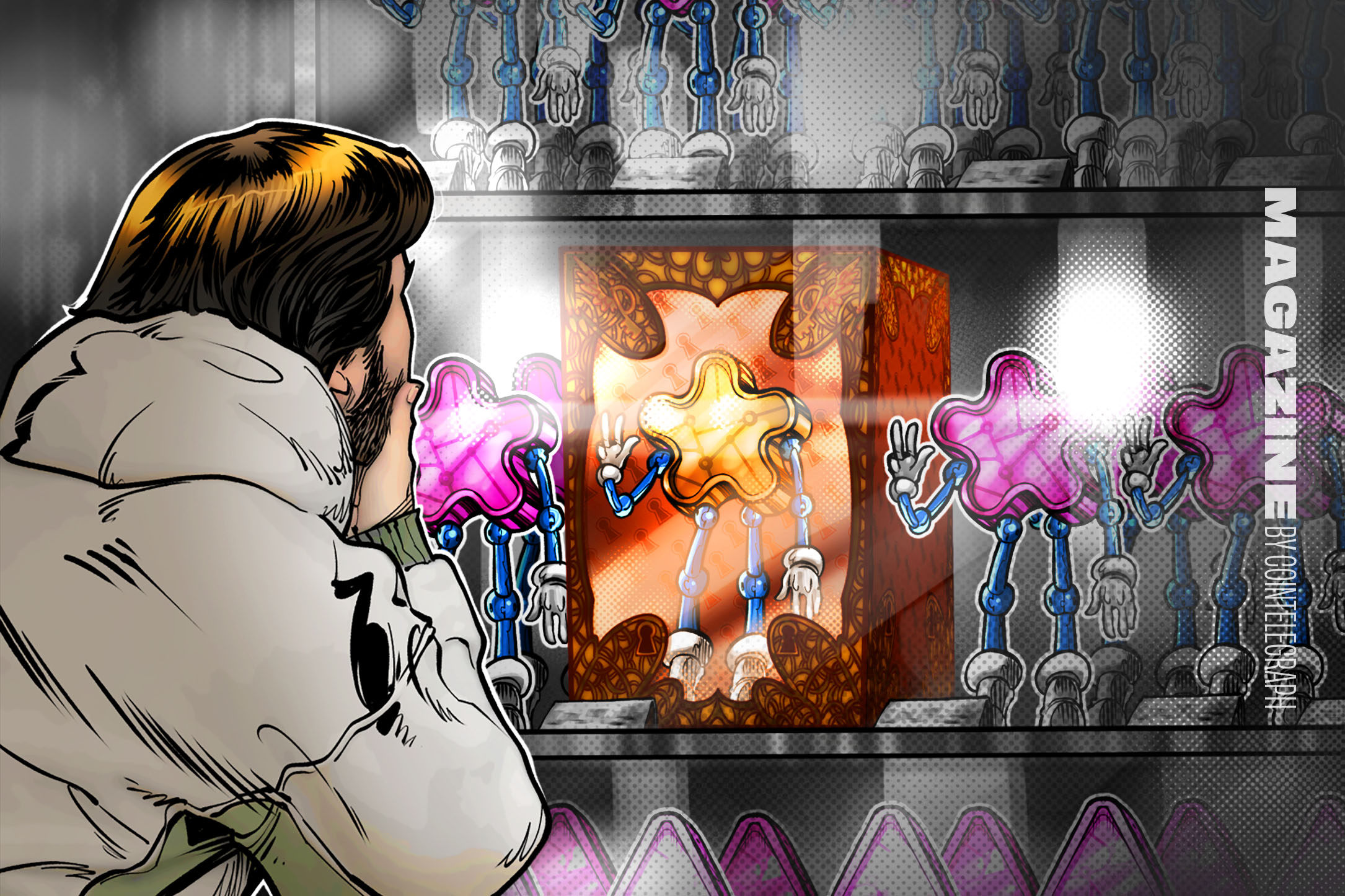
Coinbase CEO Brian Armstrong is applauding retail traders for their “diamond hands,” saying customers have been buying the dip and increasing their crypto holdings despite the market slump.

According to Armstrong, most retail users now hold as much — or more — crypto than they did in December 2025.

The praise, however, lands as Armstrong continues selling droves of Coinbase stock (COIN)

Try Our Recommended Crypto Exchanges
Sponsored
Disclosure
We sometimes use affiliate links in our content, when clicking on those we might receive a commission at no extra cost to you. By using this website you agree to our terms and conditions and privacy policy.
"}' data-trk="6970dbafcbd599f15ce64045" href="https://links.ccn.com/links?code=6985b71f73f50d4865cba0f2" rel="nofollow" target="_blank">
ChangeNow<\/h3>"}' data-trk="6970dbafcbd599f15ce64045" href="https://links.ccn.com/links?code=6985b71f73f50d4865cba0f2" rel="nofollow" target="_blank">

ChangeNow

promotions
Receive 0.4% of the volume from each transaction with your referral link.<\/strong>"}' data-trk="6970dbafcbd599f15ce64045" href="https://links.ccn.com/links?code=6985b71f73f50d4865cba0f2" rel="nofollow" target="_blank"> Receive 0.4% of the volume from each transaction with your referral link.
Coins
217
Claim Offer
"}' data-trk="6899b9831836d97539c51aa6" href="https://links.ccn.com/links?code=693293fa4a5bcb6231949c97" rel="nofollow" target="_blank">
Bitunix<\/h3>"}' data-trk="6899b9831836d97539c51aa6" href="https://links.ccn.com/links?code=693293fa4a5bcb6231949c97" rel="nofollow" target="_blank">

Bitunix

promotions
Receive up to $100,000 worth of exclusive gifts for newcomers upon registration.<\/strong>"}' data-trk="6899b9831836d97539c51aa6" href="https://links.ccn.com/links?code=693293fa4a5bcb6231949c97" rel="nofollow" target="_blank"> Receive up to $100,000 worth of exclusive gifts for newcomers upon registration.
Coins
151
Claim Offer
"}' data-trk="67adf8d4f12aaec7e4808bf5" href="https://links.ccn.com/links?code=693291aa4a5bcb62319448b2" rel="nofollow" target="_blank">
Bitget<\/h3>"}' data-trk="67adf8d4f12aaec7e4808bf5" href="https://links.ccn.com/links?code=693291aa4a5bcb62319448b2" rel="nofollow" target="_blank">

Bitget

promotions
New user rewards up to 6,200 USDT.<\/strong>"}' data-trk="67adf8d4f12aaec7e4808bf5" href="https://links.ccn.com/links?code=693291aa4a5bcb62319448b2" rel="nofollow" target="_blank"> New user rewards up to 6,200 USDT.
Coins
89
Claim Offer
Explore All Offers

Armstrong’s ‘Diamond Hands’ Praise Meets Scrutiny

“Retail users on Coinbase have been very resilient during these market conditions,” Armstrong wrote, citing platform metrics that show net increases in Bitcoin (BTC) and Ethereum (ETH) balances among individual accounts.

According to Armstrong, users have been “buying the dip.”

He emphasized that “the vast majority of customers had native unit balances in February equal to or greater than their balances in December,” reinforcing his view that retail participants are holding through volatility rather than exiting positions.

Yet the praise comes amid disclosures that Armstrong sold more than $550 million worth of COIN between April 2025 and January 2026.

At the time of writing, COIN shares were trading near $250, down significantly from peaks above $400 last year.

The contrast between retail accumulation and executive stock sales has fueled debate within crypto circles about leadership signaling during volatile markets.

Market Backdrop: Volatility and Regulatory Pressure

The 2025–2026 crypto cycle has been shaped by regulatory uncertainty and macroeconomic tightening.

Ongoing geopolitical tensions have continued to weigh on sentiment, while elevated interest rates have reduced investor appetite for risk assets.

Bitcoin, for example, fell below $60,000 multiple times last year before staging partial recoveries.

Armstrong’s data suggests retail investors—often stereotyped as reactive or impulsive—have instead demonstrated relative stability.

While retail holders appear to be maintaining exposure, larger market participants—including corporate insiders—have adopted different strategies.

Rhetoric vs. Stock Sales

Coinbase, a Nasdaq-listed company with more than 100 million users, remains one of the sector’s most influential institutions.

Executive transactions at that scale inevitably attract scrutiny.

According to disclosures analyzed by investment firm VanEck and widely discussed in market commentary, Armstrong sold more than 1.5 million COIN shares between April 2025 and January 2026.

These sales were executed under a prearranged Rule 10b5-1 trading plan—a common mechanism that allows executives to schedule stock sales in advance, reducing concerns about discretionary timing or insider trading.

Insider filings show a consistent pattern of disposals, including multiple lots of 25,000 to 40,000 shares and larger blocks ranging from 100,000 to 300,000 shares.

By January 2026, as COIN traded roughly 50% below its 2025 highs, sales continued under the established plan, signaling a systematic diversification strategy rather than a single event-driven transaction.

Still, the aggregate scale—over $550 million—has intensified debate about alignment between leadership messaging and executive positioning.

If retail investors are encouraged to hold through volatility, critics argue, the optics of substantial insider selling may create perceived contradictions.

Supporters counter that 10b5-1 plans are routine for public-company executives and often reflect personal financial planning rather than short-term market views.

Broader Implications for Coinbase and Investor Sentiment

For Coinbase, the situation underscores the delicate balance between public messaging, executive compensation, and investor confidence.

Retail holders maintaining “diamond hands” may contribute to platform stability and steady trading volumes.

However, persistent insider selling—especially during price weakness—can influence sentiment if interpreted as a signal about future performance.

Market observers note that if external demand absorbs insider supply without triggering significant price deterioration, it can suggest underlying strength.

Conversely, sustained weakness amid continued sales may reinforce caution among shareholders.

Top Trending Crypto Articles
  • Best Exchanges Check Out Our Recommended Exchanges Here
  • Buy Crypto Fast How To Buy Crypto with a Credit Card Now
  • Safe Crypto Gambling See Our Picks for the Best Crypto Gambling Sites

İlgili Sorular

QWhat did Brian Armstrong praise Coinbase retail users for during the market slump?

ABrian Armstrong praised Coinbase retail users for their 'diamond hands,' meaning they held strong and increased their Bitcoin and Ethereum balances during the market dip.

QHow much COIN stock has Brian Armstrong sold since April 2025?

ABrian Armstrong has sold over $550 million worth of COIN stock since April 2025.

QWhat mechanism did Armstrong use for his stock sales, and why is it significant?

AArmstrong used a prearranged Rule 10b5-1 trading plan for his stock sales, which is significant because it allows executives to schedule sales in advance to reduce concerns about insider trading or discretionary timing.

QHow did retail users' crypto balances in February compare to December, according to Armstrong?

AAccording to Armstrong, the vast majority of retail users had crypto balances in February that were equal to or greater than their balances in December.

QWhat broader market conditions have affected the crypto cycle in 2025-2026?

AThe 2025-2026 crypto cycle has been shaped by regulatory uncertainty, macroeconomic tightening, ongoing geopolitical tensions, and elevated interest rates, which reduced investor appetite for risk assets.

İlgili Okumalar

Has Hook Summer Truly Arrived? sato, Lo0p, FLOOD Ignite the New Uniswap v4 Narrative

With the broader market showing signs of recovery, a new wave of interest has emerged around Ethereum-based meme coins. Following ASTEROID, tokens like sato, sat1, Lo0p, and FLOOD, built upon the Uniswap v4 Hook protocol, are capturing market attention. Their market capitalizations range from millions to tens of millions of dollars, injecting much-needed focused liquidity into a market lacking narratives. This article explores whether this trend signifies an incoming "Hook Summer" and its potential impact on UNI's price. Hooks are essentially plug-in smart contracts for Uniswap v4 liquidity pools, allowing developers to inject custom logic at key points in a pool's lifecycle (like initialization, adding/removing liquidity, swaps). This transforms the AMM into programmable building blocks. Key highlighted projects include: * **sato**: Peaked over $38M market cap. It utilizes a v4 curve for minting/burning; buying locks ETH as reserve to mint new tokens, while selling redeems ETH from the reserve and burns tokens. * **sat1**: Market cap briefly exceeded $10M, promoted as an "optimized sato," but later declined significantly. * **Lo0p**: Reached nearly $6.6M. It's a lending AMM protocol where buying LO0P tokens locks them as collateral, allowing users to borrow ETH from the pool reserve at 40% LTV, aiming to improve capital efficiency for idle ETH in LPs. * **FLOOD**: Peaked near $6M. Its mechanism directs asset reserves from buys into Aave v3 to generate yield, with fees and interest retained in the pool to potentially influence the token's price long-term. In the long term, the development of the Hook ecosystem can attract users and liquidity to Uniswap v4, benefiting UNI's fundamentals—especially combined with the recent activation of the protocol fee switch, where a portion of fees is used to burn UNI. However, in the short term, these Hook-based tokens are unlikely to directly drive significant UNI price appreciation. Their impact is moderated by factors like token sustainability, price volatility, and broader market and regulatory conditions. Currently, Uniswap v4's TVL ($595M) still trails behind v2 and v3, indicating adoption and growth will take time. The article concludes that while the Hook ecosystem provides long-term "nourishment" for UNI, its short-term role is more of a "catalyst" than a "booster." Readers are cautioned that these are early-stage experimental tokens and may carry unknown risks.

Odaily星球日报7 dk önce

Has Hook Summer Truly Arrived? sato, Lo0p, FLOOD Ignite the New Uniswap v4 Narrative

Odaily星球日报7 dk önce

Interview with Michael Saylor: I Did Say I Would Sell Bitcoin, But Never a Net Sale

Interview with Michael Saylor: I Said We'd Sell Bitcoin, But Never Be a Net Seller In a recent podcast, MicroStrategy Executive Chairman Michael Saylor clarified the company's stance on potentially selling Bitcoin. Following MicroStrategy's earnings call statement about being prepared to sell BTC to fund dividends for its STRC (Strategic) credit product, Saylor emphasized the distinction between selling and being a "net seller." Saylor explained the core business model: MicroStrategy sells credit instruments like STRC and uses the proceeds to buy Bitcoin, which is viewed as "digital capital" expected to appreciate around 30-40% annually. A portion of these capital gains can then be used to pay the dividends on the credit products. He stressed that even if the company sells some Bitcoin for dividends, it simultaneously buys much more with new credit issuance. For example, after raising $3.2 billion from STRC sales in April, the dividend obligation was only $80-90 million, making the company a net buyer. The clarification aims to counter market narratives questioning the value of Bitcoin on MicroStrategy's balance sheet if it were never sold, and to dismiss claims of a "Ponzi scheme." Saylor reiterated his personal philosophy for investors: "Don't be a net seller of bitcoin" and ensure your Bitcoin holdings increase each year. Saylor also discussed Bitcoin's role as the foundation for "digital credit," noting that STRC has become the largest and most liquid preferred stock issue in the U.S., offering high risk-adjusted returns (Sharpe ratio). He highlighted Bitcoin's deep liquidity, stating that even large purchases by MicroStrategy do not move the market significantly, which is driven by macro factors, geopolitical tensions, and capital flows from ETFs and credit products. Finally, Saylor reflected on his early inspiration from sci-fi books, which motivated his path to MIT, and maintained his fundamental thesis on Bitcoin remains unchanged: it is superior digital capital enabling superior digital credit.

链捕手11 dk önce

Interview with Michael Saylor: I Did Say I Would Sell Bitcoin, But Never a Net Sale

链捕手11 dk önce

Beaten SK Hynix Employees in China: Year-end Bonus Less Than 5% of Korean Staff's

"SK Hynix Chinese Staff Hit Hard: Bonuses Less Than 5% of Korean Counterparts" Driven by the AI boom, South Korea's SK Hynix is experiencing record performance, with media reports predicting massive year-end bonuses for its employees, making them highly desirable in the matchmaking market. However, this prosperity starkly contrasts with the situation for the company's Chinese employees. According to reports, SK Hynix operates under a rule allocating 10% of operating profit for employee bonuses. While projections suggest Korean employees could receive bonuses reaching millions of RMB, a Chinese employee with over a decade of technical experience revealed the disparity: "If they get 3 million, Chinese staff get less than 5% of that." After adjustments based on KPI ratings, this employee's highest bonus was slightly over 100,000 RMB. Bonuses are paid annually in Korea but semi-annually in China. During the industry downturn in 2023-2024, Chinese employees received no bonus at all. The gap extends beyond bonuses. Recruitment posts for SK Hynix's Chinese factories (in Wuxi, Dalian, Chongqing) show engineer monthly salaries ranging from 10,000 to 35,000 RMB, with a 13th-month salary promised. Chinese employees also receive standard benefits like annual leave but lack stock incentives, which are reportedly unavailable to them. Furthermore, management positions in China are predominantly held by Korean personnel, though industry observers note a gradual increase in local middle managers over time. SK Hynix has confirmed the 10% bonus rule but cautioned that specific future bonus amounts remain unpredictable. The company forecasts strong demand for HBM and other high-value enterprise products for the next 2-3 years, driven by AI infrastructure investment. This focus on business-to-business markets may continue to constrain supply for consumer products, potentially prolonging price increases for components like memory.

链捕手25 dk önce

Beaten SK Hynix Employees in China: Year-end Bonus Less Than 5% of Korean Staff's

链捕手25 dk önce

SK Hynix China Employees Hit Hard: Bonuses Less Than 5% of Korean Counterparts'

"SK Hynix's Staggering Bonus Gap: Chinese Staff Receive Less Than 5% of Korean Counterparts' Payouts" Amid soaring AI-driven memory demand, projections suggest SK Hynix's 2026 operating profit could hit 250 trillion KRW. Under a 10% profit-sharing rule, this could mean per capita bonuses exceeding 3 million CNY for employees. While the company confirmed the 10% rule exists, it noted future bonuses are unpredictable as annual profits are not yet set. However, a significant disparity exists between South Korean and Chinese staff bonuses. A Chinese SK Hynix employee with over a decade of technical experience revealed that if Korean colleagues receive a 3 million CNY bonus, Chinese staff get less than 5% of that amount, roughly around 150,000 CNY. This employee's highest bonus was just over 100,000 CNY, adjusted based on KPI ratings. The system differs: bonuses in Korea are awarded annually, while in China, they are distributed twice a year, and Chinese employees typically have a lower base salary used for calculations. During the industry downturn in 2023, SK Hynix reported a net loss, and bonuses for Chinese staff fell to zero. Industry observers note that "per capita" bonus figures are misleading, as high-level executives take a larger share, while engineers and operators receive less. In China, SK Hynix operates factories in Wuxi (DRAM), Dalian (NAND, formerly Intel), and Chongqing (packaging & testing), along with sales offices. Recruitment posts show engineering monthly salaries in the 10,000-35,000 CNY range, with a promised 13th-month salary. Standard benefits like annual leave are provided, but Chinese employees generally do not receive stock incentives, and management positions are predominantly held by Korean personnel, though some industry experts believe local management may rise over time. Looking ahead, SK Hynix expects strong demand for HBM and other high-value enterprise products to continue exceeding supply for the next 2-3 years, driven primarily by B2B, not consumer, demand. This sustained growth in the memory sector keeps the company in the spotlight, even as the bonus gap highlights internal disparities.

marsbit45 dk önce

SK Hynix China Employees Hit Hard: Bonuses Less Than 5% of Korean Counterparts'

marsbit45 dk önce

İşlemler

Spot
Futures
活动图片