BP Price Soars 300% in 2 Weeks: What Is Backpack Betting On?

Foresight News2026-06-15 tarihinde yayınlandı2026-06-15 tarihinde güncellendi

Özet

"BP, the native token of the Backpack exchange, surged over 300% in two weeks to $0.475, driven by the launch of its new regulated stock brokerage and asset tokenization arm, Backpack Securities. The platform enables users to trade U.S. stocks and tokenize them on Solana, with the SpaceX tokenized stock (SPCX) generating significant on-chain volume. This expansion into bridging traditional finance with DeFi aligns with the RWA narrative. BP's unique tokenomics, where 25% was airdropped at TGE with zero allocation to the team, and a staking mechanism allowing conversion to equity upon a company IPO, underpins its value proposition. Over 66% of the circulating supply is currently staked."


Author: Ma He, Foresight News


On June 15, the exchange token of Backpack, BP, surged over 30% again within 24 hours, currently quoted at $0.475, with a market cap of $118.48 million and an FDV of $473.94 million. BP has skyrocketed significantly from around $0.16 in early June this year, peaking above $0.48.
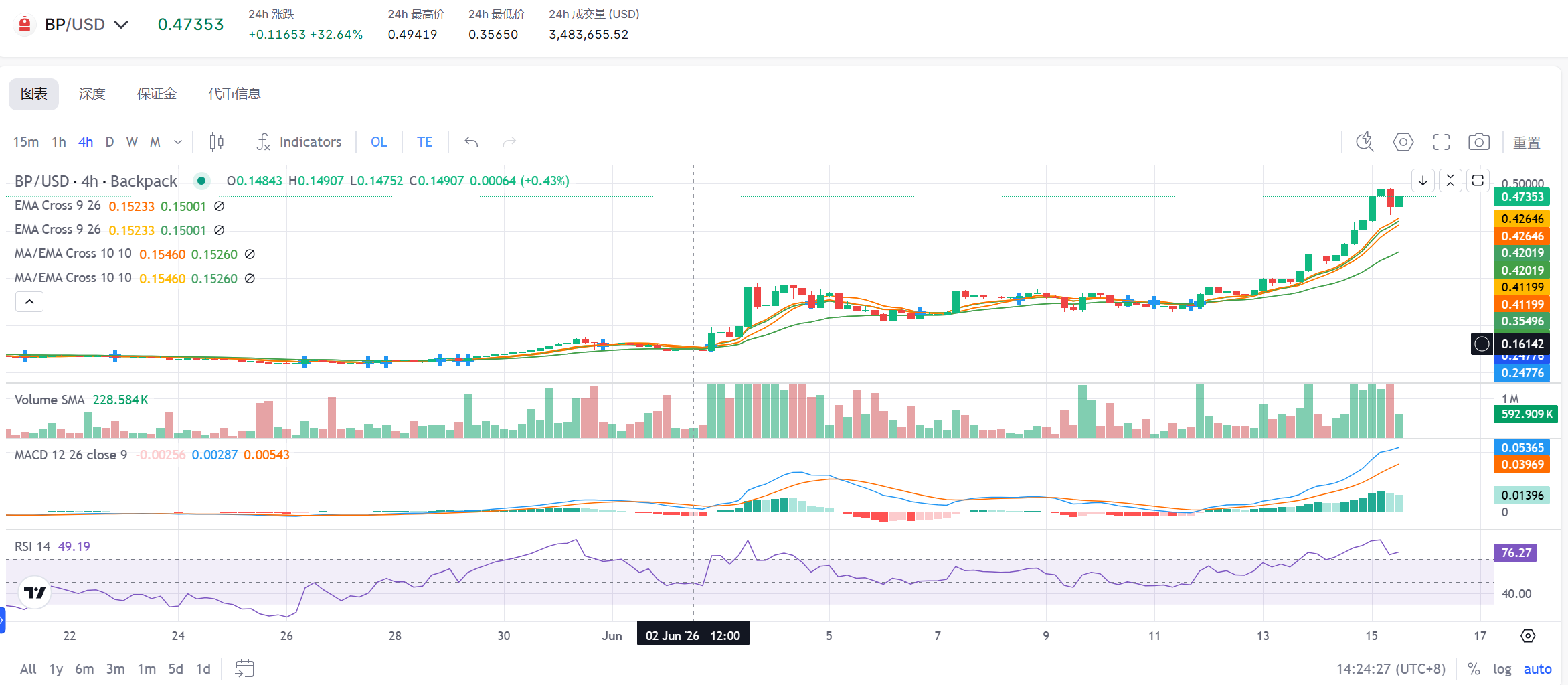


The immediate driving force behind this rally comes from the platform's latest breakthrough in traditional U.S. stock brokerage and asset tokenization services.


Entering U.S. Stock Brokerage and Tokenization Business


In March 2026, BP completed its TGE on Solana, with a total supply of 1 billion tokens and an initial circulating supply of 250 million. After listing, the price briefly hit a high before quickly retracing, with a single-day maximum drop exceeding 40%, filling the market with profit-taking pressure. For several weeks thereafter, the price consolidated at lower levels until the turn-around in early June.


On June 2, Backpack announced the launch of the Backpack Securities platform, which will offer regulated U.S. stock brokerage services while also supporting the tokenization of traditional stocks for circulation on the blockchain, enabling seamless conversion between traditional securities and on-chain assets. The brokerage services are planned for a gradual rollout in June, with initial tokenized products launched on the Solana ecosystem through a partnership with Sunrise. BP surged over 80% in a single day, rapidly climbing from the $0.14-0.15 range to around $0.27, with its market cap approaching $70 million at one point.


On June 12, the same day SpaceX listed on NASDAQ, its tokenized product SPCX went live on Solana. BP subsequently rose approximately 27% within the next 24 hours, reaching above $0.347. This token is pegged 1:1 to real SpaceX shares, supports 24/7 on-chain trading, and can be redeemed to a traditional securities account via Backpack's brokerage account, achieving interoperability between on-chain and off-chain assets. On its first day, the product generated approximately $35-38 million in on-chain trading volume across DEXs like Jupiter and Raydium. According to the latest official data, the total on-chain trading volume for SPCX exceeded $86 million.
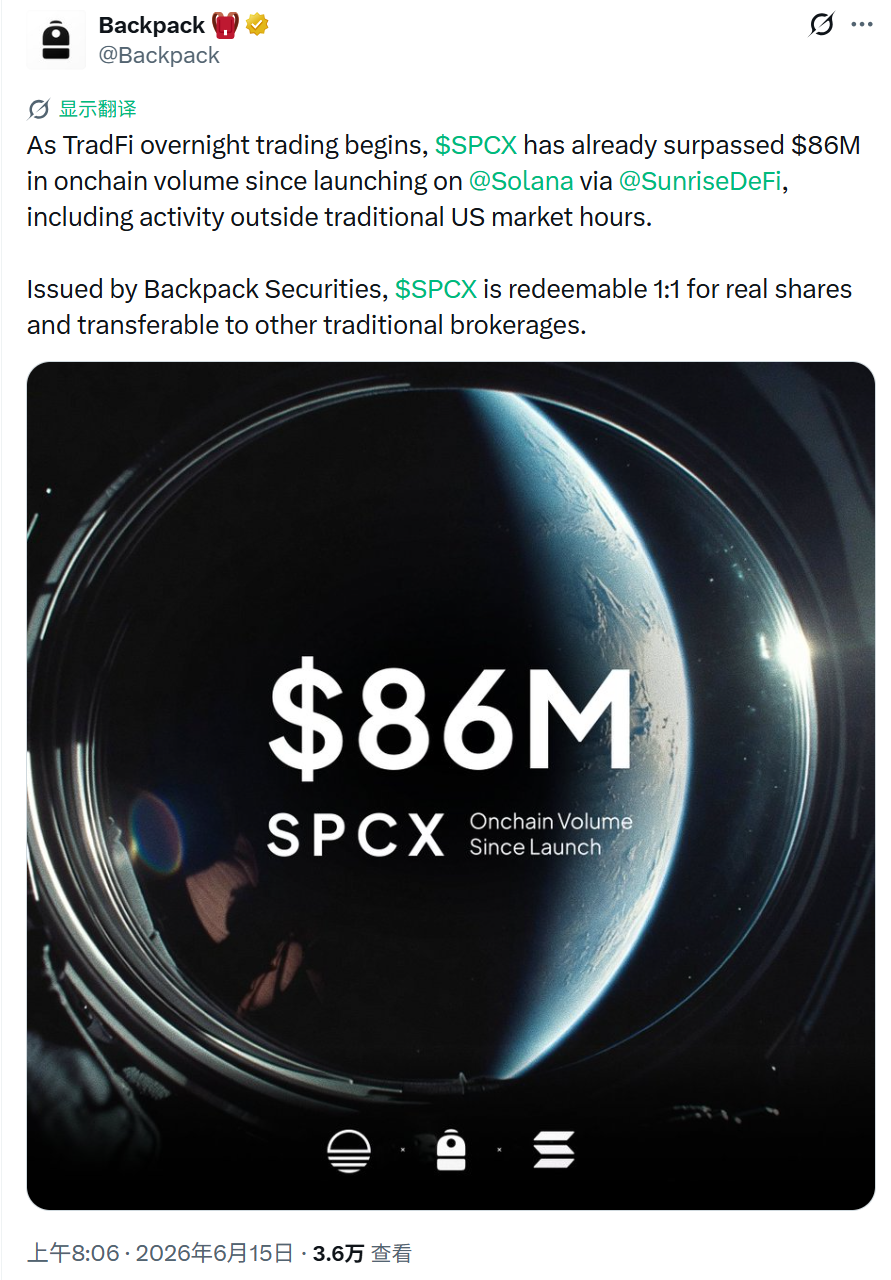


Backpack is building a bridge between traditional U.S. stocks and Solana DeFi. Users can not only trade crypto assets on the platform but also access real stocks through the same account, and tokenize some of those assets for on-chain use, trading, or composability. This path aligns well with the current RWA narrative and has also provided the BP token with clearer use cases and demand support.
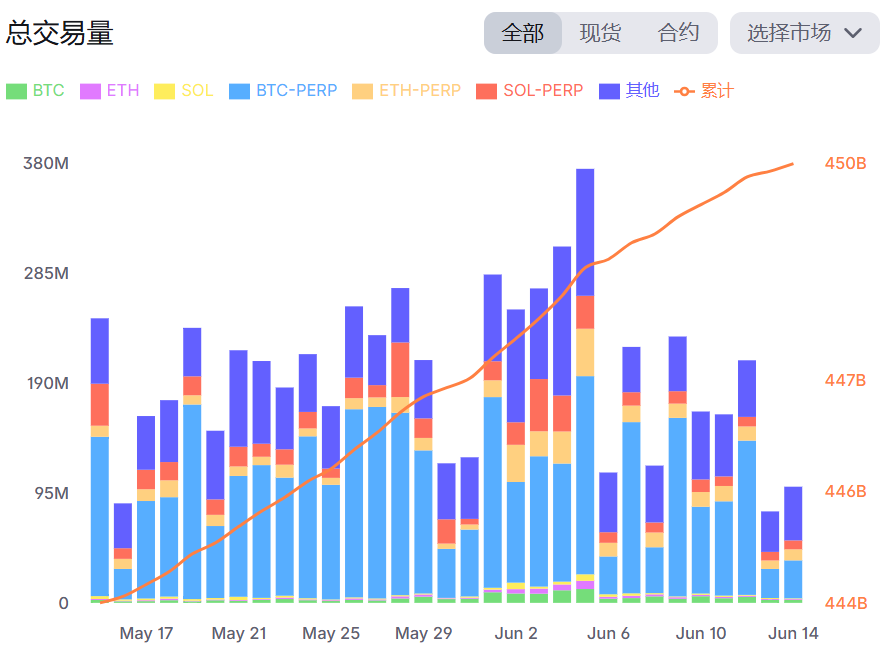


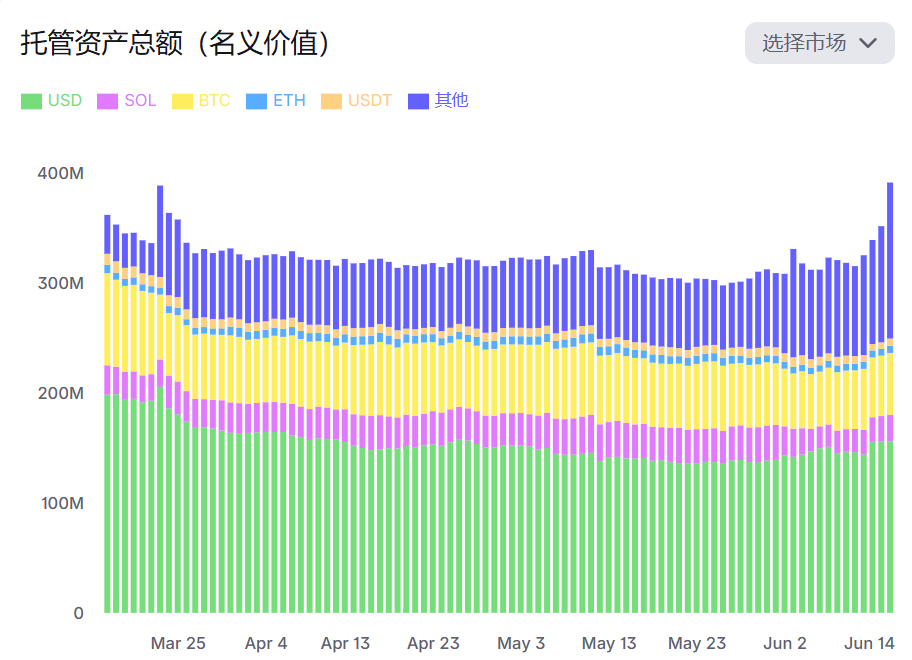
BP's rise this round stems more from the substantial expansion of the platform's business rather than short-term hype. Currently, its official website shows that Backpack's Total Custodied Assets (nominal value) has rebounded to $390 million.

Team Receives Zero Tokens Unless the Company Goes Public


Supporting the development of the above business is the BP token and its unique economic structure launched by Backpack as early as March. The total supply of 1 billion tokens is divided into three phases: The TGE phase allocates 25% (250 million tokens) entirely to community users via airdrop, with approximately 240 million given to Points Program participants and 10 million to Mad Lads NFT holders. At launch, the team, founders, and investors received zero token allocation; The Pre-IPO phase allocates 37.5%, tied to growth triggers like regulatory milestones and product launches, and continues distribution to users upon unlocking; The Post-IPO phase allocates 37.5% to the company treasury, locked for at least one year post-IPO, with the team benefiting only through equity, not directly from tokens.
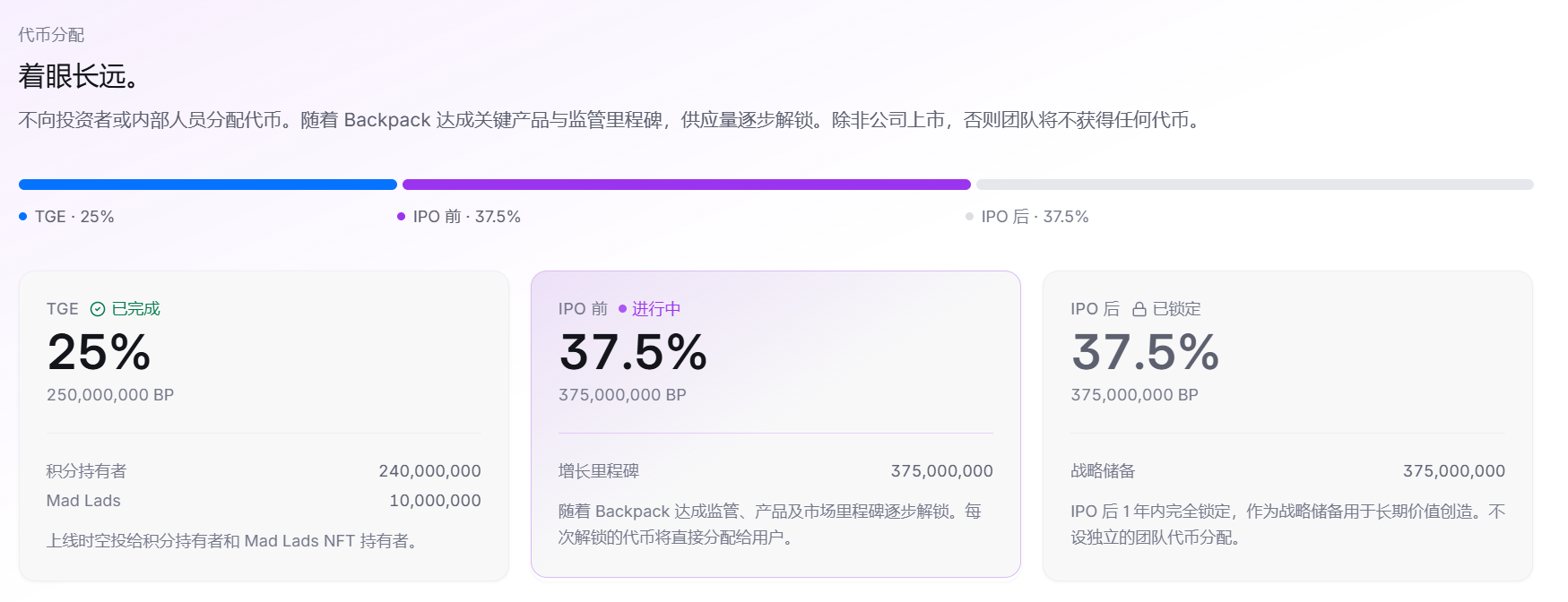


The most notable mechanism is the equity conversion design: Users staking BP for at least 1 year gain the right to convert their tokens into company equity upon an IPO or acquisition, with the base unlock bonus increasing with holding time up to the 4th year.


Additionally, staking grants benefits such as tiered trading fee discounts, extra yield on USD collateral, free wire transfers, and priority access to the Backpack Card. Currently, about 66% (approximately 165 million tokens) of the circulating supply is staked.


Although the airdrop process was technically smooth, it sparked community discussion. Supporters argued that the "no insider TGE allocation" model was quite radical, and the points system genuinely rewarded trading and ecosystem participation; criticism centered on the relatively strict Sybil filtering mechanism, which led to some long-term users having their points invalidated and receiving less than expected, as well as noticeable profit-taking during the post-listing price correction. CEO Armani Ferrante publicly denied allegations related to team OTC selling.


These controversies affected market sentiment in the short term, but as real products like Backpack Securities land, the focus is gradually shifting from distribution details to the platform's long-term growth and the token's actual utility. Against the backdrop of the platform's expansion into U.S. stock brokerage and tokenization services, the long-term alignment value of BP's staking and equity mechanisms is being re-examined.

İlgili Sorular

QWhat is the primary driver behind the recent surge in Backpack Exchange's BP token price?

AThe primary driver behind the recent surge in BP token price is the platform's expansion into traditional U.S. stock brokerage and asset tokenization services, particularly the launch of Backpack Securities and the tokenization of SpaceX shares (SPCX).

QWhat key feature of the BP token's economic structure aims to align long-term user and platform interests?

AA key feature is the equity conversion design: users who stake BP for at least one year gain the right to convert their tokens into company equity during an IPO or acquisition, with the conversion bonus increasing up to the fourth year of staking.

QWhat was a significant immediate market reaction following the launch of the tokenized SpaceX (SPCX) product?

AA significant immediate market reaction was that BP's price rose approximately 27% within 24 hours after the SPCX tokenized product launched on Solana on June 12, coinciding with SpaceX's Nasdaq IPO.

QAccording to the article, what portion of the initially circulating BP token supply was allocated to the team, founders, and investors at TGE (Token Generation Event)?

AAccording to the article, 0% of the BP tokens were allocated to the team, founders, and investors at the TGE. The entire initial circulating supply of 250 million tokens (25% of total supply) was airdropped to the community.

QWhat is the total supply of BP tokens and what percentage is designated for the 'Post-IPO' stage to be held in the company treasury?

AThe total supply of BP tokens is 1 billion. 37.5% of the total supply is designated for the 'Post-IPO' stage and will enter the company treasury, locked for at least one year after an IPO.

İlgili Okumalar

The Foundation of SpaceX's Trillion-Dollar Valuation: Who is Dividing Up Musk's Annual Tens of Billions in Capital Expenditure?

SpaceX's trillion-dollar valuation is built on its three core businesses: Starlink (profitable, 60% of revenue), rockets (driving down launch costs), and AI (a major investment area). This creates a financial cycle: Starlink funds rocket development, which enables low-cost launches for AI hardware, generating future revenue. This cycle fuels annual capital expenditures of tens of billions, flowing to a vast supply chain. Suppliers are categorized by their replaceability. The first group includes irreplaceable players like NVIDIA (GPU/CUDA ecosystem), Eutelsat (critical radio spectrum), Filtronic (specialized amplifiers), Materion (strategic beryllium), and STMicroelectronics (antenna chips). The second group consists of hard-to-replace suppliers due to high switching costs, such as Honeywell (flight control), Carpenter Technology (specialty alloys), Hexcel (carbon fiber), Broadcom (data exchange), and Linde (industrial gases). The third group comprises high-volume, cost-critical suppliers for mass-produced items like Starlink terminals. Key names include Wistron NeWeb (primary manufacturer) and several A-share companies like Shenzhen Sunway (connectors), Pies New Materials (forgings), Western Superconducting (alloys), and Yingliu (castings). Other niche players include Trimble (timing), Astronics (power distribution), and CTS (thermal management). The article argues that investing in these suppliers, rather than SpaceX stock directly, offers an alternative opportunity. The rationale is threefold: procurement is just beginning to scale, SpaceX's IPO brings new transparency to its supply chain, and the situation mirrors early stages of past "super terminal" ecosystems like Apple or Tesla. While risks exist (commodity cycles, geopolitical factors, technology shifts), the core thesis is that SpaceX's massive, ongoing procurement will translate into reliable revenue for its key suppliers, regardless of its own stock price volatility.

marsbit8 dk önce

The Foundation of SpaceX's Trillion-Dollar Valuation: Who is Dividing Up Musk's Annual Tens of Billions in Capital Expenditure?

marsbit8 dk önce

SpaceX's Trillion-Dollar Valuation Base: Who's Sharing in Musk's Annual Tens of Billions in Capital Expenditure?

**Title: The Foundation of SpaceX's Trillion-Dollar Valuation: Who Benefits from Musk's Annual $100 Billion Capital Expenditure?** This article argues that investors seeking to benefit from SpaceX's growth might find greater opportunities in its supply chain rather than directly investing in the company itself, drawing parallels to historical successes with Apple, Tesla, and NVIDIA suppliers. **SpaceX's Business Model & Cash Flow:** SpaceX generates revenue from three main areas: 1. **Starlink:** Its profitable core, earning $11.3B in 2023 (60% of revenue), funding other ventures. 2. **Rockets (Falcon/Starship):** Requires $3B+ in annual R&D but achieves the world's lowest launch costs. 3. **AI:** Currently unprofitable (-$6B+ in 2023), investing heavily in ground-based supercomputers (220,000 GPUs) and future orbital data centers. The cycle is: Starlink profits → fund cheaper rockets → low-cost launches deploy AI hardware → AI compute rentals generate future revenue. This cycle drives annual procurement spending of tens of billions of dollars. **The Supply Chain Beneficiaries:** Suppliers are categorized by their replaceability: **1. Nearly Irreplaceable (High Barriers to Entry):** * **NVIDIA:** Powers the Colossus supercomputer; its CUDA ecosystem creates immense switching costs. * **Eutelsat (SATS):** Controls critical radio spectrum for satellite communications; holds a ~3% stake in SpaceX. * **Filtronic (FTC):** Supplies millimeter-wave signal amplifiers for Starlink satellites; SpaceX constitutes 83% of its revenue. * **Materion (MTRN):** Global leader in beryllium production, a strategic material used in Starship structures. * **STMicroelectronics (STM):** Supplies phased-array antenna chips for Starlink satellites. **2. Replaceable, but Switching Cost is Prohibitively High:** * **Honeywell (HON):** Provides flight control and inertial navigation systems with decades of certification. * **Carpenter Technology (CRS):** Manufactures ultra-pure specialty steel alloys for Raptor engines. * **Hexcel (HXL):** Supplies custom carbon fiber composites developed over a decade with SpaceX. * **Broadcom (AVGO):** Manages high-speed data switching. * **Linde Group:** Supplies industrial gases (liquid oxygen/nitrogen) from facilities built near SpaceX launch sites. **3. High-Volume, Cost-Critical Manufacturing:** Focuses on mass-producing components like Starlink user terminals (target: 30 million units). * **Key Players:** Wistron NeWeb (6285, primary terminal manufacturer), several Chinese A-share companies (e.g., Sunway Communication, PAX New Materials, Western Metal Materials, Yingliu Co.), and smaller US firms like Trimble (TRMB, timing systems). **Why Now?** Three factors make the supply chain opportunity timely: 1. **Volume Ramp-Up:** SpaceX plans 100 launches in 2026, aims for 30 million Starlink terminals, and will deploy AI data centers, meaning procurement will accelerate. 2. **Increased Transparency:** The IPO provides public financial data, allowing investors to track supplier order growth. 3. **Historical Precedent:** The current phase is likened to Tesla's early mass-production stage (circa 2018), suggesting a long growth runway for suppliers. **Conclusion:** The article posits that while investing in SpaceX stock is betting on Elon Musk's ambitious vision at a high valuation, investing in its established suppliers is a bet on the tangible, recurring revenue from its massive procurement budget, which is largely decoupled from day-to-day stock price volatility.

链捕手12 dk önce

SpaceX's Trillion-Dollar Valuation Base: Who's Sharing in Musk's Annual Tens of Billions in Capital Expenditure?

链捕手12 dk önce

The U.S. Government Blocked the Anthropic Model. It Wasn't About 'Jailbreaking' at All.

Last Friday, the U.S. Commerce Department issued an enforcement letter that forced Anthropic to take its two most advanced AI models, Fable 5 and Mythos 5, offline. The stated reason was unspecified national security concerns, initially linked to potential "jailbreaks" of the models' safeguards. However, new details suggest the action stemmed more from a deteriorating relationship between the Trump administration and Anthropic, rather than a genuine technical threat. According to reports, the government cited a little-known export control regulation, compelling Anthropic to block access for all non-U.S. persons, including its own international employees. The company complied, shutting down the models without a court order or specific technical details from the government. Cybersecurity expert Katie Moussouris revealed she was privately shown a research paper detailing a potential safeguard bypass in Fable 5. She argued the described method was minor and did not warrant an export ban, stating that attempts to "fix" it would only weaken the model's defensive capabilities. Moussouris and other experts have since called for the order to be revoked, warning it dangerously removes advanced cybersecurity tools from U.S. defenders. Analysts like Justin Hendrix suggest the move appears retaliatory and sets a dangerous precedent, signaling that the U.S. government can unilaterally shut down a tech company's products. The incident has raised concerns about the reliability of American AI and the potential for political interference in the tech industry, serving as a warning to the broader sector.

marsbit15 dk önce

The U.S. Government Blocked the Anthropic Model. It Wasn't About 'Jailbreaking' at All.

marsbit15 dk önce

Ray Dalio: AI Bull Market Continues to Soar, Should Investors Go All In or Cash Out and Leave the Field?

In his latest notes, Ray Dalio addresses a critical question for investors amid the AI-driven stock market surge: how should one allocate assets during a transformative technological revolution? Dalio emphasizes that technological advancement does not automatically make related stocks attractive. Historical tech cycles—marked by excitement, crowding, volatility, and eventual shakeouts—show that even long-term winners like Microsoft and Apple experienced severe drawdowns. Today's AI sector faces similar uncertainties: overinvestment, intensifying competition, geopolitical tensions (e.g., Taiwan's chip supply), tax policy shifts, anti-AI sentiment, and potential disruption from future technologies like quantum computing. Dalio's core argument focuses on the highly concentrated market structure, where a few tech giants dominate major indices. He warns investors against unknowingly holding concentrated, correlated exposures. Instead of chasing a handful of AI leaders, he advocates for a robust, diversified portfolio of 15 or more high-quality, uncorrelated investments, risk-balanced to match an investor's volatility tolerance. Mathematically, such diversification significantly improves the risk-return ratio—for example, holding 15 uncorrelated assets can boost the ratio by over four times compared to a single concentrated bet. Dalio cautions that future equity returns appear low, with his bubble indicator suggesting real returns could be negative over the next 5-10 years. He stresses that knowing what you don't know is as important as knowing what you do. In an environment of high uncertainty and concentration, avoiding large, concentrated bets on AI stocks is prudent. The optimal strategy is disciplined diversification—the "holy grail" of investing—to navigate this technologically driven cycle with lower risk and comparable or better returns.

marsbit19 dk önce

Ray Dalio: AI Bull Market Continues to Soar, Should Investors Go All In or Cash Out and Leave the Field?

marsbit19 dk önce

İşlemler

Spot
Futures
活动图片