Blockchain Platform WEMIX Hacked for $6.25 Million

cryptonews.ru2026-07-27 tarihinde yayınlandı2026-07-27 tarihinde güncellendi

Özet

Hackers exploited administrator privileges of a smart contract on the WEMIX blockchain platform, minting approximately 5.23 million unbacked $WEMIX tokens worth about $5.22 million. These tokens were swapped on a decentralized exchange for 30,736 $WEMIX and 724,198.27 $USDC.e, a version of USDC native to the WEMIX3.0 network. The attackers then bridged the $USDC.e to Ethereum and BNB Smart Chain, converting the funds to ETH and USDT and distributing them across multiple wallets, with some reportedly sent to centralized exchanges. Total losses are estimated at $6.25 million. In response, WEMIX halted nearly all services, suspended cross-chain bridges, and froze trading in affected liquidity pools. The platform is seeking to have the withdrawn assets frozen on exchanges. The incident caused the WEMIX stablecoin to depeg, plummeting 98% to $0.01. This follows a previous hack in February 2023, where attackers stole $8.65 million worth of $WEMIX from the Play Bridge.

Hackers used administrator privileges of a smart contract and minted approximately 5,225,525 unbacked $WEMIX tokens worth about $5.22 million. The freshly issued tokens were then passed through a decentralized exchange and swapped for 30,736 $WEMIX and 724,198.27 $USDC.e — this is a version of the stablecoin $USDC circulating on the mainnet of the WEMIX3.0 project.

Then the attackers withdrew the $USDC.e to the Ethereum network and the BNB Smart Chain. There, the funds were converted into ETH and USDT and distributed across numerous wallets. Representatives of $WEMIX reported that some of these assets were later sent to centralized exchanges. The total damage from the hack is estimated at $6.25 million.

$WEMIX has disabled almost all of its services, suspended the operation of all bridges connecting the WEMIX3.0 mainnet to external blockchains. In addition, trading in the affected liquidity pools has been frozen, including for the pairs $WEMIX$USDC.e, $WEMIX$WEMIX, CROW–$WEMIX, TIPO–$WEMIX$ and PLAY–$WEMIX$. On the $WEMIX PLAY platform, trading and staking on the $NFT marketplace have been disabled.
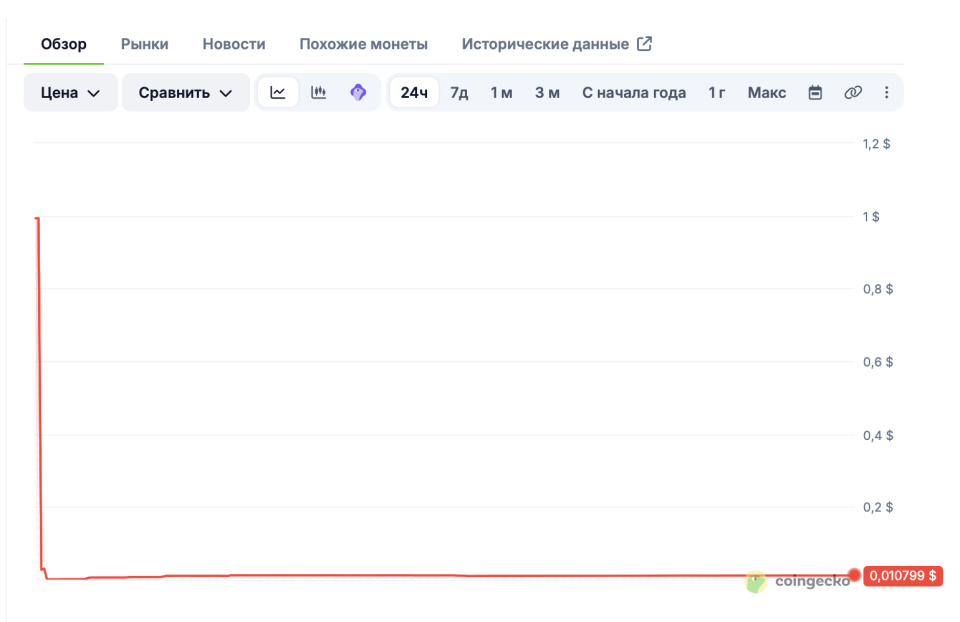
The platform is now trying to get exchanges to freeze the withdrawn assets. The WEMIX stablecoin lost its peg to the dollar, falling by 98% to $0.01.

In February of last year, attackers withdrew approximately $8.65 million worth of $WEMIX from the Play Bridge vault — at that time, the token's value was about $6.15 million. The incident was related to the compromise of authentication keys used for monitoring the $NFT platform Nile. According to the investigation, the hackers spent nearly two months in the system before withdrawing the funds.

end-content
İlgili Sorular

QHow did the hackers exploit the WEMIX platform to steal funds?

AThe hackers exploited administrator privileges of a smart contract to mint approximately 5,225,525 unbacked $WEMIX tokens, worth about $5.22 million. They then swapped these tokens on a decentralized exchange for other assets.

QWhat actions did the WEMIX platform take immediately after discovering the hack?

AWEMIX disabled nearly all its services, suspended all bridges connecting its mainnet to external blockchains, and froze trading in affected liquidity pools, including several key trading pairs. It also disabled trading and staking on its NFT marketplace.

QWhat was the total estimated financial damage from the WEMIX platform hack?

AThe total estimated damage from the hack is $6.25 million.

QWhat happened to the WEMIX stablecoin's price following the security incident?

AFollowing the hack, the WEMIX stablecoin lost its peg to the US dollar, plummeting by 98% to a value of $0.01.

QHas WEMIX experienced a similar security breach in the past?

AYes, in February of the previous year, attackers withdrew approximately $8.65 million worth of $WEMIX (valued at about $6.15 million at the time) from the Play Bridge vault. That incident was linked to compromised authentication keys.

İlgili Okumalar

Wall Street Begins to Question Tech Giants' AI Narrative

Wall Street Questions the AI Narrative of Tech Giants Wall Street is shifting its focus from the hype surrounding artificial intelligence (AI) to a rigorous financial reality check. Following strong earnings reports from companies like Google and a massive $500 billion financing initiative from Nvidia for AI infrastructure, the market reaction has been mixed and skeptical. The core concern revolves around the massive capital expenditure (CapEx) required for AI development—building data centers and acquiring chips—and whether future cash flows can justify these upfront costs. Investors are now scrutinizing free cash flow (FCF), which measures the cash left after operational expenses and capital investments. A negative FCF, as seen recently with Alphabet (Google's parent company), signals heavy immediate spending, even if profits are growing. The divergent stock reactions highlight this new scrutiny. Microsoft's stock surged after its earnings, supported by strong operating cash flow, growing cloud revenue (Azure), and a large backlog of committed business. In contrast, Alphabet's stock fell despite profit growth because its capital spending caused FCF to turn negative for the first time. Similarly, Nvidia's announcement of a $500 billion financing platform, while potentially expanding its market, raised questions about whether AI build-out has become too expensive for tech companies to fund internally. Analysts are moving beyond simply asking if there is AI demand—which cloud revenue growth confirms—to deeper questions: the speed at which AI investments translate into revenue, profit, and ultimately, cash returns. The market is evaluating the "return on invested capital" (ROIC) over the long term, considering factors like rapid chip obsolescence, energy costs, and future competition. In summary, Wall Street's AI narrative is evolving from grand vision to a detailed financial and operational examination. The key question is no longer if AI is transformative, but whether companies can generate cash returns fast enough to outpace the immense costs of building it. Free cash flow has become a critical first filter in this reassessment.

marsbit40 dk önce

Wall Street Begins to Question Tech Giants' AI Narrative

marsbit40 dk önce

An Unexpected Player Enters the Lithography Machine Arena

In the spring of 2026, Elon Musk unveiled the TeraFab chip manufacturing plan, aiming to meet the immense computing power needs of SpaceX and Tesla. He subsequently signaled a move into the photolithography machine market, with speculation centering on a Free Electron Laser (FEL) approach to challenge the dominance of traditional EUV technology. Currently, ASML, utilizing Laser-Produced Plasma (LPP) EUV光源, holds a near-monopoly. However, LPP faces bottlenecks in energy conversion efficiency, tin debris contamination, and a power ceiling. In contrast, FEL technology, pursued by companies like xLight (where former Intel CEO Pat Gelsinger serves as executive chairman), offers a different path. It generates EUV light by accelerating electrons, potentially providing higher power without plasma conversion and its associated contamination, targeting the sub-13.5nm "beyond-EUV" wavelength range. The photolithography landscape shows three main trajectories: ASML's incremental evolution (like High-NA EUV),光源革新 like FEL targeting ASML's core component, and non-EUV alternatives like Nanoimprint Lithography (NIL) or Electron Beam Lithography (EBL). While ASML remains the dominant player with strong financials and产能 expansion plans, new entrants are challenging the status quo. xLight claims its FEL could boost productivity by 50-100%. Other paths include Substrate's particle-accelerator-based X-ray lithography and Chinese research into LPP alternatives. Musk's TeraFab is a high-stakes bet that FEL can move from lab to fab, that "plug-and-play"光源 replacement can circumvent ASML's ecosystem, and that massive future compute demand justifies a new supply chain. His public endorsement of FEL signifies that the photolithography business is no longer ASML's game alone.

marsbit40 dk önce

An Unexpected Player Enters the Lithography Machine Arena

marsbit40 dk önce

İşlemler

Spot
活动图片