Original | Odaily Planet Daily (@OdailyChina)
Author | Wenser (@wenser 2010)
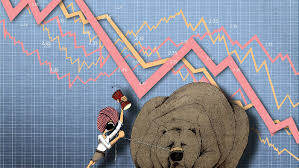
Waking up, the crypto market has once again encountered a "Monday-style flash crash".
After BTC briefly climbed above $97,000 last week, its weekly closing price settled above $95,000. Just as the market anticipated that BTC would lead a broader recovery in the crypto market, a long-awaited "significant correction" struck again—within just a few hours, BTC once fell below $92,000, currently hovering around $92,750; ETH dropped below $3,200, now at around $3,213; SOL quickly fell below $140, currently around $133. Coinglass data shows that over the past 4 hours, the market saw liquidations of $593 million, with long positions accounting for a staggering $566 million; the number of liquidated traders reached 238,400 in 24 hours.
The main trigger for this "Black Monday" might once again be a series of unconventional moves by Trump.
Sudden Shift in the Fed Chair Nomination Situation: "Dove" Hassett Possibly Out, "Hawk" Kevin Warsh's Odds Soar
As the "heart of the US economic lifeline", the Federal Reserve has always played the role of the "invisible hand" in the US and even the global economic system due to its monetary privileges, independent status, and detached attitude. The person selected to lead the Fed is the most critical figure behind this "invisible hand". As the term of the current Chair Powell nears its end, the nominee for the new Chair is crucial and is therefore seen as a "market bellwether".
Previously, White House economic adviser Kevin Hassett was considered a frontrunner due to his "pro-Trump" and "pro-rate cut" dovish stance, but Trump had not given a clear indication. Recently, the shortlist for the new Fed Chair nominee has been narrowed down to four individuals: Fed Governor Christopher Waller, former Governor Kevin Warsh, BlackRock executive Rick Rieder, and Hassett. Recommended reading: Fed "Leadership Change" Countdown: Unveiling the 5 Major Candidates, Who is the Final Winner?.
Latest news suggests Hassett may be out, while Kevin Warsh's chances have surged. White House economic adviser Kevin Hassett stated that Trump is likely to keep him in his current position, which would remove him from the running for the next Fed Chair. Last week, Trump expressed reservations about nominating Hassett to replace current Fed Chair Powell. During an event at the White House, he told the Director of the National Economic Council: "To be honest, I actually want you to stay where you are." Hassett, speaking about the White House on Sunday, also said: "There are many excellent candidates, and the President will make the right decision, likely believing that my best place is here (the White House) for now." He felt "flattered and grateful" for Trump's comments about his future, calling the President "such a good person". Recommended reading: Is BTC's "Strict Principal" Coming? If He Leads the Fed, the Crypto Party Might Grind to a Halt.
After Trump's remarks, traders on the prediction market site Kalshi raised the probability of Warsh getting the job to 60%, while Hassett and Waller's chances were only 16% and 14% respectively. Traders on Polymarket expressed a similar dynamic, with Warsh's support rate at 60%, Hassett's at 15%, and Waller's at 13%. Previously, Warsh and Hassett's odds were neck and neck.
Powell's term as Fed Chair ends on May 15th. The selection process is led by US Treasury Secretary Besant. Intriguingly, last evening, US Treasury Secretary Besant stated publicly: "Trump is committed to safeguarding the Fed's independence. We have four outstanding candidates for Fed Chair. I believe the Senate would be satisfied with any of these four candidates being selected."
Previously, Trump said he would appoint Powell's successor this month but did not provide a specific date. As Trump approaches his first full year back in office, the market might not yet have developed sufficient resilience to face his equivocal handling of matters, leading to a sharp drop in crypto market confidence and directly causing the market flash crash.
Trump's "Tariff War Hat-Trick": Greenland Dispute, EU-US Tariff War
On the other hand, looking at the overall global economic situation, unstable factors continue to increase.
Greenland Becomes a Focus of US-EU Politics, Tariff Storm Brews Again
As an EU overseas territory, Greenland has long been considered Denmark's "backyard". Now, this status quo might be about to change dramatically.
In May last year, Trump boldly stated that "military seizure of the island" was not off the table; half a year later, in early this year, this bold statement was reiterated by White House press secretary Levitt: The purchase of Greenland is currently being discussed. A military takeover of Greenland is not excluded; all options are on the table.
Following the "raid on the Venezuelan presidential palace and capture of Maduro", this foreign policy statement undoubtedly sent shockwaves through Greenland, multiple EU countries, and nations globally.
Previously, the Trump administration considered spending money to persuade Greenlanders to break away from Denmark and "join" the US, with the cost being one-time payments of $10,000 to $100,000 to Greenland's 57,000 inhabitants. It must be said, in the eyes of Trump, who never plays by the rules, politics is always ultimately a matter of "economic calculation".
Ultimately, this "Greenland crisis" evolved from a territorial dispute into a "high-tariff trade war"—on January 18th, Trump posted prominently, stating that due to the Greenland issue, effective February 1st, the US would impose a 10% tariff on all goods exported to the US from Denmark, Norway, Sweden, France, Germany, the UK, the Netherlands, and Finland, with plans to raise the rate to 25% on June 1st. These tariff measures will remain in effect until an agreement is reached on the "complete and thorough purchase of Greenland". This shows his resolute attitude,堪称 "not stopping until the goal is achieved".
In response to this news, multiple EU countries are considering imposing tariffs on $93 billion worth of US goods exported to Europe.
In April last year, a similar "tariff trade war" was first initiated by Trump, and now, this factor remains key to affecting the crypto market and the global economy.
Furthermore, Trump's move is not only about "territorial dispute" but also carries a sense of "economic counterattack".
Trump: EU's Huge Fines on US Tech Companies Are Extremely Unfair
On January 15th, US President Trump stated publicly that the EU's massive fines on US tech companies are extremely unfair and represent discriminatory actions targeting superior US technology and taxation. Relevant data shows that in 2024, the total fines imposed by the EU on US tech companies reached €3.8 billion, while the total corporate income tax paid by all listed European internet tech companies in the same period was only €3.2 billion. Currently, US tech giants like Apple, Google, and Meta are facing fines or back-tax rulings amounting to billions of euros from the EU. It's clear that regarding economic sovereignty, Trump has long been dissatisfied with the EU's "high-pressure policies".
Stalled "Crypto-Friendly Bill" Might Be a Potential Factor in Market Decline: CLARITY Faces Consensus Crisis
Apart from macro-level influencing events, the受阻 (stalled) CLARITY bill, closely related to the crypto market, might also have contributed to the sudden increase in sell-offs and the price flash crash.
Viewpoint: US Senate Crypto Market Structure Bill Delayed, Regulatory Uncertainty Heats Up, Related Assets Under Pressure
Galaxy Digital Head of Research Alex Thorn previously stated, The postponement of the US Senate Banking Committee's scheduled review meeting for the crypto market structure bill highlights deep-seated disagreements between Congress and the industry on several key issues, particularly集中在 (focusing on) stablecoin revenue mechanisms and DeFi-related clauses.
This delay occurred just hours after Coinbase CEO Brian Armstrong withdrew his support for the bill. Armstrong publicly opposed the bill's provisions regarding tokenized securities, DeFi restrictions, and stablecoin yields. Senate Banking Committee Chairman Tim Scott subsequently announced the postponement of the hearing but has not yet released a new schedule. As the Senate is on recess next week, the earliest possible restart date is between January 26th and 30th.
Alex Thorn pointed out that within just 48 hours, the draft bill was released late at night, over 100 amendments were submitted, and stakeholders kept discovering new points of contention until the last moment, significantly increasing the difficulty of political coordination. On the market front, following the announcement of the delay, crypto assets generally declined, with Bitcoin and Ethereum falling about 2% that day; related US stocks also came under pressure simultaneously, with Coinbase down 6.5%, Robinhood down 7.8%, and Circle down 9.7%.
He believes that although consensus has been largely reached on "market structure" itself, highly sensitive non-core issues surrounding stablecoin yields, DeFi compliance, and granting the SEC regulatory tools in the field of tokenized securities have created a political fault line that is difficult to cross. "The surface gap in disagreements is not large, but the substantive chasm is deep".
Previously, several tokenization companies including Securitize, Dinari, and Superstate rebutted Coinbase's opposing remarks regarding the CLARITY bill. For more details, recommended reading: CLARITY Review Suddenly Postponed, Why Is the Industry Divide So Severe?.
Summary: Correction May Continue, Traders Taking Stage Profits
Last weekend, trader Eugene posted on his personal channel, stating that because the market performance of related investment targets did not meet expectations, he chose to take stage profits and has now basically exited altcoin long positions. However, core Bitcoin long positions are still held, while cash positions have been significantly increased to wait for the next round of trading布局 (layout/positioning).
As BTC rebounded from the $85,000-$90,000 consolidation range to above $97,000, considering factors such as macro interest rate cut expectations, the world political and economic situation, and rising prices of precious metals like gold and silver, taking profits might be the best choice.
From this perspective, the correction in the crypto market may continue in the short term. Whether it can resume the bull market curve might, like last year, still depend on hoping for Trump's "TACO-style performance".