Bitroot Public Chain Invited to Attend Tencent Cloud Singapore AI Conference, Discussing the Future Alongside Solana

marsbit2026-05-27 tarihinde yayınlandı2026-05-27 tarihinde güncellendi

Özet

On May 19, Bitroot, an emerging Layer 1 blockchain, participated in the Tencent Cloud AI Summit in Singapore alongside key industry players like Solana Foundation. The event explored the intersection of AI infrastructure, enterprise applications, AI Agents, and Web3. Bitroot's invitation, despite being pre-mainnet, highlights industry interest in its focus on high-performance, AI-native architecture tailored for future AI Agent execution and verifiable on-chain automation. Bitroot CEO Juan Jose emphasized that AI competition is shifting from model performance to data, real-world application scenarios, and trust infrastructure. He argued that for AI Agents to evolve from assistants to autonomous executors managing transactions and assets, they require low-latency, low-cost, and high-throughput blockchain environments. Bitroot aims to address this through its EVM-compatible design, optimistic parallel execution, and a consensus mechanism targeting high scalability. Currently in its Testnet 5.0 phase, Bitroot reports metrics like over 50,000 peak TPS and sub-0.3 second average block time. Its narrative positions it within a growing landscape where next-generation Layer 1s like Monad and Aptos also compete on performance, while Bitroot differentiates by integrating AI computational capabilities natively across its stack. The summit underscored that the fusion of AI and Web3 is moving from concept to infrastructure competition, where networks balancing performance, security, and...

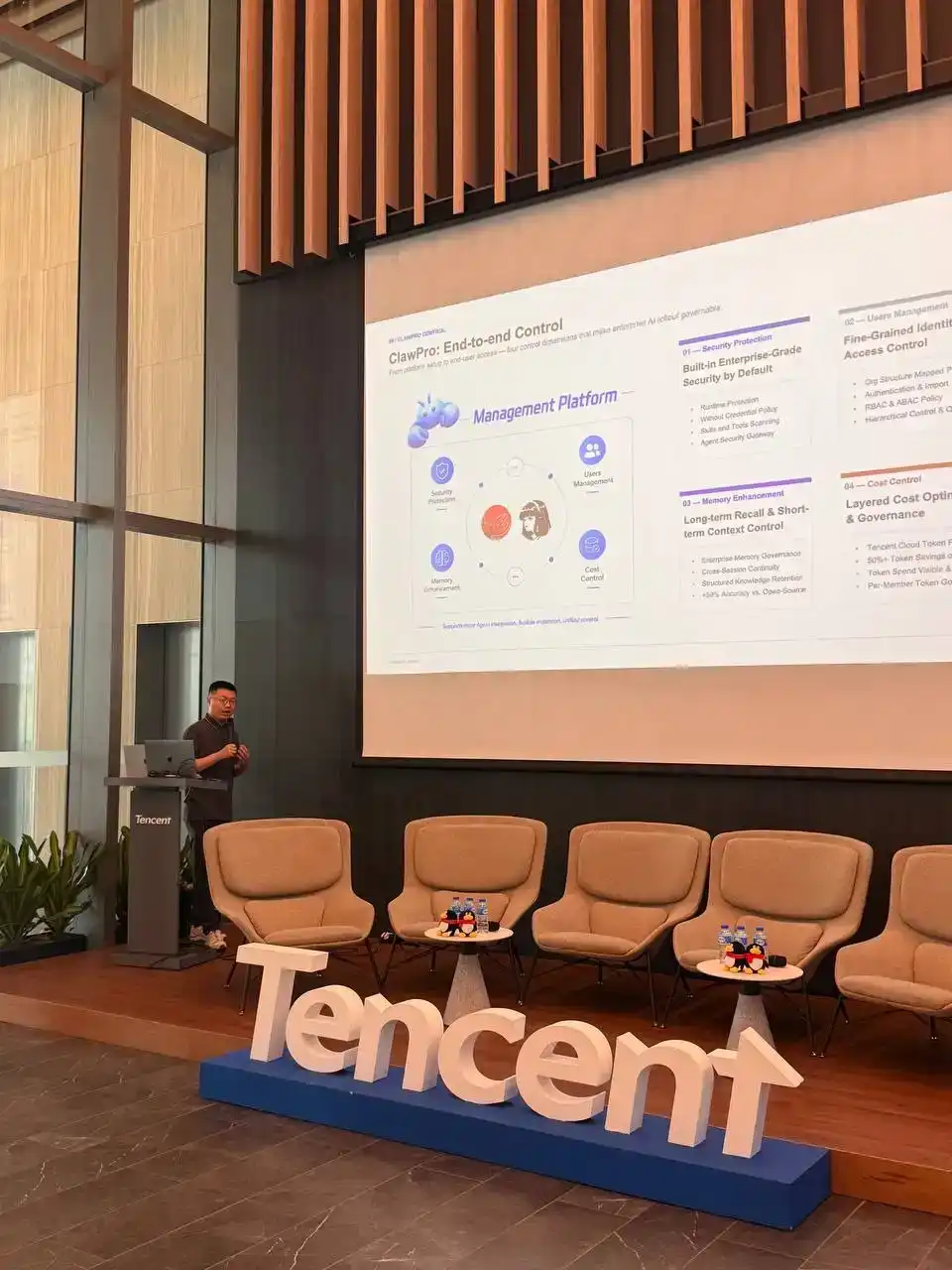
On May 19th, an AI-themed event hosted by Tencent Cloud was held in Singapore. The event focused on topics such as AI infrastructure, enterprise-level AI implementation, AI Agents, Web3 verifiable computing, and fintech, bringing together industry representatives from cloud services, public chain ecosystems, payment networks, financial technology, and investment institutions.

As a significant financial and technological hub in Asia, Singapore has increasingly become a crucial node for AI, Web3, and digital finance companies looking to expand into the Southeast Asian market. Tencent Cloud's choice to host its AI event in Singapore also reflects how major cloud service providers are paying more attention to the integration of AI application implementation, computing power services, enterprise-level solutions, and new digital infrastructure.
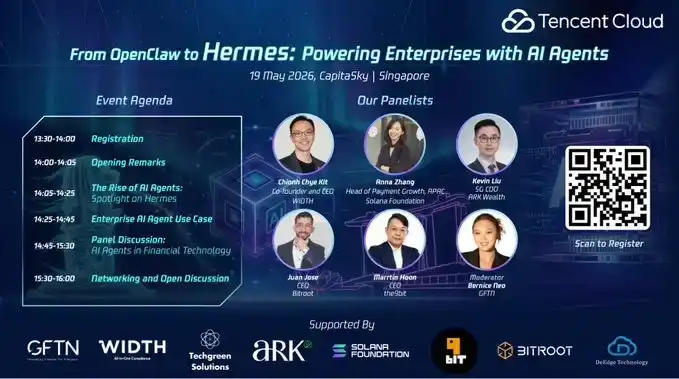

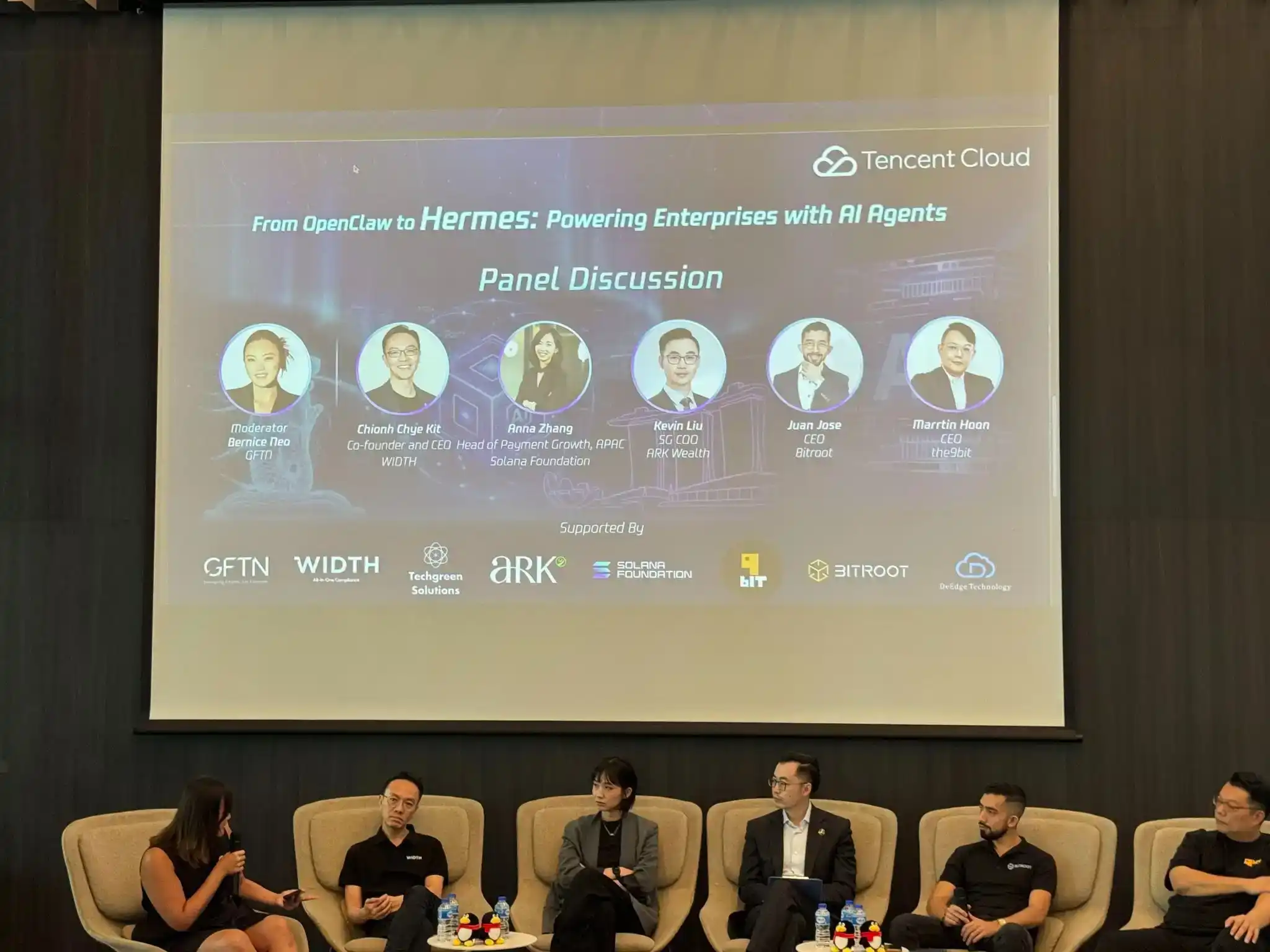
According to event information, attendees included Kevin Zhou, Director of Tencent Cloud Computing; Anna Zhang, Head of Payments Growth, APAC at Solana Foundation; Juan Jose, CEO of Bitroot; Chionh Chye Kit, Co-founder and CEO of WIDTH; Martin Hoon, CEO of the9bit; and Kevin Liu, COO of ARK Wealth Singapore, among others.

Judging by the lineup, this event was not merely a single AI product showcase but a cross-domain discussion centered on "how AI integrates with cloud services, payment networks, on-chain infrastructure, and financial technology." Tencent Cloud represents Web2 cloud computing and enterprise-level service capabilities, Solana represents a mature public chain ecosystem and on-chain payment exploration, while fintech and wealth management institutions represent the application demands of AI in real business scenarios. Against this backdrop, Bitroot, as an emerging public chain project focusing on high-performance Layer 1 and AI-native architecture, was invited to participate, making it one of the noteworthy Web3 infrastructure representatives at this event.

Behind the High-Profile AI Event, Web3 Infrastructure Re-enters the Discussion

Over the past year, the focus in the AI industry has gradually shifted from model capability competition to enterprise implementation, data governance, Agent workflows, and automated decision-making. For cloud service providers and fintech institutions, the commercialization of AI depends not only on the model itself but also on a complete set of infrastructure capabilities including computing power, data, permissions, security, and auditing mechanisms.

This explains why Web3 infrastructure is beginning to be included in AI discussions. As AI Agents evolve from "conversational tools" to "execution entities," they may need to call APIs, initiate payments, manage assets, complete settlements, and even participate in multi-party collaborative workflows in the future. In these scenarios, traditional centralized systems and on-chain verifiable infrastructure may complement each other.

The programmable assets, automated settlement, state verifiability, and on-chain auditing capabilities provided by blockchain precisely address the trust issues faced by AI Agents in financial, payment, and enterprise collaboration scenarios. Therefore, Tencent Cloud's Singapore AI event, by placing public chain ecosystems, cloud services, payment growth, and fintech representatives in the same discussion space, itself sends a signal: the next phase of AI competition is shifting from single-point technological capabilities to composite infrastructure competition.
Why Was Bitroot, Yet to Launch, Invited?

For Bitroot, being invited to this event holds certain representativeness. Unlike public chains like Solana, which already have a mature mainnet and a large ecosystem, Bitroot is currently still in the testnet and ecosystem expansion phase before its mainnet launch. The fact that an emerging Web3 project, yet to launch its mainnet, could make it onto the participant list of Tencent Cloud's Singapore AI event indicates that its technical direction and narrative approach have at least attracted the attention of some industry players.

From an industry logic perspective, the reason for Bitroot's invitation may not lie in its current ecosystem scale, but rather in the alignment of the infrastructure direction it is betting on with the demands of the AI era.

First, AI Agents and on-chain automated execution require higher-performance underlying networks. Traditional public chains still have certain limitations in throughput, latency, and cost, while AI Agents may bring about more frequent, continuous, and automated interaction demands in the future. This means the underlying chain needs to have stronger concurrent processing capabilities and lower execution costs.

Second, developer compatibility remains key to whether a new public chain can establish an ecosystem. Bitroot's choice of an EVM-compatible route means it does not attempt to completely migrate developers to an unfamiliar environment. Instead, it aims to provide a higher-performance execution environment while retaining the Ethereum developer toolchain. For a new public chain still in its early stages, this approach helps reduce the difficulty of ecosystem cold-start.

Third, AI-native architecture is becoming an important differentiating direction for next-generation infrastructure projects. Compared to simply emphasizing TPS or transaction fees, Bitroot emphasizes AI Agent, on-chain automated application, and verifiable execution scenarios. This positioning makes it easier to enter discussions about the convergence of AI and Web3, rather than being seen as just another high-performance public chain.

Therefore, from an industry observation perspective, it at least indicates that some participants in cloud services, fintech, and the Web3 ecosystem are paying attention to new infrastructure projects yet to launch their mainnets, especially those Layer 1 networks designed around AI-native features, high-performance execution, and developer compatibility.
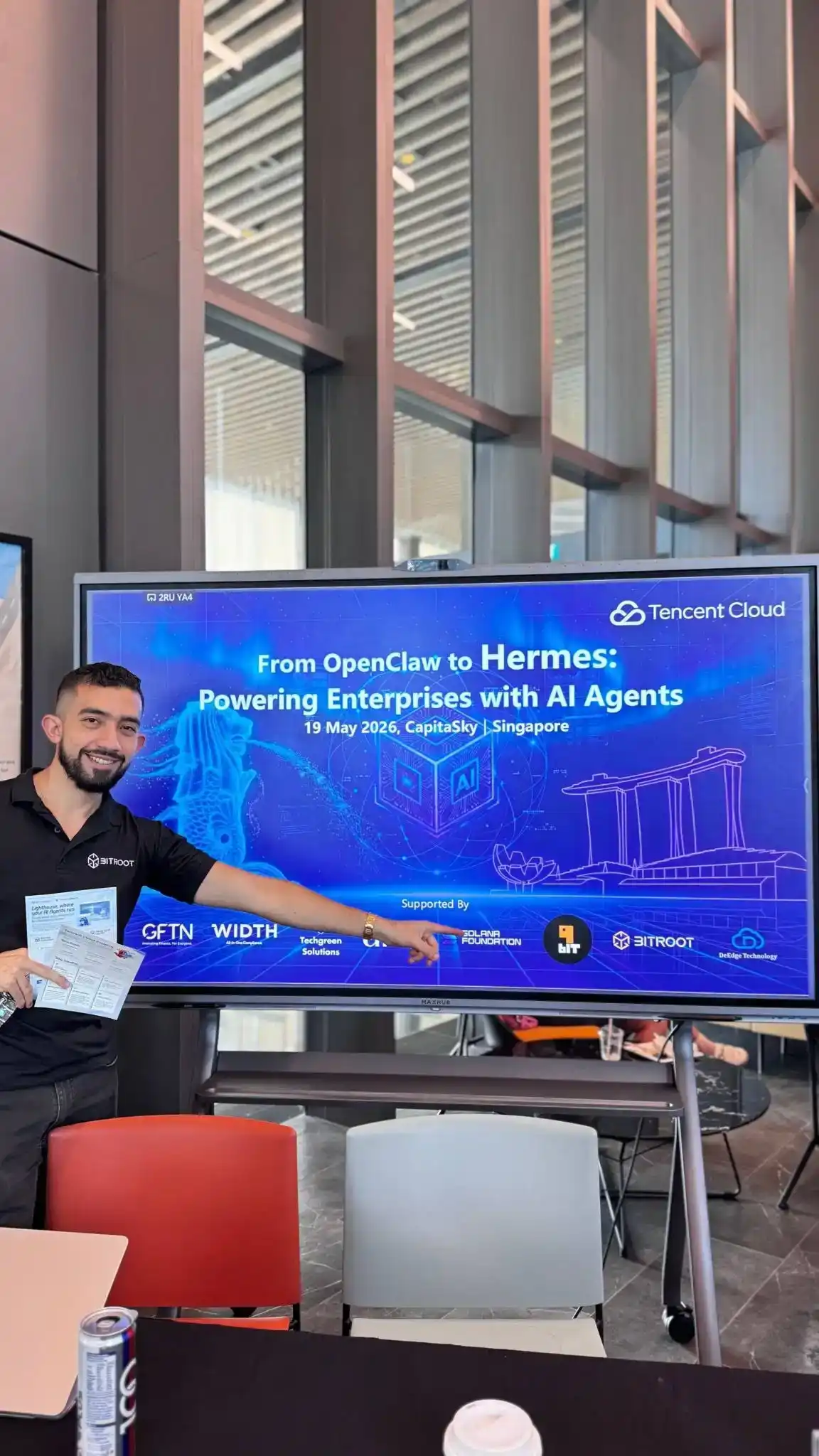
Sharing the Stage with Solana, Enhancing the Observational Value of Emerging Layer 1s

At this event, the participation of Anna Zhang, Head of Payments Growth, APAC at Solana Foundation, added perspectives from a mature public chain ecosystem and on-chain payments. Solana has been continuously advancing in the direction of high-performance public chains, payments, and consumer-grade applications in recent years, establishing itself as a key example in the Web3 infrastructure domain.

The fact that Bitroot shared the stage with representatives of mature ecosystems like Solana for discussions is itself noteworthy. It reflects that in the broader context of AI-Web3 convergence, the industry is not only focused on public chains that have already achieved scale but is also paying attention to new variables that may emerge in the next generation of infrastructure.

For an emerging Layer 1 like Bitroot, the fact that its mainnet is not yet launched means its technical roadmap is still malleable. If its parallel execution, EVM compatibility, and AI-native design can be validated in subsequent testnets and the mainnet, then it has the opportunity to carve out a differentiated position in scenarios like AI Agents, on-chain automated execution, and high-frequency applications.

Especially as AI gradually becomes a central industry theme, market requirements for public chains may change. Past public chain competition largely revolved around DeFi, NFTs, GameFi, and asset issuance. Future competition may increasingly focus on Agent execution, on-chain settlement, automated finance, data invocation, and verifiable computing. Bitroot entering industry discussions at this juncture is precisely why it deserves attention.

Juan Jose: AI Competition Will Shift from Models to Data, Scenarios, and Trust

During the panel discussion, Juan Jose, CEO of Bitroot, stated that the future gap between AI companies may no longer be just about model performance or parameter scale, but rather a comprehensive competition of data, scenarios, and trust mechanisms.
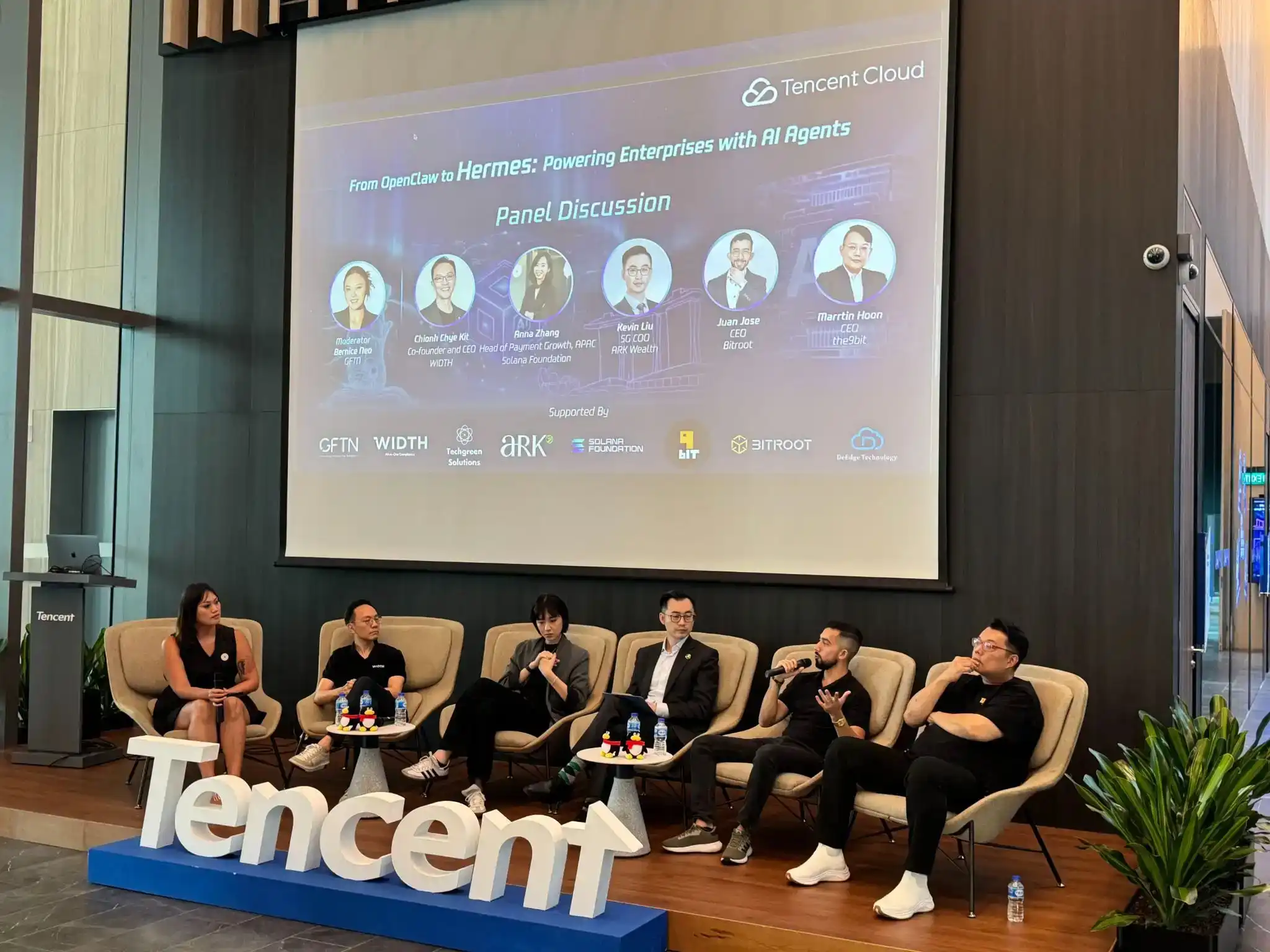
He believes that as both open-source and closed-source models continue to iterate, model capabilities themselves are accelerating in commoditization. The truly long-term, effective moat for enterprises comes from whether they possess high-quality industry data, whether they can deeply integrate into specific business processes, and whether they can establish long-term trust at both user and institutional levels.

This assessment aligns with current AI industry trends. More and more companies are realizing that the value of AI lies not only in generating content or completing simple Q&A, but in whether it can enter real business processes and consistently produce results in a controllable, auditable, and evaluable environment.

Juan Jose further pointed out that enterprise-level AI implementation still faces challenges in reliability, data infrastructure, and organizational change. Especially in high-risk scenarios like finance, payments, and auditing, AI systems must not only pursue capability ceilings but also meet stability, permission control, and auditing requirements.

AI Agents Require High-Performance and Verifiable Execution Environments

AI Agents were another important direction discussed at this event. Juan Jose stated that the industry is still in the "assistive Agent" stage, and there is still time before truly enterprise-level autonomy is achieved. The reason is that once Agents enter enterprise systems, they will face issues like multi-step task error accumulation, security permissions, legal liability, and explainability.

However, in the long term, the direction for AI Agents is relatively clear. Future Agents will not just provide suggestions; they may call services, manage accounts, initiate transactions, execute strategies, and complete settlements. This means the underlying infrastructure must support higher-frequency interactions and more trustworthy execution.

In this regard, Bitroot's technical narrative strongly correlates with industry needs. According to project information, Bitroot adopts an EVM-compatible route and enhances on-chain execution efficiency through designs like optimistic parallel EVM and the Pipeline BFT consensus mechanism, aiming to provide a high-performance, low-cost on-chain execution environment for AI Agents, DeFi, and Web3 applications.

For AI + Web3 scenarios, performance is not merely a technical metric but a prerequisite for whether applications can be viable. If an Agent requires high fees and long confirmation times for every operation, many automation scenarios will struggle to scale. Conversely, an on-chain environment with low latency, low cost, and high throughput could become an important foundation for AI Agents moving towards real-world applications.
The Testnet Phase Will Be a Crucial Validation Window for Bitroot

Bitroot is also advancing its testnet and ecosystem infrastructure development. According to project information, its testnet has entered version 5.0, with related upgrades covering network performance, cross-chain components, ecosystem application deployment, and node optimization.

Judging from testnet data, Bitroot has demonstrated technical implementation capability: the test network address count exceeds 1 million+, daily on-chain transaction volume exceeds 50,000+, peak TPS reaches 50,000+, and average block time is approximately <0.3 seconds.

For an emerging public chain yet to launch its mainnet, the testnet phase holds dual significance. On one hand, it is a validation window for the technical roadmap, where developers can observe network performance, contract compatibility, toolchain maturity, and node stability. On the other hand, it is also an important phase for ecosystem cold-start, allowing community users and developers to participate in network building through early interaction.

Industry Observation: The Competitive Landscape of High-Performance AI-Native Public Chains

From the discussions at this summit, it is evident that the convergence of AI and Web3 is shifting from conceptual narratives to specific infrastructure-level issues. In this track, different projects have chosen different technical paths:

Solana is known for its high-speed execution and mature ecosystem, having established a large developer community and DeFi ecosystem; Monad focuses on performance optimization of parallel EVM; Aptos achieves optimistic parallel execution through Block-STM. The differentiation of Bitroot lies in that it not only pursues extreme breakthroughs in public chain performance but also natively integrates AI computing capabilities into the underlying architecture of the chain—from the useful Proof-of-Work at the consensus layer, to the parallelized EVM at the execution layer, and to the distributed training and inference network at the application layer, constructing a complete decentralized AI Stack.

For next-generation infrastructure projects, how to support more complex AI application invocations while maintaining security and decentralization characteristics will become a core competitive proposition in the future.

Conclusion

Judging from the signals released at the Singapore AI-themed summit, AI is becoming the main theme for the next phase of the technology industry's evolution. The new demands arising around AI Agents, automated finance, on-chain data, and verifiable execution are placing higher requirements on the underlying infrastructure.

High-performance infrastructure is not merely a narrative choice for a single project but an inevitable direction in the process of scaling AI and Web3 applications. Bitroot's entry into this track with its full-stack architecture of "parallelized EVM + AI-native computing network," sharing the stage with mature ecosystems like Solana at the Tencent Cloud summit, demonstrates the technical depth and industry ambition of a new generation of AI public chains.

In the future, underlying networks that can simultaneously balance performance, compatibility, security, and verifiability will have a greater opportunity to host next-generation application scenarios and occupy key positions in the long-term trend of AI and blockchain convergence. Bitroot's performance is worth continued attention.

About Bitroot

Bitroot is a Layer 1 public chain project focused on parallel execution and AI-native architecture. Bitroot adopts an EVM-compatible technical route and explores providing a high-performance, low-cost on-chain execution environment for AI Agents, DeFi, and Web3 applications through parallel execution mechanisms, consensus optimization, and AI-related interface design.


İlgili Sorular

QWhat was the main theme of the Tencent Cloud AI event in Singapore that Bitroot was invited to?

AThe event focused on AI infrastructure, enterprise AI implementation, AI Agents, Web3 verifiable computing, and fintech. It explored the integration of AI with cloud services, payment networks, on-chain infrastructure, and financial technology.

QAccording to the article, why was Bitroot, an unreleased Layer 1 blockchain, invited to such a high-profile event?

ABitroot was invited primarily due to its focus on an AI-native infrastructure and high-performance execution architecture, which aligns with the future needs of AI Agent operations and verifiable on-chain execution, rather than its current ecosystem size.

QWhat is Bitroot's core technical approach as a new Layer 1 project?

ABitroot's core technical approach is an EVM-compatible, high-performance Layer 1 architecture featuring optimistic parallel EVM execution, a Pipeline BFT consensus mechanism, and an AI-native stack designed to provide a low-cost, high-throughput environment for AI Agents and Web3 applications.

QWhat key point did Bitroot CEO Juan Jose make about the future of AI competition during the panel discussion?

AJuan Jose stated that the future gap between AI companies will shift from competing on model performance or parameter scale to a comprehensive competition based on data quality, integration into specific business scenarios, and establishing trust mechanisms.

QWhat is a key potential advantage of integrating high-performance blockchains like Bitroot with AI, as discussed in the article?

AHigh-performance, low-cost, and low-latency blockchain environments can provide the verifiable execution, automated settlement, and trust mechanisms necessary for AI Agents to scale into real-world applications, especially in areas like automated finance, payments, and multi-party workflows.

İlgili Okumalar

AI PC Battle: Bet on the Toll Booth, Not the Camp

**Title:** The AI PC Battle: Don't Bet on Sides, Bet on the Tollbooth **Summary:** The AI PC competition is moving beyond simple "x86 vs. Arm" narratives. The core investment thesis should focus on identifying which players can sustain margins, cash flow, and pricing power throughout the upgrade cycle, rather than backing a particular architecture. The opportunity is analyzed in three layers: 1. **The Advanced Foundry Tollbooth:** TSMC is positioned to collect "tolls" regardless of which chip designer wins, due to its dominant ~70% share in advanced semiconductor manufacturing, which is essential for high-end AI PC chips. 2. **Compute & Platform Spillover:** AMD represents an offensive in the x86 CPU+GPU space, while NVIDIA leverages its GPU and CUDA software stack dominance. Both benefit from the demand for increased local AI compute. 3. **Architecture Diffusion & Turnaround Plays:** ARM and Intel offer potential for significant upside (elasticity), but investments here require stricter discipline due to higher execution risks and competitive challenges. The industry is transitioning from concept to shipment validation. While short-term forecasts for AI PC adoption have been revised down slightly due to tariffs and procurement delays, the long-term trend towards AI becoming a standard PC feature remains intact. The key driver for upgrade cycles will be whether compelling enterprise applications (e.g., privacy-sensitive computing, low-latency inference) emerge beyond consumer-focused features like meeting summarization. Investment strategy should prioritize companies with platform-level advantages and recurring revenue streams. TSMC offers high certainty as the foundational tollbooth. AMD presents a strong offensive play within the established ecosystem. ARM and Intel are higher-risk, higher-potential-reward turnaround bets. The report cautions against chasing short-term hype and emphasizes a disciplined, long-term approach focused on buying ecosystem strength and cash-flow certainty after market enthusiasm subsides. **Key Risks:** Underwhelming AI PC applications slowing upgrade cycles; slow improvement in Windows on Arm compatibility; macro/tariff impacts on PC demand; potential advanced node supply-demand mismatches affecting TSMC; high overall AI sector valuations making stocks vulnerable to a risk-off shift in markets.

marsbit11 dk önce

AI PC Battle: Bet on the Toll Booth, Not the Camp

marsbit11 dk önce

Ten-Thousand-Word Analysis: From $10 to $290, MRVL Wins the Entire AI Era by 'Not Making GPUs'

Marvell Technology's stock price surged from under $10 in 2016 to a record $290 in June 2026, fueled not by making GPUs, but by dominating AI infrastructure connectivity. This analysis argues the market misvalues MRVL as merely a smaller Broadcom in custom AI chips, overlooking its true, unique position. Marvell's core strength lies in enabling high-speed data flow for AI clusters through three interconnected businesses. First, it holds a commanding ~70% market share in high-speed optical DSPs (essential for data center light modules), a deep-moat business with accelerating growth. Second, its custom AI chip design business serves hyperscalers like AWS, Microsoft, and Google, with a significant revenue pipeline despite lower margins. Third, stable cash flows come from Ethernet switch chips and enterprise storage controllers. Together, they form a full-stack "AI data movement" platform. CEO Matt Murphy's transformative leadership since 2016, involving strategic divestments, key acquisitions (like Inphi for optical DSPs), and securing long-term agreements with major cloud providers, repositioned the company. A pivotal $2 billion strategic investment from NVIDIA in 2026 underscored Marvell's critical role in the AI ecosystem, particularly through collaborations like NVLink Fusion. While Marvell faces risks—including client concentration (losing the Amazon Trainium3 design), lower-margin business mix, competitive threats, insider selling, and complex supply chains—its fundamentals remain strong. The optical interconnect moat is widening with the acquisition of Celestial AI (photonics fabric), and financial metrics show accelerating revenue growth and operating leverage. With a PEG ratio suggesting undervaluation relative to its growth, the thesis is that the market undervalues Marvell's monopolistic position in AI "plumbing" while overemphasizing its competitive custom chip segment. The story transcends investing, symbolizing how in any complex system—from the internet to AI—the value of "connection" ultimately surpasses that of individual "nodes."

marsbit41 dk önce

Ten-Thousand-Word Analysis: From $10 to $290, MRVL Wins the Entire AI Era by 'Not Making GPUs'

marsbit41 dk önce

AI Relay Stations Spark Heated Debate on Zhihu: Behind Cheap Tokens, What Are Users Really Worried About?

A discussion on Zhihu about "AI relay stations" shifted the niche developer topic of "cheap tokens" into broader user awareness. Users moved beyond simply questioning the legitimacy of these services to focus on practical concerns: Where do cheap tokens truly come from? Is the model being accessed the real one? Can relay stations see prompts, code, and API keys? For occasional users, are the risks worth it? The core debate centered less on price and more on trust. A primary worry is model authenticity—the risk of "model swapping," where users paying for a premium model might be routed to a cheaper one, creating an information asymmetry. Others argued that cost comparisons matter; while cheaper than official pay-as-you-go APIs, relay stations may not be the lowest-cost option versus subscriptions, domestic models, or free tiers, making user needs assessment crucial. Speculation about token sources ranged from legitimate bulk discounts to gray-area methods like account sharing or exploiting regional pricing. This opacity makes risk assessment difficult for users. Data security emerged as a critical concern, especially for enterprise use. When processing sensitive information like code, contracts, or client data, the inability to verify a relay station's data handling, retention, or access policies poses significant compliance and confidentiality risks. The evolving consensus suggests relay stations can be used cautiously for low-sensitivity, disposable tasks (e.g., summarizing public info, simple translation). However, they should not be the default for sensitive, professional, or production workflows involving proprietary data, Agents, or automated systems. Recommendations include avoiding large prepayments, not relying on a single service, using test prompts to monitor quality, anonymizing data where possible, and keeping official channels as backups. Ultimately, the discussion framed tokens not just as a billing unit but as a measure of real cost encompassing price, model integrity, data security, and service stability. The popularity of relay stations highlights user demand for affordable access, but the debate underscores a key trade-off: the savings from cheap tokens may come at the price of trust, transparency, and control over one's data and AI experience.

marsbit1 saat önce

AI Relay Stations Spark Heated Debate on Zhihu: Behind Cheap Tokens, What Are Users Really Worried About?

marsbit1 saat önce

In-Depth Research Report on TradFi: The Convergence Wave of Crypto and Traditional Finance

In 2026, the crypto industry is undergoing a profound infrastructure-level transformation—TradFi assets are migrating on-chain at an unprecedented pace. According to CoinGecko's Q1 2026 report, the total value locked (TVL) of tokenized real-world assets (RWA) has surpassed $31 billion, a nearly 4x increase from $7.8 billion at the beginning of 2025, with the sector’s aggregate market capitalization reaching $19.3 billion. Among these, the market cap of tokenized stocks surged from $2 million to $486 million, with Q1 spot trading volume reaching $15.1 billion—a single quarter already surpassing the entire second half of 2025. RWA perpetual contract Q1 trading volume reached a staggering $524.8 billion, far exceeding the $313 billion for all of 2025. Meanwhile, BlackRock's BUIDL fund has reached $2.3 billion in scale and has filed for two new tokenized funds, signaling that the world's largest asset manager's tokenization strategy is evolving from pilot to product suite expansion. HTX, as a core participant in the crypto exchange sector, officially launched TradFi perpetual futures products including NVDA, AAPL, MSFT, META, and SPY in 2026, enabling crypto users to gain 24/7 trading access to core U.S. equities. Boston Consulting Group predicts that global tokenized asset scale could reach $16 trillion by 2030, while McKinsey offers a conservative estimate of approximately $2 trillion. The on-chain migration of TradFi assets is no longer a "future narrative" but a structural transformation unfolding in real time, as crypto exchanges evolve from single crypto asset trading platforms toward "multi-asset-class trading infrastructure."

HTX Learn1 saat önce

In-Depth Research Report on TradFi: The Convergence Wave of Crypto and Traditional Finance

HTX Learn1 saat önce

İşlemler

Spot
Futures

Popüler Makaleler

SOLANA Nedir

HarryPotterWifHatMyroWynn10Inu,$solana: Trendy Meme Coin Projesine Bir Giriş Giriş Kripto para birimlerinin sürekli gelişen dünyasında, yenilikçi projeler sürekli olarak ortaya çıkmakta ve yatırımcıların ve meraklıların hayal gücünü yakalamaktadır. Bu projelerden biri, kripto topluluğunda kendine bir yer edinmeye başlayan bir meme coin olan HarryPotterWifHatMyroWynn10Inu,$solana'dır. Bu makale, projenin amacını, mimarisini, yaratıcısını, yatırımcılarını ve yolculuğu boyunca kaydedilen dikkate değer kilometre taşlarını kapsamlı bir şekilde sunmayı hedeflemektedir. HarryPotterWifHatMyroWynn10Inu,$solana nedir? Genel Bakış HarryPotterWifHatMyroWynn10Inu,$solana, ölçeklenebilirliği ve hızı ile tanınan Solana blok zinciri üzerinde yapılandırılmış bir meme coin projesidir. Kripto alanına neşe ve yaratıcılık getirmeyi amaçlayan bu proje, sadece bir ticaret token’ı olarak değil, aynı zamanda meme içeriğinin üretilmesi ve paylaşılması için bir katalizör olarak da hizmet etmektedir. Temelindeki topluluk, aktif olarak katılım göstermeye teşvik edilmekte ve yaratıcılığın ve iş birliğinin geliştiği dinamik bir ekosistem sunulmaktadır. Hedefler ve Amaçlar Projenin özünde, meme meraklılarının bir araya gelip, paylaşabileceği ve yeni meme içerikleri oluşturabileceği bir ortam geliştirmek hedeflenmektedir. Bu anlatı odaklı yaklaşım, topluluk içerisinde heyecan yaratmakta, katılımı teşvik etmekte ve aynı zamanda Solana blok zincirinin yerel sağlam işlevselliğini öne çıkarmaktadır. HarryPotterWifHatMyroWynn10Inu,$solana, topluluk odaklı bir proje oluşturarak dijital para birimlerinin ifade biçimi olarak sosyal etkisini keşfetmeyi de amaçlamaktadır. HarryPotterWifHatMyroWynn10Inu,$solana'nın yaratıcısı kimdir? HarryPotterWifHatMyroWynn10Inu,$solana'nın arkasındaki yaratıcının kimliği gizemini korumaktadır. Proje, mülkiyetin feragat edildiği şekilde yapılandırılmıştır; bu nedenle, topluluk liderliğindeki bir girişim olarak gelişmektedir. Bu merkeziyetsizlik, tüm paydaşlar arasında şeffaflığı ve demokratik katılımı teşvik etmektedir. Topluluk katılımının en üst düzeyde olduğu meme coin dünyasında bu tür bir yaklaşım giderek daha popüler hale gelmektedir. HarryPotterWifHatMyroWynn10Inu,$solana'nın yatırımcıları kimlerdir? Şu anda, HarryPotterWifHatMyroWynn10Inu,$solana'yı destekleyen belirli yatırımcılar veya fonlar hakkında kamuya açık bilgi bulunmamaktadır. Tanınmış yatırımcıların yokluğu, projenin topluluk odaklı etik anlayışını daha da pekiştirerek geleneksel finansal çerçevelerden bağımsız olarak durmasına olanak tanımaktadır. Bu bağımsızlık, projenin, kullanıcı tabanından gelen toplu ilgiye dayanarak dış baskılardan bağımsız bir kimlik geliştirmesine olanak tanımaktadır. HarryPotterWifHatMyroWynn10Inu,$solana nasıl çalışır? Ekonomik Model Proje, işlevselliğini ve kullanıcı katılımını destekleyen benzersiz bir ekonomik model kullanmaktadır. HarryPotterWifHatMyroWynn10Inu,$solana içindeki işlemler, tüm taraflar için faydalı olacak şekilde tasarlanmıştır. Her ticaret, ücret almakta ve bu ücret mevcut token sahipleri arasında yeniden dağıtılmakta, aynı zamanda likidite havuzunu artırmaktadır. Bu modelin temel bileşenleri şunlardır: Yansıtma Mekanizması: İşlem ücretlerinin bir kısmı sahiplerine geri verilmektedir, bu da token'a uzun vadeli yatırım yapmayı teşvik etmektedir. Likidite Havuzu Edinimi: Likiditeyi artırmak için fonlar tahsis edilmektedir, böylece alım satım işlemleri sorunsuz bir şekilde gerçekleştirilebilmektedir. Yanma Mekanizmaları: Token'ların bir kısmı, talep arttıkça değeri potansiyel olarak artırmak için yanılabilir. Bu tasarım, topluluk etkileşimleri ve yatırımlar üzerinde gelişen kendine yeten bir ekosistemi teşvik etmektedir. Topluluk Katılımı HarryPotterWifHatMyroWynn10Inu,$solana'nın kalbinde, topluluk katılımına atfedilen değer yatmaktadır. Kullanıcıların, meme oluşturma ve tanıtımlar gibi çeşitli etkinlikler aracılığıyla projenin gelişimine katılmalarına olanak tanıyarak, yaratıcılığın gelişebileceği canlı bir ekosistem oluşturmaktadır. HarryPotterWifHatMyroWynn10Inu,$solana'nın Zaman Çizelgesi HarryPotterWifHatMyroWynn10Inu,$solana'nın yolculuğu, kripto topluluğundaki mevcut durumunu şekillendiren birkaç önemli olayı içermektedir: Yaratılış: Yaratılışın belirli tarihi açıklanmamış olmakla birlikte, projenin başlangıcı, dijital çağın içine işleyen meme kültüründe kök salmaktadır. Topluluk Devralması: Yaratıcının mülkiyetten feragat etmesinin ardından, proje topluluk liderliğine geçerek tüm katılımcılara başarısında bir pay vermiştir. Denetim ve NFT Koleksiyonu: Güvenilirliği artırmak için proje kapsamlı bir denetim gerçekleştirirken, aynı zamanda meme merkezli etik anlayışını yansıtacak bir NFT koleksiyonu başlatmıştır. Ortaklıklar ve Gelişim: Proje, mevcut durumda diğer token'larla potansiyel ortaklıklar keşfetmekte ve efsanevi meme'lerine dayanarak benzersiz bir web sitesi ve ürün seçeneklerinin geliştirilmesini organize etmektedir. Önemli Noktalar Özetle, HarryPotterWifHatMyroWynn10Inu,$solana, kripto para birimi meme coin sektörü içinde dikkate değer bir oyuncu durumundadır. İşte anahtar çıkarımlar: Topluluk Liderliğindeki Girişim: Proje, mülkiyet taleplerinden bağımsız olarak topluluk üyelerinin aktif katkılarını teşvik ederek iş birliği çabası içinde gelişmektedir. Yenilikçi Ekonomik Model: Yansıtma, likidite edinimi ve yanma mekanizmalarını kullanarak, kullanıcılar için sağlam ve ilgi çekici bir finansal ortam yaratmaktadır. NFT ve Ürün Etkileşimi: NFT koleksiyonunun lansmanı ile proje, topluluğu ile etkileşimi derinleştirmeyi hedeflemekte, meme kültürü ile dijital para birimi arasındaki bağı pekiştirmektedir. Ortaklıkların Keşfi: Girişim duraksamıyor – sürdürülebilir büyüme hedefleyen devam eden gelişmeler ve potansiyel ortaklıklar, ileri görüşlü bir yaklaşım olduğunu göstermektedir. Sonuç HarryPotterWifHatMyroWynn10Inu,$solana, kripto para birimi alanında itibar kazandıkça, topluluk katılımı, yenilikçi ekonomik yapılar ve meme kültürünün entegrasyonu ile potansiyel yolunu çizmektedir. Kökenleri ve yatırımcı bağlantıları etrafında gizem olmasına rağmen, proje merkeziyetçi inovasyonun özünü yansıtan ilginç bir hikaye sunmaktadır. Kripto para birimleri genellikle tamamen finansal bir bakış açısıyla değerlendirildiği bir dünyada, HarryPotterWifHatMyroWynn10Inu,$solana, kripto hareketinin yaratıcılığı, topluluğu ve iş birliğini içerebildiğini göstermektedir. İster deneyimli bir yatırımcı olsun, ister yeni bir katılımcı, bu meme coin projesinin gelişen yolculuğu kesinlikle dikkat etmeyi gerektiren ilgi çekici bir vaka çalışmasıdır.

485 Toplam GörüntülenmeYayınlanma 2024.04.04Güncellenme 2024.12.03

SOLANA Nedir

SOLANA 2.0 Nedir

BarbieCrashBandicootRFK777Inu, $SOLANA 2.0: Kripto Manzarasında Yeni Bir Oyuncu BarbieCrashBandicootRFK777Inu, $SOLANA 2.0'a Giriş Kripto para birimlerinin sürekli evrilen manzarasında, yeni girişimler sürekli olarak yatırımcıların ve meraklıların dikkatini çekiyor. Bu yeni projeler arasında, kripto para simgesi $SOLANA 2.0 ile temsil edilen BarbieCrashBandicootRFK777Inu bulunmaktadır. Bu benzersiz girişim, gizem, macera ve meme kültürü unsurlarını birleştirerek, son derece rekabetçi bir arenada beklentileri aşmayı hedefliyor. Büyüme ve yenilik arzularıyla, bu proje, yerleşik devlerle savaşa hazırlanan bir alt yapının ruhunu yakalıyor. BarbieCrashBandicootRFK777Inu, $SOLANA 2.0 Nedir? BarbieCrashBandicootRFK777Inu, temelinde çeşitli ikonik kültürel referanslardan ilham alan bir kripto para projesidir. Barbie ile ilişkilendirilen zarafet ve çekicilik, Crash Bandicoot'ın dinamik enerjisi ve RFK'nın temsil ettiği amansız azim ile harmanlanan bu proje, kripto para dünyasında çok yönlü bir deneyim sunmayı amaçlamaktadır. BarbieCrashBandicootRFK777Inu projesinin ana hedefi, bu farklı unsurları geniş bir izleyici kitlesine hitap eden uyumlu bir ekosisteme birleştirmektir. Meme kültürünün eğlenceli yanlarını kucaklarken, merkeziyetsizlik ve finansal güçlendirme ilkeleriyle köklü bir bağ kurarak, proje kendisini hem deneyimli yatırımcılar hem de kripto dünyasına yeni katılanlar için cazip bir seçenek olarak konumlandırmıştır. BarbieCrashBandicootRFK777Inu, $SOLANA 2.0'nın Yaratıcısı Kimdir? BarbieCrashBandicootRFK777Inu'ya olan ilginin artmasına rağmen, yaratıcısı hakkında bilgiler büyük ölçüde bilinmemektedir. Kurucusunun veya geliştirme ekibinin anonimliği, projenin yapısı ve yönetişimi hakkında soru işaretleri oluşturuyor. Kripto para dünyasında, projelerin kamuya açık bir şekilde yaratıcıları olmadan faaliyet göstermesi sık rastlanan bir durumdur. Bu bilgi eksikliği bazı potansiyel yatırımcıları caydırabilirken, diğerleri bunu birçok kripto para girişimini destekleyen merkeziyetsizlik ruhunu benimseme fırsatı olarak görebilir. BarbieCrashBandicootRFK777Inu, $SOLANA 2.0'in Yatırımcıları Kimlerdir? Şu anda, BarbieCrashBandicootRFK777Inu'yu destekleyen yatırım temelleri veya kuruluşları hakkında sınırlı bilgi bulunmaktadır. Projenin detaylı bir yatırım desteğinden yoksun olması, birçok kripto paranın bağımsız doğasını vurguluyor. Bu durumda, projenin finansmanının yerel topluluk desteğinden mi yoksa daha büyük finansal varlıkların desteğinden mi geleceği henüz belirsizliğini koruyor. BarbieCrashBandicootRFK777Inu, $SOLANA 2.0 Nasıl Çalışıyor? BarbieCrashBandicootRFK777Inu, kalabalık kripto alanında kendine özgü olmasına katkıda bulunan birçok özellikle tasarlanmıştır. Belirli teknik detaylar gizli tutulsa da, proje kullanıcı etkileşimini artırmayı ve topluluk büyümesini teşvik etmeyi amaçlayan işlevsellikler içermesi beklenmektedir. Modadan maceraya ve oyun dünyasına kadar çeşitli etkilerin birleşimi, farklı ilgi alanlarına hitap eden kapsayıcı bir atmosferi teşvik ediyor. Ek olarak, projenin $SOLANA 2.0 ekosistemi ile olan bağı, potansiyel teknolojik avantajları önermektedir. Bu, yenilikçi işlem hızlarını, ölçeklenebilirliği ve maliyet etkinliğini içerebilir ve bu da Solana blok zincirinin teknik kapasitesiyle uyumlu hale getirmektedir. Projenin kurucuları, kalıcı bir topluluk deneyimi ve önemli bir ürün sunumu oluşturmak için bu teknolojik temeli benimseyecek gibi gözüküyor. BarbieCrashBandicootRFK777Inu, $SOLANA 2.0'ın Zaman Çizelgesi BarbieCrashBandicootRFK777Inu'nun yolculuğu, projenin şimdiye kadarki gelişimini aydınlatan birkaç önemli dönüm noktası içermektedir: Proje Kavramsallaştırması: Gizem, macera ve meme kültürünün birleştirilmesine dair ilk fikirler ortaya çıktı ve projenin benzersiz konsepti için bir çerçeve sağladı. Token Oluşturma: Projenin beklentilerini temsil etmek ve potansiyel yatırımcıların ilgisini çekmek üzere tasarlanmış sembolik $SOLANA 2.0 tokeni oluşturuldu. Proje Gelişimi: Şu anda, proje daha fazla geliştirme aşamasındadır ve kripto alanındaki yerleşik oyunculara meydan okumaya ve yenilikçi tekliflerde bulunmaya odaklanmaktadır. Bu dönüm noktaları, projenin büyüme eğilimini yansıtırken, öncü bir kripto para deneyimi geliştirme konusundaki kararlığını da vurgulamaktadır. BarbieCrashBandicootRFK777Inu, $SOLANA 2.0 Hakkında Ana Noktalar Benzersiz Konsept: BarbieCrashBandicootRFK777Inu, gizem, macera ve meme kültürünü birleştirerek tek bir kripto para projesi olarak öne çıkmaktadır. Alt Yapı Ruhu: Proje, yerleşik kripto para projelerine meydan okumak ve sektörde bir niş oluşturma amacı taşıyan bir alt yapı kişiliğini benimsemektedir. Gelişim Aşaması: Aktif geliştirme çabaları devam etmektedir ve topluluğun ve yatırımcıların beklentileriyle uyumlu yenilikçi teklifler sunma niyeti bulunmaktadır. Sonuç $SOLANA 2.0 sembolü ile temsil edilen BarbieCrashBandicootRFK777Inu, kripto para piyasasında ilginç bir yeni girişimdir. Kültürel referansların benzersiz karışımı ve iddialı vizyonu, kripto manzarasında alternatif proje değerleri arayanlarla yankı bulabilir. Yaratıcısının ve yatırımcılarının bilinmeyen durumu bazılarına tuhaf gelebilir, ancak projenin çekicilik ve maceraya olan vurgusu, kripto paraların neyi temsil edebileceğinin sınırlarını genişleten etkileyici bir anlatı sunuyor. Proje geliştikçe, daha geniş kripto dünyasında nasıl evrileceğini ve rakipleri arasında nasıl bir yer edineceğini gözlemlemek ilginç olacaktır. BarbieCrashBandicootRFK777Inu, dijital varlıklarla etkileşimi yeniden tanımlayacak sürpriz deneyimlerin kapısını aralayabilir. Şu anda, proje ilerledikçe, yolculuğu kripto alanında yeniliğin sınır tanımadığını, heyecan ve eğlenceden finansal güçlendirme potansiyeline kadar her şeyi sunduğunu hatırlatıyor.

153 Toplam GörüntülenmeYayınlanma 2024.04.05Güncellenme 2024.12.03

SOLANA 2.0 Nedir

SOL Nasıl Satın Alınır

HTX.com’a hoş geldiniz! Solana (SOL) satın alma işlemlerini basit ve kullanışlı bir hâle getirdik. Adım adım açıkladığımız rehberimizi takip ederek kripto yolculuğunuza başlayın. 1. Adım: HTX Hesabınızı OluşturunHTX'te ücretsiz bir hesap açmak için e-posta adresinizi veya telefon numaranızı kullanın. Sorunsuzca kaydolun ve tüm özelliklerin kilidini açın. Hesabımı Aç2. Adım: Kripto Satın Al Bölümüne Gidin ve Ödeme Yönteminizi SeçinKredi/Banka Kartı: Visa veya Mastercard'ınızı kullanarak anında Solana (SOL) satın alın.Bakiye: Sorunsuz bir şekilde işlem yapmak için HTX hesap bakiyenizdeki fonları kullanın.Üçüncü Taraflar: Kullanımı kolaylaştırmak için Google Pay ve Apple Pay gibi popüler ödeme yöntemlerini ekledik.P2P: HTX'teki diğer kullanıcılarla doğrudan işlem yapın.Borsa Dışı (OTC): Yatırımcılar için kişiye özel hizmetler ve rekabetçi döviz kurları sunuyoruz.3. Adım: Solana (SOL) Varlıklarınızı SaklayınSolana (SOL) satın aldıktan sonra HTX hesabınızda saklayın. Alternatif olarak, blok zinciri transferi yoluyla başka bir yere gönderebilir veya diğer kripto para birimlerini takas etmek için kullanabilirsiniz.4. Adım: Solana (SOL) Varlıklarınızla İşlem YapınHTX'in spot piyasasında Solana (SOL) ile kolayca işlemler yapın.Hesabınıza erişin, işlem çiftinizi seçin, işlemlerinizi gerçekleştirin ve gerçek zamanlı olarak izleyin. Hem yeni başlayanlar hem de deneyimli yatırımcılar için kullanıcı dostu bir deneyim sunuyoruz.

1.8k Toplam GörüntülenmeYayınlanma 2024.12.12Güncellenme 2026.06.02

SOL Nasıl Satın Alınır

Tartışmalar

HTX Topluluğuna hoş geldiniz. Burada, en son platform gelişmeleri hakkında bilgi sahibi olabilir ve profesyonel piyasa görüşlerine erişebilirsiniz. Kullanıcıların SOL (SOL) fiyatı hakkındaki görüşleri aşağıda sunulmaktadır.

活动图片