Bitnomial gains CFTC approval to launch prediction markets in the US

cointelegraph2025-12-12 tarihinde yayınlandı2025-12-12 tarihinde güncellendi

Özet

Bitnomial Clearinghouse LLC has obtained approval from the U.S. CFTC to clear fully collateralized swaps, enabling its parent company, Bitnomial, to launch prediction markets and provide clearing services to external platforms. The prediction markets will cover crypto and economic events, allowing traders to take positions on outcomes like token prices and macroeconomic data. This expands Bitnomial’s existing suite of Bitcoin and crypto derivatives products. The company’s operates as an infrastructure-only clearing provider, offering margin and settlement systems with support for both USD and cryptocurrency collateral. The approval follows recent regulatory clearance for Bitnomial to operate a CFTC-regulated spot crypto exchange. The article also notes the growing momentum of prediction markets in the U.S., highlighting platforms like Kalshi and Polymarket, the latter of which recently received CFTC approval for intermediated trading platform operations.

Bitnomial Clearinghouse LLC received approval from the US Commodity Futures Trading Commission (CFTC) to clear fully collateralized swaps, enabling its parent company, Bitnomial, to launch prediction markets and offer clearing services to other platforms.

According to Friday’s announcement, Bitnomial’s prediction market will cover crypto and economic events, alongside its existing Bitcoin (BTC) and crypto derivatives products. The contracts are designed to allow traders to take positions on outcomes, such as token price levels and macroeconomic data.

The approval expands the umbrella of the trading products offered by Bitnomial. Based in Chicago, the company’s exchange and clearing arms offer perpetuals, futures, options contracts and leveraged spot trading. The company’s clearinghouse also supports crypto-based margin and settlement, allowing approved products to be margined and settled directly in digital assets.

Bitnomial president Michael Dunn said the approval allows the company to serve “both our own exchange and external partners, building a clearing network that strengthens the entire prediction market ecosystem.”

Bitnomial Clearinghouse operates as an infrastructure-only clearing provider, rather than a retail competitor, giving approved partners access to its margin and settlement systems and allowing collateral to be converted between US dollars and cryptocurrency.

The approval follows a recent green light to launch a CFTC-regulated spot cryptocurrency trading platform in the US, allowing customers to buy, sell and trade leveraged and non-leveraged crypto products on a federally supervised exchange.
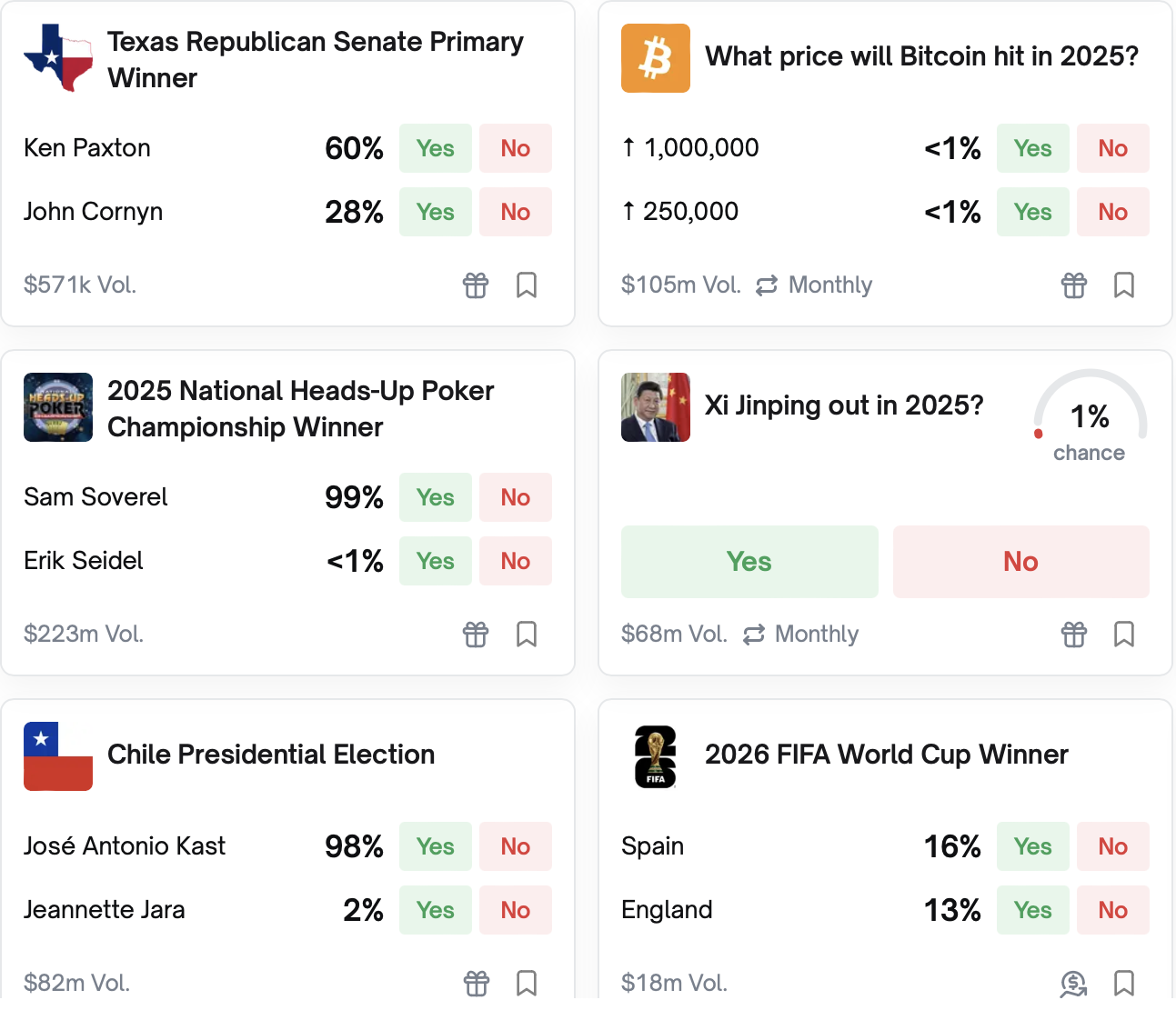
Event contracts on Polymarket. Source: Polymarket

Related: Coinbase may debut prediction markets, tokenized stocks on Wednesday: Report

Polymarket gains momentum in the US

Prediction markets have emerged as a major trend in 2025. According to DefiLlama data, prediction market Kalshi has generated $5.27 billion in trading volume over the last 30 days, while blockchain-based Polymarket recorded just under $2 billion over the same time period.
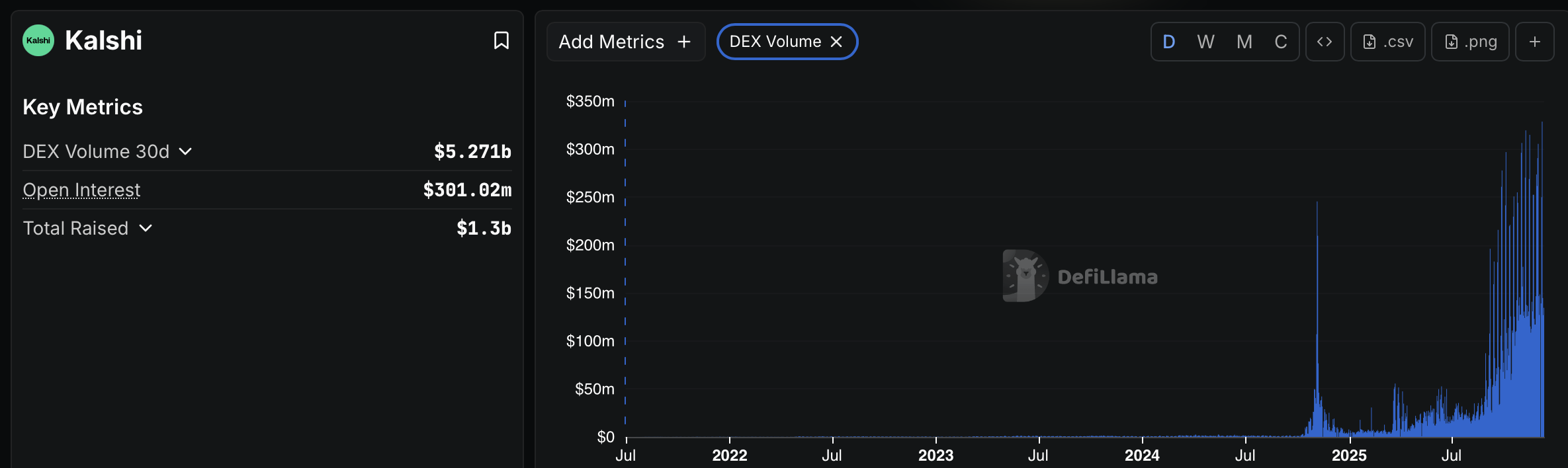
Kalshi trading volume. Source: DefiLlama

In November, Polymarket received regulatory approval from the CFTC to operate an intermediated trading platform, allowing access through registered brokers under the rules governing US markets.

The approval followed the closure of an investigation in July led by the CFTC and US Department of Justice into whether Polymarket had allowed trading by US users, a probe that included an FBI search of founder Shayne Coplan’s home.

Polymarket, which settles contracts on the Polygon blockchain using the USDC (USDC) stablecoin, has also secured several partnerships in recent months, including the UFC and Zuffa boxing and fantasy sports operator PrizePicks in November.

Magazine: Meet the onchain crypto detectives fighting crime better than the cops

İlgili Okumalar

North Korean Hackers Loot $500 Million in a Single Month, Becoming the Top Threat to Crypto Security

North Korean hackers, particularly the notorious Lazarus Group and its subgroup TraderTraitor, have stolen over $500 million from cryptocurrency DeFi platforms in less than three weeks, bringing their total theft for the year to over $700 million. Recent major attacks on Drift Protocol and KelpDAO, resulting in losses of approximately $286 million and $290 million respectively, highlight a strategic shift: instead of targeting core smart contracts, attackers are now exploiting vulnerabilities in peripheral infrastructure. For instance, the KelpDAO attack involved compromising downstream RPC infrastructure used by LayerZero's decentralized validation network (DVN), allowing manipulation without breaching core cryptography. This sophisticated approach mirrors advanced corporate cyber-espionage. Additionally, North Korea has systematically infiltrated the global crypto workforce, with an estimated 100 operatives using fake identities to gain employment at blockchain companies, enabling long-term access to sensitive systems and facilitating large-scale thefts. According to Chainalysis, North Korean-linked hackers stole a record $2 billion in 2025, accounting for 60% of all global crypto theft that year. Their total historical crypto theft has reached $6.75 billion. Post-theft, they employ specialized money laundering methods, heavily relying on Chinese OTC brokers and cross-chain mixing services rather than standard decentralized exchanges. Security experts, while acknowledging the increased sophistication, emphasize that many attacks still exploit fundamental weaknesses like poor access controls and centralized operational risks. Strengthening private key management, limiting privileged access, and enhancing coordination among exchanges, analysts, and law enforcement immediately after an attack are critical to improving defense and fund recovery chances. The industry's challenge now extends beyond secure smart contracts to safeguarding operational security at the infrastructure level.

marsbit1 saat önce

North Korean Hackers Loot $500 Million in a Single Month, Becoming the Top Threat to Crypto Security

marsbit1 saat önce

Circle CEO's Seoul Visit: No Korean Won Stablecoin Issuance, But Met All Major Korean Banks

Circle CEO Jeremy Allaire's recent activities in Seoul indicate a strategic shift for the company, moving away from issuing a Korean won-backed stablecoin and instead focusing on embedding itself as a key infrastructure provider within Korea’s financial and crypto ecosystem. Despite Korea accounting for nearly 30% of global crypto trading volume—with a market characterized by high retail participation and altcoin dominance—Circle has chosen not to compete for the role of stablecoin issuer. Instead, Allaire met with major Korean banks (including Shinhan, KB, and Woori), financial groups, leading exchanges (Upbit, Bithumb, Coinone), and tech firms like Kakao. This approach reflects a broader industry transition: the core of stablecoin competition is shifting from issuance rights to systemic positioning. With Korean regulators still debating whether banks or tech companies should issue stablecoins, Circle is avoiding regulatory uncertainty by strengthening its role as a service and technology partner. The company is deepening integration with trading platforms, building connections, and promoting stablecoin infrastructure. This positions Circle to benefit regardless of which entity eventually issues a won stablecoin. Allaire also noted the potential for a Chinese yuan stablecoin in the next 3–5 years, underscoring a regional trend of stablecoins becoming more regulated and integrated with traditional finance. Ultimately, Circle’s strategy highlights that future influence in the stablecoin market will belong not necessarily to the issuers, but to the foundational infrastructure layers that enable cross-system transactions.

marsbit1 saat önce

Circle CEO's Seoul Visit: No Korean Won Stablecoin Issuance, But Met All Major Korean Banks

marsbit1 saat önce

İşlemler

Spot
Futures

Popüler Makaleler

US Nasıl Satın Alınır

HTX.com’a hoş geldiniz! Talus Network (US) satın alma işlemlerini basit ve kullanışlı bir hâle getirdik. Adım adım açıkladığımız rehberimizi takip ederek kripto yolculuğunuza başlayın. 1. Adım: HTX Hesabınızı OluşturunHTX'te ücretsiz bir hesap açmak için e-posta adresinizi veya telefon numaranızı kullanın. Sorunsuzca kaydolun ve tüm özelliklerin kilidini açın. Hesabımı Aç2. Adım: Kripto Satın Al Bölümüne Gidin ve Ödeme Yönteminizi SeçinKredi/Banka Kartı: Visa veya Mastercard'ınızı kullanarak anında Talus Network (US) satın alın.Bakiye: Sorunsuz bir şekilde işlem yapmak için HTX hesap bakiyenizdeki fonları kullanın.Üçüncü Taraflar: Kullanımı kolaylaştırmak için Google Pay ve Apple Pay gibi popüler ödeme yöntemlerini ekledik.P2P: HTX'teki diğer kullanıcılarla doğrudan işlem yapın.Borsa Dışı (OTC): Yatırımcılar için kişiye özel hizmetler ve rekabetçi döviz kurları sunuyoruz.3. Adım: Talus Network (US) Varlıklarınızı SaklayınTalus Network (US) satın aldıktan sonra HTX hesabınızda saklayın. Alternatif olarak, blok zinciri transferi yoluyla başka bir yere gönderebilir veya diğer kripto para birimlerini takas etmek için kullanabilirsiniz.4. Adım: Talus Network (US) Varlıklarınızla İşlem YapınHTX'in spot piyasasında Talus Network (US) ile kolayca işlemler yapın.Hesabınıza erişin, işlem çiftinizi seçin, işlemlerinizi gerçekleştirin ve gerçek zamanlı olarak izleyin. Hem yeni başlayanlar hem de deneyimli yatırımcılar için kullanıcı dostu bir deneyim sunuyoruz.

263 Toplam GörüntülenmeYayınlanma 2025.12.11Güncellenme 2025.12.11

US Nasıl Satın Alınır

Tartışmalar

HTX Topluluğuna hoş geldiniz. Burada, en son platform gelişmeleri hakkında bilgi sahibi olabilir ve profesyonel piyasa görüşlerine erişebilirsiniz. Kullanıcıların US (US) fiyatı hakkındaki görüşleri aşağıda sunulmaktadır.

活动图片