Bitfinex Hack Mastermind Released Early From Prison, Credits 2018 Trump Law – Details

bitcoinist2026-01-03 tarihinde yayınlandı2026-01-03 tarihinde güncellendi

Özet

Ilya Lichtenstein, the mastermind behind the 2016 Bitfinex hack that stole 119,574 Bitcoin, has been released early from prison after serving 14 months of his five-year sentence. He credited his release to the First Step Act, a 2018 criminal justice reform law signed by former President Donald Trump. The stolen Bitcoin, initially worth $71 million, is now valued at nearly $11 billion. Lichtenstein expressed remorse and pledged to contribute positively to cybersecurity. His wife, Heather Morgan, who was also convicted for laundering the stolen funds and released early under the same law, celebrated their reunion. The couple used sophisticated methods to launder a portion of the stolen cryptocurrency.

The mastermind behind the Bitfinex hack, one of the most prominent cases in crypto security history, has been released early from prison after serving 14 months, under a 2018 law signed by US President Donald Trump.

Bitfinex Hack Mastermind Receives Early Release

On Friday, Ilya Lichtenstein, the mastermind behind the 2016 hack that stole over 120,000 Bitcoin (BTC) from crypto exchange Bitfinex, announced that he had been released from prison a year after receiving a five-year sentence.

On X, Lichtenstein thanked a law signed by President Trump during his first administration for his release. “Thanks to President Trump’s First Step Act, I have been released from prison early,” the post stated.

Notably, Trump signed the bipartisan First Step Act on December 21, 2018, aiming to improve criminal justice outcomes and reduce the size of the federal prison population. The law included a series of reforms, including one to establish a “risk and needs assessment system” that offers some inmates rehabilitative programming and the opportunity to be released early into home confinement.

According to CNBC, A Trump administration official stated on January 2 that the mastermind behind the Bitfinex hack “has served significant time on his sentence and is currently on home confinement consistent with statute and Bureau of Prisons policies.”

The US Department of Justice (DOJ) previously declared that Lichtenstein used advanced hacking techniques and tools to access Bitfinex’s network. He then transferred 119,574 Bitcoin to one of his crypto wallets through more than 2,000 transactions.

At the time, the stolen funds were valued at around $71 million. However, its value has increased exponentially in the past decade, being worth nearly $11 billion at current prices. During his sentencing hearing, he expressed remorse for using his talents on criminal activities “instead of a positive contribution to society.”

“I remain committed to making a positive impact in cybersecurity as soon as I can,” Lichtenstein affirmed on his Friday announcement, thanking his supporters for the help and vowing to prove “the haters” wrong.

Crypto Heist Figures Reunite Under Trump’s Law

Lichtenstein’s wife, Heather Morgan, reacted to the news online, declaring that being reunited at home with her husband after four years was “the best New Year’s present” she could get.

Morgan, a rapper known online as “Razzlekhan,” entered prison in February 2025 but was released early from prison after eight months under the First Step Act. In late October, she posted a video on X, sharing the news and thanking President Trump for her release.

“It is very good to be back, and I want to give a shout out to Papa Trump for making my 18-month sentence shorter,” she stated. However, it appears that the US President was not directly involved in the decision.

As reported by Bitcoinist, the self-titled “Crocodile of Wall Street” was sentenced to 18 months in prison on November 18, 2024, for her role in the Bitfinex heist. Despite not being involved in the hack, Morgan assisted her husband in laundering the stolen funds by using “numerous sophisticated laundering techniques” to disguise them.

Notably, they used fake identities to create online accounts, deposited the stolen Bitcoin in several darknet markets and crypto exchanges to withdraw the funds, converted BTC to other cryptocurrencies, and deposited part of the funds into crypto mixers. The couple seemingly managed to launder 21% of the total funds stolen from Bitfinex.

At the time, prosecutors argued that Morgan was “a willing participant and bears full responsibility for her actions.” Nonetheless, they noted that she was “a lower-level participant,” which resulted in her reduced sentence.
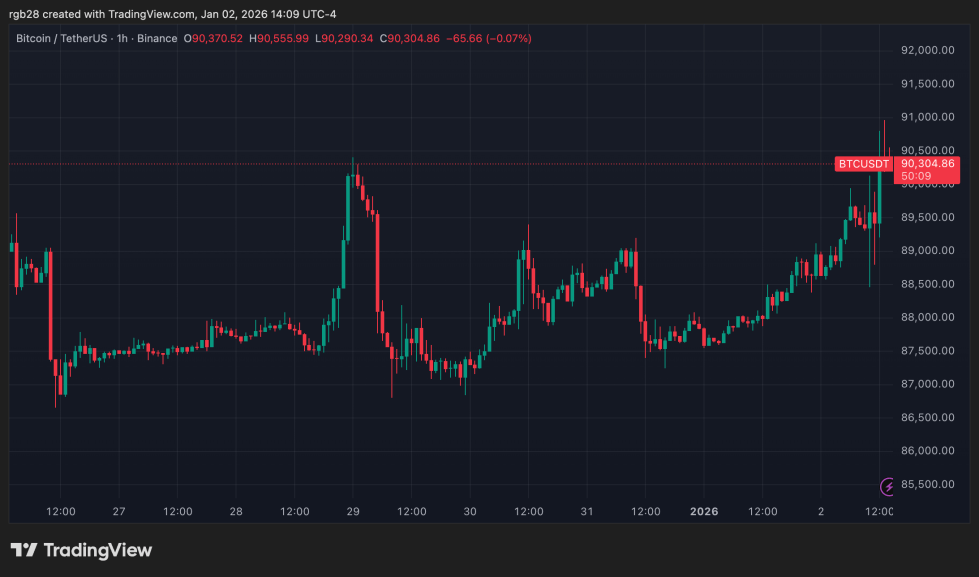
Bitcoin (BTC) trades at $90,304 in the one-week chart. Source: BTCUSDT on TradingView


İlgili Sorular

QWho was released early from prison for the Bitfinex hack and what law was credited for the release?

AIlya Lichtenstein, the mastermind behind the Bitfinex hack, was released early from prison. He credited his release to the First Step Act, a 2018 law signed by President Donald Trump.

QWhat was the value of the stolen Bitcoin at the time of the hack and what is its approximate value now?

AAt the time of the hack, the stolen 119,574 Bitcoin were valued at around $71 million. At current prices, the stolen funds are worth nearly $11 billion.

QWhat role did Heather Morgan play in the Bitfinex heist and what was her sentence?

AHeather Morgan, Ilya Lichtenstein's wife, did not participate in the hack itself but assisted in laundering the stolen funds. She was sentenced to 18 months in prison but was released early after 8 months under the First Step Act.

QWhat specific techniques did the couple use to launder the stolen Bitcoin?

AThe couple used numerous sophisticated laundering techniques, such as creating online accounts with fake identities, depositing Bitcoin into darknet markets and crypto exchanges to withdraw funds, converting BTC to other cryptocurrencies, and using crypto mixers.

QWhat was the primary goal of the First Step Act signed by President Trump?

AThe First Step Act, signed on December 21, 2018, was a bipartisan law aimed at improving criminal justice outcomes, reducing the federal prison population, and establishing a system that offers rehabilitative programming and the opportunity for early release into home confinement for some inmates.

İlgili Okumalar

Not Speculation but a Necessity: The 4 Unique Values of Prediction Markets

Polymarket's recent $4 billion funding round and soaring valuation of $15 billion highlight the explosive growth of prediction markets, with trading volume reaching $25.7 billion in March 2026—a 10.6% monthly increase. This analysis argues that prediction markets serve critical non-speculative functions, positioning them as essential tools rather than mere gambling platforms. Prediction markets offer four unique values: entertainment consumption, insurance-like protection, risk hedging, and truth discovery. Firstly, they stimulate economic activity by engaging users in event-based betting, similar to the broader sports industry. Secondly, they act as a form of decentralized insurance, allowing users to hedge against specific, well-defined risks (e.g., weather events) transparently and without traditional overhead costs. Thirdly, institutions and individuals use these markets to hedge against geopolitical and commodity price risks, as demonstrated during the U.S.-Iran conflict and the launch of 24/7 commodity markets on platforms like Kalshi. Finally, prediction markets counter media bias by aggregating crowd-sourced information, often achieving 30% higher accuracy than surveys due to users' vested interests. Experts like Bitwise’s Jeff Park and SIG’s Jeff Yass emphasize the markets' role in risk transfer and financial innovation. As these platforms evolve, they are poised to become trillion-dollar markets, offering more reliable, decentralized mechanisms for information pricing and risk management.

marsbit18 dk önce

Not Speculation but a Necessity: The 4 Unique Values of Prediction Markets

marsbit18 dk önce

Interview with Jeff Hoffman: How Web3 and AI Are Reshaping the Trillion-Dollar Social Travel Market

Interview with Jeff Hoffman: Web3 and AI Reshaping the Trillion-Dollar Social Travel Market Jeff Hoffman, co-founder of Priceline, discusses how Web3 and AI are transforming the social travel industry. He highlights that the current travel market is fragmented and inefficient, dominated by traditional online travel agencies (OTAs) that act as intermediaries with opaque models. Web3 introduces direct connections, transparency, and faster settlements, shifting value back to travelers. Key trends driving this change include demand for flexible rewards, digital payments, and trust in communities over ads. Hoffman joined Staynex not for its Web3 label, but because it addresses industry inefficiencies by integrating booking, payments, AI-driven itineraries, and rewards into a single ecosystem. This Web2.5 model combines Web2 scale with Web3 incentives. He emphasizes the team’s focus on execution over hype as a key reason for his involvement. Looking ahead, blockchain will enable transparent rewards and seamless cross-border payments, while AI provides personalization. Together, they will turn travel into a continuous relationship rather than a transaction. Hoffman predicts traditional OTAs will persist, but value will shift to platforms that own payment, loyalty, and community networks. Social travel represents a significant, underestimated opportunity in Web3.

marsbit48 dk önce

Interview with Jeff Hoffman: How Web3 and AI Are Reshaping the Trillion-Dollar Social Travel Market

marsbit48 dk önce

İşlemler

Spot
Futures
活动图片