Bitcoin's Pursuit of a Monetary Standard

marsbit2026-02-04 tarihinde yayınlandı2026-02-04 tarihinde güncellendi

Özet

The article "Bitcoin's Pursuit of a Monetary Standard" by Thejaswini M A, based on a reading of Saifedean Ammous' "The Bitcoin Standard," explores the concept of money as a technology for transferring value across time, space, and scale. It emphasizes "salability" and introduces the critical idea of "hardness"—money whose supply is difficult to increase. The author reviews historical examples of money, such as Yap's Rai Stones, African Aggry beads, and wampum, which all lost value when their supply was easily expanded by new technology or trade. Precious metals, particularly gold, emerged as superior due to their scarcity and high stock-to-flow ratio. The critique then shifts to government-issued fiat currency, arguing it represents an unbacked, easily inflated system that erodes savings and leads to economic instability. While acknowledging the book's persuasive framework and its effective use of historical anecdotes, the author remains unconvinced by its one-sided, Austrian economics-influenced narrative that blames fiat for modern societal ills. The key takeaway is a new perspective on evaluating any asset: to critically ask how easily new units can be created and to be wary of anyone who can print money faster than one can earn it.

Written by: Thejaswini M A

Compiled by: Block unicorn

I've always wanted to slowly study "The Bitcoin Standard"—read it from start to finish and see how it affects my thinking. It often appears in the background of many Bitcoin discussions, revered as a foundational work. People would say, "As Saifedean explained..." and then you realize that everything they're referencing is based on a meme or a cover screenshot.
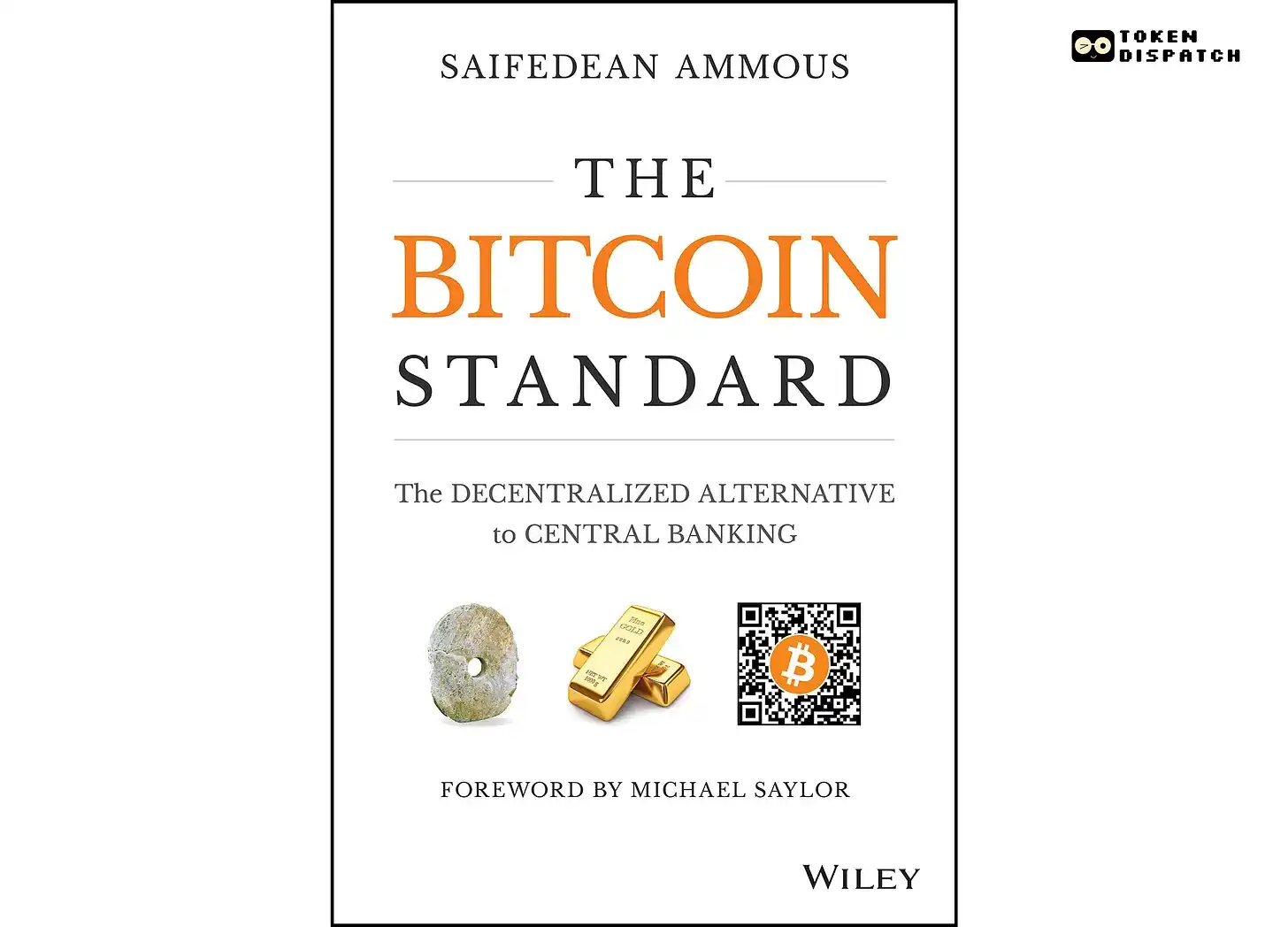
So, I will read this book in its entirety, divided into three parts. This is the first part.

We are still in the early chapters and haven't reached the later sections that fully critique fiat money for ruining everything from architecture to waistlines. For now, Saifedean Ammous is laying the groundwork, trying to convince you that money is a technology, that some forms of money are "harder" than others, and that history is essentially a process of continuous selection, with the harder options ultimately prevailing. If he can make you understand this, Bitcoin will then emerge as the "hardest money to date," and you'll feel it's inevitable.

I'm not entirely convinced yet, but I must admit it's a tricky framework.

The book begins by stripping money of its romanticized veneer, revealing its core essence. It is not a "social contract," nor a "product of the state," but simply a tool for transferring value across time and space, something people don't need to think too much about every day.

Ammous repeatedly emphasizes the concept of "Salability." A good monetary asset should be easily sold anytime, anywhere, without significant loss. To be salable, it must meet three conditions: across space—so you can carry it with you and use it to exchange for what you need; across time—so it doesn't rot or collapse in value; and across scale—so it can be used for any purpose, from a cup of tea to a house, without needing a calculator or a large bag of change.
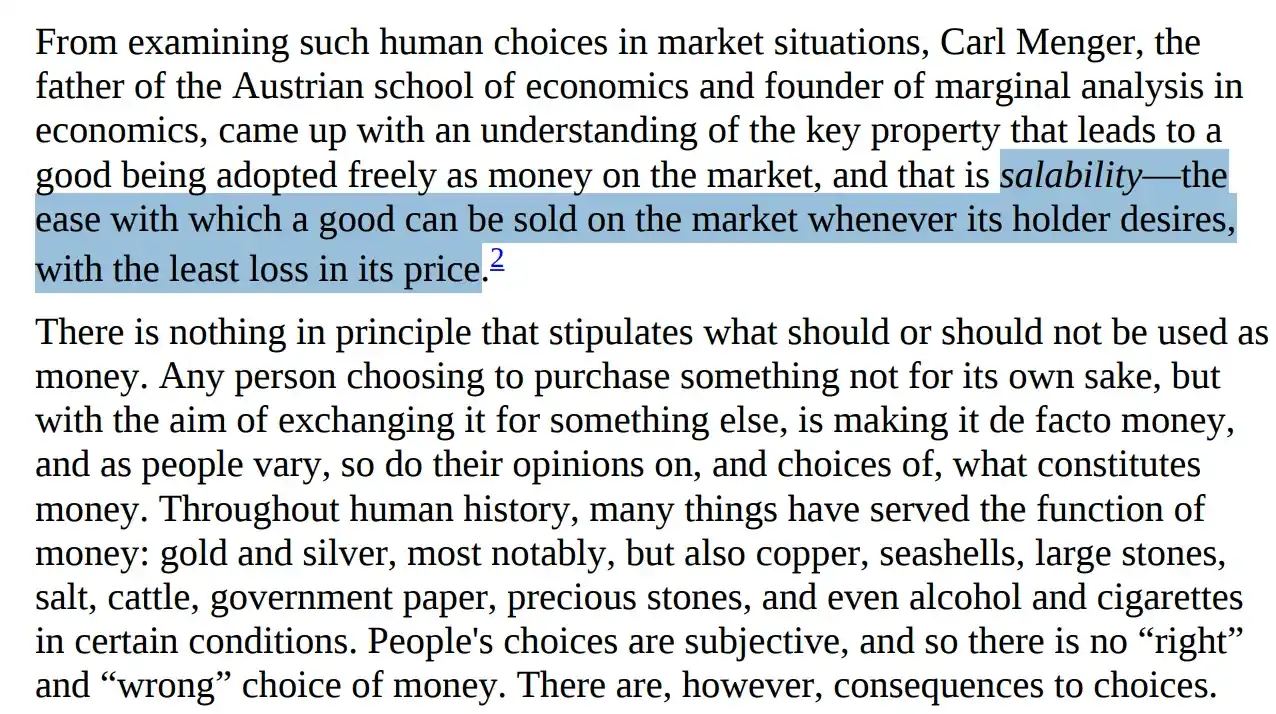
Next, the book's truly decisive word appears: hardness. Hard money is money whose supply is difficult to increase. Soft money is easy to print. This is the essence. The core logic is simple: Why would you store your life's work in something that others can easily create?
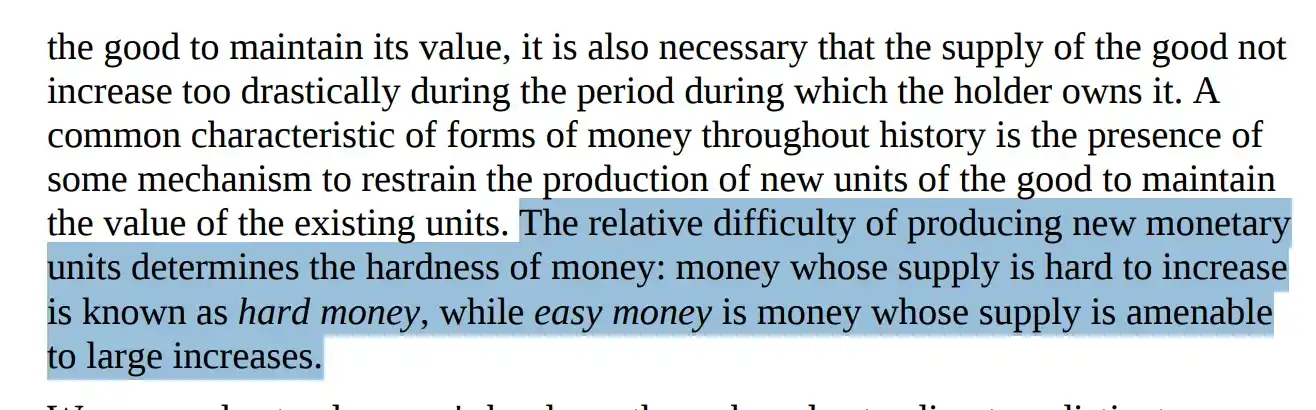
You can feel the influence of the Austrian School of Economics in every sentence, but once you strip away the ideology, the book leaves you with a very useful question: If I invest my savings in X, how easy is it for others to earn more X?

Once you view your life through this lens—whether it's rupees, dollars, stablecoins, Bitcoin, or any other monetary combination—it's hard to ignore.

After setting up this framework, the book takes you on a tour of a small "Museum of Broken Money."

The first exhibit is Yap Island and its Rai Stones. These huge circular limestone discs, some weighing up to four tons, were quarried from other islands and arduously transported to Yap. Ammous writes that this worked surprisingly well for centuries. The stones were bulky and difficult to move or steal. Everyone in the village knew which stone belonged to whom. Payment was made by announcing the change of ownership to the community. The stones were "easily salable anywhere on the island" because they were known everywhere on the island; they also stood the test of time because the cost of obtaining new stones was so high that the existing stock was always far greater than the new supply that could be produced in a given period... The stock-to-flow ratio of Rai stones was very high."

Then, technology arrived.

In 1871, an Irish-American captain named David O'Keefe was shipwrecked on Yap Island. After recovering, he left and later returned with a large ship and explosives, realizing he could quarry Rai stones in large quantities using modern tools. The villagers were divided. The chief deemed his stones "too easy" to produce, banned their quarrying, and insisted that only traditional stones counted. Others disagreed and began quarrying the newly discovered stones. Conflict ensued. The stones' use as money gradually faded. Today, they are mostly used for ceremonial purposes.

It's a neat, perhaps overly neat, parable. But it makes a point: once a monetary commodity loses its hardness (once someone can produce it cheaply and in large quantities), those who once held it end up subsidizing later arrivals.

Beads and shells followed the same pattern. West Africa's Aggry Beads were valuable because they were scarce and time-consuming to make. Later, European merchants began importing them in large quantities from glass factories. Ammous describes how this importation "slowly but surely" turned them from "hard money" into "cheap money," "undermining their salability and causing the purchasing power of these beads in the hands of African owners to decline over time, ultimately impoverishing them as their wealth was transferred to the Europeans, who could now easily obtain the beads."
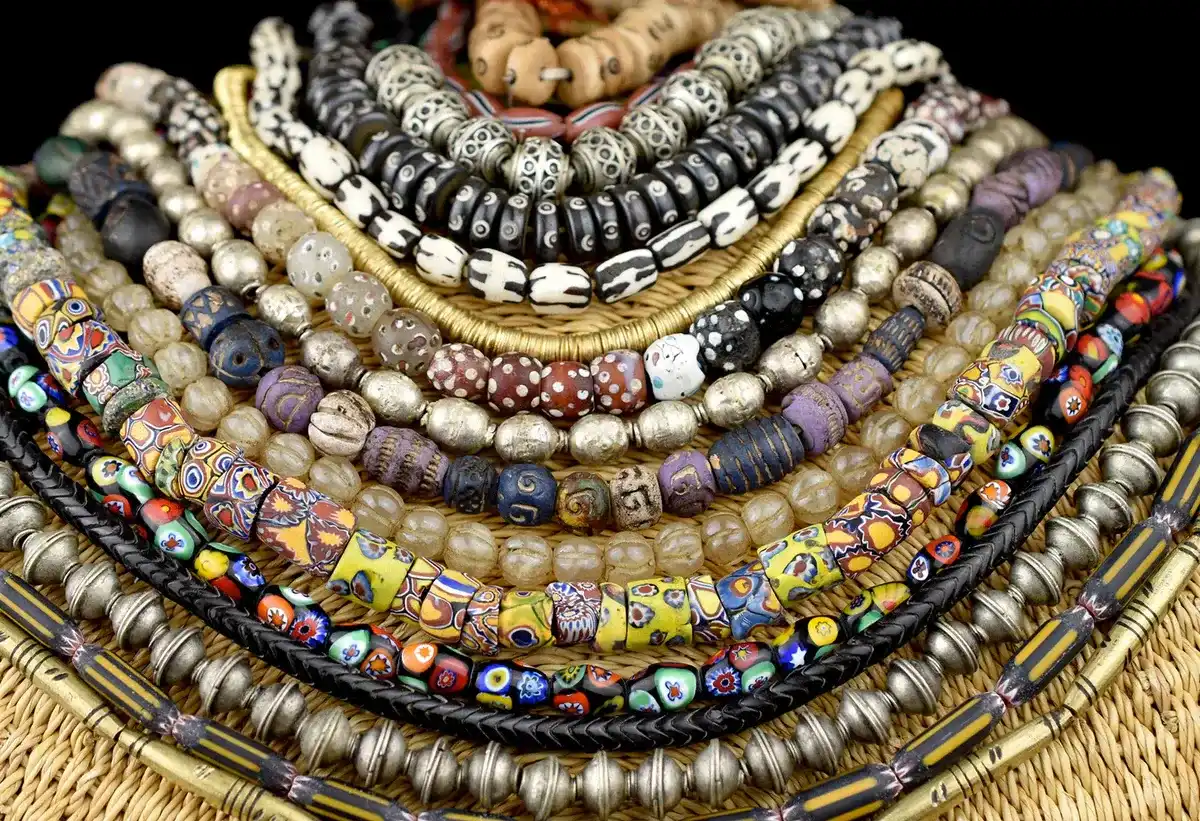
Cowrie shells and wampum experienced similar trajectories. They were initially scarce hard money, difficult to obtain, with high stock-to-flow ratios. Later, with the advent of industrial ships, "their supply expanded dramatically, causing their value to decline and their salability to be lost over time." and by 1661, they had lost their status as legal tender.

You'll find stories of cattle, salt, tally sticks, and cigarettes in prisoner-of-war camps. Each story does the same thing: trains your intuition to feel that if the supply of new units can suddenly be greatly increased at very low cost, then the stock held by savers is essentially making a donation.

You could criticize these historical narratives as being too tidy. There's little mention of violence, politics, or culture in these small stories. Everyone acts like a hyper-rational economic actor with perfect memory. But as a means of making you suspicious of easily printed money, it works.

After you're thoroughly horrified by shells and beads, metals emerge as the mature solution.

Metals solved many salability problems. They didn't spoil like grain. They were more portable than巨石. They could be minted into uniform coins, making pricing and accounting easier. Over time, gold and silver ultimately prevailed because they were the most resistant to inflation. The annual mining output only increased the existing stock by a small fraction, so no single miner could devalue everyone's savings.

Thus began the long era of metallic money, and later, gold-backed paper money. The book doesn't dwell too much on these details. Its purpose is to make you feel that once humans discovered gold, they found a near-perfect money: portable, durable, divisible, and most importantly, expensive to produce.

You'll later see how this sets the stage for Bitcoin's emergence. If you fully accept the notion that "given the physical and metallurgical conditions of the time, gold was the best substance we could make," then "Bitcoin is digital gold with even greater hardness" sounds logical.

What interests me is that in this section, gold is portrayed less as a mystical object and more as a clever workaround to physical limitations. If you imagine ancient societies as constantly trying to answer the question, "How do we preserve the fruits of a harvest or a voyage in a form that can be passed down to future generations?" then gold is a relatively clever, albeit imperfect, yet reasonable answer.

This framework also benefits Bitcoin. It is no longer "magic internet money," but rather "another attempt to solve the same problem with new tools."

The book hasn't reached that point yet, but you can feel the runway being laid.

Then, government money enters the scene as the villain.

So far, monetary collapses have stemmed from external factors. New technology emerged, breaking the rigidity of the monetary system, leaving savers with nothing. Now, the villain comes from within: governments and central banks have the legal authority to print money without any scarce commodity to back it.

In this narrative, fiat money is the product of governments realizing they could completely separate monetary symbols from real assets. The monetary unit was retained, but the constraints were removed. Governments told people their paper money had value because the law said so, because taxes had to be paid with it, not because it was backed by any physical asset.
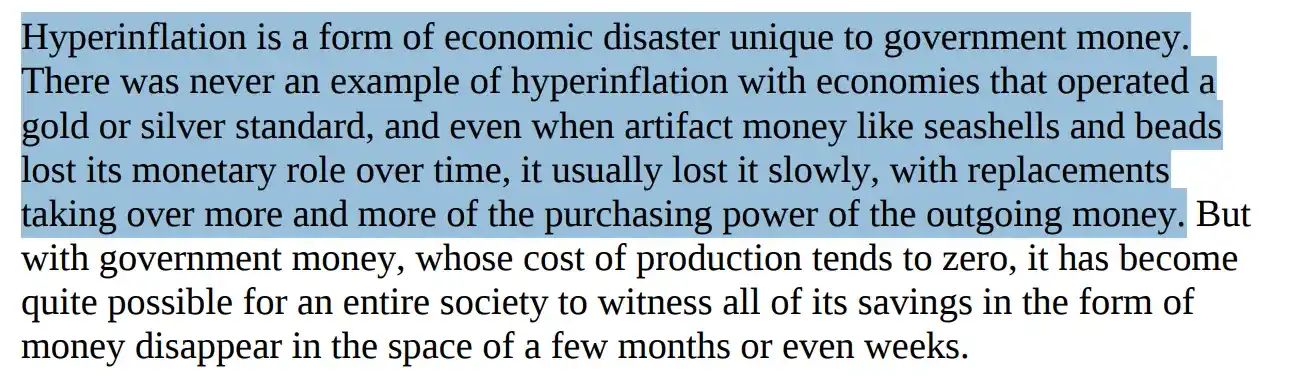
Under a gold or silver standard, money could be devalued or debased, but you didn't get Zimbabwe-style collapses where wages became worthless within months. But under a fiat system, this can happen. And some governments have indeed done it repeatedly.

Ammous spends considerable time explaining the social consequences of this phenomenon. To survive, people are forced to sell capital, and productive activity is eroded. Long-term contracts break down because no one trusts them. Political extremism thrives amidst anger and chaos. Weimar Germany is a prime example. Monetary collapse is just the precursor to worse things.

It's not wrong that most fiat currencies depreciate against physical goods over the long term. This is somewhat by design of the monetary system.

Where my mind starts to push back against the book is not the facts themselves, but its framing. Almost all the ills of modern society are blamed on the fiat monetary system. Central banks are portrayed almost entirely as tools that secretly tax savers to subsidize borrowers. Any benefits of having a flexible lender of last resort are downplayed as "but they will abuse it," which has some truth, but it's not the only question society must answer.

Even if you don't like central banks, the idea that "the entire twentieth century was a mistake from the moment we abandoned the full metal standard" feels a bit extreme.

What impressed me

So, beyond adding more quotable classics to the timeline, what practical impact did Part One actually have on me?

Strangely, it didn't make me more convinced about Bitcoin. It just clarified a question I hadn't asked carefully enough before.

I rarely look at my money the way Ammous does. I consider risk and returns, volatility, how much time I'm willing to put into crypto versus boring things. I don't systematically sit down and scrutinize who can print how much of each crypto I handle and under what rules.

Then I saw a Bloomberg chart showing the S&P 500 not priced in dollars, but in gold. It's so unfair. Priced in gold, the US stock market is back to where it was over a decade ago, in the post-global financial crisis era. All those dollar-denominated all-time highs, all the post-pandemic frenzy, are just noise on a flat line.
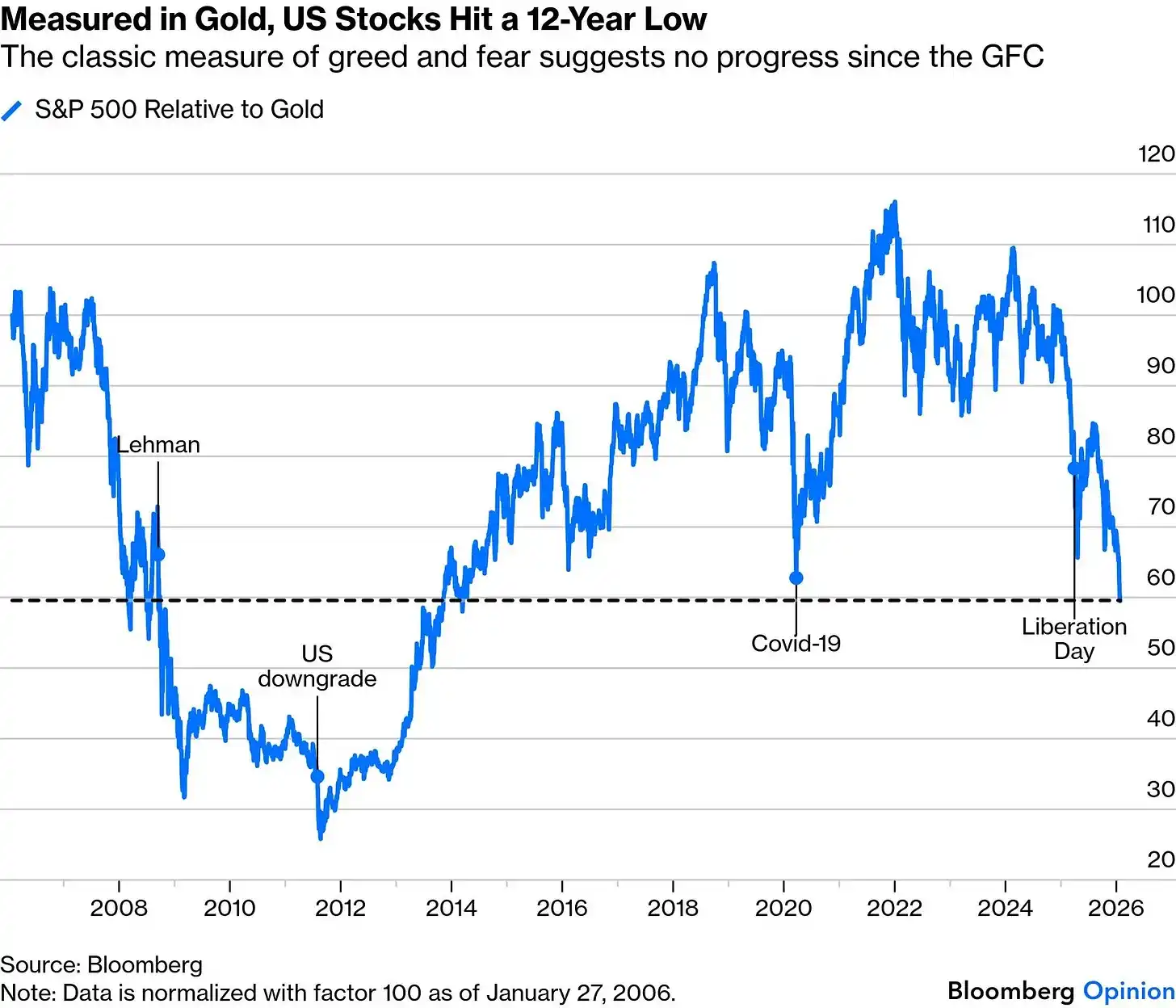
Once you understand this, it's hard to ignore the simple truth Ammous has been hammering home: performance is always "performance relative to what?" If your base unit is slowly depreciating, even if your index hits new highs, your performance in harder units might still be stagnant.

I realize the book leaves out a lot. It barely seriously discusses credit as a social tool, nor does it mention that states don't just destroy money; they also create the legal and military environments that allow markets to flourish. It doesn't delve into the idea that some groups might sacrifice some economic strength for greater resilience to shocks. Everything revolves around one core: are the savers' interests being diluted?

Maybe that's the point. It's a polemic, not a textbook. But I don't want to pretend it's the whole truth.

For now, I'm happy to treat it as a perspective, not a creed. Whenever I see a central bank's balance sheet, a new secondary bond issuance plan, or some "stable yield" product promising 18% returns in dollars, a Saifedean-esque voice echoes in my ear: How hard is this money really? And how many O'Keefes are already in the water with dynamite?

For now, I just want to remember this: money stores our future choices. Choose your monetary unit carefully, and be wary of anyone who can print more than you earn.


İlgili Sorular

QWhat is the core concept of 'hard money' as described in the book 'The Bitcoin Standard'?

AHard money refers to a form of currency that is difficult to increase in supply, making it resistant to inflation and devaluation. It contrasts with 'soft money,' which can be easily created or printed.

QHow did the introduction of modern technology disrupt the Rai Stone monetary system on Yap Island?

AModern technology, such as ships and explosives brought by David O'Keefe, made it easier to mine and transport Rai Stones. This led to an oversupply, devaluing the existing stones and ultimately causing the collapse of their use as money.

QWhat is 'salability' in the context of money, and what are its three dimensions?

ASalability refers to the ease with which a monetary asset can be sold without significant loss. Its three dimensions are: across space (portability), across time (durability and resistance to decay), and across scale (divisibility for transactions of any size).

QWhy does the author argue that fiat money is problematic compared to commodity-based money like gold?

AFiat money is problematic because it can be easily printed by governments and central banks without any backing by scarce commodities. This leads to devaluation, loss of purchasing power, and economic instability, as seen in historical hyperinflation episodes like Weimar Germany.

QWhat historical examples does the book use to illustrate the downfall of previously 'hard' currencies?

AThe book uses examples like Rai Stones on Yap Island, Aggry beads in West Africa, and wampum shells, which were initially scarce and hard to produce but lost their value when technological advances or industrial methods made them easy to mass-produce.

İlgili Okumalar

How Many Tokens Away Is Yang Zhilin from the 'Moon Chasing the Light'?

The article explores the intense competition between two leading Chinese AI companies, DeepSeek and Kimi (Moon Dark Side), and the mounting pressure on Yang Zhilin, the founder of Kimi. While DeepSeek re-emerged after 15 months of silence with its powerful V4 model—boasting 1.6 trillion parameters and low-cost, long-context capabilities—Kimi has been focusing on long-context processing and multi-agent systems with its K2.6 model. Yang faces a threefold challenge: technological rivalry, commercialization pressure, and investor expectations. Despite Kimi’s high valuation (reaching $18 billion), its revenue heavily relies on a single product with low paid conversion rates, while DeepSeek’s strategic silence and open-source influence have strengthened its market position and valuation prospects, now targeting over $20 billion. Both companies reflect broader trends in China’s AI ecosystem: Kimi aims for global influence through open-source contributions and agent-based advancements, while DeepSeek prioritizes foundational innovation and hardware independence, notably shifting to Huawei’s chips. Their competition is seen as vital for China’s AI progress, with the gap between top Chinese and U.S. models narrowing to just 2.7% on the Elo rating scale. Ultimately, the article argues that this rivalry, though anxiety-inducing for leaders like Zhilin, is essential for driving innovation and solidifying China’s role in the global AI landscape.

marsbit12 saat önce

How Many Tokens Away Is Yang Zhilin from the 'Moon Chasing the Light'?

marsbit12 saat önce

İşlemler

Spot
Futures

Popüler Makaleler

BITCOIN Nedir

HarryPotterObamaSonic10Inu (ERC-20)'yu ve Kripto Alanındaki Yerini Anlamak Son yıllarda, kripto para piyasası, hem ticaret yapanların hem de topluluk etkileşimi ve eğlence değeri arayanların ilgisini çeken meme coin'lerin popülaritesinde bir artış gördü. Bu benzersiz token'lar arasında, kripto para dokusuna kültürel referansları harmanlayan ilginç bir proje olan HarryPotterObamaSonic10Inu (ERC-20) bulunmaktadır. Bu makale, HarryPotterObamaSonic10Inu'nun temel yönlerini, mekanizmalarını, topluluk odaklı ethosunu ve daha geniş kripto manzarasıyla etkileşimini incelemektedir. HarryPotterObamaSonic10Inu (ERC-20) Nedir? Adından da anlaşılacağı gibi, HarryPotterObamaSonic10Inu, Ethereum blok zinciri üzerinde inşa edilen bir meme coin'dir ve ERC-20 standardı altında sınıflandırılmaktadır. Geleneksel kripto paraların pratik kullanılabilirlik veya yatırım potansiyeline odaklandığı durumların aksine, bu token eğlence değeri ve topluluğunun gücü üzerine kuruludur. Proje, bağlı kullanıcıların bir araya gelebileceği, fikirlerini paylaşabileceği ve çeşitli kültürel fenomenlerden ilham alan etkinliklere katılabileceği bir ortam yaratmayı hedeflemektedir. HarryPotterObamaSonic10Inu'nun dikkate değer özelliklerinden biri işlemlerde sıfır vergi olmasıdır. Bu çekici unsur, küçük ölçekli yatırımcıları caydırabilecek ek ücretlerden yoksun olarak ticareti ve topluluk katılımını teşvik etmeyi amaçlamaktadır. Coin'in toplam arzı bir milyar token olarak belirlenmiştir; bu, topluluk içinde önemli bir dolaşım sağlama niyetini göstermektedir. HarryPotterObamaSonic10Inu (ERC-20) Yaratıcısı HarryPotterObamaSonic10Inu'nun kökenleri bir miktar gizemlidir; yaratıcısı hakkında spesifik bilgilerin ne olduğu bilinmemektedir. Bu token'ın geliştirilmesi, belirli bir ekip veya açık bir plan eksikliği ile gerçekleşmiştir; bu durum, meme coin sektöründe oldukça yaygındır. Proje, topluluğunun heyecanı ve katılımına dayalı olarak organik bir şekilde ortaya çıkmıştır. HarryPotterObamaSonic10Inu (ERC-20) Yatırımcıları Dış yatırımlar ve destekler söz konusu olduğunda, HarryPotterObamaSonic10Inu da belirsiz kalmaktadır. Token, bilinen herhangi bir yatırım fonunu veya önemli bir kurumsal desteği listelememektedir. Bunun yerine, projenin can damarı, kolektif eylem ve kripto alanındaki katılım yoluyla büyüme ve sürdürülebilirlik sağlayan temel topluluğudur. HarryPotterObamaSonic10Inu (ERC-20) Nasıl Çalışır? Bir meme coin olarak, HarryPotterObamaSonic10Inu, genellikle varlık değerini yöneten geleneksel çerçevelerin dışında çalışmaktadır. Projenin nasıl çalıştığını tanımlayan birkaç özelliği vardır: Sıfır Vergi İşlemleri: İşlemlerde vergi ücreti olmadan, kullanıcılar gizli maliyet endişesi olmadan token'ı serbestçe alıp satabilirler. Topluluk Etkileşimi: Proje, topluluk etkileşimi üzerine kuruludur ve sosyal medya platformlarını kullanarak heyecan yaratarak katılımı kolaylaştırır. Tartışmalar, içerik paylaşımı ve katılım, projenin erişimini genişletmeye ve destekleyiciler arasında sadakat oluşturmaya yardımcı olan kritik unsurlardır. Pratik Kullanılabilirlik Yok: HarryPotterObamaSonic10Inu'nun mali ekosistem içinde somut bir kullanılabilirlik sunmadığı belirtilmelidir. Daha ziyade, eğlence ve topluluk etkinlikleri için bir token olarak sınıflandırılmaktadır. Kültürel Referans: Token, popüler kültürden unsurları zekice harmanlayarak ilgi çekmektedir ve hem meme meraklıları hem de kripto takipçileriyle bağlantı kurmaktadır. HarryPotterObamaSonic10Inu, meme coin'lerin, daha geleneksel kripto para projelerinden nasıl farklı çalıştığını örneklendirmektedir; bu projeler, utilitarist varlıklar yerine yenilikçi sosyal yapıların bir parçası olarak piyasaya girmektedir. HarryPotterObamaSonic10Inu (ERC-20) Zaman Çizelgesi HarryPotterObamaSonic10Inu'nun tarihi, birkaç dikkate değer kilometre taşı ile işaretlenmiştir: Oluşum: Token, birçok kripto meraklısının hayal gücünü yakalayan bir viral meme'den ortaya çıkmıştır. Spesifik yaratım tarihleri mevcut değildir ve bu onun organik yükselişini vurgulamaktadır. Borsa Listelemeleri: HarryPotterObamaSonic10Inu, topluluğun daha kolay erişim ve ticaret yapabilmesini sağlamak için çeşitli borsalarda yer bulmuştur. Topluluk Katılım İnisiyatifleri: Yarışmalar, sosyal medya kampanyaları ve hayranlar ile destekçilerden içerik üretimini içeren topluluk etkileşimini artırmayı amaçlayan devam eden etkinlikler. Gelecek Genişleme Planları: Projenin yol haritası, kültürel temalarına ilişkin bir NFT koleksiyonu, ticari ürünler ve bir e-ticaret sitesi başlatılmasını içermektedir; bu da topluluğun daha fazla katılımını sağlamayı ve ekosistemine daha fazla boyut kazandırmayı hedeflemektedir. HarryPotterObamaSonic10Inu (ERC-20) Hakkında Kilit Noktalar Topluluk Odaklı Doğası: Proje, kullanıcı katılımını geliştirme önceliği taşır ve böylece kullanıcıların sürecin en önünde yer almasını sağlar. Meme Coin Sınıflandırması: Eğlenceye dayalı kripto paranın doruk noktasıdır ve geleneksel yatırım araçlarından ayrılmaktadır. Bitcoin ile Doğrudan İlişki Yok: Ticker ismindeki benzeliğe rağmen, HarryPotterObamaSonic10Inu ayırt edicidir ve Bitcoin veya diğer yerleşik kripto paralarla herhangi bir ilişkisi yoktur. İşbirliğine Odaklanma: HarryPotterObamaSonic10Inu, sahipleri arasında işbirliği ve hikaye paylaşımı için bir alan oluşturmak üzere tasarlanmıştır ve bu da yaratıcılık ve topluluk bağlarını sağlamaktadır. Gelecek Beklentileri: Başlangıçta belirlendiği temalardan NFTs ve ticari ürünlere genişleme arzusu, projenin dijital kültürde daha ana akıma girebilmesi için bir yol haritası çizmektedir. Meme coin'ler, kripto para topluluğunun hayal gücünü çalmaya devam ederken, HarryPotterObamaSonic10Inu (ERC-20), kültürel bağları ve topluluk merkezli yaklaşımıyla öne çıkmaktadır. Geleneksel bir hizmet odaklı token modeliyle uyumlu olmasa da, özünde destekçileri arasında sağlanan neşe ve dostluğu vurgulayarak, giderek dijitalleşen bir çağda kripto paraların evrilen doğasını göstermektedir. Proje gelişmeye devam ettikçe, topluluk dinamiklerinin blockchain teknolojisi dünyasındaki seyrini nasıl etkilediğini izlemek önemli olacaktır.

1.4k Toplam GörüntülenmeYayınlanma 2024.04.01Güncellenme 2024.12.03

BITCOIN Nedir

BTC Nasıl Satın Alınır

HTX.com’a hoş geldiniz! Bitcoin (BTC) satın alma işlemlerini basit ve kullanışlı bir hâle getirdik. Adım adım açıkladığımız rehberimizi takip ederek kripto yolculuğunuza başlayın. 1. Adım: HTX Hesabınızı OluşturunHTX'te ücretsiz bir hesap açmak için e-posta adresinizi veya telefon numaranızı kullanın. Sorunsuzca kaydolun ve tüm özelliklerin kilidini açın. Hesabımı Aç2. Adım: Kripto Satın Al Bölümüne Gidin ve Ödeme Yönteminizi SeçinKredi/Banka Kartı: Visa veya Mastercard'ınızı kullanarak anında Bitcoin (BTC) satın alın.Bakiye: Sorunsuz bir şekilde işlem yapmak için HTX hesap bakiyenizdeki fonları kullanın.Üçüncü Taraflar: Kullanımı kolaylaştırmak için Google Pay ve Apple Pay gibi popüler ödeme yöntemlerini ekledik.P2P: HTX'teki diğer kullanıcılarla doğrudan işlem yapın.Borsa Dışı (OTC): Yatırımcılar için kişiye özel hizmetler ve rekabetçi döviz kurları sunuyoruz.3. Adım: Bitcoin (BTC) Varlıklarınızı SaklayınBitcoin (BTC) satın aldıktan sonra HTX hesabınızda saklayın. Alternatif olarak, blok zinciri transferi yoluyla başka bir yere gönderebilir veya diğer kripto para birimlerini takas etmek için kullanabilirsiniz.4. Adım: Bitcoin (BTC) Varlıklarınızla İşlem YapınHTX'in spot piyasasında Bitcoin (BTC) ile kolayca işlemler yapın.Hesabınıza erişin, işlem çiftinizi seçin, işlemlerinizi gerçekleştirin ve gerçek zamanlı olarak izleyin. Hem yeni başlayanlar hem de deneyimli yatırımcılar için kullanıcı dostu bir deneyim sunuyoruz.

7.3k Toplam GörüntülenmeYayınlanma 2024.12.12Güncellenme 2025.03.21

BTC Nasıl Satın Alınır

$BITCOIN Nedir

DİJİTAL ALTIN ($BITCOIN): Kapsamlı Bir Analiz DİJİTAL ALTIN ($BITCOIN) Tanıtımı DİJİTAL ALTIN ($BITCOIN), geleneksel değerli metallerin özelliklerini merkeziyetsiz teknolojilerin yeniliği ile birleştirmeyi amaçlayan Solana ağı üzerinde çalışan blockchain tabanlı bir projedir. Bitcoin ile aynı isme sahip olmasına rağmen, genellikle bir değer saklama aracı olarak algılandığı için “dijital altın” olarak anılmaktadır; DİJİTAL ALTIN, Web3 ortamında benzersiz bir ekosistem yaratmak için tasarlanmış ayrı bir tokendir. Hedefi, uygulanabilir bir alternatif dijital varlık olarak kendini konumlandırmaktır, ancak uygulamaları ve işlevleri ile ilgili ayrıntılar hala gelişmektedir. DİJİTAL ALTIN ($BITCOIN) Nedir? DİJİTAL ALTIN ($BITCOIN), Solana blockchain'inde kullanılmak üzere açıkça tasarlanmış bir kripto para tokenidir. Bitcoin'in yaygın olarak tanınan bir değer saklama rolü sağlamasının aksine, bu token daha geniş uygulamalara ve özelliklere odaklanıyor gibi görünmektedir. Dikkate değer yönler şunlardır: Blockchain Altyapısı: Token, yüksek hızlı ve düşük maliyetli işlemleri yönetme kapasitesi ile bilinen Solana blockchain'inde inşa edilmiştir. Arz Dinamikleri: DİJİTAL ALTIN'ın maksimum arzı 100 katrilyon token (100P $BITCOIN) ile sınırlıdır, ancak dolaşımdaki arzı ile ilgili ayrıntılar şu anda açıklanmamıştır. Kullanım Alanı: Kesin işlevler açıkça belirtilmemiş olsa da, token'ın merkeziyetsiz uygulamalar (dApps) veya varlık tokenizasyon stratejileri ile ilgili çeşitli uygulamalar için kullanılabileceğine dair işaretler bulunmaktadır. DİJİTAL ALTIN ($BITCOIN) Yaratıcısı Kimdir? Şu anda, DİJİTAL ALTIN ($BITCOIN) arkasındaki yaratıcıların ve geliştirme ekibinin kimliği bilinmemektedir. Bu durum, merkeziyetsiz finans ve meme coin fenomenleriyle uyumlu olan birçok yenilikçi proje arasında yaygındır. Böyle bir anonimlik, topluluk odaklı bir kültürü teşvik edebilirken, yönetişim ve hesap verebilirlik konusundaki endişeleri artırmaktadır. DİJİTAL ALTIN ($BITCOIN) Yatırımcıları Kimlerdir? Mevcut bilgiler, DİJİTAL ALTIN ($BITCOIN) için bilinen herhangi bir kurumsal destekçi veya önde gelen risk sermayesi yatırımı olmadığını göstermektedir. Proje, geleneksel finansman yolları yerine topluluk desteği ve benimsemeye odaklanan bir eşler arası modelde çalışıyor gibi görünmektedir. Faaliyetleri ve likiditesi esas olarak PumpSwap gibi merkeziyetsiz borsalarda (DEX'ler) yer almakta olup, bu da onun taban hareketine vurgu yapmaktadır. DİJİTAL ALTIN ($BITCOIN) Nasıl Çalışır DİJİTAL ALTIN ($BITCOIN) 'ın operasyonel mekanikleri, blockchain tasarımı ve ağ özellikleri temelinde açıklanabilir: Konsensüs Mekanizması: Solana'nın benzersiz tarih kanıtı (PoH) ile bir hisse kanıtı (PoS) modelini birleştirerek, proje ağın yüksek performansına katkıda bulunan verimli işlem doğrulamasını sağlar. Tokenomik: Belirli deflasyonist mekanizmalar kapsamlı bir şekilde detaylandırılmamış olsa da, geniş maksimum token arzı, henüz tanımlanmamış mikro işlemler veya niş kullanım durumlarına hitap edebileceğini ima etmektedir. Etkileşim: Solana'nın daha geniş ekosistemi ile entegrasyon potansiyeli bulunmaktadır; bu, çeşitli merkeziyetsiz finans (DeFi) platformlarını içermektedir. Ancak, belirli entegrasyonlarla ilgili ayrıntılar belirtilmemiştir. Önemli Olayların Zaman Çizelgesi DİJİTAL ALTIN ($BITCOIN) ile ilgili önemli kilometre taşlarını vurgulayan bir zaman çizelgesi: 2023: Token'ın Solana blockchain'inde ilk dağıtımı, sözleşme adresi ile işaretlenmiştir. 2024: DİJİTAL ALTIN, PumpSwap gibi merkeziyetsiz borsalarda işlem görmeye başladıkça görünürlük kazanır ve kullanıcıların bunu SOL karşısında ticaret yapmasına olanak tanır. 2025: Proje, topluluk odaklı etkileşimlere yönelik potansiyel ilgi ve ara sıra ticaret faaliyetleri görür, ancak şu ana kadar dikkate değer ortaklıklar veya teknik ilerlemeler belgelenmemiştir. Kritik Analiz Güçlü Yönler Ölçeklenebilirlik: Temel Solana altyapısı, yüksek işlem hacimlerini destekleyerek $BITCOIN'in çeşitli işlem senaryolarındaki faydasını artırabilir. Erişilebilirlik: Token başına potansiyel düşük ticaret fiyatı, perakende yatırımcıları çekebilir ve parçalı mülkiyet fırsatları sayesinde daha geniş katılımı kolaylaştırabilir. Riskler Şeffaflık Eksikliği: Kamuya açık olarak bilinen destekçilerin, geliştiricilerin veya bir denetim sürecinin olmaması, projenin sürdürülebilirliği ve güvenilirliği konusunda şüpheler doğurabilir. Piyasa Volatilitesi: Ticaret faaliyeti büyük ölçüde spekülatif davranışa dayanmakta olup, bu da yatırımcılar için önemli fiyat dalgalanmalarına ve belirsizliklere yol açabilir. Sonuç DİJİTAL ALTIN ($BITCOIN), hızla gelişen Solana ekosisteminde ilginç ama belirsiz bir proje olarak ortaya çıkmaktadır. “Dijital altın” anlatısını kullanmaya çalışırken, Bitcoin'in değer saklama rolünden ayrılması, amaçlanan faydasının ve yönetişim yapısının daha net bir şekilde tanımlanması gerekliliğini vurgulamaktadır. Gelecekteki kabul ve benimseme, mevcut belirsizliklerin giderilmesine ve operasyonel ile ekonomik stratejilerinin daha açık bir şekilde tanımlanmasına bağlı olacaktır. Not: Bu rapor, Ekim 2023 itibarıyla mevcut olan sentezlenmiş bilgileri kapsamaktadır ve araştırma döneminin ötesinde gelişmeler yaşanmış olabilir.

92 Toplam GörüntülenmeYayınlanma 2025.05.13Güncellenme 2025.05.13

$BITCOIN Nedir

Tartışmalar

HTX Topluluğuna hoş geldiniz. Burada, en son platform gelişmeleri hakkında bilgi sahibi olabilir ve profesyonel piyasa görüşlerine erişebilirsiniz. Kullanıcıların BTC (BTC) fiyatı hakkındaki görüşleri aşağıda sunulmaktadır.

活动图片













