Bitcoiners push for quantum-resistant BIP-360 upgrade as debate heats up

cointelegraph2025-12-18 tarihinde yayınlandı2025-12-18 tarihinde güncellendi

Özet

A group of Bitcoin advocates and fund managers is urging the network to accelerate the adoption of quantum-resistant cryptography, citing BIP-360 as a potential solution. Proponents like Charles Edwards of Capriole warn that a significant portion of Bitcoin could be vulnerable to quantum attacks within years and argue for a migration deadline by 2028. However, critics including Adam Back of Blockstream dismiss these concerns as premature, stating quantum threats are “decades away” and emphasizing that Bitcoin doesn’t rely on encryption vulnerable to near-term quantum breaks. Debate continues as Taproot adoption declines, possibly reflecting user anxiety, while alternative quantum-resistant signature schemes like hash-based proposals from Blockstream Research gain attention.

A small but growing group of Bitcoin advocates and crypto fund managers is urging the network to accelerate work on quantum-resistant signatures, arguing that the perception of a future “quantum threat” could become a market risk long before it becomes a practical one.

Some supporters are pointing to a draft Bitcoin Improvement Proposal known as BIP-360, which would introduce a post-quantum signature option for Bitcoin addresses that could be vulnerable to future advances in quantum computing.

The implementation must be finalized and deployed in 2026, said Charles Edwards, the founder of quantitative Bitcoin (BTC) and digital asset fund Capriole.

However, the implementation of the new standard would require wider consensus among hardware wallet providers, node operators and cryptocurrency exchanges, added Capriole in a Thursday X post. Around “20-30% of Bitcoin will be taken by a quantum hacker in the next few years,” Edwards said. “I believe we should burn all coins that do not migrate to BIP-360 by 2028.”
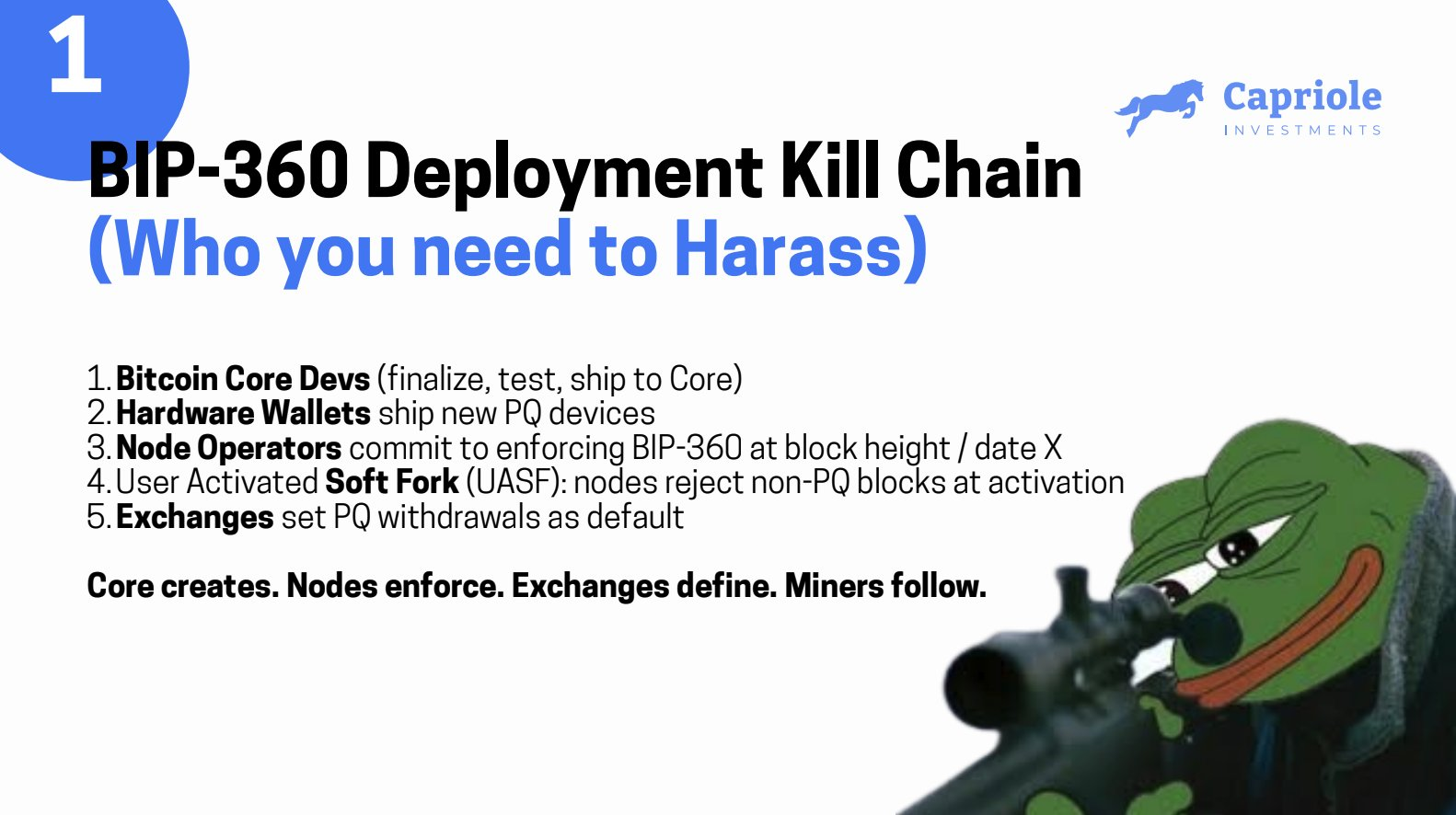
Source: Charles Edwards

Related: Bitcoin treasuries stall in Q4, but largest holders keep stacking sats

However, other industry watchers see quantum computing as a short-term risk for Bitcoin’s price.

“Pro-tip for quantum FUD promoters. Bitcoin does not use encryption. Get your basics right, or it’s a tell,” wrote Adam Back, co-founder and CEO of Blockstream, and the inventor of Hashcash, in a Thursday X post, adding that the quantum computing threat is still “decades away.”

Samson Mow, the CEO of Bitcoin technology company Jan3, also mocked the idea of early quantum computing threatening the Bitcoin network.

“Quantum computing can’t even factor 21, yet people are panic selling because they think it will kill Bitcoin,” wrote Mow in a Wednesday X post.

Related: Bitcoin investor loses retirement fund in AI-fueled romance scam

Taproot questions and competing proposals

Bitcoin’s latest Taproot format, which is perceived as quantum vulnerable, is declining in usage, from 42% of transactions in 2024 to just 20%, signaling that users may be worried about Bitcoin's quantum threat.
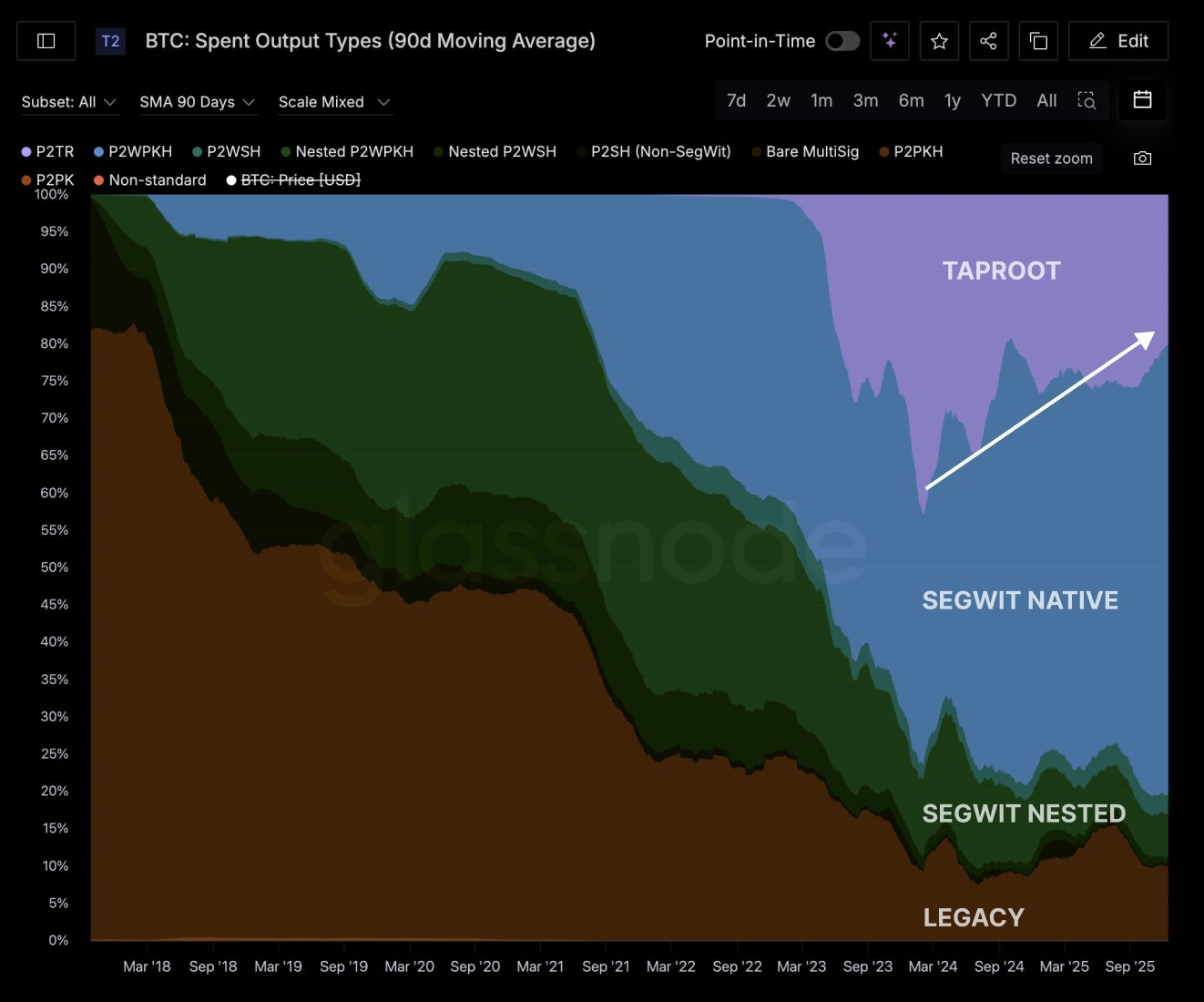
Source: Willy Woo

“I’ve NEVER seen the latest format losing adoption before. Taproot is Quantum Vulnerable, while older SegWit and Legacy are not,” wrote Bitcoin analyst Willy Woo, in a Wednesday X post.

Bitcoin’s Taproot update is the most important upgrade the cryptocurrency has experienced since 2017, when Segregated Witness (SegWit) was activated. Taproot aimed to upgrade the privacy and efficiency of the Bitcoin network.

Meanwhile, Back, one of the leading cryptographers, proposed a new hash-based signature scheme as a promising post-quantum alternative for Bitcoin, where security would rely solely on hash function assumptions similar to the ones currently used in the Bitcoin network’s design.
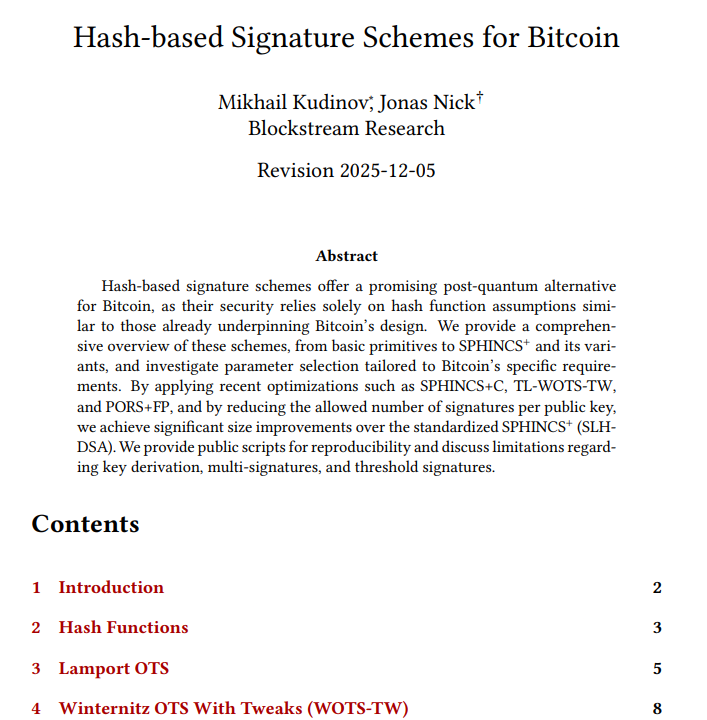
Hash-based signature schemes for Bitcoin, research paper. Source: Blockstream Research

Hash-based signature schemes like ECDSA and Schnorr signatures “offer a promising path for securing Bitcoin in a post-quantum world,” according to the paper released by Back’s Blockstream Research on Dec. 5.

The Elliptic Curve Digital Signature Algorithm (ECDSA) uses elliptic-curve cryptography to verify the authenticity and integrity of a message. Schnorr signatures are another signature scheme praised for enhancing privacy and reducing data size, due to their ability to combine multiple signatures into one.

Magazine: Bitcoin vs. the quantum computer threat — Timeline and solutions (2025–2035)

İlgili Sorular

QWhat is the main purpose of the proposed BIP-360 upgrade for Bitcoin?

AThe main purpose of the proposed BIP-360 upgrade is to introduce a post-quantum signature option for Bitcoin addresses, making them resistant to potential future attacks from advanced quantum computers.

QAccording to Charles Edwards, by when must the quantum-resistant implementation be deployed, and what is his proposal for non-migrated coins?

ACharles Edwards stated that the implementation must be finalized and deployed by 2026, and he proposed that all coins not migrated to BIP-360 by 2028 should be burned.

QWhy is Bitcoin's Taproot format considered a decline in usage significant, as noted by Willy Woo?

AThe decline in Taproot usage, from 42% of transactions in 2024 to just 20%, is significant because it is the first time a newer Bitcoin format has lost adoption. This signals that users may be concerned about Taproot's vulnerability to quantum threats, unlike older SegWit and Legacy formats.

QWhat alternative post-quantum solution did Adam Back and Blockstream Research propose for Bitcoin?

AAdam Back and Blockstream Research proposed a new hash-based signature scheme as a post-quantum alternative. This scheme's security relies solely on hash function assumptions, similar to those already used in Bitcoin's design, with ECDSA and Schnorr signatures being highlighted as promising paths.

QWhat are the differing views on the immediacy of the quantum computing threat to Bitcoin, as presented in the article?

AThe article presents differing views: Charles Edwards and others see it as a near-term market risk, urging immediate action. In contrast, Adam Back and Samson Mow consider the quantum threat to be decades away or currently insignificant, with Mow mocking the idea that quantum computing, which 'can't even factor 21,' is a reason for panic selling.

İlgili Okumalar

Not Speculation but a Necessity: The 4 Unique Values of Prediction Markets

Polymarket's recent $4 billion funding round and soaring valuation of $15 billion highlight the explosive growth of prediction markets, with trading volume reaching $25.7 billion in March 2026—a 10.6% monthly increase. This analysis argues that prediction markets serve critical non-speculative functions, positioning them as essential tools rather than mere gambling platforms. Prediction markets offer four unique values: entertainment consumption, insurance-like protection, risk hedging, and truth discovery. Firstly, they stimulate economic activity by engaging users in event-based betting, similar to the broader sports industry. Secondly, they act as a form of decentralized insurance, allowing users to hedge against specific, well-defined risks (e.g., weather events) transparently and without traditional overhead costs. Thirdly, institutions and individuals use these markets to hedge against geopolitical and commodity price risks, as demonstrated during the U.S.-Iran conflict and the launch of 24/7 commodity markets on platforms like Kalshi. Finally, prediction markets counter media bias by aggregating crowd-sourced information, often achieving 30% higher accuracy than surveys due to users' vested interests. Experts like Bitwise’s Jeff Park and SIG’s Jeff Yass emphasize the markets' role in risk transfer and financial innovation. As these platforms evolve, they are poised to become trillion-dollar markets, offering more reliable, decentralized mechanisms for information pricing and risk management.

marsbit2 saat önce

Not Speculation but a Necessity: The 4 Unique Values of Prediction Markets

marsbit2 saat önce

İşlemler

Spot
Futures

Popüler Makaleler

PUSH Nasıl Satın Alınır

HTX.com’a hoş geldiniz! Push Protocol (PUSH) satın alma işlemlerini basit ve kullanışlı bir hâle getirdik. Adım adım açıkladığımız rehberimizi takip ederek kripto yolculuğunuza başlayın. 1. Adım: HTX Hesabınızı OluşturunHTX'te ücretsiz bir hesap açmak için e-posta adresinizi veya telefon numaranızı kullanın. Sorunsuzca kaydolun ve tüm özelliklerin kilidini açın. Hesabımı Aç2. Adım: Kripto Satın Al Bölümüne Gidin ve Ödeme Yönteminizi SeçinKredi/Banka Kartı: Visa veya Mastercard'ınızı kullanarak anında Push Protocol (PUSH) satın alın.Bakiye: Sorunsuz bir şekilde işlem yapmak için HTX hesap bakiyenizdeki fonları kullanın.Üçüncü Taraflar: Kullanımı kolaylaştırmak için Google Pay ve Apple Pay gibi popüler ödeme yöntemlerini ekledik.P2P: HTX'teki diğer kullanıcılarla doğrudan işlem yapın.Borsa Dışı (OTC): Yatırımcılar için kişiye özel hizmetler ve rekabetçi döviz kurları sunuyoruz.3. Adım: Push Protocol (PUSH) Varlıklarınızı SaklayınPush Protocol (PUSH) satın aldıktan sonra HTX hesabınızda saklayın. Alternatif olarak, blok zinciri transferi yoluyla başka bir yere gönderebilir veya diğer kripto para birimlerini takas etmek için kullanabilirsiniz.4. Adım: Push Protocol (PUSH) Varlıklarınızla İşlem YapınHTX'in spot piyasasında Push Protocol (PUSH) ile kolayca işlemler yapın.Hesabınıza erişin, işlem çiftinizi seçin, işlemlerinizi gerçekleştirin ve gerçek zamanlı olarak izleyin. Hem yeni başlayanlar hem de deneyimli yatırımcılar için kullanıcı dostu bir deneyim sunuyoruz.

498 Toplam GörüntülenmeYayınlanma 2024.12.13Güncellenme 2025.03.21

PUSH Nasıl Satın Alınır

Tartışmalar

HTX Topluluğuna hoş geldiniz. Burada, en son platform gelişmeleri hakkında bilgi sahibi olabilir ve profesyonel piyasa görüşlerine erişebilirsiniz. Kullanıcıların PUSH (PUSH) fiyatı hakkındaki görüşleri aşağıda sunulmaktadır.

活动图片