This article is jointly produced by PANews and BIT U.S. Stocks. BIT U.S. Stocks provides 10,000+ mainboard U.S. stocks and ETFs, supports stablecoin deposits/withdrawals and traditional USD wire transfers, and allows for full shareholder rights including dividends and voting.
Bitcoin On-Chain Buying Pressure Warms Up, Downside Risks Remain
Bitcoin returned above $65,000 yesterday, touching this level for the first time since August 10. Meanwhile, U.S. stock risk assets are still pressured by the surge in long-term Treasury yields. The 30-year Treasury yield once rose to a multi-year high of 5.34%, indicating a temporary divergence between BTC and traditional risk assets.
Most traders focus key support around the $62,000 to $63,000 range. If this level breaks, a drop to $60,000 to $61,000 to sweep liquidity is possible. Resistance above is concentrated around the 50-month Exponential Moving Average near approximately $65,400 and the potential head-and-shoulders bottom neckline area. Analyst Aksel Kibar pointed out that if the head-and-shoulders bottom structure holds, the rebound target could be as high as $76,000; however, if it fails, a drop to $53,000 is possible.
On-chain data research firm CryptoQuant noted that Bitcoin's 30-day apparent spot demand has significantly recovered from negative 206,000 BTC on July 23 to the current negative 5,000 BTC, approaching the critical point of turning positive for the first time since February 26. Historically, after spot demand turns from negative to positive, the median BTC gain over the next 60 days is 18.1%, with a win rate of 78%.
VanEck also believes Bitcoin may be nearing the end of its correction. Its model shows that 8 out of 12 "capitulation indicators" have been triggered, and BTC has already entered its 11th month of adjustment; the average time from peak to trough in the past three cycles (excluding 2011) was about 12.7 months, suggesting September to November could be an important window for the accumulation phase this round. However, VanEck also emphasized that capitulation signals do not have a stable excess return advantage over the next 90 and 180 days. The real thing to wait for is the reconfirmation of capital demand.
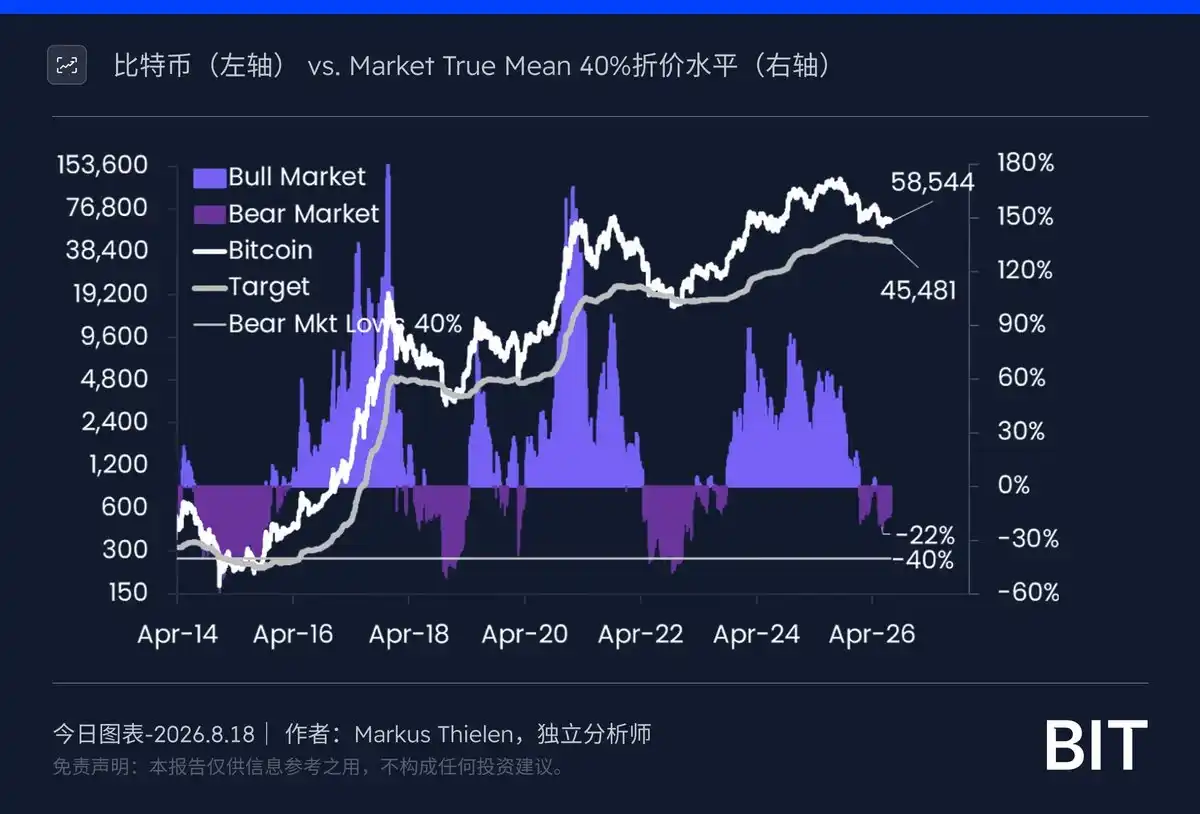
The options market still shows strong bearish sentiment, with put option premiums significantly higher than calls, but open interest and funding rates indicate a gradual unwinding of leverage. BIT's view is that, based on historical data, Bitcoin has traded about 40% below its long-term market average during bear markets. If this pattern repeats, the price could drop to around $45,500. Currently, the potential downside risk from the current price is about 20%, corresponding to an upside potential of about 60%. The risk-reward ratio is gradually improving, but macro risks could still drive another downturn. The real test is whether spot demand can sustainably turn positive and hold above the cost basis.
The key focus for BTC moving forward is two things: whether the Fed meeting minutes are hawkish, and whether the U.S. 20-year Treasury auction goes smoothly. If the bond market remains concerning, BTC may test around $63,000; if interest rate pressure eases, BTC has a chance to challenge the $66,000 to $70,000 range again.
Key Points for Today:
-
Ethereum will conduct the Glamsterdam upgrade fork on the Platåberget testnet on August 20.
-
KAITO (KAITO) unlocks approximately 32.6 million tokens, valued around $11.5 million.
-
LayerZero (ZRO) unlocks approximately 25.72 million tokens, valued around $19.62 million.
-
Upbit 24-hour trading volume ranking: BTC, XRP, ETH, LA, DOS.
-
Bitcoin Spot ETF: +$189 million.
-
Ethereum Spot ETF: +$71.468 million.
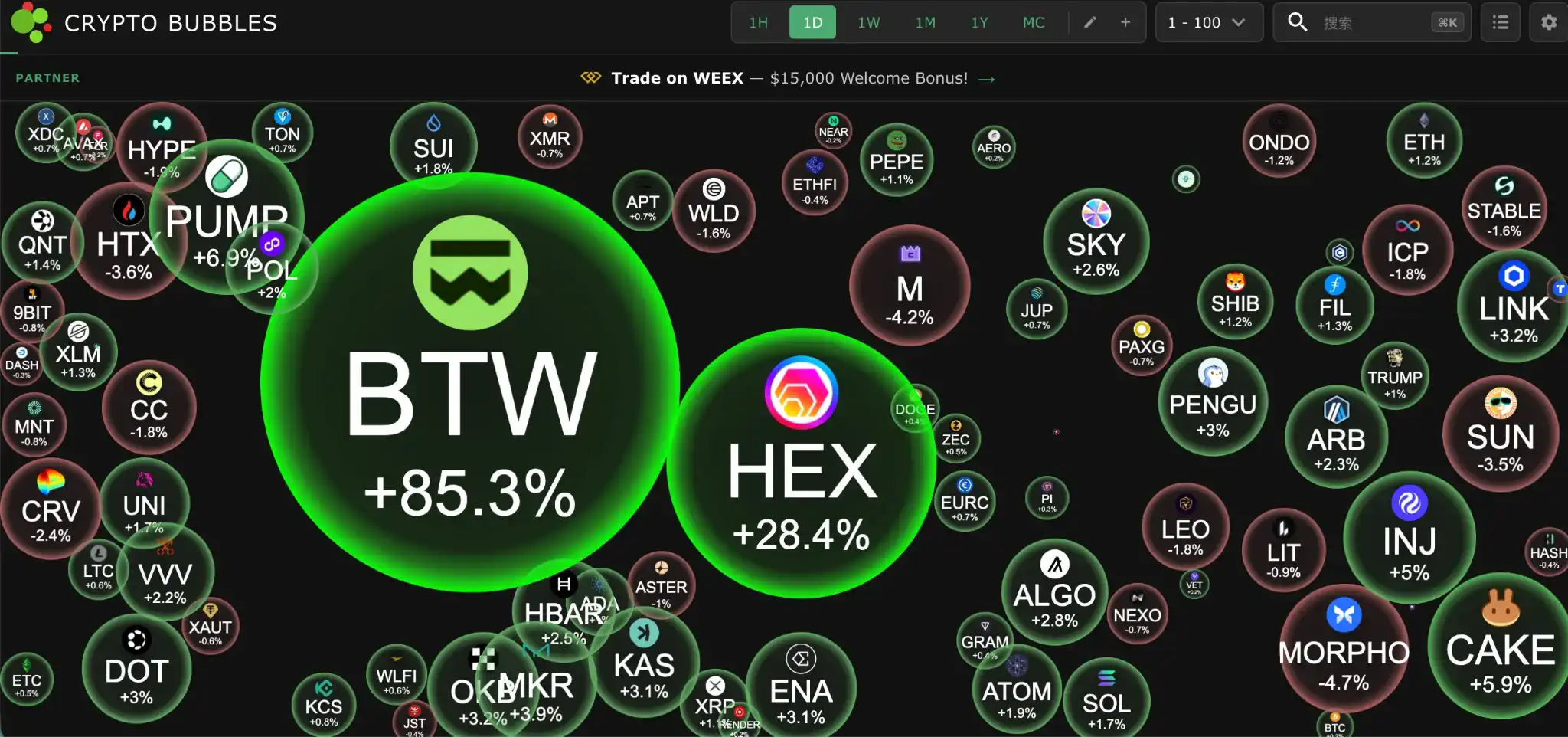
Today's top gainers among the top 100 cryptocurrencies by market cap: BTW up 85.3%, HEX up 28.4%, PUMP up 6.9%, CAKE up 5.9%, INJ up 5%.
Stock Index Futures Test Rebound, AI Sector Remains the Eye of the Storm

U.S. stock index futures showed mixed performance, with Dow futures up 0.06%, Nasdaq 100 futures down 0.04%, and S&P 500 futures up 0.02%.
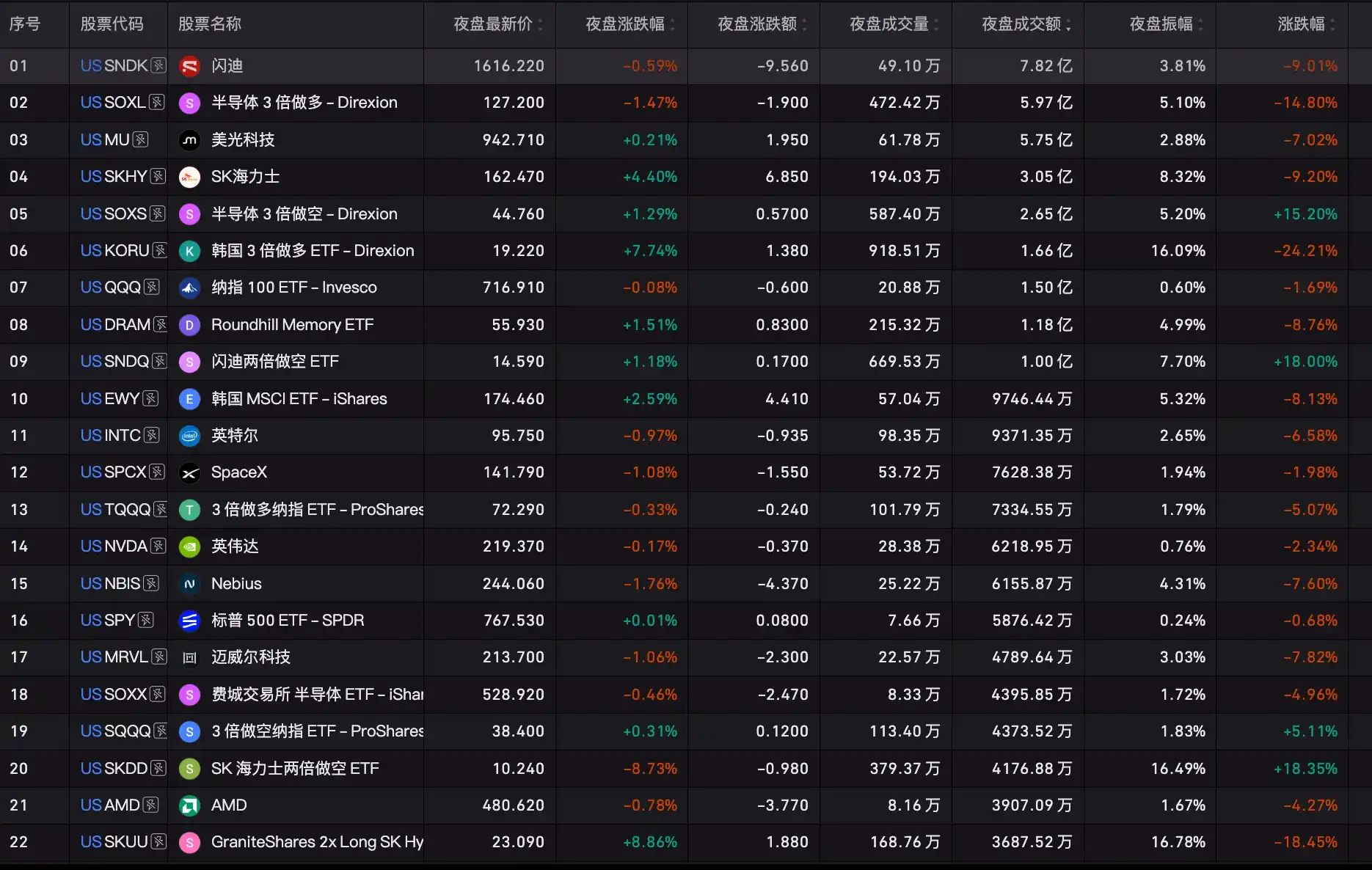
BIT after-hours data shows that SK Hynix was the most watched stock in after-hours trading, rising over 4%. The company announced a stock buyback plan worth 40 trillion won. The repurchased shares will be canceled to enhance shareholder returns. This move temporarily stabilized sentiment in the memory sector. The memory ETF DRAM rose 1.51%, Micron Technology rose slightly by 0.21%, while SanDisk fell 0.59%.
However, most U.S. stocks remained in a downtrend: NVIDIA fell 0.17%, AMD fell 0.78%, Nebius fell 1.76%, and Marvell Technology fell 1.06%.
Bond Market Storm Overwhelms AI Narrative, Funds Turn Defensive
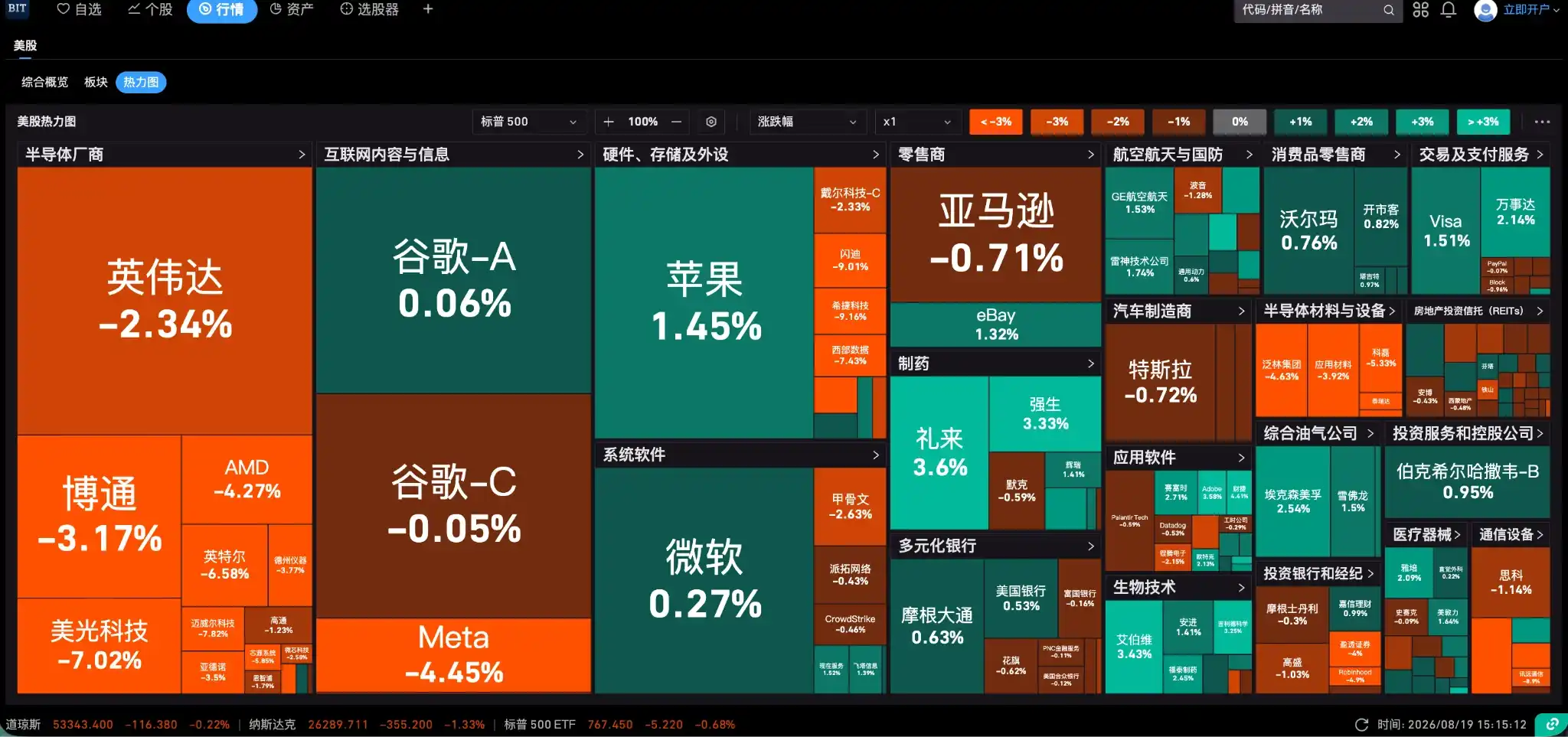
Last night's main theme in U.S. stocks wasn't equities, but bonds. The U.S. 30-year Treasury yield touched 5.338% intraday, hitting its highest level since 2007, while the 10-year yield approached 4.75%. Long-term bond yields in France, Germany, the UK, and Japan also surged simultaneously, raising global funding costs together.
The AI sector became the center of selling. The Philadelphia Semiconductor Index fell about 5% as market logic regarding AI capital expenditures wavered, with concerns shifting from a "growth story" to a "debt story." Goldman Sachs data shows that AI-related bond issuance this year has reached $489 billion, far exceeding the full-year 2025 level. Meanwhile, OpenAI's Q2 operating loss widened to $12.3 billion, and Anthropic's annualized revenue run rate fell short of market expectations, further intensifying investor anxiety over the mismatch between high AI investment and return cycles.
Memory stocks, as the most elastic segment in AI server expansion, led the decline: Micron Technology fell about 7%, Seagate fell over 9%, and SK Hynix ADR fell over 9%. Optical communication and AI cloud service providers faced more intense valuation reassessments: Applied Optoelectronics fell about 15%, Coherent fell over 12%, and CoreWeave fell over 12%. BIT analysis points out that for companies whose business models heavily rely on continuous financing, their valuation elasticity has an inverse amplification effect in the environment of surging long-term rates.
Meta fell 4.45% amid a joint lawsuit from 29 states. In contrast, Apple, which is not deeply involved in the "arms race" of AI data center capital expenditures, was viewed as a tech defensive stock by the market and rose 1.45%. Microsoft, Google, and Amazon performed relatively steadily.
Analysts note that the core of the current bond market turmoil lies in the U.S. fiscal deficit outlook for the next decade. Currently, nearly one out of every five dollars of U.S. government revenue is used to pay interest. This "normalization" is forcing the market to re-evaluate the intrinsic value of high-valuation tech stocks.
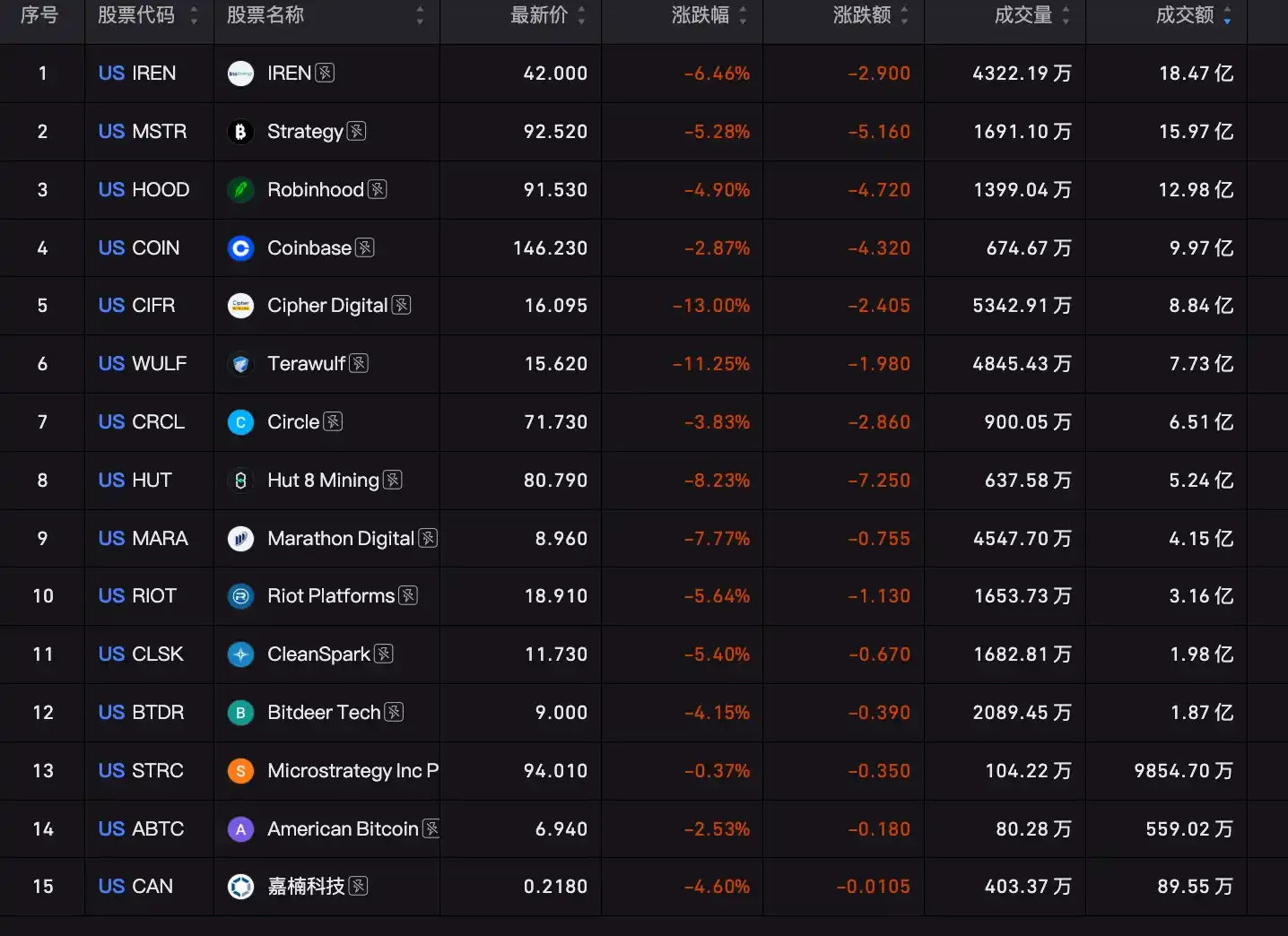
Crypto-related stocks fell sharply. According to BIT U.S. Stocks data, Coinbase fell 2.87%, Robinhood fell 4.9%, Strategy fell 5.28%, and Circle fell 3.83%.
Among mining companies: Cipher Digital fell 13%, TeraWulf fell 11.25%, Hut 8 fell 8.23%, MARA fell 7.77%, IREN fell 6.46%; CleanSpark, Canaan, Riot, and Bitdeer fell between 5% and 6%. VanEck remains optimistic about the long-term value of some miners transitioning to AI data centers, but short-term factors like rising rates, data center scrutiny, and AI capex concerns will pressure the sector.
Seoul and Tokyo Slam the Brakes, Chip Stocks Become Core of Asia-Pacific Sell-off, Unitree Tech IPO Sets New Benchmark for Humanoid Robot Valuations
High global bond yields and oil price inflation concerns directly impacted Asian risk assets. South Korea's KOSPI index closed down 5.80%, with chip stocks being the main drag. SK Hynix closed down about 10%, and Samsung Electronics fell nearly 8%. Although revenue and net profit for listed companies on Korea's main board saw significant growth in the first half (with semiconductor leaders contributing significantly), short-term sentiment was dominated by U.S. bond and stock sell-offs.
The Japanese market also opened low and moved lower, with the Nikkei 225 closing down 3.16% and the Topix index also falling significantly by about 2%. Heavyweight tech giants like SoftBank Group, Tokyo Electron, and memory chip maker Kioxia faced concentrated profit-taking. Tech giants like SoftBank were hit by a double whammy of valuation concerns and bond market volatility.
A-shares opened low and moved lower throughout the day. The Shanghai Composite Index fell about 2.4%, the Shenzhen Component Index fell about 5%, the ChiNext Index fell over 6%, and the STAR 50 Index once fell nearly 7%. Over 5,000 stocks declined across the market. Robotics, computing hardware, semiconductors, and MLCC concepts were heavily hit, with many stocks limit-down. Coal and some shipping and banking sectors showed relative resilience.
Unitree Technology became the strongest narrative and the biggest source of volatility in A-shares. On its first day of listing on the STAR Market, the stock surged 629.44% at open to 1,100 yuan per share, with total market capitalization once reaching 444.9 billion yuan. Subsequently, gains moderated to around 460%, with the stock price around 845 yuan. Chairman Wang Xingxing's shareholding value exceeded 100 billion yuan, making him the new richest person among those born in the 1990s. Lei Jun's Shunwei Capital, Liang Wenfeng's DeepSeek, and Huanfang Quantitative also profited handsomely. Nomura Securities assigned a "Buy" rating, forecasting its 2026-2028 revenue CAGR at 122%. However, the overall robotics sector was hit hard, with stocks like Julong Intelligence, Wuzhou Xinchun, Qinchuan Machine Tool, and many others limit-down. This indicates a rapid switch between "leader frenzy" and "sector pullback" in the market.
In Hong Kong stocks, the Hang Seng Index rose slightly by 0.09%, while the Hang Seng Tech Index fell 1.21%. Tech stocks fell broadly: MINIMAX fell about 8%, Baidu Group fell about 11%, while China Unicom, Huahong Grace, and Cambridge Technology all fell around 12%. Kuaishou Technology released its 2026 Q2 earnings, with revenue of 35.54 billion yuan and adjusted net profit of 3.91 billion yuan, both exceeding market expectations. Average monthly active users reached 800 million, significantly surpassing the estimated 740 million. Among these, Kling AI performed brilliantly, with quarterly revenue exceeding 850 million yuan, a year-on-year increase of over 200%, continuing to lead the commercialization of the global AI video generation industry. Despite solid earnings, Hong Kong-listed internet stocks still faced significant selling pressure amid market risk-off sentiment.
What to Watch Next:
August 19 (Wednesday)
-
Seoul AI Summit held from August 19-21: Tech leaders including Google DeepMind, Google Cloud, Microsoft Research, NVIDIA, LG AI Research, and Hyundai Motor are attending. Market focus is on new collaborations in large models, AI cloud, autonomous driving, AI chips, and enterprise applications. Related signals may catalyze global AI software, cloud computing, chip, and robotics supply chains.
-
World Robot Conference held in Beijing from August 19-23: Unitree, Ubtech, Siasun, Galaxy General, Tiangang, and others will showcase humanoid robots and industrial robot solutions. If mass production progress, order fulfillment, or cost reductions exceed expectations, it could catalyze sentiment in the A-share robotics supply chain (reducers, servos, motors, sensors, controllers, and OEMs).
-
HKEX, Kuaishou (19:00 conference call), Hengrui Medicine, ZTO Express, Kingsoft, Kingsoft Cloud, Weibo earnings: For Kuaishou, focus on e-commerce GMV, advertising recovery, profit margins, and AI video tools; HKEX - watch trading volume, IPO pipeline, and derivatives business; Hengrui Medicine - validates innovative drug overseas expansion and R&D delivery; Kingsoft Cloud - an observation point for elasticity in China-concept AI cloud demand.
August 20 (Thursday)
-
01:00 U.S. Treasury auctions 20-year bonds: Following last week's surge in yields for 10-year and 30-year bond auctions, the bid-to-cover ratio and foreign demand for this 20-year auction will serve as a "super stress test" for the bond market. If demand is weak, it could directly push the 30-year Treasury yield above the 5.35% level, triggering a severe chain reaction in global fixed income markets.
-
02:00 Release of Fed's July Monetary Policy Meeting Minutes: The market will scrutinize internal discussion details, especially regarding tolerance for inflation (including energy-driven) and the inclination of some members towards rate hikes. Hawkish wording could push long-end yields higher, increasing pressure on high-valuation assets like AI. If it shows increased focus on economic slowdown, it may moderate the pace of rate increases.
-
09:00 China's 1-year Loan Prime Rate (LPR) announcement: If July economic data was weak, whether the LPR is cut will serve as a litmus test for policy stance. A rate cut would benefit property-related sectors, consumption, Hong Kong-listed internet stocks, and high-dividend assets. If unchanged, the market may turn to waiting for RRR cuts, fiscal expansion, or further property policy easing.
-
20:30 U.S. Initial Jobless Claims: Employment data will influence Fed pricing together with the previously weak Non-Farm Payrolls. If claims rise, it will reinforce expectations of economic cooling and a September pause in rate hikes. If the job market remains strong, market confidence in "no action" may decrease.
-
Alibaba (20:00 conference call), Pop Mart, NetEase, Walmart, Ping An Insurance, China Telecom, AIA Group, Li Ning, Futu Holdings earnings: Alibaba is the top focus among China concepts. Watch e-commerce GMV, Cloud Intelligence revenue, AI investment, and commercialization of Tongyi Qianwen. For Pop Mart, focus on IP overseas expansion, store expansion, and gross margin. NetEase validates gaming revenue and AI tools. Walmart is a key bellwether for U.S. consumer resilience.
August 21 (Friday)
-
07:30 Japan's July Core CPI: If inflation is higher than expected, expectations for a BOJ rate hike in September will heat up, potentially causing volatility in the yen and global yield curves. If inflation cools, it will ease pressure on global carry trade unwinding and reduce upward pressure on global long-term rates.
-
08:00 South Korea's August 1-20 Export Data: Previous data showed a year-on-year increase as high as 52.3%, driven mainly by memory price increases and AI chip exports. This data is a leading indicator for the global semiconductor cycle and the sustainability of AI capital expenditures, directly impacting sentiment for Samsung, SK Hynix, Micron, TSMC, AMD, NVIDIA, and the A-share semiconductor supply chain.
-
Announcement of Q2 Hang Seng Index Series review results: CICC predicts Zijing Mining International, Zhipu AI, MINIMAX-W, etc., are high on the potential inclusion candidate list. If inclusion expectations materialize, it will bring passive fund allocation and short-term liquidity catalysts. If expectations are dashed, related stocks may face selling pressure.
-
NYMEX September Crude Oil Futures contract rollover: Against the backdrop of Hormuz Strait risks and expectations of U.S. sanctions on Iran, the rollover could amplify volatility in near-month contracts. If the spot premium widens, it indicates tight physical supply. If the spread narrows, upward momentum in oil prices may weaken.
-
ZTE, Zijing Mining, Zhongji Innolight, Yangtze Optical Fibre and Cable, KE Holdings, Sinopec earnings: Zhongji Innolight and Yangtze Optical Fibre will validate AI optical module and fiber demand. Watch ZTE's computing power network and carrier capex. Zijing Mining is driven by gold and copper prices. KE Holdings reflects recovery in China's property transaction chain. Sinopec is directly influenced by oil prices and refining margins.