Bills on Cryptocurrency Market Regulation to Be Submitted to the State Duma Within Six Months

RBK-crypto2025-12-30 tarihinde yayınlandı2025-12-30 tarihinde güncellendi

Özet

Russian Finance Minister Anton Siluanov announced that cryptocurrency market regulation bills will be submitted to the State Duma in the first half of 2026. The Ministry of Finance supports allowing non-qualified investors to access the crypto market through Russian platforms, but with investment limits. The Central Bank's published concept permits such investors to purchase the "most liquid" cryptocurrencies after passing a test, with an annual limit of 300,000 rubles per intermediary. Siluanov emphasized the need for clear legislation to define permissible activities and participants, as crypto transactions are occurring without regulation. The Central Bank's proposals are under government review, and it plans to introduce penalties for illegal crypto intermediary activities starting July 1, 2027, similar to those for illegal banking. Access to the digital financial assets (DFA) market will also be simplified starting in 2026.

Finance Minister Anton Siluanov stated in an interview with "Russia 24" that bills regulating the cryptocurrency market will be submitted to the State Duma in the first half of 2026. According to him, the Ministry of Finance supports allowing non-qualified investors access to the cryptocurrency market through Russian platforms, but with limitations on the volume of such investments.

On December 23, the Bank of Russia published a concept for regulating the cryptocurrency and digital asset market, which, among other things, allowed "non-qualified" investors to purchase "the most liquid" cryptocurrencies, but only after passing a test and within a limit—no more than 300,000 rubles per year through a single intermediary.

Siluanov explained that transactions in cryptocurrencies are taking place, but there is no regulation, so this topic requires legislative definition: "what is allowed, what is not, and who can participate." All of this is defined in the legislative acts jointly prepared by the Ministry of Finance and the Central Bank, the minister added.

"I am confident that we will be able to submit these draft decisions to the State Duma in the first half of next year and will ask lawmakers to consider these draft legislative acts," said Siluanov.

The Central Bank's proposals on crypto regulation have already been submitted to the government for consideration. The regulator also plans to introduce liability for illegal activities of intermediaries in the cryptocurrency market, similar to liability for illegal banking activities, starting from July 1, 2027.

Access to the market of digital financial assets (DFAs) will also be simplified. Starting from 2026, the classification of DFAs available to qualified and non-qualified investors will change.

The Central Bank Decides to Make Budget Payments in Digital Rubles Without Commission for Everyone

How Cryptocurrency Mining in Russia Has Changed. Results of 2025

Recognition, Rise and Fall of Bitcoin. Top Events of the Cryptocurrency Market in 2025
İlgili Okumalar

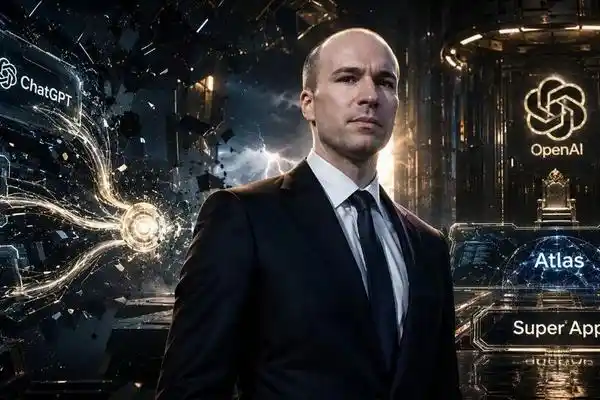
Breaking: OpenAI Undergoes Major Reorganization, President Brockman Assumes Command

OpenAI has announced a major internal reorganization just months before its anticipated IPO. The company is merging its three flagship product lines—ChatGPT, Codex, and the API platform—into a single, unified product organization. The most significant leadership change involves co-founder and President Greg Brockman moving from a background technical role to take full, permanent control over all product strategy. This follows the indefinite medical leave of AGI Deployment CEO Fidji Simo. Additionally, ChatGPT's longtime lead, Nick Turley, has been reassigned to enterprise products, with former Instagram executive Ashley Alexander taking over consumer offerings. The consolidation, internally framed as a strategic move towards an "Agentic Future," aims to break down internal silos and create a cohesive "Super App." This planned desktop application would integrate ChatGPT's conversational abilities, Codex's coding power, and a rumored internal web browser named "Atlas" to autonomously perform complex user tasks. The reorganization occurs amid significant internal and external pressures. OpenAI has recently seen a wave of high-profile departures, including Sora co-lead Bill Peebles and other senior technical leaders, leading to concerns about a thinning executive bench. Externally, rival Anthropic recently secured funding at a staggering $900 billion valuation, surpassing OpenAI's own. Google's upcoming I/O developer conference also poses a competitive threat. Analysts suggest the dramatic restructure is a pre-IPO move to present a clearer, more focused narrative to Wall Street—streamlining operations and demonstrating decisive leadership under Brockman to counter internal turbulence and intense market competition.

marsbit5 dk önce

Breaking: OpenAI Undergoes Major Reorganization, President Brockman Assumes Command

marsbit5 dk önce

Two Survival Structures of Market Makers and Arbitrageurs

Market makers and arbitrageurs represent two distinct survival structures in high-frequency trading. Market makers primarily use limit orders (makers) to profit from the bid-ask spread, enjoying high capital efficiency (nominally 100%) but bearing inventory risk. This "inventory risk" arises from passive, fragmented, and discontinuous order fills in the limit order book (LOB). This risk, while a potential cost, can also contribute to excess profit if managed within control boundaries, allowing for mean reversion. Market makers essentially sell "time" (uncertainty over execution timing) to the market for price control and low fees. In contrast, cross-exchange arbitrageurs typically use market orders (takers) to exploit price differences or funding rates, resulting in lower nominal capital efficiency (requiring capital on both exchanges) and higher transaction costs. Their risk exposure stems from asymmetries in exchange rules (e.g., minimum order sizes), execution latency, and infrastructure risks (e.g., ADL, oracle drift). These exposures are active, exogenous gaps that primarily erode profits rather than contribute to them. Arbitrageurs essentially sell "space" (capital sunk across venues) for localized, immediate certainty. Both strategies engage in a trade-off between execution friction and residual risk. Optimal systems allow for temporary, controlled risk exposure rather than enforcing zero exposure at all costs. Their evolution converges towards hybrid models: arbitrageurs may use maker orders to reduce costs, while market makers may use taker orders or hedges for risk management. Ultimately, both use different forms of risk exposure—market makers exposing inventory, arbitrageurs immobilizing capital—to extract marginal, hard-won certainty from the market.

链捕手5 dk önce

Two Survival Structures of Market Makers and Arbitrageurs

链捕手5 dk önce

Who Will Define the Rules of the AI Era? Anthropic Discusses the 2028 US-China AI Landscape

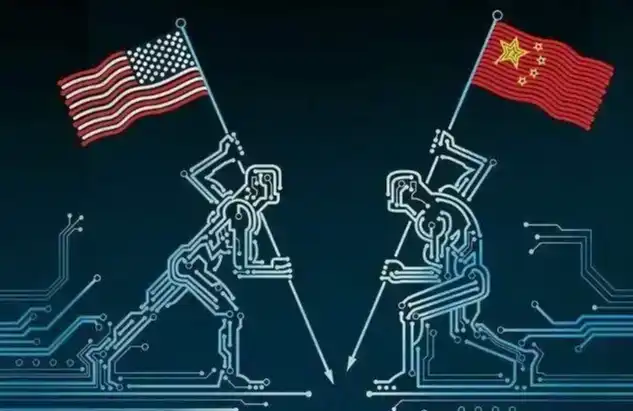
This article, based on Anthropic's analysis, outlines the intensifying systemic competition between the U.S./allies and China for AI leadership by 2028. It argues that access to advanced computing power ("compute") is the critical bottleneck, where the U.S. currently holds a significant advantage through chip export controls and allied innovation. However, China's AI labs remain competitive by exploiting policy loopholes—via chip smuggling, overseas data center access, and "model distillation" attacks to copy U.S. model capabilities—keeping them close to the frontier. The piece presents two contrasting scenarios for 2028. In the first, decisive U.S. action to tighten compute controls and curb distillation locks in a 12-24 month AI capability lead, cementing democratic influence over global AI norms, security, and economic infrastructure. In the second, policy inaction allows China to achieve near-parity through continued access to U.S. technology, enabling Beijing to promote its AI stack globally and integrate advanced AI into its military and governance systems, altering the strategic balance. Anthropic contends that maintaining a decisive U.S. lead is essential for shaping safe AI development and governance. The core recommendation is for U.S. policymakers to urgently close compute and model access loopholes while promoting global adoption of the U.S. AI technology stack to secure a lasting strategic advantage.

marsbit2 saat önce

Who Will Define the Rules of the AI Era? Anthropic Discusses the 2028 US-China AI Landscape

marsbit2 saat önce

“Why Didn’t You Buy 2x Long SK Hynix?”

The article discusses the immense popularity of the "2x Long SK Hynix ETF" (07709.HK) in Hong Kong, which became the world's largest single-stock leveraged ETF by May 2026. Launched in October 2025, the ETF's net value soared over 1000% in seven months, significantly outperforming the 324% gain of SK Hynix's underlying stock, driven by the AI boom and a critical shift in industry demand from computing power to memory. It highlights the mechanics and risks of daily-rebalanced leveraged ETFs. In a smooth bullish market, they generate amplified returns, but during volatile periods—exemplified by market swings during geopolitical tensions in the Strait of Hormuz in March-April 2026—they suffer severe "volatility decay," where choppy price action can cause losses far exceeding twice the drop of the underlying asset. The piece frames SK Hynix, as NVIDIA's primary HBM supplier, within the classic cycle of the memory chip industry—a commoditized sector prone to boom-and-bust cycles of shortage, price hikes, overcapacity, and crashes. While current AI-driven demand and high margins (Q1 2026毛利率~79%) create a "super cycle," the article questions its sustainability. It warns that extreme profits will inevitably tempt competitors like Samsung and Micron to ramp up HBM production, potentially eroding scarcity. Furthermore, the entire narrative remains tethered to the massive AI capital expenditure of tech giants. In conclusion, the ETF's trajectory symbolizes the accelerated, all-in nature of the current AI revolution, where timeframes are compressed and market moves are extreme. However, it also underscores that while industry trends define ultimate returns, macro-geopolitical risks dictate the volatile and uncertain path to get there.

marsbit2 saat önce

“Why Didn’t You Buy 2x Long SK Hynix?”

marsbit2 saat önce

İşlemler

Spot
Futures
活动图片