Berkshire's 'New King, New Atmosphere': Q1 Reduces Retail and Oil & Gas Holdings, Increases Google, and Also Establishes a Position in Airlines

marsbit2026-05-16 tarihinde yayınlandı2026-05-16 tarihinde güncellendi

Özet

Berkshire Hathaway's Q1 portfolio report, marking the start of the "Abel era" post-Buffett, revealed significant rebalancing. The firm made a major new investment, initiating a $2.65 billion position in Delta Air Lines—its first airline bet since 2020. It also aggressively increased its stake in Alphabet's A-class shares by over 200%, making it the seventh-largest holding. Conversely, Berkshire divested from several positions, completely exiting Amazon, Visa, Mastercard, and UnitedHealth. It also significantly reduced its stake in Chevron, selling approximately $8 billion worth of shares near their peak. The overall portfolio was streamlined, with the number of holdings dropping from 42 to 29, indicating a move toward a more concentrated and actively managed strategy under new leadership. Apple remains the top holding.

After Buffett's departure, Berkshire Hathaway boldly ushered in the "Abel Era" with a quarterly holdings report featuring significant portfolio adjustments.

The 13F filing disclosed on Friday, Eastern Time, the 15th, showed that in the first quarter of 2026, Berkshire made major adjustments to its investment portfolio: on one hand, it spent approximately $2.65 billion to establish a new position in Delta Air Lines, marking Berkshire's first renewed bet on airline stocks since divesting from the four major U.S. airlines during the pandemic in 2020; on the other hand, it further increased its stake in Google's parent company Alphabet, while completely exiting holdings in multiple consumer and fintech stocks such as Amazon, Visa, and Mastercard.

Meanwhile, Berkshire reduced its stake in Chevron by approximately 45.78 million shares in Q1. Based on the volume-weighted average price of $182.59 calculated by Bloomberg data, this generated proceeds of about $8 billion. Its ownership percentage decreased to 4.2%, but Berkshire remained Chevron's fourth-largest shareholder. Chevron's stock hit a record high in March this year before retreating somewhat, making this sale opportune given the high price.

Overall, Berkshire noticeably increased its portfolio adjustment intensity in Q1. According to media statistics, Berkshire purchased about $16 billion worth of stocks and sold about $24 billion worth in the quarter. The number of holdings plummeted from 42 to 29, indicating the new management is undertaking a more concentrated and distinct rebalancing of the investment portfolio.

Q1 Splurges $2.6 Billion to Establish Position in Delta Air Lines

Among the data disclosed this Friday, the market paid the most attention to Berkshire's move to re-enter airline stocks.

The 13F shows Berkshire established a new position of approximately 39.8 million shares in Delta Air Lines (DAL) in Q1. These shares were worth nearly $2.65 billion, accounting for about 1% of Berkshire's portfolio. In terms of holding value, Delta Air Lines became Berkshire's 14th-largest holding immediately after being established in Q1.

This move holds special significance. In 2020, when the pandemic hit the global aviation industry, Buffett quickly exited positions in the four major U.S. airlines, including Delta, United, Southwest, and American Airlines, publicly stating that the business model of the aviation industry had fundamentally changed.

Now, Berkshire's renewed bet on the aviation industry after six years is seen by the market as a signal that management has turned optimistic again regarding U.S. consumer and business travel, as well as corporate profit prospects.

In addition to Delta, Berkshire also established new positions in Macy's and slightly increased its stake in Alphabet Class C shares.

Alphabet Class A Holdings Soar Over 200%, Rise to 7th Largest Holding

Regarding the tech sector, Berkshire continued to strengthen its bet on Google.

The filing shows Berkshire increased its holdings of Alphabet (GOOGL) Class A shares by over 36.4 million shares in Q1. The share count surged approximately 204% compared to the end of Q4, with the holding value rising to $15.6 billion. Its ranking among Berkshire's major holdings rose from tenth in Q4 to seventh.

The market believes this means Berkshire's recognition of the value of Google's core assets in the AI era is increasing. In recent years, Berkshire has long been cautious about large tech companies, with Apple being the only tech stock it held heavily. However, as generative AI competition intensifies and Google increases investment in AI infrastructure, its valuation and cash flow advantages have re-attracted Berkshire.

Notably, Alphabet is also one of the few large tech companies Berkshire has consistently added to over recent quarters.

In contrast, Apple remains Berkshire's number one holding, although Berkshire sold Apple for three consecutive quarters starting from Q2 2025 until stopping this Q1. Data shows that as of the end of March, Apple accounted for about 22.6% of Berkshire's U.S. stock portfolio, still the absolute core asset.


Exits Amazon, Visa, Mastercard, UnitedHealth, "Portfolio Slimming" Evident

While adding to Google and airline stocks, Berkshire also made a "clean break" from several non-core assets.

The 13F shows Berkshire completely exited its position in Amazon and also cleared out holdings in Visa, Mastercard, UnitedHealth Group, Domino's Pizza, Pool Corp, Aon, and several other stocks.

Among these, the exit from Amazon is particularly noteworthy, marking the first time in nearly seven years that Berkshire does not hold Amazon. Last Q4, Amazon was the stock Berkshire reduced the most, with its share count falling over 77.2% quarter-on-quarter to about 2.3 million shares.

Berkshire first bought Amazon in Q2 2019. Buffett said at the time that although he had historically been cautious about tech stocks, it was "stupid" not to have bought shares of the online retail giant earlier.

Amazon was seen as one of Berkshire's rare investments in internet e-commerce in recent years, but its position size was never large. Its complete exit is also interpreted by the market as Berkshire further focusing its "tech allocation," i.e., concentrating bets on giants like Apple and Google that possess greater platform moats and cash flow advantages.

In the financial sector, Berkshire continued to trim some banking and payment assets:

  • Bank of America (BAC) holdings reduced by about 3.67 million shares, a decrease of approximately 0.7% compared to Q4;
  • The beverage stock Constellation Brands (STZ) was reduced by nearly 12.37 million shares, a sharp drop of about 95.1%.

However, long-term core positions like Coca-Cola and American Express remained largely stable.

Sells Chevron at Highs for ~$8 Billion, Remains Fourth-Largest Shareholder

The reduction in Chevron was the single largest transaction by value in this holdings report.

According to Bloomberg, Berkshire sold approximately 45.78 million shares of Chevron at a volume-weighted average price of $182.59, generating proceeds of about $8 billion. The holding decreased by about 35%, with the remaining ownership at 4.2%. After the sale, Berkshire remained Chevron's fourth-largest shareholder.

Bloomberg reported that Chevron's stock price hit a record high in March this year against the backdrop of U.S.-Iran tensions and soaring oil prices. Berkshire initially bought Chevron around $65 in 2020 and partially reduced its stake in 2021; around the time of the Russia-Ukraine conflict outbreak in 2022, it significantly increased its position again at an average price of $124. Based on the current sale average price of $182.59, this represents an unrealized gain of about 47% compared to the 2022 buying cost.

Top Ten Holdings at End of Q1: Apple Still Far Ahead

As of the end of March 2026, Berkshire's top ten holdings remained highly concentrated in Apple, financials, and consumer leaders, all "familiar faces" from Q4, though their specific rankings shifted, with Alphabet's ranking rising the most—three positions quarter-on-quarter.

According to the 13F filing, Berkshire's top ten holdings in Q1 this year were:

  1. Apple (AAPL)
  2. American Express (AXP)
  3. Coca-Cola (KO), ranking rose from fourth in Q4 to third
  4. Bank of America (BAC), ranking fell from third to fourth
  5. Chevron (CVX)
  6. Occidental Petroleum (OXY), ranking rose from seventh to sixth
  7. Alphabet (GOOGL), ranking rose from tenth to seventh
  8. Chubb (CB)
  9. Moody's (MCO), ranking fell from sixth to ninth
  10. Kraft Heinz (KHC), ranking fell from ninth to tenth

Among these, the combined positions of Apple, American Express, and Bank of America still account for over half of the entire stock portfolio.

However, compared to the Buffett era, the new management is demonstrating a higher portfolio adjustment frequency and a more evident "active rotation" style.

The market's current focus is also shifting: as Buffett gradually steps back and new CEO Greg Abel takes the lead, will Berkshire transition from its "long-term, extremely concentrated holding" model towards a more flexible, industry-trend-oriented investment style?


Trend Kriptolar

İlgili Sorular

QAccording to Berkshire Hathaway's Q1 2026 13F filing, which sector did they make a significant new investment in after a six-year hiatus?

ABerkshire Hathaway made a significant new investment in the airline sector, specifically initiating a new position in Delta Air Lines worth approximately $2.65 billion. This marked their first major investment in airlines since clearing their positions in four major U.S. carriers during the pandemic in 2020.

QWhat major technology holding did Berkshire significantly increase in Q1 2026, and what was the reported percentage increase in the number of shares held?

ABerkshire Hathaway significantly increased its holdings in Alphabet (Google) Class A shares (GOOGL) in Q1 2026. The number of shares held surged by approximately 204%, making it the seventh-largest holding in Berkshire's portfolio, up from tenth place in the previous quarter.

QWhich notable e-commerce and several financial/payment companies did Berkshire Hathaway completely exit from its portfolio in the first quarter of 2026?

AIn Q1 2026, Berkshire Hathaway completely exited its positions in Amazon, Visa, Mastercard, UnitedHealth Group, Domino's Pizza, Pool Corp, and Aon.

QWhat was the largest single-stock sale by value for Berkshire in Q1 2026, and what was the estimated total proceeds from that sale?

AThe largest single-stock sale by value was the reduction of its stake in Chevron. Berkshire sold approximately 45.78 million shares at a volume-weighted average price of $182.59, raising an estimated $8 billion in proceeds.

QHow has Berkshire Hathaway's overall portfolio concentration changed under the new 'Abel era' leadership, as indicated by the Q1 2026 13F data?

AUnder the new 'Abel era' leadership, Berkshire Hathaway's portfolio has become more concentrated and actively managed. The total number of holdings dropped sharply from 42 to 29 stocks. The report indicates a shift towards a more distinct rebalancing with a higher frequency of portfolio adjustments and a potential move away from the traditional 'long-term, ultra-concentrated holding' model towards a more flexible, industry-trend-oriented investment style.

İlgili Okumalar

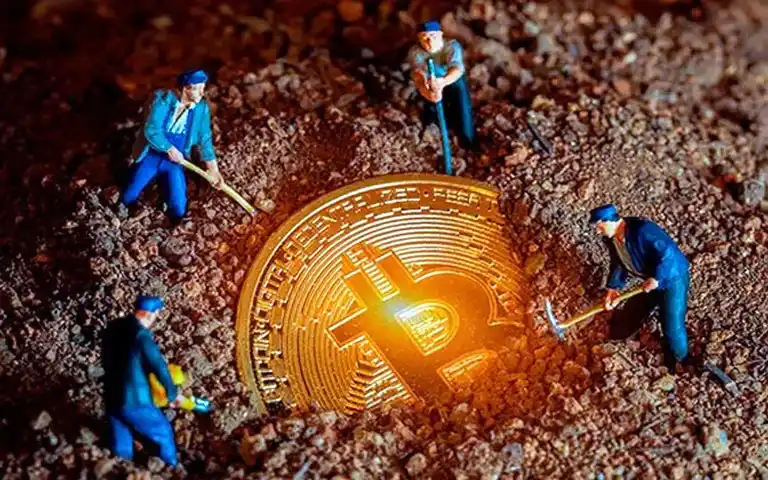
$120 Million Vanishes Overnight! Crypto's 'Steadiest Giant' Stumbles in South America

Summary: Tether's $120 million Bitcoin mining venture in Uruguay, initiated in May 2023, was abruptly shut down in July 2025 when the national power utility UTE cut off electricity. The project, developed in partnership with local firm Microfin in Florida province, was touted as a model for leveraging the country's nearly 98% renewable energy grid. The collapse stemmed from a fundamental contract dispute over electricity supply. Tether interpreted the agreed power volume as a "minimum guaranteed supply," expecting to request more as the mining operation expanded. UTE, however, viewed it as a "strict maximum cap." This disagreement led to frequent power curtailments for the 24/7 mining facility, causing significant revenue loss from lost computing power. Following the 2025 election of left-wing President Yamandú Orsi and a management change at UTE, negotiations broke down. Microfin stopped paying electricity bills in May 2025, formally notified UTE of contract termination in June, and did not attend a final meeting where UTE presented a revised contract. By the July 25 power cut, Microfin's debt approached $5 million. The operation ceased, laying off 30 of its 38 local staff, with all outstanding debts settled by December 2025. The failure highlights key risks for heavy-asset overseas investments: Uruguay's green energy proved not to be cheap energy, especially after the 2024 Bitcoin halving squeezed industry profits. Furthermore, political changes can swiftly alter utility company policies, undermining the long-term regulatory stability critical for such projects. While financially absorbable for Tether, the incident underscores that operational success depends on unambiguous contracts and genuine cost advantages, not just technological scale.

marsbit9 dk önce

$120 Million Vanishes Overnight! Crypto's 'Steadiest Giant' Stumbles in South America

marsbit9 dk önce

Is Bitcoin Price Lagging? Record Global M2 Money Supply Could Be a Springboard for BTC's Rise

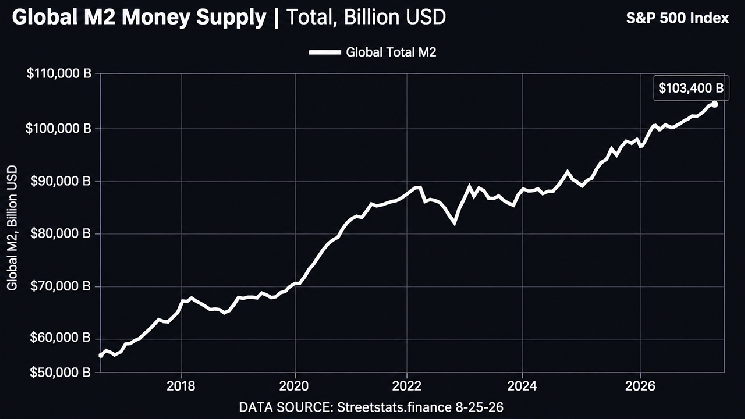
Bitcoin Price Lagging? Record Global Money Supply M2 Could Springboard BTC Growth The global money supply (M2) is expanding rapidly, similar to global debt. The US M2, representing all money circulating in its economy, has reached a record $23.16 trillion. Combined with figures from major economies like the Eurozone, China, and Japan, the global M2 is approximately $103 trillion. Some estimates, however, place it closer to $195 trillion. This surge in liquidity is significant because excess capital often seeks higher returns in assets like precious metals, stocks, and cryptocurrencies. Bitcoin's recent price surge above $81,000 has brought the global M2 metric back into focus. Following a sharp rise in early August after a US Treasury bond buyback announcement, BTC still trades about 37% below its October 2025 all-time high exceeding $126,000. This gap presents a potential "catch-up" trade thesis. Bitcoin's fixed supply of 21 million contrasts with governments' ability to print fiat currency, making scarce assets like BTC attractive if monetary expansion continues. Historically, Bitcoin's bull cycles in 2017-2018 and 2020-2021 coincided with M2 expansion and increased liquidity. Over the past year, the correlation seemed broken as M2 grew while Bitcoin's price fell sharply from its peak. Observers believe fresh dollars may have remained locked in cash-favorable investments. Some, like Ash Crypto, now suggest a long-awaited alignment between Bitcoin and M2 may be starting, especially as a weakening US Dollar Index this month has seen assets like gold and Bitcoin surge. A softer dollar pressures cash havens and prompts holders to act. While record M2 doesn't guarantee higher Bitcoin prices, a sustained influx of liquidity, a weak dollar, and capital flowing into alternative assets could trigger a catch-up rally sooner than expected. However, changes in these conditions could lead to the opposite outcome.

cryptonews.ru33 dk önce

Is Bitcoin Price Lagging? Record Global M2 Money Supply Could Be a Springboard for BTC's Rise

cryptonews.ru33 dk önce

Blockchain Capital Partner: Tokenization Will Reshape the Underlying Structure of Capital Markets

"Blockchain Capital partner Aleks Larsen argues that tokenization will fundamentally restructure capital markets by solving a costly 'packaging' problem in finance. Currently, assets like mortgages, private equity, and stocks exist in fragmented, incompatible systems, creating huge friction and slowing capital flow. Tokenization introduces a standardized, machine-readable interface for assets—akin to shipping containers for finance. Just as containerization standardized global trade, enabling massive efficiency gains and economic growth, tokens standardize financial rights. This allows platforms, lenders, and custodians to interact with assets directly on a shared network without rebuilding infrastructure for each one. Stablecoins demonstrate this potential, processing volumes rivaling Visa with far lower cost and faster settlement. Beyond payments, tokenization is expanding to assets like U.S. Treasuries, commodities, and private credit, now totaling nearly $400 billion on-chain. This shift changes financial service access: instead of depending on relationships with institutions, services become accessible based on the asset's tokenized properties themselves. DeFi protocols like Aave exemplify this, where assets meeting criteria can be used as collateral programmatically. Ultimately, tokenization will reorganize capital markets around open networks of specialized services, lowering barriers to entry and reducing costs. This could unlock global capital for currently underserved assets—small receivables, regional infrastructure, emerging market credit—integrating them into a seamless, programmable financial system. Combined with AI, tokenization promises to make capital allocation more efficient, transparent, and globally accessible, reshaping how economic value is created and distributed."

marsbit37 dk önce

Blockchain Capital Partner: Tokenization Will Reshape the Underlying Structure of Capital Markets

marsbit37 dk önce

İşlemler

Spot

Popüler Makaleler

GAS Nasıl Satın Alınır

HTX.com’a hoş geldiniz! GAS (GAS) satın alma işlemlerini basit ve kullanışlı bir hâle getirdik. Adım adım açıkladığımız rehberimizi takip ederek kripto yolculuğunuza başlayın. 1. Adım: HTX Hesabınızı OluşturunHTX'te ücretsiz bir hesap açmak için e-posta adresinizi veya telefon numaranızı kullanın. Sorunsuzca kaydolun ve tüm özelliklerin kilidini açın. Hesabımı Aç2. Adım: Kripto Satın Al Bölümüne Gidin ve Ödeme Yönteminizi SeçinKredi/Banka Kartı: Visa veya Mastercard'ınızı kullanarak anında GAS (GAS) satın alın.Bakiye: Sorunsuz bir şekilde işlem yapmak için HTX hesap bakiyenizdeki fonları kullanın.Üçüncü Taraflar: Kullanımı kolaylaştırmak için Google Pay ve Apple Pay gibi popüler ödeme yöntemlerini ekledik.P2P: HTX'teki diğer kullanıcılarla doğrudan işlem yapın.Borsa Dışı (OTC): Yatırımcılar için kişiye özel hizmetler ve rekabetçi döviz kurları sunuyoruz.3. Adım: GAS (GAS) Varlıklarınızı SaklayınGAS (GAS) satın aldıktan sonra HTX hesabınızda saklayın. Alternatif olarak, blok zinciri transferi yoluyla başka bir yere gönderebilir veya diğer kripto para birimlerini takas etmek için kullanabilirsiniz.4. Adım: GAS (GAS) Varlıklarınızla İşlem YapınHTX'in spot piyasasında GAS (GAS) ile kolayca işlemler yapın.Hesabınıza erişin, işlem çiftinizi seçin, işlemlerinizi gerçekleştirin ve gerçek zamanlı olarak izleyin. Hem yeni başlayanlar hem de deneyimli yatırımcılar için kullanıcı dostu bir deneyim sunuyoruz.

308 Toplam GörüntülenmeYayınlanma 2024.12.12Güncellenme 2026.06.02

GAS Nasıl Satın Alınır

Tartışmalar

HTX Topluluğuna hoş geldiniz. Burada, en son platform gelişmeleri hakkında bilgi sahibi olabilir ve profesyonel piyasa görüşlerine erişebilirsiniz. Kullanıcıların GAS (GAS) fiyatı hakkındaki görüşleri aşağıda sunulmaktadır.

活动图片