Behind Robinhood's Launch of Its Own Chain, the Beautifully Packaged "Tokenized Stocks" Still Have No Equity Rights

marsbit2026-07-10 tarihinde yayınlandı2026-07-10 tarihinde güncellendi

Özet

Robinhood has launched "Robinhood Chain," an Ethereum-based Layer 2 built with Arbitrum technology, and introduced "Stock Tokens." This article clarifies that these tokens are not actual on-chain equity. They are tokenized debt securities issued by Robinhood Assets Jersey Limited, offering economic exposure to reference stocks or ETFs but lacking direct ownership, voting rights, or other shareholder privileges. The legal structure is conservative, relying on traditional financial intermediaries, custody, KYC/AML controls, and specific jurisdiction rules, even though the tokens are transferable on-chain. The move is part of Robinhood's broader strategy to evolve from a retail brokerage into a global financial ecosystem, integrating services like banking, retirement, crypto, and DeFi. Robinhood Chain aims to provide a programmable settlement layer, making financial products more portable and accessible while masking underlying complexity. However, the "brokerage chain paradox" lies in balancing a simple user interface with the intricate, regulated reality of the wrapped assets. The success of this model depends on users and regulators accepting this structured approach without misunderstanding the tokens as direct stock ownership. Key components supporting this strategy include the Bitstamp acquisition (expanding institutional crypto capabilities), the Robinhood Wallet (bridging brokerage and self-custody), the Robinhood Earn program (integrating DeFi lending), and the Lighte...

Author: insights4vc

Compiled by: Deep Tide TechFlow

Deep Tide's Take: Robinhood has launched its own Layer 2 chain and "tokenized stocks," seemingly bringing stocks on-chain. However, what users actually get are packaged debt instruments—they hold neither voting rights nor true equity ownership. How far this packaging game can go depends on whether users, developers, and regulators can accept this contradiction of a "simple interface, complex underlying structure."

Robinhood's move is easily misinterpreted if one only looks at the surface. On the surface, the story is appealing: a major retail broker launches a public, Ethereum-compatible, Arbitrum-based Layer 2; it supports wallets, ETH gas fees, bridges, tokenized market exposure, and DeFi integration; it aims to make financial products cheaper, more portable, and more global. This is all largely true.

The real strategic questions lie beneath. Robinhood is building a permissionless financial chain, but the assets that make this chain strategically interesting are not truly permissionless financial objects. They are packaged claims on rights, still bound by law. The chain itself may be freely deployable. Tokens may be transferable between supporting wallets. But the economically meaningful instruments still rely on issuers, prospectuses, custodians, networks of authorized participants, sanctions and KYC controls, jurisdictional exclusions, oracle designs, and legal recourse that looks nothing like direct share ownership.

This is the broker-chain paradox. Robinhood's opportunity lies in hiding this complexity well enough that the products feel simple, global, and useful. Robinhood's risk is that users, developers, and regulators refuse to ignore the underlying complexity. If users think "tokenized stocks" are "stocks," the gap between language and legal reality becomes a product liability issue. If regulators believe the packaging is clear and fairly disclosed, the structure may expand. If they believe the packaging encourages misunderstanding, expansion may stall precisely where the story gets interesting.

Viewed this way, Robinhood Chain is neither a pure crypto experiment nor a simple extension of broker applications. It's an attempt to create a new layer in between: a consumer-facing financial stack whose interface feels intuitive, but whose underlying mechanisms are deeply structured, tightly controlled, and jurisdiction-specific. This is commercially rational. But also inherently fragile. If Robinhood cannot sustain the illusion of simplicity without overstating what users actually own, no part of the strategy will work.

Robinhood's Current Position and Super App Ambitions

Robinhood's launch of Robinhood Chain is not a defensive move. The company is acting from a position of unusual operational strength—for a broker that just a few years ago was viewed by many investors as a cyclical retail trading platform.

Robinhood (NASDAQ: HOOD) plans to release its Q2 2026 earnings after market close on Wednesday, July 29, 2026.

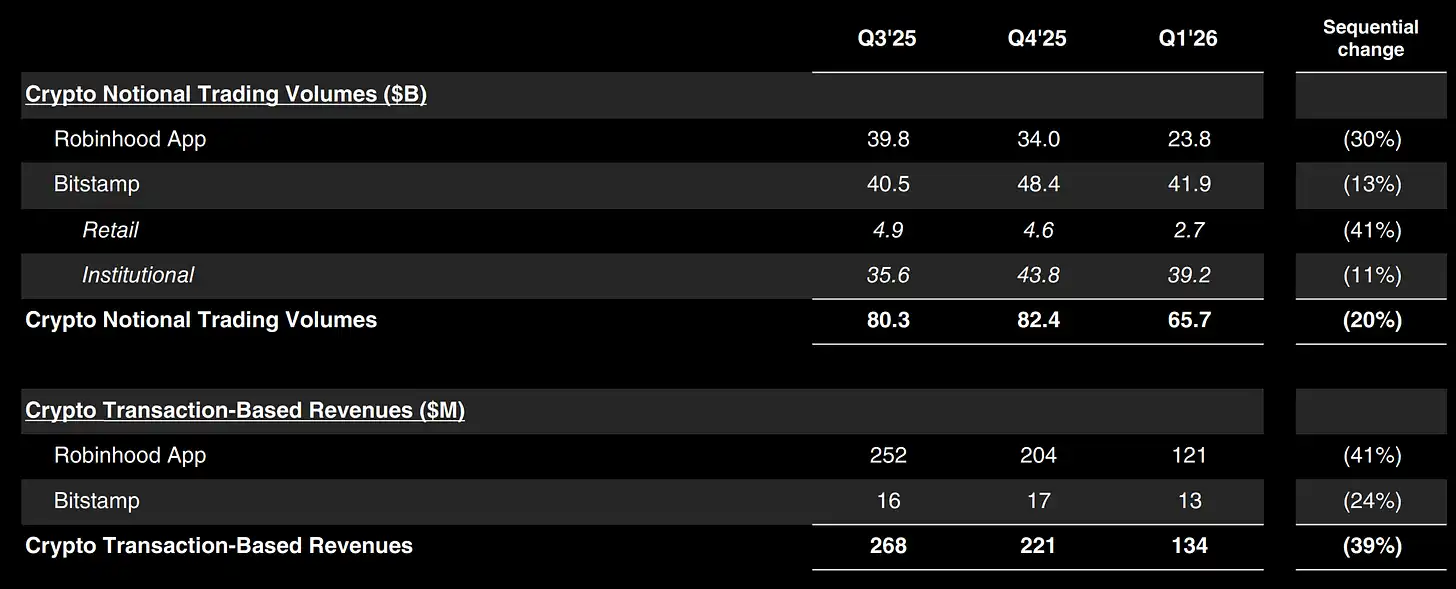
The revenue structure matters because it shows where the business actually monetizes today. In Q1 2026, options generated $260M in transaction revenue, stocks $82M, event contracts $104M, other transaction revenue $43M, and cryptocurrencies $134M. The standout growth line was event contracts, rising from $3M year-over-year to $104M, while crypto revenue fell from $252M to $134M. Therefore, the launch of Robinhood Chain coincides with a time when the company's earnings are still primarily driven by active retail trading, high-margin products, and balance sheet monetization, not by any existing on-chain business line.

This distinction is important for strategy and valuation. Robinhood Chain is not saving the business. It's trying to create a new interface on top of a business that is already functioning. This makes the move more credible because the company has room to experiment. It also makes the move easier to overhype because the existing earnings engine is still rooted in established broker economics.

The rest of the balance sheet and user engagement point in the same direction. Robinhood disclosed a $17B margin book, $16.7B in cash and deposits, $27.4B in retirement assets under custody, and $66B in crypto notional trading volume in Q1 2026, of which $42B came from Bitstamp and $24B from the Robinhood app. This last number is particularly relevant. Bitstamp already makes Robinhood's crypto footprint look more like infrastructure than an isolated retail trading feature.

From Broker App to Financial Super App

The strategic logic of Robinhood now appears more coherent than when the company first began adding disparate products around its core brokerage. In Q1 2026 and subsequent public materials, the company no longer just describes product expansion. It outlines a more complete operating model: brokerage, options, futures, event contracts, banking, Gold, retirement, crypto, wallet, private market access, AI tools, global licenses, tokenized assets, and DeFi-linked yields. Management's talk of building a "global financial ecosystem" is not just corporate speak. It's an attempt to explain how the layers fit together.

The broader stack now includes several parts that would seem incoherent in isolation. Robinhood Banking and higher cash engagement matter because they deepen deposit and balance relationships. Robinhood Gold matters because it increases subscription attach rates and supports premium packaging models. Retirement matters because it lengthens asset lifecycles and dampens pure trading cyclicality. Futures and event contracts matter because they increase engagement and monetization intensity. Crypto matters because it provides 24/7 markets, self-custody rails, and global funding flexibility. Bitstamp matters because it expands institutional and international reach. The wallet matters because it gives Robinhood a credible non-custodial interface. Robinhood Chain matters because it provides a programmable settlement layer where, in principle, all this financial activity can begin to converge.

The company's international direction reinforces the same point. Robinhood's expansion into Canada via WonderFi, its disclosed progress on Singapore regulation, and its description of UK crypto plans. The importance of these steps is not just new territory, but that they create a testing ground for products that don't fully fit within the US retail broker rulebook. Tokenized wrappers and wallet-native products are easier to introduce at the edges of the group than by turning the regulated core of the US app crypto-native overnight.

The strategic sentence is simple: Robinhood Chain matters because it may allow Robinhood to extend its consumer distribution advantage into programmable finance without having to turn its core US brokerage crypto-native overnight. That's why the chain should be read as infrastructure strategy, not launch hype.

What Exactly Is Robinhood Chain

Robinhood Chain's documentation describes it as an Arbitrum Layer 2 chain built on Ethereum, using Ethereum blobs for data availability and ETH as the native gas token. Robinhood Wallet natively supports it, and other EVM wallets can add it manually. Assets can be transferred on-chain using the canonical Arbitrum bridge or partner routing. Public materials also emphasize that the chain is open and permissionless, EVM-compatible, and designed for tokenized real-world assets.

Robinhood's July 2026 launch materials say the chain is built using the Arbitrum platform to "institutional standards" and name Uniswap as the day-one AMM, with Pleiades as a proprietary AMM/proprietary trading venue. Robinhood's technical documentation adds that Stock Tokens are standard ERC-20s, each with a Chainlink price feed, and corporate actions are reflected via on-chain multipliers rather than rebalancing balance changes.

However, public documentation is not equally complete on all infrastructure questions. We found clear docs on connectivity, gas, bridges, token formats, and oracle design, but fewer clear public explanations on sequencer decentralization, governance pathways, fault proof states, or the exact current production roles of each named infrastructure partner. This doesn't mean the system is weak; it means some institutional-grade diligence questions still require more disclosure than the public docs currently provide.

The main takeaway is straightforward. Robinhood Chain is real, but still early. It has infrastructure, partners, and live products attached to it. What it doesn't yet have is proof of sustained liquidity, broad developer adoption, seamless regulatory portability, or material revenue contribution. This distinction matters. A public mainnet and a few live products are enough to take the strategy seriously. They are not enough to prove it.

Stock Tokens and the Legal Reality of On-Chain Stocks

The most important sentence in this article is also the simplest: Robinhood's Stock Tokens should not be described as on-chain stocks. They are tokenized economic exposures to securities through legal wrappers.

Robinhood's on-chain Stock Tokens are described in public materials and prospectus filings as tokenized debt securities issued by Robinhood Assets Jersey Limited. They provide economic exposure to reference shares or ETFs, but users do not obtain direct legal ownership of the underlying securities, beneficial ownership of those shares, or ordinary shareholder rights like voting. The product documentation is clear on this point, and the prospectus framework is clearer than most marketing shorthand around "stock tokens" implies.

The early "Classic Stock Tokens" from Robinhood Europe were legally different again. Those products are described as derivative contracts between users and Robinhood Europe, UAB. They are not transferable to external wallets and can only be opened or closed via the Robinhood Europe platform. The legal boundaries there are even less ambiguous: customers are dealing with derivative exposures, not tokenized claims of holder rights.

The newer on-chain product is more aggressive on distribution but more conservative on legal architecture. That's precisely why it might work. Tokens can behave like crypto assets at the interface layer: on-chain transfer, held in compatible wallets, referenced in DeFi, and priced by oracles. But the underlying claim remains conservative: a Jersey-issued, prospectus-governed, collateralized, limited-recourse debt security referencing underlying shares. Robinhood isn't dismantling securities law. It's packaging around it.

The structure also relies on designated service providers and legal control points. The documents reviewed for the underlying research identify Robinhood Assets Jersey Limited as issuer and tokenizer, Bitstamp Global Ltd. as an authorized offeror in the reviewed terms, and Alpaca Securities LLC as custodian and broker for the reference series. These roles matter because tokenized exposure, aspiring to be globally portable, remains in practice knotted together by highly traditional financial plumbing.

Even the asset-backing story is more complex than the phrase suggests. Robinhood's materials state each token is 1:1 backed by underlying shares. The prospectus framework describes segregated accounts per series but also permits securities lending. During the life of a securities loan transaction, the issuer's economic exposure runs through collateral and contractual rights, not through untouched shares sitting statically in custody. This difference could matter in stress conditions. It introduces borrower, collateral, operational, and recovery-value risks that are alien to the simple intuition a retail user might derive from the product name.

Corporate actions and dividends are similarly indirect. Robinhood's materials explain dividends are handled through a multiplier mechanism adjusting token reference economics, not through direct shareholder distributions to users. The prospectus also flags withholding tax and Section 871(m) considerations for dividend equivalents. Again, this doesn't make the product defective. It makes the product structured. Users should buy this structure with their eyes open.

Transferability is real but not absolute. Robinhood says on-chain Stock Tokens can be held and transferred on supported blockchains and compatible wallets. At the same time, documentation allows for pausing, freezing, and restrictions under certain conditions, and purchase or redemption remains subject to KYC, AML, sanctions compliance, and jurisdictional exclusions. This is closer to a programmable, wrapped, conditional product than an unrestricted bearer instrument.

The business conclusion is straightforward. The product is aggressive on distribution but conservative on legal architecture. This combination is not a flaw. It's likely the only viable route to market. But it also means Stock Tokens should be evaluated as a legal and market structure experiment making economic exposure portable, not as an on-chain replacement for actual stock ownership.

Digital Assets as Infrastructure, Not Just Trading Revenue

Robinhood's digital assets strategy is now too broad to fit back into the old "crypto trading revenue" box. Crypto as a revenue line still matters, but its role as infrastructure is becoming more important. This shift is precisely where the deeper significance of Robinhood Chain lies.

Crypto trading revenue still matters, but it no longer tells the whole story. In Q1 2026, Robinhood generated $134M in crypto transaction revenue, a significant decline year-over-year, despite reaching $66B in crypto notional trading volume. Of that $66B notional volume, $42B came from Bitstamp and $24B from the Robinhood app. In other words, Robinhood's digital assets footprint has already outgrown its consumer crypto label.
Bitstamp is central here. Robinhood completed its ~$200M cash acquisition of Bitstamp in June 2025, explicitly positioning the deal as gaining global exchange capabilities, institutional clients, white-label infrastructure, staking, institutional lending, and broader license coverage. In subsequent filings, Robinhood has already described Bitstamp as extending the institutional side of the business into services like on-exchange lending, OTC settlement, post-trade settlement, and institutional perps. A company doesn't talk this way if it still views crypto as an adjunct to its retail business.

Robinhood Earn makes the same point from the consumer side. Public materials describe a simple flow: users buy USDG on Robinhood Crypto, move it into a self-custody wallet, and then lend via Morpho. Robinhood carefully discloses that the wallet is non-custodial and withdrawal times depend on pool liquidity. The Morpho side describes Robinhood Earn as a progressive rollout to eligible US users. This is more than adding yield to cash balances; it's educating the Robinhood userbase that DeFi can live behind an interface without requiring crypto-native behavior from the customer.

The stablecoin angle matters because it could prove more durable than any single speculative trading cycle. If Robinhood can turn stablecoin balances into an invisible funding rail, it gains a portable, programmable financing layer for wallet-native activity, international flows, and future collateral use cases. In that model, stablecoins are not the product itself but the settlement medium underlying products. That's a strategically more important role.

Robinhood Wallet is the user-side bridge to this tech stack. Supporting materials show the wallet already spans multiple major blockchains and now includes Robinhood Chain itself. This matters because wallet strategy is where broker distribution and crypto infrastructure meet. Brokers can custody, wallets can compose. Robinhood increasingly wants to have both within the same customer relationship.

Why Lighter Matters

Lighter is one of the clearest examples of Robinhood's infrastructure positioning. Lighter gives Robinhood access to advanced on-chain trading design without having to build a crypto-native perpetual exchange from scratch. Public materials describe Lighter as a custom zero-knowledge rollup with order matching and clearing proofs, price-time priority execution, and an emergency exit design if certain operations aren't processed on time. Robinhood Wallet materials describe perpetual contracts within the wallet, including liquidation mechanics and funding rate dynamics, with the underlying decentralized protocol responsible for handling liquidations.
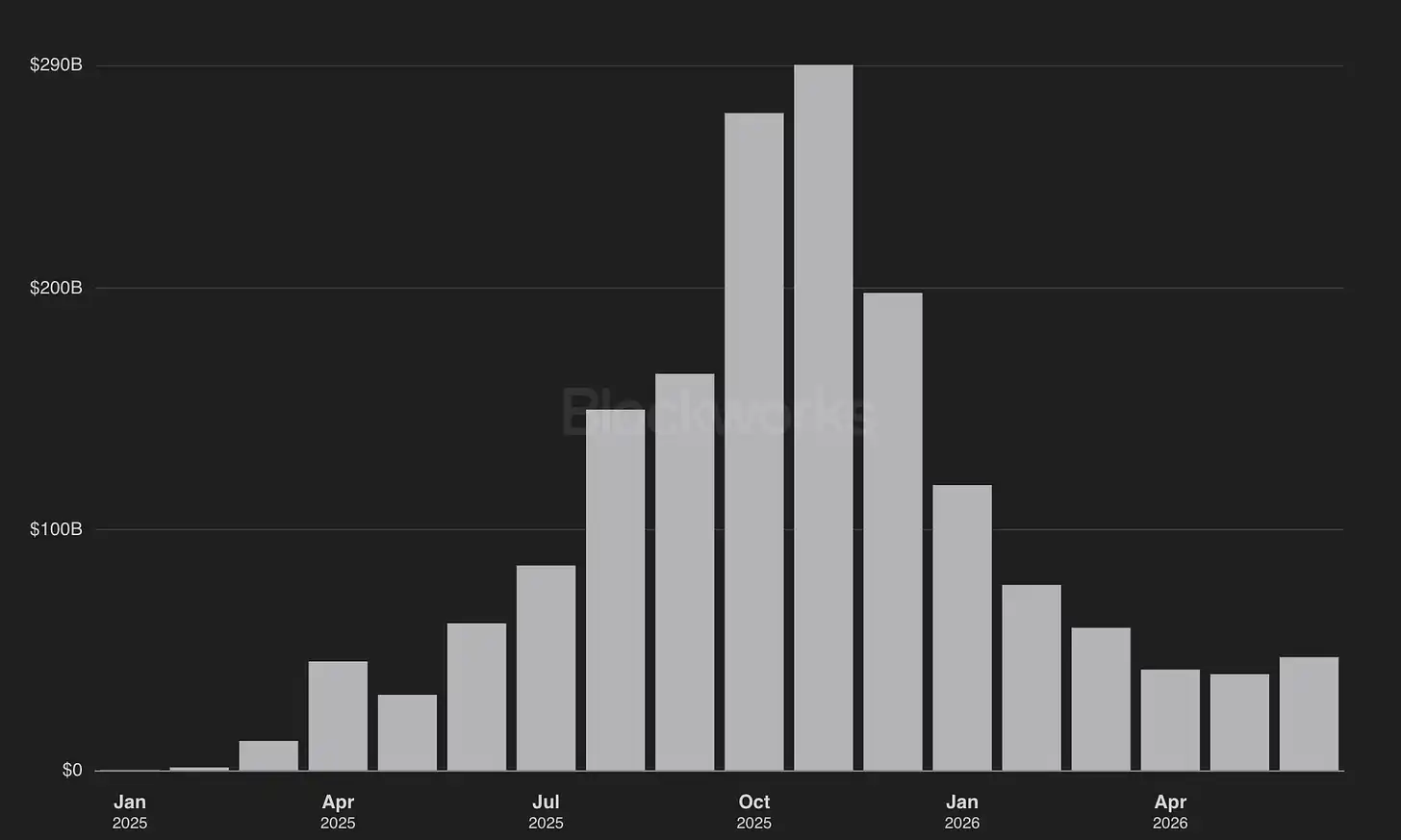
Perpetual contracts notional volume (Source: Blockworks)
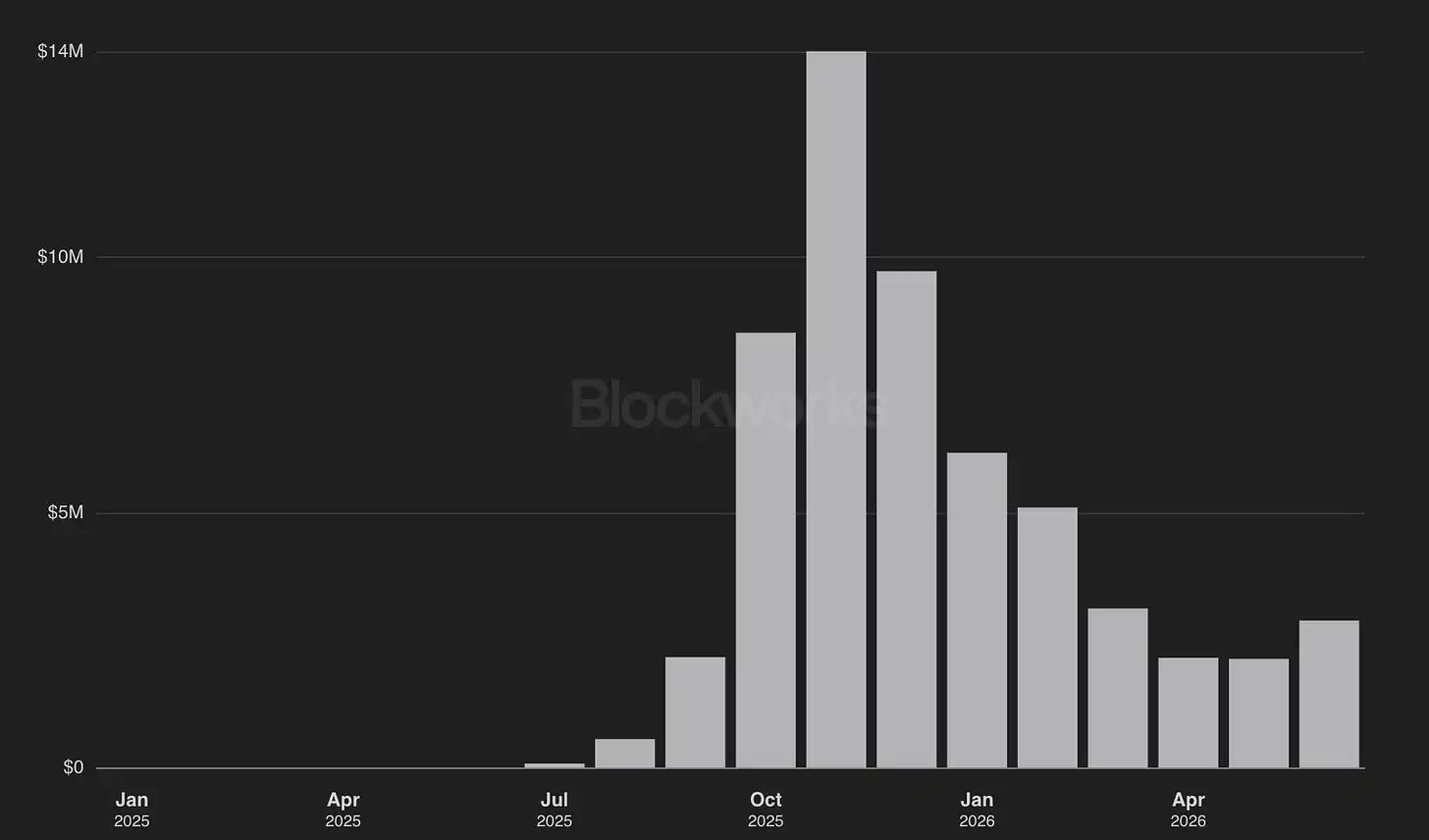
Revenue (Source: Blockworks)
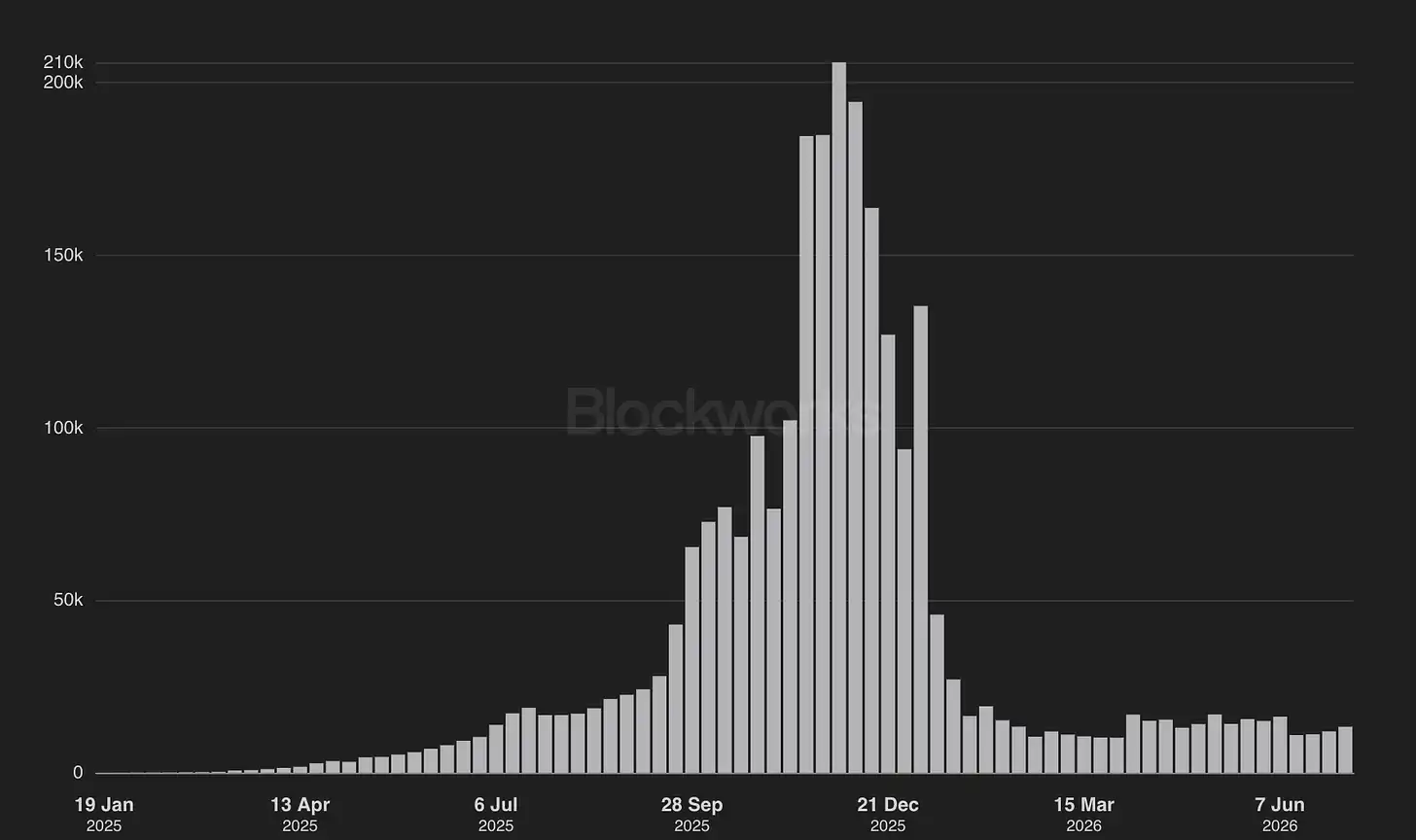
Traders (Source: Blockworks)

This is useful strategically in several ways. It expands the wallet's engagement surface. It lets Robinhood test high-frequency, high-engagement trading demand in a self-custody environment. It shortens time to market. It exposes Robinhood to the economic model and user behavior of global 24/7 trading without shifting the entire burden onto the regulated US broker architecture.

But Lighter also heightens the brand challenge. Perpetual contracts bring leverage, liquidation, incentive-sensitive liquidity, and retail loss risk closer to the Robinhood ecosystem. Lighter's own documentation explicitly states that RWA markets trade around the clock and use margin mechanisms. This may be commercially attractive, but it's also the kind of product layer that can bring political, regulatory, and reputational friction for a mass-market broker.

So the correct conclusion is narrower than markets might hope. Lighter is not proof that Robinhood can own a perpetuals economy like Hyperliquid, but rather proof that Robinhood can plug crypto-native trading infrastructure into its consumer wallet funnel. This makes strategic sense, but is not the same as owning the trading venue.

Risk Disclaimer:

insights4.vc and its newsletter provide research and information for educational purposes only and should not be considered professional advice of any kind. We do not advocate any investment actions, including buying, selling, or holding digital assets.

The content reflects the authors' opinions only and does not constitute financial advice. Please conduct your own due diligence before engaging with digital assets or related technologies, as they are high-risk and their value can fluctuate significantly.


Trend Kriptolar

İlgili Sorular

QAccording to the article, what is the core contradiction or paradox at the heart of Robinhood Chain's strategy?

AThe core paradox is that Robinhood is building a 'permissionless' financial chain, but the economically significant assets on it are not truly permissionless financial objects. They are legally constrained, packaged claims (like its tokenized stock exposure), relying on issuers, custodians, KYC controls, and specific jurisdictions. The opportunity lies in hiding this complexity to make the product feel simple and global, but the risk is that users, developers, or regulators might reject this illusion, creating product liability or regulatory roadblocks.

QWhat are Robinhood's 'Stock Tokens' legally, and what key shareholder rights do they NOT confer to the user?

ALegally, Robinhood's Stock Tokens are tokenized debt securities issued by Robinhood Assets Jersey Limited. They provide economic exposure to a reference stock or ETF but do NOT confer direct legal ownership of the underlying securities, beneficial ownership of the shares, or shareholder rights such as voting rights.

QHow does the article differentiate between Robinhood's role in cryptocurrency as a source of 'trading revenue' versus its role as 'infrastructure'?

AThe article states that while crypto trading revenue is still a significant line item (e.g., $134M in Q1 2026), its role is broadening beyond that. Cryptocurrency is increasingly becoming infrastructure for Robinhood. This is evidenced by the Bitstamp acquisition (providing global exchange capabilities and institutional services), the Robinhood Earn program (integrating DeFi lending behind a simple interface), and the strategic use of stablecoins as a portable, programmable settlement layer for future financial activities on platforms like Robinhood Chain.

QWhat is the strategic significance of the Lighter platform for Robinhood, according to the analysis?

ALighter provides Robinhood with access to advanced on-chain trading infrastructure (specifically for perpetual contracts) without having to build it from scratch. Strategically, it allows Robinhood to test high-engagement, 24/7 trading demand within a self-custody environment (like its Wallet), expand the utility of its wallet, and shorten product development time. It's a proof point that Robinhood can connect crypto-native trading infrastructure to its consumer distribution funnel, though it is distinct from owning the entire trading venue economy.

QWhy does the author argue that Robinhood Chain is launched from a position of 'operational strength' rather than as a defensive move?

AThe author points to Robinhood's current revenue structure, which is still primarily driven by traditional, high-margin brokerage activities like options and stocks, along with a growing events contracts business. The crypto revenue line, while significant, has declined. This means Robinhood Chain is not an attempt to 'save' a failing business but an attempt to create a new interface and infrastructure layer on top of an already functioning and profitable core brokerage business, giving the company credible room to experiment.

İlgili Okumalar

Strategy's Accounting Gimmick: The Cap on BTC Sales Far Exceeds $1.25 Billion

The article, originally from Bankless, discusses how MicroStrategy's (MSTR) recent Bitcoin (BTC) sales reveal a much larger potential selling capacity than the widely reported $1.25 billion "reserve-building" cap. On July 7, MicroStrategy disclosed a sale of 3,588 BTC (~$216M) to pay dividends for its STRAT (STRC) preferred shares and replenish its USD Reserve. Crucially, the company stated this sale did not count against its stated $1.25 billion "reserve-building capacity." The analysis explains that MicroStrategy's "BTC Monetization Plan," part of its broader "Digital Credit Capital Framework," actually outlines three main purposes for selling BTC, only one of which has the $1.25B cap: 1. **Building the USD Reserve** (capped at $1.25B). 2. **Covering preferred share/ debt costs** (replenishing the reserve after payments). 3. **Funding buybacks** (up to $10B for preferred shares and $10B for MSTR common stock). The key nuance is the accounting distinction between "building" the reserve (selling BTC before making payments) and "replenishing" it (selling BTC after using reserve funds for payments). While functionally the same—converting BTC to cash for obligations—only "building" counts against the publicized $1.25B limit. This means sales for "replenishing" and the $20B+ buyback pool allow for total potential sales exceeding $30B. The article frames this as part of MicroStrategy's shift from a simple "buy and hold" Bitcoin narrative to an "active capital management" model, where BTC becomes a balance-sheet tool to manage pressures between its common stock, preferred shares, dollar reserve, and Bitcoin holdings. This creates complex trade-offs and potential conflicts of interest. The conclusion warns investors that the $1.25B figure is not a total sales ceiling. Understanding terms like "build," "replenish," and "repurchase" in MicroStrategy's disclosures is now critical, as the company navigates a new, more complex role as an actively managed entity rather than a passive Bitcoin accumulator.

Odaily星球日报1 saat önce

Strategy's Accounting Gimmick: The Cap on BTC Sales Far Exceeds $1.25 Billion

Odaily星球日报1 saat önce

The Networking Game in Silicon Valley's Elite Circles: Those with Connections Get $50 Million, While the Truly Talented Can't Raise Money?

"Silicon Valley's Meritocracy to Relationship Game: How Networks Now Trump Talent." The article argues that Silicon Valley has shifted from a meritocracy to a "kingmaker" system where connections and background outweigh true ability. Key factors driving this change include: 1. **AI-Distorted Expectations:** Unprecedented growth curves (e.g., Anthropic) have led VCs to seek only "sure things" or pattern-match against past successes. 2. **Capital Concentration:** LP funds are concentrated in a few large, multi-stage funds, pushing VCs to overpay for hot deals to secure capital. 3. **VC Professionalization:** The industry has become a standardized career path, attracting conformist "NPCs" rather than independent thinkers. The long IPO timeline incentivizes safe, consensus bets for career advancement over risky, fund-returning outliers. This consensus capital fuels consensus founders. Startups are now a standard career option, with accelerators pressuring uniform ideas (e.g., 81% AI). Founders from elite schools (Stanford, OpenAI) easily raise millions based on pedigree, not proof. Large funds preemptively back "centrally cast" teams with $10-50M war chests to dominate categories, sidelining outsiders. The "kingmaker" strategy has downstream effects: it encourages aggressive, sometimes fraudulent, revenue reporting and allows founders to sell significant secondary shares early, attracting grifters. The author predicts a mean reversion. History shows the hottest trends rarely produce the most valuable companies. They advocate backing underestimated outsiders with "a chip on their shoulder" over anointed insiders, believing true meritocracy will ultimately win. "Those chasing the herd are set up for slaughter."

marsbit1 saat önce

The Networking Game in Silicon Valley's Elite Circles: Those with Connections Get $50 Million, While the Truly Talented Can't Raise Money?

marsbit1 saat önce

From 2 Million Monthly Active Users to Zero: Zapper's Demise in the "Maturation" of DeFi

From 2M MAU to Zero: The Demise of Zapper in a Maturing DeFi Landscape On July 8, 2026, Zapper co-founder Seb Audet announced the platform's full shutdown. Once a DeFi star with 2 million monthly active users, $13B in processed transactions, and $16.5M in funding, Zapper's journey ends. Born in 2020 from the merger of DeFiZap and DeFiSnap, Zapper rode the "DeFi Summer" wave. It became essential for users to track complex, multi-protocol yield farming positions across chains. At its peak, it supported 14 chains, 450+ protocols, and 7000+ tokens, with its signature "Zap" feature simplifying multi-step DeFi actions. However, sustainable revenue never materialized. Its primary model—taking small fees from DEX aggregation—faced fierce competition and squeezed margins. Meanwhile, maintaining its extensive, real-time data indexing system was costly. Crucially, the DeFi ecosystem matured, with activity and liquidity concentrating in fewer top protocols. The core demand for a complex, multi-protocol dashboard waned as user behavior simplified. Zapper attempted multiple pivots that failed to gain traction: an NFT-based points system (2021), a social app called Chainchat (2023), and plans for a ZAP token and open protocol (2024). These efforts reflected a persistent "blockchain-native" mindset focused on creating new C端 (consumer) needs rather than addressing existing pain points or bolstering its revenue-generating products. The article contrasts Zapper with DeBank, which successfully narrowed its asset-tracking focus while developing Rabby Wallet—a revenue-stabilizing, competitive product. Zapper's story serves as a cautionary tale for tooling projects: over-immersion in a purist vision, coupled with an inability to adapt business models to market shifts—like the consolidation of DeFi activity—can be fatal, even for once-dominant platforms.

marsbit2 saat önce

From 2 Million Monthly Active Users to Zero: Zapper's Demise in the "Maturation" of DeFi

marsbit2 saat önce

İşlemler

Spot

Popüler Makaleler

$S$ Nedir

SPERO'yu Anlamak: Kapsamlı Bir Genel Bakış SPERO'ya Giriş İnovasyonun manzarası gelişmeye devam ederken, web3 teknolojilerinin ve kripto para projelerinin ortaya çıkışı dijital geleceği şekillendirmede önemli bir rol oynamaktadır. Bu dinamik alanda dikkat çeken projelerden biri SPERO, $$s$$ olarak adlandırılmaktadır. Bu makale, SPERO hakkında ayrıntılı bilgi toplamak ve sunmak amacıyla, meraklılar ve yatırımcıların web3 ve kripto alanlarındaki temellerini, hedeflerini ve yeniliklerini anlamalarına yardımcı olmayı amaçlamaktadır. SPERO,$$s$$ Nedir? SPERO,$$s$$, kripto alanında merkeziyetsizlik ve blok zinciri teknolojisi ilkelerini kullanarak etkileşimi, faydayı ve finansal kapsayıcılığı teşvik eden bir ekosistem yaratmayı amaçlayan benzersiz bir projedir. Proje, kullanıcıların yenilikçi finansal çözümler ve hizmetler sunarak eşler arası etkileşimleri yeni yollarla kolaylaştırmayı hedeflemektedir. SPERO,$$s$$'nin temel amacı, bireyleri güçlendirmek ve kripto para alanındaki kullanıcı deneyimini artıran araçlar ve platformlar sağlamaktır. Bu, daha esnek işlem yöntemlerini mümkün kılmayı, topluluk odaklı girişimleri teşvik etmeyi ve merkeziyetsiz uygulamalar (dApp'ler) aracılığıyla finansal fırsatlar yaratmayı içermektedir. SPERO,$$s$$'nin temel vizyonu kapsayıcılık etrafında dönmekte olup, geleneksel finansal sistemlerdeki boşlukları kapatmayı ve blok zinciri teknolojisinin faydalarından yararlanmayı hedeflemektedir. SPERO,$$s$$'nin Yaratıcısı Kimdir? SPERO,$$s$$'nin yaratıcısının kimliği bir miktar belirsizdir, çünkü kurucusu(ları) hakkında ayrıntılı arka plan bilgisi sağlayan sınırlı kamuya açık kaynaklar bulunmaktadır. Bu şeffaflık eksikliği, projenin merkeziyetsizlik taahhüdünden kaynaklanabilir—birçok web3 projesinin paylaştığı bir etik anlayışı, bireysel tanınmanın yerine kolektif katkıları önceliklendirmektedir. Topluluk ve onun kolektif hedefleri etrafında tartışmaları merkezileştirerek, SPERO,$$s$$, belirli bireyleri öne çıkarmadan güçlendirme özünü taşımaktadır. Bu nedenle, SPERO'nun etik anlayışını ve misyonunu anlamak, tek bir yaratıcının kimliğini belirlemekten daha önemlidir. SPERO,$$s$$'nin Yatırımcıları Kimlerdir? SPERO,$$s$$, kripto sektöründe yeniliği teşvik etmeye adanmış girişim sermayedarlarından melek yatırımcılara kadar çeşitli yatırımcılar tarafından desteklenmektedir. Bu yatırımcıların odak noktası genellikle SPERO'nun misyonuyla uyumlu olup, toplumsal teknolojik ilerlemeyi, finansal kapsayıcılığı ve merkeziyetsiz yönetimi vaat eden projeleri önceliklendirmektedir. Bu yatırımcı temelleri, yalnızca yenilikçi ürünler sunan projelere değil, aynı zamanda blok zinciri topluluğuna ve ekosistemlerine olumlu katkılarda bulunan projelere de ilgi duymaktadır. Bu yatırımcıların desteği, SPERO,$$s$$'yi hızla gelişen kripto projeleri alanında dikkate değer bir rakip haline getirmektedir. SPERO,$$s$$ Nasıl Çalışır? SPERO,$$s$$, onu geleneksel kripto para projelerinden ayıran çok yönlü bir çerçeve kullanmaktadır. İşte benzersizliğini ve yeniliğini vurgulayan bazı temel özellikler: Merkeziyetsiz Yönetim: SPERO,$$s$$, kullanıcıların projenin geleceğiyle ilgili karar alma süreçlerine aktif olarak katılmalarını sağlayan merkeziyetsiz yönetim modellerini entegre etmektedir. Bu yaklaşım, topluluk üyeleri arasında sahiplik ve hesap verebilirlik duygusunu teşvik etmektedir. Token Kullanımı: SPERO,$$s$$, ekosistem içinde çeşitli işlevler sunmak üzere tasarlanmış kendi kripto para token'ını kullanmaktadır. Bu token'lar, işlemleri, ödülleri ve platformda sunulan hizmetlerin kolaylaştırılmasını sağlayarak genel etkileşimi ve faydayı artırmaktadır. Katmanlı Mimari: SPERO,$$s$$'nin teknik mimarisi, modülerlik ve ölçeklenebilirliği destekleyerek projenin evrimi sırasında ek özelliklerin ve uygulamaların sorunsuz bir şekilde entegrasyonuna olanak tanımaktadır. Bu uyum sağlama yeteneği, sürekli değişen kripto manzarasında geçerliliği sürdürmek için hayati öneme sahiptir. Topluluk Katılımı: Proje, işbirliği ve geri bildirim teşvik eden mekanizmalar kullanarak topluluk odaklı girişimlere vurgu yapmaktadır. Güçlü bir topluluk oluşturarak, SPERO,$$s$$, kullanıcı ihtiyaçlarını daha iyi karşılayabilir ve piyasa trendlerine uyum sağlayabilir. Kapsayıcılığa Odaklanma: Düşük işlem ücretleri ve kullanıcı dostu arayüzler sunarak, SPERO,$$s$$, daha önce kripto alanında yer almamış bireyler de dahil olmak üzere çeşitli bir kullanıcı tabanını çekmeyi hedeflemektedir. Bu kapsayıcılık taahhüdü, erişilebilirlik yoluyla güçlendirme misyonuyla uyumludur. SPERO,$$s$$ Zaman Çizelgesi Bir projenin tarihini anlamak, gelişim yolculuğu ve kilometre taşları hakkında kritik bilgiler sağlar. Aşağıda, SPERO,$$s$$'nin evriminde önemli olayları haritalayan önerilen bir zaman çizelgesi bulunmaktadır: Kavram Geliştirme ve Fikir Aşaması: SPERO,$$s$$'nin temelini oluşturan ilk fikirler, blok zinciri endüstrisindeki merkeziyetsizlik ve topluluk odaklılık ilkeleriyle yakından uyumlu olarak geliştirildi. Proje Beyaz Kağıdının Yayınlanması: Kavramsal aşamayı takiben, SPERO,$$s$$'nin vizyonunu, hedeflerini ve teknolojik altyapısını ayrıntılı bir şekilde açıklayan kapsamlı bir beyaz kağıt yayımlandı ve topluluk ilgisini ve geri bildirimini toplamak amacıyla sunuldu. Topluluk Oluşturma ve Erken Katılımlar: Projenin hedefleri etrafında tartışmalar yürüterek destek toplamak ve erken benimseyenler ile potansiyel yatırımcılar için bir topluluk oluşturmak amacıyla aktif iletişim çabaları gerçekleştirildi. Token Üretim Etkinliği: SPERO,$$s$$, yerel token'larını erken destekçilere dağıtmak ve ekosistem içinde başlangıç likiditesini sağlamak amacıyla bir token üretim etkinliği (TGE) gerçekleştirdi. İlk dApp'in Yayınlanması: SPERO,$$s$$ ile ilişkili ilk merkeziyetsiz uygulama (dApp) faaliyete geçti ve kullanıcıların platformun temel işlevleriyle etkileşimde bulunmalarını sağladı. Sürekli Gelişim ve Ortaklıklar: Projenin tekliflerine sürekli güncellemeler ve iyileştirmeler yapılmakta olup, blok zinciri alanındaki diğer oyuncularla stratejik ortaklıklar, SPERO,$$s$$'yi rekabetçi ve gelişen bir oyuncu haline getirmiştir. Sonuç SPERO,$$s$$, web3 ve kripto paranın finansal sistemleri devrim niteliğinde dönüştürme ve bireyleri güçlendirme potansiyelinin bir kanıtıdır. Merkeziyetsiz yönetime, topluluk katılımına ve yenilikçi tasarlanmış işlevselliğe olan bağlılığıyla, daha kapsayıcı bir finansal manzaraya doğru bir yol açmaktadır. Hızla gelişen kripto alanındaki herhangi bir yatırımda olduğu gibi, potansiyel yatırımcılar ve kullanıcılar, SPERO,$$s$$ içindeki devam eden gelişmelerle ilgili olarak kapsamlı bir araştırma yapmaları ve düşünceli bir şekilde katılmaları teşvik edilmektedir. Proje, kripto endüstrisinin yenilikçi ruhunu sergileyerek, sayısız olasılığını keşfetmeye davet etmektedir. SPERO,$$s$$'nin yolculuğu hala devam ederken, temel ilkeleri, teknoloji, finans ve birbirimizle etkileşim biçimimizi etkileyebilir.

166 Toplam GörüntülenmeYayınlanma 2024.12.17Güncellenme 2024.12.17

$S$ Nedir

AGENT S Nedir

Agent S: Web3'te Otonom Etkileşimin Geleceği Giriş Web3 ve kripto para dünyasında sürekli gelişen manzarada, yenilikler bireylerin dijital platformlarla etkileşim biçimlerini sürekli olarak yeniden tanımlıyor. Bu tür öncü projelerden biri olan Agent S, açık ajans çerçevesi aracılığıyla insan-bilgisayar etkileşimini devrim niteliğinde değiştirmeyi vaat ediyor. Otonom etkileşimlerin yolunu açarak, Agent S karmaşık görevleri basitleştirmeyi ve yapay zeka (AI) alanında dönüştürücü uygulamalar sunmayı hedefliyor. Bu detaylı inceleme, projenin karmaşıklıklarına, benzersiz özelliklerine ve kripto para alanındaki etkilerine dalacaktır. Agent S Nedir? Agent S, bilgisayar görevlerinin otomasyonunda üç temel zorluğu ele almak üzere özel olarak tasarlanmış çığır açıcı bir açık ajans çerçevesidir: Alan Spesifik Bilgi Edinimi: Çerçeve, çeşitli dış bilgi kaynaklarından ve iç deneyimlerden akıllıca öğrenir. Bu çift yönlü yaklaşım, alan spesifik bilgi açısından zengin bir veri havuzu oluşturmasını sağlar ve görev yürütmedeki performansını artırır. Uzun Görev Ufukları Üzerinde Planlama: Agent S, karmaşık görevlerin verimli bir şekilde parçalanmasını ve yürütülmesini kolaylaştıran deneyim artırımlı hiyerarşik planlama kullanır. Bu özellik, çoklu alt görevleri etkili ve verimli bir şekilde yönetme yeteneğini önemli ölçüde artırır. Dinamik, Homojen Olmayan Arayüzlerle Başlama: Proje, ajanlar ve kullanıcılar arasındaki etkileşimi geliştiren yenilikçi bir çözüm olan Ajan-Bilgisayar Arayüzü'ni (ACI) tanıtmaktadır. Çok Modlu Büyük Dil Modellerini (MLLM'ler) kullanarak, Agent S çeşitli grafik kullanıcı arayüzlerini sorunsuz bir şekilde gezinebilir ve manipüle edebilir. Bu öncü özellikler aracılığıyla, Agent S, makinelerle insan etkileşimini otomatikleştirmede karşılaşılan karmaşıklıkları ele alan sağlam bir çerçeve sunarak, AI ve ötesinde birçok uygulama için zemin hazırlıyor. Agent S'nin Yaratıcısı Kimdir? Agent S'nin kavramı temelde yenilikçi olsa da, yaratıcısı hakkında spesifik bilgiler belirsizliğini koruyor. Yaratıcı şu anda bilinmiyor, bu da projenin yeni aşamasını veya kurucu üyeleri gizli tutma stratejik tercihini vurguluyor. Anonimlikten bağımsız olarak, odak çerçevenin yetenekleri ve potansiyeli üzerinde kalıyor. Agent S'nin Yatırımcıları Kimlerdir? Agent S, kriptografik ekosistemde oldukça yeni olduğundan, yatırımcıları ve finansal destekçileri hakkında ayrıntılı bilgiler açıkça belgelenmemiştir. Projeyi destekleyen yatırım temelleri veya organizasyonları hakkında kamuya açık bilgilerdeki eksiklik, finansman yapısı ve gelişim yol haritası hakkında sorular doğuruyor. Destekleyicilerin anlaşılması, projenin sürdürülebilirliğini ve potansiyel pazar etkisini değerlendirmek için kritik öneme sahiptir. Agent S Nasıl Çalışır? Agent S'nin temelinde, çeşitli ortamlarda etkili bir şekilde çalışmasını sağlayan son teknoloji bir sistem yatmaktadır. İşleyiş modeli birkaç ana özellik etrafında inşa edilmiştir: İnsan Benzeri Bilgisayar Etkileşimi: Çerçeve, bilgisayarlarla etkileşimleri daha sezgisel hale getirmeyi amaçlayan gelişmiş AI planlaması sunar. Görev yürütmedeki insan davranışını taklit ederek, kullanıcı deneyimlerini yükseltmeyi vaat eder. Anlatı Belleği: Yüksek düzeyde deneyimlerden yararlanmak için kullanılan Agent S, görev geçmişlerini takip etmek amacıyla anlatı belleğini kullanarak karar verme süreçlerini geliştirir. Episodik Bellek: Bu özellik, kullanıcılara adım adım rehberlik sağlayarak, çerçevenin görevler gelişirken bağlamsal destek sunmasına olanak tanır. OpenACI Desteği: Yerel olarak çalışabilme yeteneği ile Agent S, kullanıcıların etkileşimleri ve iş akışları üzerinde kontrol sağlamasına olanak tanır ve Web3'ün merkeziyetsiz felsefesiyle uyumlu hale gelir. Dış API'lerle Kolay Entegrasyon: Çeşitli AI platformlarıyla uyumluluğu ve çok yönlülüğü, Agent S'nin mevcut teknolojik ekosistemlere sorunsuz bir şekilde entegre olmasını sağlar ve geliştiriciler ile organizasyonlar için cazip bir seçenek haline getirir. Bu işlevsellikler, Agent S'nin kripto alanındaki benzersiz konumuna katkıda bulunarak, karmaşık, çok aşamalı görevleri minimum insan müdahalesi ile otomatikleştirir. Proje geliştikçe, Web3'teki potansiyel uygulamaları dijital etkileşimlerin nasıl gelişeceğini yeniden tanımlayabilir. Agent S'nin Zaman Çizelgesi Agent S'nin gelişimi ve kilometre taşları, önemli olaylarını vurgulayan bir zaman çizelgesinde özetlenebilir: 27 Eylül 2024: Agent S'nin kavramı, “Bilgisayarları İnsan Gibi Kullanan Açık Bir Ajans Çerçevesi” başlıklı kapsamlı bir araştırma makalesi ile tanıtıldı ve projenin temelini sergiledi. 10 Ekim 2024: Araştırma makalesi arXiv'de kamuya açık olarak yayınlandı ve çerçevenin derinlemesine bir incelemesini ve OSWorld benchmark'ına dayalı performans değerlendirmesini sundu. 12 Ekim 2024: Agent S'nin yetenekleri ve özellikleri hakkında görsel bir içgörü sağlayan bir video sunumu yayımlandı ve potansiyel kullanıcılar ve yatırımcılarla daha fazla etkileşim sağlandı. Bu zaman çizelgesindeki işaretler, sadece Agent S'nin ilerlemesini değil, aynı zamanda şeffaflık ve topluluk katılımına olan bağlılığını da göstermektedir. Agent S Hakkında Ana Noktalar Agent S çerçevesi gelişmeye devam ederken, birkaç ana özellik öne çıkmakta ve yenilikçi doğasını ve potansiyelini vurgulamaktadır: Yenilikçi Çerçeve: İnsan etkileşimine benzer bir bilgisayar kullanımı sağlamak üzere tasarlanan Agent S, görev otomasyonuna yeni bir yaklaşım getiriyor. Otonom Etkileşim: GUI aracılığıyla bilgisayarlarla otonom olarak etkileşim kurabilme yeteneği, daha akıllı ve verimli hesaplama çözümlerine doğru bir sıçrama anlamına geliyor. Karmaşık Görev Otomasyonu: Sağlam metodolojisi ile karmaşık, çok aşamalı görevleri otomatikleştirerek süreçleri daha hızlı ve daha az hata payı ile gerçekleştirebilir. Sürekli İyileştirme: Öğrenme mekanizmaları, Agent S'nin geçmiş deneyimlerden öğrenmesini sağlar ve sürekli olarak performansını ve etkinliğini artırır. Çok Yönlülük: OSWorld ve WindowsAgentArena gibi farklı işletim ortamlarında uyumlu olması, geniş bir uygulama yelpazesine hizmet edebilmesini sağlar. Agent S, Web3 ve kripto alanında kendini konumlandırırken, etkileşim yeteneklerini artırma ve süreçleri otomatikleştirme potansiyeli, AI teknolojilerinde önemli bir ilerlemeyi temsil etmektedir. Yenilikçi çerçevesi aracılığıyla, Agent S dijital etkileşimlerin geleceğini örneklemekte ve çeşitli sektörlerde kullanıcılar için daha sorunsuz ve verimli bir deneyim vaat etmektedir. Sonuç Agent S, AI ve Web3'ün birleşiminde cesur bir sıçramayı temsil ediyor ve teknoloji ile etkileşim biçimimizi yeniden tanımlama kapasitesine sahip. Henüz erken aşamalarında olmasına rağmen, uygulama olanakları geniş ve çekici. Kritik zorlukları ele alan kapsamlı çerçevesi ile Agent S, otonom etkileşimleri dijital deneyimin ön plana çıkmasına taşımayı hedefliyor. Kripto para ve merkeziyetsizlik alanlarına daha derinlemesine girdikçe, Agent S gibi projelerin teknoloji ve insan-bilgisayar işbirliğinin geleceğini şekillendirmede önemli bir rol oynayacağı kesin.

649 Toplam GörüntülenmeYayınlanma 2025.01.14Güncellenme 2025.01.14

AGENT S Nedir

S Nasıl Satın Alınır

HTX.com’a hoş geldiniz! Sonic (S) satın alma işlemlerini basit ve kullanışlı bir hâle getirdik. Adım adım açıkladığımız rehberimizi takip ederek kripto yolculuğunuza başlayın. 1. Adım: HTX Hesabınızı OluşturunHTX'te ücretsiz bir hesap açmak için e-posta adresinizi veya telefon numaranızı kullanın. Sorunsuzca kaydolun ve tüm özelliklerin kilidini açın. Hesabımı Aç2. Adım: Kripto Satın Al Bölümüne Gidin ve Ödeme Yönteminizi SeçinKredi/Banka Kartı: Visa veya Mastercard'ınızı kullanarak anında Sonic (S) satın alın.Bakiye: Sorunsuz bir şekilde işlem yapmak için HTX hesap bakiyenizdeki fonları kullanın.Üçüncü Taraflar: Kullanımı kolaylaştırmak için Google Pay ve Apple Pay gibi popüler ödeme yöntemlerini ekledik.P2P: HTX'teki diğer kullanıcılarla doğrudan işlem yapın.Borsa Dışı (OTC): Yatırımcılar için kişiye özel hizmetler ve rekabetçi döviz kurları sunuyoruz.3. Adım: Sonic (S) Varlıklarınızı SaklayınSonic (S) satın aldıktan sonra HTX hesabınızda saklayın. Alternatif olarak, blok zinciri transferi yoluyla başka bir yere gönderebilir veya diğer kripto para birimlerini takas etmek için kullanabilirsiniz.4. Adım: Sonic (S) Varlıklarınızla İşlem YapınHTX'in spot piyasasında Sonic (S) ile kolayca işlemler yapın.Hesabınıza erişin, işlem çiftinizi seçin, işlemlerinizi gerçekleştirin ve gerçek zamanlı olarak izleyin. Hem yeni başlayanlar hem de deneyimli yatırımcılar için kullanıcı dostu bir deneyim sunuyoruz.

1.7k Toplam GörüntülenmeYayınlanma 2025.01.15Güncellenme 2026.06.02

S Nasıl Satın Alınır

Tartışmalar

HTX Topluluğuna hoş geldiniz. Burada, en son platform gelişmeleri hakkında bilgi sahibi olabilir ve profesyonel piyasa görüşlerine erişebilirsiniz. Kullanıcıların S (S) fiyatı hakkındaki görüşleri aşağıda sunulmaktadır.

活动图片