Australian Pension Giant Eyes Bitcoin Access For 2.2 Million Members

bitcoinist2026-03-25 tarihinde yayınlandı2026-03-25 tarihinde güncellendi

Özet

Australian pension fund Hostplus, managing $96 billion for 2.2 million members, is considering offering Bitcoin and digital asset access through its self-directed ChoicePlus investment option. This move responds to growing member demand and a 70% surge in self-managed super funds (SMSFs) registrations, largely driven by crypto investment interest. While regulatory approval is pending, Hostplus follows AMP's 2024 move into crypto via futures contracts. The fund emphasizes long-term readiness over haste, acknowledging the significant implications for Australia's $4.5 trillion superannuation system.

Self-Managed Super Funds (SMSFs) registrations in Australia climbed nearly 70% in the 2024–2025 financial year, with many of those new accounts set up for one specific purpose: buying Bitcoin and other crypto assets.

That surge reflects a growing frustration — retirement savers want digital asset exposure, and most of the country’s big super funds haven’t been offering it.

Pressure From Members Mounts

Hostplus, which manages more than $96 billion in assets for its members, is now moving to change that.

The fund’s chief investment officer, Sam Sicilia, confirmed it is weighing a plan to give members access to Bitcoin and other digital assets through its ChoicePlus investment option — a self-directed stream that lets people shape their own retirement portfolios.
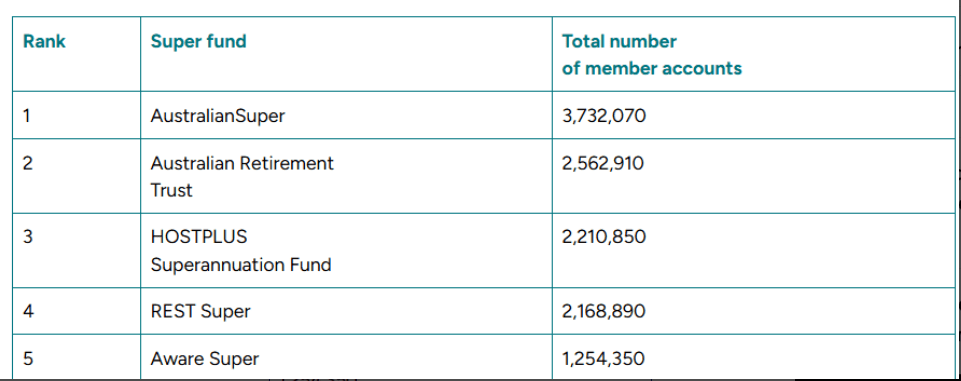
Hostplus ranks third among Australian pension funds by member count, according to financial comparison site Canstar.

Reports indicate the offering could be available as soon as the next financial year, pending regulatory sign-off and the resolution of consumer protection requirements still being worked through.

“There’s certainly a demand from some of our members who write in and say, ‘Why can’t I have access to cryptocurrency?'” Sicilia said.

The fund ranks third in Australia by member count and fifth by total assets. Its membership of 2.2 million gives any policy shift significant reach across the country’s retirement system.

A Gap The Big Funds Left Open

Until now, Self-Managed Super Funds have been the main path for Australians wanting crypto in their retirement savings. These are accounts set up and run by individuals — a hands-on alternative to conventional institution-managed funds.

The sharp rise in SMSF registrations tracked by crypto exchange BTC Markets points to how many savers have been willing to take on that administrative burden just to gain access to digital assets.

BTCUSD now trading at $71,125. Chart: TradingView

Kate Cooper, the Australian chief executive of OKX, recently said that a growing number of new SMSFs are being created specifically to hold digital assets — because the option simply doesn’t exist inside the major funds.

Hostplus would not be the first big super fund to enter this space. AMP made that move back in May 2024, adding Bitcoin exposure to its strategy through futures contracts. Hostplus is following a path that has at least one set of footprints on it already.
Image: Da-kuk via Getty Images

Design Phase Still Has Hurdles

The plan is not finalized. Sicilia said regulatory clearance is still needed, and the fund is prepared to wait for it.

“We’d love to get regulatory tick-off, even if it means waiting another six months,” he said, adding that six months is not a meaningful delay for an institution built around long-term investing.

Australia’s total superannuation pool stood at roughly $4.5 trillion AUD at the end of the September 2025 quarter — a number that underscores how much weight any shift in fund behavior carries for the broader financial system.

Featured image from MarkRubens/Getty Images, chart from TradingView

İlgili Sorular

QWhat is the main reason for the 70% increase in Self-Managed Super Funds (SMSFs) registrations in Australia in the 2024-2025 financial year?

AThe main reason is that many new SMSF accounts were set up specifically for the purpose of buying Bitcoin and other crypto assets, as most of the country's large super funds did not offer this exposure.

QWhich Australian pension fund is considering offering Bitcoin access to its members and what is the name of the investment option they plan to use?

AHostplus is considering offering Bitcoin access to its members through its ChoicePlus investment option, which is a self-directed stream that allows members to shape their own retirement portfolios.

QAccording to the article, what are the two main prerequisites that need to be met before Hostplus can offer cryptocurrency access to its members?

AThe offering is pending regulatory sign-off and the resolution of consumer protection requirements that are still being worked through.

QHow did AMP, another large super fund, previously provide its members with exposure to Bitcoin?

AAMP added Bitcoin exposure to its strategy back in May 2024 through the use of futures contracts.

QWhat does the article cite as the total value of Australia's superannuation pool at the end of the September 2025 quarter, highlighting the significance of any fund's policy shift?

AAustralia's total superannuation pool stood at roughly $4.5 trillion AUD at the end of the September 2025 quarter.

İlgili Okumalar

In-Depth Report on the On-Chain Lending Market: When Off-Chain Credit Meets On-Chain Liquidation

The on-chain lending market has evolved from a peripheral DeFi niche into core financial infrastructure. As of early 2026, total value locked (TVL) in on-chain lending protocols has reached $64.3 billion, accounting for 53.54% of total DeFi TVL, making it the largest and most mature vertical within decentralized finance. Aave dominates the sector with approximately $32.9 billion in TVL, commanding nearly half of the market—a leadership position that is unlikely to be challenged in the foreseeable future. However, the path of on-chain lending forward is not without risk. Liquidation cascades, credit defaults, and cross-chain vulnerabilities remain systemic threats hanging over the industry. At the same time, a deeper structural transformation is underway: on-chain lending is shifting from a “leverage tool for crypto-native users” to a “compliant gateway for institutional capital”. The scale of RWA (Real World Asset) lending has surpassed $18.5 billion, with U.S. Treasuries and government securities increasingly serving as core collateral. Institutional capital inflows are reshaping both the user base and risk appetite of the sector. This report systematically analyzes the evolution of on-chain lending definitions, competitive dynamics, core risks, and future trends, providing a comprehensive industry outlook for investors and trade practitioners. Key findings suggest that the “one dominant player with several strong challengers” structure will persist in the short term, while fixed-rate lending, compliant collateral, and institutional credit underwriting will define the next phase of competition. For investors focused on DeFi infrastructure, three key opportunity tracks stand out, namely, the Aave ecosystem (Morpho, Spark), RWA lending protocols (Ondo, Maple) and fixed-rate innovation (Notional, Pendle).

HTX Learn1 saat önce

In-Depth Report on the On-Chain Lending Market: When Off-Chain Credit Meets On-Chain Liquidation

HTX Learn1 saat önce

Fu Peng's First Public Speech in 2026: What Exactly Are Crypto Assets? Why Did I Join the Crypto Asset Industry?

Fu Peng, a renowned macroeconomist and now Chief Economist at New火 Group, delivered his first public speech of 2026 at the Hong Kong Web3 Festival. He explained his perspective on crypto assets and why he joined the industry, framing it within the context of macroeconomic trends and financial evolution. Fu emphasized that crypto assets are transitioning from an early, belief-driven phase to a mature, institutionally integrated asset class. He drew parallels to the 1970s-80s, when technological advances (like computing) revolutionized traditional finance, leading to the rise of FICC (Fixed Income, Currencies, and Commodities). Similarly, current advancements in AI, data, and blockchain are reshaping finance, with crypto assets becoming part of a new "FICC + C" (C for Crypto) framework. He noted that institutional capital, including traditional hedge funds, avoided early crypto due to its speculative nature but are now engaging as regulatory clarity emerges (e.g., stablecoin laws, CFTC classifying crypto as a commodity). Fu predicted that 2025-2026 marks a turning point where crypto becomes a standardized, financially viable asset for diversified portfolios, akin to commodities or derivatives in traditional finance. Fu defined Bitcoin not as "digital gold" in a simplistic sense but as a value-preserving, financially tradable asset. He highlighted that crypto's future lies in regulated, institutional adoption, moving away from retail-dominated trading. His entry into crypto signals this maturation, where traditional finance integrates crypto into mainstream asset management.

marsbit2 saat önce

Fu Peng's First Public Speech in 2026: What Exactly Are Crypto Assets? Why Did I Join the Crypto Asset Industry?

marsbit2 saat önce

İşlemler

Spot
Futures
活动图片