Assisting Turkey in Freezing $1 Billion in Assets, Tether's Compliance Approach Has Changed

marsbit2026-02-09 tarihinde yayınlandı2026-02-09 tarihinde güncellendi

Özet

On January 30, Turkish authorities froze assets worth over $500 million belonging to Veysel Sahin, who is accused of operating an illegal gambling platform and money laundering. Tether Holdings SA, the issuer of the $185 billion stablecoin USDT, assisted in the freeze at the request of the Turkish government. This action is part of a broader Turkish operation that has frozen over $1 billion in assets. Tether has increasingly collaborated with global law enforcement agencies to combat cryptocurrency-related crimes, including money laundering, drug trafficking, and sanctions evasion. According to Tether CEO Paolo Ardoino, the company follows legal procedures when working with authorities such as the U.S. Department of Justice and the FBI. Analysis by Elliptic shows that Tether and its competitor Circle have blacklisted around 5,700 wallets holding approximately $2.5 billion in assets, with three-quarters of these containing USDT. Tether claims to have assisted in over 1,800 cases across 62 countries, freezing $3.4 billion in USDT tied to illicit activities. This marks a shift from Tether’s earlier tensions with U.S. regulators, including a 2021 settlement over misrepresenting reserves. The company has recently re-entered the U.S. market with a compliant stablecoin, USAT, and has gained regulatory acceptance under the Trump administration. Despite these efforts, USDT remains under scrutiny for its use in criminal activities, including a recent case involving $1 billion in ...

Written by: Ryan Weeks, Todd Gillespie, Taylan Bilgic

Compiled by: Luffy, Foresight News

On January 30, Turkish authorities announced the freezing of assets worth over $500 million under the name of Veysel Sahin, who is accused of operating an illegal gambling platform and suspected of money laundering. The Istanbul Chief Prosecutor revealed that an unnamed cryptocurrency company carried out the freeze at the request of the Turkish government.

This company is Tether Holdings SA, the issuer of the stablecoin USDT with a market capitalization of $185 billion. Recently, the company has actively assisted governments worldwide in combating various cryptocurrency-related criminal activities, including money laundering, drug trafficking, and sanctions evasion.

Tether CEO Paolo Ardoino stated in a recent interview with Bloomberg News: "Law enforcement approaches us, provides relevant information, we verify the information, and then take action in accordance with the laws of the country. We follow this process when cooperating with the U.S. Department of Justice, the FBI, and other agencies."
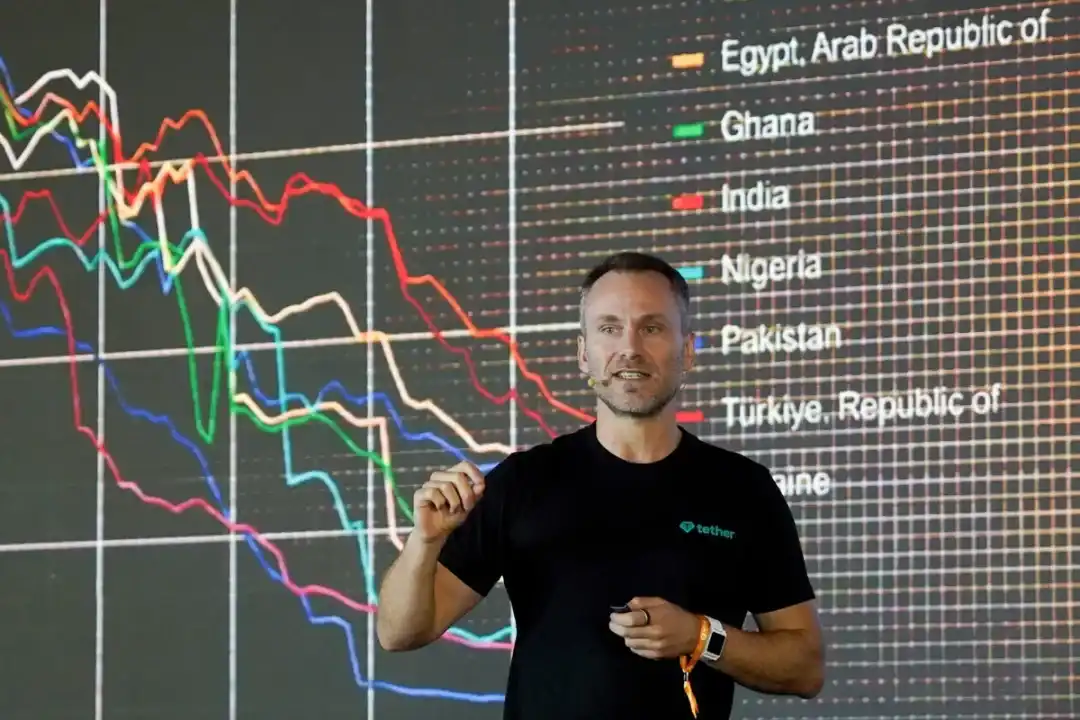
Tether declined to comment further on the case. Bloomberg was unable to reach Sahin. A Turkish official also refused to disclose the name of the company mentioned in the prosecutor's statement.

The frozen assets of 460 million euros (approximately $544 million) are part of a large-scale law enforcement operation in Turkey, where the total frozen assets involved now exceed $1 billion. According to Turkish television NTV, a few days after the announcement of the freezing of Sahin's assets, another individual was investigated for suspected money laundering and illegal gambling, and crypto assets worth $500 million under their name were also frozen. However, it is currently unclear whether this asset freeze involved tokens issued by Tether.

A Turkish official, who spoke anonymously on sensitive legal matters to Bloomberg, revealed that authorities discovered the "financial traces" of these suspected illegal proceeds by tracking fund flows and analyzing crypto assets. The official added that similar asset freezes targeting individuals involved in illegal gambling and payment systems will be implemented in the future.

For Tether, this freezing operation is just one of its increasingly frequent fund freezes, highlighting the growing efforts of this cryptocurrency giant to cooperate with global law enforcement agencies.

A report released in January by analytics firm Elliptic showed that by the end of 2025, Tether and its competitor Circle Internet Group Inc. had blacklisted approximately 5,700 wallets, involving assets of about $2.5 billion, a figure that was negligible two years ago. At the time of freezing, three-quarters of these wallets held USDT.

Arda Akartuna, Head of Crypto Threat Intelligence for Asia-Pacific at Elliptic, said: "As legitimate applications of cryptocurrency and the integration of global payments accelerate, illegal usage has also increased, prompting stablecoin issuers to intervene more actively."

Tether often publicizes its efforts to combat criminal activities, including in communications aimed at potential investors, as the company seeks funding at a valuation of up to $500 billion. According to its website, Tether has assisted law enforcement agencies in 62 countries with over 1,800 cases, freezing $3.4 billion worth of USDT related to suspected illegal activities.

Nathan McCauley, Co-founder and CEO of Tether partner Anchorage Digital Bank, said in an interview: "They (Tether) are extremely proactive in their cooperation. Among stablecoin issuers, the company has the 'recognized best reputation' with law enforcement agencies."

Anchorage is the issuer of Tether's compliant dollar stablecoin USAT, which was launched in late January, marking Tether's return to the U.S. market.

This represents a significant shift from the tense relationship between Tether and U.S. regulators a few years ago. After clashing with regulators in 2018, Tether largely exited the U.S. market and paid $41 million in 2021 to settle charges of misrepresenting its reserves.

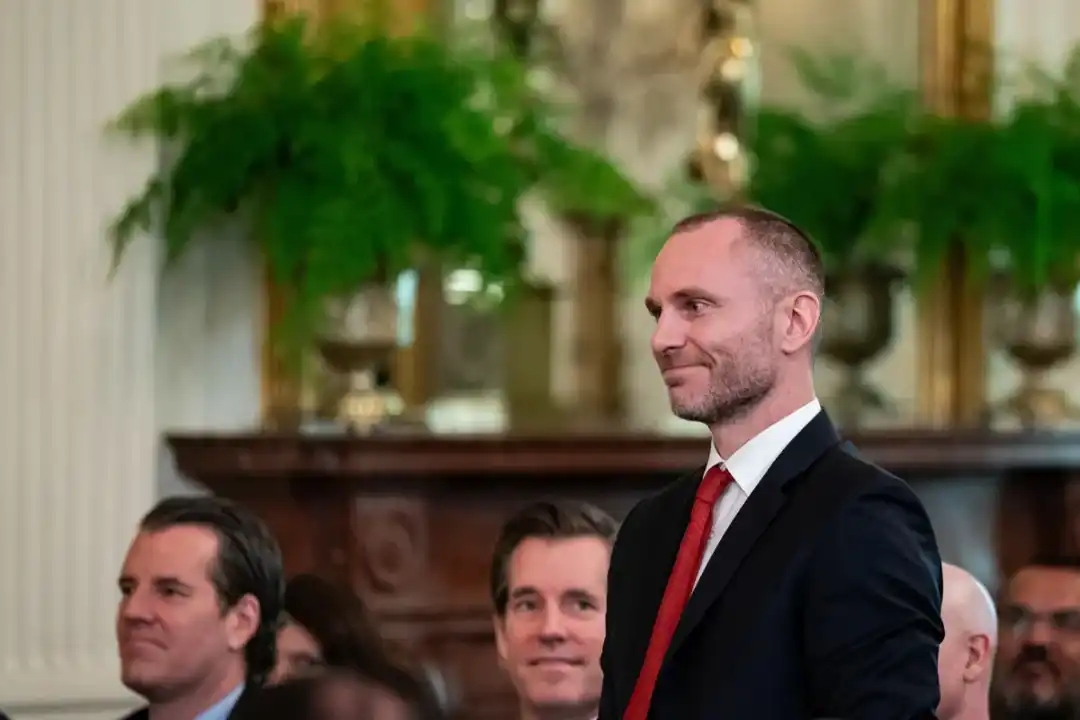
However, the second Trump administration has welcomed the cryptocurrency industry. Last year, Ardoino attended, along with several other executives, the ceremony where President Trump signed the stablecoin regulatory bill.
Even so, Tether's USDT continues to face scrutiny from regulators due to its widespread use by criminals.

On January 9, the U.S. Attorney's Office for the Eastern District of Virginia announced charges against a Venezuelan citizen for laundering $1 billion using USDT. A recent report by Elliptic showed that the Central Bank of Iran purchased over $500 million worth of USDT to alleviate its currency crisis and evade U.S. sanctions.

Turkish fugitive Sahin is accused of leading an organization that laundered money for illegal online gambling platforms. According to local media, Sahin was sentenced to 10 years in prison in 2017, released in 2023, and sentenced to another 21 years in prison month later. His current whereabouts are unknown, but the Turkish official news agency Anadolu Agency reported on January 30 that "the relevant authorities are advancing the legal process for his extradition back to Turkey."


İlgili Sorular

QWhat was the Turkish government's action against Veysel Sahin, and which company assisted in this operation?

AThe Turkish government froze assets worth over $500 million belonging to Veysel Sahin, who was accused of operating an illegal gambling platform and money laundering. The company that assisted in this operation was Tether Holdings SA, the issuer of the USDT stablecoin.

QHow has Tether's approach to compliance and law enforcement cooperation changed recently?

ATether has significantly increased its cooperation with global law enforcement agencies, actively assisting in combating cryptocurrency-related crimes such as money laundering, drug trafficking, and sanctions evasion. It has frozen assets in numerous cases and has a recognized reputation for its proactive stance.

QWhat is the total value of assets that Tether has frozen in connection with alleged illegal activities, according to its website?

AAccording to Tether's website, the company has assisted law enforcement in over 1,800 cases across 62 countries and frozen $3.4 billion worth of USDT related to suspected illegal activities.

QWhat significant legal and regulatory challenges has Tether faced in the past, particularly in the United States?

AIn 2018, Tether had conflicts with U.S. regulators, which led to its near-exit from the U.S. market. In 2021, it paid $41 million to settle charges that it misrepresented its reserves.

QWhat recent development marks Tether's return to the U.S. market, and who is its partner in this initiative?

ATether's return to the U.S. market is marked by the launch of its compliant dollar stablecoin, USAT, in late January. Its partner in issuing this stablecoin is Anchorage Digital Bank.

İlgili Okumalar

Bitcoin Withdrawals Continue: 8 Years of Storage in a Coldcard Cold Wallet Ended in Zero

Coldcard Hardware Wallet Hacked: Losses Mount Due to Vulnerable Seed Generation A critical vulnerability in Coldcard hardware wallets has led to a continued wave of fund thefts. According to Galaxy Research, the total stolen has reached 1,367.05 BTC (approx. $88.6 million) from 4,585 addresses, a significant increase from the initial 594.5 BTC reported on July 30, 2026. Most of the stolen funds remain on the attackers' addresses. The issue is not with the current firmware, which Coinkite has updated, but with seed phrases generated on vulnerable devices between March 2021 and the release of fixed firmware versions. Due to a programmer error, devices switched from using a hardware random number generator to the software-based Yasmarang generator, which was initialized with publicly accessible data like the chip's serial number. This made the seed phrases predictable through offline brute-force attacks, meaning wallets remain at risk until funds are moved to a new wallet generated with the patched firmware. Affected devices include Mk2/Mk3 with firmware 4.0.1–4.1.9 (and up to 5.0.3), Mk4/Mk5 up to version 5.6.0, and Q models up to 1.5.0Q. The only exceptions are seeds created with a high-entropy method like at least 50 independent dice rolls or a strong unique BIP-39 passphrase. All other owners must generate a new seed on the fixed firmware and transfer their assets. A case highlighting the human impact involves a 39-year-old long-term investor who lost 2 BTC (approx. $130,000) in minutes. He had accumulated the Bitcoin over eight years through physical labor, viewing it as a financial lifeline and a retirement plan in a country suffering from hyperinflation. His story underscores that even conservative "buy and hold in cold storage" strategies can be compromised by such underlying technical flaws. From a technical perspective, this incident echoes historical failures where weak random number generators undermined cryptographic security, challenging the assumption that offline storage is automatically foolproof.

cryptonews.ru5 saat önce

Bitcoin Withdrawals Continue: 8 Years of Storage in a Coldcard Cold Wallet Ended in Zero

cryptonews.ru5 saat önce

İşlemler

Spot
活动图片




