Anthropic Tests "Lobster" Conway: Supports Independent UI, Webhook Activation, and Custom Extension Standards

marsbit2026-04-02 tarihinde yayınlandı2026-04-02 tarihinde güncellendi

Özet

Anthropic is actively developing "Conway," a persistent agent solution designed to provide Claude with an always-on, independently running intelligent environment. It features a standalone UI instance, operating as a traditional chat interface and more of a dedicated workspace. Conway can directly control browsers, connect to external services, and integrate Claude Code for deeper code execution and task handling. It supports Webhook-based invocation, enabling external services or events to trigger automated workflows. Additionally, Conway will support for extensions through the upcoming CNW ZIP standard, allowing developers to build custom tools, UI tabs, and context handlers, similar to an app store ecosystem. This enhancement aims to transform Claude from a reactive conversational tool into a proactive, multi-step task assistant, positioning it as a strong competitor in the AI agent space and advancing the trend toward always-on AI capabilities.

Anthropic is actively developing a persistent agent solution named Conway, aimed at creating an always-on, independently running intelligent environment for Claude.

According to related information, Conway will feature an independent UI instance, moving beyond the traditional chat interface to operate as a standalone agent workspace. It will be capable of directly controlling browsers, connecting external connectors, and integrating Claude Code functionality (potentially involving Epitax-related features), enabling deeper code execution and task handling. Simultaneously, Conway supports invocation via Webhooks, allowing external services or events to trigger agent workflows, thereby boosting automated response capabilities.
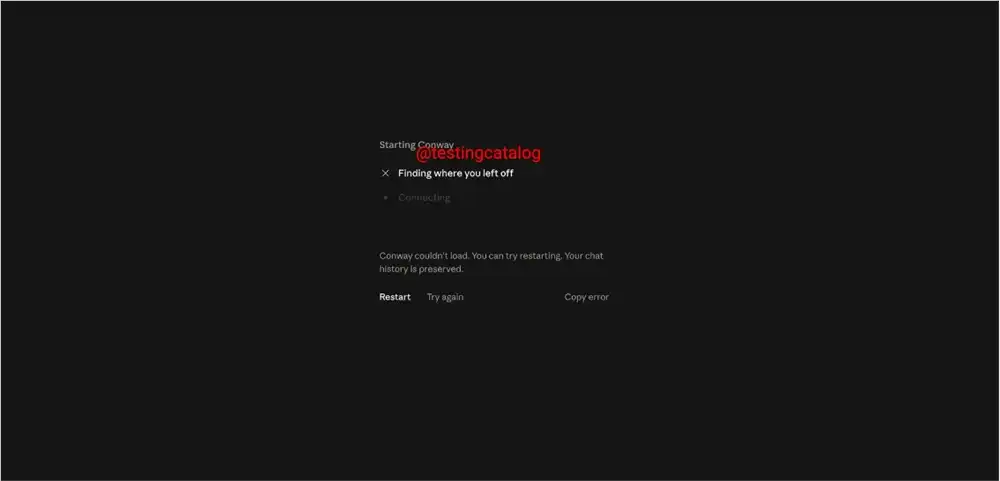
Additionally, Conway will support an extension system. Anthropic is set to launch the CNW ZIP standard, which developers can use to easily build custom tools, UI tabs, and context handlers, forming an ecosystem expansion capability similar to an "app store." This will significantly enhance Claude's flexibility and scalability in handling complex tasks.
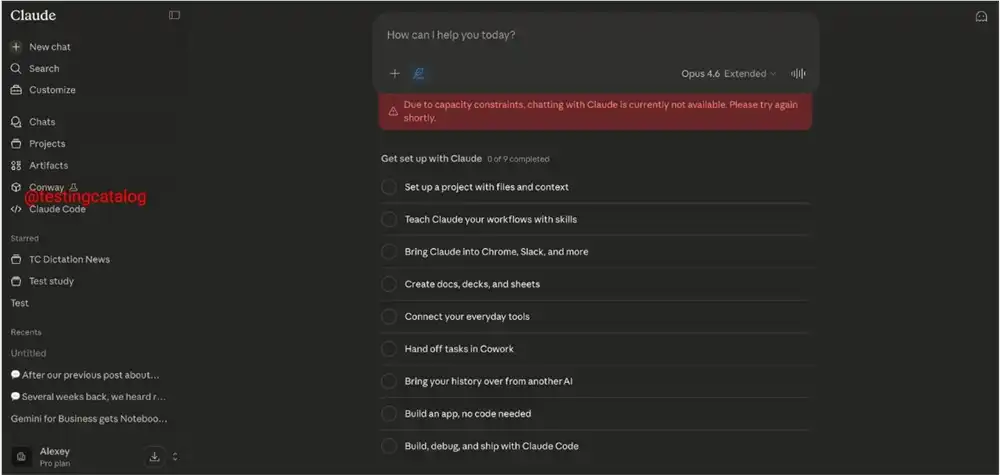
The emergence of Conway is seen as a key strategic move by Anthropic in the AI agent domain, aiming to transform Claude from a passive conversational tool into a persistent assistant capable of continuous operation and autonomous execution of multi-step tasks. It not only supports browser automation and event triggering but also strengthens code generation, execution, and problem-solving capabilities through native integration of Claude Code.

Industry observers believe that Conway has the potential to become a strong competitor to rivals like OpenClaw, driving the advancement of AI agents toward an "always-on" direction. The era where Claude can truly "show its prowess" may be just around the corner.

İlgili Sorular

QWhat is the name of the persistent agent solution being developed by Anthropic for Claude?

AThe persistent agent solution being developed by Anthropic for Claude is named Conway.

QHow does Conway differ from a traditional chat interface?

AConway differs by being an independent UI instance that operates as a standalone agent workspace, capable of directly controlling the browser, connecting to external connectors, and integrating Claude Code functionality.

QWhat method does Conway support to allow external services or events to trigger its work?

AConway supports being invoked via Webhook, which allows external services or events to trigger the agent's work and enhance automated response capabilities.

QWhat is the name of the extension standard that will allow developers to build custom tools for Conway?

AThe extension standard that developers can use to build custom tools, UI tabs, and context handlers for Conway is called the CNW ZIP standard.

QHow is Conway expected to transform the role of Claude according to the article?

AConway is expected to transform Claude from a passive conversational tool into a persistent assistant that can run continuously and autonomously execute multi-step tasks, moving towards an 'always-on' AI agent direction.

İlgili Okumalar

Who Captures Value in Web 2.5?

Title: Who Captures Value in Web 2.5? Summary: For most of financial history, moving money was difficult and slow. Cryptocurrencies and stablecoins promised faster, cheaper transfers. However, their true potential is realized not by replacing traditional finance but by acting as an efficient, invisible settlement layer beneath it—a hybrid model called "Web 2.5." This fusion combines the regulation and familiar interfaces of traditional finance with the low-cost, programmable, always-on settlement of crypto. The critical question is: where does value accumulate in this new system? The answer lies in the coordination or "translation" layer that bridges the two financial worlds. History shows that the middleman connecting systems often captures immense value, as seen with Visa or SWIFT. This layer controls the flow of funds and can extract fees, collect float interest, and wield significant power (e.g., sanctions). Now, four main models are competing to become this dominant translation layer: protocols (like Chainlink), market utilities, banking cooperatives, and central bank clubs. For instance, Chainlink, in partnership with a consortium of banks, is piloting real-time FX settlement. SWIFT is building its own blockchain-based ledger layer. The Bank for International Settlements is testing tokenized central bank reserves. Ultimately, Web 2.5 is more promising than a purely decentralized utopia because it doesn't require abandoning existing systems. Instead, crypto becomes a commoditized, hidden infrastructure enabling faster, cheaper transactions within the traditional financial framework. The winning coordination layer will hold the power and capture the economic value in this new landscape.

链捕手4 saat önce

Who Captures Value in Web 2.5?

链捕手4 saat önce

İşlemler

Spot
活动图片