Anatoly Yakovenko, Vitalik Buterin Debate Whether Blockchains Should Keep Evolving

TheNewsCrypto2026-01-19 tarihinde yayınlandı2026-01-19 tarihinde güncellendi

Özet

In a January 2026 debate, Ethereum creator Vitalik Buterin and Solana co-founder Anatoly Yakovenko presented opposing views on blockchain evolution. Buterin argued that Ethereum should achieve "ossification"—a stable, trustless state requiring no further upgrades, passing the "walkaway test" to function independently of developers. Yakovenko countered that blockchains must continuously evolve to remain useful and avoid stagnation, emphasizing that Solana should incorporate community-driven upgrades addressing real user needs, without relying on a single team. The discussion highlights two contrasting visions: long-term stability versus iterative adaptation for competitiveness.

The Public debate started in mid january 2026 between Anatoly Yakovenko, co-founder of Solana labs and Vitalik Buterin, Creator of Ethereum. Vitalik Buterin shared his view on social media that Ethereum should be stable and reach the ossified state, where it should still run without the constant upgrades. Yakovenko disagreed completely by saying that the blockchain must continue evolving to remain useful and avoid stagnation.

Yakovenko’s Case for Continuous, Community-Driven Blockchain Evolution

On replying to Vitalik Buterin, Analogy argued that any blockchain that stops upgrading will eventually die. The technology and users need to change. This debate started after Vitalik posted the tweet on X that Ethereum should aim for long-term stability, where there should not be the constant upgrades. Yakovenko also suggested that Solana must reject most upgrade ideas and accept only those that solve the real problem for the users and developers. He added that the future of Solana should be built by contributors outside Solana Labs to avoid permanent dependence on a single team.

Vitalik’s Vision of Blockchain Ossification and Long-Term Trustless Stability

On the other side, the creator of Ethereum, Vitalik Buterin, says that the blockchain should reach the point where it does not need constant upgrades and calls this level as the Ossification. This means that the blockchain becomes so stable that it doesn’t need regular upgrades and can run safely for many years. He says that Ethereum should pass something called the Walkaway Test. This means that Ethereum should work even if the developers stop upgrading. He believes trustless systems need stability, and if there are constant upgrades, then the users must depend on the developers forever.

This debate shows two different visions of future blockchains. Vitalik Buterin believes that ETH should become more stable and work reliably without constant upgrades, and Anatoly Yakovenko believes that Solana must keep evolving and continuous upgrades are necessary to stay useful and competitive. This difference highlights two contrasting approaches to how blockchains can survive and grow over time.

Highlighted Crypto News:

‌Binance Australia Restores AUD Deposits, Withdrawals After 2-Year Pause

TagsBlockchainvitalik Buterin

İlgili Sorular

QWhat is the core disagreement between Anatoly Yakovenko and Vitalik Buterin regarding blockchain development?

AAnatoly Yakovenko believes blockchains must continue evolving with continuous upgrades to remain useful and avoid stagnation, while Vitalik Buterin argues that a blockchain should reach a stable, 'ossified' state where it no longer needs constant upgrades to run reliably and trustlessly.

QAccording to Vitalik Buterin, what is the 'Walkaway Test' for Ethereum?

AThe 'Walkaway Test' is the idea that Ethereum should be able to continue functioning safely and reliably even if its developers completely stop working on upgrades, ensuring it remains a trustless and trust-minimized platform.

QHow does Anatoly Yakovenko suggest Solana should handle upgrades to avoid dependence on a single team?

AYakovenko suggests that Solana should reject most upgrade ideas and only accept those that solve real problems for users and developers, and that its future should be built by contributors outside of Solana Labs to avoid permanent dependence on a single team.

QWhat term does Vitalik Buterin use to describe the ideal, stable state for Ethereum that does not require constant upgrades?

AVitalik Buterin uses the term 'Ossification' to describe the ideal state where a blockchain becomes so stable that it doesn't need regular upgrades and can run safely for many years.

QWhat was the catalyst that started the public debate between Yakovenko and Buterin in January 2026?

AThe debate started after Vitalik Buterin posted on social media (X) that Ethereum should aim for long-term stability and reach an ossified state, a view which Anatoly Yakovenko publicly disagreed with.

İlgili Okumalar

Once-Popular Web3 Enters Wave of Layoffs

The once-hot Web3 industry is experiencing a severe wave of layoffs. While many companies attribute job cuts to AI-driven restructuring, the primary reason is often financial pressure. The Web3 sector, at the intersection of tech and finance, has been hit particularly hard. Employees at major cryptocurrency exchanges report sudden, impersonal layoffs—often with system access revoked overnight—and minimal or no severance. Common tactics include setting impossible performance targets or terminating employees for minor policy violations. The working atmosphere has become toxic, marked by intense monitoring, excessive meetings, and management obsessed with control and internal politics rather than product innovation. The industry's core business model is collapsing. Exchange revenue from trading fees and listing charges has plummeted due to a decline in quality projects and retail investor exodus. Events like the massive forced liquidation on October 10th further shattered confidence. Competition from on-chain derivatives platforms and prediction markets is intensifying the downturn. As layoffs continue, displaced workers struggle to find new opportunities. Many transition to the AI sector, but face significant bias from traditional finance and even some AI firms, which view crypto industry experience with suspicion. The current downturn appears more structural than cyclical, driven by unsustainable practices, internal strife, and a failure to innovate, raising questions about the industry's future trajectory.

marsbit46 dk önce

Once-Popular Web3 Enters Wave of Layoffs

marsbit46 dk önce

Sales Drop 26% But Prices Rise? Xiaomi's Dilemma

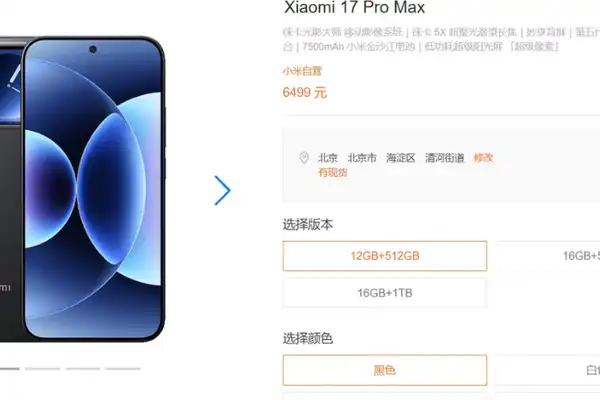
Xiaomi, facing a significant 26.3% year-on-year decline in global smartphone shipments in Q2 2026, has implemented its third price hike of the year. On August 2nd, prices were raised for nine models, including the flagship Mi 17 series (up 400-500 yuan) and Redmi K90/Turbo 5 series (up 300 yuan). This move completes a pattern where cost pressure, originating from surging memory chip prices, has climbed from entry-level to mid-range and now flagship products. The primary driver is a severe supply squeeze on consumer-grade DRAM and NAND flash memory, as major manufacturers like Samsung shift advanced capacity to more profitable HBM for AI applications. According to Xiaomi President Lu Weibing, memory prices for the same configuration have skyrocketed nearly fourfold since Q1 2025, adding roughly 1500 yuan to the cost of a mainstream 12GB+512GB phone. IDC estimates consumer memory costs have risen nearly 300% year-on-year. While the price increases hurt demand and contributed to the sales slump, Xiaomi's strategy of reducing entry-level models and upgrading its product mix also played a role. Domestically, its market share in China fell to 12% (5th place), while leaders Huawei and Apple saw shipments grow over 24%. To mitigate future risks, Xiaomi is accelerating its in-house "Surge" chip development and optimizing memory configurations across its lineup. Xiaomi is not alone; major brands like OPPO, vivo, and Apple have already raised prices in 2026, with industry insiders predicting another round of increases (200-800 yuan) in the second half. A full-scale industry-wide涨价 cycle is underway, forcing both manufacturers and consumers to recalibrate their strategies and purchasing decisions amid sustained cost pressures.

marsbit57 dk önce

Sales Drop 26% But Prices Rise? Xiaomi's Dilemma

marsbit57 dk önce

İşlemler

Spot
活动图片