An 80s-Born from Tianjin, Set to Become the First Human on a Journey to Mars

Odaily星球日报2026-05-22 tarihinde yayınlandı2026-05-22 tarihinde güncellendi

Özet

Chun Wang, an 80s-born native of Tianjin, is set to become the first person to journey to Mars. SpaceX recently announced that Wang, co-founder of F2Pool and commander of the Fram2 mission, will travel on Starship for a historic two-year deep-space mission to fly by Mars (without landing) and return to Earth. Prior to this, he will also participate in a week-long commercial crewed mission around the Moon. Wang's passion for exploration began in childhood. After university, he embarked on extensive travels, eventually visiting every province in China by train and earning the nickname "Thousand High-Speed Rail Man." His interest in technology led him to programming and, in 2011, to Bitcoin. He purchased his first bitcoin at $8.70 and later co-founded F2Pool, one of the world's largest mining pools, in 2013. The success of his cryptocurrency ventures provided the wealth that later funded his ambitious projects. Having reached both the South and North Poles, Wang sought new frontiers. Inspired by SpaceX's advancements, he conceived and funded the private Fram2 mission in 2025. As mission commander, he led an all-civilian, non-American crew on a unique polar orbit flight aboard a Crew Dragon spacecraft, conducting scientific experiments and capturing unprecedented views of Earth's poles. Now, his journey continues toward the ultimate destination. From his current location on the remote Bouvet Island near Antarctica, Wang prepares for the next steps: a lunar flyby and humanity's...

Original | Odaily Planet Daily(@OdailyChina)

Author | Azuma(@azuma_eth)
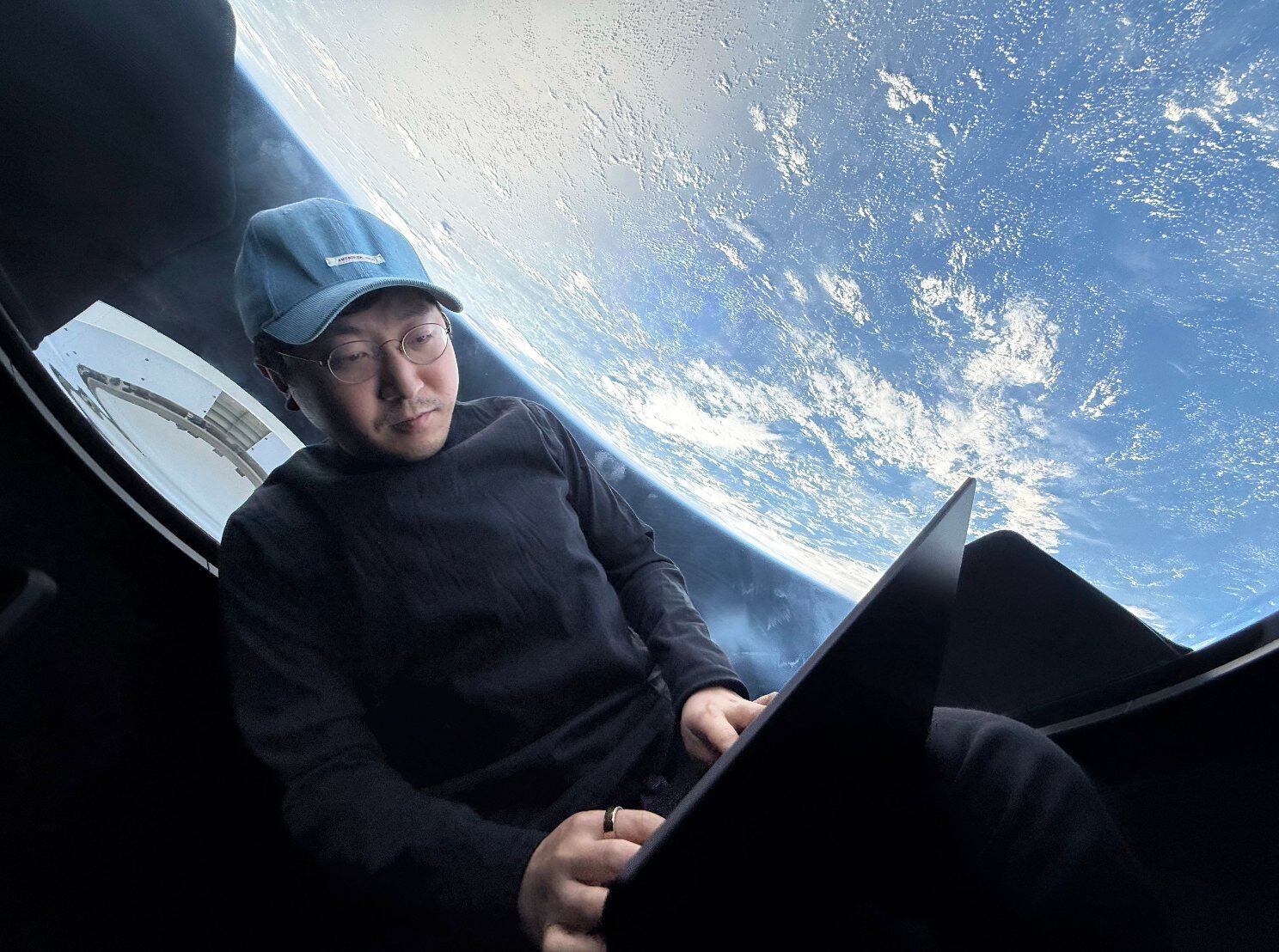
Humanity is finally embarking on its journey to Mars, and the central figure about to undertake this historic aerospace mission is someone from Tianjin.

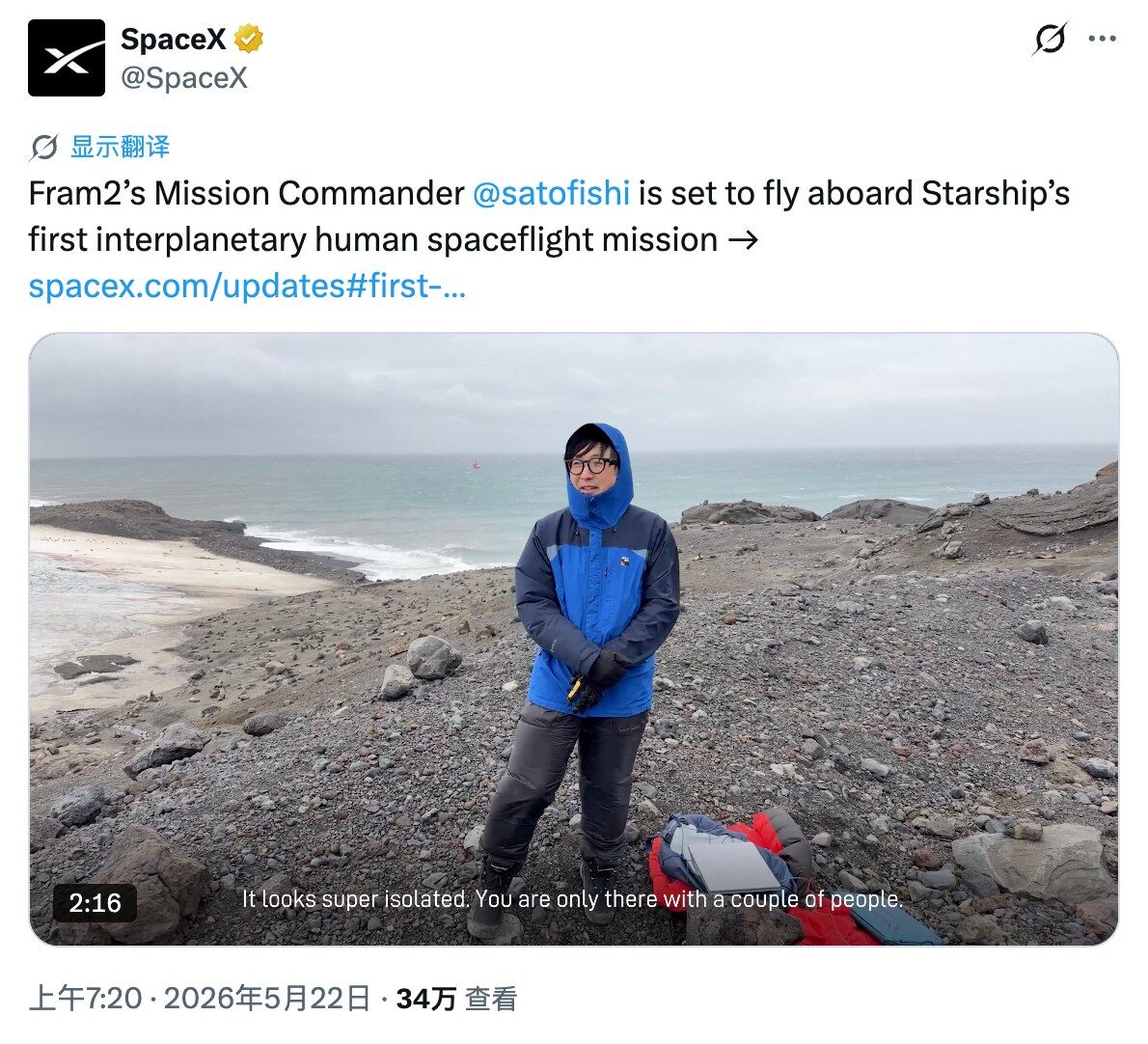
On the morning of May 22, Beijing Time, SpaceX, which is gearing up for an IPO, dropped a major announcement — Chun Wang, co-founder of F2Pool and Mission Commander of Fram2, will board the Starship to execute the first batch of manned interplanetary Mars flight missions! The mission is planned as a two-year deep space flight, exiting the Earth-Moon system, passing by Mars (without landing), and finally returning to Earth.

Prior to this mission, Chun Wang, along with Dennis Tito and Akiko Tito, will participate in Starship's first commercial manned lunar flyby mission, expected to last about a week, with a flyby approximately 200 km from the lunar surface.
The Travel Maniac from Tianjin

On March 31, 2025, on the eve of the Fram2 mission launch, Chun Wang gave an interview to the aerospace professional media "Spaceflight Now," revealing many previously unknown stories from his upbringing.

Chun Wang was born in 1982 in Tianjin, China, and was raised by his grandparents. Until he left for university in 2000, he had hardly ever ventured beyond his hometown.

However, from a very young age, Chun Wang developed a strong interest in travel, always fantasizing about exploring the world: "In 1987, when I was 5 years old, my grandfather brought home a world map he found during a walk. That map instantly became my favorite toy and ignited my curiosity. What truly caught my eye was the vast blank area at the bottom of the map — the polar regions. From that moment on, I was deeply captivated by the mystery and excitement of these distant and unknown lands."

After university, Chun Wang first worked for a Norwegian software company in Beijing. It was then that his travel mileage truly began to skyrocket — to save money, he often slept on his French colleague's sofa or directly in the office, commuting back home about 120 kilometers away on weekends.

Chun Wang mentioned: "Despite having a full-time job, I traveled over 75,900 kilometers by train during weekends in the year 2007 alone. In total, I spent two full months that year inside train compartments, heading straight to the railway station after work on Fridays and not returning to the company until Monday morning."

Over the next four years, Chun Wang further expanded his travel footprint. By train, he visited every province in China.

In 2010, Chun Wang embarked on his first trip abroad — Nepal followed by India. That trip took him to the southernmost tip of the Indian subcontinent. He boarded what was then India's longest-running, non-stop train — the 16317 Himsagar Express, traveling all the way from Kanyakumari to Kashmir and continuing his journey in the country.

That journey ultimately cost him about $1,000, which was all the savings he had at the time.

"During those years, I was obsessed with infrastructure and transportation, especially railways. I meticulously recorded every train journey down to the minute or even second and posted these records on online forums and message boards. Someone once gave me the nickname 'Thousand-HSR-Man,' because I was counting my high-speed rail rides at the time, aiming for the goal of 1,000 trips."

Chun Wang revealed that as of March 20, 2025, he had taken 854 high-speed rail trips, but the number of his commercial airline flights was already extremely close to 1,000.

Wealth, Capability, and Resource Accumulation, Rooted in Cryptocurrency

Apart from travel, Chun Wang also displayed a keen interest in various emerging technologies.

At the age of 7, Chun Wang first heard about computers, but it wasn't until he graduated from elementary school at 13 that he owned his first computer, a 486SX running MS-DOS 5.0.

Chun Wang mentioned: "Besides playing games, I also used it to write many interesting programs. One of the earliest was a gravity simulator that visually demonstrated the motion of planets in the solar system... At school, I participated in various programming competitions, including the International Olympiad in Informatics (IOI) and the ACM-ICPC (International Collegiate Programming Contest). Due to my outstanding performance in these competitions, I was directly admitted to university without taking the National College Entrance Examination (Gaokao)."

In 2011, Chun Wang first heard about Bitcoin through the tech website Solidot, and on May 28 of that year, he bought his first Bitcoin at $8.7 each.
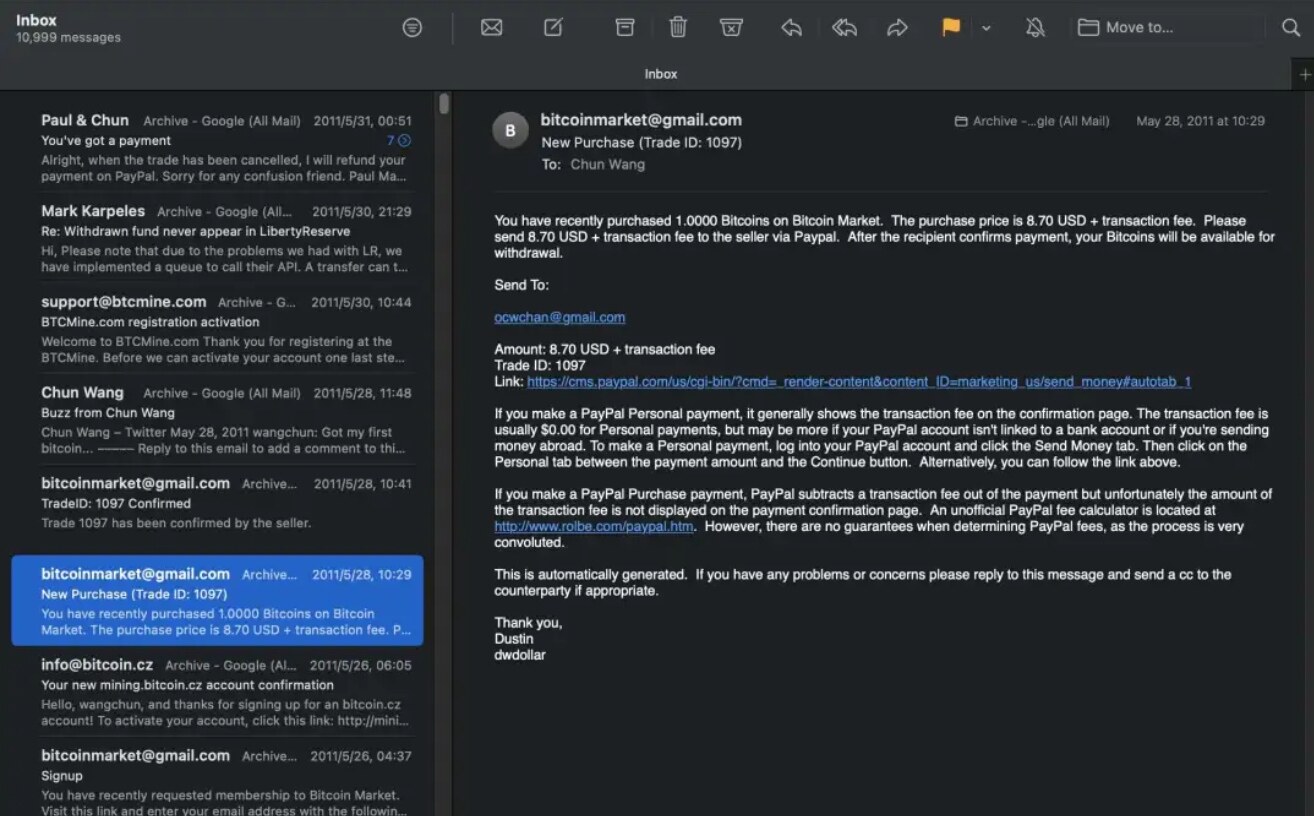
Simultaneously, as a tech enthusiast, Chun Wang began trying to assemble his own mining rigs to mine Bitcoin.

The initial story wasn't smooth sailing. Chun Wang first collaborated with Wu Gang, the later founder of Bixin, renting a few residential rooms and building a relatively crude mining farm with several dozen rigs. The startup capital was even borrowed from his father... Yet, despite this, Chun Wang managed to mine 7,700 Bitcoins over two years, spending 4,000 on electricity, trading 660 for an iPhone (which was later stolen at the St. Petersburg subway station), and liquidating the rest at $17 each in early 2023...

The turning point came in 2013. In April of that year, he co-founded F2Pool (known in the cryptocurrency community as 'Fish Pool') in Wenzhou with Mao Shixing, nicknamed 'Shenyu.' The more introverted Chun Wang handled backend coding, while the more extroverted Shenyu managed operations. This was China's first Bitcoin mining pool, which later developed into one of the world's largest comprehensive mining pools.

In 2018, Chun Wang founded his second company, Stake.fish, in Thailand, a staking service provider specializing in PoS networks, offering comprehensive node staking services for networks like Ethereum, Cosmos, and Polygon.

The success of F2Pool and Stake.fish, coupled with the soaring price of cryptocurrencies, accumulated immense personal wealth for Chun Wang — in 2025, Chun Wang revealed that over the past decade or so, F2Pool had mined over 1.3 million Bitcoins.

A Space Dreamer

The rapid growth in wealth allowed Chun Wang to realize his childhood dream of traveling to the polar regions. In December 2021, Chun Wang successfully reached the South Pole; in July 2023, he reached the North Pole.

But after fulfilling these dreams, Chun Wang found that it still wasn't enough... His entire life had been a journey, continuously moving towards unknown horizons.

  • 2006: He traveled west to the Kazakhstan border at 82° East longitude;
  • 2011: He went to the southernmost tip of India, reaching 8° North latitude;
  • 2012: He took the Trans-Siberian Railway to Europe, reaching St. Petersburg at 60° North, 30° East;
  • 2013: He traveled to the Kamchatka Peninsula, reaching 160° East longitude;
  • 2016: He visited the United States for the first time;
  • December 2021: He successfully reached the South Pole;
  • July 2023: He successfully reached the North Pole...

But now, there are no further endpoints left on Earth. Where else could one go?

Chun Wang soon found the answer: "Since SpaceX began recovering Falcon 9 first-stage rockets, the commercial aerospace industry has been advancing at an incredible pace. I once again see something completely new and exciting unfolding, a feeling just like when I first heard about computers or discovered Bitcoin."

Chun Wang's choice was to fly into space. In 2023, Chun Wang proposed an extremely bold idea to SpaceX — he wished to privately and fully fund a SpaceX Crew Dragon mission to fly over a polar orbit passing both the Earth's North and South Poles.

Chun Wang's idea was that since humans entered space in 1961, because most rocket launches are concentrated near the equator or at mid-latitudes, the International Space Station (ISS) and almost all previous manned spacecraft (except for Apollo missions that passed by from a distance) have been unable to fly over the Earth's poles. In other words, for nearly 60 years of manned spaceflight history in low Earth orbit, the Earth's polar ice caps have been a visual and scientific blank. Therefore, Chun Wang hoped to take a never-before-taken polar retrograde orbit (Polar Orbit) at a 90-degree inclination, directly crossing and overlooking the Earth's poles.

Chun Wang named the mission "Fram2," in homage to the legendary polar research vessel "Fram," which carried Norwegian explorers to the Arctic and Antarctic in history.

On April 1, 2025, a Falcon 9 rocket carrying the Crew Dragon "Resilience" lifted off on time from LC-39A at the Kennedy Space Center in Florida. Chun Wang, as the Mission Commander, led the all-civilian, fully non-American crew he personally selected (including a Norwegian filmmaker, a German robotics engineer, and an Australian Arctic explorer) and officially embarked on their space journey.
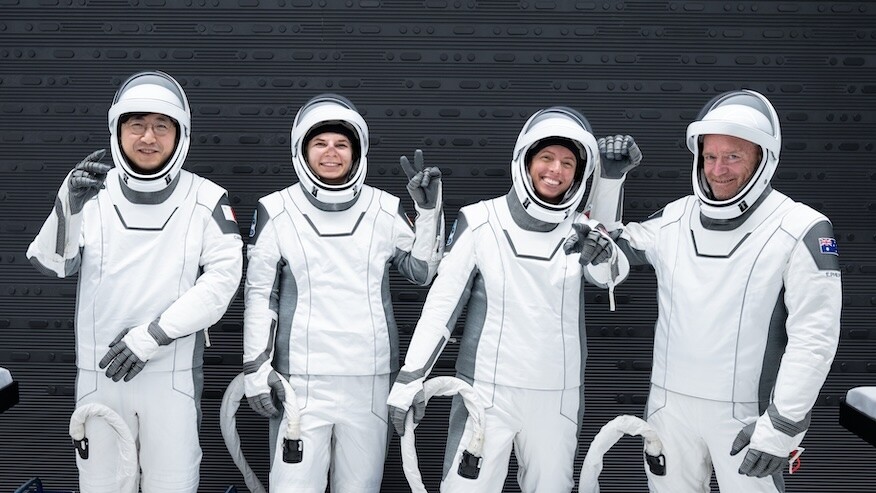
In a 90-degree polar orbit with an apogee of 413 km and a perigee of 202 km, the spacecraft orbited the Earth every 93 minutes, taking only 46 minutes to fly from the North Pole to the South Pole. During the three-and-a-half-day flight mission, Chun Wang and the crew completed a significant amount of extremely hardcore scientific research and visual capture — including close observation of the rare, high-latitude atmospheric phenomenon STEVE (Strong Thermal Emission Velocity Enhancement); capturing the first-ever space X-ray image in microgravity; and humanity's first attempt to grow fungal organisms in microgravity...

One noteworthy detail is that before the mission began, Chun Wang's friend Bao Er Ye (宝二爷) revealed online that Chun Wang had not made any backups of his Bitcoin private keys. He had stated that if anything happened to him during the mission, his Bitcoin holdings would be permanently destroyed.

Flying to Mars

Chun Wang's aerospace dreams did not end with the successful conclusion of Fram2 but continued to evolve further.

Returning to the story at the beginning, just before SpaceX tested the launch of its latest-generation Starship, SpaceX officially announced during a livestream two subsequent space plans for Chun Wang — a week-long manned lunar flyby mission, and the first-ever two-year-long manned interplanetary Mars flight mission in human history.

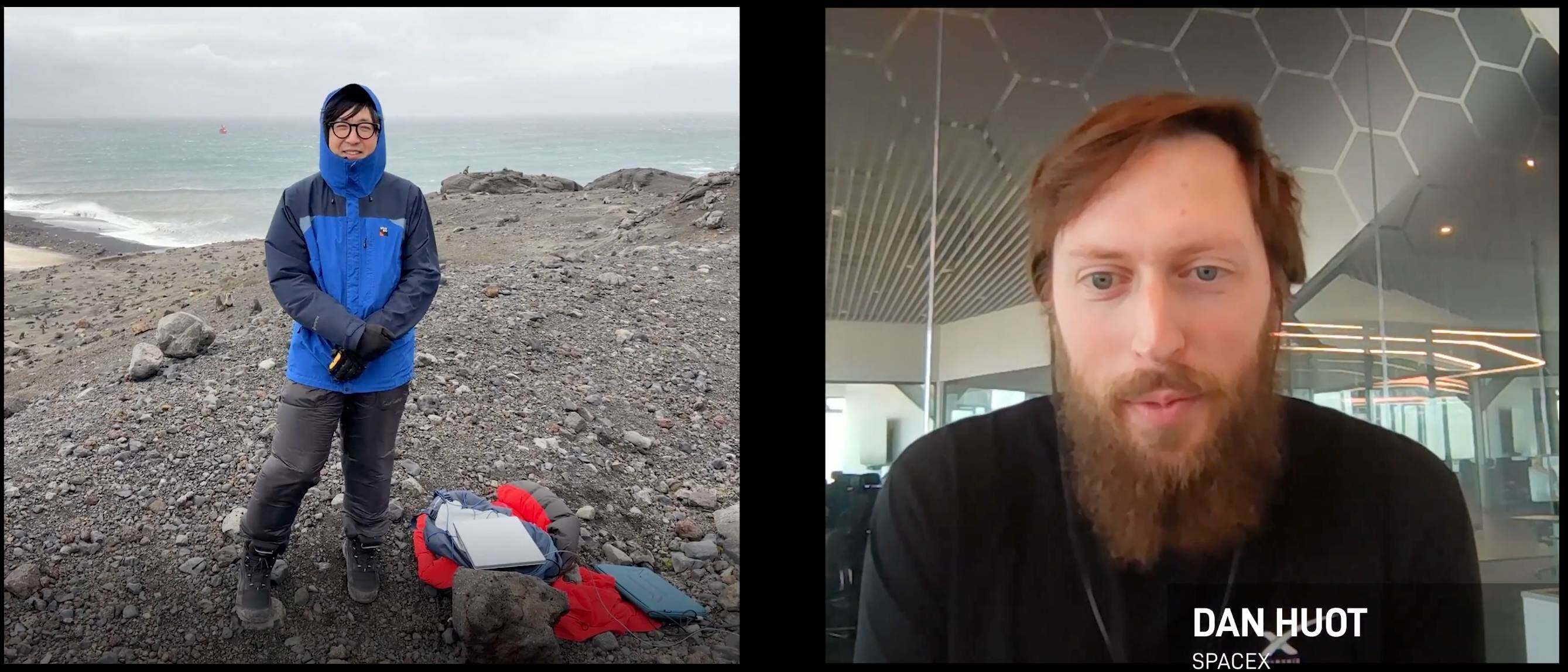
During SpaceX's live connection with Chun Wang, he was standing in the fierce winds on Bouvet Island at 54°26′ South, 3°24′ East. The island is located in the South Atlantic Ocean, near Antarctica, is an overseas territory of Norway (Norwegian Antarctic Territory), and lies outside the land claims frozen by the Antarctic Treaty.
On Chun Wang's personal X profile, he detailed his travel progress. As of the time of writing, the current status is: "60% of territories visited on 1 celestial body (150 / 249), to be continued..."


İlgili Sorular

QWho is Chun Wang, and what significant achievement is he about to accomplish according to the article?

AChun Wang is an 80s-born entrepreneur from Tianjin, China, co-founder of F2Pool and Stake.fish. According to the article, he is about to become the first person to undertake a manned interplanetary mission to Mars, flying by Mars (without landing) on SpaceX's Starship for a two-year mission.

QHow did Chun Wang accumulate the wealth and resources that enabled his space ambitions?

AChun Wang accumulated his wealth primarily through cryptocurrency. He co-founded F2Pool, one of the world's largest mining pools, which has mined over 1.3 million Bitcoins. He also founded the staking service provider Stake.fish. The success of these ventures, coupled with the rise in cryptocurrency value, provided him with significant personal wealth.

QWhat was the name and primary objective of Chun Wang's first private space mission with SpaceX?

AHis first private space mission was named 'Fram2'. Its primary objective was to fly a Crew Dragon spacecraft on a polar orbit (90-degree inclination), allowing it to pass directly over and visually survey Earth's North and South Poles—areas previously unseen by crewed spacecraft in low-Earth orbit.

QWhat personal characteristic, evident from his youth, is cited as a driving force behind Chun Wang's extensive travels and eventual space ventures?

AFrom a very young age, Chun Wang exhibited an intense fascination with travel and exploration. After his grandfather brought home a world map when he was five, he became deeply curious about remote and unknown places, particularly the polar regions. This lifelong passion for pushing geographical and experiential boundaries ultimately led him to space exploration.

QBefore the planned Mars mission, what other upcoming SpaceX mission is Chun Wang scheduled to participate in?

ABefore the Mars mission, Chun Wang is scheduled to participate in SpaceX's first commercial crewed circumlunar flight mission. He will join Dennis Tito and Akiko Tito on a week-long journey that will include a flyby approximately 200 km from the lunar surface.

İlgili Okumalar

Single-Day Plunge of 30%, Arthur Hayes Suddenly Liquidates: Why Did ZEC Get Exploded by Security Issues?

On June 5th, Zcash founder Zooko Wilcox disclosed a critical soundness vulnerability in the project's latest Orchard privacy pool. This flaw, found in the elliptic curve multiplication constraints, could allow an attacker to create unlimited counterfeit ZEC within the shielded pool, with transactions appearing valid. The vulnerability was discovered in late May by security researcher Taylor Hornby, who utilized Anthropic's new Opus 4.8 AI model for a targeted audit. The Zcash ecosystem had already performed an emergency network upgrade to patch the issue. However, the detailed disclosure triggered severe market panic, causing ZEC's price to plummet over 30% in a single day. Notably, prominent investor Arthur Hayes announced he had sold his entire ZEC position following the news. The incident starkly challenges the "technological trust" narrative central to privacy coins. Despite years of top-tier cryptographic audits, the bug persisted until uncovered with advanced AI-assisted research. This highlights the growing gap between theoretical perfection and practical implementation in privacy technology. The event serves as a industry-wide warning: in an AI-driven security landscape, the assumption that "undiscovered equals safe" is obsolete. It underscores the urgent need for continuous, proactive security practices combining AI audits, formal verification, and rapid response mechanisms.

foresightnews_api1 saat önce

Single-Day Plunge of 30%, Arthur Hayes Suddenly Liquidates: Why Did ZEC Get Exploded by Security Issues?

foresightnews_api1 saat önce

Breaking the Curse of DeFi Cascading Liquidations, Vitalik Proposes a New Solution

**Vitalik Buterin Proposes New DeFi Design to Eliminate Forced Liquidations** Ethereum co-founder Vitalik Buterin has published a proposal for a new decentralized finance (DeFi) architecture aimed at removing the automatic liquidation mechanisms prevalent in current lending protocols. The core idea involves creating synthetic assets using options as building blocks, fundamentally avoiding the抵押借贷结构 that triggers forced sell-offs. The proposal responds to a recurring flaw in DeFi: during sharp market downturns, mass自动清算 of under-collateralized positions can exacerbate price declines, creating systemic selling pressure and market instability, as evidenced by recent crypto market volatility. Buterin's model would split an asset like 1 ETH into two option-like derivatives, P and N, pegged to a price index with a set strike price and expiration. At expiry, an oracle determines the settlement price to allocate the underlying ETH between P and N holders. This design eliminates the "cliff" of instant liquidation. Instead, a position's value would gradually drift from its target peg if not actively rebalanced by the user, transferring the rebalancing decision from the protocol to the user or automated tools. A key advantage is the reduced reliance on high-frequency, real-time oracle price feeds, which are vulnerable to manipulation and errors in current systems. The delayed settlement in the options model allows for more robust, fault-tolerant oracle designs. However, significant challenges remain for practical adoption. High transaction costs (slippage) from frequent rebalancing on automated market makers (AMMs) could erode user funds. The model may not be suitable for stablecoins requiring a strict 1:1 dollar peg, as it inherently allows for value drift. Success would depend on developing new liquidity provisioning models and deep markets for these synthetic assets. The proposal represents a fundamental rethinking of DeFi risk management, challenging the industry to explore alternatives to被动集中平仓 rather than merely optimizing existing liquidation processes. It remains a theoretical framework awaiting implementation and testing by development teams.

foresightnews_api1 saat önce

Breaking the Curse of DeFi Cascading Liquidations, Vitalik Proposes a New Solution

foresightnews_api1 saat önce

Bitcoin's Decline Marks the Transformation of Crypto

Title: The Decline of Bitcoin Marks the Transformation of Crypto While Bitcoin's price recently fell below $70,000, down approximately 45% from its peak, the broader crypto industry is not following it into decline. Instead, crypto is maturing and evolving beyond its dependence on Bitcoin's price movements. Two of Bitcoin's core functions are being usurped. First, AI has captured its role as the primary speculative asset. AI, with its tangible revenue, explosive demand, and massive capital inflows ($700-830 billion in 2024), is siphoning off the speculative "hot money" that once drove Bitcoin. It also contributes to a sustained high-interest-rate environment, further tightening liquidity for assets like Bitcoin. Second, dollar-pegged stablecoins like USDC and USDT have replaced Bitcoin as the crypto market's foundational currency and primary on/off-ramp. Most trading pairs and on-chain transactions are now settled in stablecoins, severing the historical link where all capital inflows had to pass through Bitcoin first. This decoupling allows projects to thrive based on their own fundamentals rather than Bitcoin's price. Examples include Hyperliquid, an on-chain derivatives exchange with annual revenues of $8-13 billion, and prediction market platform Polymarket, valued at $200 billion with $3.65 billion in annual fees. These projects are evaluated on traditional metrics like revenue and user growth. New opportunities are emerging, particularly around privacy. Privacy coins like Zcash (ZEC) are seeing surging demand, while infrastructure like NEAR enables private, cross-chain asset transfers without requiring users to hold a specific token—privacy becomes a universal service layer. In this new paradigm, stablecoins are the universal cash, various project tokens represent equity, and privacy-enabled cross-chain coordination layers (like NEAR) act as the critical infrastructure connecting a fragmented, multi-chain ecosystem. Bitcoin is now just one asset among many. The era where the entire crypto market moved in lockstep with Bitcoin is over. The industry's health should now be judged by project fundamentals—real revenue, active users, and tokenomics that capture value—and the development of the underlying infrastructure enabling a mature, dollar-denominated crypto economy.

foresightnews_api1 saat önce

Bitcoin's Decline Marks the Transformation of Crypto

foresightnews_api1 saat önce

Lightspark CEO: In Ten Years, Bitcoin Will Be as Invisible as TCP/IP, Yet Power Trillions in Daily Transactions

A decade from now, Bitcoin will function like TCP/IP — invisible yet foundational, supporting trillions in daily transactions globally, according to Lightspark CEO David Marcus. In this future, a coffee shop in Lagos receives instant payment, a manufacturer in São Paulo settles an invoice with a supplier in Ho Chi Minh City, and a freelancer in Bangalore gets paid weekly from an Austin startup — all via Bitcoin's settlement layer, with none of the parties consciously interacting with it. This vision parallels the adoption of open protocols: first driven by necessity where existing systems fail, then scaling rapidly as tools mature and economic benefits become clear. The structural shift begins with wallets. Modern non-custodial wallets, like Spark, allow users to hold dollars, local currency, and Bitcoin in a single address, seamlessly switching between them. This eliminates friction and revolutionizes global custody, moving significant deposits to user-controlled keys not by ideology, but by superior utility. As a result, Bitcoin becomes the default savings layer for billions, as its fixed supply and appreciating value make it a rational choice for savers holding it alongside stablecoins in their everyday wallets. Businesses follow a similar path, from small companies in emerging markets to multinational corporations, holding Bitcoin alongside operational stablecoins. The latest trend is direct Bitcoin transactions for commerce. When both parties hold Bitcoin, transacting in it becomes the simplest option — no conversions, no intermediary currency. This starts in niche areas like high-value B2B settlements but grows as infrastructure makes sending Bitcoin as easy as stablecoins. An accelerating force is AI agents. By 2036, AI agents conducting commerce on behalf of individuals and firms will increasingly choose Bitcoin for settlement. Optimizing for speed, finality, and minimal counterparty risk across jurisdictions, they find Bitcoin's global, neutral, and programmable network ideal for netting and settling obligations. Thus, Bitcoin is becoming the native currency for machine commerce, just as it has become a native savings asset for humans. The global monetary system is being rebuilt from the protocol layer: open infrastructure, default self-custody, Bitcoin settling everything underneath, with stablecoins as the interface. Most users won't think about Bitcoin when they transact — and they won't need to.

foresightnews_api1 saat önce

Lightspark CEO: In Ten Years, Bitcoin Will Be as Invisible as TCP/IP, Yet Power Trillions in Daily Transactions

foresightnews_api1 saat önce

İşlemler

Spot
Futures
活动图片




