Altcoins or metals? Here’s how investors are rotating amid rising risk

ambcrypto2026-03-28 tarihinde yayınlandı2026-03-28 tarihinde güncellendi

Özet

Amid rising macroeconomic volatility and declining risk appetite, investors are rotating capital away from Bitcoin, which faces selling pressure, and into select altcoins. Technical indicators show Bitcoin dominance encountering resistance at 60%, while the Altcoin Season Index has risen, suggesting accelerating altcoin rotation. However, the Bitcoin Risk Index mirrors 2022 patterns, indicating that altcoins remain highly vulnerable to BTC’s instability. If negative altcoin impulse exceeds 25%, broader corrective pressure may spread. Concurrently, investors are hedging risk by moving into hard assets like gold and silver, which have gained significantly. This deliberate shift into metals may continue to limit altcoin upside until Bitcoin stabilizes and overall risk conditions improve.

Several interconnected traits characterize the ongoing corrective phase.

As macroeconomic volatility increases, investors’ risk appetite tends to decline, prompting a re-evaluation of portfolio exposures. In response, many market participants rotate capital away from Bitcoin [BTC], which has been under selling pressure, and into select altcoins.

Notably, this behavior appears to be unfolding in the market right now.

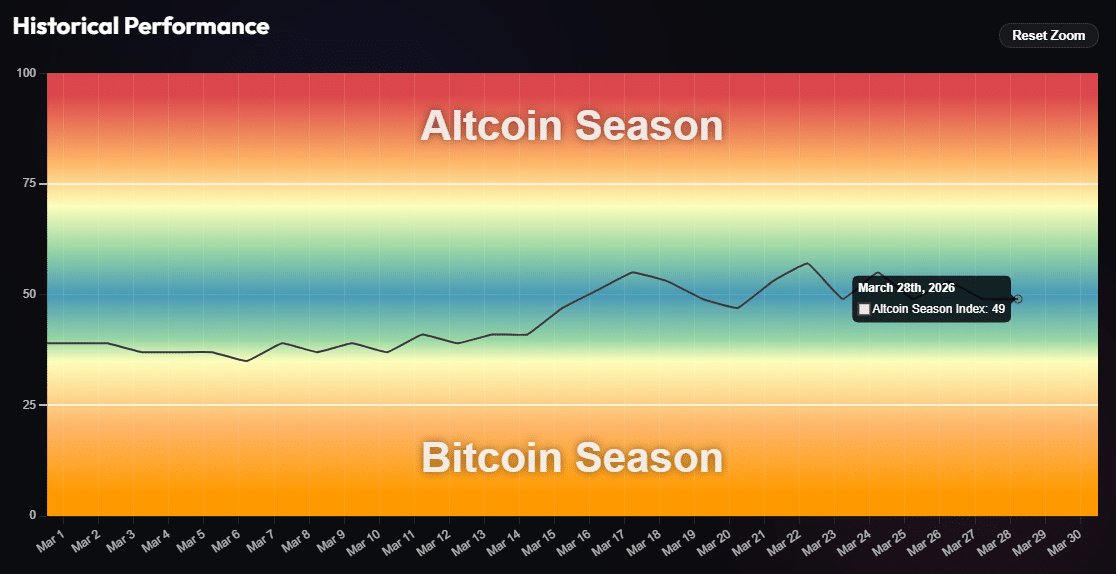
From a technical perspective, Bitcoin dominance (BTC.D) has encountered clear resistance at the 60% level, forming the first red yearly candle in five years. Simultaneously, the Altcoin Season Index is up by 10 points this month, suggesting that altcoin rotation is beginning to accelerate under the surface.
Source: Blockchaincenter

Naturally, the question arises – Is this corrective phase following the textbook rotational playbook?

Technical signals suggest it is, but the Bitcoin Risk Index has been mirroring 2022’s pattern. For context, when the Risk Index rises, BTC loses stability, and if negative altcoin impulse exceeds the 25% threshold, corrective pressure spreads “across” the broader altcoin market.

Currently, the market is nearing this critical threshold, meaning altcoins might be highly sensitive to changes in BTC stability and overall risk conditions. According to AMBCrypto, until the Risk Index declines and negative impulse subsides, altcoins are unlikely to gain significant traction. In this environment, short-term rallies may occur, but they are likely to be shallow and quickly reversed.

Investors bet on altcoins, but rising metals could restrict upside

Altcoins are currently trading under elevated risk, prompting investors to position carefully.

In other words, high altcoin risk, coupled with Bitcoin dominance hitting resistance, may be causing investors to rotate selectively, seeking short-term opportunities elsewhere. Such a dynamic keeps rallies muted and reinforces corrective pressure across the market until overall risk metrics ease.

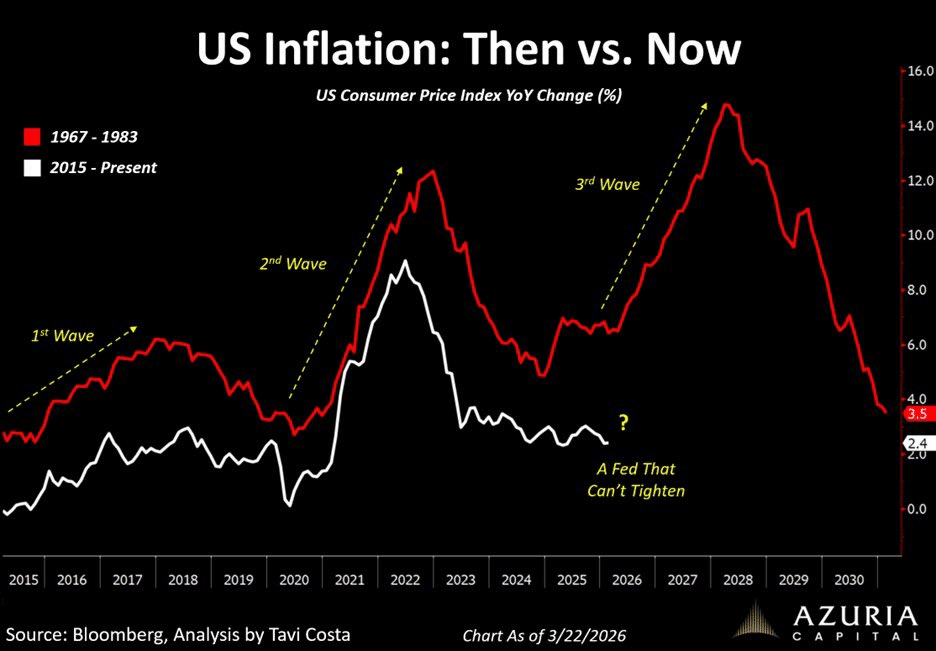
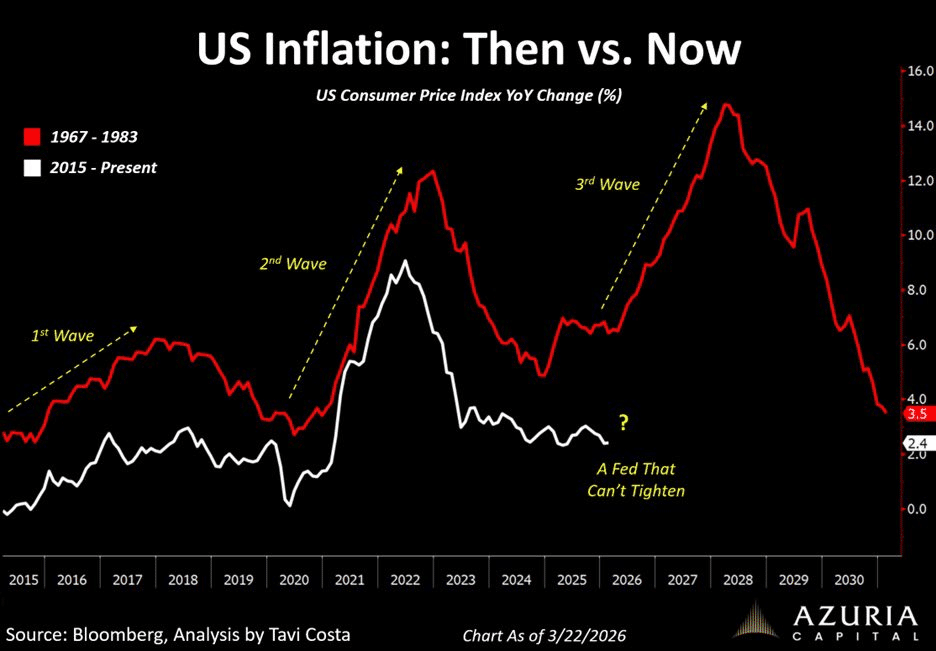
Macro volatility further seemed to be compounding this dynamic at press time. The market has been increasingly pricing in stagflationary pressures, a scenario where economic growth slows down while inflation remains high. Stagflation reduces investors’ risk appetite and complicates portfolio allocation, prompting a careful balance between BTC, altcoins, and hard assets like gold and silver.
Source: Bloomberg

That said, investors appear to be moving ahead of the trend right now.

Technically, gold has decoupled from equities, extending gains to +4% over the day and climbing above $4,550/oz. Meanwhile, silver has jumped by +5%, surpassing $71/oz. Together, the two metals have added roughly $1.3 trillion in market capitalization.

The timing is telling. With Bitcoin breaking below $70K, BTC dominance capped at 60%, and altcoin rotations remaining selective amid a rising Risk Index, this move into hard assets looks deliberate. Investors might be hedging against broader market risk, which may continue to limit altcoin upside until BTC stabilizes and risk metrics improve.


Final Summary

  • BTC.D hitting 60% resistance and the Altcoin Season Index’s hike indicate selective rotation.
  • Rising gold and silver indicate deliberate hedging against macro and BTC risk, potentially limiting altcoin upside.


İlgili Sorular

QWhat are the key technical indicators suggesting a shift from Bitcoin to altcoins is occurring?

ABitcoin dominance (BTC.D) facing resistance at 60% and the Altcoin Season Index rising by 10 points this month indicate a selective rotation from Bitcoin into altcoins is beginning.

QAccording to the article, what is the critical threshold for altcoin market pressure, and what happens if it's exceeded?

AThe critical threshold is a negative altcoin impulse exceeding 25%. If this happens, corrective pressure spreads across the broader altcoin market.

QWhat macroeconomic scenario is the market pricing in, and how does it affect investor behavior?

AThe market is pricing in stagflationary pressures, where economic growth slows while inflation remains high. This reduces risk appetite and complicates portfolio allocation, causing investors to carefully balance between crypto and hard assets.

QWhat significant moves have gold and silver made, and what does this suggest about investor sentiment?

AGold gained +4% to climb above $4,550/oz and silver jumped +5% to surpass $71/oz, adding roughly $1.3 trillion in market cap. This suggests investors are deliberately hedging against broader market risk.

QWhy are altcoin rallies likely to be shallow and short-lived in the current environment?

AAltcoin rallies are likely shallow and quickly reversed because they are trading under elevated risk. Until the Bitcoin Risk Index declines and negative impulse subsides, altcoins are unlikely to gain significant traction.

İlgili Okumalar

Stuck Polymarket: The Real Test After Riding the Traffic Boom Has Arrived

Polymarket, a leading prediction market platform, is facing significant technical challenges as its growth outpaces its current infrastructure on Polygon. Users are experiencing laggy transactions, unresponsive orders, and delayed confirmations, severely impacting the trading experience. In response, DeFi Engineering VP Josh Stevens outlined a comprehensive engineering overhaul. The plan includes reducing on-chain data delays, fixing order cancellation issues, rebuilding the central limit order book (CLOB), improving website performance, and developing a unified SDK and API. A major revelation was the ongoing "chain migration," indicating a potential move away from Polygon. The core issue is that Polymarket has evolved from a simple prediction market into a high-frequency trading platform, making Polygon's limitations—such as block space, gas fees, and block time—a ceiling for further growth. The migration is not just a simple chain switch but a fundamental rebuild of its trading system to support more complex products like perpetual contracts (Perps). This announcement has sparked competition among chains like Solana, Sui, and Algorand, all vying to host Polymarket. For Polygon, losing this key application, which contributes significantly to its gas fee revenue, would be a major setback. The real test for Polymarket is no longer attracting users but proving it can provide a stable, reliable trading environment that retains them.

Odaily星球日报1 saat önce

Stuck Polymarket: The Real Test After Riding the Traffic Boom Has Arrived

Odaily星球日报1 saat önce

İşlemler

Spot
Futures
活动图片