Altcoin market falls from $100B to $26.5B in volume – Can demand recover?

ambcrypto2026-03-21 tarihinde yayınlandı2026-03-21 tarihinde güncellendi

Özet

Altcoin trading volume has sharply declined from peaks above $100 billion to approximately $26.5 billion, indicating a significant contraction in market activity and reduced risk appetite. Binance currently processes nearly 40% of this volume, with other exchanges handling the remainder. The market has entered a capitulation phase, with nearly 40% of altcoins trading near all-time lows, reflecting broad-based deterioration rather than isolated declines. Capital is rotating towards Bitcoin as a safer asset, leading to thinner liquidity and accelerated price declines in altcoins. However, such extreme conditions suggest selling pressure may be nearing exhaustion. Market structure shows stress without full capitulation, with limited liquidations and controlled selling pressure. The Futures-to-Spot ratio on Binance has reached a 1.5-year high, indicating derivatives activity is outpacing spot demand—a sign of fragile market balance. If spot demand fails to recover, the market could face renewed volatility, though current conditions may eventually favor accumulation if liquidity returns to undervalued altcoins.

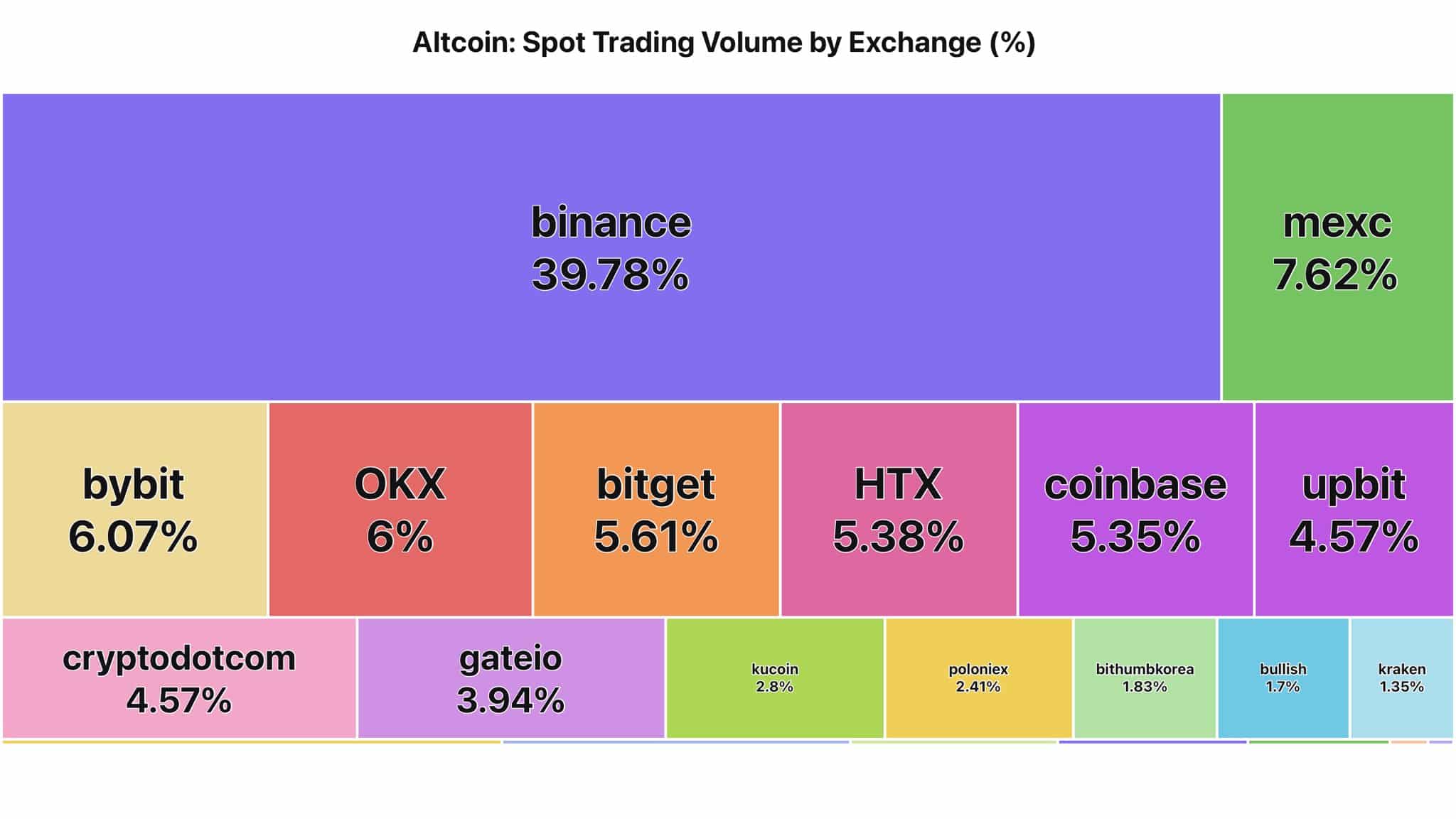
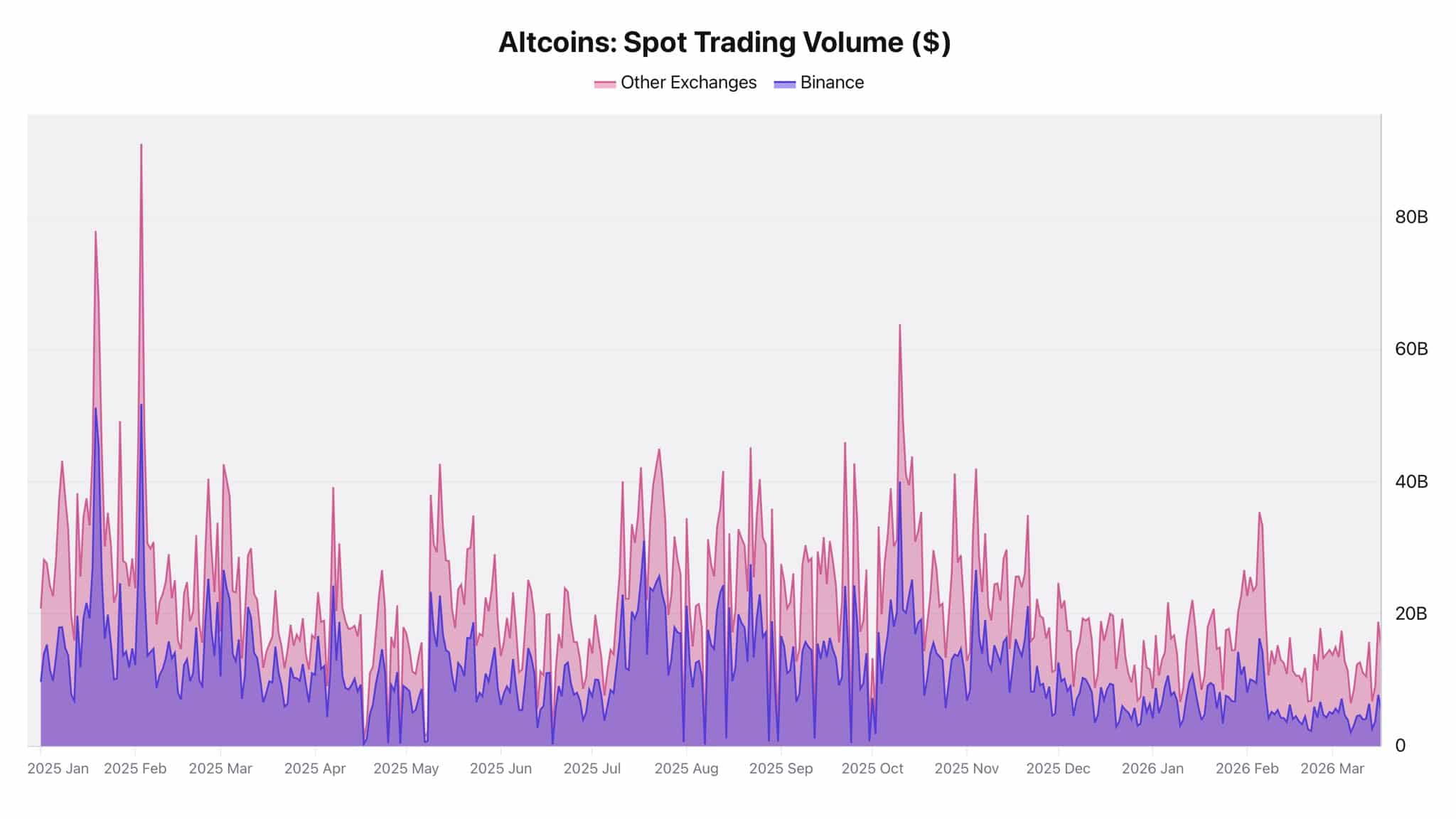
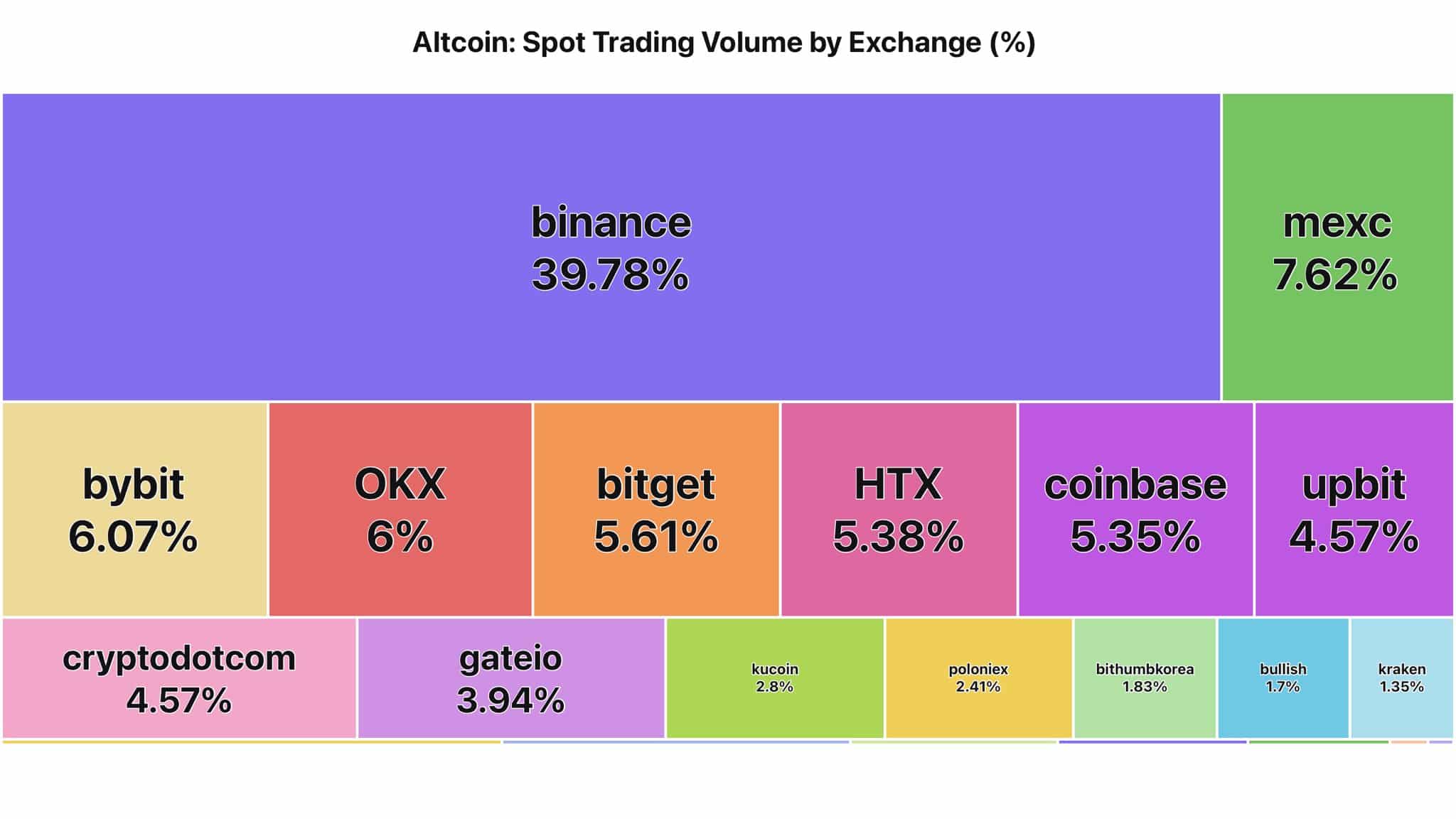
Altcoin trading volume has dropped towards $26.5 billion from peaks above $100 billion, showing a sharp contraction in activity. As this decline unfolded, Binance processed about $7.7 billion. All while other exchanges handled roughly $18.8 billion – Confirming broad-based weakness.

Source: CryptoQuant

In relative terms, Binance holds nearly a 40% share right now, with the same rising as overall participation shrinks. Earlier peaks in February and October 2025 saw volumes surge to $40–50 billion on Binance and up to $91 billion elsewhere, marking periods of strong demand.

As volumes fall across all venues, participation weakens across pairs and trade sizes, pointing to reduced risk appetite.

Source: CryptoQuant

However, this also means capital is stepping back rather than exiting entirely. As engagement compresses, volatility often declines, although such phases can precede renewed positioning once sentiment stabilizes and liquidity begins returning.

Altcoins enter capitulation zone as liquidity rotates to Bitcoin

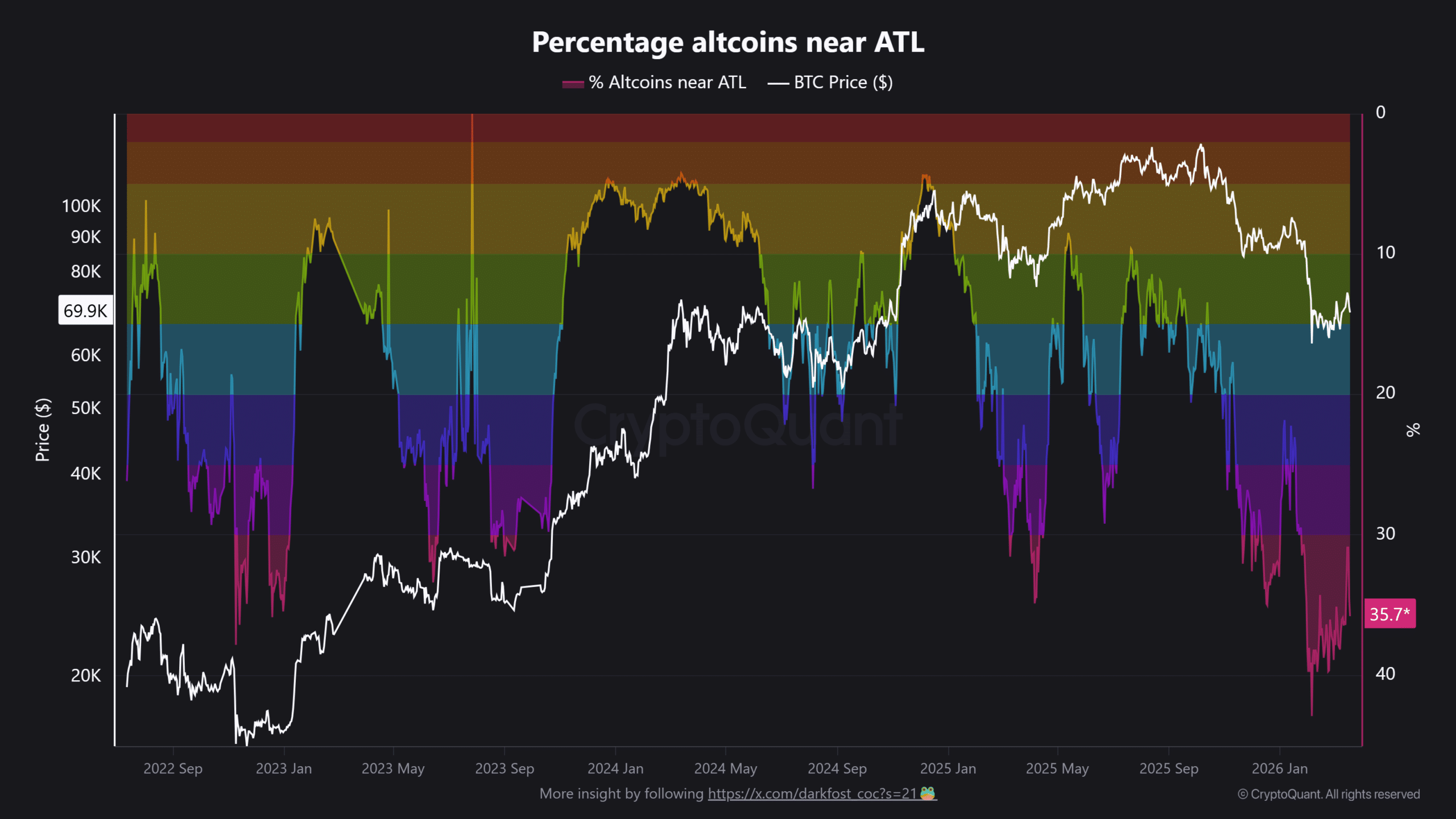
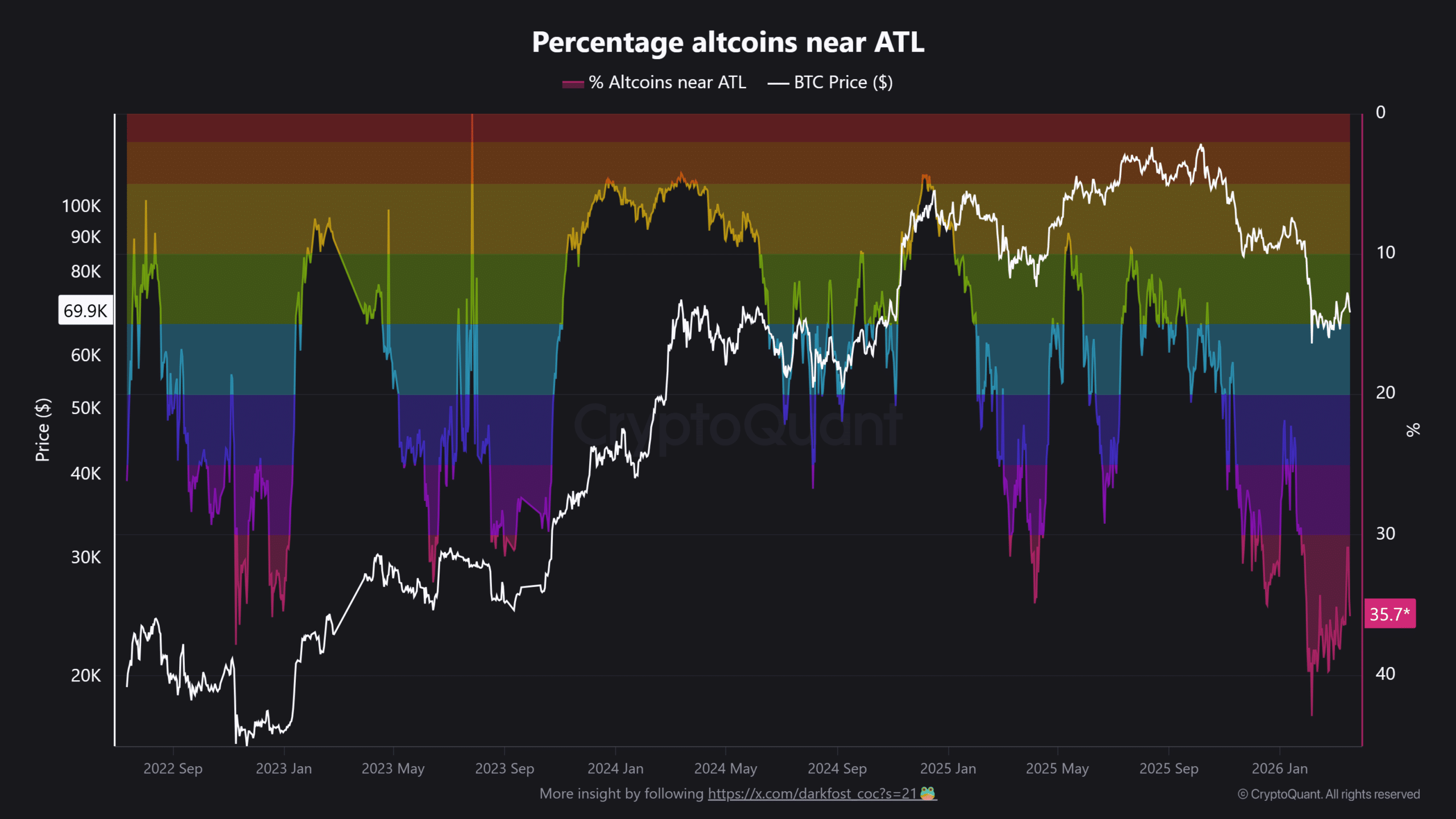
Altcoin weakness deepened as nearly 38–40% of assets traded near all-time lows, pushing the market into clear capitulation territory. As this level rises, it would reflect broad deterioration rather than isolated declines.

Source: CryptoQuant

At the same time, Bitcoin has held on relatively stronger, highlighting a widening divergence between major and risk assets. This shift signals liquidity rotation, where capital moves into Bitcoin for safety while exiting altcoins. As funds leave, altcoins face thinner liquidity and reduced demand, which accelerates price declines.

However, such extreme readings also mean that selling pressure may be nearing exhaustion. Meanwhile, participants reduce risk exposure, favoring preservation over speculation.

Such a structure implies a fragile market, one where downside risks remain. However, conditions may begin to favor accumulation if liquidity gradually returns to undervalued altcoins.

Market holds near capitulation as derivatives outpace spot demand

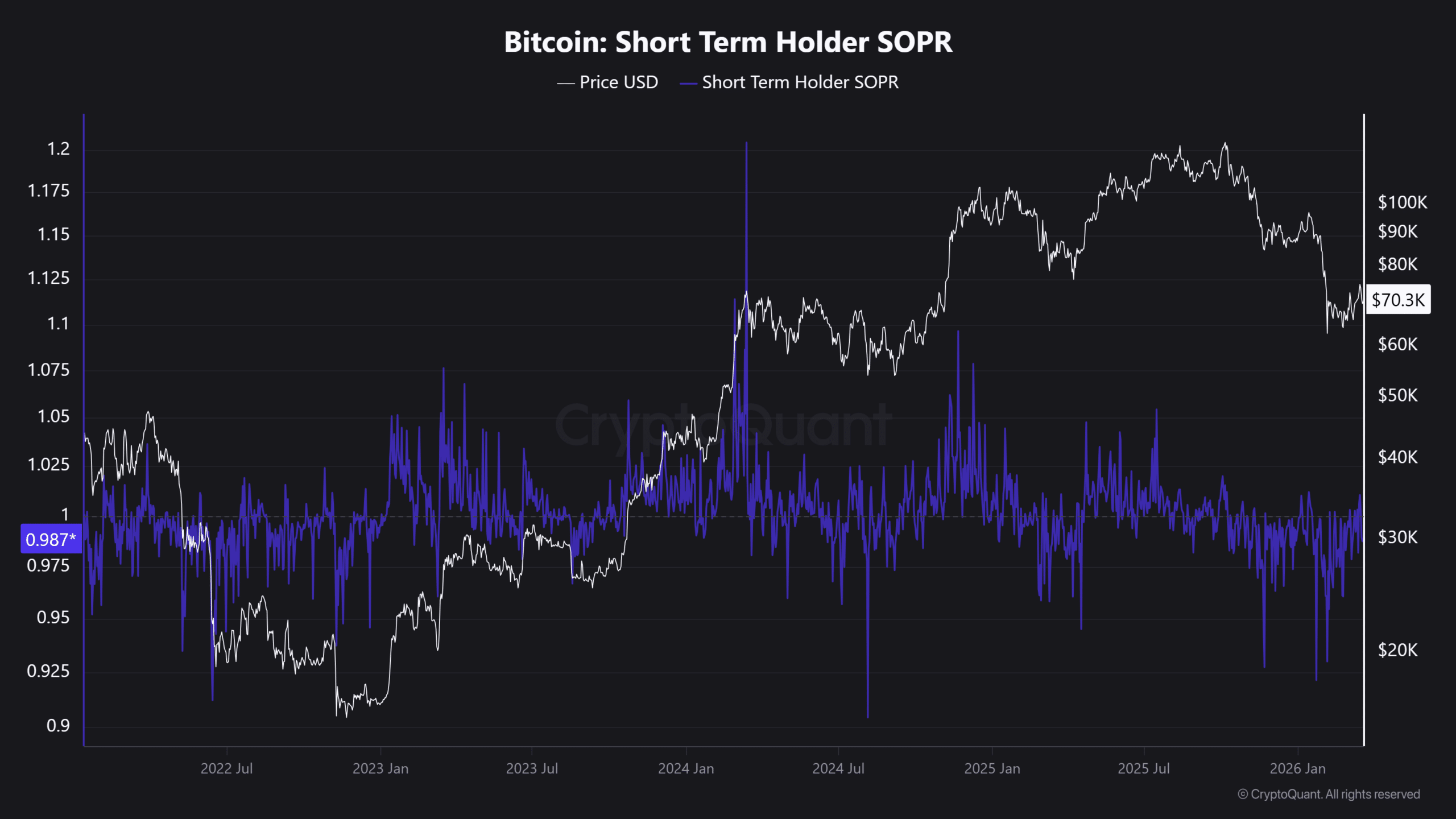
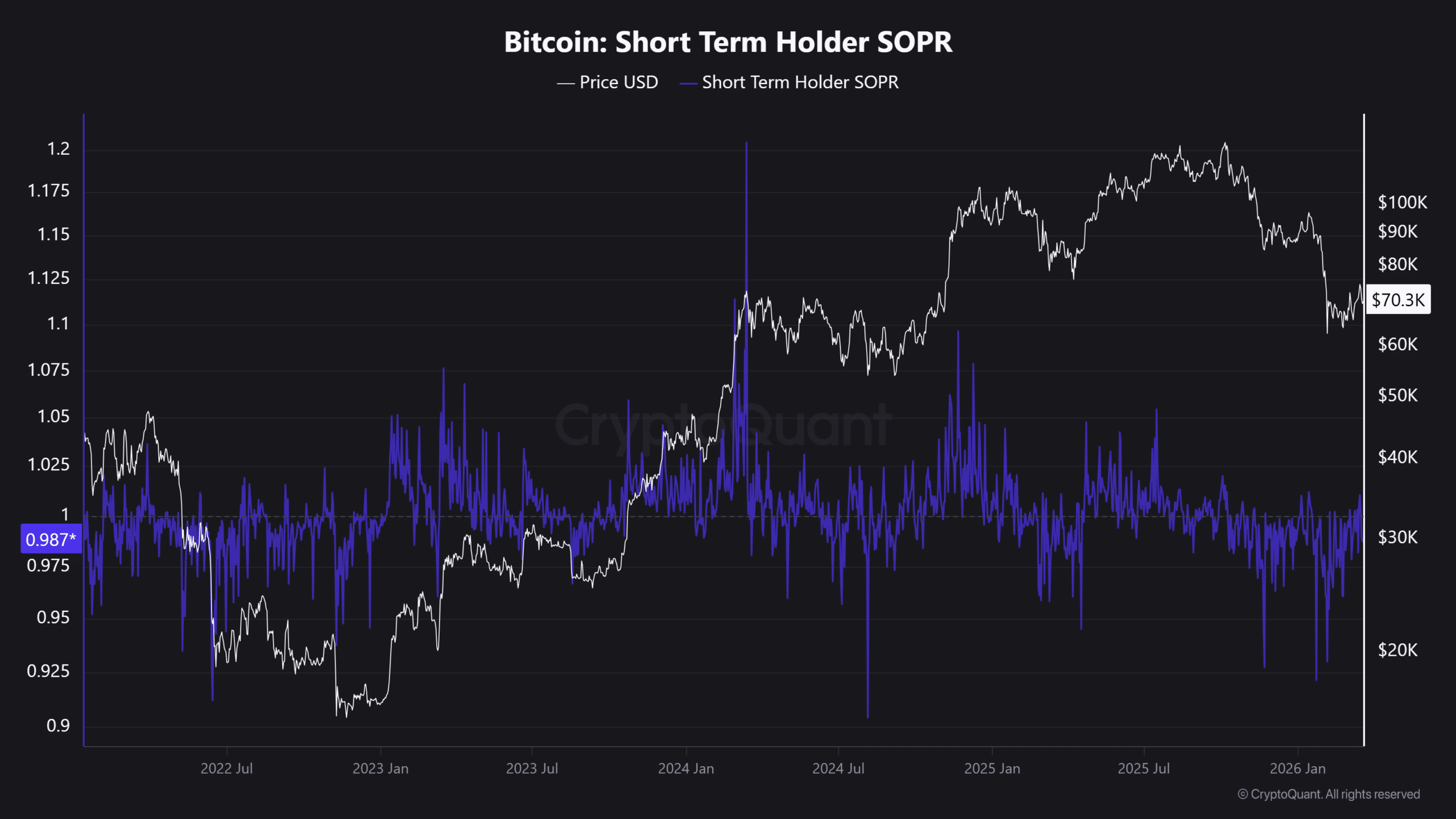
Finally, market structure revealed stress building without full capitulation, as Bitcoin [BTC] Short-Term Holder SOPR held near 0.98, reflecting realized losses around -12%. Since 2023, similar levels have often preceded deeper resets. And yet, press time selling appeared to be more controlled rather than aggressive.

Source: CryptoQuant

Consequently, liquidations have stayed subdued at $234 million, with $127 million in longs – Indicative of limited forced exits.

However, liquidity quality weakened as Binance’s Futures-to-Spot ratio climbed to a 1.5-year high. Such a shift showed derivatives activity expanding faster than spot demand.This divergence also hinted at a fragile balance, one where markets may either stabilize or face renewed volatility if spot demand fails to strengthen.


Final Summary

  • Altcoin market showed weakening demand as volumes fell to $26.5 billion and nearly 40% traded near lows, reflecting reduced risk appetite.
  • Altcoins now face thinning liquidity and sell-side pressure as capital rotates to Bitcoin [BTC], although conditions may begin favoring accumulation if demand returns.

İlgili Sorular

QWhat has happened to the altcoin trading volume according to the article?

AAltcoin trading volume has sharply contracted, dropping to $26.5 billion from peaks above $100 billion.

QWhich exchange processed the largest share of altcoin trades during this decline?

ABinance processed the largest share, handling about $7.7 billion, which represents nearly 40% of the market.

QWhat does the decline in altcoin volume and the performance of Bitcoin indicate about market behavior?

AIt indicates a liquidity rotation where capital is moving into Bitcoin for safety while exiting altcoins, reflecting reduced risk appetite and a preference for preservation over speculation.

QWhat does the high Futures-to-Spot ratio on Binance suggest about the current market dynamics?

AThe high ratio, which reached a 1.5-year high, suggests that derivatives activity is expanding faster than spot demand, indicating a fragile balance that could lead to renewed volatility if spot demand doesn't strengthen.

QAccording to the article, what might the current market conditions potentially favor in the future?

AThe current conditions may begin to favor accumulation if liquidity gradually returns to undervalued altcoins, as extreme selling pressure could be nearing exhaustion.

İlgili Okumalar

Will the Fed Definitely Raise Interest Rates in September? How Will Crypto and U.S. Stocks Withstand the Pressure?

The market's expectation for a September Fed rate hike surged dramatically in early August, jumping from under 50% to over 80% within a week. This shift followed a contentious July FOMC meeting, where a 9-3 vote to hold rates revealed growing dissent from hawkish members advocating for an immediate hike to combat persistent inflation. The primary catalyst for this repricing is rising oil prices, driven by renewed geopolitical tensions around the Strait of Hormuz, which threaten global supply. Energy costs directly influence inflation metrics, making the upcoming July CPI report (due August 12th) a critical data point. If it shows inflation reaccelerating, the probability of a September hike will solidify. For Bitcoin and crypto assets, this is typically bearish news. Bitcoin continues to behave as a high-beta, liquidity-sensitive risk asset. A rate hike raises the opportunity cost of holding non-yielding assets and could drive capital toward money markets, pressuring crypto prices in the short term. However, historical patterns suggest that if a hike is perceived as the end of a tightening cycle rather than the start, any negative price impact may be brief. U.S. stocks, particularly crypto-linked equities like Coinbase and growth-oriented tech stocks, are also vulnerable. Higher rates increase discount rates in valuation models, putting pressure on high-multiple companies. This coincides with a pivotal tech earnings season where investor focus has shifted from massive AI capital expenditure to tangible revenue and cash flow generation. Companies with negative cash flow and weak growth narratives could face heightened volatility if borrowing costs rise in September. In summary, a September Fed hike has evolved into a mainstream market scenario. Key factors to watch are oil prices, the July CPI report, and Fed communications, which will determine the final decision and its impact on volatile crypto and equity markets.

marsbit7 dk önce

Will the Fed Definitely Raise Interest Rates in September? How Will Crypto and U.S. Stocks Withstand the Pressure?

marsbit7 dk önce

A 'Overlooked' Market Event: Joint US-Japan-South Korea Intervention, Rare US Treasury Involvement, and Bessent's Quiet 'Market Rescue'?

Summary: The United States, Japan, and South Korea executed their largest coordinated foreign exchange intervention in nearly 30 years. The action targeted depreciation pressure on the Japanese yen and South Korean won. This move is seen as a significant effort by the US to stabilize the financial markets of its key allies and prevent the spillover of risks. Key details: * Japan reportedly intervened on July 30 using approximately 8.45 trillion yen (about $52.8 billion). South Korean authorities also intervened that day, selling dollars to support the won. * Notably, the US Treasury Department intervened directly in yen markets for the first time in roughly 30 years. The New York Fed, reportedly acting on behalf of the Treasury, sold euros to buy yen via Goldman Sachs and Morgan Stanley on July 31. Analysts view the use of the euro-yen pair as a way to alleviate yen pressure without adding selling pressure to the US dollar. * Prior to the action, the New York Fed conducted "rate checks" on both USD/JPY and EUR/JPY, a newer signaling tool that falls between verbal and physical intervention. The intervention is interpreted as going beyond traditional currency stabilization. Analysts, such as Michael Hartnett of Bank of America, suggest it resembles a "Price Keeping Operation" for the AI era. The core US objectives are perceived to be: 1. Preventing rapid yen depreciation from triggering a sharp rise in Japanese government bond yields. 2. Containing financial stress from spreading across Asian markets like South Korea and Japan. 3. Reducing the risk of disorderly capital flows impacting the US bond market. This coordinated action underscores the importance of Japan and South Korea as critical partners in the US semiconductor and AI supply chain. Stabilizing their financial markets is seen as vital to mitigating risks to the broader tech industry and the US market itself. The intervention coincides with market pressures, including the KOSDAQ index hitting a low since October 2022. While seen as a move to control volatility, some analysts caution it may not fundamentally reverse existing market trends.

marsbit11 dk önce

A 'Overlooked' Market Event: Joint US-Japan-South Korea Intervention, Rare US Treasury Involvement, and Bessent's Quiet 'Market Rescue'?

marsbit11 dk önce

Will the Federal Reserve Definitely Raise Interest Rates in September? How Will Cryptocurrencies and US Stocks Bear the Pressure?

In early August 2024, market expectations for a September Federal Reserve rate hike surged dramatically, from below 50% to over 80%, driven by renewed inflation concerns. This shift followed a contentious July FOMC meeting where a 9-3 vote to hold rates revealed a growing hawkish faction advocating for an immediate hike, citing prolonged above-target inflation. The key catalyst is escalating conflict near the Strait of Hormuz, which has pushed oil prices up approximately 20% in July, threatening to reignite inflation. The next critical data point is the July CPI report on August 12th; a hot reading could solidify hike expectations. For crypto assets, particularly Bitcoin, this represents near-term pressure. Bitcoin continues to exhibit high-beta, risk-on characteristics, making it sensitive to tightening liquidity and higher opportunity costs. However, historical precedent suggests that if a hike is perceived as the cycle's end rather than its start, the negative impact may be brief, with markets quickly pivoting to anticipate future rate cuts. U.S. stocks, especially crypto-linked equities like Coinbase and high-valuation tech stocks, face amplified volatility. Higher rates increase discount rates in valuation models, pressuring growth stocks. This coincides with a pivotal tech earnings season where investor focus has shifted from massive AI capital expenditures to demonstrable revenue and cash flow generation. Companies with negative cash flows and weak growth narratives could see severe pressure if a September hike materializes, as financing costs would rise. Key indicators to watch include oil prices, upcoming inflation data, and Fed commentary at events like the Jackson Hole symposium.

Odaily星球日报11 dk önce
Will the Federal Reserve Definitely Raise Interest Rates in September? How Will Cryptocurrencies and US Stocks Bear the Pressure?

Odaily星球日报11 dk önce

İşlemler

Spot
活动图片