AI Trading Cools, South Korean Stocks Plunge 1.8%, Spot Gold Rises 1%, Bitcoin Dives

华尔街日报2026-06-04 tarihinde yayınlandı2026-06-04 tarihinde güncellendi

Özet

A sell-off in AI-related stocks, triggered by Broadcom's disappointing earnings forecast, sent shockwaves through global markets. South Korea's KOSPI led Asia's decline, plunging 1.8% as the risks from concentrated chip stock gains and surging leveraged investments came to the fore. The tech-heavy Nasdaq 100 futures fell 0.5% following Broadcom's 14% after-hours plunge, which signaled a slower-than-expected transition to AI clients. This pullback extended Wall Street's weakness, halting the S&P 500's nine-day rally amid hawkish Fed signals and renewed Middle East tensions. South Korean authorities convened an emergency meeting, pledging "immediate measures" against market volatility and warning of record-high stock margin debt. The adjustment rippled across assets: Bitcoin fell to around $64,000, its lowest since February, while safe-haven gold rose 1% on bargain hunting. Oil prices dipped on Middle East ceasefire news. Market analysts noted the sell-off was driven by profit-taking after massive gains, particularly in chip stocks like Samsung and SK Hynix, which now dominate the KOSPI. Wall Street banks are divided on Korea's outlook, with Goldman Sachs raising its target while Citigroup and others warn of overvaluation and a potential bubble. Bridgewater's Ray Dalio noted that great technological shifts often create bubbles. Meanwhile, Fed officials' hints at potential future rate hikes added to the cautious mood ahead of key U.S. jobs data.

Broadcom's disappointing earnings outlook triggered a rapid cooling of the global artificial intelligence (AI) trade. South Korea's KOSPI led the decline in the Asia-Pacific market on Thursday, abruptly pushing the accumulated bubble risks from highly concentrated chip stocks and rapidly expanding leveraged funds to the forefront.

Nasdaq 100 index futures slipped 0.5%, after Broadcom plunged 14% in after-hours trading. Its latest earnings outlook fell far short of investor expectations and signaled a slower-than-expected transition progress towards AI customers. UBS Group's AI Winners Basket Index fell 1.4% on Wednesday, ending a four-day winning streak. The Asian decline extended Wall Street's weak performance on Wednesday—the S&P 500's nine-day rally came to a halt, pressured by a combination of hawkish signals from Fed officials and renewed U.S.-Iran tensions, further suppressing risk appetite.

According to a Wall Street Journal article, South Korean Finance Minister Koo Yun-cheol held a joint meeting with central bank governor Shin Hyun-song, Financial Services Commission chairman Lee Eog-weon, and Financial Supervisory Service governor Lee Chan-jin. They pledged to take "immediate measures" if necessary to respond to sharp volatility in the foreign exchange market. At the same time, officials warned about stock margin loan balances hitting a nearly 20-year high, highlighting authorities' high concern for market stability.

This adjustment affected global assets: Bitcoin slid to around $64,000, its lowest level since February this year; gold rose about 1% as bargain-hunting buying flowed in; Brent crude oil ended a three-day rally on news of an Israel-Lebanon ceasefire agreement, falling about 1% to around $97 per barrel; European stocks were mixed, with investors cautiously awaiting Friday's U.S. non-farm payrolls data.

  • European stocks opened mixed, with the Euro Stoxx 50 up 0.13%, the UK's FTSE 100 down 0.12%, France's CAC 40 up 0.10%, and Germany's DAX up 0.20%.
  • Japan's Nikkei 225 closed down 1.4% at 67,470.69 points. The Topix index closed down 1.1% at 3,951.85 points. South Korea's KOSPI closed down 1.8% at 8,639.41 points.
  • The U.S. Dollar Spot Index was little changed.
  • The yen rose 0.1% to 159.86 per dollar.
  • The yield on the 10-year U.S. Treasury note fell two basis points to 4.48%.
  • The yield on the 10-year Japanese government bond rose 3 basis points to 2.670%.
  • WTI crude oil fell 0.8% to $95.27 per barrel.
  • Spot gold rose 1% to $4,479.64 per ounce.
  • Bitcoin fell 0.9% to $64,312.09.

Nasdaq 100 index futures slipped 0.5%, after Broadcom plunged 14% in after-hours trading, as its latest earnings outlook fell short of investor expectations. Broadcom also signaled that its transition towards AI customers was progressing slower than expected, though the direction is correct, it faces excessively high market expectations. UBS Group's AI Winners Basket Index fell 1.4% on Wednesday, ending a four-day winning streak.
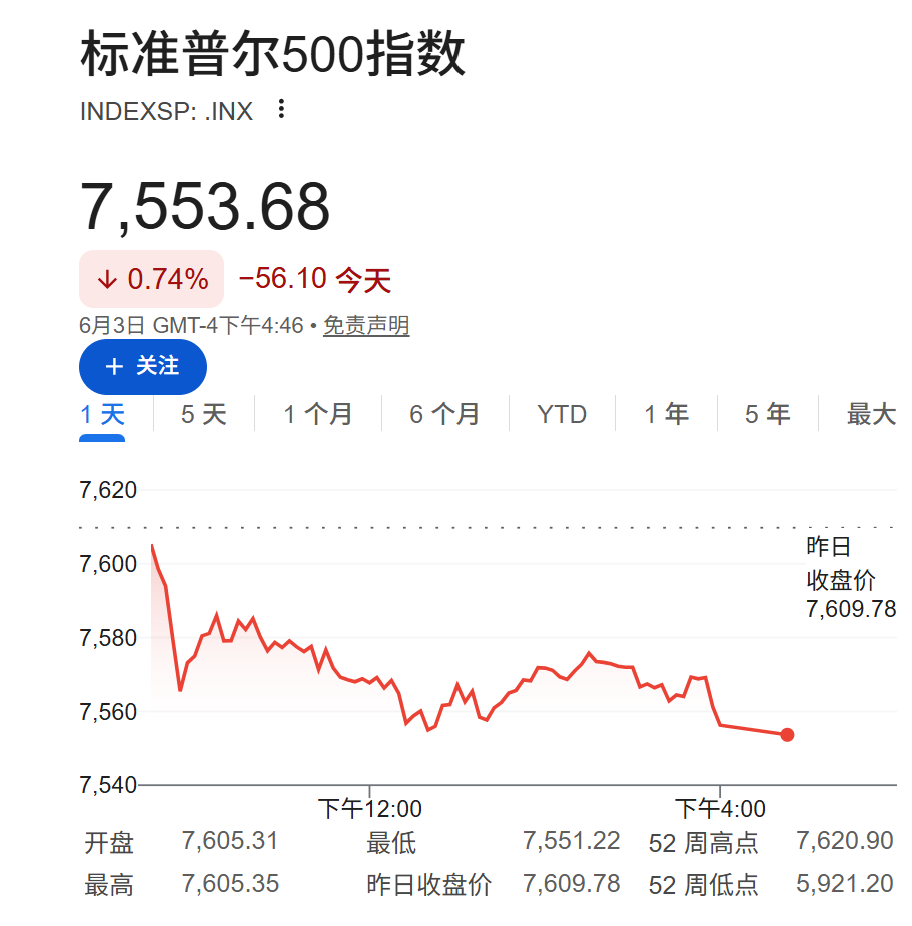
The Asian decline extended Wall Street's weak performance on Wednesday—the S&P 500's nine-day rally ended abruptly, as renewed U.S.-Iran conflict weighed on market risk sentiment. European stocks also faced downward pressure, with Bitcoin sliding to around $64,000, its lowest level since February this year. News of an Israel-Lebanon ceasefire agreement brought some local relief, leading Brent crude oil to end its three-day rally and fall about 1% to around $97 per barrel; gold rose 0.6% to around $4,460 per ounce as bargain-hunting buying flowed in.

Billy Leung, an investment strategist at Global X Management, said, "Chip stocks had rallied sharply before the earnings reports were released. Investors holding significant paper gains don't need much reason to take profits."

South Korea's KOSPI opened with a dive on Thursday, becoming one of the worst-performing major indices in the Asia-Pacific region. Although the KOSPI is still up over 100% year-to-date and has gained over 200% since June 2025, ranking first among major global stock indices, the nearly 2% drop on the day still drew high-level attention from authorities.
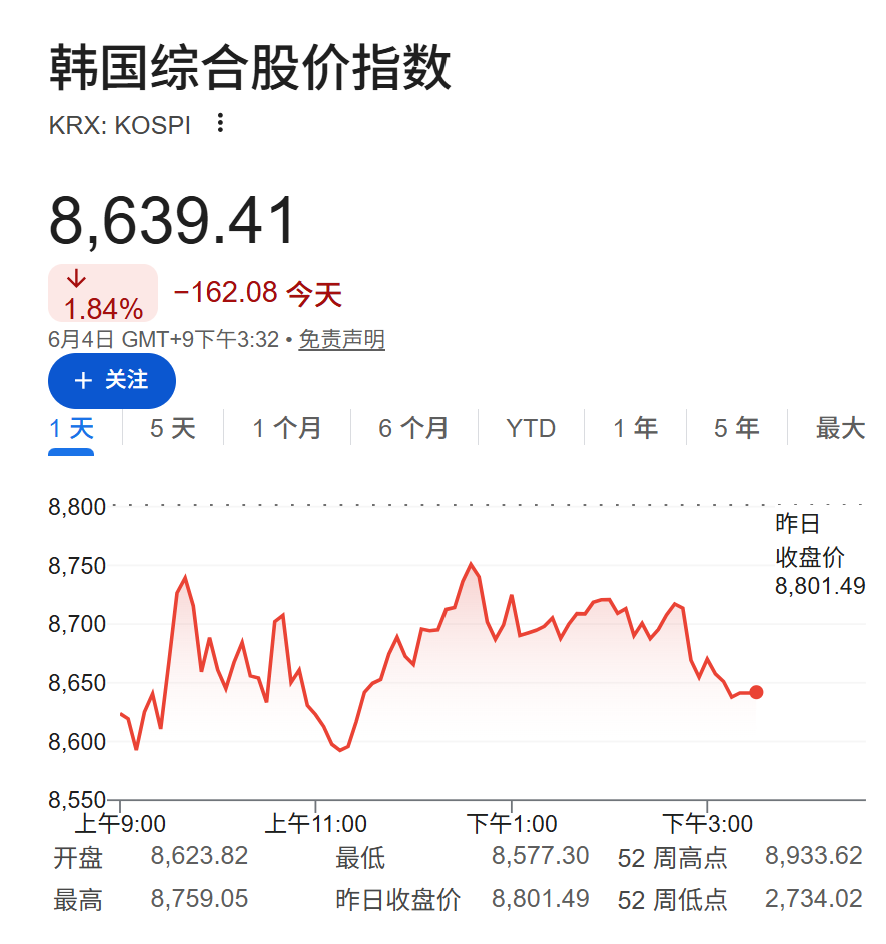
According to Yonhap News Agency, Koo Yun-cheol stated after the meeting that the government is maintaining high vigilance to prevent external uncertainties from turning into widespread market panic. "(The government) will take immediate measures if necessary to respond to excessive market volatility," he added. Attending officials believe the recent market volatility is closely related to the ongoing conflict in the Middle East and continuous net selling by foreign investors in the stock market. South Korea's Ministry of Finance stated in a declaration, "The recent rapid rise in the Korean stock market has led to temporary rebalancing by foreign investors, with profit-taking activities intensifying market volatility."

While officials emphasized the robustness of South Korea's economic fundamentals—May exports surged 53.2% year-on-year, and the total stock market capitalization has risen to the sixth largest globally—they also warned that the rise in stock margin loan scale could pose potential risks to the economy and will closely monitor related developments to protect investor interests.

The stellar performance of the KOSPI masks severe divergence among its components. Among the 835 constituent stocks, only 373 have risen this year, less than half; Samsung Electronics and SK Hynix have surged about 200% and 250% year-to-date, respectively, each with market capitalization exceeding $1 trillion, together accounting for over 40% of the KOSPI's weighting, while the remaining over 800 stocks contribute less than 30% to the index's gain.

Accompanying the highly concentrated rally is a sharp expansion of leveraged speculative funds. Data from South Korea's Financial Supervisory Service shows that as of Q1 2026, the margin loan balance at the top ten securities firms has approached 36 trillion won, nearly doubling from a year ago, hitting a nearly 20-year high; investors aged 50 and above account for as high as 62.3% of this, with the loan balance for the over-60 group surging from about 3 trillion won to over 8 trillion won within a year. In Q1 2026, the number of new securities accounts opened by individuals under 18 in South Korea increased nearly tenfold compared to the same period last year.

Data from the Korea Exchange shows that the total number of circuit breaker triggers in the main board market this year has risen to the highest level since the 2008 financial crisis—a total of 20 "sidecar" program trading suspension orders have been issued this year, only 6 less than the 26 issued in all of 2008. According to the rules, program trading is suspended for 5 minutes when the KOSPI 200 futures index fluctuates by 5% or more for at least 1 minute.

Faced with the KOSPI's rapid rise, major Wall Street institutions have shown clear divergence in their stances. Goldman Sachs raised its KOSPI target from 9,000 points to 12,000 points, stating in a report that the rally in AI chipmaker stocks may continue, but warning that correction risks are rising; strategists including Timothy Moe, the bank's chief Asia-Pacific equity strategist, wrote in the report, "We prefer North Asia, where earnings growth is the strongest."

Citi warned that South Korean stock valuations are at high levels among major global markets, coupled with institutional risks in labor relations, which could dampen long-term foreign investment allocation interest. It believes the current rally is more driven by short-term sentiment. The global chief investment officer at Standard Chartered Bank pointed out that going long on South Korea has become a "highly crowded trade" and has downgraded the semiconductor sector from "overweight" to "neutral," believing a short-term correction is entirely reasonable.

Billionaire and Bridgewater Associates founder Ray Dalio said in a Bloomberg TV interview on Wednesday, "All great technological transformations create bubbles." Rob Marshall Lee, emerging markets investor and founding partner & chief investment officer at Cusana Capital, was more blunt: "The Korean market is a huge bubble." He pointed out that most Korean companies have extremely low return on equity, and the AI era will not bring fundamental change; he warned that when the cycle reverses, the profit margins of related companies could plummet from 70% to negative. "Short-term, I wouldn't short; but looking five years out, you'd likely lose a lot of money," he said.

Hawkish remarks from Fed officials simultaneously cooled market sentiment. Dallas Fed President Lorie Logan said policymakers may need to raise interest rates later this year to bring inflation back to target; New York Fed President John Williams told Yahoo Finance that the interest rate outlook remains uncertain.

According to Bloomberg, recent data showed U.S. companies added the most new jobs since January 2025, indicating hiring momentum remains strong despite rising energy costs. If Friday's non-farm payrolls data confirms this, market expectations for Fed rate hikes will strengthen further. The yield on the 10-year U.S. Treasury note fell slightly by 2 basis points to 4.48% on Thursday, after rising significantly earlier due to high oil prices and labor market resilience. Investors on Thursday will also receive the weekly initial jobless claims data to further gauge the direction of the job market.

Fawad Razaqzada, an analyst at Forex.com, said, "If U.S. economic data continues to positively exceed expectations, investors may express a more hawkish Fed expectation by betting on a stronger U.S. dollar, especially against low-yield or zero-yield assets like the yen and gold." Meanwhile, according to Bloomberg citing informed sources, Bank of Japan officials are considering raising the benchmark interest rate by 25 basis points this month and assessing the possibility of further hikes within the year, driving the yen to strengthen against the dollar on Thursday.


Trend Kriptolar

İlgili Sorular

QWhat was the immediate trigger for the global AI trade cooling and the subsequent market sell-off?

AThe immediate trigger was Broadcom's disappointing earnings outlook, which fell significantly below investor expectations and signaled a slower-than-anticipated transition to AI customers. This caused its stock to plunge 14% in after-hours trading and triggered a broader sell-off in AI and chip-related stocks.

QWhy did the South Korean KOSPI index fall significantly, and what specific market risks did this highlight?

AThe KOSPI fell 1.8% due to the global tech/AI sell-off and domestic factors. It highlighted the risks of a highly concentrated and leveraged market bubble. Specifically, the index's performance was driven almost entirely by massive gains in two chip giants (Samsung and SK Hynix), while over 800 other components contributed little. Concurrently, margin loan balances hit a near 20-year high, indicating speculative, debt-fueled investment, particularly among older retail investors.

QHow did the market movements described affect major global assets like gold, oil, and Bitcoin?

AThe risk-off sentiment led to a flight to safety, boosting gold, which rose 1%. Oil (Brent crude) fell about 1% on news of an Israel-Lebanon ceasefire. Bitcoin, often viewed as a risk asset, dropped to around $64,000, its lowest level since February, as speculative capital fled.

QWhat were the contrasting views of major Wall Street institutions (e.g., Goldman Sachs, Citigroup) on the South Korean market rally?

AThere was significant divergence. Goldman Sachs was optimistic, raising its KOSPI target to 12,000 and believing the AI chip rally could continue, albeit with rising correction risks. In contrast, Citigroup warned that high valuations and structural labor risks could deter long-term foreign investment, viewing the rally as driven by short-term sentiment.

QWhat key factors are currently influencing U.S. monetary policy expectations and currency markets according to the article?

ATwo main factors are at play: 1) Strong U.S. economic data, especially a resilient labor market (e.g., strong private payrolls), which could compel the Federal Reserve to maintain or even consider future rate hikes, as hinted by officials like Lorie Logan. 2) High energy prices putting upward pressure on inflation. This is strengthening expectations for a hawkish Fed, which could support the U.S. dollar, particularly against low-yield currencies like the Japanese Yen.

İlgili Okumalar

human.tech Launches Clean SDK for Privacy-First Web3 Apps

human.tech has launched the Clean SDK, a toolkit enabling developers to build privacy-first Web3 applications with transparent accountability. Released alongside Aztec's version 5, the SDK provides components for integrating zero-knowledge identity verification, sanctions screening, and private transactions, without developers handling sensitive user data or building compliance infrastructure from scratch. It uses zero-knowledge proofs and programmable verification to allow apps to confirm user legitimacy and sanctions compliance while keeping identities confidential. The first application built on the SDK, Shield, a privacy bridge to Aztec, also launched. It allows users to transfer assets privately while proving a unique human is behind each transfer and that funds have passed sanctions checks, as verified by a May 2026 audit. The SDK offers three core verification techniques: Proof of Innocence (sanctions screening against 23 sources), Proof of Personhood (simpler verification via Human Passport), and Proof of Clean Hands (higher-assurance zero-knowledge government ID checks). This allows apps to authenticate users and transactions without exposing personal data. Designed for Aztec builders, the SDK lets developers add programmable privacy to decentralized apps, eliminating the need to create their own verification and ZK infrastructure. Shield demonstrates its practical use for private bridges, but the SDK aims to enable a wider ecosystem of private, accountable financial apps and services. The launch addresses growing demand for infrastructure that balances privacy and accountability. The SDK avoids traditional identity databases, storing encrypted data off-chain, screening at both entry and exit points, and including a gated disclosure mechanism for legal requests. human.tech's products, including the Clean SDK, focus on using zero-knowledge technology to enable verifiable personhood and privacy in digital systems.

TheNewsCrypto12 dk önce

human.tech Launches Clean SDK for Privacy-First Web3 Apps

TheNewsCrypto12 dk önce

Unlocking $100 Million in Liquidity? Pump.fun's New Policy Tests the 5-Minute Pump Technique

Pump.fun, a popular meme coin launchpad, has introduced a new standard mechanism called BOOST. It aims to address a significant capital efficiency issue: when a newly launched token graduates from its initial bonding curve to a liquidity pool (LP), roughly 20% of its liquidity becomes permanently locked as "dead liquidity," estimated to waste over $100 million annually. Instead of locking these funds permanently, BOOST repurposes them. Upon a token's migration, approximately 20% of the settlement funds (e.g., 17.6 SOL or ~$2516 USDC) are used to buy back the token on the open market over a 5-minute period via a Time-Weighted Average Price (TWAP) mechanism. All purchased tokens are immediately burned. This creates a brief, systematic buy pressure immediately after migration, potentially generating a short-term price surge ("pump") while permanently reducing the token's circulating supply. The goal is to enhance the immediate post-launch trading experience, potentially increasing trader retention and sustainable protocol revenue, which funds ongoing token buybacks. However, concerns exist that this artificial 5-minute boost could lower the barrier for launching low-quality tokens and lead to steeper price crashes once the buy pressure stops, if followed by large sell-offs. The feature automatically applies to tokens migrating after July 21, 2024, but not to previously migrated tokens or those launched via the Mayhem AI Agent lab.

marsbit19 dk önce

Unlocking $100 Million in Liquidity? Pump.fun's New Policy Tests the 5-Minute Pump Technique

marsbit19 dk önce

Podcast Notes | Conversation with GSR Asset Management Head: To Determine if This Crypto Rally is Real, Just Watch the Lending Rates on Aave

Podcast Summary: Dialogue with GSR's Head of Asset Management: To Determine if This Crypto Rally is Real, Just Check Lending Rates on Aave Andy Baehr, Managing Director of Asset Management at GSR, discusses the current crypto market, characterizing it as stuck in a state of "ambivalence" with short-lived, unsustainable rallies. He outlines a simple framework: the market moves between "ambivalence" and "conviction" (sustained upward momentum). Currently, every rally resembles a single-stage rocket booster that quickly fizzles out. Baehr identifies three key signals to watch: 1) DeFi lending rates, 2) the potential passage of the CLARITY Act, and 3) the market forming a consensus on the "Fed hawkish peak." He emphasizes that the most immediate indicator for the sustainability of the recent CPI-triggered rally is the USDC borrowing rate on Aave, currently around 3.75%—close to U.S. Treasury yields. The absence of a credit spread indicates low leverage demand and a lack of market energy. He explains that a healthy, sustained rally requires layered buying pressure. Last year's rally progressed from an ETH short squeeze to crypto-native trader influx and finally to ETF inflows. Currently, this structure is missing. Other potential structural buyers like Digital Asset Treasury (DAT) companies are absent, and ETF flows have proven transient. Baehr notes that while small-cap crypto tokens outperformed large caps in Q2—a potential sign of capitation in major assets—capital is also flowing to more exciting opportunities like AI stocks and tech IPOs, leaving crypto sidelined. Regarding DeFi, he highlights that platforms like Aave provide a clear, real-time signal of leverage demand through their supply/demand-driven interest rates. A significant, sustained rate increase would signal genuine market conviction. He also observes the quiet emergence of fixed-income-like products and vaults in DeFi. On regulation, the probability of the CLARITY Act passing before the August 7th deadline has dropped linearly from 75% to below 40% on Polymarket. Baehr suggests its passage would be treated as a bullish surprise, a potent driver for price movement. However, political hurdles, including ethical clause debates and disclosures about the First Family's crypto profits, remain significant obstacles. Ultimately, the market awaits clarity on the Fed's terminal rate under Chair Warsh. Until the "Fed Solstice"—the point where the market collectively understands the peak of hawkish policy—sustained conviction will be difficult to achieve.

marsbit50 dk önce

Podcast Notes | Conversation with GSR Asset Management Head: To Determine if This Crypto Rally is Real, Just Watch the Lending Rates on Aave

marsbit50 dk önce

İşlemler

Spot

Popüler Makaleler

BITCOIN Nedir

HarryPotterObamaSonic10Inu (ERC-20)'yu ve Kripto Alanındaki Yerini Anlamak Son yıllarda, kripto para piyasası, hem ticaret yapanların hem de topluluk etkileşimi ve eğlence değeri arayanların ilgisini çeken meme coin'lerin popülaritesinde bir artış gördü. Bu benzersiz token'lar arasında, kripto para dokusuna kültürel referansları harmanlayan ilginç bir proje olan HarryPotterObamaSonic10Inu (ERC-20) bulunmaktadır. Bu makale, HarryPotterObamaSonic10Inu'nun temel yönlerini, mekanizmalarını, topluluk odaklı ethosunu ve daha geniş kripto manzarasıyla etkileşimini incelemektedir. HarryPotterObamaSonic10Inu (ERC-20) Nedir? Adından da anlaşılacağı gibi, HarryPotterObamaSonic10Inu, Ethereum blok zinciri üzerinde inşa edilen bir meme coin'dir ve ERC-20 standardı altında sınıflandırılmaktadır. Geleneksel kripto paraların pratik kullanılabilirlik veya yatırım potansiyeline odaklandığı durumların aksine, bu token eğlence değeri ve topluluğunun gücü üzerine kuruludur. Proje, bağlı kullanıcıların bir araya gelebileceği, fikirlerini paylaşabileceği ve çeşitli kültürel fenomenlerden ilham alan etkinliklere katılabileceği bir ortam yaratmayı hedeflemektedir. HarryPotterObamaSonic10Inu'nun dikkate değer özelliklerinden biri işlemlerde sıfır vergi olmasıdır. Bu çekici unsur, küçük ölçekli yatırımcıları caydırabilecek ek ücretlerden yoksun olarak ticareti ve topluluk katılımını teşvik etmeyi amaçlamaktadır. Coin'in toplam arzı bir milyar token olarak belirlenmiştir; bu, topluluk içinde önemli bir dolaşım sağlama niyetini göstermektedir. HarryPotterObamaSonic10Inu (ERC-20) Yaratıcısı HarryPotterObamaSonic10Inu'nun kökenleri bir miktar gizemlidir; yaratıcısı hakkında spesifik bilgilerin ne olduğu bilinmemektedir. Bu token'ın geliştirilmesi, belirli bir ekip veya açık bir plan eksikliği ile gerçekleşmiştir; bu durum, meme coin sektöründe oldukça yaygındır. Proje, topluluğunun heyecanı ve katılımına dayalı olarak organik bir şekilde ortaya çıkmıştır. HarryPotterObamaSonic10Inu (ERC-20) Yatırımcıları Dış yatırımlar ve destekler söz konusu olduğunda, HarryPotterObamaSonic10Inu da belirsiz kalmaktadır. Token, bilinen herhangi bir yatırım fonunu veya önemli bir kurumsal desteği listelememektedir. Bunun yerine, projenin can damarı, kolektif eylem ve kripto alanındaki katılım yoluyla büyüme ve sürdürülebilirlik sağlayan temel topluluğudur. HarryPotterObamaSonic10Inu (ERC-20) Nasıl Çalışır? Bir meme coin olarak, HarryPotterObamaSonic10Inu, genellikle varlık değerini yöneten geleneksel çerçevelerin dışında çalışmaktadır. Projenin nasıl çalıştığını tanımlayan birkaç özelliği vardır: Sıfır Vergi İşlemleri: İşlemlerde vergi ücreti olmadan, kullanıcılar gizli maliyet endişesi olmadan token'ı serbestçe alıp satabilirler. Topluluk Etkileşimi: Proje, topluluk etkileşimi üzerine kuruludur ve sosyal medya platformlarını kullanarak heyecan yaratarak katılımı kolaylaştırır. Tartışmalar, içerik paylaşımı ve katılım, projenin erişimini genişletmeye ve destekleyiciler arasında sadakat oluşturmaya yardımcı olan kritik unsurlardır. Pratik Kullanılabilirlik Yok: HarryPotterObamaSonic10Inu'nun mali ekosistem içinde somut bir kullanılabilirlik sunmadığı belirtilmelidir. Daha ziyade, eğlence ve topluluk etkinlikleri için bir token olarak sınıflandırılmaktadır. Kültürel Referans: Token, popüler kültürden unsurları zekice harmanlayarak ilgi çekmektedir ve hem meme meraklıları hem de kripto takipçileriyle bağlantı kurmaktadır. HarryPotterObamaSonic10Inu, meme coin'lerin, daha geleneksel kripto para projelerinden nasıl farklı çalıştığını örneklendirmektedir; bu projeler, utilitarist varlıklar yerine yenilikçi sosyal yapıların bir parçası olarak piyasaya girmektedir. HarryPotterObamaSonic10Inu (ERC-20) Zaman Çizelgesi HarryPotterObamaSonic10Inu'nun tarihi, birkaç dikkate değer kilometre taşı ile işaretlenmiştir: Oluşum: Token, birçok kripto meraklısının hayal gücünü yakalayan bir viral meme'den ortaya çıkmıştır. Spesifik yaratım tarihleri mevcut değildir ve bu onun organik yükselişini vurgulamaktadır. Borsa Listelemeleri: HarryPotterObamaSonic10Inu, topluluğun daha kolay erişim ve ticaret yapabilmesini sağlamak için çeşitli borsalarda yer bulmuştur. Topluluk Katılım İnisiyatifleri: Yarışmalar, sosyal medya kampanyaları ve hayranlar ile destekçilerden içerik üretimini içeren topluluk etkileşimini artırmayı amaçlayan devam eden etkinlikler. Gelecek Genişleme Planları: Projenin yol haritası, kültürel temalarına ilişkin bir NFT koleksiyonu, ticari ürünler ve bir e-ticaret sitesi başlatılmasını içermektedir; bu da topluluğun daha fazla katılımını sağlamayı ve ekosistemine daha fazla boyut kazandırmayı hedeflemektedir. HarryPotterObamaSonic10Inu (ERC-20) Hakkında Kilit Noktalar Topluluk Odaklı Doğası: Proje, kullanıcı katılımını geliştirme önceliği taşır ve böylece kullanıcıların sürecin en önünde yer almasını sağlar. Meme Coin Sınıflandırması: Eğlenceye dayalı kripto paranın doruk noktasıdır ve geleneksel yatırım araçlarından ayrılmaktadır. Bitcoin ile Doğrudan İlişki Yok: Ticker ismindeki benzeliğe rağmen, HarryPotterObamaSonic10Inu ayırt edicidir ve Bitcoin veya diğer yerleşik kripto paralarla herhangi bir ilişkisi yoktur. İşbirliğine Odaklanma: HarryPotterObamaSonic10Inu, sahipleri arasında işbirliği ve hikaye paylaşımı için bir alan oluşturmak üzere tasarlanmıştır ve bu da yaratıcılık ve topluluk bağlarını sağlamaktadır. Gelecek Beklentileri: Başlangıçta belirlendiği temalardan NFTs ve ticari ürünlere genişleme arzusu, projenin dijital kültürde daha ana akıma girebilmesi için bir yol haritası çizmektedir. Meme coin'ler, kripto para topluluğunun hayal gücünü çalmaya devam ederken, HarryPotterObamaSonic10Inu (ERC-20), kültürel bağları ve topluluk merkezli yaklaşımıyla öne çıkmaktadır. Geleneksel bir hizmet odaklı token modeliyle uyumlu olmasa da, özünde destekçileri arasında sağlanan neşe ve dostluğu vurgulayarak, giderek dijitalleşen bir çağda kripto paraların evrilen doğasını göstermektedir. Proje gelişmeye devam ettikçe, topluluk dinamiklerinin blockchain teknolojisi dünyasındaki seyrini nasıl etkilediğini izlemek önemli olacaktır.

2.1k Toplam GörüntülenmeYayınlanma 2024.04.01Güncellenme 2024.12.03

BITCOIN Nedir

BTC Nasıl Satın Alınır

HTX.com’a hoş geldiniz! Bitcoin (BTC) satın alma işlemlerini basit ve kullanışlı bir hâle getirdik. Adım adım açıkladığımız rehberimizi takip ederek kripto yolculuğunuza başlayın. 1. Adım: HTX Hesabınızı OluşturunHTX'te ücretsiz bir hesap açmak için e-posta adresinizi veya telefon numaranızı kullanın. Sorunsuzca kaydolun ve tüm özelliklerin kilidini açın. Hesabımı Aç2. Adım: Kripto Satın Al Bölümüne Gidin ve Ödeme Yönteminizi SeçinKredi/Banka Kartı: Visa veya Mastercard'ınızı kullanarak anında Bitcoin (BTC) satın alın.Bakiye: Sorunsuz bir şekilde işlem yapmak için HTX hesap bakiyenizdeki fonları kullanın.Üçüncü Taraflar: Kullanımı kolaylaştırmak için Google Pay ve Apple Pay gibi popüler ödeme yöntemlerini ekledik.P2P: HTX'teki diğer kullanıcılarla doğrudan işlem yapın.Borsa Dışı (OTC): Yatırımcılar için kişiye özel hizmetler ve rekabetçi döviz kurları sunuyoruz.3. Adım: Bitcoin (BTC) Varlıklarınızı SaklayınBitcoin (BTC) satın aldıktan sonra HTX hesabınızda saklayın. Alternatif olarak, blok zinciri transferi yoluyla başka bir yere gönderebilir veya diğer kripto para birimlerini takas etmek için kullanabilirsiniz.4. Adım: Bitcoin (BTC) Varlıklarınızla İşlem YapınHTX'in spot piyasasında Bitcoin (BTC) ile kolayca işlemler yapın.Hesabınıza erişin, işlem çiftinizi seçin, işlemlerinizi gerçekleştirin ve gerçek zamanlı olarak izleyin. Hem yeni başlayanlar hem de deneyimli yatırımcılar için kullanıcı dostu bir deneyim sunuyoruz.

8.2k Toplam GörüntülenmeYayınlanma 2024.12.12Güncellenme 2026.06.02

BTC Nasıl Satın Alınır

$BITCOIN Nedir

DİJİTAL ALTIN ($BITCOIN): Kapsamlı Bir Analiz DİJİTAL ALTIN ($BITCOIN) Tanıtımı DİJİTAL ALTIN ($BITCOIN), geleneksel değerli metallerin özelliklerini merkeziyetsiz teknolojilerin yeniliği ile birleştirmeyi amaçlayan Solana ağı üzerinde çalışan blockchain tabanlı bir projedir. Bitcoin ile aynı isme sahip olmasına rağmen, genellikle bir değer saklama aracı olarak algılandığı için “dijital altın” olarak anılmaktadır; DİJİTAL ALTIN, Web3 ortamında benzersiz bir ekosistem yaratmak için tasarlanmış ayrı bir tokendir. Hedefi, uygulanabilir bir alternatif dijital varlık olarak kendini konumlandırmaktır, ancak uygulamaları ve işlevleri ile ilgili ayrıntılar hala gelişmektedir. DİJİTAL ALTIN ($BITCOIN) Nedir? DİJİTAL ALTIN ($BITCOIN), Solana blockchain'inde kullanılmak üzere açıkça tasarlanmış bir kripto para tokenidir. Bitcoin'in yaygın olarak tanınan bir değer saklama rolü sağlamasının aksine, bu token daha geniş uygulamalara ve özelliklere odaklanıyor gibi görünmektedir. Dikkate değer yönler şunlardır: Blockchain Altyapısı: Token, yüksek hızlı ve düşük maliyetli işlemleri yönetme kapasitesi ile bilinen Solana blockchain'inde inşa edilmiştir. Arz Dinamikleri: DİJİTAL ALTIN'ın maksimum arzı 100 katrilyon token (100P $BITCOIN) ile sınırlıdır, ancak dolaşımdaki arzı ile ilgili ayrıntılar şu anda açıklanmamıştır. Kullanım Alanı: Kesin işlevler açıkça belirtilmemiş olsa da, token'ın merkeziyetsiz uygulamalar (dApps) veya varlık tokenizasyon stratejileri ile ilgili çeşitli uygulamalar için kullanılabileceğine dair işaretler bulunmaktadır. DİJİTAL ALTIN ($BITCOIN) Yaratıcısı Kimdir? Şu anda, DİJİTAL ALTIN ($BITCOIN) arkasındaki yaratıcıların ve geliştirme ekibinin kimliği bilinmemektedir. Bu durum, merkeziyetsiz finans ve meme coin fenomenleriyle uyumlu olan birçok yenilikçi proje arasında yaygındır. Böyle bir anonimlik, topluluk odaklı bir kültürü teşvik edebilirken, yönetişim ve hesap verebilirlik konusundaki endişeleri artırmaktadır. DİJİTAL ALTIN ($BITCOIN) Yatırımcıları Kimlerdir? Mevcut bilgiler, DİJİTAL ALTIN ($BITCOIN) için bilinen herhangi bir kurumsal destekçi veya önde gelen risk sermayesi yatırımı olmadığını göstermektedir. Proje, geleneksel finansman yolları yerine topluluk desteği ve benimsemeye odaklanan bir eşler arası modelde çalışıyor gibi görünmektedir. Faaliyetleri ve likiditesi esas olarak PumpSwap gibi merkeziyetsiz borsalarda (DEX'ler) yer almakta olup, bu da onun taban hareketine vurgu yapmaktadır. DİJİTAL ALTIN ($BITCOIN) Nasıl Çalışır DİJİTAL ALTIN ($BITCOIN) 'ın operasyonel mekanikleri, blockchain tasarımı ve ağ özellikleri temelinde açıklanabilir: Konsensüs Mekanizması: Solana'nın benzersiz tarih kanıtı (PoH) ile bir hisse kanıtı (PoS) modelini birleştirerek, proje ağın yüksek performansına katkıda bulunan verimli işlem doğrulamasını sağlar. Tokenomik: Belirli deflasyonist mekanizmalar kapsamlı bir şekilde detaylandırılmamış olsa da, geniş maksimum token arzı, henüz tanımlanmamış mikro işlemler veya niş kullanım durumlarına hitap edebileceğini ima etmektedir. Etkileşim: Solana'nın daha geniş ekosistemi ile entegrasyon potansiyeli bulunmaktadır; bu, çeşitli merkeziyetsiz finans (DeFi) platformlarını içermektedir. Ancak, belirli entegrasyonlarla ilgili ayrıntılar belirtilmemiştir. Önemli Olayların Zaman Çizelgesi DİJİTAL ALTIN ($BITCOIN) ile ilgili önemli kilometre taşlarını vurgulayan bir zaman çizelgesi: 2023: Token'ın Solana blockchain'inde ilk dağıtımı, sözleşme adresi ile işaretlenmiştir. 2024: DİJİTAL ALTIN, PumpSwap gibi merkeziyetsiz borsalarda işlem görmeye başladıkça görünürlük kazanır ve kullanıcıların bunu SOL karşısında ticaret yapmasına olanak tanır. 2025: Proje, topluluk odaklı etkileşimlere yönelik potansiyel ilgi ve ara sıra ticaret faaliyetleri görür, ancak şu ana kadar dikkate değer ortaklıklar veya teknik ilerlemeler belgelenmemiştir. Kritik Analiz Güçlü Yönler Ölçeklenebilirlik: Temel Solana altyapısı, yüksek işlem hacimlerini destekleyerek $BITCOIN'in çeşitli işlem senaryolarındaki faydasını artırabilir. Erişilebilirlik: Token başına potansiyel düşük ticaret fiyatı, perakende yatırımcıları çekebilir ve parçalı mülkiyet fırsatları sayesinde daha geniş katılımı kolaylaştırabilir. Riskler Şeffaflık Eksikliği: Kamuya açık olarak bilinen destekçilerin, geliştiricilerin veya bir denetim sürecinin olmaması, projenin sürdürülebilirliği ve güvenilirliği konusunda şüpheler doğurabilir. Piyasa Volatilitesi: Ticaret faaliyeti büyük ölçüde spekülatif davranışa dayanmakta olup, bu da yatırımcılar için önemli fiyat dalgalanmalarına ve belirsizliklere yol açabilir. Sonuç DİJİTAL ALTIN ($BITCOIN), hızla gelişen Solana ekosisteminde ilginç ama belirsiz bir proje olarak ortaya çıkmaktadır. “Dijital altın” anlatısını kullanmaya çalışırken, Bitcoin'in değer saklama rolünden ayrılması, amaçlanan faydasının ve yönetişim yapısının daha net bir şekilde tanımlanması gerekliliğini vurgulamaktadır. Gelecekteki kabul ve benimseme, mevcut belirsizliklerin giderilmesine ve operasyonel ile ekonomik stratejilerinin daha açık bir şekilde tanımlanmasına bağlı olacaktır. Not: Bu rapor, Ekim 2023 itibarıyla mevcut olan sentezlenmiş bilgileri kapsamaktadır ve araştırma döneminin ötesinde gelişmeler yaşanmış olabilir.

209 Toplam GörüntülenmeYayınlanma 2025.05.13Güncellenme 2025.05.13

$BITCOIN Nedir

Tartışmalar

HTX Topluluğuna hoş geldiniz. Burada, en son platform gelişmeleri hakkında bilgi sahibi olabilir ve profesyonel piyasa görüşlerine erişebilirsiniz. Kullanıcıların BTC (BTC) fiyatı hakkındaki görüşleri aşağıda sunulmaktadır.

活动图片













