Original|Odaily Planet Daily(@OdailyChina)
Author|Wenser(@wenser 2010 )

A new form of "hard currency" has recently emerged in the Korean matchmaking market—SK Hynix employees.
Kang Eun-sun, a representative from the Korean matchmaking company Gayeon, candidly stated: "In the past, we would match SK Hynix employees with partners roughly at a B+ level, but now it's unconditionally an A grade." An anonymous Hynix employee even said: "When on blind dates, we usually pretend to work at Samsung Electronics first; we only reveal the truth that we're actually at Hynix when we meet someone with decent character."
The hierarchy of the marriage market, both in Korea and globally, has quietly been rewritten.
If the most sought-after were once "Samsung people", finance guys, and civil servants, then after the AI bull market swept across the globe, the individuals truly being revalued by the market have become:
NVIDIA employees;
SK Hynix engineers;
Researchers at OpenAI and Anthropic;
AI team members at DeepSeek and ByteDance.
The primary market revalues companies, the secondary market revalues stocks, and now the market is starting to revalue "marriageable men".
In light of this, Odaily Planet Daily will compile a "Most Sought-After Marriageable Men Ranking in the AI Era" based on multiple dimensions such as company valuation, employee income, industry status, and wealth potential, for everyone's casual reference.

Explosively Hot: NVIDIA & SK Hynix
If there is a "Tier 0 version" in the current matchmaking market, it almost unquestionably belongs to NVIDIA and SK Hynix.
The former is the biggest "money-printing machine" in the AI world.
With AI computing power demand continuing to explode, NVIDIA has become one of the biggest beneficiaries of the global AI wave. After the US stock market opened yesterday, Nvidia's stock price hit another historic high; simultaneously, Wells Fargo again raised its target price and maintained its "overweight" rating.
A consensus is gradually forming in the capital market: in today's era, GPUs are no longer just chips, but the "oil" of the AI world.
On the other hand, what's driving the collective frenzy in the Korean matchmaking market is the nearly outrageous bonus scale for SK Hynix employees.
Last year, SK Hynix revised its "Performance Sharing (PS)" system, stipulating that 10% of operating profit would be directly allocated to the bonus pool, while also removing the bonus cap.
The result is:
With the soaring demand for HBM (High Bandwidth Memory), Hynix employees' bonuses have entered the "hundred-million won era."
The company's operating profit for fiscal year 2025 reached 47.2 trillion won. Calculating 10% of that, over 30,000 Hynix employees could receive an average bonus of 140 million won (approximately 650,000 RMB).
In the first quarter of this year, the average per-employee bonus had already reached 107 million won, about 500,000 RMB. According to further predictions by the international investment bank Macquarie Securities, SK Hynix's operating profit is expected to soar to 447 trillion won by 2027, with average employee bonuses reaching 1.29 billion won, approximately 6.1 million RMB.
Under such massive rewards, Hynix employees are not only extremely sought-after in the matchmaking market but are even seriously considering "internal matching."
An anonymous employee stated: "Recently, there's a noticeable increase in mutual attention among unmarried employees. After all, the economic synergy of marrying a colleague is too significant. Office romances are now being seriously considered as a strategic option."
When bonuses start to be calculated in "hundreds of millions of won," "office romances" suddenly transform from HR's biggest headache into an act of household asset allocation. Due to performance bonuses being highly tied to attendance, many employees have even begun actively avoiding parental leave. Office couples have expressed: "With hundreds of millions of won in bonuses on the table right now, who can afford to take leave?"
SK Hynix employees are no longer just engineers; they more closely resemble AI-themed stocks in the Korean marriage market.
Therefore, NVIDIA, crowned with the halo of the "world's highest market capitalization company," and SK Hynix, the "bonus myth-making machine," unsurprisingly rank in the first tier of this ranking, with a rating of "Explosively Hot."

Clip from the Korean variety show SNL: "Hynix Uniform as a Luxury Store Pass"
Hot: Anthropic, OpenAI
If NVIDIA and Hynix represent AI infrastructure, then OpenAI and Anthropic represent the hottest "new nobility" of the AI era.
Over the past year, the valuations of both companies have expanded frantically. Simultaneously, employee wealth has also entered the real "realization phase."
Last October, OpenAI completed a staggeringly large employee stock buyback round. According to the Wall Street Journal, over 600 current and former employees cashed out a total of $6.6 billion (approx. 48 billion RMB) in that round. About 75 people hit the cap, receiving $30 million each. After completing a $122 billion financing round at an $852 billion valuation this year, OpenAI has further loosened restrictions on employee stock sales. After another financing round in April, OpenAI recently took a further step to relax employee stock sale limits.
The situation at Anthropic is similar.
This April, Anthropic conducted another employee stock sale at a $350 billion valuation. However, due to employees' reluctance to sell, many investors didn't even manage to secure their expected shares.
Unlike the "paper option" stories of the previous internet era, this round of AI companies has truly started allowing employees to cash out and realize "equity wealth."
In other words: the actual wealth level of these AI company employees has already far exceeded that of most employees at traditional internet giants.
However, compared to stable cash flow "money-printing machines" like NVIDIA and Hynix, OpenAI and Anthropic more resemble "high-volatility, high-growth assets."
Therefore, we temporarily assign them a "Hot" rating.

Elite: Deepseek, ByteDance
One of the biggest changes in a bull market is that global internet companies are once again realizing: the most expensive thing is no longer GPUs, but people, especially AI talent.
Last December, ByteDance was exposed planning to massively increase AI investment; this year, with its AI strategy further upgraded, the scale of its AI-related investments has reached a staggering level of 200 billion RMB.
Simultaneously, ByteDance's valuation continues to rise. According to the latest market news, ByteDance's current valuation has surpassed $600 billion, which is $50 billion higher than three months ago.
In April this year, it launched a new round of employee stock buybacks. The repurchase price for current employees was raised to $229.5 per share, an appreciation of 14.52% from the previous price; the repurchase price for former employees was set at $201.96 per share, an appreciation of about 11.97% from the previous round, leading to another significant increase in employees' paper wealth.
On the other side, DeepSeek is also initiating its own "AI talent defense war."
As some core personnel have gradually left, DeepSeek's Liang Wenfeng also needs to use equity to retain his core team.
In May, market rumors first emerged that DeepSeek was seeking financing at a $45 billion valuation; subsequently, news officially surfaced that DeepSeek intended to seek 50 billion RMB in funding.
It's worth noting that according to some reports, of DeepSeek's 50 billion RMB financing quota, only 30 billion RMB would be external financing, with Liang Wenfeng supplementing the remaining 20 billion RMB through internal fundraising. As the boss of the quantitative fund Huan Fang, Liang undoubtedly has the resources, and Huan Fang Fund's 70 billion RMB in assets under management and 58.5% annualized return give him ample confidence.
Clearly, while OpenAI and Anthropic use dollars to retain talent, Chinese AI companies have begun using RMB to wage their own AI talent war.
And in today's market, those who can secure a seat at the main AI table are themselves extremely scarce high-level players.
Therefore, whether from ByteDance or DeepSeek, their employees deserve an "Elite" rating in the matchmaking market.
NPC: Samsung, Tencent
If the companies mentioned earlier have boarded the AI high-speed train, then Samsung Electronics and Tencent are more like players still struggling to find their "AI ticket."
Let's start with Samsung.
For decades, being a "Samsung person" was one of the strongest professional halos in Korean society. But in the AI era, Samsung has unexpectedly become the party being re-evaluated by the market.
Due to missing the early HBM layout, missteps in technology roadmap selection, and product certification issues, Samsung has gradually been suppressed by Hynix in the AI memory competition.
Simultaneously, Samsung employees have also begun "looking towards Hynix." Recently, Samsung's national union even planned a large-scale strike, hoping the company would increase the bonus ratio and remove the bonus cap mechanism. If these demands are not met, the Samsung union will initiate a large-scale strike lasting 18 days (starting May 21). J.P. Morgan estimated this could cause 4 trillion won in losses and reduce DRAM and NAND chip production.
It must be said, it's understandable why the SK Hynix employees in the earlier matchmaking market anecdote "impersonated" Samsung employees.
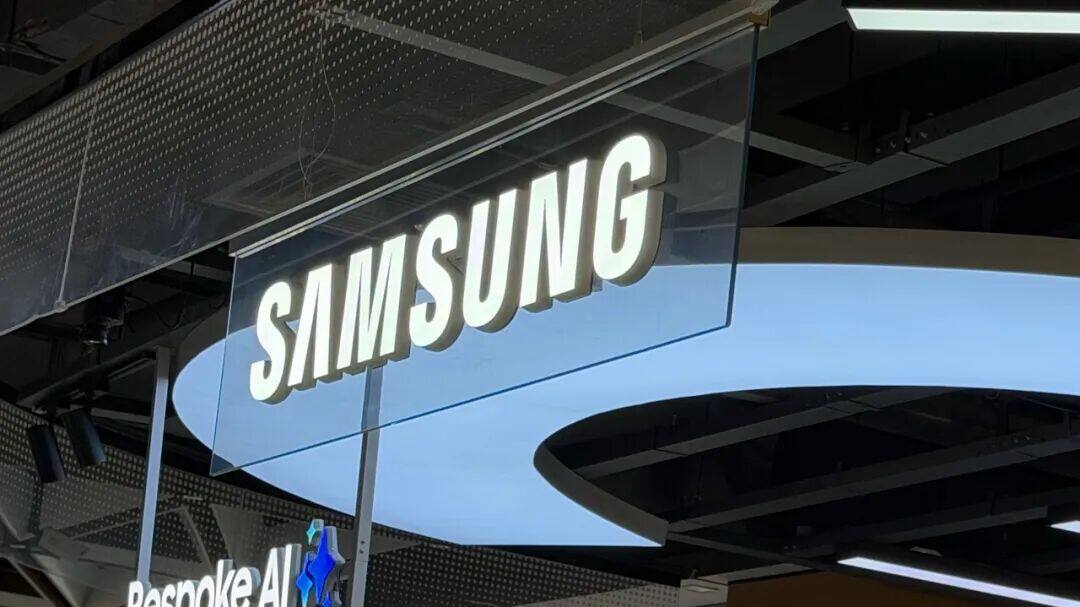
Negotiations broken down, Samsung's large-scale strike likely finalized.
On the other hand, Tencent isn't having an easy time either.
Compared to ByteDance's aggressive AI investments, Tencent appears more cautious. Previously, Tencent's President Martin Lau stated that the company invested about 18 billion RMB in new AI products last year and would double that this year; however, compared to ByteDance's hundreds of billions of RMB in AI investment, the gap remains significant.
Simultaneously, Tencent also faces slowing growth in its traditional businesses.
On May 13th, Tencent released its Q1 2026 financial report, showing: revenue of 196.458 billion RMB, a 9% year-on-year increase; Non-IFRS operating profit of 75.63 billion RMB, a 9% year-on-year increase. Overall, revenue and profit growth slowed to single-digit levels, with AI investments dragging down short-term gross margin; in gaming performance, domestic market game revenue was 45.4 billion RMB, a 6% year-on-year increase, lagging behind the growth rate of domestic market game gross receipts.
This is also a key reason why Tencent didn't occupy a dominant position in DeepSeek's financing. Earlier media reports stated that Tencent offered to subscribe to up to 20% of DeepSeek's shares, but DeepSeek was reluctant to relinquish a large controlling stake.
This is why the market is increasingly frequently discussing: Has Tencent actually secured the real "ticket" for the AI era?
After all, back in the day, Tencent built the most expensive "Noah's Ark" of the mobile internet era—WeChat; but the new ticket for the AI era, no one knows yet who will ultimately hold it.
Therefore, we temporarily assign Samsung and Tencent employees a rating of "NPC."
Washed Up: Traditional Finance Guys, Crypto Bros
Finally, compared to the AI giant employees above, traditional finance guys and crypto bros are gradually losing their era's dividends.
The reason is quite simple: the most sought-after professions of an era often represent that era's core wealth distribution rights.
For the past few decades: the finance industry represented capital, the internet industry represented traffic; the crypto circle represented overnight riches.
But AI has long begun to redefine everything.
Compared to AI giant teams with bonuses reaching millions and stock cash-outs in the billions of dollars, traditional finance guys and crypto bros suddenly seem somewhat "out of sync with the times."
Especially against the backdrop of the US stock market's ongoing AI transformation, A-shares' structural market conditions, and the crypto circle's loss of new wealth effects, the halos of "financial elites" and "crypto gods" have faded.
Based on the current matchmaking market conditions and elder judgment criteria, the above two categories of people can only be assigned a "Washed Up" rating in the matchmaking market.
Representative avatar of a traditional finance guy

Current state of the crypto bro
Do you think such ratings are reasonable? Do you have other rating references? Feel free to leave your views and opinions in the comments.
Attached is a generator for ratings from Hot to Washed Up: https://tool.dayun.cool/ranking






