After the Death of 100 Projects: Some Have Died, Others Have Moved to AI

marsbit2026-08-10 tarihinde yayınlandı2026-08-10 tarihinde güncellendi

Özet

On August 7th, around 4:30 AM, Harry Chun Tak Yeh (Ye Junde), a well-known Chinese-Canadian crypto investor and founder of projects like Tomb Finance, was found deceased after falling from a luxury residential building in Asunción, Paraguay. The scene showed an open door on the 30th floor and a disordered apartment, with police yet to release conclusions. Yeh entered crypto in 2013 and later gained prominence as a managing partner at Binary Financial and founder of Quantum Fintech Group. His algorithmic stablecoin project, Tomb, once held over $1.6 billion on the Fantom network but has since collapsed to near zero, alongside his other ventures like LIF3 and L3USD. This has left many retail investors with significant losses. His death occurs during an unprecedented crypto bear market in 2026, marked by over 100 project failures, substantial outflows of capital and developers, and rising hacking losses. The sector is witnessing a talent exodus to AI companies, while declining developer activity signals a deep downturn. As investigations continue in Asunción, the incident underscores the severe pressures and human toll within the beleaguered cryptocurrency industry.

At around 4:30 a.m. on August 7, the alarm phone rang at the Jade Park luxury residential building in Asunción.

Police arriving at the scene found a man at the base of the building who had fallen from a high floor. The body was naked and covered with a black plastic bag. Upon entering the 30th-floor apartment, police saw an open door and a messy interior; no other individuals were found at the scene. Two apartments related to the deceased on the 27th and 30th floors were subsequently examined for evidence. Police have not yet provided any conclusions.

Soon, the name of the man who fell was revealed: Harry Chun Tak Yeh, an investor and project founder in the crypto space, also of Chinese descent, with the Chinese name Ye Junde.

Luxury residence, crypto, founder, death—with these words strung together, a possible story quickly takes shape.
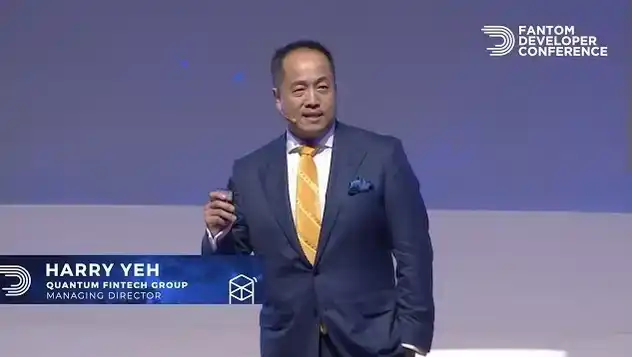
Harry Chun Tak Yeh Ye Junde

The Curve from 'Resurrection' to Zero

Harry Chun Tak Yeh had a personal homepage listing projects like Tomb, LIF3, L3 Reserve, and L3USD, as well as his Quantum Fintech Group. The numbers on the page exceeded $2 billion in scale.

His rise to fame began in an earlier crypto cycle than his projects.

Yeh once said he bought Bitcoin when it was around $60 in 2013. Later, he entered the Bitcoin over-the-counter (OTC) and block trading markets as the managing partner of Binary Financial. At least from 2015 onwards, he was frequently in front of cameras at industry events like Coin Congress and Money20/20, discussing Bitcoin prices, liquidity, and institutional capital. By 2022, he could already give a Bloomberg interview as the founder of Quantum Fintech Group, discussing whether the crypto market would enter a 'super cycle.'

He wasn't thrust into the spotlight only after Tomb gained popularity. Tomb gave him a bigger stage.

Tomb initially ran on Fantom, with its core narrative being an algorithmic token pegged to FTM: when the price was above the peg, the system expanded; when the price fell below the peg, contraction and waiting replaced yields.

At its peak, Tomb's protocol held over $1.6 billion.

By August 10, 2026, two days after news of Yeh's fall broke, that number was less than $30,000, virtually zero.

Other projects similarly left traces of decay. LIF3 and L3USD are also essentially at zero. After all, even the network they ran on, Fantom, is nearly gone, let alone the value of the protocols on it.

It's also easy to imagine what the retail investors who put money into these zeroed-out projects must be thinking.

A quick search on Reddit reveals posts like 'Is TOMB finance dead?' and 'Is the TOMB/FTM LP Dead now?' One person wrote about putting about $1,200 into the TOMB/FTM liquidity pool, seeing their position shrink drastically after the peg broke; another wrote that their roughly $2,000 investment was almost entirely gone.

The Death List in a Bear Market

Death always seems to appear alongside bear markets. The bear market following FTX's collapse in 2022 sent a very clear signal.
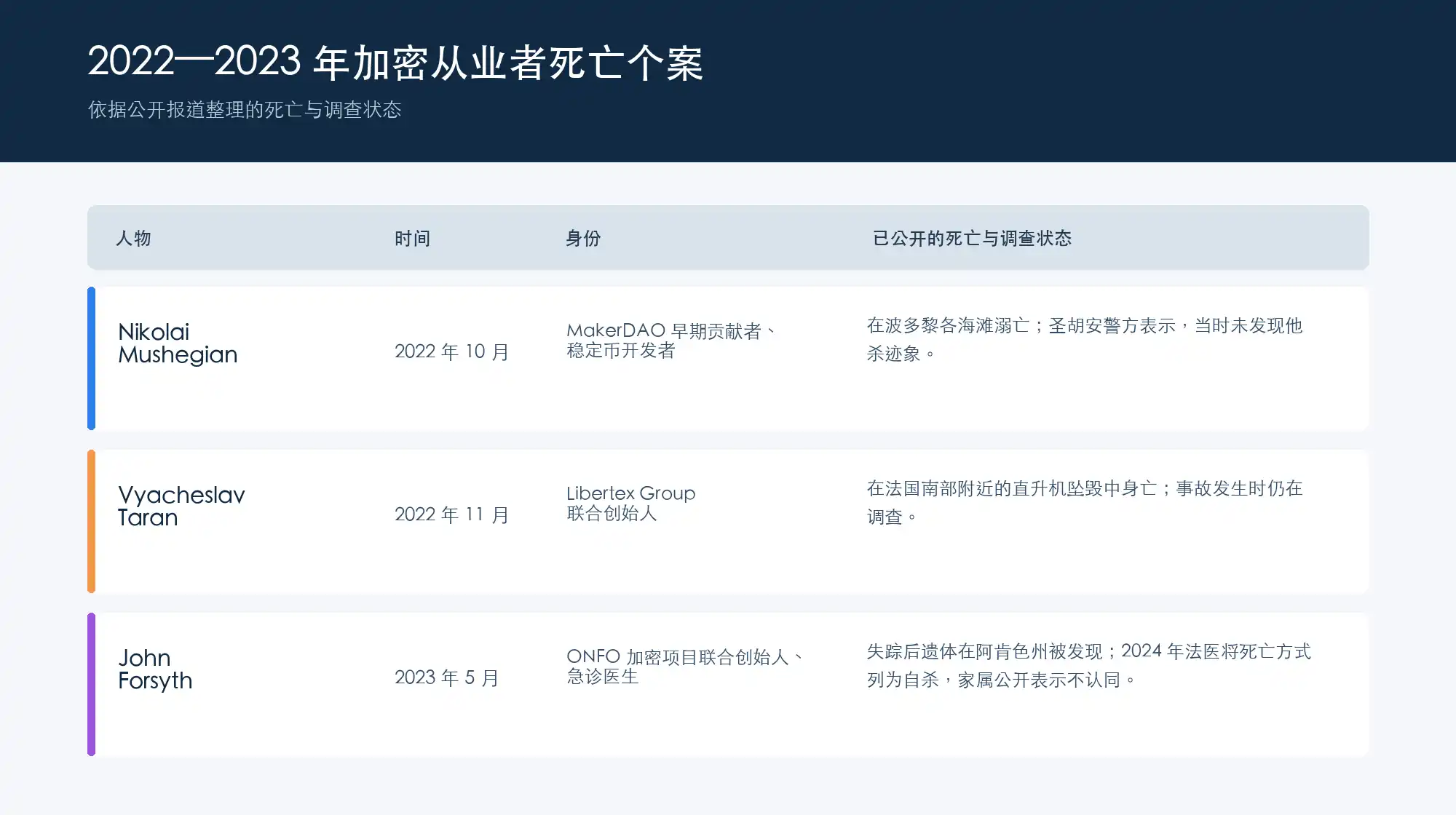
There is still no evidence to prove these events were homicides, but the inability to infer murder makes it all the more suspicious.

Bear markets make people lose a shared explanatory framework. When prices fall, an unreleased autopsy, a helicopter still under investigation, a fearful pre-death tweet—all are more easily amplified into parts of an unsolved mystery.

The same goes for Harry Chun Tak Yeh.

After the Death of 100 Projects

This is an unprecedented bear market, with capital and people flowing out entirely. No crypto industry bear market can compare to 2026. Some have counted that over 100 crypto projects have shut down, gone bankrupt, or permanently ceased operations so far, covering exchanges, wallets, lending protocols, NFT marketplaces, and blockchains. The real situation is certainly harsher than 100.

Money is flowing out. Data from PeckShield shows that hacks and scams resulted in losses of about $4.04 billion in 2025, while DeFi alone saw about $972 million stolen in the first half of 2026.

People are leaving too. Some didn't wait for their projects to be liquidated. Sam Blackshear, creator of the Move language and co-founder of Mysten Labs, recently announced he is joining Anthropic to work on defensive security research; OpenSea co-founder Alex Atallah left to found OpenRouter, and Oasis Labs founder Dawn Song also joined Meta's AI team. As of March 2026, weekly code commits in the crypto field have dropped by about 75% compared to early 2025, and active blockchain developers have decreased by 56%.

Others have passed away. If we were to choose a keyword for the cryptocurrency industry in 2026, 'death' would likely be the choice for most.

The door on the 30th floor in Asunción, Paraguay, is still open, with police going in and out, trying to find clues.

But those still in the crypto space are reopening the door to crypto.

Trend Kriptolar

İlgili Sorular

QWhat was the initial value of Tomb's protocol at its peak, and what was its value in early August 2026?

AAt its peak, Tomb's protocol held over 1.6 billion USD. By August 10, 2026, its value had plummeted to less than 30,000 USD, essentially reaching zero.

QHow does the article describe the state of the cryptocurrency market in 2026?

AThe article describes the 2026 cryptocurrency market as an unprecedented and severe bear market, characterized by massive capital and talent outflow. Over 100 projects have shut down or gone bankrupt, and developer activity has drastically decreased.

QWho was Harry Chun Tak Yeh, and what was the narrative associated with his death in the article?

AHarry Chun Tak Yeh (Ye Junde) was a cryptocurrency investor and project founder. The article notes his death in a fall from a luxury residential building in Asunción, Paraguay, and connects it to the common narrative of 'death' in the crypto industry during the 2026 bear market, though no evidence of foul play was presented.

QAccording to the article, what are some examples of crypto industry professionals transitioning to AI?

AThe article cites several examples: Sam Blackshear, creator of the Move language, joined Anthropic for security research; OpenSea co-founder Alex Atallah started OpenRouter; and Oasis Labs founder Dawn Song joined Meta's AI team.

QWhat metrics does the article use to illustrate the decline in crypto developer activity?

AThe article states that as of March 2026, weekly code commits in the crypto sector had fallen by about 75% compared to early 2025, and the number of active blockchain developers had decreased by 56%.

İlgili Okumalar

The $6.4 Billion CRO Accumulation Plan of Trump Media Group Falls Apart

A $6.4 billion plan to create a publicly-listed CRO treasury company, announced a year ago by Trump Media & Technology Group (DJT), Crypto.com, and SPAC Yorkville, has been terminated. The ambitious deal, which aimed to accumulate approximately 6.3 billion CRO tokens (nearly 20% of supply at the time), never progressed beyond a framework agreement. Related plans for a prediction market integrated into Truth Social and ETF custody services by Crypto.com were also shelved, scaled back to a simple marketing partnership. The collaboration followed significant political alignment, with Crypto.com donating to Trump's inauguration and a pro-Trump super PAC, and its CEO meeting with Trump. The SEC also closed an investigation into the exchange shortly before the deal was announced, raising conflict-of-interest concerns. Officially, the termination was attributed to an unfavorable market environment. CRO's price has fallen roughly 70% since the announcement, and the broader market for publicly-traded digital asset treasuries has cooled significantly, with Bitcoin nearly halving from its late-2025 peak. The only completed transaction from the 2025 agreements remains intact: Trump Media's ~$105 million CRO purchase and Crypto.com's $50 million purchase of DJT stock. The termination aligns with DJT's strategic pivot away from crypto; the company is now pursuing a multi-billion dollar all-stock merger with nuclear fusion firm TAE Technologies, shifting its focus to clean energy.

marsbit8 dk önce

The $6.4 Billion CRO Accumulation Plan of Trump Media Group Falls Apart

marsbit8 dk önce

Tiger Research: The $43 Million Gray Area of Asian Prediction Markets

Tiger Research: Asia's $43 Million Grey Zone in Prediction Markets Western jurisdictions have created regulatory pathways for prediction markets through derivatives law (like the U.S. CFTC framework) or flexible gambling licenses (like the UK's "betting intermediary" category). In contrast, Asia lacks a comparable regulatory architecture. The absence of a general gambling license framework adaptable to private operators, coupled with closed financial product definitions (e.g., positive lists of assets in Korea and Japan), leaves prediction markets in a regulatory grey area. This lack of a clear classification—whether as gambling, financial derivatives, or a novel third category—has not stopped market activity. Significant liquidity, evidenced by over $52 million tied to a single South Korean election, flows to offshore platforms. However, this results in forgone tax revenue (estimated at $4-43 million annually per major Asian market), no consumer protection, and no oversight for market integrity. The core issue is not cultural opposition to gambling, which exists legally in many Asian markets, but a missing institutional design. Without a deliberate regulatory pathway, authorities are left with suboptimal options: expanding criminal sanctions or blocking access, which fail to address the underlying economic activity or achieve key policy goals. Establishing a regulatory foundation requires initiating a formal public discourse to first define prediction markets' legal status and societal value, a foundational step that has yet to occur in most Asian jurisdictions.

marsbit17 dk önce

Tiger Research: The $43 Million Gray Area of Asian Prediction Markets

marsbit17 dk önce

How Singapore's Retail Giant Masters the Gold Trade: Selling Thousands of Pounds Monthly Without Betting on Price, Gold Leasing Inspires RWA Income Design on Chain

A Singapore retail giant, Mustafa Centre, sells around 1,100 pounds of gold jewelry monthly, holding nearly a ton of inventory valued over $100 million, yet avoids gold price speculation. They achieve this by maintaining a constant inventory—buying back the exact amount of gold sold each day, earning only from sales margins, not price movements. This practice is enabled by the century-old gold leasing market. Retailers borrow physical gold to meet inventory needs without tying up capital or bearing price risk, paying a lease rate. Lenders earn yield on otherwise idle gold. This real-economy demand, driven by operational needs rather than speculation, provides a stable income stream. The article highlights how this traditional leasing model inspires on-chain Real World Asset (RWA) protocols like thUSD and thGOLD. These protocols channel gold lease yields—generated from borrowers like Mustafa—to token holders. The key challenge has been access, not yield availability. Platforms like Libeara, with institutional backing (e.g., SC Ventures), facilitate this by tokenizing funds (e.g., the MG 999 Gold Fund) that lend to vetted commercial borrowers, making this off-chain yield accessible on-chain. Thus, gold leasing demonstrates a proven, non-speculative revenue source for crypto protocols seeking sustainable "real yield," connecting physical trade finance to decentralized finance.

marsbit28 dk önce

How Singapore's Retail Giant Masters the Gold Trade: Selling Thousands of Pounds Monthly Without Betting on Price, Gold Leasing Inspires RWA Income Design on Chain

marsbit28 dk önce

İşlemler

Spot

Popüler Makaleler

RE Nasıl Satın Alınır

HTX.com’a hoş geldiniz! Re (RE) satın alma işlemlerini basit ve kullanışlı bir hâle getirdik. Adım adım açıkladığımız rehberimizi takip ederek kripto yolculuğunuza başlayın. 1. Adım: HTX Hesabınızı OluşturunHTX'te ücretsiz bir hesap açmak için e-posta adresinizi veya telefon numaranızı kullanın. Sorunsuzca kaydolun ve tüm özelliklerin kilidini açın. Hesabımı Aç2. Adım: Kripto Satın Al Bölümüne Gidin ve Ödeme Yönteminizi SeçinKredi/Banka Kartı: Visa veya Mastercard'ınızı kullanarak anında Re (RE) satın alın.Bakiye: Sorunsuz bir şekilde işlem yapmak için HTX hesap bakiyenizdeki fonları kullanın.Üçüncü Taraflar: Kullanımı kolaylaştırmak için Google Pay ve Apple Pay gibi popüler ödeme yöntemlerini ekledik.P2P: HTX'teki diğer kullanıcılarla doğrudan işlem yapın.Borsa Dışı (OTC): Yatırımcılar için kişiye özel hizmetler ve rekabetçi döviz kurları sunuyoruz.3. Adım: Re (RE) Varlıklarınızı SaklayınRe (RE) satın aldıktan sonra HTX hesabınızda saklayın. Alternatif olarak, blok zinciri transferi yoluyla başka bir yere gönderebilir veya diğer kripto para birimlerini takas etmek için kullanabilirsiniz.4. Adım: Re (RE) Varlıklarınızla İşlem YapınHTX'in spot piyasasında Re (RE) ile kolayca işlemler yapın.Hesabınıza erişin, işlem çiftinizi seçin, işlemlerinizi gerçekleştirin ve gerçek zamanlı olarak izleyin. Hem yeni başlayanlar hem de deneyimli yatırımcılar için kullanıcı dostu bir deneyim sunuyoruz.

534 Toplam GörüntülenmeYayınlanma 2026.06.18Güncellenme 2026.06.29

RE Nasıl Satın Alınır

Tartışmalar

HTX Topluluğuna hoş geldiniz. Burada, en son platform gelişmeleri hakkında bilgi sahibi olabilir ve profesyonel piyasa görüşlerine erişebilirsiniz. Kullanıcıların RE (RE) fiyatı hakkındaki görüşleri aşağıda sunulmaktadır.

活动图片