After Admitting Failure Seven Months Later, Farcaster is Again Seeking a New Operator

marsbit2026-08-18 tarihinde yayınlandı2026-08-18 tarihinde güncellendi

Özet

Seven months after taking over, Farcaster's current operator, Neynar, has announced it is seeking a new team to take over operations of the decentralized social protocol and its associated products, including the flagship Farcaster client and the Clanker platform. Neynar co-founder Rishav Mukherji acknowledged the company failed to meet its goals since acquiring Farcaster from its original creators in January, citing a combination of a tight-knit community, high operating costs for the main app, and slow market growth as reasons requiring a different organizational and funding structure. Farcaster is a decentralized social protocol allowing users to maintain identity, content, and social graphs across different client applications. Despite Neynar reducing infrastructure costs by 80% and decentralizing protocol operations further, the challenge of scaling consumer adoption and sustaining the flagship app remains unresolved. The original founding team at Merkle Manufactory had previously struggled to grow the user base beyond 200,000-300,000 monthly active users. This marks the second major operational handoff for Farcaster in less than a year, following a similar transition by competitor Lens Protocol. The search for a new operator highlights a recurring difficulty in Web3 social: maintaining and growing consumer-facing applications while the underlying decentralized protocols continue to function. The structure of the potential handoff—whether products will be transferred t...

Farcaster has initiated preparations for a second operational handover in less than seven months. Rishav Mukherji, co-founder of Neynar, stated on August 18th that the company has started the process of seeking new homes and operational teams for Farcaster, Clanker, and related Neynar products. They are currently in contact with several teams deemed potentially suitable for operating decentralized social applications and developer products.

Rishav Mukherji acknowledged that Neynar failed to achieve the goals set when taking over Farcaster at the beginning of the year, and the current team is not suitable for the next stage. He summarized the conditions facing Farcaster as a tight-knit community, a flagship application with significant operational costs, and a slowly growing market. This combination requires a different organizational and financial structure than what Neynar possesses.

Farcaster is a decentralized social protocol that allows users to access different clients with a single account while retaining their identity, content, and social connections. User posts are called Casts, and the basic usage is similar to X, enabling users to post, reply, and follow other accounts. Its main entry point is the eponymous Farcaster application, and within its ecosystem, social mini-programs, wallets, and the AI token issuance platform Clanker are also operational.

The identity of the next operator, transaction structure, and handover timeline are yet to be determined. The announcement did not specify whether the Farcaster protocol, clients, Clanker, and Neynar's developer business will be transferred as a whole or if operators will be sought separately. Rishav Mukherji stated that the applications and developer products will continue to operate normally for now, with no direct impact on users. The company will return its on-book capital, most of which remains intact, after which team members will shift to new projects. The recipients, amount, and execution timeline for the capital return have not been disclosed.

With $180 Million in Funding Over Five Years, Farcaster Has Already Changed Leadership Twice

Farcaster was founded by former Coinbase executives Dan Romero and Varun Srinivasan and was initially developed by their company, Merkle Manufactory. The two founders aimed to decouple social accounts and relationship networks from single platforms, allowing developers to build different applications around the same set of user identities and social data. Consequently, Farcaster includes both an open protocol and a client for regular users, both of which were long maintained by the Merkle team.

After five years of development, Romero and Srinivasan handed over the protocol contracts, codebase, Farcaster application, and Clanker to Neynar on January 21st of this year. Upon exiting daily operations, the two stated that Farcaster needed a new product roadmap and leadership team. Merkle, which developed Farcaster, raised approximately $180 million cumulatively, including $150 million in a 2024 funding round. Romero later stated that the company would return its remaining capital to investors; the price of this acquisition was not publicly disclosed.

Neynar was already one of the most important infrastructure service providers in the Farcaster ecosystem before the first handover, offering nodes, APIs, databases, and data pipelines for developers, with many third-party applications relying on its services to connect to Farcaster. Upon taking over, Neynar proposed a builder-first roadmap, aiming to combine software generation tools, crypto payments, and the Farcaster community to help developers transition from product release to sustainable revenue. Some members of Clanker also joined Neynar as part of the transaction.

Consumer-side growth remained a core issue inherited from the previous team. Romero had mentioned in 2025 that between 200,000 and 300,000 people opened the Farcaster client monthly, a number that needed to increase 10 to 100 times for the network to reach a sustainable scale. In its later stages, Merkle allocated more resources to the built-in wallet, token trading, and the $120-per-year Pro subscription, hoping to support developers and content creators through transaction and subscription revenue. Neynar retained the wallet and trading features upon taking over while shifting the product focus towards developers. Seven months later, they still have not found a growth path capable of supporting the entire product system.

Costs Reduced by 80%, Flagship App Remains Expensive

After taking over, Neynar reduced infrastructure operational costs by 80%, increased the number of validator operators distributed across different regions, and opened the previously core-team-only protocol codebase to these operators. The next step involves delegating decisions on adding new validators to on-chain voting by existing validators, reducing the core team's sole control over the membership list.

These adjustments enhance the protocol's ability to operate independently from a single company but cannot replace consumer product operations. Farcaster employs a hybrid architecture: account identities and key management reside on OP Mainnet contracts, while high-frequency data such as posts, follows, and interactions are stored by the Snapchain validator network. Protocol data can be read by multiple companies, but the official client's product development, content distribution, customer service, wallet functions, and developer interfaces still require continuous investment.

Therefore, Neynar's exit from daily operations does not mean the Farcaster protocol stops running. Farcaster places account identities and key management on contracts within the Ethereum Layer 2 network OP Mainnet, while high-frequency data like posts, follows, and interactions are stored by the Snapchain validator network. Developers can read this data to create their own clients and mini-programs; the Farcaster application for regular users, wallet, content recommendation, customer service system, Clanker, and Neynar's developer interfaces still require ongoing maintenance by a corporate team.

In his statement, Mukherji also emphasized that while Neynar has reduced infrastructure costs by 80%, the operational expenses of the flagship application remain high, and the slowly growing market struggles to support the existing business portfolio. The Farcaster protocol continues to operate, and Neynar will maintain the application and developer services. The company has not yet specified whether protocol maintenance, consumer-side products, and the developer business will be handed over as a whole or be taken over by different teams.

Web3 Social Protocols Pass the Baton Successively, Consumer-Side Operations Emerge as a Shared Challenge

The day before Farcaster's first change of ownership, Lens also handed over daily product operations to Mask Network, with the original team transitioning to technical advisors. The reasons given by Lens similarly pointed to consumer-grade product capabilities: after completing the open protocol, growth requires unified applications, product design, and distribution channels. Farcaster's renewed search for an operator after seven months subjects this division of labor to more direct scrutiny. While the protocol can operate openly, the flagship application still needs to find a company willing to bear the long-term costs and be responsible for growth.

In the next phase, details need to be confirmed regarding the identity of potential operators, whether various products will be split, the arrangements for returning Neynar's on-book capital, and when on-chain voting for adding new validators will be activated, among others. Until these matters are made public, Farcaster will continue to be maintained by Neynar under its current operational structure, with a third operational framework yet to be established.

Trend Kriptolar

İlgili Sorular

QWhat is Farcaster, and what are its main components as described in the article?

AFarcaster is a decentralized social protocol. It allows users to use the same account across different clients while retaining their identity, content, and social connections (called 'follows'). User posts are called 'Casts'. Its main components are the core Farcaster protocol, the flagship Farcaster client application (similar to X), the social mini-app/wallet/AI token platform Clanker, and developer infrastructure services like those provided by Neynar.

QWhy is Neynar looking for a new operator for Farcaster after just seven months?

ANeynar is seeking a new operator because it acknowledges it failed to meet the goals set when it took over Farcaster in January. The company states its current team and structure are not suited for the project's next phase. The challenges include a tight-knit community, a flagship app with high operational costs, and a slowly growing market—a combination requiring a different organizational and funding structure than what Neynar possesses.

QWhat were the key changes or improvements Neynar implemented during its tenure operating Farcaster?

ANeynar reduced the infrastructure operating costs by 80%. It increased the number of validator operators distributed across different regions and opened the previously core-team-only protocol code repository to these operators. The next planned step was to delegate the authority to add new validators to an on-chain vote by existing validators, reducing the core team's unilateral control.

QWhat core problem did both the original Merkle Manufactory team and Neynar struggle to solve for Farcaster?

AThe core problem was achieving significant consumer-side growth. Dan Romero of Merkle stated in 2025 that Farcaster needed to grow its user base by 10 to 100 times from the 200,000-300,000 monthly active users to reach a sustainable scale. Despite attempts like introducing wallet/trading features and a Pro subscription (Merkle) or a builder-first strategy (Neynar), neither found a growth path capable of supporting the entire product ecosystem.

QHow does the article contrast the fate of the Farcaster protocol versus its flagship client application in this transition?

AThe article highlights that the Farcaster protocol itself, which stores identity on OP Mainnet and social data on a network of validators, will continue to run independently. The challenge lies with the flagship Farcaster client application, which requires continuous investment for product development, content distribution, customer service, wallet features, and developer APIs. Finding a company willing to bear these ongoing costs and drive growth for the consumer product is the central difficulty, not the protocol's technical operation.

İlgili Okumalar

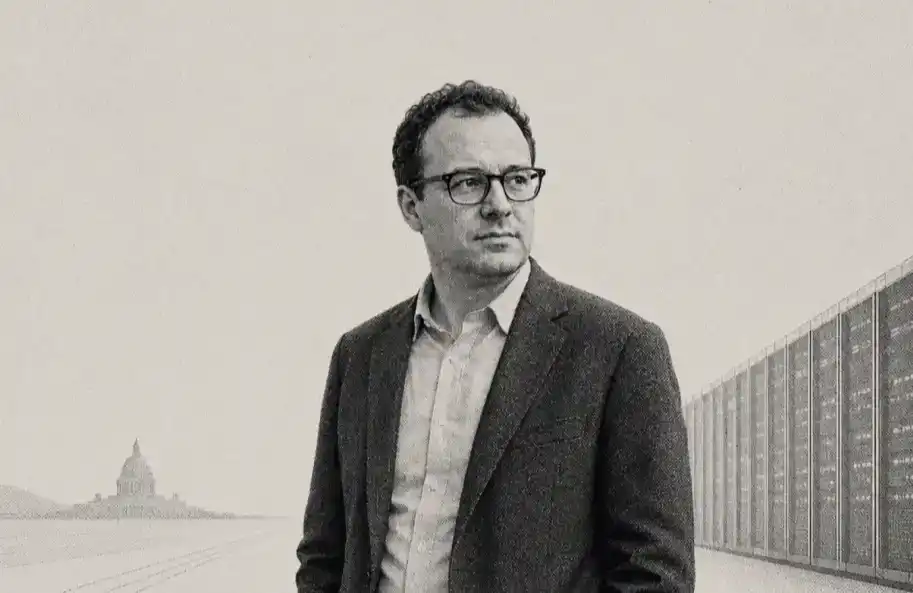
Anthropic, Dario Amodei, and "The Last Private Company"

The article explores the contrasting narratives surrounding Anthropic and its founder, Dario Amodei. He is portrayed as both a cautious "watchman" warning of AI's existential dangers and an ambitious driver racing to build that very future. The core tension lies in Amodei's belief that since powerful AI is inevitable, Anthropic must lead its development to ensure it's done "responsibly." Driven by personal tragedy—his father's death before a cure arrived—Amodei is obsessed with accelerating science. He co-founded Anthropic after leaving OpenAI over governance concerns, aiming to build top models while establishing safety standards. Anthropic developed "Constitutional AI" to align models and proposed risk-based policies, positioning itself as both creator and regulator. Amodei envisions AI bringing immense benefits, like curing diseases within years. However, his roadmap reveals a geopolitical vision: he argues the US and its allies must secure a dominant, "unipolar" advantage in advanced AI to lock in strategic supremacy before sharing benefits. The article critiques this logic. While Amodei eloquently warns of concentrated corporate power and influence, his solutions consistently grant Anthropic more authority. He disqualifies other actors—markets, the public, rival nations—as unfit to steer the future, ultimately positioning Anthropic as the necessary custodian. This culminates in an alleged, unconfirmed internal vision where Anthropic becomes "the world's only private company." The piece concludes that Amodei, sincerely believing he sees the dangers most clearly, has authored his own justification to hold the wheel.

marsbit2 dk önce

Anthropic, Dario Amodei, and "The Last Private Company"

marsbit2 dk önce

İşlemler

Spot

Popüler Makaleler

T Nasıl Satın Alınır

HTX.com’a hoş geldiniz! Threshold Network Token (T) satın alma işlemlerini basit ve kullanışlı bir hâle getirdik. Adım adım açıkladığımız rehberimizi takip ederek kripto yolculuğunuza başlayın. 1. Adım: HTX Hesabınızı OluşturunHTX'te ücretsiz bir hesap açmak için e-posta adresinizi veya telefon numaranızı kullanın. Sorunsuzca kaydolun ve tüm özelliklerin kilidini açın. Hesabımı Aç2. Adım: Kripto Satın Al Bölümüne Gidin ve Ödeme Yönteminizi SeçinKredi/Banka Kartı: Visa veya Mastercard'ınızı kullanarak anında Threshold Network Token (T) satın alın.Bakiye: Sorunsuz bir şekilde işlem yapmak için HTX hesap bakiyenizdeki fonları kullanın.Üçüncü Taraflar: Kullanımı kolaylaştırmak için Google Pay ve Apple Pay gibi popüler ödeme yöntemlerini ekledik.P2P: HTX'teki diğer kullanıcılarla doğrudan işlem yapın.Borsa Dışı (OTC): Yatırımcılar için kişiye özel hizmetler ve rekabetçi döviz kurları sunuyoruz.3. Adım: Threshold Network Token (T) Varlıklarınızı SaklayınThreshold Network Token (T) satın aldıktan sonra HTX hesabınızda saklayın. Alternatif olarak, blok zinciri transferi yoluyla başka bir yere gönderebilir veya diğer kripto para birimlerini takas etmek için kullanabilirsiniz.4. Adım: Threshold Network Token (T) Varlıklarınızla İşlem YapınHTX'in spot piyasasında Threshold Network Token (T) ile kolayca işlemler yapın.Hesabınıza erişin, işlem çiftinizi seçin, işlemlerinizi gerçekleştirin ve gerçek zamanlı olarak izleyin. Hem yeni başlayanlar hem de deneyimli yatırımcılar için kullanıcı dostu bir deneyim sunuyoruz.

805 Toplam GörüntülenmeYayınlanma 2024.12.10Güncellenme 2026.06.02

T Nasıl Satın Alınır

Tartışmalar

HTX Topluluğuna hoş geldiniz. Burada, en son platform gelişmeleri hakkında bilgi sahibi olabilir ve profesyonel piyasa görüşlerine erişebilirsiniz. Kullanıcıların T (T) fiyatı hakkındaki görüşleri aşağıda sunulmaktadır.

活动图片